

Pipeline Programs

CGT Companies Tracked

Manufacturing Facilities


The global AI in personalized nutrition market size was estimated at USD 1.58 billion in 2025 and is predicted to increase from USD 2.01 billion in 2026 to approximately USD 17.59 billion by 2035, expanding at a CAGR of 27.25% from 2026 to 2035. The AI in personalized nutrition market is growing, as AI-based technology supports in giving people with particular nutrient needs, like athletes and soldiers, and improves food taste and catering in specific food production systems.
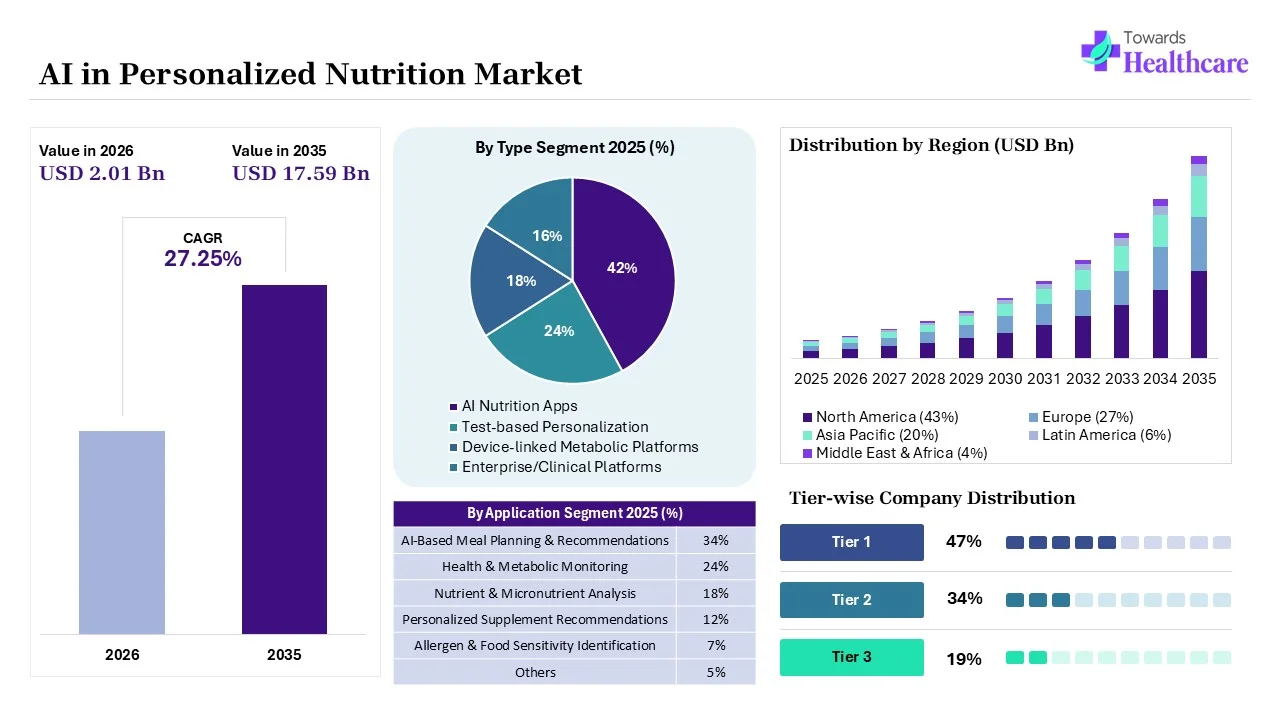
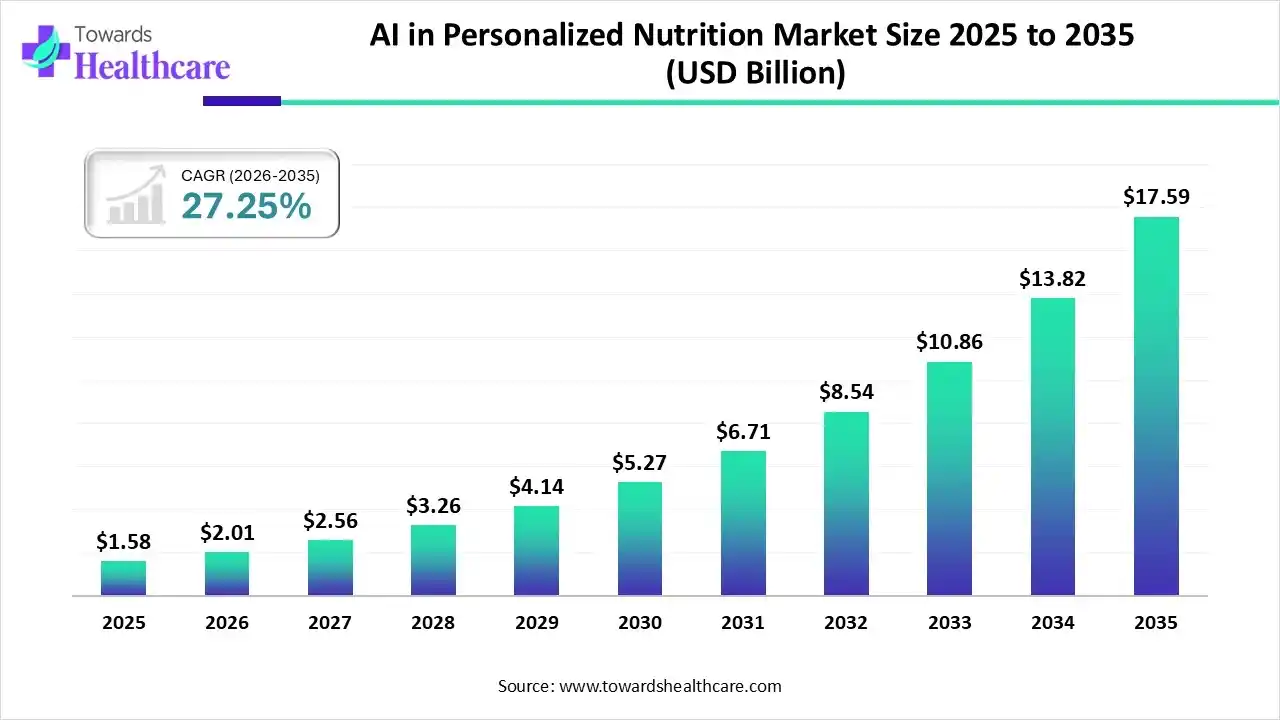
The AI in personalized nutrition market is growing because the potential of AI in nutrition likewise includes usefulness, as apps are used as a motivational visual device for users to understand and track. The applications of AI-based technology in nutrition assessment enable rapid assessment of patients, which supports increased effectiveness in offering treatment since they are allowed to seek nutritional advice from dietitians earlier than normal. By involving AI-based technology in nutrigenomics, prediction models are generated to support dietitians and researchers in making more informed decisions when designing nutrition interventions for patients.
AI in perosnalized nutrition refers to the application of artificial intelligence technologies, including machine learning, predictive analytics, and data-driven algorithms, to deliver customized dietary, lifestyle, microbiome, and metabolic profiles. The market is expanding due to increasing consumer awareness of preventive healthcare, rising demand for personalized wellness solutions, wearable health devices, microbiome analysis, digital biomarkers, and cloud-based health analytics, which are enhancing nutritional precision. Key trends include integration with mobile health ecosystems. Future opportunities are driven by AI-enabled precision nutrition, genomic-based dietary planning, and real-time metabolic monitoring. Growing investments in healthcare technology, combined with increasing focus on chronic disease prevention and healthy aging, continue to accelerate market growth and innovation.
EU AI Act - Categorizes high-risk AI systems including those that process sensitive health, biometric, and metabolic data to generate medical or nutritional recommendations under strict legal mandates. These require rigorous conformity assessments, continuous risk management, bias mitigation, and human oversight.
Food and Drug Administration (FDA) evaluates AI-driven nutrition platforms as Software as a Medical Device (SaMD) if they make clinical claims about diagnosing, treating, mitigating, or preventing chronic conditions (such as Type 2 diabetes or severe metabolic disorders).
National AI Strategy & Digital Health Frameworks- Emphasize resource-driven, problem-centric deployments (such as scaling maternal and public health screening programs), while data protection is governed under the Digital Personal Data Protection (DPDP) Act, which regulates digital health and biometric data processing.
Personalized nutrition is an approach that provides dietary recommendations tailored to an individual’s genetic profile, lifestyle, health status, microbiome, and metabolic characteristics to improve overall health and disease prevention. The AI in personalized nutrition market is growing due to increasing consumer demand for customized wellness solutions, rising awareness of preventive healthcare, and the widespread adoption of digital health technologies. Advances in artificial intelligence, machine learning, wearable devices, and health monitoring applications enables continuous analysis of dietary habits and real-time nutrition recommendations. Growing integration of AI with genomics testing, microbiome analysis, and biomarker-based assessment is further improving the accuracy of personalized nutrition plans. In addition, expanding investments in digital healthcare, increasing prevalence of chronic diseases, and the shift towards data-driven nutrition management continue to accelerate market growth globally.
| Table | Scope |
| Market Size in 2026 | USD 2.01 Billion |
| Projected Market Size in 2035 | USD 17.59 Billion |
| CAGR (2026 - 2035) | 27.25% |
| Leading Region | North America by 43% |
| Key Applications | AI nutrition coaching, metabolic health optimization, personalized meal recommendations, microbiome-based nutrition, nutrigenomics, weight management, diabetes prevention, food recommendation engines, wellness platforms |
| Primary End Users | Consumers, healthcare providers, wellness companies, employers, insurers, nutritionists, dietitians, fitness platforms, pharmaceutical companies |
| Key Challenges | Limited clinical validation for some AI nutrition models, data privacy concerns, regulatory uncertainty, fragmented nutrition datasets, difficulty integrating biological complexity |
| Measurable Values | USD Millions/Units/Volume |
| Market Segmentation | By Type, By Application, By End-User, By Region |
| Top Key Players | Appinventiv, BetterMeal Al, BiteAI, Culina Health, DayTwo, EatLove |
| Segments | Shares % |
| AI Nutrition Apps | 42% |
| Test-based Personalization | 24% |
| Device-linked Metabolic Platforms | 18% |
| Enterprise/Clinical Platforms | 16% |
Which Type Led the AI in Personalized Nutrition Market in 2025?
In 2025, the AI nutrition apps segment held the dominant share of the market by 42% share in 2025, as AI-based technology improves healthcare by offering nutritional advice, and the rapidity of the results might advantage users. Different applications in this area are expected to be developed. Diet and nutrition apps comprise personalized recommendations, precise nutritional analysis, real-time response, enhanced user engagement, and improved user experience. Major apps analyze user data like dietary preferences, health goals, and nutritional requirements.
Enterprise/Clinical Platforms
Whereas the enterprise/clinical platforms segment is the fastest-growing in the market, as AI has proven effective in generating adaptive nutrition plans, enhancing self-management, and supporting decision-making in clinical and community settings. AI-driven systems are increasingly used to monitor physiological data and personalize care. Tools like AI-based telemedicine platforms and electrochemical breathomics sensors allow continuous monitoring of patient metrics.
| Segments | Shares % |
| AI-Based Meal Planning & Recommendations | 34% |
| Health & Metabolic Monitoring | 24% |
| Nutrient & Micronutrient Analysis | 18% |
| Personalized Supplement Recommendations | 12% |
| Allergen & Food Sensitivity Identification | 7% |
| Others | 5% |
Which Application Dominated the Market in 2025?
The AI-based meal planning & recommendations segment was dominant in the AI in personalized nutrition market by 34% share in 2025, as AI-based meal planners incorporate nutrition science with machine learning. They accumulate personal data like weight, age, health conditions, preferences, and integrate it with an inclusive knowledge base of foods and dietary strategies. AI-based diets are smarter and seamless. AI-based systems enhance the precision of food recommendations, determining what end users should eat to get food suggestions.
Personalized Supplement Recommendations
Whereas the personalized supplement recommendations segment is the fastest-growing in the market, AI-based dietary recommendation systems yield enhanced healthcare results, specifically in glycemic control, gastrointestinal symptom relief, and metabolic challenges reduction. AI-based processes applied advanced analytics to look at various types of data, such as genetics, metabolic profiles, and lifestyle data, to make nutritional interventions more efficient and enhance adherence and health results.
| Segments | Shares % |
| Individuals/Consumers | 58% |
| Fitness & Wellness Organizations | 16% |
| Healthcare Providers | 14% |
| Employers & Enterprises | 8% |
| Others | 4% |
Why did the Individuals/Consumers Segment Dominate the Market in 2025?
The individuals/consumers segment is dominant in the AI in personalized nutrition market by 58% share in 2025, as AI-based technology supports in managing patients with particular nutrient requirements, like athletes and soldiers, and enhances food taste and catering in the specific food production technology. AI-based technology involves significant enhancements to improve the food manufacturing process. The uses of AI-based processes in nutrition are far-reaching, allowing personalized diet plans, improved clinical nutrition, and the advancement of targeted nutraceuticals.
Employers & Enterprises
Whereas the employers & enterprises segment is the fastest-growing in the market, as AI-based technology is significantly enhancing the food manufacturing process. Tools like artificial neural networks and fuzzy logic models are applied to improve drying technologies, allowing manufacturers to improved preserve nutritional content while processing. AI-driven technology helps the manufacturing of customized food formulations to meet precise dietary requirements, contributing to the wider goal of precision nutrition.
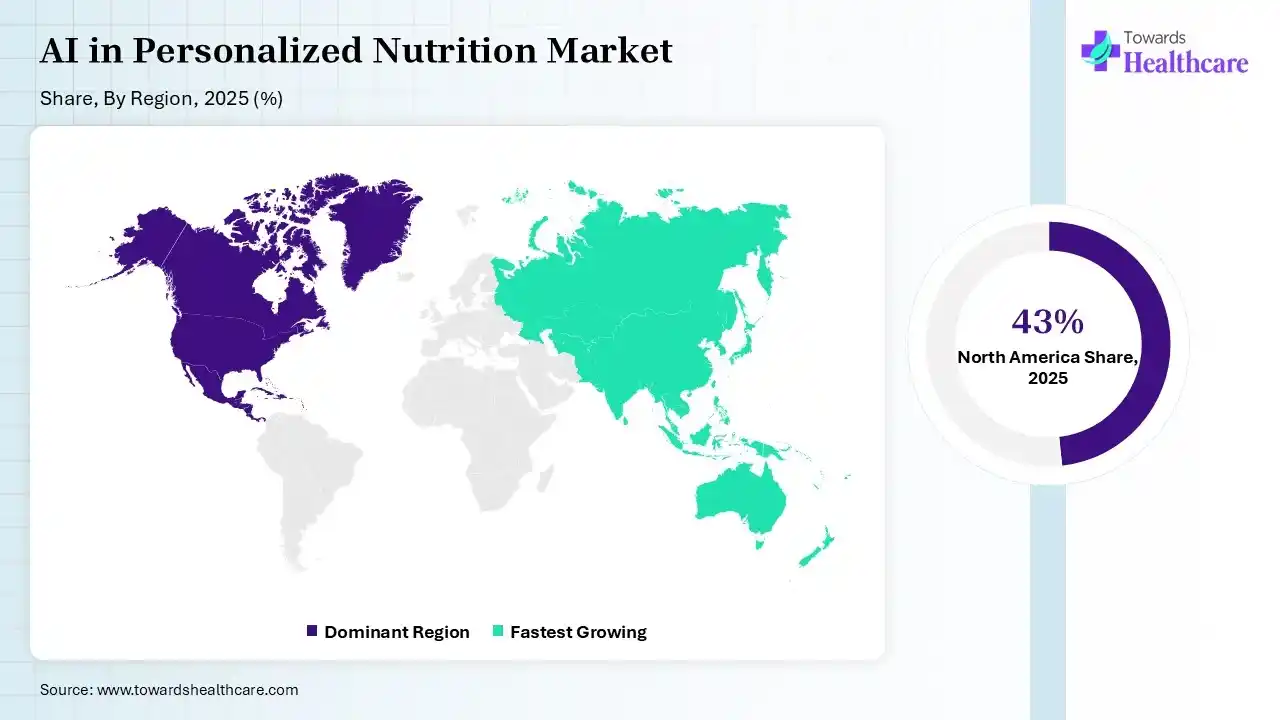
In 2025, North America dominated the AI in personalized nutrition market by 43%, as increasing adoption of wearable health devices has transformed rehabilitation by allowing real-time monitoring of physiological parameters, developing early disease detection, and promoting proactive medical care management. Rising cases of chronic diseases like high blood pressure and high cholesterol evolve as the conditions impacting many people, driving the crucial requirement for and adoption of precise, AI-based nutritional solutions.
For Instance,
U.S. Market Trends
In the U.S., using wearable healthcare tools might improve the treatment of chronic illnesses by monitoring significant challenging factors, involving blood pressure, glucose, and various parameters. The increasing prevalence of diabetes, obesity, and CVD in the U.S. has accelerated the need for and acceptance of personalized, AI-driven nutrition.
Canada Embraces AI-Powered Personalized Nutrition
The Canada AI in powered nutrition market is growing due to increasing demand for personalized wellness solutions, rising adoption of AI-powered health applications, and growing awareness of preventive healthcare. The integration of wearable devices, genomics, and digital health platforms enabled accurate nutrition recommendations. In addition, government support for AI innovation, expanding precision health research, and collaborations between healthcare and technology companies are accelerating market growth across Canada.
Asia Pacific is expected to see rapid growth in the AI in personalized nutrition market, driven by the fact that countries in the APAC region have taken rapid actions to control the challenges of CVDs, which drives the demand for AI in personalized nutrition. Around 80% people already use at least one health app or device, such as a smart watch or ring, as compared with 70% worldwide. These tools offer real-time biometric data significant for AI to generate precise, personalized nutritional information.
India Market Trends
The Indian traditional diet is more plant-based due to staple items such as lentils, chickpeas, beans, and a wide variety of vegetables. AI-based technology involves significantly to improving the food manufacturing technology. These advanced systems analyze specific health data, dietary preferences, and lifestyle factors to generate tailor-made meal plans with the goal of enhancing health results.
China Shapes the Future of Personalized Nutrition
The China AI in personalized nutrition market is expanding due to rapid digital health adoption, increasing health-conscious consumers, and strong government support for artificial intelligence innovation. Growing use of AI-powered mobile health applications, wearable devices, and precision nutrition platforms is improving personalized dietary recommendations. Additionally, rising investments in biotechnology, genomics, and smart healthcare infrastructure, along with the increasing prevalence of lifestyle-related diseases, are driving sustained market growth across China.
Europe is significantly growing in the AI in personalized nutrition market, as the European Health Data Space (EHDS) is a keystone of the European Health Union and the first common EU data space devoted to a precise sector as part of the European strategy for information. The region has a robust, mature ecosystem in microbiome and nutrigenomics research, allowing the development of AI models that analyze challenging biological data to offer precise dietary recommendations, which contributes to the growth of the market.
UK Dominates the AI in Personalized Nutrition Market
The UK dominated the AI in personalized nutrition market due to its advanced digital healthcare ecosystems, strong adoption of AI-driven wellness technologies, and growing consumer demand for personalized health solutions. The presence of leading health-tech companies, increasing use of wearable devices and genetic testing, supportive research initiatives, and widespread integration of AI into nutrition and preventive healthcare services continue to strengthen the country's market leadership.
Germany Experiences Strong Growth in the AI in Personalized Nutrition Market
Germany is experiencing significant growth in the AI in personalized nutrition market due to rising consumer awareness of preventive healthcare, increasing adoption og digital health technologies, and strong investment in AI-driven health technologies and strong investment sin AI-driven wellness solutions. The country’s expanding use of wearable health devices, genetic testing, and personalized nutrition platforms is improving individual care. Supportive research initiatives, a robust healthcare infrastructure, and growing demand for precision nutrition further accelerate market growth.
South America is known as an emerging regional contributor to the growth of the AI in personalized nutrition market. Growing disposable incomes and rising health awareness are some of the major growth factors of the market in the region. South American startups and platforms are training and adapting AI-powered meal planning and nutrient-analysis models to fit regional agricultural outputs, local cuisine, and traditional dietary patterns rather than importing rigid Western templates.
Brazil Market Trends
Brazil is known to lead the growth of AI in personalized nutrition market. The country is also known as a primary hub for precision nutrition and digital health adoption in the region, outpacing neighboring countries. The country is experiencing a sharp surge in home-based clinical nutrition, mobile wellness applications, and e-commerce tele-nutrition platforms that integrate AI-powered meal planning. The growth of the market in the country is also influenced by increasing rates of lifestyle-related and chronic conditions (such as obesity, diabetes, and cardiovascular issues); Brazilian consumers and healthcare providers are heavily adopting preventive, data-driven dietary interventions.
Argentina Market Trends
Argentina has a notable contribution to the growth of the market and is also known as the second-largest regional platform market in Latin America after Brazil. Rather than dominating global hardware or massive VC-backed consumer apps, Argentina contributes through talent density, digital health ecosystems, academic collaborations, and specialized foodtech/agritech innovations.
Middle East and Africa has a smaller contribution to the growth of the market. The growth of the market in the region represents a growing niche with immense headroom for digital and preventive health adoption. Rising health consciousness in the region is also a major market growth factor. High prevalence of diabetes, obesity, and cardiovascular conditions across Gulf Cooperation Council (GCC) nations and parts of Africa has pushed governments and consumers toward preventive, diet-based health management.
Saudi Arabia Market Trends
Saudi Arabia has a massive contribution to the growth of the market, which is mainly driven by national healthcare investments, high consumer digital adoption, and supportive strategic frameworks. National strategies prioritize precision medicine, digital health transformation, and reducing the burden of lifestyle-related and chronic diseases, helpful for market’s growth.
South Africa Market Trends
South Africa contributes to the growth of the artificial intelligence (AI) in personalized nutrition market primarily by addressing its dual burden of undernutrition and obesity, driving regional research in clinical dietetics, and serving as a key market within the broader Middle East and Africa (MEA) digital health ecosystem. South Africa provides a critical testing ground for AI models that must simultaneously manage severe nutritional deficits and rising rates of lifestyle-related chronic diseases, which is helpful for the growth of the market.
| Company | Headquarters | Latest Update |
| Appinventiv | India | Appinventiv focused on harnessing the power of AI, IoMT, and data analytics to build platforms that provide personalized treatment. |
| BetterMeal Al | United States | BetterMeal AI is developing an Artificial Intelligence Nutritionist, with the precise goal to support individuals who have complex health challenges. |
| BiteAI | Dubai | Bit AI is a significant technology provider in this space, providing an API-driven computer vision platform that enables other health uses. |
| Culina Health | United States | Culina Health expands its offerings to help dietitians and patients implement novel AI-based platforms to enhance care effectiveness, and improves its leadership with significant hires. |
| DayTwo | United States | DayTwo provides a targeted nutrition strategy for controlling blood glucose levels. |
| EatLove | United States | EatLove processed over 200 million targeted meal recommendations, enhancing user adherence by 42%. |
Strengths
Weakness
Opportunities
Threat
By Type
By Application
By End-User
By Region





Principal Consultant
Payal Rabde is a Healthcare Market Research Analyst at Towards Healthcare Research & Consulting with 4+ years of experience in pharmaceuticals, biotechnology, medical devices, and life sciences.
Learn more about Payal Rabde

Reviewed By
Aditi Shivarkar is a seasoned professional with over 14 years of experience in healthcare market research. As a content reviewer, Aditi ensures the quality and accuracy of all market insights and data presented by the research team.
Learn more about Aditi Shivarkar









