


The APAC point-of-care medical imaging market size was estimated at USD 373.98 million in 2025 and is predicted to increase from USD 395.67 million in 2026 to approximately USD 657.21 million by 2035, expanding at a CAGR of 5.8% from 2026 to 2035. Her analysis highlights that the APAC point-of-care medical imaging market is rapidly expanding due to expanding manufacturing capabilities, advancing AI-powered systems, growing wireless products, expanding care settings, increasing applications, and key industry players like GE HealthCare, Philips, Siemens Healthineers, Canon Medical Systems, and Fujifilm SonoSite.
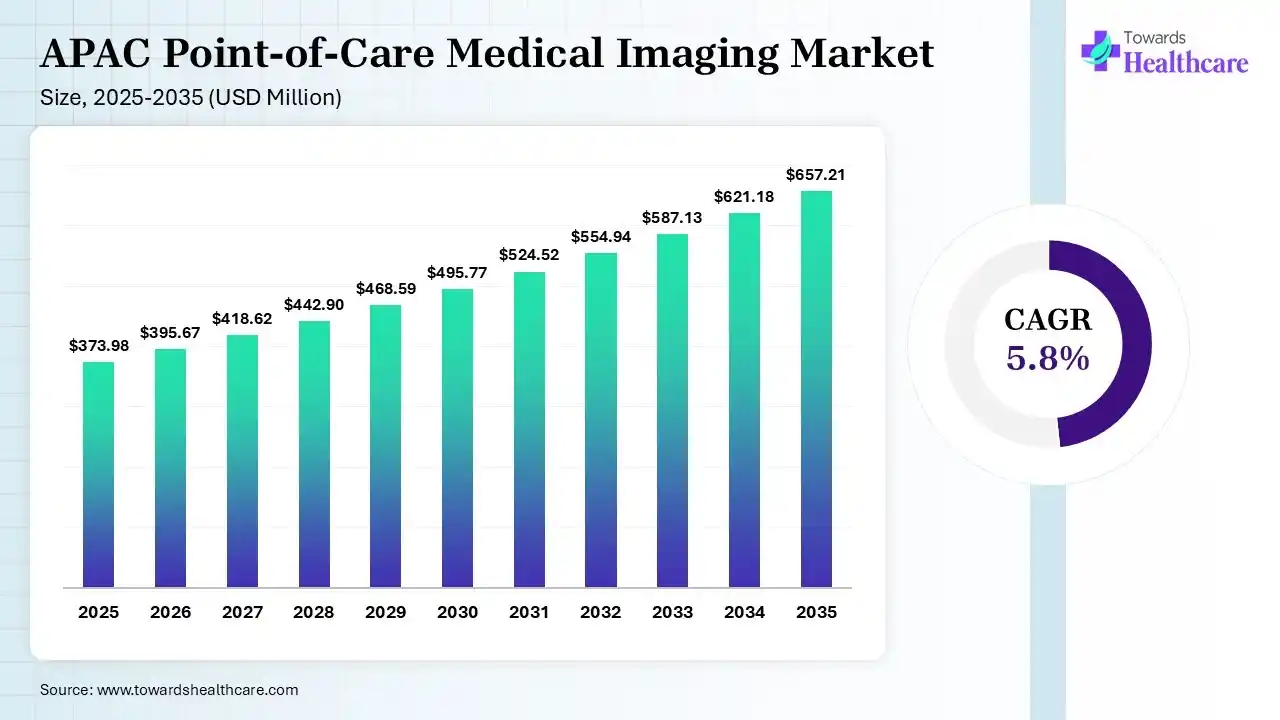
The APAC point-of-care medical imaging refers to devices designed for direct imaging at the patient's location across APAC. They are used for general imaging, cardiovascular, musculoskeletal, and emergency/critical care applications. The most commonly used point-of-care medical imaging consists of ultrasound, X-ray, and CT devices. Furthermore, advancements in handheld, compact/laptop, and mobile/cart-based systems are also driving the market expansion.
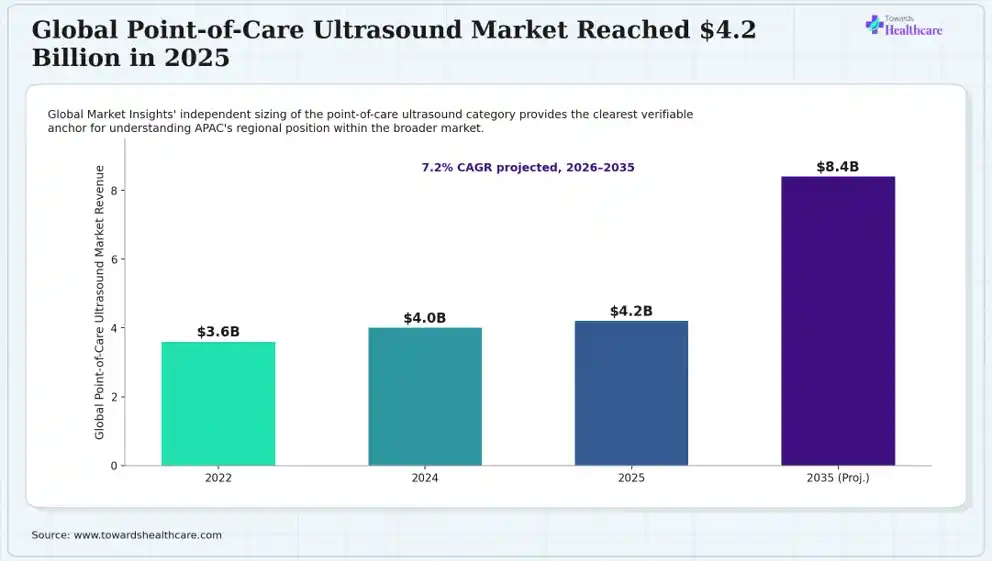
As a market research analyst, I interpret that the bar chart illustrates global point-of-care ultrasound market revenue in 2022-2035. In 2022, the global POCUS market revenue was noted to be $3.6 billion, which increased to $4.0 billion in 2024. Moreover, in 2025, the global POCUS market revenue rose to $4.2 billion, while it is expected to achieve $8.4 billion by 2035.
Key Insight:
The rapid growth of the global POCUS market is projected to double within a decade, representing a structurally growing category, and highlights that APAC manufacturers are entering too late to capture a meaningful share of the market.
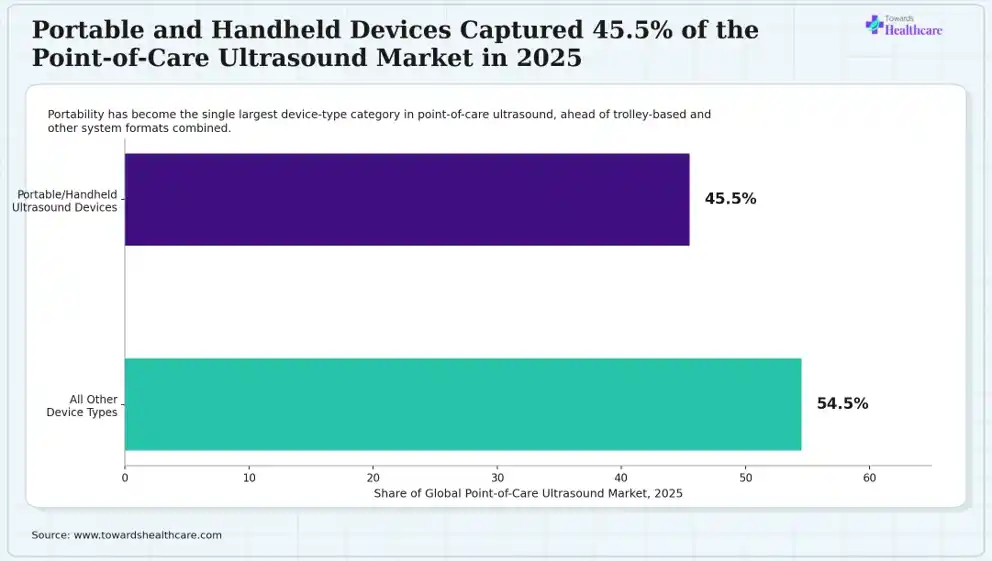
The above-mentioned horizontal bar chart represents the portable/handheld device share of the global POCUS market. Portable/handheld ultrasound devices contributed to 45.5% of the global POCUS market in 2025, while all other device types (trolley-based, etc.) held 54.5% market share.
Key Insight:
The growth in portable devices, holding approximately half of the total market share, prompts device manufacturers to strengthen their handheld product line rather than just focusing on traditional cart-based system performance.
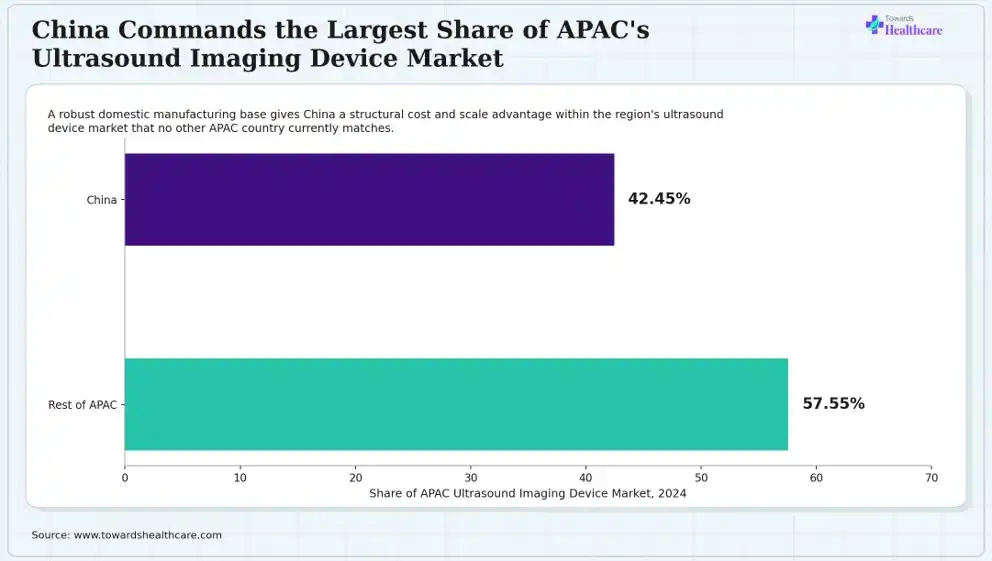
Based on our research, this horizontal bar chart highlights China's share of the APAC ultrasound imaging device market. A total of 42.45% share of the APAC ultrasound device market in 2024 was held by China, while the rest of APAC held 57.55% market share.
Key Insight:
China consists of self-reinforcing cost advantage when compared to APAC markets, due to a domestic manufacturing base supported by Mindray and other China-headquartered device makers.
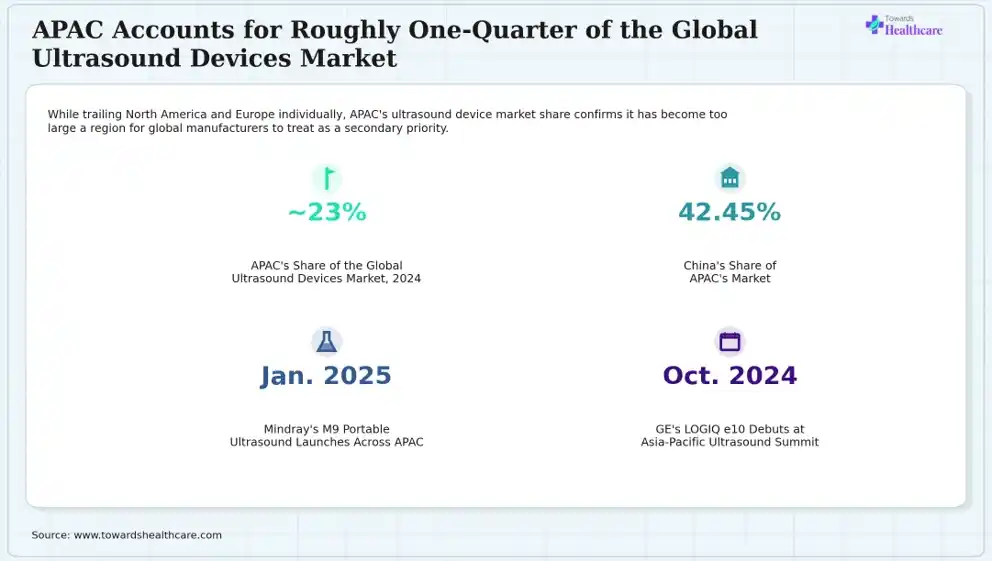
As per the survey conducted, the infographic stat-panel covers APAC regional market share and product-launch metrics. In 2024, APAC's share of the global ultrasound devices market was noted to be approximately 23%, where China's share of APAC's market was reported to be 42.45%. In October 2024, GE's LOGIQ e10 debuted at the Asia-Pacific Ultrasound Summit, which was followed by Mindray's M9 portable ultrasound APAC launch in January 2025.
Key Insight:
APAC is becoming a genuine first-wave launch market for new point-of-care imaging technology due to the simultaneous launch of two major products within a five-month window of each other.
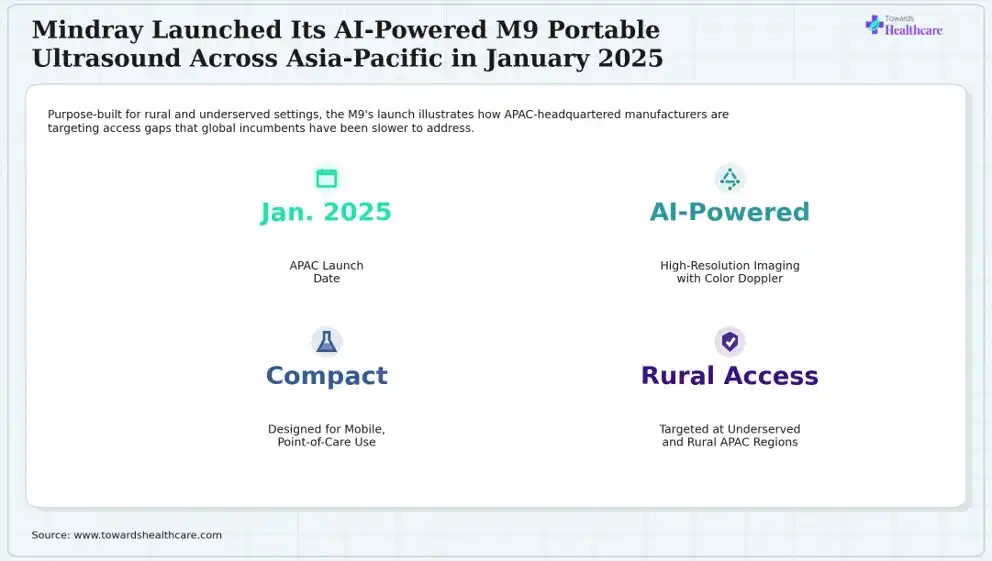
The given infographic stat panel encompasses Mindray M9 APAC launch metrics. M9 compact, mobile, AI-powered, high-resolution imaging system with superior color Doppler and point-of-care use, targeting obstetrics, cardiology, and emergency care, was launched in APAC in January 2025.
Key Insight:
The launch of M9 for rural APAC deployment instead of adapting a system built for developed-market hospitals represents a structural advantage for Mindray, focusing on understanding and serving APAC-specific healthcare access gaps.
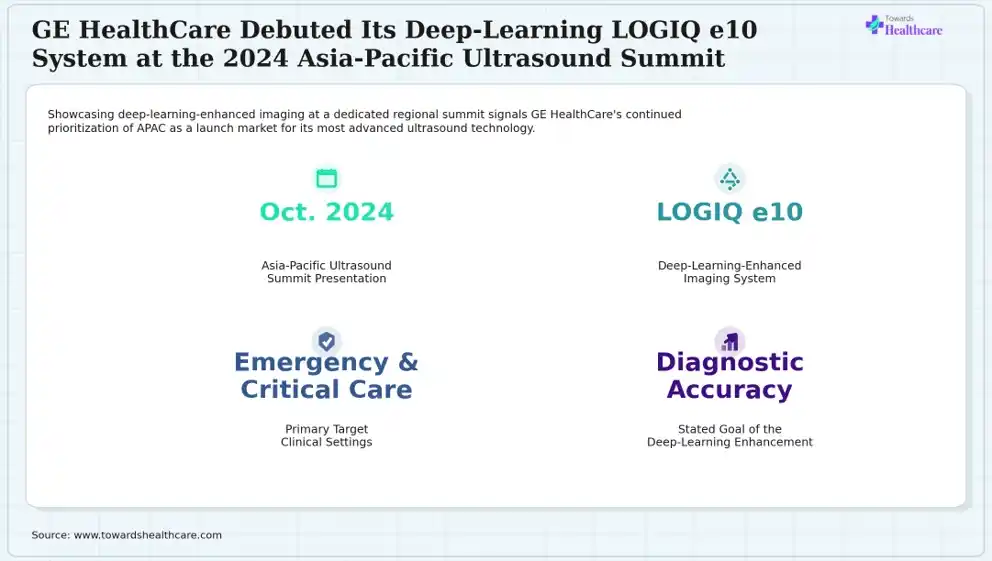
As per the analysis, the infographic stat panel focuses on GE HealthCare LOGIQ e10 APAC debut metrics. At the Asia-Pacific Ultrasound Summit 2024, held in October 2024, LOGIQ e10, deep-learning-enhanced imaging, was presented for emergency and critical care settings.
Key Insight:
The unveiling of the product at a regional summit instead of a global trade show reflects that GE HealthCare interprets APAC clinical and regulatory audiences as strategically important to dedicate a regional launch narrative.
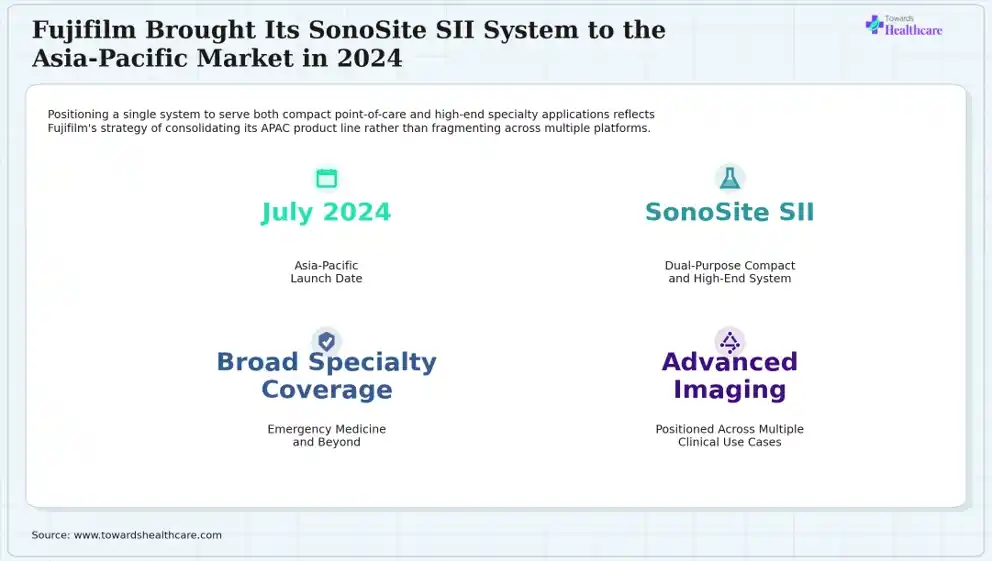
Based on the information gathered, the infographic stat panel focuses on Fujifilm SonoSite SII APAC launch metrics. SonoSite SII, a dual-purpose compact and high-end system for emergency medicine and broader clinical applications, was launched in July 2024.
Key Insight:
The dual-purpose positioning strategy of Fujifilm, opposite of Mindray's rural-access-focused M9 launch the same year, represents two genuinely different competitive approaches across the same regional market.
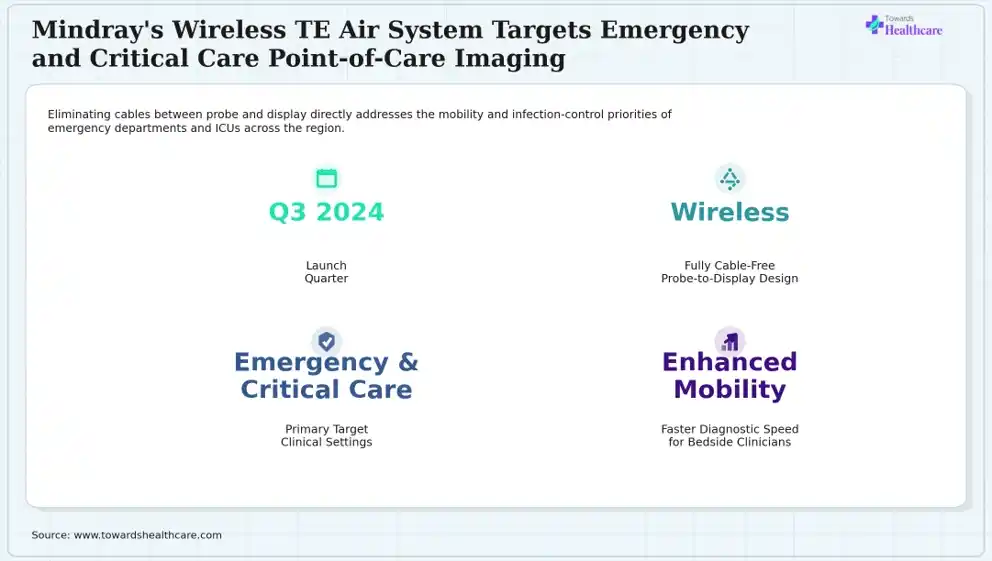
As per the market research analyst, I interpret that the infographic stat panel outlines Mindray TE Air wireless system launch metrics. TE Air, a fully wireless, cable-free probe-to-display design targeting emergency and critical care with its Enhanced mobility and diagnostic speed, was launched in Q3 2024.
Key Insight:
The simultaneous launch of two distinct new systems (TE Air, Resona I8) within a six-month window in 2024 represents a deliberate strategy by Mindray to defend and expand its APAC competitive position through rapid and sequential product introductions.
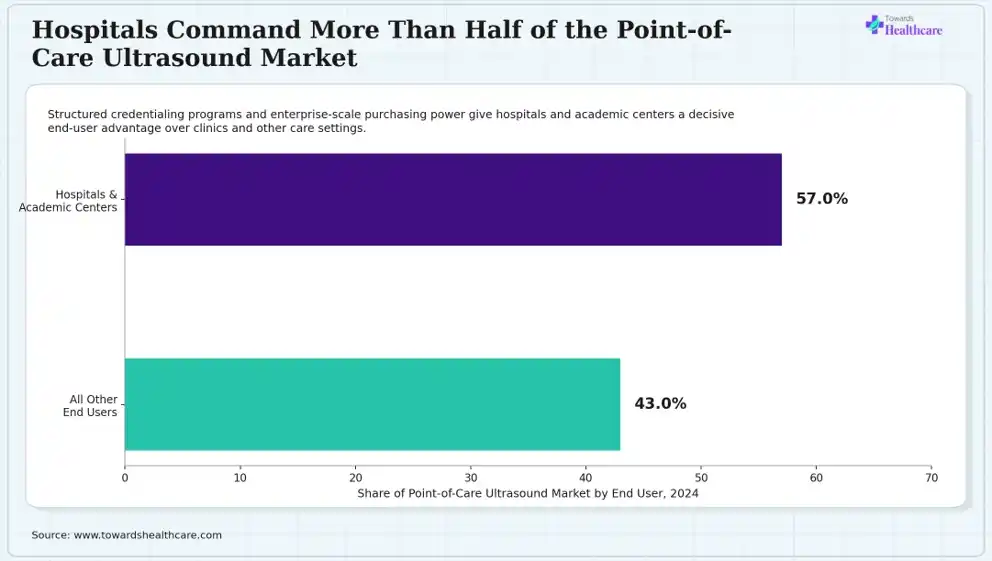
The above-mentioned horizontal bar chart illustrates hospital share of the point-of-care ultrasound market. Hospitals & academic centers held a 57.0% share of the global POCUS market in 2024, while 43.0% share accounted for all other end users (clinics, ASCs, other).
Key Insight:
AI-enabled imaging workflows are becoming the clinical standard, as enterprise-scale hospital contracts between health systems and device manufacturers, represented by documented multi-year, multi-facility partnerships, present hospitals with inconsistent influence.
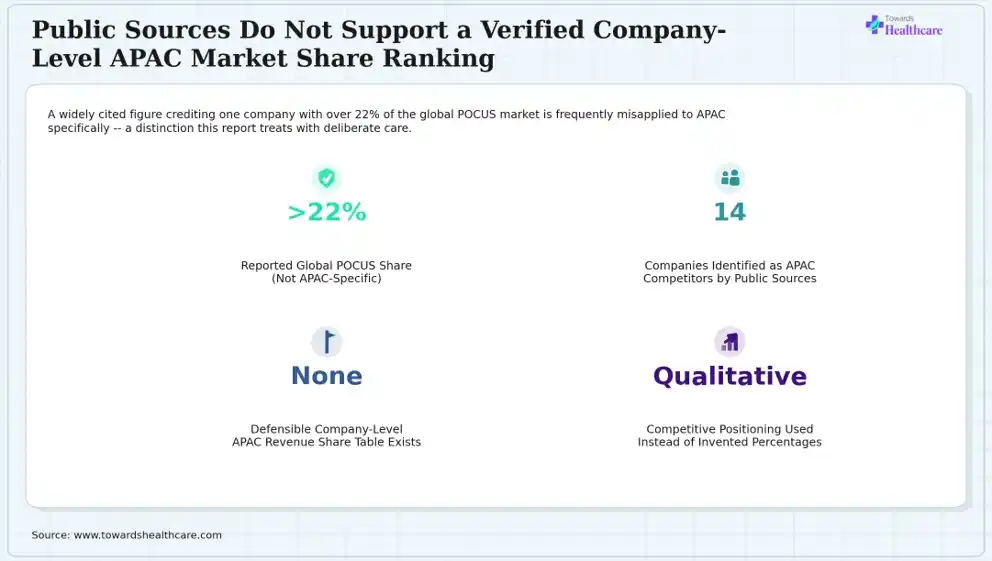
According to the analysis conducted by Aman, the infographic stat-panel covers data availability and methodology transparency metrics. With the use of qualitative competitive positioning rather than invented percentages, the global POCUS market share, including the leading company, contributed more than 22%, while 14 companies were identified as APAC point-of-care imaging competitors, whereas no defensible company-level APAC revenue-share table available were identified.
Key Insight:
The data gap confirms that even sophisticated market-research providers are yet unable to publicly release or produce APAC-specific company-level revenue shares for this market.
Source: Towards Healthcare, correctly distinguishing global POCUS share data (Global Market Insights) from unavailable APAC-specific company shares.
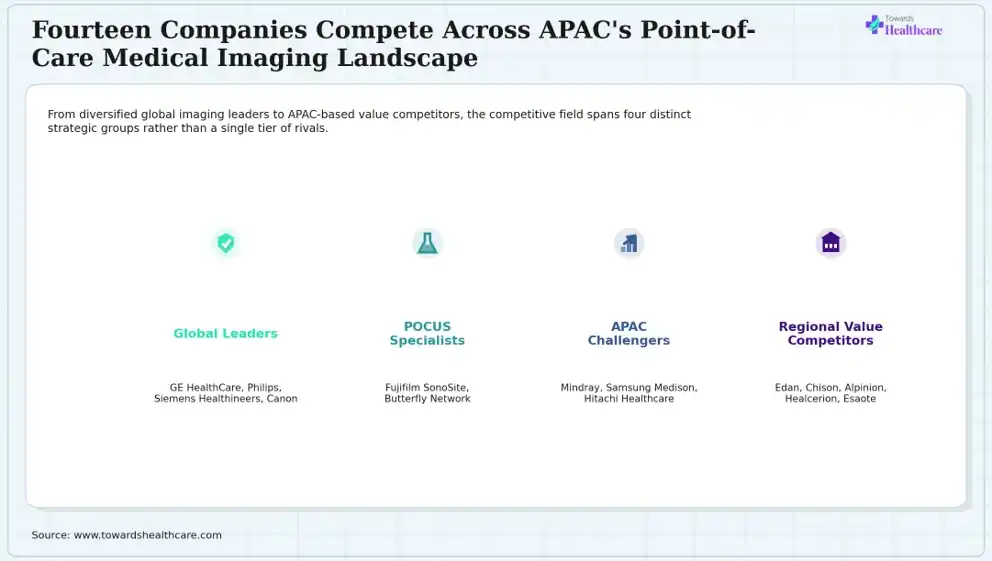
Based on our research, the ecosystem infographic encompasses four strategic groups within APAC's point-of-care imaging competitive field. The market consists of a wide range of competitors, where GE HealthCare, Philips, Siemens Healthineers, and Canon Medical are the global leaders. Fujifilm SonoSite and Butterfly Network are considered the POCUS specialists; Mindray, Samsung Medison, and Hitachi Healthcare are the well-known APAC challengers, whereas Edan Instruments, Chison Medical, Alpinion, Healcerion, and Esaote are the regional value competitors.
Key Insight:
APAC market consists of four genuinely distinct strategic groups instead of one homogeneous competitive tier, which encourages emerging companies to tailor their strategy based on which group of companies they are competing against.
Source: Towards Healthcare, cross-referenced against publicly identified competitor lists for point-of-care medical imaging and APAC POCUS.
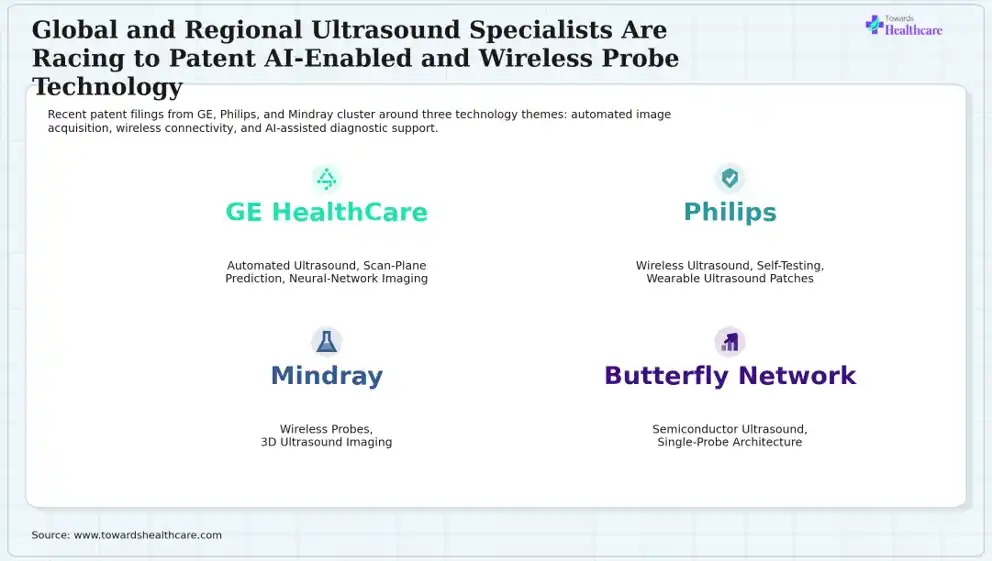
The given infographic stat panel highlights recent point-of-care ultrasound patent technology themes by company. GE HealthCare patented automated ultrasound examination, scan-plane prediction, and neural-network imaging, while wireless ultrasound, system self-testing, and wearable ultrasound patches of Philips were granted patent protection. Similarly, wireless probes and 3D ultrasound imaging were patented by Mindray, whereas Butterfly Network’s semiconductor ultrasound, single-probe architecture was granted patent protection.
Key Insight:
The patent protection for wearable ultrasound patches by Philips, a category other three companies' recent filings suggest the next competitive frontier is expected to move beyond handheld portability toward continuous, worn diagnostic monitoring systems.
Source: Towards Healthcare, citing recent patent filing activity for GE HealthCare, Philips, Mindray, and Butterfly Network.
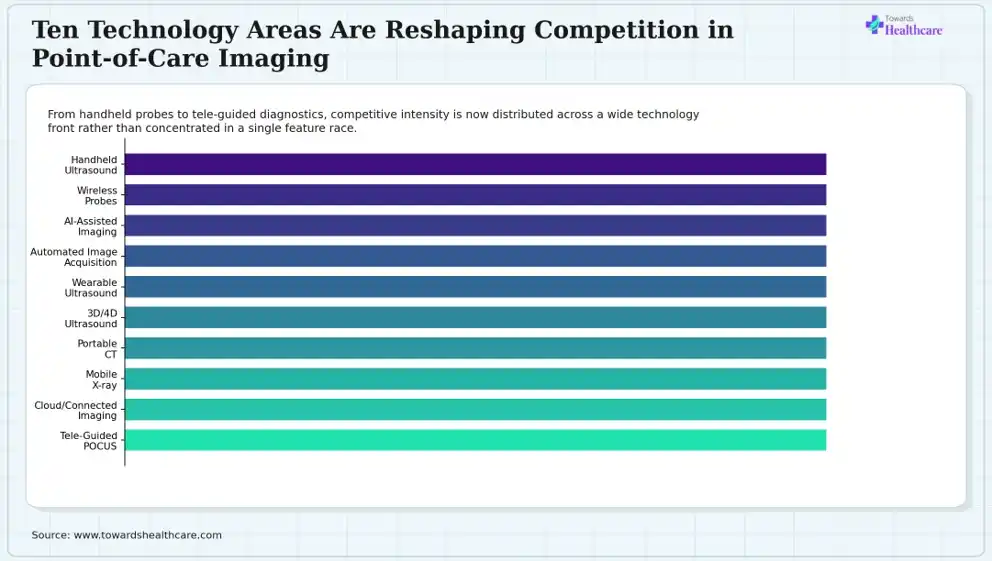
As per the survey conducted by Aman, the horizontal list chart covers ten technology areas driving point-of-care imaging competition. GE, Philips, Fujifilm SonoSite, Mindray, and Samsung are actively contributing to the development of handheld ultrasound systems; Philips, Mindray, and GE focus on Wireless Probes; and GE, Philips, Siemens, and Samsung also support the development of AI-assisted imaging. Automated Image acquisition is driven by GE, Philips, and Siemens, while Philips and emerging players are aiming for the development of wearable ultrasound systems. GE, Philips, Mindray, and Samsung are the major players for 3D/4D ultrasound; Siemens, GE, Canon, and specialist companies drive the development of portable CT, while Siemens, Canon, GE, and Fujifilm focus on mobile X-ray. Cloud/connected imaging is the new area of interest for Philips, GE, Siemens, and Mindray, while tele-guided POCUS is fueled by Philips, GE, and digital POCUS players.
Key Insight:
The broadest simultaneous technology leadership across the ten technology areas is maintained by GE and Philips, which focus on eight and seven technology categories, respectively.
Source: Towards Healthcare.
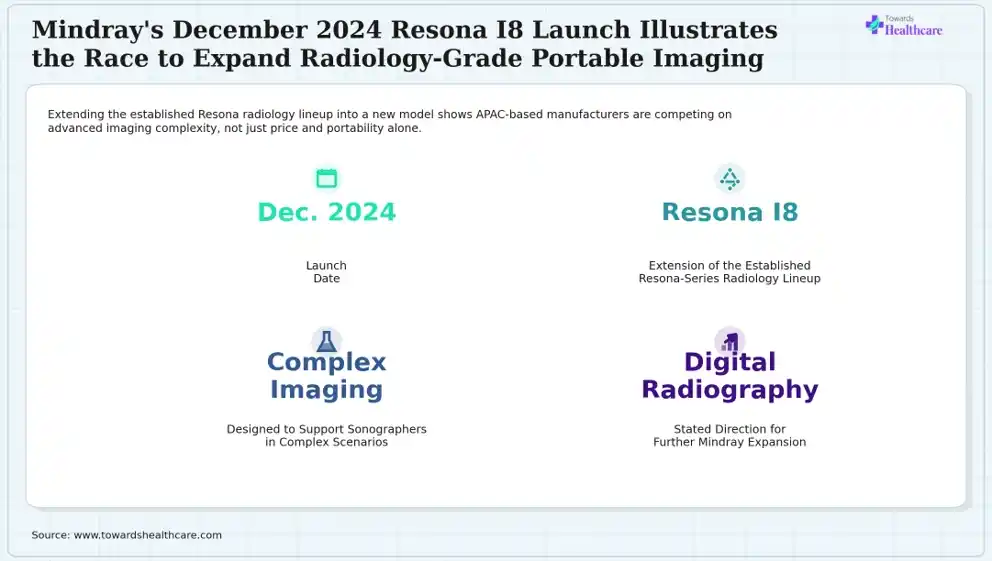
Based on the information gathered, infographic stat panel, Mindray Resona I8 launch and strategic-direction metrics. Resona I8, an extension of the Resona-Series radiology lineup to support sonographers in complex imaging scenarios, was launched in December 2024, leading to the company’s expansion into digital radiography.
Key Insight:
To compete beyond ultrasound into the X-ray segment of point-of-care imaging, a major category of Siemens, Canon, and Fujifilm, Mindray stated its plan to expand further into digital radiography.
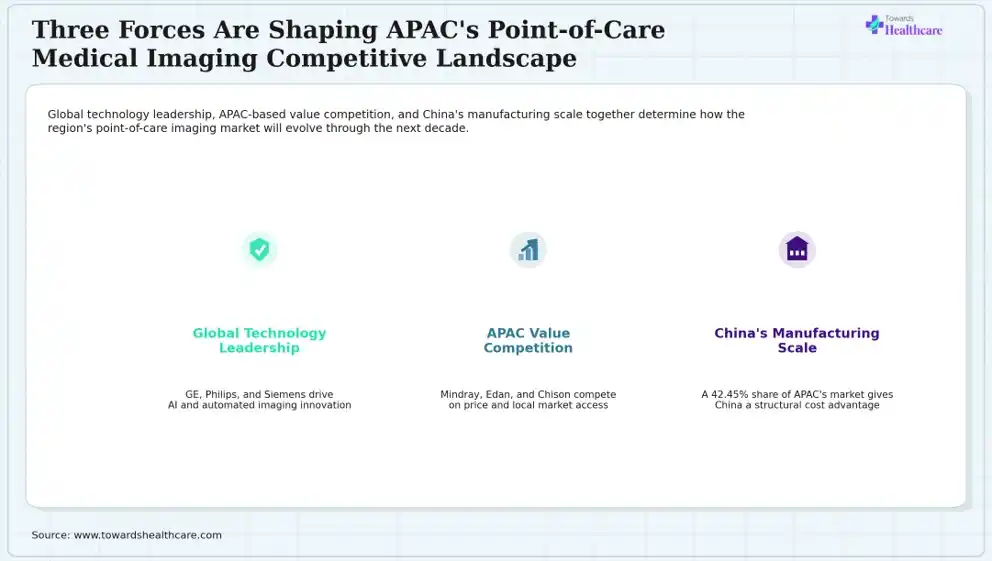
As a market research analyst, I interpret that the synthesis infographic illustrates three structural forces shaping APAC point-of-care imaging competition. GE, Philips, and Siemens drive AI and automated imaging innovation, which makes them the global technology leaders; Mindray, Edan, and Chison compete on price and local market access, achieving the position of APAC value competitors. 42.45% share of APAC's market gives China a structural cost advantage due to its well-established manufacturing scale.
Key Insight:
APAC's competitive equilibrium is anticipated to remain multi-polar instead of consolidating around one dominant player, as the three forces operate on different competitive bases, creating barriers for a single company to lead on all three forces.
| Indicator | Value |
| Global point-of-care ultrasound market revenue, 2025 | $4.2 billion |
| Global POCUS market projected revenue, 2035 | $8.4 billion (7.2% CAGR) |
| Portable/handheld device share of global POCUS market, 2025 | 45.5% |
| APAC's share of the global ultrasound devices market, 2024 | ~23% |
| China's share of the APAC ultrasound devices market, 2024 | 42.45% |
| Hospital share of global POCUS market, 2024 | 57.0% |
The table represents market shares and revenue for different years. In 2024, APAC's share of the global ultrasound devices market was noted to be approximately 23%, where China's share of the APAC ultrasound devices market was reported to be 42.42, whereas the global point-of-care ultrasound market revenue in 2025 accounted for $4.2 billion. Similarly, the hospital share of the global POCUS market in 2024 was recorded to be 57.0%, while portable/handheld devices contributed 45.5%. Moreover, the global POCUS market projected revenue by 2035 is expected to be $8.4 billion and is anticipated to expand at a 7.2% CAGR.
The section highlights six segmentation dimensions such as Product, Device Portability, Application, End User, Care Setting, and Region, along with their market share, CAGR percentages, and recent advancements.
Ultrasound registered its dominance in the point-of-care imaging product category. The growing launches such as Mindray M9 and TE Air, GE LOGIQ e10, Fujifilm SonoSite SII, and Mindray Resona I8 confirm its dominance, as well as its growing active APAC-specific competitive investments.
By device type, a total of 45.5% of the global POCUS market is held by Portable/handheld devices, which made them the dominant and fastest-growing portability segment. In the launch of five new specific APAC products, four were portable or handheld systems such as M9, TE Air, SonoSite SII, and Resona I8, which confirmed that the segment contributes to the highest competitive activity.
| Region | Verified Data Point |
| APAC (overall) | Held roughly 23% share of the global ultrasound devices market in 2024 |
| China |
Contributed 42.45% share of APAC's ultrasound devices market in 2024 Driven by a robust domestic manufacturing base |
| Rest of APAC | Accounted for 57.55% of APAC's ultrasound devices market, which was distributed across Japan, India, South Korea, Australia, and Southeast Asia |
The table highlights the regions and their ultrasound device share. APAC contributed approximately 23% share of the global ultrasound devices market in 2024, where China held a total of 42.45% share of the market due to a well-established manufacturing base. Furthermore, the rest of APAC, including Japan, India, South Korea, Australia, and Southeast Asia, held 57.55% of APAC's ultrasound devices market in 2024.
In August 2025, a next-generation mobile CT product portfolio was launched through a collaboration between Samsung India and NeuroLogica, where the systems combine AI-powered efficiency, patient-first design, and mobility.
Source: Express Healthcare “Samsung India launches mobile CT technologies portfolio” August 2025
In 2025, the AI-powered M9 portable ultrasound system for mobile use in rural and underserved point-of-care settings was launched by Mindray across the Asia-Pacific market.
Source: Mindray
In December 2024, the Resona I8 ultrasound machine was launched by Mindray, expanding its Resona-Series radiology pipeline along with its digital radiography.
Source: Axis Imaging News “Mindray Introduces Resona I8 Ultrasound Machine,” December 2024
In 2024, the LOGIQ e10 ultrasound system, consisting of deep-learning-enhanced imaging, was unveiled at the Asia-Pacific Ultrasound Summit 2024 by GE HealthCare.
Source: GE HealthCare
On February 6, 2023, a wireless portable ultrasound system developed for emergency and critical care settings named TE Air was launched by Mindray.
Source: Mindray “Mindray Revolutionizes the Way of Using Ultrasound with TE Air, Its First Wireless Handheld Ultrasound System,” February 2023
In April 2016, SonoSite SII ultrasound system, a dual-purpose compact and high-end imaging system, was launched by Fujifilm in the Asia-Pacific market for a wide range of specialties.
Source: Medical Device Network “Fujifilm SonoSite launches new smart ultrasound system SonoSite SII” April 2016
It is a global leader, debuted with the deep-learning LOGIQ e10 at the Asia-Pacific Ultrasound Summit in October 2024, which have active patents in automated imaging and neural-network technology.
It is a global leader with active patent filings in wireless ultrasound, system self-testing, and wearable ultrasound patches in 2025.
It is a global leader, identified as a leading company offering mobile X-ray, portable CT, and AI-assisted imaging technologies.
It is a global leader and APAC leader with an enhanced APAC presence, providing CT, X-ray, and ultrasound.
It is a POCUS specialist that launched SonoSite SII in APAC in July 2024, with an extensive handheld ultrasound patent base.
It is an APAC challenger, well known for being active in wireless-probe and 3D-imaging patents, along with the launch of M9 (Jan. 2025), TE Air (Q3 2024), and Resona I8 (Dec. 2024) within a single year.
It is a major APAC ultrasound player with very strong innovations and APAC distribution presence.
It is a POCUS specialist and an emerging challenger with an active semiconductor-ultrasound and single-probe-architecture patent portfolio.
It is a regional value competitor identified as a value-oriented regional competitor with strong APAC distribution.
It is a value-oriented regional competitor with strong APAC distribution.
Aditi is a medical imaging research expert with strong experience in AI-enabled handheld devices, manufacturing capabilities, and emergency care markets. She conducted detailed market research, analyzed company data, clinical trends, and industry developments. Based on her comprehensive analysis, the following strategic key takeaways highlight the most important market insights and opportunities.
For Service Providers & CDMOs
For Pharma Companies
For Investors & Corporate Strategy Teams
Based on my assessment, the market is significantly expanding due to the growing launch of point-of-care ultrasound systems. I also anticipate that the new collaboration among the major companies will drive novel innovations. The growth in the demand for portable and handheld systems also promotes their advancements. I also see strong growth in AI and deep learning systems, which will create new market opportunities.
Payal Rabde led the primary market research, developed the methodology, analyzed trends, segmentation, competition, forecasts, and strategic opportunities, forming the report's analytical foundation.
Aman was responsible for collecting and validating clinical trial data, research publications, company information, partnerships, and other quantitative datasets, strengthening evidence-based analysis and market estimations.
Aditi reviewed the complete research document, performed quality checks, validated findings, refined content, corrected inconsistencies, and finalized the report, ensuring accuracy, clarity, credibility, and publication-ready quality.
By Product
By Device Portability
By Application
By End User
By Care Setting
By Region

















Principal Consultant
Payal Rabde is a Healthcare Market Research Analyst at Towards Healthcare Research & Consulting with 4+ years of experience in pharmaceuticals, biotechnology, medical devices, and life sciences.
Learn more about Payal Rabde

Reviewed By
Aditi Shivarkar is a seasoned professional with over 14 years of experience in healthcare market research. As a content reviewer, Aditi ensures the quality and accuracy of all market insights and data presented by the research team.
Learn more about Aditi Shivarkar









