
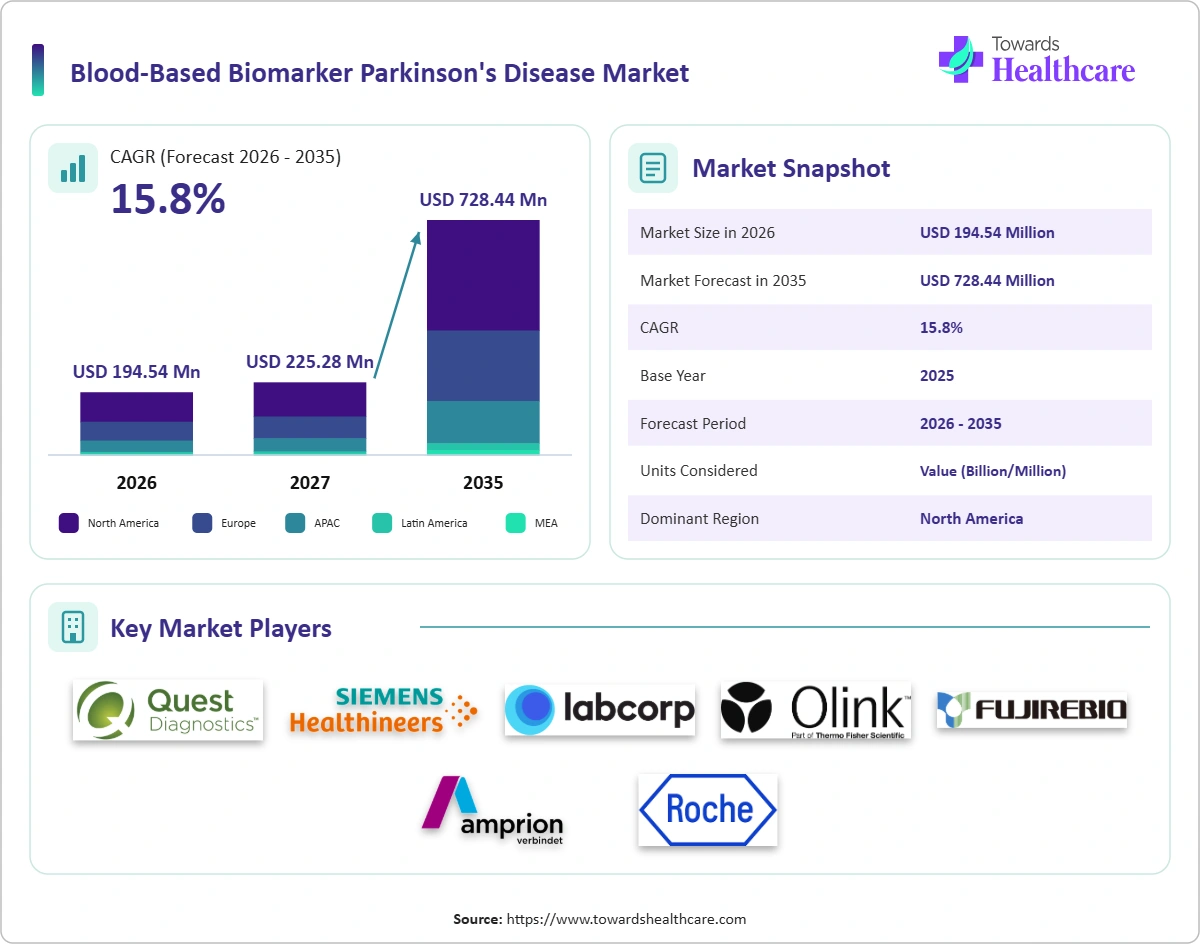
The blood-based biomarker Parkinson's disease market is expected to grow from USD 168 million in 2025 to USD 728.44 million by 2035, driven by the need for early disease identification and improved diagnostics. The rise in disease prevalence, diagnostic challenges, and advancements in disease-modifying therapies are key market drivers. Blood testing offers a less invasive method compared to traditional CSF-based procedures, aided by ultrasensitive analytical platforms for detecting low-abundance neurological proteins.
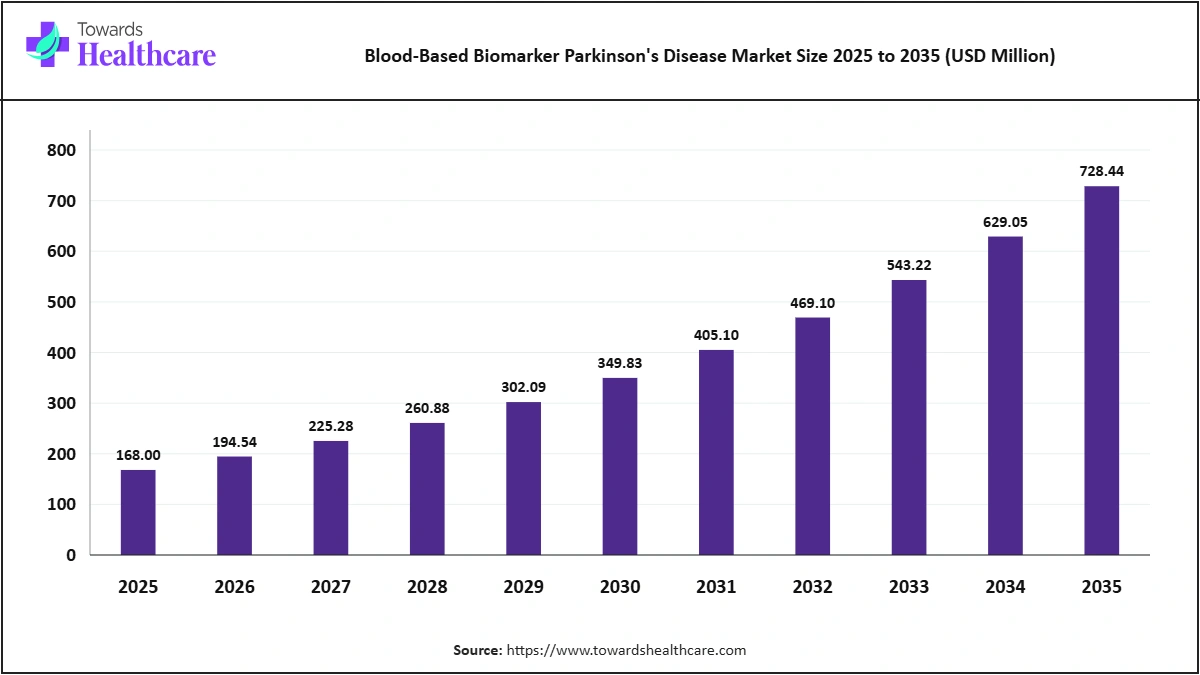
Innovations in alpha-synuclein detection, NfL measurement, and genetic profiling will expand clinical applications, leading to an expected market revenue of USD 349.83 million by 2030, with a projected CAGR of 15.8% from 2026 to 2035. Research into the gut microbiome, genomics, and precision medicine is broadening the investigation of biological subtypes and potential biomarker combinations in Parkinson’s disease.
Analyst View: We estimated the market using biomarker testing volumes across clinical trials, research programs, and early clinical applications, together with average test prices and service revenues across geographical markets. The assessment considers alpha-synuclein assays, NfL testing, genetic markers such as LRRK2 and GBA, and multi-analyte proteomic panels. The estimate was cross-checked against the neurological biomarker portfolios, analytical capabilities, and relevant activities of leading suppliers. Published estimates for this specific market definition are limited, making a clearly defined scope and bottom-up assessment particularly important.
| Driver | Impact | ≈ CAGR Contribution | Time Horizon | Key Regions |
| Parkinson's cases rise with ageing | High | +6.17 pp | Short to long term | Global, strongest in North America |
| Misdiagnosis is common | Medium | +5.20 pp | Medium to long term | Global, fastest uptake in Asia Pacific |
| Disease-modifying trials need biomarkers | Medium | +4.43 pp | Short to medium term | Global |
| Blood tests are less invasive than CSF | Low | +3.47 pp | Long term | Developed and emerging markets |
Note: Contributions are indicative estimates of each factor's effect on annual growth.
Sources: Expert interviews, secondary sources, Towards Healthcare database and Towards Healthcare analysts.
The identified growth drivers collectively represent an estimated 19.27 percentage points of gross forecast growth contribution under the report’s analytical framework, due to the rising prevalence of the disease among aging populations. Demand for objective biological measures is supporting research and clinical-trial use, while routine diagnostic adoption remains dependent on clinical validation and reimbursement. Increased investment in disease-modifying drug development and the advantages of blood collection over invasive methods are driving interest in neurological testing, especially in North America and fast-expanding in Asia Pacific due to enhanced research infrastructure and healthcare investments.
| Restraint | Impact | ≈ Negative CAGR Contribution | Time Horizon | Key Regions |
| Limited validation | High | -1.56 pp | Short to medium term | Global |
| No reimbursement yet | High | -1.15 pp | Medium term | Price-sensitive and emerging markets |
| Low biomarker levels in blood | Medium | -0.76 pp | Short term | North America and other mature markets |
Note: Contributions are indicative estimates of each factor's effect on annual growth.
Sources: Expert interviews, secondary sources, Towards Healthcare database and Towards Healthcare analysts.
The identified restraints are estimated to moderate the forecast growth rate by approximately 3.47 percentage points under the assumed scenario due to limited clinical validation, lack of reimbursement pathways, and challenges in measuring low-abundance biomarkers. The significant barrier is the need for demonstrated biomarker performance across various patient populations and disease stages. Additionally, the absence of reimbursement may hinder adoption among hospitals and patients. Despite these challenges, improvements in assay sensitivity, increased clinical datasets, and clearer regulatory pathways could facilitate greater market adoption, projecting a net CAGR of 15.8% from 2026 to 2035.
The development of blood-based diagnostic tests, especially for detecting alpha-synuclein and measuring NfL, presents opportunities for market participants, improving access to neurological testing and expanding the potential applications of biomarkers beyond research settings.
Clinical trial enrollment represents a commercial opportunity. Pharmaceutical companies and CROs seek biomarkers for patient identification and clinical efficiency. Suppliers providing validated assays and specialized biomarker services may establish beneficial partnerships with drug developers.
Asia Pacific offers substantial growth potential due to aging populations, advancements in neurological research, and increased healthcare investments in China, Japan, India, and South Korea. Collaborations between manufacturers, diagnostic service providers, and academic and healthcare institutions can strengthen market positions. Furthermore, integrating blood-based biomarkers with genetic testing and patient monitoring may lead to new commercial opportunities and improve patient classification and precision medicine.
Note: 2025 is the base year; 2035 shares and CAGRs are forecasts.
Sources: Expert interviews, secondary sources, Towards Healthcare database, and Towards Healthcare analysts.
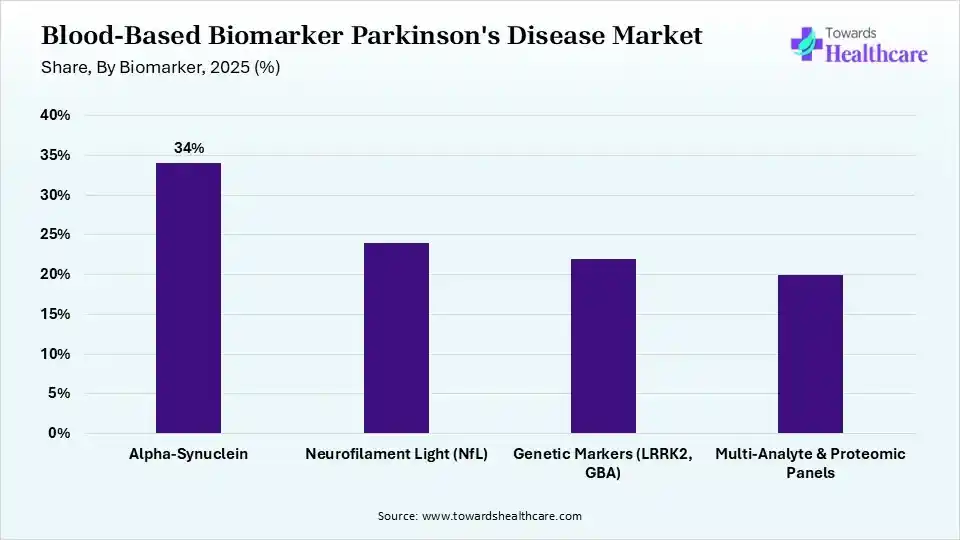
Alpha-Synuclein accounted for 34% of the market in 2025 and is projected to expand at a CAGR of 14.87% from 2026 to 2035. Alpha-synuclein serves as a crucial biomarker for Parkinson's disease, prompting research into detection and measurement technologies. While advancements in peripheral blood methods could improve clinical applications, growth in this segment is expected to lag behind the larger market due to the increasing use of multi-analyte technologies.
Neurofilament Light (NfL) is a biomarker of neuroaxonal injury, being studied for distinguishing Parkinson's disease from atypical parkinsonian disorders. Its measurement via ultrasensitive blood-based immunoassays is gaining traction among researchers and clinical trial sponsors. While its use in disease monitoring and research suggests growth, it is anticipated to expand slightly slower than the overall market.
Genetic Markers (LRRK2, GBA) such as LRRK2 and GBA define significant subgroups of genetically defined Parkinson's disease. Genetic testing supports patient stratification and recruitment for clinical trials focused on specific disease mechanisms. Increased investment in precision medicine and targeted drug development is expected to boost demand, though this segment is projected to grow at a slightly slower pace than the overall market.
Multi-Analyte and Proteomic Panels driven by their capability to capture biological pathways associated with Parkinson's disease. Key innovations such as proteomics, high-sensitivity detection, and AI data interpretation enhance the development of integrated biomarker panels, which can improve disease classification and reveal variations among patient subgroups. The increasing emphasis on precision medicine and clinical trial stratification is predicted to accelerate growth in the forecast period.
Segment Outlook: Alpha-Synuclein is expected to remain the largest biomarker segment through 2035, retaining around 31.36% of the market. However, Multi-Analyte and Proteomic Panels are projected to register the highest CAGR of 18.27%, supported by increasing research into combined biomarker approaches, advanced proteomic technologies, and AI-assisted biological classification. NfL and genetic markers will continue to represent important categories for neurological assessment and precision clinical research.
Note: 2025 is the base year; 2035 shares and CAGRs are forecasts.
Sources: Expert interviews, secondary sources, Towards Healthcare database, and Towards Healthcare analysts.
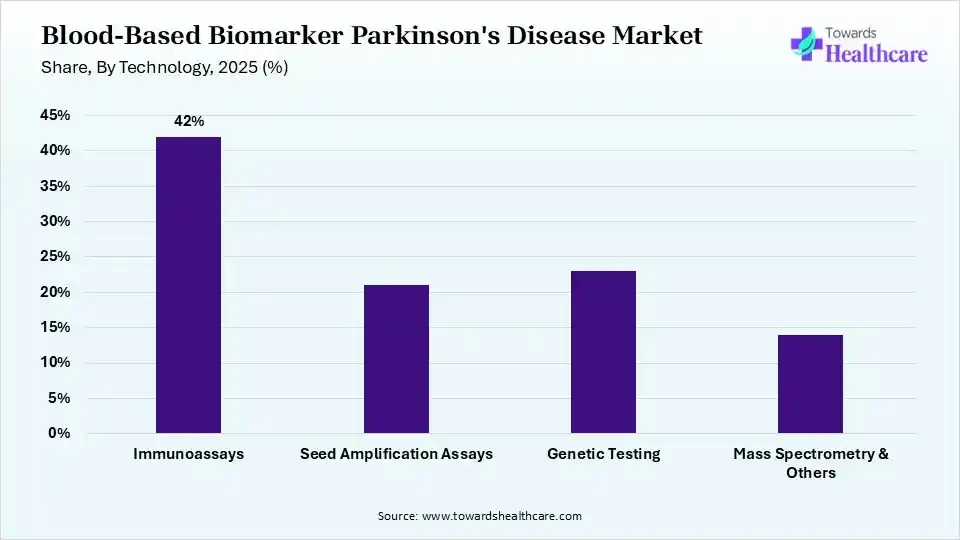
Immunoassays accounted for 42% of the market in 2025 and are projected to expand at a CAGR of 14.87% from 2026 to 2035. Immunoassays are the primary technology for measuring neurological proteins in blood, utilizing ultrasensitive platforms for low-concentration biomarkers such as NfL and alpha-synuclein. Their established workflows and scalability ensure ongoing demand, although growth may slow due to the rising adoption of seed amplification technologies.
Seed Amplification Assays Seed amplification assays are expected to be the fastest-growing technology segment because they can identify the presence of pathological protein seeds associated with synucleinopathies. Increasing research into alpha-synuclein aggregation and assay standardization is supporting development. Their potential use in patient stratification and Clinical trial enrollment is creating additional opportunities. The development of reliable peripheral blood-based applications remains an important area of research and commercialization.
Genetic Testing for variants such as LRRK2 and GBA linked to Parkinson's disease is essential for precision medicine and targeted trials. Anticipated investments in genetically defined therapies and specialized neurological testing are expected to spur growth in this segment.
Mass Spectrometry and Others specialized analytical technologies are essential for protein characterization and biomarker discovery, especially in analyzing complex biological samples. Increased investment in multi-protein biomarker discovery is expected to spur advancements in this segment during the forecast period.
Segment Outlook: Through 2035, immunoassays are expected to remain the largest technology segment, accounting for approximately 38.74% of the market. However, Seed Amplification Assays are projected to register the highest CAGR of 18.27%, supported by growing research into alpha-synuclein pathology and the development of more advanced biomarker detection methods.
Note: 2025 is the base year; 2035 shares and CAGRs are forecasts.
Sources: Expert interviews, secondary sources, Towards Healthcare database, and Towards Healthcare analysts.
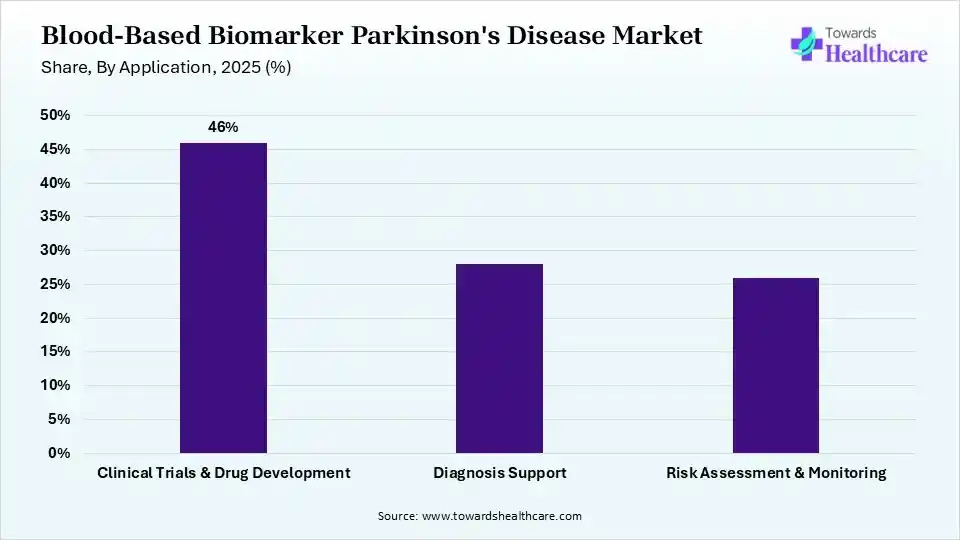
Clinical Trials and Drug Development, accounting for 46% of the market in 2025, is projected to grow at a CAGR of 14.82% from 2026 to 2035. This application leads due to the integration of biomarkers in neurological drug development, aiding in patient stratification and trial population characterization. Increased investment in disease-modifying therapies will boost demand, although growth may lag behind the overall market.
Diagnosis Support This application is expected to be the fastest-growing due to the demand for objective evidence in Parkinson's disease diagnosis. Blood-based biomarkers are poised to aid clinicians in differentiating Parkinson's from other neurological disorders, thereby enhancing diagnostic evaluations. Advances in assay sensitivity and clinical validation are likely to drive adoption in hospitals and specialty neurology clinics.
Risk Assessment and Monitoring Key applications include biomarker testing for genetically susceptible individuals and patients in longitudinal neurological evaluations. Advances in genetic markers, NfL measurements, and multi-analyte panels aid in tracking disease changes. Growing research into prodromal Parkinson's disease and personalized medicine is anticipated to drive market expansion.
Segment Outlook: However, Diagnosis Support is projected to record the highest CAGR of 17.72%, supported by the development of less invasive biomarker tests and increasing demand for objective neurological assessment.
Note: 2025 is the base year; 2035 shares and CAGRs are forecasts.
Sources: Expert interviews, secondary sources, Towards Healthcare database and Towards Healthcare analysts.
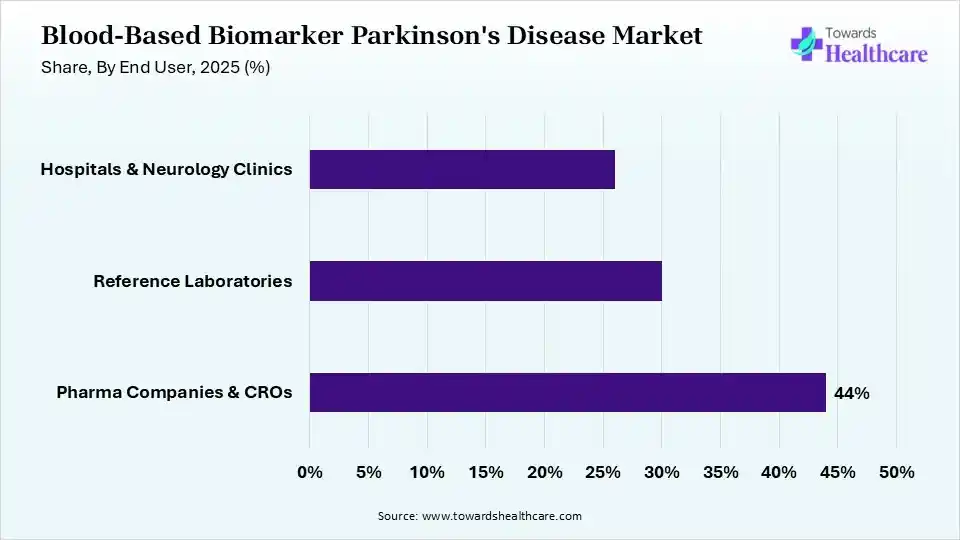
Pharmaceutical companies and CROs accounted for 44% of the market in 2025, with a projected CAGR of 15.02% from 2026 to 2035. They are the largest end-users due to the importance of biomarker testing in clinical trials, requiring specialized services and standardized procedures. The growth is supported by advancements in Parkinson's therapies, though it is expected to be slower than the overall market growth.
Reference Laboratories offer specialized testing for neurological biomarkers, leveraging advanced techniques and centralized testing for multiple healthcare organizations. The rising demand for ultrasensitive protein assays and genetic testing is anticipated to enhance growth in this segment.
Hospitals and Neurology Clinics are expected to rapidly adopt blood-based biomarker tests, spurred by better accessibility and clinical validation. These facilities will utilize biomarker testing for neurological evaluations, differential diagnosis, patient monitoring, and clinical trial referrals, enhancing integration with routine care and driving significant growth during the forecast period.
Segment Outlook: By 2035, Pharma Companies and CROs are expected to remain the largest end-user segment, accounting for around 41.11% of the market. However, Hospitals and Neurology Clinics are projected to register the highest CAGR of 17.42%, supported by the gradual expansion of biomarker testing into clinical neurological practice. Reference Laboratories will remain significant for specialized analytical services and centralized testing capacity.
Analyst View: Based on our analysis, segment shares in the neurology testing market are determined by factors such as testing demand, biomarker portfolios, and user purchasing patterns. Currently, Alpha-Synuclein, Immunoassays, Clinical Trials and Drug Development, and Pharma Companies and CROs dominate their categories due to their alignment with neurological research needs. In contrast, Multi-Analyte and Proteomic Panels and Seed Amplification Assays are predicted to gain market share as clinical adoption of advanced biomarker technologies increases, shifting market demand from research to broader clinical applications through 2035.
Note: 2025 is the base year; 2035 shares and CAGRs are forecasts.
Sources: Expert interviews, secondary sources, Towards Healthcare database, and Towards Healthcare analysts.
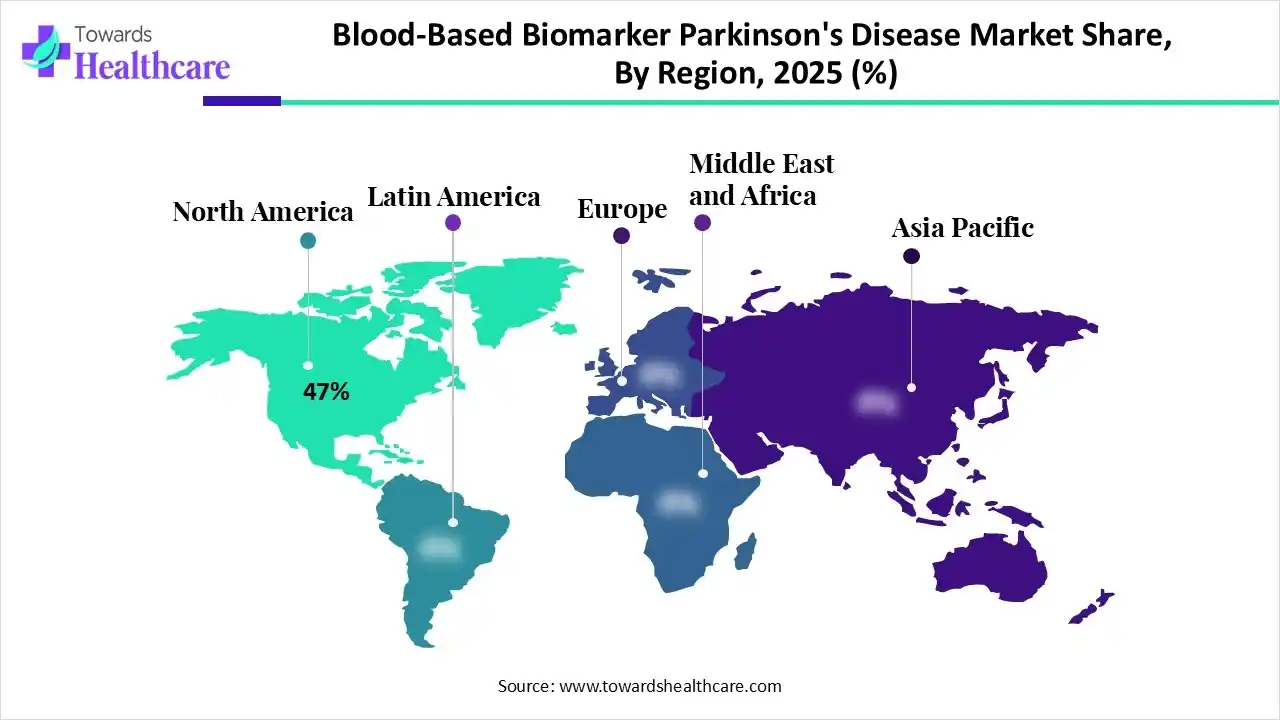
North America led with 47% of the global market in 2025 and is projected to report a CAGR of 15.36% from 2026 to 2035. The region leads due to its strong neurological research, pharmaceutical investments, and clinical trials. The United States is a significant market for advanced neurological biomarker development and specialized laboratory services, supported by key suppliers and research institutions. Increasing investments in Parkinson's therapies are driving demand for biomarker-based patient stratification, although North America's growth is expected to slightly underperform compared to the overall market during the forecast period.
Europe growth is supported by leading neurological research institutions and clinical networks in Germany, the UK, France, Italy, and the Netherlands, which utilize robust research capabilities and healthcare systems. Emphasis is placed on alpha-synuclein pathology, genetic factors, and blood-based biomarkers, propelled by enhanced collaboration and laboratory infrastructure improvements, expected to promote market expansion.
Asia Pacific is set for rapid growth due to aging populations, heightened research on Parkinson's disease, and boosted healthcare investments. China, Japan, and India emerge as key markets, propelled by their vast populations and increasing neurological disease burdens. Japan's robust research infrastructure and China's rising biomedical research funding create opportunities for advanced biomarker testing. Collaborations among hospitals, academic institutions, pharmaceutical companies, and diagnostic suppliers are expected to enhance regional development.
Latin America demand for neurological research is bolstered by increasing healthcare investments and improvements in diagnostic infrastructure, particularly in Brazil and Argentina, which have strong healthcare systems and research growth. However, factors like limited access to testing platforms and affordability issues may hinder adoption in some countries.
Middle East and Africa increased investment in healthcare infrastructure and specialized services. Key markets include GCC countries and South Africa for advanced testing and neurological assessments. However, challenges such as limited access to biomarker platforms and affordability issues may hinder adoption in this region.
Analyst View: In our analysis, regional market shares were developed by evaluating neurological research activity, biomarker testing demand, clinical trial participation, laboratory infrastructure, healthcare spending, and supplier presence across geographical markets. North America maintains its leading position because of its mature research ecosystem, established pharmaceutical industry, and strong reference laboratory networks. Asia Pacific is expected to record the highest growth premium because aging populations, research investment, and healthcare infrastructure are expanding rapidly. Europe will maintain a substantial market position, while Latin America and the Middle East and Africa will benefit from gradual improvements in specialized diagnostic capabilities.
| Rank | Company Name | 2025 Share (%) | Key Products / Business | Headquarters |
| 1 | Quanterix | 9.52% | Simoa NfL and ultra-sensitive neurology assays | United States |
| 2 | Roche Diagnostics | 5.95% | Elecsys neurology biomarkers | Switzerland |
| 3 | Amprion | 4.76% | SYNTap alpha-synuclein seed amplification testing | United States |
| 4 | Fujirebio | 4.17% | Lumipulse neurology assays | Japan |
| 5 | Olink (Thermo Fisher) | 4.17% | Proteomic biomarker panels | United States |
| 6 | Labcorp | 4.17% | Neurology biomarker testing and trial services | United States |
| 7 | Siemens Healthineers | 2.98% | Neurology immunoassays | Germany |
| 8 | Quest Diagnostics | 2.98% | Neurology and genetic testing | United States |
| 9 | Invitae (Labcorp) | 1.79% | Genetic testing for LRRK2 and GBA | United States |
| 10 | Alamar Biosciences | 1.79% | High-sensitivity proteomic assays | United States |
Note: Company shares are 2025 estimates.
Sources: Company press releases, expert interviews, secondary sources, Towards Healthcare database and Towards Healthcare analysts.
Quanterix led the blood-based biomarker Parkinson's disease market with an estimated 9.52% share of 2025 revenue, followed by Roche Diagnostics at 5.95% and Amprion at 4.76%. Quanterix competes through its Simoa ultrasensitive protein detection platform and neurological biomarker applications, while Roche Diagnostics participates through its established diagnostic technology and neurology biomarker portfolio. Amprion is associated with alpha-synuclein seed amplification testing.
Significant market participants include Fujirebio, Olink (Thermo Fisher), Labcorp, Siemens Healthineers, Quest Diagnostics, Invitae (Labcorp), and Alamar Biosciences, involved in neurological assay development, ultrasensitive protein detection, proteomic analysis, genetic testing, specialized laboratory services, and clinical research support.
The competitive landscape includes diagnostic manufacturers, specialized biomarker technology developers, reference laboratories, and proteomic platform providers. Established firms utilize analytical expertise and global networks, while specialized developers prioritize assay sensitivity, biomarker specificity, validation quality, and innovative analytical methods.
The top 10 companies collectively accounted for an estimated 42.28% of 2025 revenue, with the remaining market shared among various entities. Key competitive factors include analytical sensitivity, clinical validation, regulatory status, research partnerships, test turnaround time, and pricing.
The market remains relatively fragmented because several biomarker technologies are still progressing through research and clinical validation. Companies that prove analytical reliability, partner with pharmaceutical firms, and improve access to specialized lab testing are likely to enhance their competitive standing.
Quanterix: Quanterix is headquartered in the United States. It held an estimated 9.52% share of the blood-based biomarker Parkinson's disease market in 2025. Its offering centres on the Simoa platform, ultrasensitive protein detection, and neurological biomarker applications, including NfL measurement. The company benefits from its established expertise in detecting low-abundance proteins and its participation in neurological research. In the Towards Healthcare Companies Quadrant, it is positioned as a Leader.
Roche Diagnostics: Roche Diagnostics, part of F. Hoffmann-La Roche Ltd, is headquartered in Switzerland. It held an estimated 5.95% market share in 2025. Its offering centres on diagnostic platforms and neurology-related biomarker technologies, including Elecsys-based applications. The company benefits from its global diagnostic infrastructure, established laboratory relationships, and broad analytical portfolio. In the Towards Healthcare Companies Quadrant, it is identified as a Leader.
Amprion: Amprion, based in the United States, held approximately 4.76% of the market share in 2025, focusing on alpha-synuclein seed amplification testing and the SYNTap assay. The company is involved in developing biomarker-based strategies for synucleinopathies and neurological disease assessment, and is recognized as a Leader in the Towards Healthcare Companies Quadrant.
Fujirebio: Fujirebio, part of H.U. Group Holdings, Inc., is headquartered in Japan. It captured a 4.17% market share in 2025. Its offering centres on Lumipulse diagnostic platforms and specialized neurological biomarker assays. The company benefits from its established immunoassay capabilities and international diagnostic presence. In the Towards Healthcare Companies Quadrant, it is ranked as a Leader.
Olink (Thermo Fisher): Olink, part of Thermo Fisher Scientific, is headquartered in Sweden, with its parent company based in the United States. In 2025, the company held an estimated 4.17% market share, focusing on high-throughput proteomic analysis and multi-analyte biomarker panels, contributing to neurological biomarker discovery with its protein profiling technologies. In the Towards Healthcare Companies Quadrant, it is categorized as a Leader.
Labcorp: Labcorp, headquartered in the United States, captured a 4.17% market share in 2025, with a focus on specialized laboratory testing, neurological biomarker services, and clinical trial support. The company leverages its extensive laboratory network and partnerships with pharmaceutical and biotechnology firms, positioning it as a Leader in the Towards Healthcare Companies Quadrant.
Siemens Healthineers: Siemens Healthineers is based in Germany. It held an estimated 2.98% share of the market in 2025. Its offerings include diagnostic immunoassay technologies and laboratory platforms for neurological biomarker testing, supported by a broad diagnostic portfolio, established healthcare relationships, and global distribution capabilities. In the Towards Healthcare Companies Quadrant, it is placed as an Innovator.
Quest Diagnostics: Quest Diagnostics is headquartered in the United States. It held an estimated 2.98% share of the market in 2025. Its offerings include specialized diagnostic laboratory services and genetic testing. The company leverages a vast laboratory network to provide testing services across various healthcare markets and is positioned as an Innovator in the Towards Healthcare Companies Quadrant.
Invitae (Labcorp): Invitae, now part of Labcorp and based in the United States, accounted for 1.79% market share in 2025. It specializes in genetic testing, particularly for variants linked to neurological conditions, relevant for genetic stratification in Parkinson's disease research. In the Towards Healthcare Companies Quadrant, it is positioned as an Innovator.
Alamar Biosciences: Alamar Biosciences, headquartered in the United States, held a 1.79% market share in 2025. The company specializes in high-sensitivity proteomic analysis aimed at detecting low-abundance proteins, facilitating biomarker discovery and multi-analyte neurological testing. It is recognized as an Innovator in the Towards Healthcare Companies Quadrant.
The blood-based biomarker Parkinson's disease ecosystem links biomarker discovery, platform & assay makers, testing labs, users, and regulators, with each stage adding value before products reach end users.
| Ecosystem Stage | Role in the Market | Key Companies |
| Biomarker Discovery | Find and validate markers | Academic centres, MJFF, PPMI |
| Platform & Assay Makers | Build assays and instruments | Quanterix, Roche, Fujirebio, Amprion |
| Testing Labs | Run tests | Labcorp, Quest, specialty labs |
| Users | Use results | Pharma, CROs, neurologists |
| Regulators | Clear tests and qualify biomarkers | FDA, EMA, C-Path |
Sources: Company press releases, expert interviews, secondary sources, Towards Healthcare database and Towards Healthcare analysts.
Biomarker Discovery: Biomarker discovery organizations aim to identify biological pathways and validate biomarkers associated with Parkinson's disease, supported by academic institutions, neurological research centers, the Michael J. Fox Foundation, and the Parkinson's Progression Markers Initiative.
Platform & Assay Makers: Platform and assay manufacturers such as Quanterix, Roche Diagnostics, Fujirebio, and Amprion are dedicated to developing analytical instruments and testing methods for neurological biomarkers, emphasizing assay development, analytical sensitivity, and technology integration.
Testing Labs: Specialized reference laboratories, including Labcorp and Quest Diagnostics, conduct biomarker analysis for clinical research, pharmaceutical companies, and healthcare institutions, providing critical testing infrastructure, quality control, and clinical trial services.
Users: Biomarker testing is utilized by pharmaceutical companies, CROs, hospitals, and neurology clinics for clinical research, patient stratification, diagnostic evaluation, and disease monitoring, with pharmaceutical companies and CROs being key demand sources in neurological drug development.
Regulators: Regulatory bodies, including the FDA, EMA, and Critical Path Institute, set standards for the analytical performance and clinical evidence of biomarkers used in research and healthcare, particularly in the context of neurological biomarker development.
The value chain in the global blood-based biomarker Parkinson's disease market begins with biological research and biomarker discovery, followed by assay development, analytical platform manufacturing, laboratory testing, and interpretation of results by clinical and research organizations. Pharmaceutical companies and CROs create substantial demand through clinical trial programs, while hospitals and neurology clinics represent an important opportunity for future clinical adoption.
Companies that integrate advanced analytical platforms, validated assays, laboratory services, and established research partnerships are better positioned to capture value across the ecosystem.
The Towards Healthcare Companies Quadrant positions key participants in the blood-based biomarker Parkinson's disease market by market strength, reflecting revenue scale, market share, and geographic reach, and by innovation and growth strategy, reflecting product portfolio breadth, R&D intensity, and partnerships. Positions reflect each company's estimated 2025 share of the blood-based biomarker Parkinson's disease market and our assessment of its product innovation, portfolio breadth, and partnerships.
Sources: Company press releases, expert interviews, secondary sources, Towards Healthcare database and Towards Healthcare analysts.
Leaders: Quanterix, Roche Diagnostics, Amprion, Fujirebio, Olink (Thermo Fisher), and Labcorp combine high market share with broad portfolios and strong innovation.
Innovators: Siemens Healthineers, Quest Diagnostics, Invitae (Labcorp), and Alamar Biosciences bring newer technologies and specialised products.
By Biomarker
By Technology
By Application
By End User
By Region
The global blood-based biomarker Parkinson’s disease market is estimated through a bottom-up assessment of qualifying blood-based biomarker testing volumes, average test prices, assay-kit revenues, and associated laboratory services across clinical research, clinical-trial, and emerging clinical applications. The market scope distinguishes protein biomarkers, including alpha-synuclein and neurofilament light chain (NfL), from genetic markers such as LRRK2 and GBA variants, while separately identifying multi-analyte panels and their constituent biomarkers.
The analysis evaluates assay type, specimen eligibility, analytical platform, commercial availability, intended use and clinical validation status. Blood-based tests are distinguished from CSF-based and tissue-based assays, and research-use-only products are separated from tests used in clinical diagnostic settings. Company revenues are allocated only where attributable to qualifying Parkinson’s-related blood biomarker activities. Broader neurological testing, general-purpose proteomic platforms and non-Parkinson’s applications are excluded unless an identifiable revenue contribution can be established.
Regional estimates consider clinical-trial activity, neurological research investment, laboratory capacity, testing access, healthcare infrastructure and supplier presence. Forecasts through 2035 incorporate expected changes in testing volumes, assay adoption, clinical validation, average test prices and the transition from research applications toward selected clinical uses. A top-down assessment is used to cross-check the bottom-up estimates, with adjustments for overlapping assay categories, bundled services, and parent-subsidiary revenue to prevent double counting.
Analyst View: The blood-based biomarker Parkinson's disease market is set for significant growth due to advancements in neurological research and a rising demand for objective disease assessments. While traditional assessments are vital, blood-based biomarkers are gaining attention for their potential to provide additional biological insights via less invasive methods. Key technological advancements include ultrasensitive protein detection and proteomic analysis. North America is expected to lead the market, while Asia Pacific will experience the fastest growth, driven by increased investment and healthcare infrastructure. Growth opportunities lie in multi-analyte proteomic panels and diagnostics support applications. However, barriers such as clinical validation and regulatory uncertainty must be addressed for commercial success. Overall, continued investment in neurological biomarker research is anticipated to drive market expansion through 2035.