Pipeline Programs

CGT Companies Tracked

Manufacturing Facilities


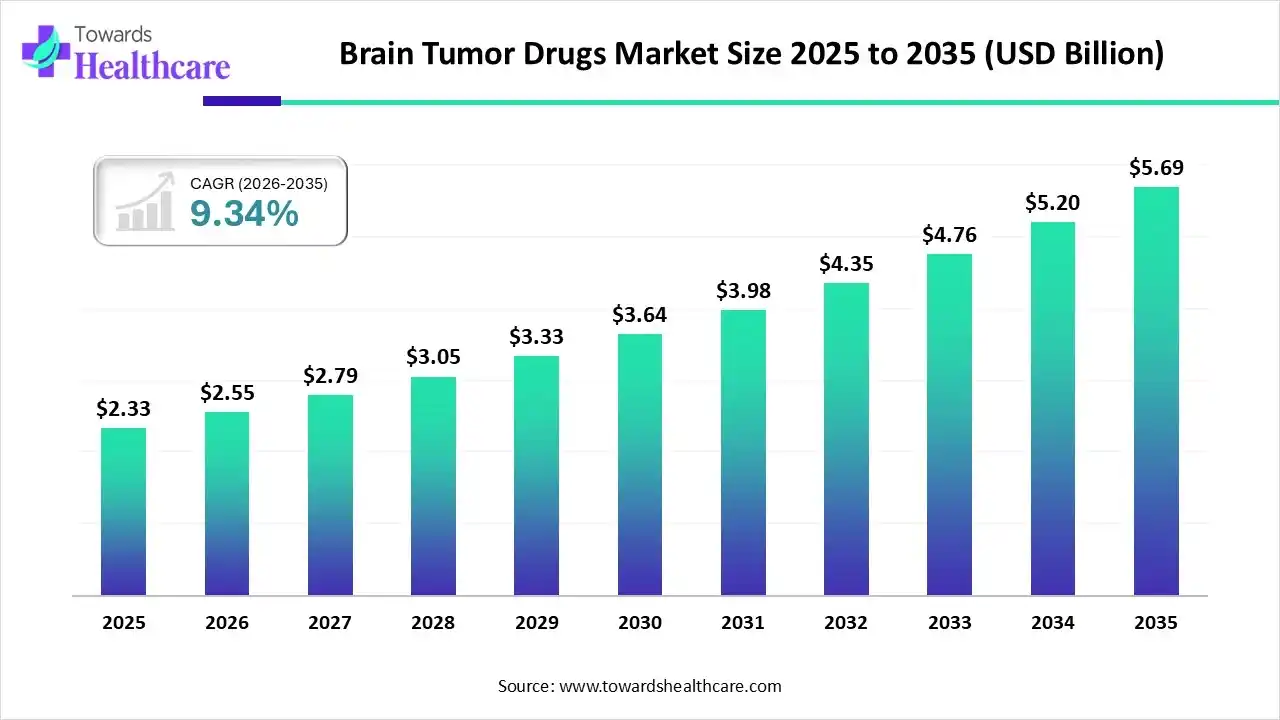
The global brain tumor drugs market size was estimated at USD 2.33 billion in 2025 and is predicted to increase from USD 2.55 billion in 2026 to approximately USD 5.69 billion by 2035, expanding at a CAGR of 9.34% from 2026 to 2035.
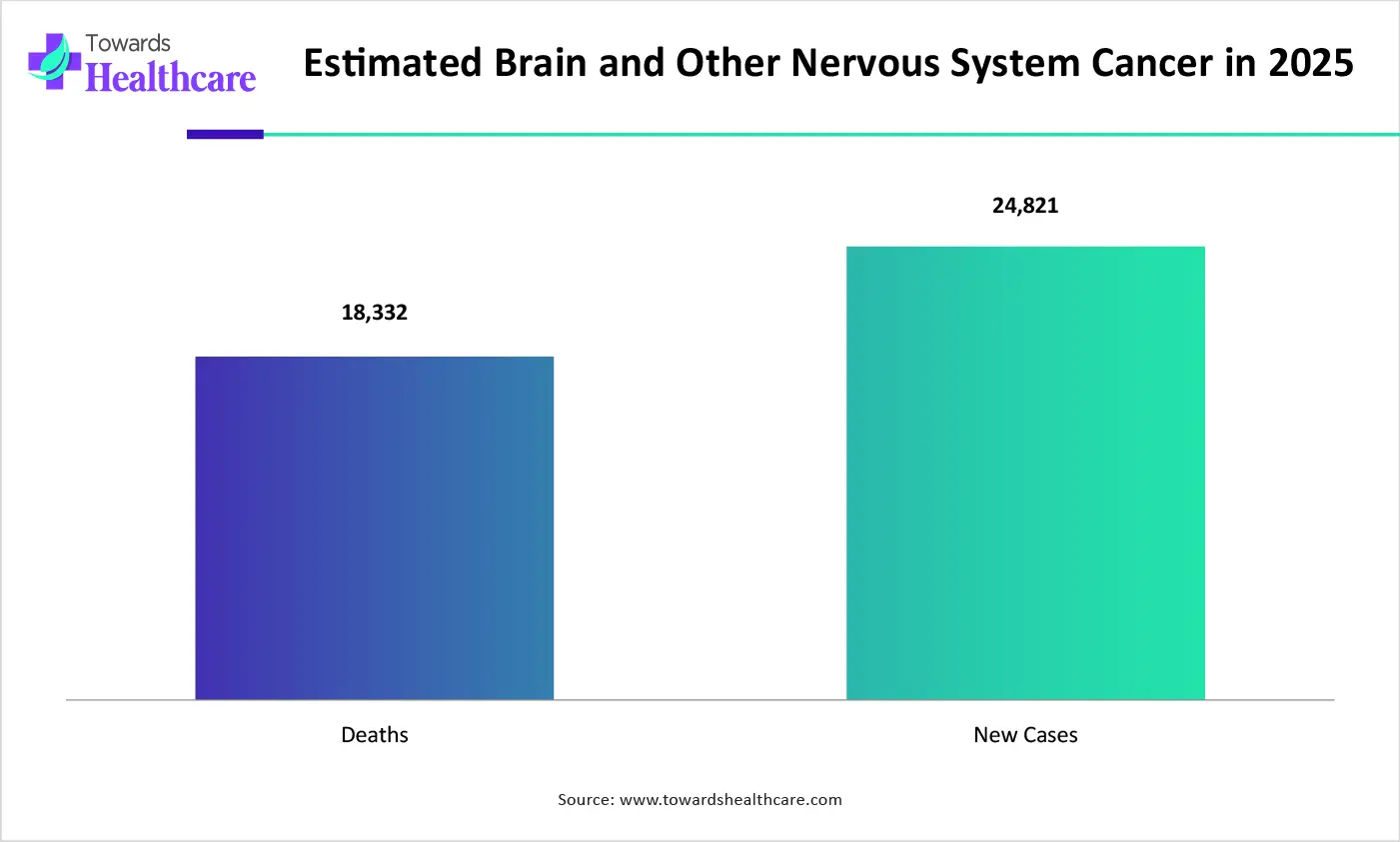
The growing brain tumor burden globally is increasing the demand for effective drugs, which is driving their production rates. AI technologies are also accelerating their development, where the companies are also launching new products, promoting market growth.
The brain tumor drugs market is driven by increasing brain cancer cases and growing demand for targeted therapies and immunotherapies. The brain tumor drugs encompass the treatment options that are used to manage and treat brain tumors. These drugs help in shrinking and controlling the abnormal growth of the brain cells by target-specific action, reducing the damage to healthy brain tissues.
Ongoing studies involving precision medicine and personalized therapy are producing positive change within the marketplace by way of unique delivery systems that can penetrate the blood/brain barrier. This continues to be accomplished through the use of traditional chemotherapeutics; however, more and more targeted therapies and immunotherapeutic are being utilized to enhance patient outcome and survival. With the increasing use of biomarker-based diagnostic testing, customized treatment procedures are being developed for different types of brain tumors, such as glioblastomas, astrocytomas, meningiomas, and brain metastases.
In addition, the market will likely continue to expand because of increased patient expenditures on healthcare services, increased clinical trial activity, a favorable regulatory environment for orphan and oncology drug development, and new combination therapies on the market. Pharmaceutical and biotechnology companies are also investing heavily in innovative drug development to meet an unmet clinical need and to develop ways to overcome treatment resistance.
AI plays an important role in the market, where it helps in accelerating the brain tumor drug discovery and development. It is also used in the development of personalized medication and treatment planning. Moreover, it is also used to enhance the drug penetration property and develop drug delivery systems, where its predictive analytics help in detecting the treatment response and disease progression as well.
Blooming Precision Medicine
The companies are focusing on the development of biomarker-based targeted therapies and personalized therapies to target the specific tumors, which is creating opportunities for new innovations.
Growing Regulatory Support
The growing innovations are being supported by the regulatory agencies, where they are offering the brain tumor drugs fast-track approval and orphan drug designations, accelerating their clinical trials and encouraging their advancements.
Increasing Interest in Drug Delivery Solutions
In order to enhance the penetration property of the brain tumor drugs, different types of drug delivery systems are being developed, where companies are focusing on developing suitable nanocarriers and convection-enhanced delivery systems.
| Key Elements | Scope |
| Market Size in 2026 | USD 2.55 Billion |
| Projected Market Size in 2035 | USD 5.69 Million |
| CAGR (2026 - 2035) | 9.34% |
| Leading Region | North America by 45% |
| Key Applications | Glioblastoma treatment, CNS tumor management, targeted therapy, chemotherapy, immunotherapy, personalized oncology treatment, recurrence management |
| Primary End Users | Hospitals, oncology centers, cancer research institutes, specialty clinics, pharmaceutical companies, academic research organizations |
| Key Growth Drivers | Rising incidence of brain tumors, increasing oncology R&D investments, advances in precision medicine, molecular diagnostics, immunotherapy development, improved clinical trial activity |
| Measurable Values | USD Millions/Units/Volume |
| Market Segmentation | By Therapy, By Indication, By Distribution Channel, By Region |
| Top Key Players | Merck & Co., F. Hoffmann-La Roche, Avastin, Novartis AG, Pfizer Inc., Bayer AG, Eisai Co., Ltd., Arbor Pharmaceutical |
| Segments | Shares % |
| Targeted Therapy | 20% |
| Chemotherapy | 45% |
| Immunotherapy | 25% |
| Others | 10% |
Why Did the Chemotherapy Segment Dominate in the Brain Tumor Drugs Market in 2025?
The chemotherapy segment held the largest share in the market by 45% in 2025, due to its enhanced success rates. This, in turn, increased their acceptance rates, where they were used in treating various aggressive tumors. Moreover, their availability also increased their use in the treatment of brain tumors.
Immunotherapy
The immunotherapy segment is expected to show the highest growth during the predicted time, due to their target specific action. At the same time, the growing R&D activities supported by investment and funding are also increasing their innovations. Additionally, personalized therapies are also being developed.
| Segments | Shares % |
| Pituitary | 10% |
| Meningioma | 15% |
| Glioma | 50% |
| Others | 25% |
How Glioma Segment Dominated the Brain Tumor Drugs Market in 2025?
The glioma segment dominated the market share of 50% in 2025, due to its aggressive growth and increased incidence. This increased the demand for brain tumor drugs to tackle their growth. Furthermore, the growth in the treatment options also increased the use of various glioma treatment options.
Meningioma
The meningioma segment is expected to show lucrative growth during the predicted time, due to growing awareness. Additionally, the growing incidence and R&D activities are also increasing the innovations of various meningioma-targeting drugs. The growing government support is also promoting these advertisements.
| Segments | Shares % |
| Hospital Pharmacy | 55% |
| Retail & Online Pharmacy | 35% |
| Others | 10% |
Which Distribution Channel Type Segment Held the Dominating Share of the Brain Tumor Drugs Market in 2025?
The hospital pharmacy segment held the dominating share in the market by 55% in 2025, driven by specialized handling and advanced infrastructure. They also offered enhanced storage and administrative services. Furthermore, inpatient and continuous supervision also increased the reliance of patients on them, where their affordable services also attracted them.
Retail & Online Pharmacy
The retail and online pharmacies segment is expected to show the highest growth during the upcoming years, due to expanding e-commerce platforms. They are enhancing the accessibility and affordability of brain tumour drugs and enhancing patient convenience. Additionally, increasing smartphone penetration is also increasing their use.
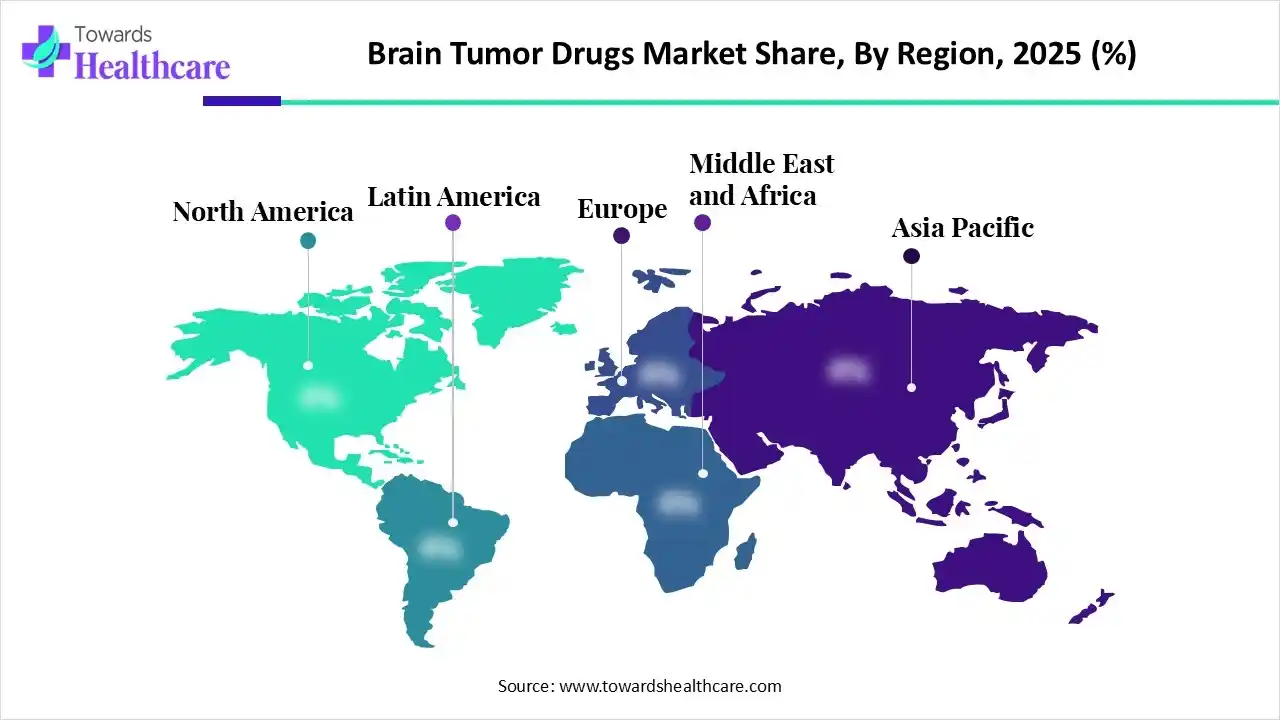
North America dominated the brain tumor drugs market by 45% share in 2025, due to the presence of the advanced healthcare sector. This increased the use of various brain tumor drugs for the treatment of growing brain cancers. The growth in the R&D activities, which are backed by healthcare investments, also increased their innovations. Additionally, the regulatory support also encouraged their advancements, which contributed to the market growth.
U.S. Market Trends
The U.S. is experiencing a rise in brain tumor rates, which is increasing the use of different types of treatment options. The presence of advanced healthcare and growth in healthcare investment are also encouraging the adoption of new brain tumour drugs. The companies are also developing advanced therapies.
Canada Market Trends
Canada is seeing a steady increase in the market for drugs used to treat brain tumors thanks largely to the continuing number of cases diagnosed each year. In addition, other factors driving this increase are the robust healthcare infrastructure, increasing levels of research into the causes of cancer and the development of treatments for the disease. There are also larger numbers of patients seeking new and innovative methods for treating their condition, such as targeted therapies and immunotherapies, (as well as more traditional means).
Mexico Market Trends
In Mexico, the healthcare access to cancer treatments is rapidly growing in addition to the awareness of brain tumors and their treatment options, this also plays a role in the marketplace's continued growth as there are more patients being diagnosed with brain tumors than ever before. More and more cancer treatment facilities are opening across Mexico and innovative drugs to treat brain tumors are more accessible than ever before.
Asia Pacific is expected to host the fastest-growing brain tumor drugs market by 17% share in 2025 during the forecast period, due to expanding healthcare. This is increasing the adoption of various brain tumor drugs, where the growing awareness and large population are increasing their early diagnosis and incidence rates, driving their demand. Additionally, the affordable production is also increasing their adoption rates, enhancing the market growth.
China Market Trends
Due to the presence of a large population, the incidence of brain tumors is increasing in China. This, in turn, is increasing the demand for effective brain tumor drugs, promoting their innovations. The growing healthcare investments and government initiatives are also increasing their adoption rates.
India Market Trends
India has a very large and growing population. The number of people suffering from cancer, including brain tumors, is increasing. The continued investment into the country's healthcare facilities is contributing to this growing number of patients. Targeted therapy products, specialty cancer treatment facilities, and pharmaceutical companies investing into the country are major contributors to the growth of the market for brain tumor drugs in India.
Japan Market Trends
Japan has a very advanced healthcare system, an aging population, and a very strong research community focused on oncology. Precision medicine, innovative medications, and improved patient outcomes are the driving forces behind continued growth in the market for brain tumor drug therapies in Japan.
Europe is expected to grow significantly in the brain tumor drugs market share of 30% during the forecast period, due to growing R&D activities. At the same time, the presence of robust healthcare systems is increasing the accessibility of the brain tumor drugs, where the reimbursement policies are also increasing their acceptance rates. Moreover, the growing awareness and development of advanced therapies are also promoting the market growth.
UK Market Trends
The UK consists of a well-developed healthcare system, which is increasing the adoption of various brain tumor drugs. The industries are also developing various targeted and combination therapies, where the growing funding and investment from various sources are accelerating their innovations.
Germany Market Trends
Germany is an established front-runner in the European market for brain tumor medicines thanks to its robust healthcare delivery system, significant oncology research, and a culture of using more innovative therapies for cancer. The brain tumor drugs market has continued on its growth path as a result of growing use of targeted agents, as well as strides taken toward a personalized medicine approach within oncology.
Netherlands Market Trends
Growth in the brain tumor drug market in the Netherlands remains on an upward trajectory due to a healthy supply of cancer care services, increased clinical-research activity, and high overall access levels to the healthcare system. A growing interest in obtaining more effective as well as personalized treatment options has been an important factor contributing to overall market growth.
The South American brain tumor drug market is expanding due to rising cancer rates, improved diagnostic tools like MRIs and CT scans, and a focus on personalized medicine. This growth is driven by increased healthcare investments, more clinical trials, and the emergence of targeted therapies. Countries like Brazil, Argentina, and Mexico are attracting both government and private healthcare investments, while better infrastructure enhances access to advanced treatments. The region faces a growing number of brain tumors, with improved diagnostics leading to higher detection rates and increased patient demand. There is a strong need for targeted therapies and personalized medicine in Latin American oncology, alongside a demand for affordable treatments and generics to improve access to healthcare.
Brazil Market Trends
Brazil is a leading player in the Market in Latin America and a significant global participant, driven by high disease rates, strong government support, rapid adoption of advanced therapies, and a robust public-private drug production framework. Brazil's public healthcare system (SUS) is the world's largest, providing universal free healthcare, which creates consistent demand for cancer treatments supported by expanding public and private insurance coverage. The country is shifting from importing to producing complex therapies, including biosimilars for immunotherapy, with local production enhanced by technology transfers, reducing costs and improving access to innovative treatments. Brazil is also a hub for cancer research and clinical trials, with major cities like São Paulo and Rio de Janeiro attracting foreign investment as biotech centers.
Argentina Market Trends
The Argentinian brain tumor drugs market is growing steadily due to an increase in accessibility to cancer treatment across the country, more frequent diagnoses, and expansion of services within the healthcare sector as a whole. Continued growth in the availability of targeted therapies, plus government programs designed to enhance performance of institutions providing different types of oncology treatment contribute to further market growth.
The Brain Tumor Drugs Market in the Middle East and Africa (MEA) is growing share of 3% due to increasing disease rates, substantial healthcare investments, and improved diagnostic tools. Gulf Cooperation Council (GCC) countries, such as Saudi Arabia and the UAE, are heavily investing in specialized cancer and neurology centers, enhancing access to advanced treatments. Advanced imaging techniques like MRI, PET-CT, and molecular diagnostics have improved early detection, boosting demand for targeted therapies, including personalized treatment plans for glioblastoma.
UAE Market Trends
The UAE is a significant player in the Market, driven by high healthcare spending, rapid adoption of targeted therapies, and government initiatives to establish the country as a global oncology research hub. High cancer prevalence, the third leading cause of death in the UAE, along with an aging population, has increased the demand for advanced treatment options, particularly targeted therapies and precision medicine. The UAE's reputation for quality healthcare attracts international patients, further increasing the need for advanced brain tumor treatments. Additionally, the use of AI in drug discovery and imaging enhances diagnostic and treatment effectiveness.
Saudi Arabia Market Trends
The Saudi Arabia brain tumor drugs market continues to expand due to increased investment into oncology care, the development of healthcare infrastructure, and increased public awareness around neurological cancers. Governmental programs to modernise healthcare services, increased access to targeted therapies, and modern cancer treatments are aiding this market's growth.
South Africa Market Trends
Slow increase in South Africa's brain tumor drugs market is due to growing cancer diagnosis rates, increased access to oncology services, and increasing public awareness of cancer. Increased demand for effective treatment options, and efforts to strengthen the country's cancer care infrastructure are all contributing to market growth.
| Category | Market Participants & Explanation |
| Technology Providers | Biotechnology companies developing targeted molecules, immunotherapies, CAR-T therapies, antibody platforms, and CNS drug delivery technologies |
| Product Manufacturers | Pharmaceutical companies manufacturing approved brain tumor therapies such as chemotherapy agents, targeted drugs, and supportive oncology medicines |
| Service Providers | Oncology-focused healthcare providers, specialty hospitals, diagnostic centers, and clinical trial organizations supporting treatment delivery |
| Platform Providers | Precision oncology platforms, molecular profiling companies, AI-driven drug discovery platforms, and biomarker discovery providers |
| CROs/CDMOs | Organizations supporting oncology clinical trials, drug development, formulation, and manufacturing services |
| Software Vendors | AI drug discovery, clinical trial management, genomic analysis, and oncology data platforms |
| Research Institutions | Cancer research centers and universities conducting CNS oncology studies and clinical trials |
| End-User Industries | Pharmaceutical, biotechnology, healthcare, diagnostics, and research sectors |
R&D
Clinical Trials and Regulatory Approvals
Formulation and Final Dosage Preparation
Packaging and Serialization
Distribution to Hospitals, Pharmacies
Patient Support and Services
| Tier 1 | Tier 2 | Tier 3 | |
| Typical Market Influence | 65% | 25% | 10% |
| Tier 1 | ||||
| Company Name | Headquarters | Country | Why Relevant to This Market | Key Products/Services |
| Roche | Basel, Switzerland | Switzerland | One of the world's largest oncology companies with strong CNS cancer research and targeted therapy capabilities | Oncology portfolio including Avastin (bevacizumab), diagnostics, precision oncology solutions |
| Merck & Co. | Rahway, New Jersey, USA | United States | Major immuno-oncology leader with checkpoint inhibitor technologies relevant to brain tumor research | Keytruda (pembrolizumab), oncology clinical development programs |
| Bristol Myers Squibb | Princeton, New Jersey, USA | United States | Strong presence in immuno-oncology and CNS cancer clinical research | Opdivo (nivolumab), Yervoy (ipilimumab), oncology pipeline |
| Tier 2 | ||||
| Company Name | Headquarters | Country | Why Relevant to This Market | Key Products/Services |
| AstraZeneca | Cambridge, England, UK | United Kingdom | Strong oncology portfolio and CNS cancer research partnerships | Targeted oncology medicines, immunotherapy pipeline |
| Eli Lilly and Company | Indianapolis, Indiana, USA | United States | Oncology-focused pharmaceutical company with targeted treatment capabilities | Cancer therapeutics and clinical development programs |
| Servier | Suresnes, France | France | Specialized oncology company involved in glioma research and CNS tumors | Vorasidenib (IDH-mutant glioma therapy), oncology pipeline |
| Tier 3 | ||||
| Company Name | Headquarters | Country | Why Relevant to This Market | Key Products/Services |
| Kazia Therapeutics | Sydney, Australia | Australia | Specialized oncology biotechnology company focused on brain cancer therapies | Paxalisib (PI3K/mTOR inhibitor) for glioblastoma research |
| Immunocure | United States | United States | Emerging biotechnology participant developing immunotherapy approaches | Cancer immunotherapy research programs |
| Denovo Biopharma | San Diego, California, USA | United States | Develops precision oncology therapies using biomarker-based approaches | Targeted cancer therapeutics |
Strengths
Weaknesses
Opportunities
Threats
By Therapy
By Indication
By Distribution Channel
By Region





Principal Consultant
Payal Rabde is a Healthcare Market Research Analyst at Towards Healthcare Research & Consulting with 4+ years of experience in pharmaceuticals, biotechnology, medical devices, and life sciences.
Learn more about Payal Rabde

Reviewed By
Aditi Shivarkar is a seasoned professional with over 14 years of experience in healthcare market research. As a content reviewer, Aditi ensures the quality and accuracy of all market insights and data presented by the research team.
Learn more about Aditi Shivarkar