Pipeline Programs

CGT Companies Tracked

Manufacturing Facilities


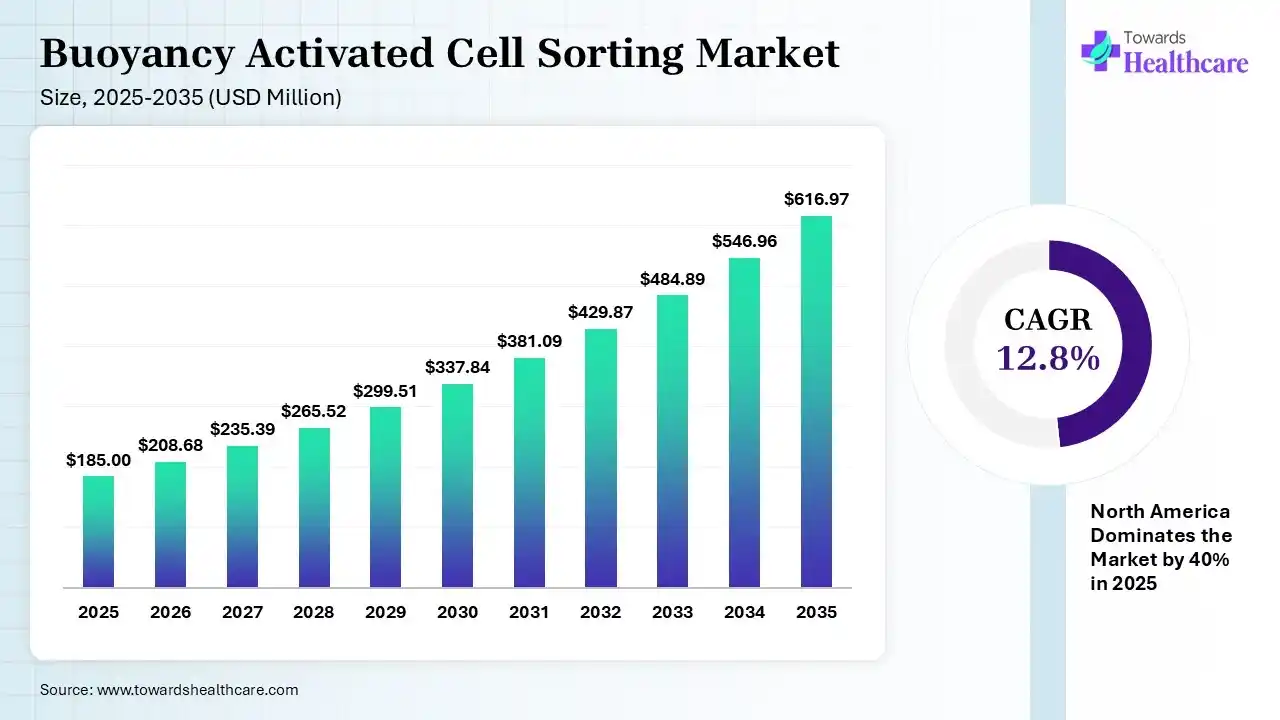
The global buoyancy activated cell sorting (BACS) market size was estimated at USD 185 million in 2025 and is predicted to increase from USD 208.68 million in 2026 to approximately USD 616.97 million by 2035, expanding at a CAGR of 12.8% from 2026 to 2035. The market is growing due to increasing demand for precise, label-free cell separation in biopharmaceutical research and advanced diagnostics. Growth is further supported by innovations in microfluidics and automation, though high costs and technical complexity may limit widespread adoption.
Buoyancy activated cell sorting (BACS) is a cell separation technique that isolates cells based on differences in their density or buoyant properties within a fluid medium. It enables label-free sorting by allowing cells with distinct buoyancies to migrate and be collected separately. The buoyancy activated cell sorting (BACS) market is growing due to increasing demand for gentle, label-free cell separation in biopharmaceutical research and regenerative medicine. Its ability to preserve cell viability and reduce processing complexity makes it attractive for advanced applications.
AI can significantly enhance the market by improving the accuracy, speed, and reproducibility of cell separation processes. Machine learning algorithms can analyze complex cell characteristics, optimize sorting parameters, and enable real-time monitoring. AI-driven automation reduces manual intervention and errors, while predictive analytics supports better experimental outcomes, accelerating adoption in drug discovery, precision medicine, and advanced biological research.
| Table | Scope |
| Market Size in 2026 | USD 208.68 Billion |
| Projected Market Size in 2035 | USD 616.97 Billion |
| CAGR (2026 - 2035) | 12.8% |
| Leading Region | North America by 40% |
| Historical Data | 2020 - 2023 |
| Base Year | 2025 |
| Forecast Period | 2026 - 2035 |
| Measurable Values | USD Millions/Units/Volume |
| Market Segmentation | By Product Type, By Technology, By Application, By End User, By Region |
| Top Key Players | Terumo Corporation, STEMCELL Technologies Inc., Bio-Rad Laboratories, Inc., Merck KGaA, GE HealthCare, Miltenyi Biotec |
| Segment | Share 2025 (%) |
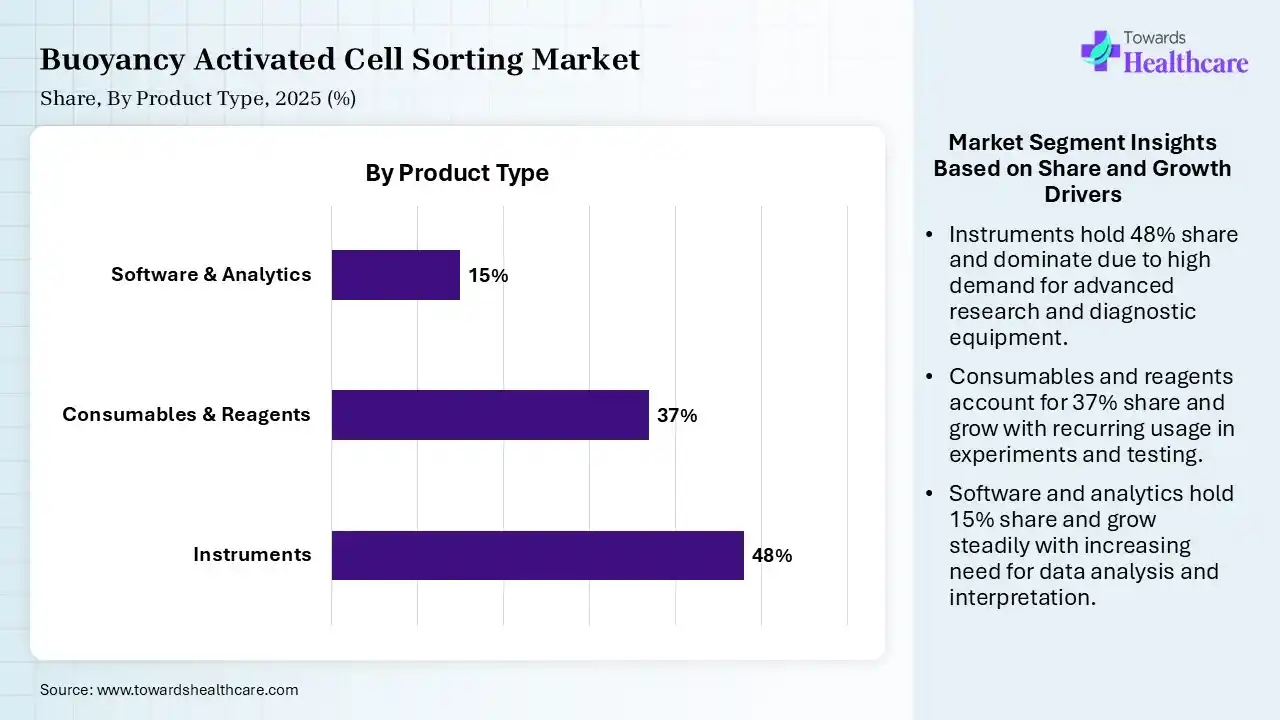
| Instruments | 48% |
| Consumables & Reagents | 37% |
| Software & Analytics | 15% |
The Instruments Segment Dominated the Market in 2025
The instruments segment dominated the buoyancy activated cell sorting (BACS) market with a revenue share of 48% in 2025 due to the essential role of specialized sorting systems and microfluidic devices in performing accurate cell separation. These instruments involve high upfront costs, advanced technology, and continuous upgrades, driving higher revenue contribution.
The consumables & reagents segment held the second-largest share of 37% in 2025 and is expected to grow at the fastest CAGR in the market during the forecast period due to their recurring use in every sorting process. Continuous demand for buffers, media, and sample preparation materials ensures steady revenue generation.
The software & analytics segment held 15% of the non-antibody fusion proteins buoyancy activated cell sorting (BACS) market share in 2025 due to increasing demand for data-driven insights and process optimization. Advanced software enables real-time monitoring, precise control of sorting parameters, and efficient data management. Integration with AI and machine learning further enhances accuracy and automation, while the rising adoption of digital lab solutions and high-throughput research workflows continues to drive segment growth
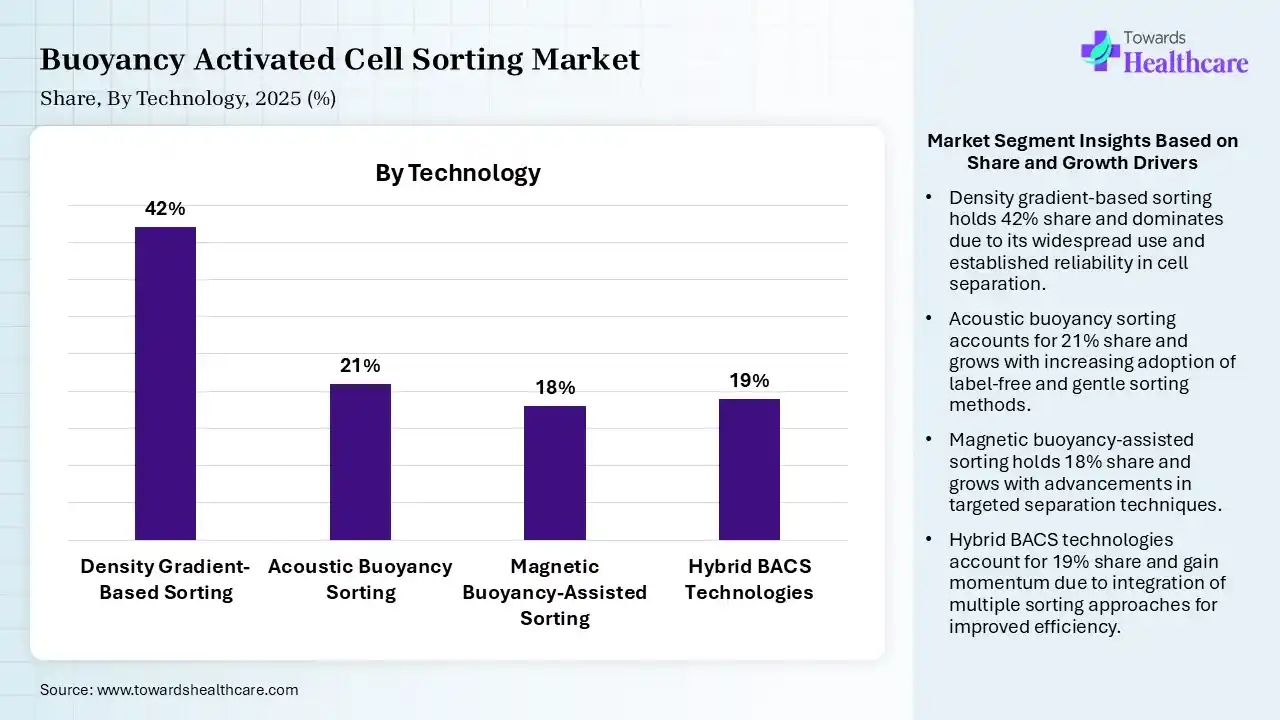
| Segment | Share 2025 (%) |
| Density Gradient-Based Sorting | 42% |
| Acoustic Buoyancy Sorting | 21% |
| Magnetic Buoyancy-Assisted Sorting | 18% |
| Hybrid BACS Technologies | 19% |
The Density Gradient-Based Sorting Segment Led the Market in 2025 with the Largest Share
The density gradient-based sorting segment held a dominant position in the buoyancy activated cell sorting (BACS) market with a share of 42% in 2025 due to its reliability, simplicity, and cost-effectiveness in separating cells based on density differences. It is widely adopted in research and clinical laboratories for its ability to maintain cell viability without complex instrumentation.
The acoustic buoyancy sorting segment held the second-largest share of 21% in 2025 and is expected to grow at the fastest CAGR in the market during the forecast period due to its ability to provide gentle. Label-free and highly precise cell separation using sound waves. It preserves cell viability and functionality, making it ideal for sensitive applications like stem cell and immunotherapy research.
The hybrid BACS technologies segment held 19% of the buoyancy activated cell sorting (BACS) market share in 2025, as it combines multiple sorting principles, such as density, acoustic, and magnetic methods, to achieve accuracy and flexibility. These systems can handle complex samples more efficiently while improving cell recovery and purity. Growing demand for multifunctional, high-throughput solutions in advanced research and cell therapy development, along with continuous technological innovation, is accelerating the adoption of hybris BACS platforms.
The magnetic buoyancy-assisted sorting segment held 18% of the market share in 2025 due to its ability to combine density-based separation with magnetic control for higher precision and selectivity. It enables faster processing and improved recovery for targeted cells, especially in improved samples. Increasing use in clinical research and cell therapy development, along with compatibility with automated systems and microfluidic platforms, is driving its adoption and overall market growth.
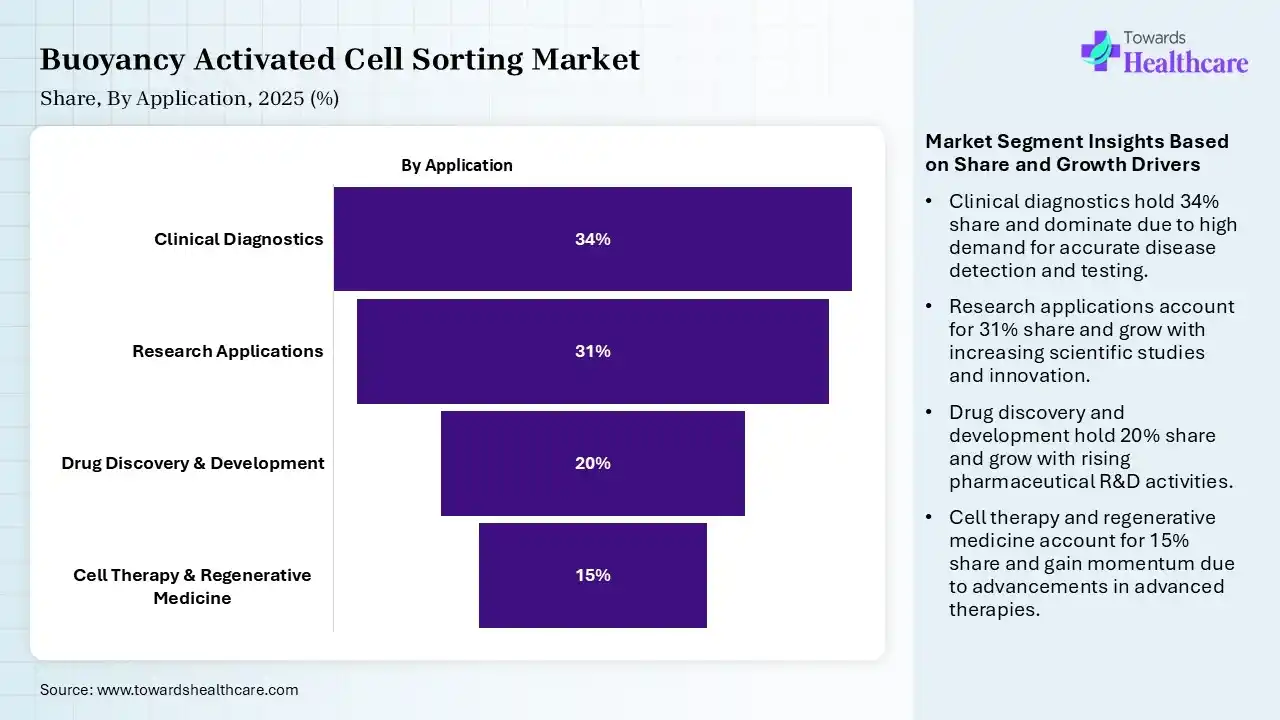
| Segment | Share 2025 (%) |
| Clinical Diagnostics | 34% |
| Research Applications | 31% |
| Drug Discovery & Development | 20% |
| Cell Therapy & Regenerative Medicine | 15% |
The Clinical Diagnostics Segment Led the Market in 2025 with the Largest Share
The clinical diagnostics segment led the buoyancy activated cell sorting (BACS) market with a share of 34% in 2025 due to growing demand for accurate, rapid, and minimally invasive diagnostic techniques. BACS enables efficient separation of specific coil populations, supporting early disease detection and monitoring.
The research application segment held the second-largest share of 31% in 2025 due to extensive use in academic and biopharmaceutical studies for cell analysis, isolation, and experimental workflows. Increasing focus on drug discovery, stem cell research, and disease modelling has driven demand for a precise, label-free sorting technique. Additionally, rising research funding and expanding laboratory activities worldwide continue to strengthen this segment’s leading position.
The drug discovery & development segment held 20% of the buoyancy activated cell sorting (BACS) market share in 2025 due to its critical role in screening, isolating, and analyzing specific cell populations during early research. BACS enables gentle, label-free separation, preserving cell integrity for accurate testing. Increasing investment in biopharmaceutical R&D, along with the need for efficient and reproducible workflows, continues to drive strong demand in this segment.
The cell therapy & regenerative medicine segment held 15% share in 2025 and is expected to grow at the fastest CAGR in the market during the forecast period due to rising demand for advanced treatments targeted at chronic and degenerative diseases. BACS enable gentle, high-precision cell isolations, essential for maintaining cell viability in therapeutic applications. Increasing clinical trials, expanding investment in regenerative medicine, and growing focus on personalized therapies are further accelerating adoption and driving rapid segment growth.
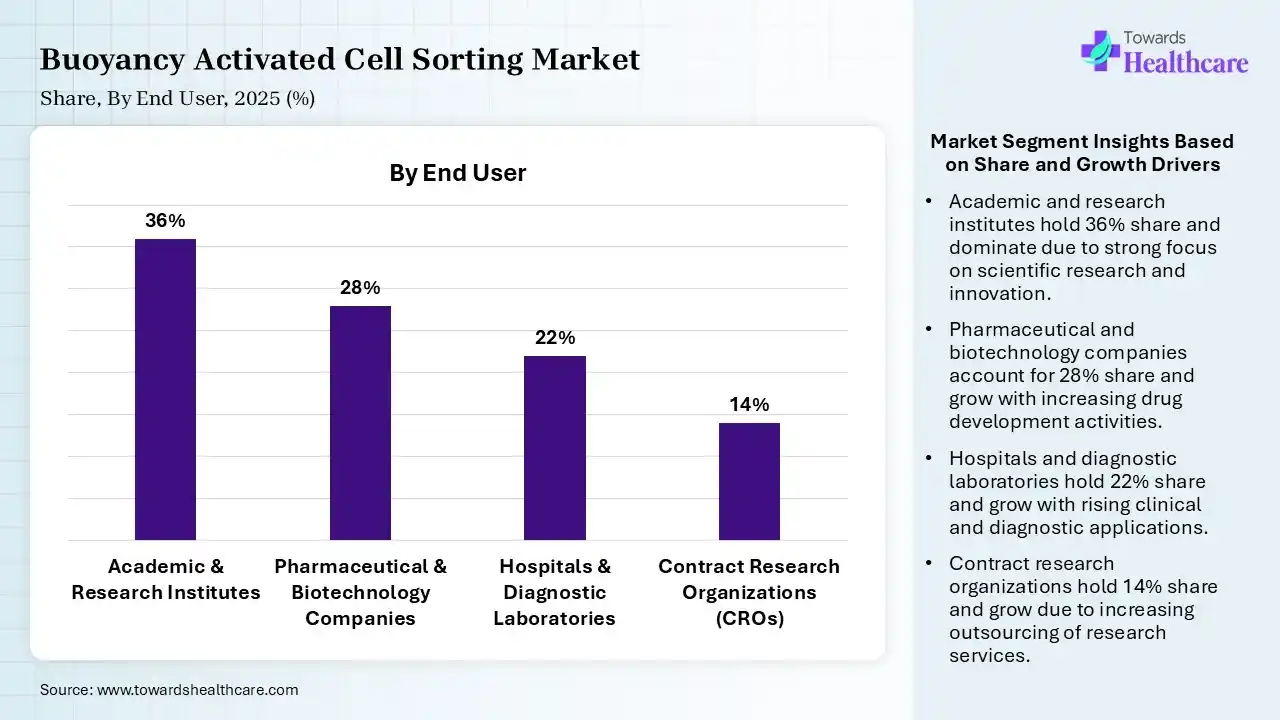
| Segment | Share 2025 (%) |
| Academic & Research Institutes | 36% |
| Pharmaceutical & Biotechnology Companies | 28% |
| Hospitals & Diagnostic Laboratories | 22% |
| Contract Research Organizations (CROs) | 14% |
The Academic & Research Institutes Segment held a Dominant Position in the Market in 2025
The academic & research institutes segment held a dominant the buoyancy activated cell sorting (BACS) market with a share of 36% in 2025 due to extensive use of BACS in fundamental studies, cell biology research, and experimental workflows. These institutions benefit from strong government and private funding, enabling the adoption of advanced sorting technologies.
The pharmaceutical & biotechnology companies segment held the second-largest share of 28% in 2025 and is expected to grow at the fastest CAGR in the market during the forecast period due to strong reliance on BACS for drug discovery, cell-based assays, and bioprocess development. These companies require precise, reproducible cell sorting to support R&D and therapeutic development.
The hospitals & diagnostic laboratories segment held 22% of the buoyancy activated cell sorting (BACS) market share in 2025 due to increasing demand for accurate, rapid diagnostic solutions and advanced cell analysis techniques. BACS supports efficient isolation of specific cell populations for disease detection and monitoring.
The contract research organizations (CRO) segment held 14% of the market share in 2025 due to increasing outsourcing of drug discovery and development activities by pharmaceutical and biotech companies. CROs rely on BACS for efficient, high-throughput cell sorting to support preclinical and clinical research. Cost-effectiveness, faster project timelines, and access to specialized expertise are driving demand, while growing pipelines and partnerships continue to strengthen the segment’s market growth.
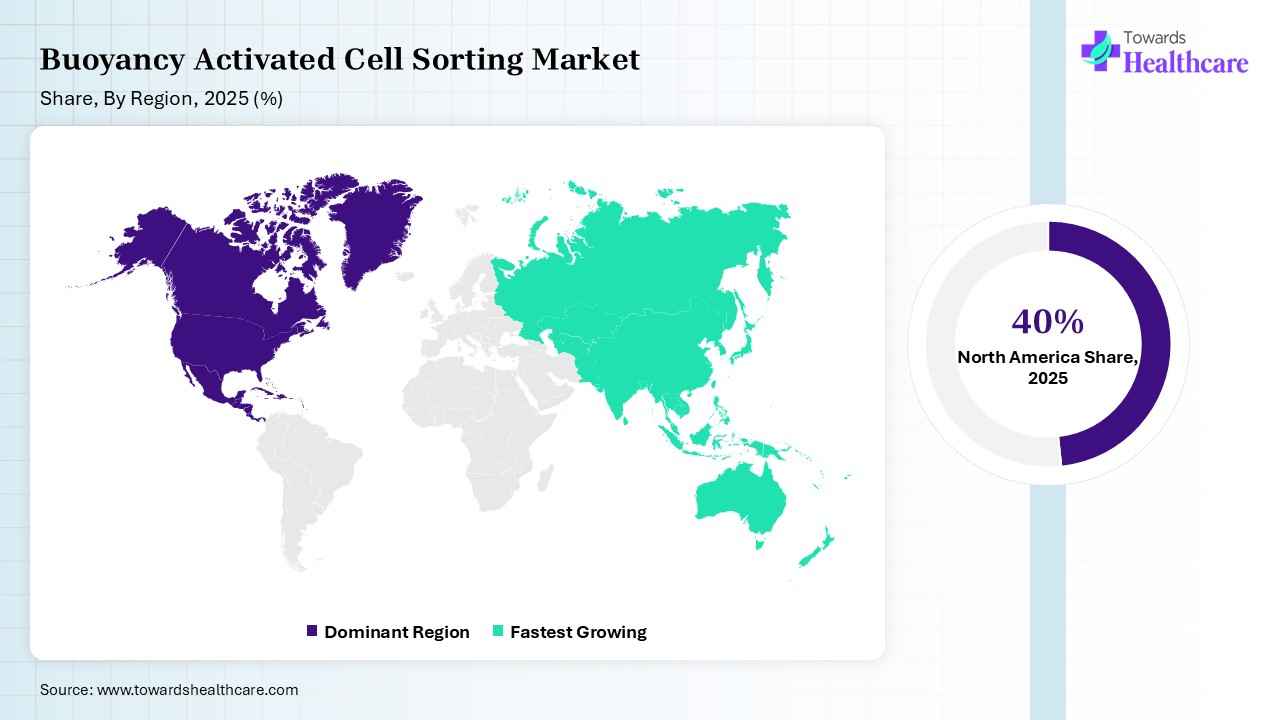
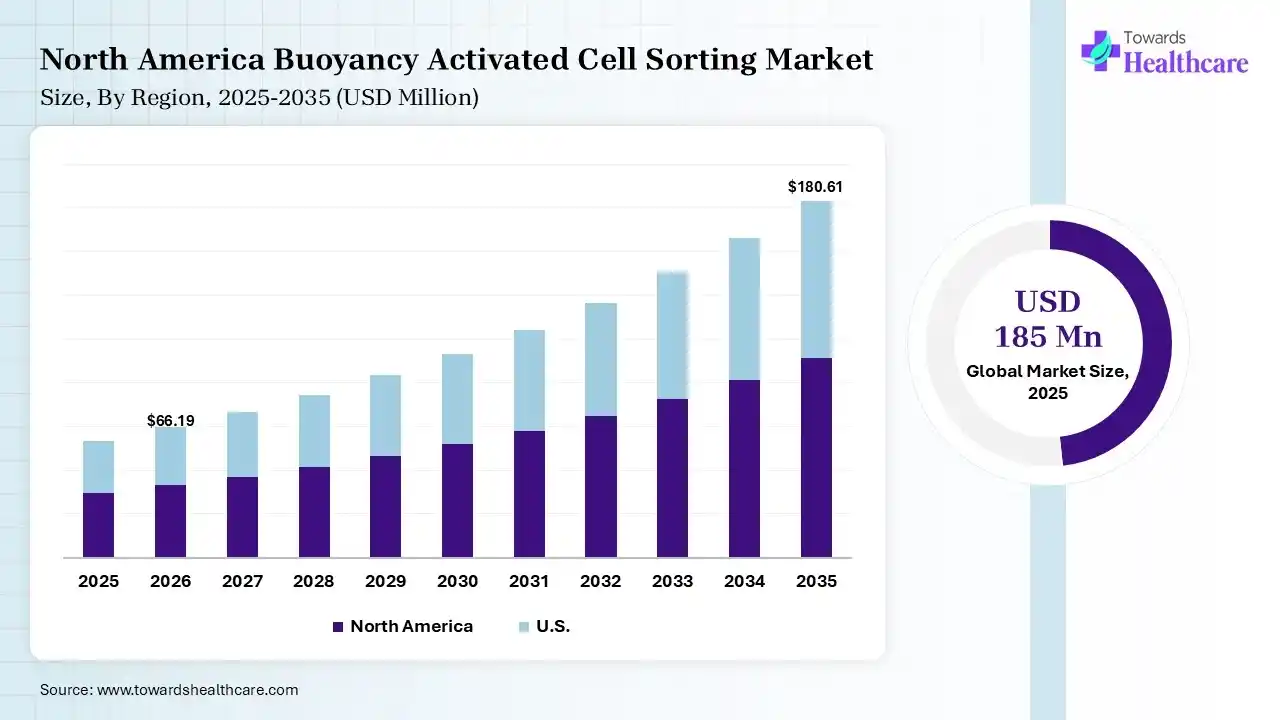
North America dominated the buoyancy activated cell sorting (BACS) market with a share of 40% in 2025 due to advanced research infrastructure, high adoption of innovative cell separation technologies, and the strong presence of leading biotech and pharmaceutical companies. Significant funding for life science research, growing focus on cell therapies, and early adoption of emerging technologies further drive regional leadership and market growth.
U.S. Market Trends
The U.S. buoyancy activated cell sorting (BACS) market leads due to its robust biotechnology sector, advanced research facilities, and high investment in life science and cell therapy development. Strong presence of key market players, increasing clinical research activities, and early adoption of innovative technologies drive growth. Additionally, supportive regulatory frameworks and growing demand for precision medicine further strengthen the country’s leadership position.
Asia Pacific held 22% of the market share in 2025 and is anticipated to grow at the fastest CAGR in the buoyancy activated cell sorting (BACS) market due to the expanding biotechnology sector, increasing research funding, and rising healthcare investments across countries like China, India, and Japan. Growing focus on cell therapy, improving laboratory infrastructure, and increasing collaborations with global players are accelerating adoption, while a large patient base and supportive government initiatives further drive regional market growth.
India Market Trends
India is expected to grow at the fastest CAGR in the buoyancy activated cell sorting (BACS) market due to increasing investment in biotechnology and life science research, along with expanding pharmaceutical and biopharma sectors. Rising focus on cell therapy, improving healthcare infrastructure, and growing government support for research initiatives are driving adoption. Additionally, a large patient population and increasing clinical research activities further accelerate market growth in the country.
R&D
Clinical Trials
Regulatory Approvals
| Companies | Headquarters | Offerings |
| Terumo Corporation | Tokyo, Japan | Provides advanced medical and blood management technologies, supporting cell processing and separation workflows used in research and clinical applications. |
| STEMCELL Technologies Inc. | Vancouver, Canada | Specializes in cell isolation kits, culture media, and reagents, widely used in gentle cell separation and stem cell research applications. |
| Bio-Rad Laboratories, Inc. | California, USA | Offers cell analysis instruments, reagents, and separation technologies supporting research and diagnostic workflows. |
| Merck KGaA | Darmstadt, Germany | Provides a broad portfolio of life science tools, including cell culture systems, reagents, and filtration technologies relevant to cell sorting processes. |
| GE HealthCare | Illinois, USA | Delivers bioprocessing systems, cell therapy manufacturing solutions, and analytical tools supporting advanced cell separation and processing. |
| Miltenyi Biotec | Bergisch Gladbach, Germany | Known for cell separation technologies, including magnetic-based sorting systems, reagents, and automated platforms used in research and clinical cell processing. |
Strengths
Weaknesses
Opportunities
Threats
By Product Type
By Technology
By Application
By End User
By Region









Principal Consultant
Rohan Patil is a seasoned market research professional with over 5+ years of focused experience in the healthcare sector, bringing deep domain expertise, strategic foresight, and analytical precision to every project he undertakes.
Learn more about Rohan Patil

Reviewed By
Aditi Shivarkar is a seasoned professional with over 14 years of experience in healthcare market research. As a content reviewer, Aditi ensures the quality and accuracy of all market insights and data presented by the research team.
Learn more about Aditi Shivarkar