
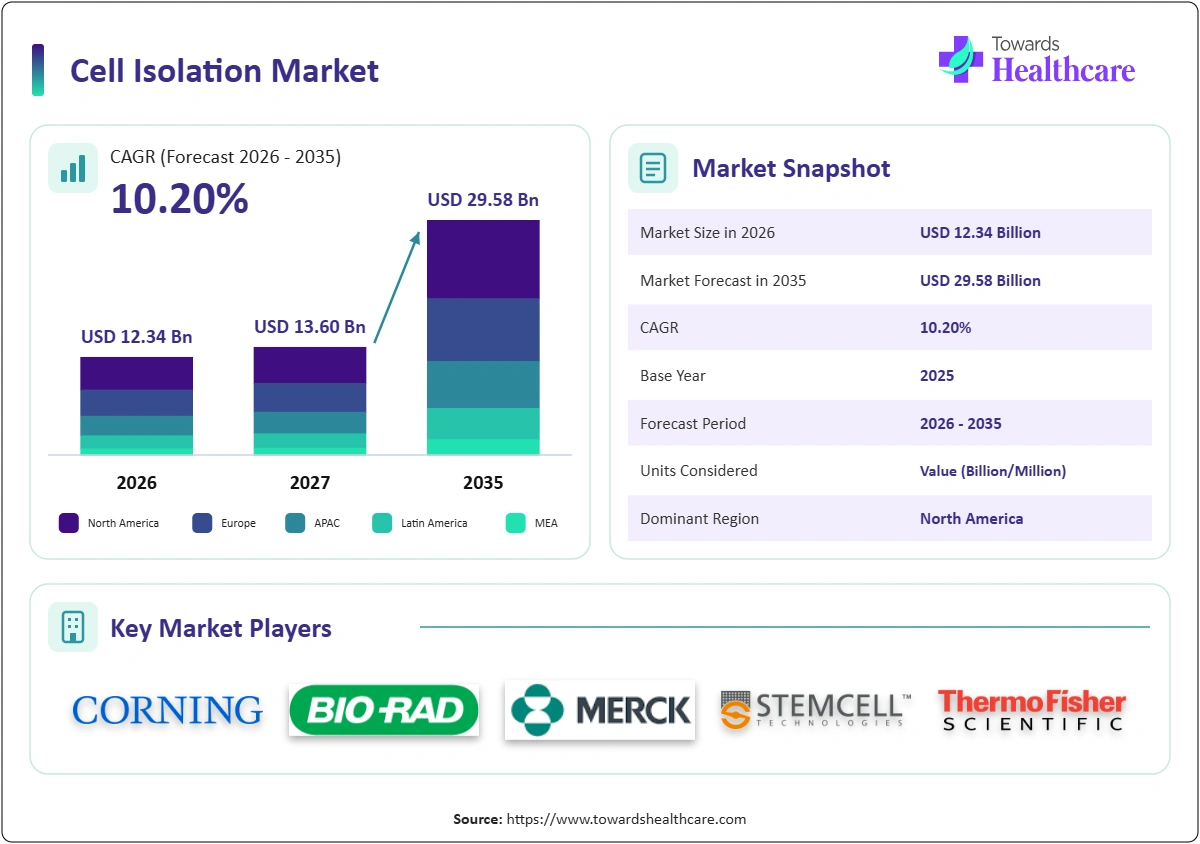
The cell isolation/cell separation market is projected to grow from USD 11.20 billion in 2025 to USD 29.58 billion by 2035 because research, diagnostics, and cell therapy manufacturing all depend on isolating pure populations of specific cells, and cell and gene therapy pipelines are expanding quickly. Cell and gene therapy commercialisation, growth of immunology, oncology and single-cell research, liquid biopsy, automated closed systems and GMP-grade reagents support strong growth, lifting the market to USD 18.20 billion by 2030 and sustaining a CAGR of 10.20% from 2026 to 2035.
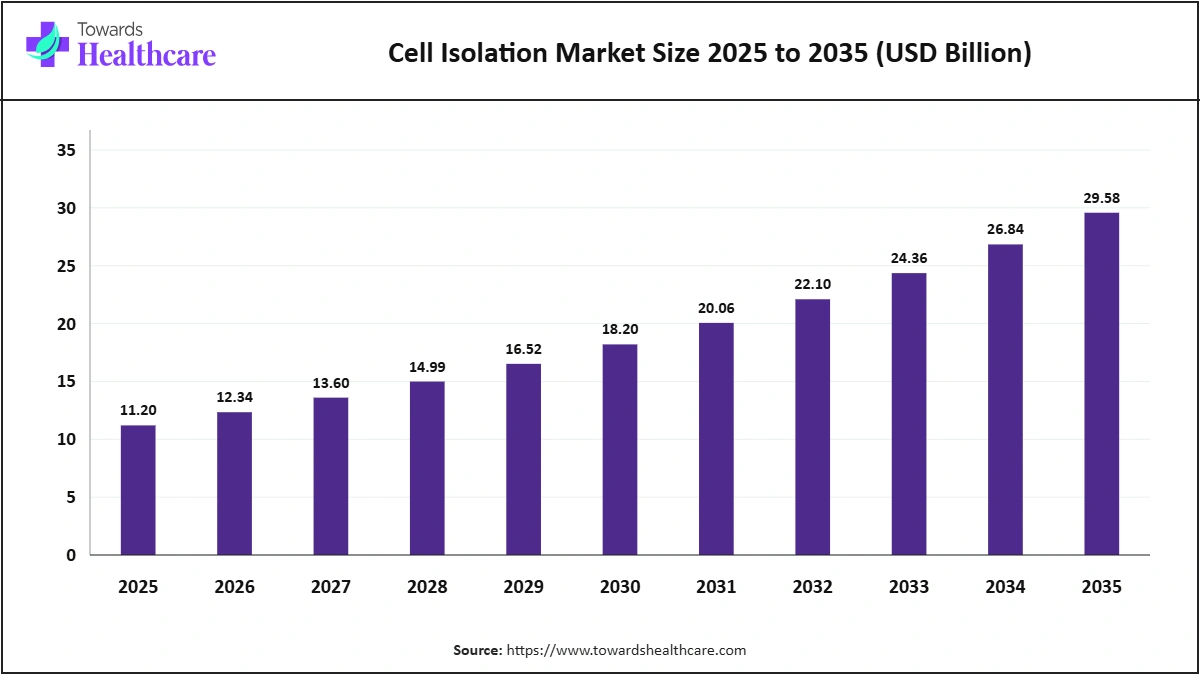
Analyst View: The market estimate was developed by assessing the installed base and sales of cell separation instruments, along with the consumption of reagents, kits, magnetic beads, media, and disposable supplies. Demand was evaluated across different separation techniques, applications, end-user categories, and regions, with market values calculated using the corresponding average selling prices. Volume estimates take into account research activity, diagnostic testing, and the number of cell therapy manufacturing runs. Pricing assumptions also consider the growing adoption of GMP-grade reagents and automated separation systems.
The total was cross-checked against the cell separation and flow cytometry revenues of leading life science companies, against our U.S. estimate and against published estimates, which places our base year slightly above the highest credible comparable figure, excluding broader estimates that appear to include unrelated products. The growth rate reflects strong demand from cell and gene therapy and research, which we judge supports a slightly higher rate than comparable estimates, moderated by instrument costs and research budget pressure.
Driver: Cell and gene therapies are expanding. Immunology and cancer research are growing. Single-cell analysis needs pure cells. Liquid biopsy uses rare cell isolation. Automation improves consistency.
Restraint: Instruments are expensive. Skilled operators are needed. Cell viability can be affected. Research budgets are under pressure. GMP validation adds cost.
Opportunity: Closed GMP systems for therapies. Label-free and gentle separation. Asia Pacific cell therapy growth. Point-of-care manufacturing. Integrated isolation and analysis.
Note: 2025 is the base year; 2035 values are forecasts.
Sources: Expert interviews, secondary sources, Towards Healthcare database, and Towards Healthcare analysts.
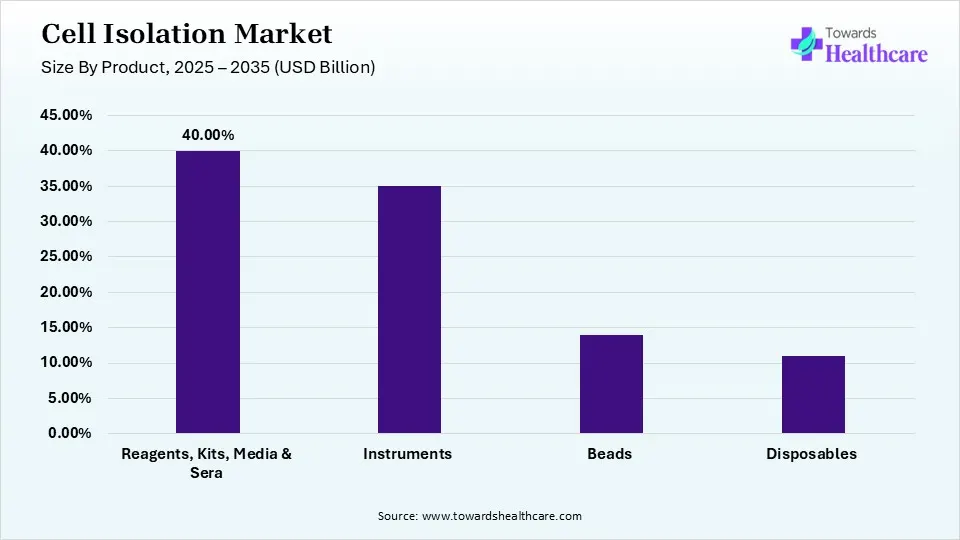
Reagents, Kits, Media & Sera: This segment accounted for 40.00% USD 4.48 billion of the cell isolation/cell separation market in 2025 and is projected to reach USD 11.26 billion by 2035, expanding at a CAGR of 9.65% from 2026 to 2035. Reagents, kits, media, and sera include antibodies, isolation kits, density gradient media, buffers, and culture media used in every separation workflow. They are the largest product group because they are consumed in each run and create recurring revenue for suppliers.
Key instruments include centrifuges, flow cytometry-based cell sorters, magnetic-activated cell separators, filtration systems and automated, closed cell processing platforms. These systems are used across research, diagnostic testing, and GMP-compliant manufacturing.
Beads, mainly magnetic beads coated with antibodies, are the fastest-growing product because magnetic separation is simple, scalable, and widely used to isolate T cells and other cells for cell therapy manufacturing.
Key products include tubes, filters, columns, tubing sets, and single-use kits, which support sterile handling and closed cell processing workflows across research and biopharmaceutical manufacturing.
Note: 2025 is the base year; 2035 values are forecasts.
Sources: Expert interviews, secondary sources, Towards Healthcare database, and Towards Healthcare analysts.
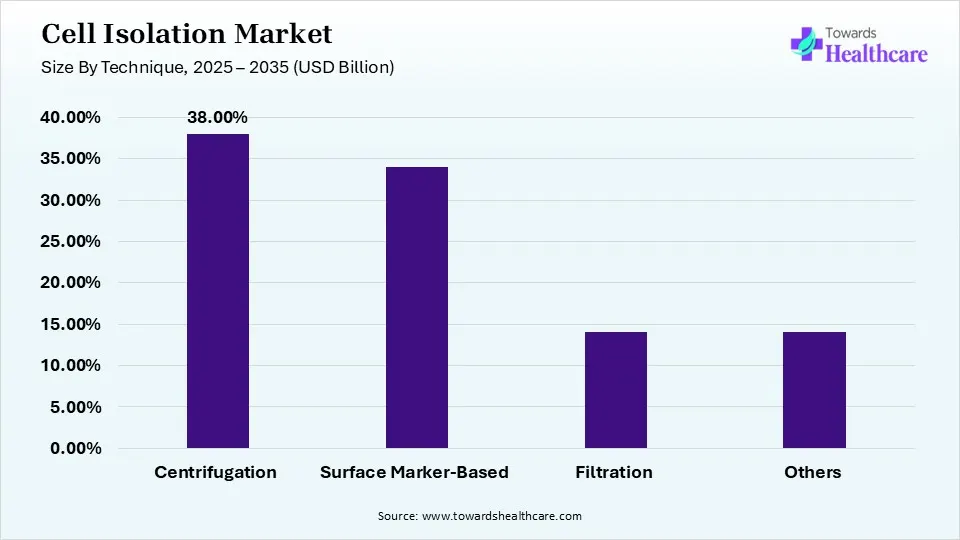
Centrifugation: The centrifugation segment accounted for 38.00% of the cell isolation/cell separation market in 2025, representing a value of USD 4.26 billion. The segment is projected to reach USD 10.57 billion by 2035, registering a CAGR of 9.52% during the forecast period. Centrifugation remains the leading separation technique due to its widespread use in research and clinical laboratories. Density gradient and differential centrifugation are commonly used to separate cells and other components from blood, bone marrow and tissue samples, often serving as initial steps in cell isolation workflows.
Surface marker-based separation, including magnetic-activated and fluorescence-activated cell sorting, is growing faster because it isolates specific cell types with high purity, which is essential for immunology research and cell therapy manufacturing.
Filtration-based separation relies on differences in cell size and is commonly used in sample preparation, leukocyte depletion, and the enrichment of circulating tumour cells (CTCs). Its ability to support these applications makes it a useful technique across research, diagnostic and clinical workflows.
Others include microfluidic, acoustic, buoyancy-based, and image-based separation technologies.
Note: 2025 is the base year; 2035 values are forecasts.
Sources: Expert interviews, secondary sources, Towards Healthcare database, and Towards Healthcare analysts.
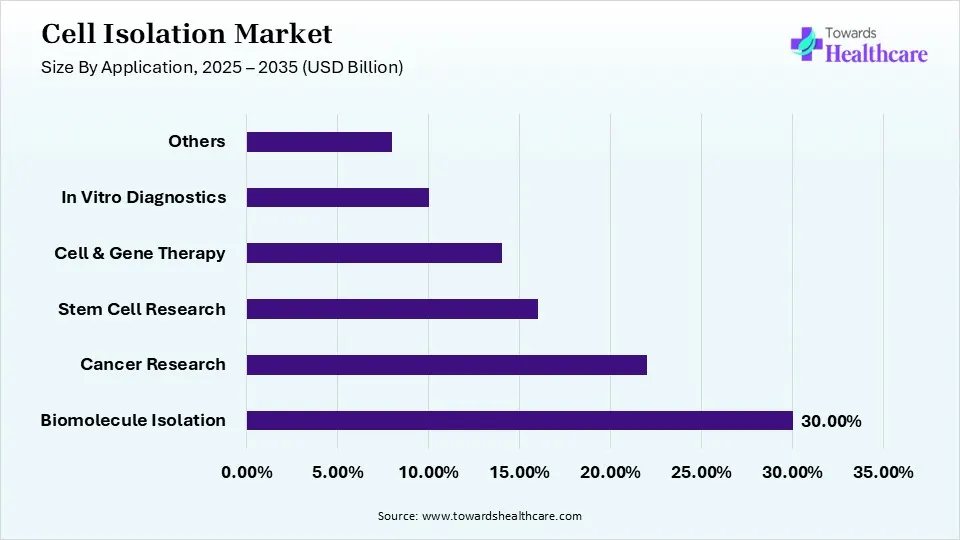
Biomolecule Isolation: The biomolecule isolation segment accounted for 30.00% of the cell isolation/cell separation market in 2025, representing a value of USD 3.36 billion. The segment is projected to reach USD 8.22 billion by 2035, registering a CAGR of 9.36% during the forecast period. Demand in this segment is supported by the use of cell separation techniques to obtain specific cell populations for downstream DNA, RNA, and protein analysis. These processes are widely used in molecular biology research, disease studies, and diagnostic testing.
Cancer research uses cell separation to isolate tumour cells, immune cells, and circulating tumour cells for study and drug development.
Cell separation techniques play an important role in stem cell research by enabling the isolation and enrichment of specific cell populations, including haematopoietic, mesenchymal and pluripotent stem cells, as well as their derivatives. These techniques support research into cell characteristics, differentiation and potential therapeutic applications.
Cell and gene therapy is the fastest-growing application because CAR-T, TCR, and stem cell therapies need isolation of specific cells at the start of manufacturing, using GMP-grade and automated systems.
Cell separation plays an important role in diagnostic workflows by helping isolate specific cell populations from blood and other biological samples. Key applications include blood testing, transplant-related testing and liquid biopsy analysis.
Others include tissue regeneration, microbiology and veterinary uses.
Note: 2025 is the base year; 2035 values are forecasts.
Sources: Expert interviews, secondary sources, Towards Healthcare database, and Towards Healthcare analysts.
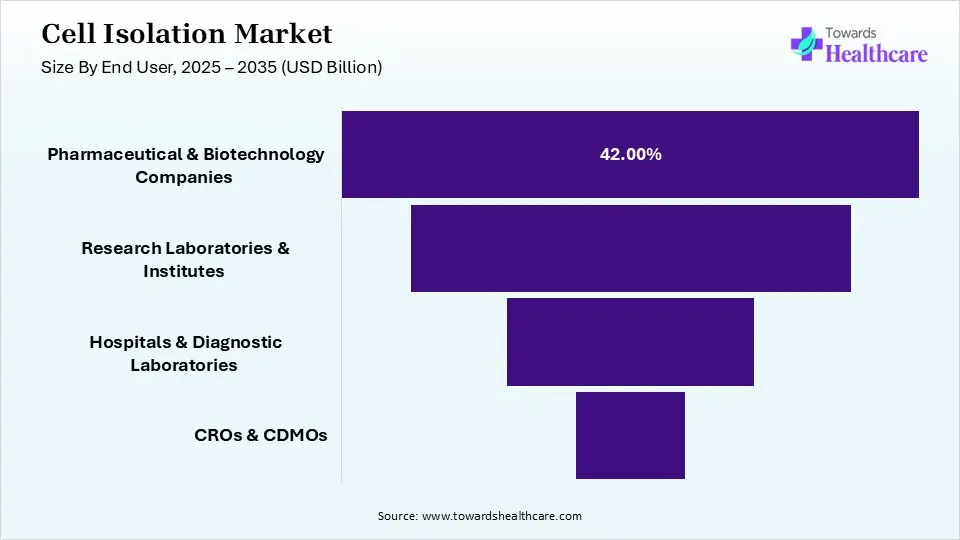
Pharmaceutical & Biotechnology Companies: Pharmaceutical and biotechnology companies accounted for 42.00% of the cell isolation/cell separation market in 2025, representing a value of USD 4.70 billion. The segment is projected to reach USD 11.86 billion by 2035, registering a CAGR of 9.69% during the forecast period. These companies represent the largest end-user group due to their extensive use of cell separation technologies in drug discovery, immunology research and cell therapy manufacturing. Growing investment in biologics development and advanced cell-based therapies is further supporting demand across this segment.
Research laboratories and institutes use cell separation widely for immunology, cancer, stem cell, and single-cell research.
These facilities use cell separation technologies for blood sample processing, transplant-related testing and diagnostic procedures. In addition, some hospitals are adopting specialised cell processing capabilities to support cell therapy applications, including point-of-care manufacturing.
CROs and CDMOs are the fastest-growing users because cell therapy developers increasingly outsource manufacturing and testing.
Analyst View: Segment-level estimates were developed by mapping instrument sales and consumable usage across product categories, separation techniques, applications, and end-user groups. Supplier product portfolios, research activity, and cell therapy manufacturing trends were also considered when allocating market values. Reagents and kits, centrifugation-based separation, biomolecule isolation, and pharmaceutical and biotechnology companies emerged as the leading segments. Over the forecast period, magnetic bead-based products, surface marker-based separation techniques, cell and gene therapy applications, and contract development and manufacturing organisations (CDMOs) are expected to gain market share.
| Region | 2025 Share | 2025 Value (USD Billion) | 2035 Value (USD Billion) | CAGR 2026–2035 |
| North America | 43.00% | 4.82 | 11.93 | 9.50% |
| Europe | 27.00% | 3.02 | 7.77 | 9.90% |
| Asia Pacific | 22.00% | 2.46 | 7.58 | 11.90% |
| Latin America | 5.00% | 0.56 | 1.44 | 9.90% |
| Middle East & Africa | 3.00% | 0.34 | 0.86 | 9.90% |
Note: 2025 is the base year; 2035 values are forecasts.
Sources: Expert interviews, secondary sources, Towards Healthcare database and Towards Healthcare analysts.
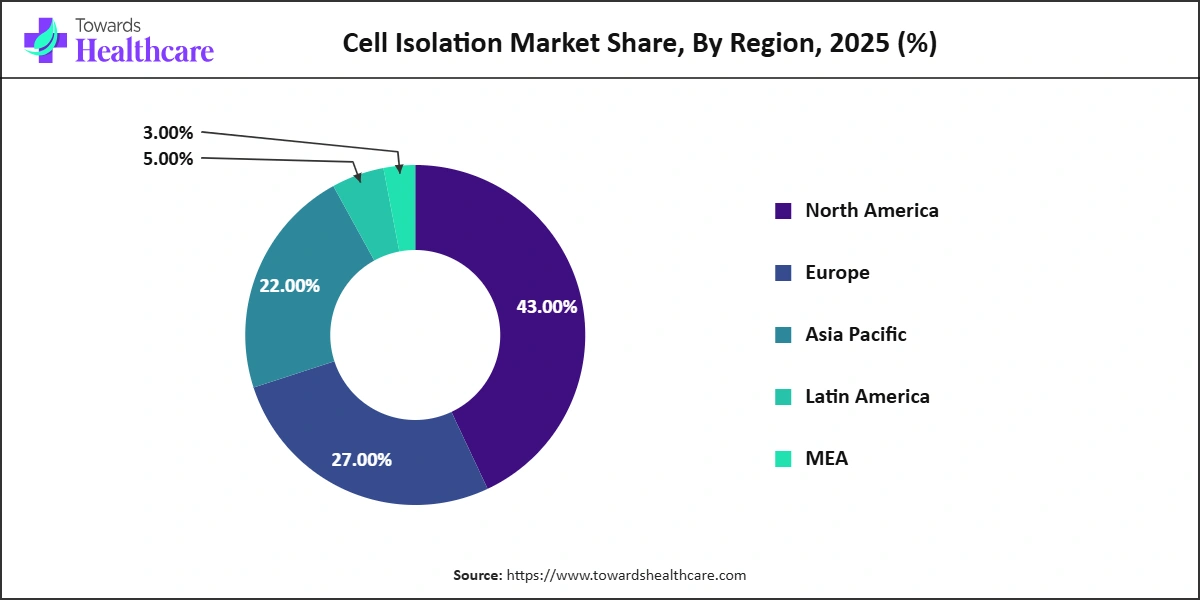
North America: North America accounted for 43.00% of the global cell isolation/cell separation market in 2025, with a market value of USD 4.82 billion. The regional market is projected to reach USD 11.93 billion by 2035, registering a CAGR of 9.50% over the forecast period. North America holds the leading regional position, supported by substantial research funding, a strong cell and gene therapy development pipeline, and the presence of numerous approved CAR-T cell therapies. The region also benefits from the presence of established suppliers, including Thermo Fisher Scientific, Danaher, Waters, and STEMCELL Technologies.
Europe: This region accounted for a 27.00% share of USD 3.02 billion of the cell isolation/cell separation market in 2025 and is projected to reach USD 7.77 billion by 2035, expanding at a CAGR of 9.90% from 2026 to 2035. Europe has strong immunology and stem cell research, growing cell therapy manufacturing, and suppliers such as Miltenyi Biotec and Merck KGaA.
Asia Pacific: Asia Pacific accounted for 22.00% of the global cell isolation/cell separation market in 2025, with a market value of USD 2.46 billion. The regional market is projected to reach USD 7.58 billion by 2035, registering a CAGR of 11.90% over the forecast period. Asia Pacific is expected to record the fastest growth among regions, driven by China's expanding cell therapy pipeline, Japan's supportive regenerative medicine framework, and increasing investment in life sciences research across South Korea, India, and Australia.
Latin America: This region accounted for a 5.00% share of USD 0.56 billion of the cell isolation/cell separation market in 2025 and is projected to reach USD 1.44 billion by 2035, expanding at a CAGR of 9.90% from 2026 to 2035. Latin America is supported by growing research activity and cell therapy programmes in Brazil and Argentina.
Middle East & Africa: This region accounted for a 3.00% share of USD 0.34 billion of the cell isolation/cell separation market in 2025 and is projected to reach USD 0.86 billion by 2035, expanding at a CAGR of 9.90% from 2026 to 2035. The Middle East and Africa are supported by investment in research and cell therapy centres in Gulf countries.
Analyst View: Regional market shares were estimated by assessing research activity, diagnostic demand and cell therapy development across each region. North America holds the largest market share, supported by substantial research funding and an established cell therapy industry. Asia Pacific is expected to record the fastest growth, reflecting the expansion of cell therapy development programmes and increasing investment in research across the region.
| Rank | Company Name | Market-Specific Revenue (USD Billion) | 2025 Share | Key Products / Business | Headquarters |
| 1 | Thermo Fisher Scientific | 1.65 | 14.73% | Dynabeads, reagents and centrifuges | United States |
| 2 | Danaher | 1.35 | 12.05% | Beckman Coulter and Cytiva separation products | United States |
| 3 | Waters (BD Biosciences) | 1.05 | 9.38% | Flow cytometry cell sorters and reagents | United States |
| 4 | Miltenyi Biotec | 0.95 | 8.48% | MACS separation and CliniMACS systems | Germany |
| 5 | Merck KGaA | 0.70 | 6.25% | Separation reagents and filtration | Germany |
| 6 | Terumo Blood and Cell Technologies | 0.45 | 4.02% | Automated cell processing systems | United States |
| 7 | STEMCELL Technologies | 0.40 | 3.57% | EasySep and RosetteSep kits | Canada |
| 8 | Bio-Rad Laboratories | 0.30 | 2.68% | Cell sorters and reagents | United States |
| 9 | Corning | 0.18 | 1.61% | Separation media and consumables | United States |
| 10 | Sony Biotechnology | 0.12 | 1.07% | Cell sorters | United States |
Note: Company revenues and shares are 2025 estimates.
Sources: Company press releases, expert interviews, secondary sources,Towards Healthcare database, and Towards Healthcare analysts.
Thermo Fisher Scientific led the cell isolation/cell separation market with an estimated 14.73% USD 1.65 billion of 2025 revenue, followed by Danaher at 12.05% USD 1.35 billion and Waters (BD Biosciences) at 9.38% USD 1.05 billion. Thermo Fisher Scientific leads with Dynabeads magnetic separation, reagents, media, and centrifuges used across research and cell therapy. Danaher offers separation products through Beckman Coulter and Cytiva, and Waters became a top supplier after combining with BD's biosciences business, which includes flow cytometry cell sorters and reagents. Miltenyi Biotec, Merck KGaA, Terumo Blood and Cell Technologies, STEMCELL Technologies, Bio-Rad Laboratories, Corning and Sony Biotechnology compete through magnetic and clinical-scale separation, reagents and filtration, automated cell processing, isolation kits, cell sorters and separation media.
The top 10 companies accounted for an estimated 63.84% of the cell isolation/cell separation market in 2025, equivalent to USD 7.15 billion in revenue. The remaining 36.16%, or approximately USD 4.05 billion, was distributed among specialised technology developers, reagent manufacturers and regional suppliers. This indicates a moderately concentrated market, where competition is shaped by factors such as cell purity and recovery rates, processing speed, scalability, closed and automated workflows, GMP compliance, product range and technical support. Ongoing consolidation and the development of new cell separation technologies are also influencing the competitive landscape.
The cell isolation/cell separation ecosystem links reagent and bead makers and instrument developers with distributors, research and diagnostic users and cell therapy manufacturers.
| Ecosystem Stage | Role in the Market | Key Companies |
| Reagents & Beads | Make antibodies, kits and beads | Thermo Fisher, STEMCELL Technologies, Miltenyi Biotec, Merck KGaA |
| Instruments | Build sorters and separators | Waters (BD), Danaher, Bio-Rad, Sony Biotechnology, Terumo BCT |
| Distributors | Supply laboratories | Life science distributors |
| Research & Diagnostics | Isolate cells for study and testing | Universities, institutes, hospitals, labs |
| Cell Therapy Makers | Isolate cells for manufacturing | Cell therapy developers, CDMOs |
Sources: Company press releases, expert interviews, secondary sources, Towards Healthcare database and Towards Healthcare analysts.
The Towards Healthcare Companies Quadrant positions key participants in the cell isolation/cell separation market by market strength, reflecting revenue scale, market share and geographic reach, and by innovation and growth strategy, reflecting product portfolio breadth, R&D intensity and partnerships. Positions reflect each company's estimated 2025 cell isolation/cell separation revenue and our assessment of its technology, portfolio and support.
Sources: Company press releases, expert interviews, secondary sources, Towards Healthcare database and Towards Healthcare analysts.
Leaders: Thermo Fisher Scientific, Danaher, Waters (BD Biosciences), Miltenyi Biotec, Merck, Terumo Blood and Cell Technologies and STEMCELL Technologies combine large separation revenue with broad reagent and instrument portfolios.
Innovators: Bio-Rad Laboratories, Corning and Sony Biotechnology bring automated, clinical-scale and advanced sorting technologies.
By Product
By Technique
By Application
By End User
By Region
The cell isolation/cell separation market was defined as consumables and instruments used to isolate and separate cells, including reagents, kits, media, beads, disposables, centrifuges, cell sorters and separators, worldwide. The 2025 base year was built bottom-up from instrument sales and consumable use by product, technique, application, end user and region, and average prices, and checked top-down against the cell separation and flow cytometry revenues of leading life science companies. Segment, regional and company values were allocated from products, techniques, applications, end users and regional activity.
Key estimates were verified by cross-checking company disclosures, regulatory and industry data and published third-party estimates, and inputs that could not be reconciled were excluded. All segment, regional and company figures were reconciled to the same 2025 base year, and the 2026–2035 forecast, which applies a constant CAGR from the 2025 base, was recalculated and validated.
Analyst View: The cell isolation/cell separation market is a large and fast-growing segment of life science tools, driven by research and the scale-up of cell and gene therapies. Our estimate links demand to instrument sales and consumable use, so the forecast follows research activity, diagnostic testing, and cell therapy manufacturing. The main upside comes from cell and gene therapy and automated GMP systems, while the main risks are instrument costs and research budget pressure.