Pipeline Programs

CGT Companies Tracked

Manufacturing Facilities


The China radioligand therapy market size, trends, key companies, market segments, and growth opportunities. China's PSMA-targeted therapeutic radioligand market is forecast to grow from USD 402.5 million in 2026 to USD 1415.95 million by 2035, registering a CAGR of 15%. The report also examines emerging technologies, clinical developments, isotope supply, manufacturing, pricing, reimbursement, and treatment infrastructure.
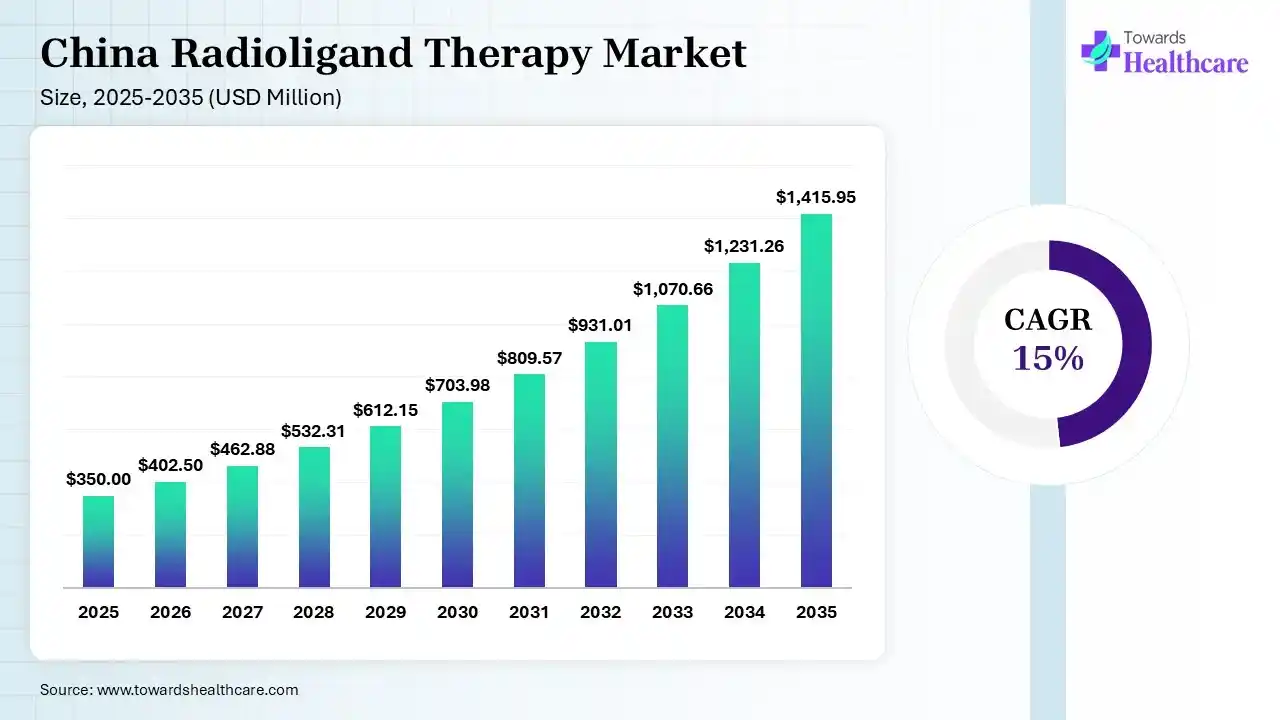
The China Radioligand Therapy (RLT) Market is an emerging segment within China's broader radiopharmaceutical and nuclear-medicine industry. RLT combines a tumor-targeting ligand with a therapeutic radioisotope to deliver radiation directly to cancer cells. China has moved into an important commercialization phase: Novartis' Pluvicto (¹⁷⁷Lu-PSMA-617) became China's first approved RLT in November 2025, initially for PSMA-positive metastatic castration-resistant prostate cancer. China's RLT market is shifting from a predominantly clinical-development and imported-product model toward a broader domestic commercialization ecosystem. The strongest near-term activity is concentrated in PSMA-targeted prostate-cancer therapy, while SSTR-targeted neuroendocrine tumor therapy and emerging targets such as FAP are widening the development pipeline. China's clinical evidence base is also becoming more locally generated: a 2026 Phase II study of ^177Lu-PSMA-617 enrolled Chinese patients across multiple major oncology and nuclear-medicine centers and reported pharmacokinetic and dosimetry findings consistent with previously published evidence.
The commercial opportunity is increasingly determined by three linked capabilities: target-specific diagnostics, therapeutic isotope availability, and specialized treatment infrastructure. China already has a substantial oncology burden and an expanding nuclear-medicine ecosystem, but access to RLT depends on more than drug approval. Hospitals need PSMA/SSTR imaging, radiopharmacy capabilities, radiation-safety infrastructure, trained nuclear-medicine personnel, and reliable isotope supply.
The largest immediate opportunity is therefore not simply "more RLT drugs"; it is the development of an integrated diagnosis → patient selection → isotope production → treatment → monitoring ecosystem.
China's radioligand therapy market is at an important commercialization stage, supported by the rapid development of nuclear medicine, increasing investment in radiopharmaceuticals, growing cancer prevalence, domestic radioisotope production, and the entry of multinational pharmaceutical companies. However, the exact size of the total China RLT market should be distinguished from the broader radiopharmaceutical or nuclear-medicine market because RLT remains a relatively new therapeutic category in China.
One useful market benchmark is the PSMA-targeted therapeutic radioligand segment, which is currently one of the most commercially important RLT categories. China Insights Consultancy data cited in a 2025 Hong Kong Stock Exchange filing projected China's PSMA-targeted therapeutic radioligand market to increase from approximately RMB 0.7 billion in 2026 to RMB 13.3 billion by 2035, corresponding to a 38.7% CAGR from 2026 to 2035. The forecast assumes the anticipated commercialization of the first PSMA-targeted therapeutic radioligands in China.
The broader Chinese radiopharmaceutical industry is considerably larger than the RLT segment. Industry forecasts cited by Chinese sources indicate that China's overall radiopharmaceutical market could reach approximately RMB 26 billion by 2030. This broader category includes diagnostic and therapeutic radiopharmaceuticals and therefore should not be interpreted as the RLT market alone.
The growth opportunity is being supported by China's increasing ability to produce key medical isotopes domestically. China's National Nuclear Safety Administration reported that the country had achieved large-scale commercial production of lutetium-177 (Lu-177) and gallium-68 (Ga-68), reducing reliance on imported medical isotopes. The agency also reported that domestic demand for medical isotopes and radiopharmaceuticals was growing at approximately 25%–30% annually.
The market's future growth will depend on several factors: approval of domestic RLT candidates, expansion of nuclear-medicine departments, availability of Lu-177 and Ac-225, reimbursement, treatment capacity, and development of companion diagnostic imaging.
The market can therefore be expected to develop in stages. The initial stage is PSMA/Lu-177 commercialization, followed by expansion into SSTR, FAP, GPC3, and other targets, and eventually greater adoption of alpha-emitting radionuclides such as Ac-225. China's domestic pipeline is already expanding rapidly, with industry sources reporting more than 150 nuclear-drug programs under development and numerous therapeutic candidates entering clinical trials.
Therefore, while current RLT revenues remain relatively small compared with China's overall pharmaceutical market, the high projected growth rate, expanding pipeline, and improving isotope infrastructure make RLT one of the faster-developing segments within China's radiopharmaceutical industry.
China's RLT competitive landscape is developing through the interaction of multinational pharmaceutical companies, established domestic nuclear-medicine companies, biotechnology startups, and companies specializing in radioisotope production and radiopharmaceutical manufacturing. Competition is increasingly extending beyond individual drugs to include isotope supply, manufacturing infrastructure, target technology, clinical development, and hospital distribution.
A major milestone was the entry of Novartis' Pluvicto, a Lu-177-based PSMA-targeted radioligand therapy for prostate cancer. Chinese industry reporting identifies Pluvicto as the first RLT approved for commercialization in China, creating an important commercial precedent for the domestic market.
The domestic competitive field includes companies such as China Isotope & Radiation Corporation (China Isotope), Dongcheng Pharmaceutical, Grand Pharmaceutical, Sinotau, and other emerging biotechnology companies. These companies have different strategic approaches. Traditional nuclear-medicine companies possess advantages in isotope production, radiopharmacy networks, and hospital relationships, while biotechnology companies are focusing more heavily on innovative target-ligand combinations.
The competitive landscape is also becoming increasingly international. Industry sources report that Curium, Telix and ITM have advanced radiopharmaceutical programs in China, while multinational companies including Novartis, Bayer, AstraZeneca and Eli Lilly are developing or bringing RLT/radiopharmaceutical pipelines into the Chinese market.
A particularly important competitive development is the increasing emphasis on Ac-225. Industry sources report that multiple Ac-225 therapeutic programs from Novartis, Bayer and AstraZeneca have entered or sought clinical development in China. Domestic companies including Lannacheng Biotechnology, Full-Life Technologies and Tongrui Biotechnology have also entered the Ac-225 development field.
Competition can be assessed across the following dimensions:
| Competitive factor | Importance |
| Target technology | PSMA, SSTR, FAP, GPC3 and others |
| Radionuclide | Lu-177, Ac-225 and emerging isotopes |
| Clinical evidence | Safety and efficacy data |
| Manufacturing | GMP radiopharmaceutical capacity |
| Isotope access | Reliable domestic/global supply |
| Hospital network | Access to qualified treatment centers |
| Companion diagnostics | Ability to identify target-positive patients |
| Cost | Treatment and manufacturing economics |
| Pipeline | Number and quality of clinical programs |
| Partnerships | Licensing and regional commercialization |
A key differentiator in China will be vertical integration. Companies capable of controlling or securing isotope supply, drug development, radiolabeling, manufacturing, and hospital distribution may have structural advantages.
For example, domestic Lu-177 production is becoming increasingly important. China has achieved commercial-scale Lu-177 production, while new partnerships are also being established to supply no-carrier-added Lu-177 to Chinese developers and healthcare institutions.
Consequently, the competitive landscape should be evaluated as an ecosystem rather than simply a list of RLT drug developers. The strongest competitive differentiation is likely to emerge from the combination of proprietary ligands, clinical evidence, isotope security, manufacturing capacity, diagnostic capabilities, and hospital access.
China's radioligand therapy (RLT) market can be segmented across target, radionuclide, cancer indication, treatment setting, end user, and customer type. This segmentation is particularly important because RLT is not a single therapeutic category; it consists of multiple targeted therapies using different radioactive isotopes and biological targets.
By target, the principal segments include PSMA, somatostatin receptors (SSTR), FAP, GRPR, GPC3, and other emerging tumor targets. PSMA dominated the market with 56% and currently represents a particularly important segment because of its application in prostate cancer. SSTR-targeted RLT is relevant to neuroendocrine tumors, while FAP and GPC3 are emerging targets being investigated across several solid tumors. China's RLT pipeline is expanding beyond the initial PSMA-focused market toward multiple targets and indications.
By radionuclide, the market can be divided into lutetium-177 (Lu-177), actinium-225 (Ac-225), and other therapeutic radionuclides. Lu-177 led the market with 58% and is currently the primary commercially established isotope for RLT, while Ac-225 represents an important next-generation opportunity contributing to 20.60% CAGR.
By indication, prostate cancer is currently a major application with 55% market share, particularly metastatic castration-resistant prostate cancer (mCRPC). Other opportunities include neuroendocrine tumors, gastrointestinal cancers, and other solid tumors depending on the target and clinical evidence.
The major customer groups include tertiary hospitals, cancer hospitals, nuclear-medicine departments, specialized RLT centers, physicians and patients. Pharmaceutical and biotechnology companies are also important B2B customers for isotope suppliers, contract manufacturers, and radiopharmaceutical technology providers.
Patient selection is particularly important because RLT generally requires confirmation that the relevant molecular target is expressed in the tumor. This makes companion diagnostic imaging an important part of the customer journey.
China's market is also likely to divide into premium innovative therapies and domestically developed products. Multinational products may initially command premium positioning, while domestic companies may compete through lower production costs, local supply chains and broader hospital access.
From a customer perspective, hospitals are especially important because RLT requires specialized infrastructure, trained personnel, and radiation-safety capabilities. Unlike conventional oral oncology drugs, RLT cannot simply be distributed through ordinary retail pharmacies.
Overall, China's RLT market should be viewed as a multi-layered ecosystem involving patients, hospitals, diagnostic providers, pharmaceutical companies, isotope suppliers, and specialized nuclear-medicine centers. Growth will depend not only on the number of eligible patients but also on the country's ability to expand treatment capacity and molecular diagnostic infrastructure.
Technology is one of the most important factors shaping China's RLT market because the industry is evolving from conventional radiopharmaceuticals toward highly targeted theranostic platforms. RLT combines a targeting molecule with a therapeutic radionuclide so that radiation can be delivered selectively to cells expressing a particular molecular target. The same or related target can often be used for diagnostic imaging, creating the foundation for a diagnosis-selection-treatment-monitoring model.
The current technological foundation is Lu-177-based therapy. Lu-177 is a beta-emitting radionuclide that can be linked to targeting molecules such as PSMA or somatostatin-receptor ligands. China's domestic production capabilities have improved significantly. The National Nuclear Safety Administration reported that China had achieved large-scale commercial production of Lu-177, reducing dependence on imports.
The next major technological development is alpha-emitter therapy, particularly Actinium-225 (Ac-225). Ac-225 emits high-energy alpha particles with a short tissue range, creating interest in treating small-volume disease and potentially overcoming some limitations associated with beta-emitting radionuclides. However, Ac-225 supply remains considerably more constrained than Lu-177, making isotope availability a major technological and commercial challenge. A 2026 review of China's radiopharmaceutical development highlights Lu-177 domestic mass production as a major milestone while describing Ac-225 supply constraints as a continuing bottleneck.
Target innovation is also accelerating. PSMA has become a leading target for prostate cancer, but developers are expanding toward SSTR, FAP, GPC3, GRPR, STEAP2, and other tumor-associated targets. Chinese industry sources report active clinical development of Lu-177-based FAP and GRPR therapies as well as Ac-225 programs targeting PSMA and other cancer targets.
Another major innovation is theranostics. Diagnostic radiotracers can identify whether a patient's tumor expresses a specific target before therapeutic administration. This enables patient selection and creates a more personalized treatment pathway.
Manufacturing innovation is equally important. RLT drugs have short radioactive half-lives, meaning production, radiolabeling, quality control, and delivery must be carefully synchronized. New radiopharmaceutical facilities and specialized supply chains are therefore becoming strategic assets.
China is also developing innovation around AI-assisted dosimetry, imaging and patient selection, potentially allowing treatment doses to be better tailored to individual patients.
Overall, China's RLT technology landscape is moving through three broad phases:
Lu-177 commercialization → Ac-225 and next-generation radionuclides → multi-target, multi-isotope theranostic platforms.
The long-term competitive advantage is therefore likely to depend not only on discovering new ligands, but on combining target biology + isotope availability + diagnostic imaging + manufacturing + dosimetry + clinical data into an integrated RLT platform.
China's regulatory and clinical environment is a critical factor in determining the speed at which RLT products can move from research to commercialization. RLT products combine pharmaceutical development with radioactive materials, meaning companies must address both drug regulation and radiation/nuclear-safety requirements.
The National Medical Products Administration (NMPA) is central to pharmaceutical approval, including clinical development and marketing authorization. RLT developers must generate appropriate preclinical and clinical evidence demonstrating safety, efficacy, manufacturing quality, and consistency. At the same time, nuclear and radiation-related activities are subject to additional regulatory and safety requirements.
A major regulatory milestone occurred in November 2025, when China's NMPA approved Novartis' Pluvicto (lutetium-177 vipivotide tetraxetan), making it the first RLT approved for commercialization in China. The approval covers PSMA-positive metastatic castration-resistant prostate cancer in specified treatment settings.
Clinical development is closely connected with patient selection and companion imaging. Because RLT works by binding to specific molecular targets, patients generally need to demonstrate target expression before receiving therapy. This creates a theranostic model in which diagnostic imaging identifies eligible patients and therapeutic radiopharmaceuticals subsequently deliver radiation to the tumor.
Regulatory requirements also extend to manufacturing, transportation, storage, radiation protection, and clinical administration. Facilities need appropriately trained personnel and procedures for handling radioactive materials. This increases development and commercialization complexity compared with conventional pharmaceutical products.
Another important issue is clinical standardization. Developers must establish appropriate treatment doses, administration schedules, dosimetry, and monitoring procedures. Long-term safety monitoring is also important because patients receive radioactive therapy.
The regulatory environment can therefore create both challenges and opportunities. Strict requirements may increase development costs and timelines, but regulatory approval also provides credibility and can establish standards for a rapidly developing market.
As more domestic RLT candidates enter clinical development, regulatory experience accumulated from early approved products should help establish clearer pathways for subsequent products. The long-term development of the market will depend on balancing innovation, clinical evidence, radiation safety, manufacturing quality, and patient access.
Supply chain and manufacturing are among the most strategically important aspects of China's RLT market because radioactive materials have unique characteristics that make their production and transportation more complex than conventional pharmaceutical products.
The RLT supply chain begins with radioisotope production, followed by target or ligand production, radiolabeling, pharmaceutical formulation, quality control, packaging, and transportation to specialized healthcare facilities. Because many therapeutic radionuclides have relatively short half-lives, the timing of these activities must be carefully coordinated.
Lutetium-177 (Lu-177) is currently particularly important because it is used in several leading RLT programs. China's National Nuclear Safety Administration has reported that the country has achieved large-scale commercial production of Lu-177 and Ga-68, strengthening domestic isotope supply. The agency also stated that demand for medical isotopes and radiopharmaceuticals was growing rapidly.
The supply chain is also beginning to develop around Actinium-225 (Ac-225). Ac-225 is attractive because of its alpha-emission characteristics, but supply remains more challenging than Lu-177. Reliable access to Ac-225 could therefore become a major competitive factor for companies developing next-generation RLT products.
Manufacturing facilities require specialized capabilities for radioisotope handling, radiolabeling, sterile production, quality control, and radiation protection. These requirements mean that RLT manufacturing cannot simply use conventional pharmaceutical production facilities without significant modifications.
Geographical proximity between manufacturing sites and treatment centers is another important factor. Radioactive products must reach hospitals within appropriate timeframes, so companies may need regional production or radiopharmacy networks rather than relying on a single distant manufacturing location.
China is increasingly investing in domestic radiopharmaceutical infrastructure. This includes isotope production, specialized manufacturing facilities, and hospital-based nuclear-medicine capabilities.
The supply chain can therefore be viewed as a strategic competitive advantage. Companies with secure isotope access and integrated manufacturing capabilities may have greater control over production costs and product availability.
Over the longer term, China's objective of strengthening domestic isotope production could reduce dependence on imports and support expansion of RLT treatment. However, challenges remain around isotope capacity, specialized equipment, skilled personnel, quality control, transportation, and regional treatment infrastructure.
Consequently, supply-chain development will be just as important as drug development in determining how rapidly RLT can scale across China.
RLT requires a highly specialized distribution and treatment infrastructure because radioactive medicines cannot be handled like conventional pharmaceutical products. The market therefore depends on an integrated network consisting of radioisotope production facilities, radiopharmaceutical manufacturing sites, specialized transportation systems, nuclear-medicine departments, trained healthcare professionals, and radiation-safety infrastructure.
The distribution process begins after radiopharmaceutical manufacturing and radiolabeling. Because therapeutic isotopes decay over time, transportation must be carefully scheduled. Hospitals need to receive the product within an appropriate timeframe and have facilities ready for administration.
At the hospital level, RLT requires nuclear-medicine departments or specialized RLT treatment units equipped to safely store, prepare, and administer radioactive therapies. Radiation monitoring, shielding, waste management, and patient isolation procedures may also be required depending on the therapy.
Another essential component is diagnostic imaging infrastructure. Patients need to undergo molecular imaging to determine whether their tumors express the relevant target. For example, PSMA-targeted RLT requires appropriate PSMA imaging before treatment. This means that diagnostic PET/CT or SPECT/CT capacity is closely connected with therapeutic RLT demand.
Qualified personnel are equally important. The treatment ecosystem requires nuclear-medicine physicians, medical physicists, radiopharmacists, radiologists, technologists, nurses, and radiation-safety specialists. Workforce shortages could therefore limit market expansion even when RLT products are commercially available.
Geographical distribution is another challenge. China's major metropolitan healthcare centers are likely to develop RLT capacity first because they have more advanced hospitals and nuclear-medicine infrastructure. Smaller cities may initially depend on referrals to regional specialist centers.
The market could gradually develop into a hub-and-spoke model, with major RLT centers acting as regional hubs and referring hospitals identifying eligible patients and coordinating follow-up.
Home administration is generally less practical than for conventional medicines because of radiation-safety requirements, meaning hospital-based treatment will remain important.
Overall, China's RLT infrastructure is likely to expand alongside product approvals. The availability of treatment centers, imaging equipment, isotope supply, and trained specialists will directly influence the number of patients who can actually access RLT.
Therefore, market potential should not be measured only by eligible cancer patients or drug approvals. Treatment capacity is equally important. Expanding the physical and human infrastructure required to deliver RLT safely will be essential for converting China's growing RLT pipeline into actual patient treatments.
Pricing and reimbursement are important determinants of RLT adoption because these therapies involve expensive radioactive materials, specialized manufacturing, advanced diagnostic imaging, and hospital-based administration. The total cost of treatment therefore includes considerably more than the price of the radioligand itself.
The cost structure can include diagnostic imaging, radiopharmaceutical production, isotope costs, hospital administration, radiation-safety procedures, medical personnel, laboratory testing and follow-up monitoring. RLT treatment is also commonly administered over multiple cycles, meaning that the total treatment cost can be substantially higher than the cost of a single administration.
A major issue for the Chinese market is the distinction between innovative imported therapies and domestically developed RLT products. Imported products may initially carry higher prices because of development costs, manufacturing economics, and international pricing structures. Domestic manufacturers could potentially compete through lower manufacturing costs and local supply chains.
Reimbursement is therefore critical. China's National Reimbursement Drug List (NRDL) and provincial/local reimbursement policies can significantly affect patient access to high-cost therapies. Inclusion in reimbursement schemes can substantially reduce the patient's out-of-pocket burden and increase the addressable treatment population.
However, reimbursement decisions depend on factors such as clinical benefit, cost-effectiveness, budget impact, and availability of alternative treatments. Because RLT is a relatively new therapeutic category in China, reimbursement policies are likely to evolve as more clinical evidence and real-world treatment data become available.
Another important consideration is the cost of companion diagnostic imaging. Patients need to be appropriately selected before therapy, which means diagnostic procedures can add to the overall treatment expense.
Hospitals also need to recover the cost of specialized infrastructure, including radiation-safety equipment and trained staff. These costs can influence the final treatment price.
In the long term, pricing pressure is likely to increase as more domestic RLT products enter the market. Competition could encourage lower prices, while reimbursement negotiations may further influence commercial positioning.
The market could consequently develop into a tiered pricing structure, with premium innovative therapies competing on clinical differentiation and domestic products competing on accessibility and cost.
Overall, reimbursement will be one of the most important determinants of real-world RLT penetration in China. Strong clinical outcomes combined with favorable health-economic evidence will be important for expanding access beyond wealthy self-paying patients and specialized private healthcare settings.
RLT adoption in China is expected to be concentrated initially in regions with strong tertiary hospitals, cancer centers, nuclear-medicine departments, advanced imaging infrastructure, pharmaceutical manufacturing and research capabilities. Because RLT requires specialized facilities and trained personnel, geographic access is likely to be more concentrated than for conventional cancer medicines.
Major healthcare and pharmaceutical hubs such as Beijing, Shanghai, Guangdong, Zhejiang, Jiangsu and Sichuan are well positioned to become important RLT markets. These regions contain large tertiary hospitals and research institutions, significant cancer patient populations and established nuclear-medicine capabilities.
Beijing and Shanghai are particularly important because of their concentration of leading hospitals, medical universities, research organizations and pharmaceutical companies. These cities are likely to play a major role in clinical trials, early adoption, and specialist treatment.
Guangdong is another important market because of its large population, developed private and public healthcare systems, and proximity to major biotechnology and pharmaceutical ecosystems.
Zhejiang and Jiangsu are important from both healthcare and manufacturing perspectives. Zhejiang, in particular, is becoming relevant to radiopharmaceutical manufacturing infrastructure.
Other provinces and major cities will gradually expand RLT availability as treatment demand increases and more hospitals establish nuclear-medicine capabilities.
Regional development will depend on several factors:
A regional hub model is likely to develop. Major cities could function as RLT hubs serving patients referred from surrounding provinces. This is particularly important because not every hospital can economically maintain the infrastructure required for RLT.
Regional disparities may remain an important challenge. Patients living in less-developed regions may face longer travel distances and higher indirect costs.
Over time, expansion of domestic isotope production, specialized radiopharmacy networks and national hospital infrastructure could improve access.
Thus, regional analysis should not simply compare cancer populations. It should evaluate the combination of patient demand + treatment infrastructure + isotope logistics + healthcare capacity + reimbursement.
China's RLT market is attracting investment because it sits at the intersection of oncology, nuclear medicine, biotechnology, radiopharmaceuticals, isotope production, and precision medicine. The investment landscape extends beyond drug development into the broader infrastructure needed to manufacture and deliver radioactive therapies.
Pharmaceutical and biotechnology companies are investing in proprietary RLT pipelines targeting PSMA, SSTR, FAP, GPC3, and other tumor-associated targets. Investment is also moving toward next-generation radionuclides, particularly Ac-225.
Domestic companies can potentially benefit from China's growing ability to manufacture medical isotopes locally. The National Nuclear Safety Administration has reported commercial-scale production of Lu-177 and Ga-68, strengthening the country's radiopharmaceutical ecosystem.
Partnerships are particularly important because successful RLT commercialization requires multiple capabilities. A biotechnology company may possess a promising ligand but lack isotope production capacity. A radiopharmaceutical manufacturer may have isotope expertise but require access to innovative targeting technology. Hospitals provide clinical-development capabilities and patient access.
International partnerships can also accelerate technology transfer and provide access to advanced radionuclides and manufacturing know-how.
Investment opportunities are therefore emerging across the entire value chain, including radioisotope production, ligand discovery, radiolabeling, manufacturing, diagnostic imaging, treatment centers and digital patient management.
Investors are likely to evaluate companies based on their clinical pipeline, target differentiation, isotope security, manufacturing capabilities, regulatory progress, hospital partnerships and commercial scalability.
The strongest long-term business models may be those capable of integrating several parts of the ecosystem. A company with a proprietary ligand but no isotope access may face supply constraints, while an isotope producer without innovative therapies may face lower margins.
Consequently, strategic partnerships will be essential. The market is likely to see continued collaboration between Chinese pharmaceutical companies, biotechnology startups, hospitals, nuclear-medicine centers, isotope producers, and multinational pharmaceutical companies.
The China RLT market is being driven by a combination of growing cancer burden, advances in precision oncology, increasing availability of medical isotopes, technological innovation, and expanding domestic pharmaceutical capabilities.
One of the strongest drivers is the growing demand for targeted cancer therapies. RLT can selectively deliver radiation to tumor cells expressing specific molecular targets, creating an attractive approach for patients with advanced cancers.
Another major driver is the development of domestic isotope production. China has achieved commercial-scale production of Lu-177 and Ga-68, which can reduce dependence on imported radioactive materials and strengthen supply security.
The approval of Novartis' Pluvicto in 2025 is another important market catalyst because it establishes an approved commercial RLT product and creates greater awareness among physicians and patients.
The growing domestic pipeline is also supporting the market. More companies are developing therapies against PSMA, SSTR, FAP, and other targets.
However, several restraints could slow adoption. The first is limited treatment infrastructure. RLT requires specialized hospitals, radiation-safety facilities, and trained personnel. Second, radioactive isotopes can have short half-lives, making manufacturing and transportation difficult.
Third, Ac-225 supply remains constrained, potentially limiting the expansion of next-generation alpha therapies. Fourth, treatment costs can be high, and reimbursement may determine whether patients can access therapy.
Other challenges include clinical-development costs, regulatory requirements, patient selection, companion diagnostic availability, and the need for long-term safety monitoring.
The market therefore faces an important infrastructure paradox: pharmaceutical companies may develop effective RLT products faster than hospitals can build the capacity to administer them.
In summary, the strongest drivers are clinical demand, technology, isotope availability and domestic innovation, while the most important restraints are infrastructure, isotope supply, cost, workforce availability and reimbursement.
The ability to overcome these constraints will determine whether RLT remains a specialized treatment available mainly in major cities or develops into a broadly accessible component of China's oncology system.
China's RLT market is entering a period of significant expansion following the transition from research and clinical development toward commercial availability. The approval of Novartis' Pluvicto in 2025 established an important commercial precedent and is likely to accelerate physician awareness, hospital investment, and domestic RLT development.
The near-term market is likely to be dominated by Lu-177-based therapies, particularly PSMA-targeted treatments for prostate cancer. Over time, the market is expected to become more diversified as developers introduce therapies targeting SSTR, FAP, GPC3, and other tumor-associated proteins.
The next major technological opportunity is Ac-225-based alpha therapy. Although supply constraints remain, the development of domestic and international Ac-225 programs could create a new generation of RLT products for cancers that may be difficult to treat effectively using conventional approaches.
China's domestic manufacturing capabilities will also become increasingly important. Commercial-scale Lu-177 production has already strengthened the domestic isotope ecosystem, while additional investments in radiopharmaceutical manufacturing and treatment infrastructure are expected to support market expansion.
A particularly important future trend will be the development of integrated theranostic platforms. Instead of treating RLT as a standalone pharmaceutical product, companies will increasingly combine diagnostic imaging, target identification, treatment, dosimetry, and follow-up monitoring.
Market growth will nevertheless depend on reimbursement and infrastructure. Expanding the number of qualified treatment centers and trained specialists will be necessary to convert clinical demand into actual treatment volumes.
By 2030 and beyond, China's RLT market could therefore develop into a more diversified ecosystem consisting of multiple targets, multiple radionuclides, domestic and multinational developers, specialized treatment centers and integrated diagnostic-therapeutic platforms.
The long-term opportunity extends beyond RLT drugs themselves. Companies involved in radioisotope production, radiolabeling technology, companion diagnostics, specialized manufacturing, radiation-safe transportation and treatment infrastructure can all participate in the expanding value chain.
Overall, China's RLT market is moving from early commercialization toward ecosystem development. The combination of domestic isotope capabilities, an expanding clinical pipeline, growing oncology demand, and increasing pharmaceutical investment provides a foundation for substantial market development, while affordability, isotope availability, clinical infrastructure, and reimbursement will remain critical factors determining the pace of adoption.


Principal Consultant
Payal Rabde is a Healthcare Market Research Analyst at Towards Healthcare Research & Consulting with 4+ years of experience in pharmaceuticals, biotechnology, medical devices, and life sciences.
Learn more about Payal Rabde

Reviewed By
Aditi Shivarkar is a seasoned professional with over 14 years of experience in healthcare market research. As a content reviewer, Aditi ensures the quality and accuracy of all market insights and data presented by the research team.
Learn more about Aditi Shivarkar