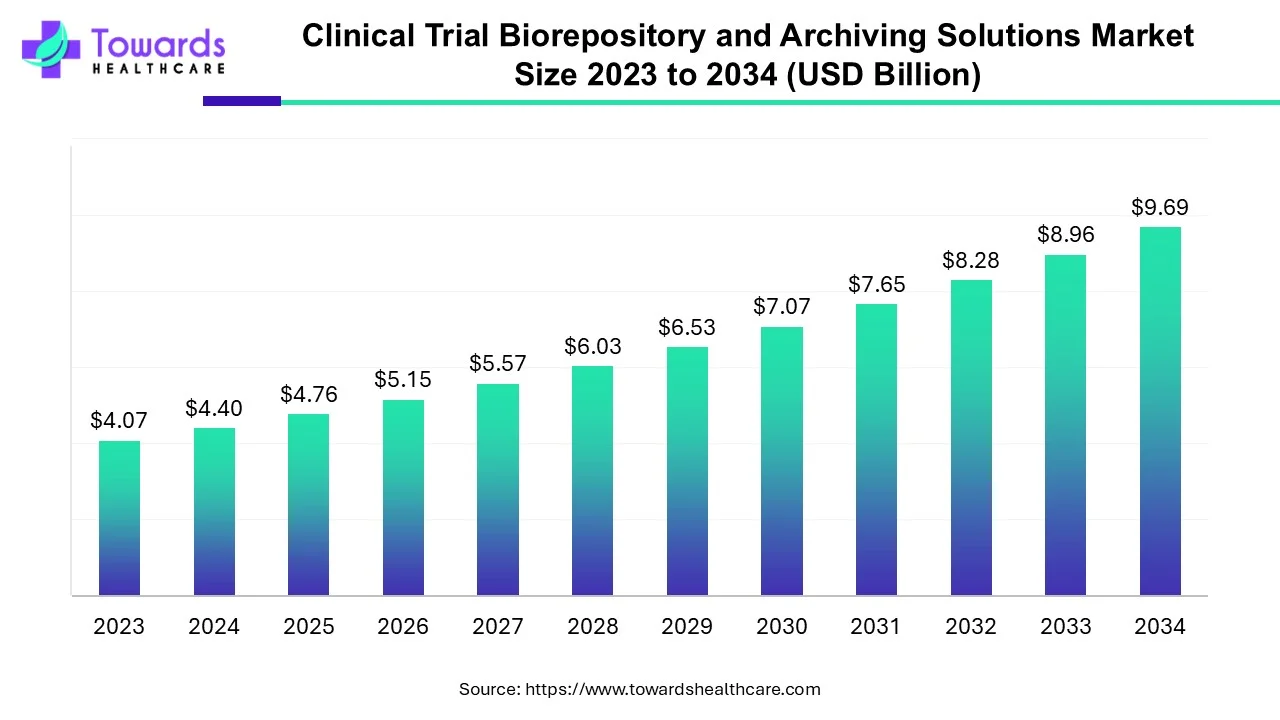
The global clinical trial biorepository and archiving solutions market size is calculated at US$ 4.76 in 2025, grew to US$ 5.15 billion in 2026, and is projected to reach around US$ 10.48 billion by 2035. The market is expanding at a CAGR of 8.21% between 2026 and 2035. Growing research and development in various fields of healthcare is driving the clinical trial biorepository and archiving solutions market.
Valid testing and study findings are crucial in the dynamic field of clinical research, which is why dependable data retrieval, archiving, and storage are crucial steps in the research process. This requirement is satisfied by biorepositories and archiving facilities, which offer incredibly effective, secure, and safe ways to receive, handle, store, and distribute biological specimens for scientific research and clinical trials. In addition to meeting clinical and scientific demands, biorepositories must also foresee future regulatory developments and proactively and flexibly adjust to changing needs. For storage and archiving services to meet changing consumer needs, they must have the infrastructure, capacity, and flexibility to adapt.
Clinical trial biorepository and archiving solutions involve the organized collection, preservation, storage, retrieval, and management of biological specimens and trial records throughout and after clinical studies. The market is expanding as clinical research generates larger volumes of biological samples and long-term documentation requiring controlled, reliable management. Trends include centralized repositories, specialized specimen logistics, digital recordkeeping, and integrated inventory platforms. Future opportunities are emerging through decentralized trials, personalized medicine, and long-term sample utilization for secondary research. Technological advancements such as automated storage systems, barcode and RFID tracking, cloud-based platforms, environmental monitoring, and AI-supported inventory management are improving accessibility and operational efficiency. Key drivers include increasing clinical trial complexity, growing demand for sample traceability, extended specimen retention requirements, and the need to maintain data integrity. Greater emphasis on standardized workflows and secure archival infrastructure is further supporting adoption across research organizations.
The demand for high-quality, well-documented biospecimens for genomic profiling and biomarker research is driving increased investment in specialized biobanking. Cancer research, the main driver of precision medicine, requires the long-term preservation of high-integrity tissue samples for retrospective biomarker discovery.
To enhance accuracy and maintain sample integrity, biorepositories are implementing automated cold storage (-80 °C and liquid nitrogen) and robotic sample handling to cope with the growing number of samples. Biobanks are increasingly utilizing advanced robotic systems to reduce human interaction with samples. This helps to lower the risks of cross-contamination and temperature fluctuations during long-term storage.
Biorepositories have joined the Big Data age, which calls for new AI methods, machine learning, deep learning tools, and algorithms in addition to new IT technologies. With better-quality biobanking data, these characteristics support the paradigm change toward data-driven science. The issue of limited local storage capacity can be resolved with the aid of cloud storage and other emerging data storage technologies. AI may be used to streamline clinical trial pain points in order to lower costs and enhance patient outcomes. The problems with clinical trial supply management may be resolved with the use of AI and machine learning technology. A skilled supply manager or subject matter expert may improve supply chain strategies for pharmaceutical firms, reduce hazards like overproduction, overstocking, and overdistribution, and ultimately increase efficiency and cost-effectiveness by utilizing these cutting-edge solutions.
Driver
Rising Personalized Medicine Demand
The market for archiving solutions and clinical trial biorepositories The growing need for tailored treatment is driving tremendous expansion in the industry. Advanced biorepositories are becoming more and more necessary as a result of the move towards precision healthcare and the increased focus on gathering and evaluating patient-specific data. Effective storage and management of biological samples is essential to personalized medicine because it allows researchers and pharmaceutical companies to obtain high-quality data for their studies. Additionally, more organizations and institutions are funding research projects that call for sizable biological material repositories.
Restraint
Strict Regulatory Compliance
The complex regulations that control the clinical trial process, from submitting a dossier to approving new medications, are significant barriers keeping biopharmaceuticals from investing in the creation of novel therapies. Biopharmaceutical firms apply for approval of a certain medication in a number of countries. Businesses in areas like the EU are discouraged from investing in R&D since they have to file separate applications in several countries, which takes a very long time.
Opportunity
Increasing Collaboration Among CROs & Pharmaceutical Companies
The market expansion for clinical trial biorepository and archiving systems may be fueled by an increase in alliances and cooperation between pharmaceutical corporations and contract research organizations for clinical trial projects. Large pharmaceutical companies contract with CROs to handle clinical trial operations because these experts may provide benefits, including lower prices, quicker turnaround times, and specialized knowledge that drug manufacturers might not have on staff. CROs broaden the scope of their services to include end-to-end trial assistance. This includes supporting more recent fields, such as the development of genomic/companion diagnostics, site feasibility studies, and real-world evidence research. The demand for integrated data and sample management systems that can facilitate cooperative, multi-site research is increasing as pharmaceutical-CRO connections get stronger.
| Metric | Details |
| Market Size in 2026 | USD 5.15 Billion |
| Projected Market Size in 2035 | USD 10.48 Billion |
| CAGR (2026 - 2035) | 8.21% |
| Leading Region | North America by 49% |
| Historical Data | 2020 - 2023 |
| Base Year | 2025 |
| Forecast Period | 2026 - 2035 |
| Measurable Values | USD Millions/Units/Volume |
| Market Segmentation | By Service, By Product, By Phase, By Region |
| Top Key Players | Medpace, American Type Culture Collection (ATCC), Cell&Co BioServices (Cryoport), Brooks Life Sciences (Azenta, Inc.), Patheon (Thermo Fisher Scientific, Inc.), Precision Medicine Group, LLC., Labcorp Drug Development, Q2 Solutions, LabConnect, Charles River Laboratories |
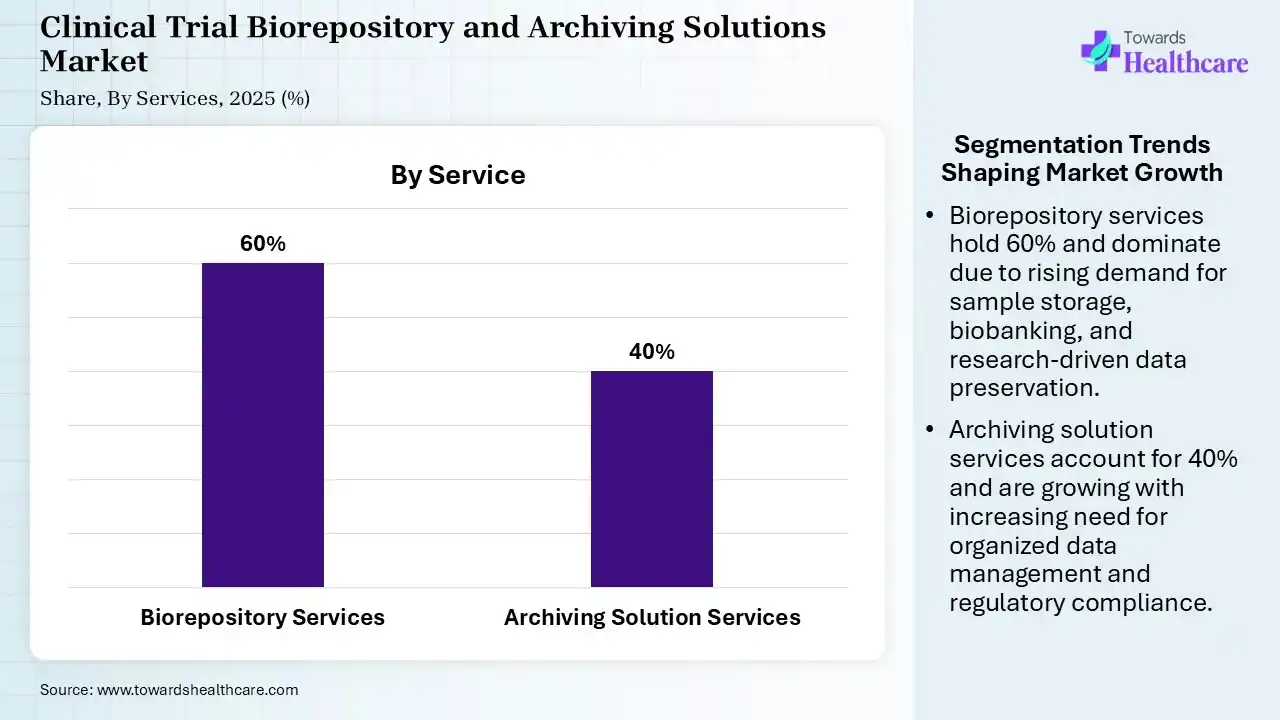
| Segments | Shares % |
| Biorepository Services | 60% |
| Archiving Solution Services | 40% |
The Biorepository Services Segment Dominated
By service, the biorepository services segment dominated the clinical trial biorepository and archiving solutions market by 60% share in 2025. By guaranteeing accountability, traceability, and quality control, a central biorepository for a network of multisite clinical trials enhances the value of multisite clinical trials. High-quality standardized specimens will be supplied via a central biorepository that adheres to best practices and a quality management system. The growth of the specimen collection bMOP and personnel education and training are also crucial. Planning and carrying out multi-site research may benefit from the quality control of specimen integrity provided by a central biorepository.
The Archiving Solutions Services Segment: Significant Growth
By service, the archiving solution services segment is estimated to grow at a significant rate in the clinical trial biorepository and archiving solutions market during the forecast period. Currently, underdeveloped nations are where the majority of clinical trials are carried out. Biopharmaceutical firms are outsourcing clinical trials to countries due to the problems in patient recruiting and the rising expense of clinical trials in certain established economies. The requirement for various archiving solutions, including material indexing, real-time material management systems, tracking solutions, and multi-site archiving solutions, is anticipated to increase as a result of the globalization of clinical trials. This will help to propel the expansion of the market.
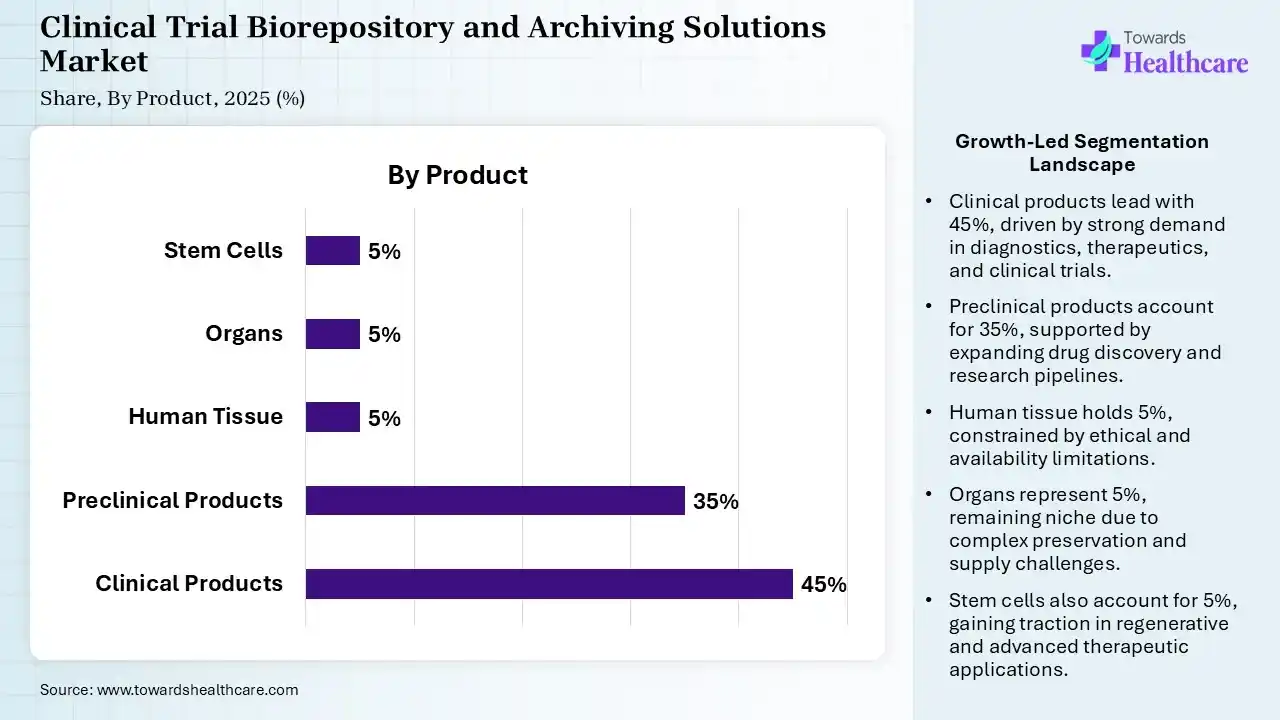
| Segments | Shares % |
| Clinical Products | 45% |
| Preclinical Products | 35% |
| Human Tissue | 5% |
| Organs | 5% |
| Stem Cells | 5% |
| Other Biospecimens | 5% |
The Clinical Products Segment Dominated in 2025
By product, the clinical products segment was dominant in the clinical trial biorepository and archiving solutions market by 45% in 2025. The materials utilized in clinical trials, including experimental, placebo, and comparative drug studies, are known as CTMs. The production of these materials is essential to the clinical trial's effectiveness since any change in the CTM's quality or composition might affect how accurately the trial findings are obtained. Clinical trials are changing at the same time due to the emphasis on virtual, hybrid, and decentralized models. This is especially beneficial given the number of clinical studies that are presently being conducted; as of May 8, 2023, there were around 451,538 registered clinical trials.
The Preclinical Products Segment: Significantly Growing
By product, the preclinical products segment is estimated to grow at a significant rate in the clinical trial biorepository and archiving solutions market during the forecast period. Pre-clinical manufacturing includes a number of subprocesses, such as quality control, process validation, scale-up, drug formulation development, and manufacturing process development. For each of these procedures to guarantee the safety and effectiveness of the final product, several products, careful planning, accuracy, and adherence to strict regulatory criteria are necessary.
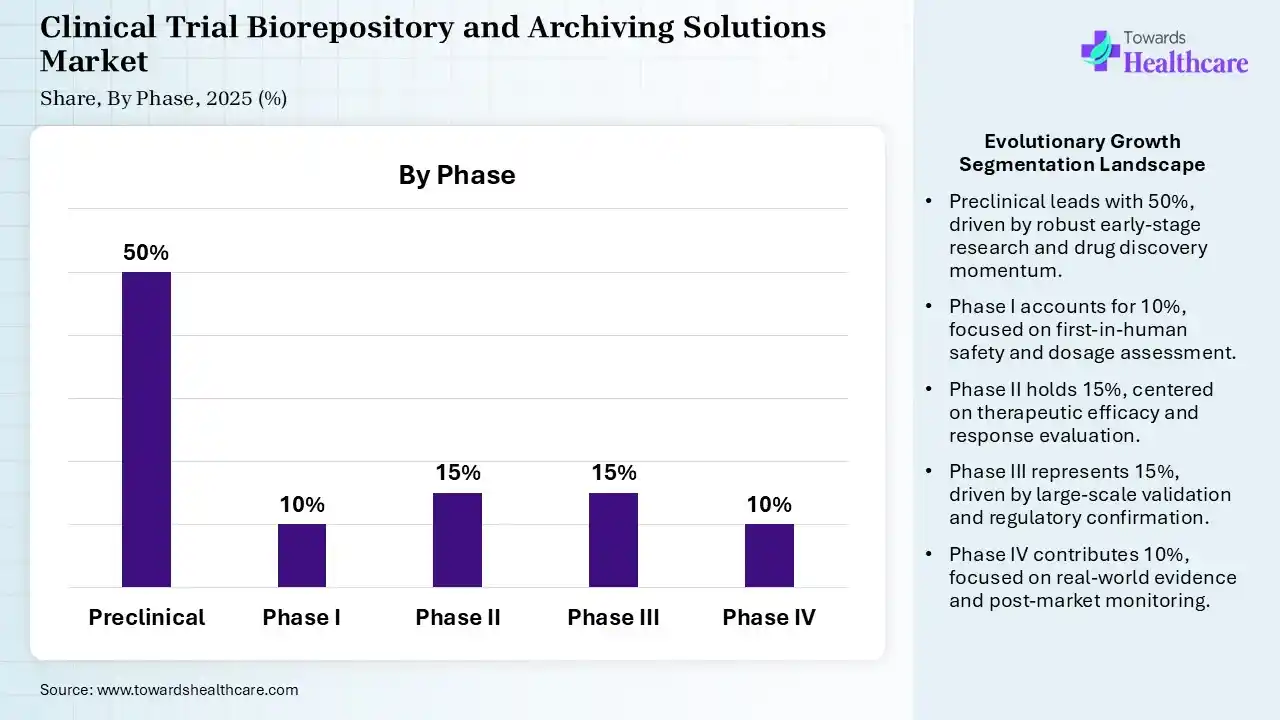
| Segments | Shares % |
| Preclinical | 50% |
| Phase I | 10% |
| Phase II | 15% |
| Phase III | 15% |
| Phase IV | 10% |
The Preclinical Segment Led in 2025
By phase, the preclinical segment held the major share of the clinical trial biorepository and archiving solutions market by 50% share in 2025. To create more effective and profitable drug development programs, preclinical research is essential. In order to make well-informed decisions about drug development and ultimately achieve success in drug discovery projects, successful drug development programs rely on collecting data from routine preclinical studies, determining when they might be less predictive, and then moving forward with considering additional scientifically appropriate preclinical studies.
The Phase II Segment: Fastest-Growing
By phase, the phase II segment is anticipated to be the fastest-growing in the clinical trial biorepository and archiving solutions market during the predicted timeframe. Phase 2 studies are intended to determine whether a medication offers enough activity or promise of efficacy or whether it offers an additional benefit to justify additional research in a conclusive phase 3 study. There are benefits to switching to Phase 2 clinical trials in terms of medication performance, stability, and patient compliance. This action entails meticulous preparation for formulation development, scaling up manufacturing, and regulatory compliance.
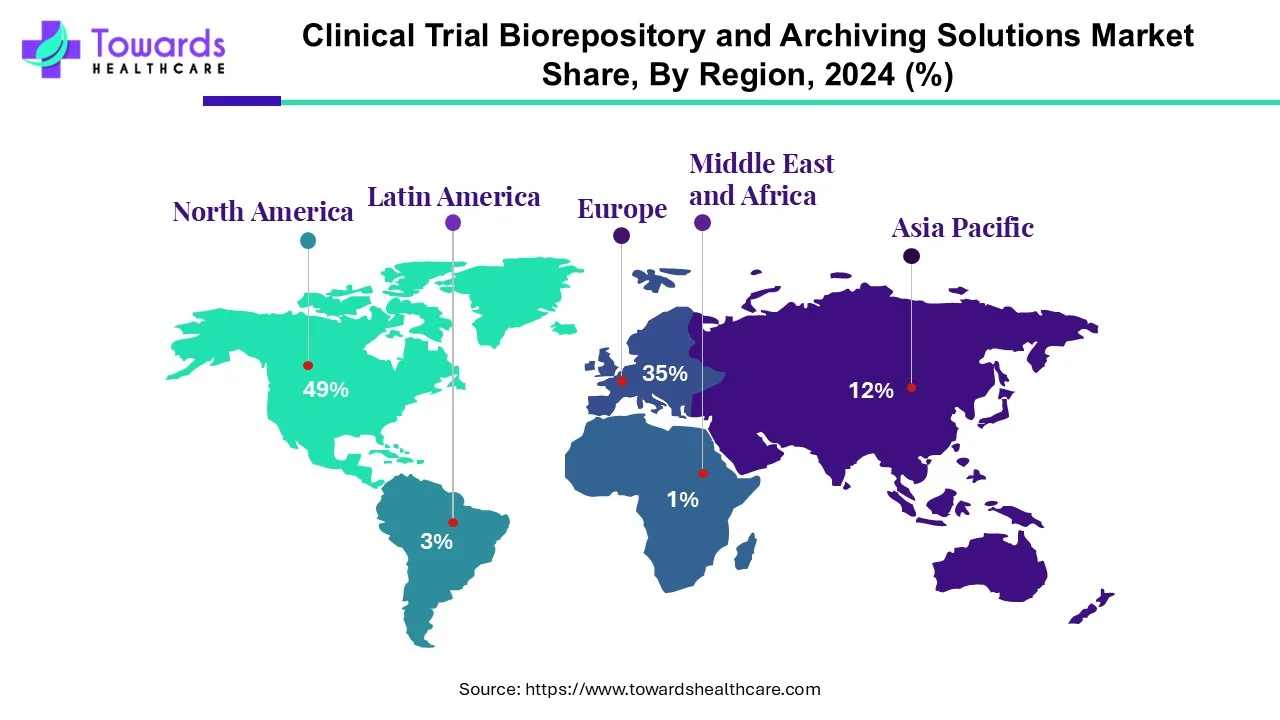
North America dominated the clinical trial biorepository and archiving solutions market share by 49% in 2025. because of its highly concentrated pharmaceutical and biotechnology businesses, substantial investments in clinical research, and sophisticated healthcare infrastructure. Its wide network of biorepositories, strong clinical trial ecosystem, and strict regulatory frameworks that guarantee high standards of sample handling and data integrity are what propel the area to its leadership.
Furthermore, North America's market dominance is supported by its significant investment in R&D as well as its strong emphasis on innovation and technology adoption. North America continues to be the most influential region in the global clinical trial biorepository & archiving solutions landscape due to its established infrastructure and leadership in clinical research, even though other regions like Europe and the Asia Pacific are expanding quickly and making significant contributions to market expansion.
U.S. Market Trends
The need for clinical trial storage and archiving solutions is being driven by the increasing number of clinical trials in the United States, which is helping to boost the market's revenue growth in the nation. The United States had the most registered trials (186,497) between 1999 and June 2024, according to the World Health Organization. This pattern demonstrates how important the United States is to the advancement of clinical research worldwide, which supports the market for biorepository and archiving systems ongoing expansion. The United States also makes significant investments in medication development research and development, backed by financing from the public and commercial sectors.
Canada Clinical Trials Biorepository Market Gains Momentum Through Research Infrastructure
Canada’s market is significantly growing due to increasing demand for organized biological specimen management across clinical research. Expanding biobank capabilities and collaborations between research institutions are supporting sophisticated sample preservation. Growing adoption of standardized storage practices, digital inventory systems, and temperature-controlled facilities is also improving specimen accessibility and strengthening the need for reliable biorepository and archiving solutions.
Asia Pacific is estimated to host the fastest-growing clinical trial biorepository and archiving solutions market by 12% share during the forecast period because of its growing clinical trial market and rising healthcare infrastructure spending. Large patient populations, increased healthcare spending, and an increase in the number of pharmaceutical and biotechnology businesses are all contributing to the development of countries like China and India as important centers for clinical research. Favorable legislative frameworks, affordable research possibilities, and developments in biobanking technology all contribute to the region's market expansion. The need for cutting-edge biorepository solutions is rising as clinical trials and research activities spread throughout the Asia Pacific, making the region a major participant in the worldwide market.
China Market Trends
Citeline’s recent white paper reported that 31% of the world’s clinical trials initiated between 2019 and 2023 were conducted in China. Additionally, China is scaling up support for clinical trials, contributing to the acceleration of its new drug development.
India Clinical Trials Biorepository Market Expands with Rising Research Capacity
India’s market is notably growing as clinical research organizations and healthcare institutions strengthen their capabilities for managing biological specimens. Increasing participation in multinational trials is creating demand for dependable sample preservation and documentation. Growing use of centralized storage facilities, digital specimen tracking, and standardized archival workflows if further improving sample accessibility and supporting wider adoption of specialized biorepository solutions.
Europe is expected to grow at a notable rate in the clinical trial biorepository and archiving solutions market with share of 35% in the foreseeable future. The increasing number of clinical trials and favorable government support drive the market. In 2023, 1,978 clinical trials were conducted in Europe, accounting for 12% of the global trials. Numerous government organizations support the conduct of clinical trials and provide funding. The increasing collaborations among researchers and biobanks foster the market.
Germany Market Trends
Germany is at the forefront of recognizing the economic impact on its medical research ecosystem and aims to revitalize the clinical trial landscape. The German government makes efforts to reduce the bureaucracy for new trials and make it easier for new trial concepts like decentralized trials and trials for innovative therapies.
UK Market Trends
The UK Biobank is a large-scale biomedical database and research resource funded by government and charitable initiatives. The database included whole-genome sequencing data for all 500,000 participants in 2023. In January 2025, the UK Biobank launched the world’s largest study of proteins circulating in human bodies. The project aims to measure up to 5,400 proteins in each of 600,000 samples.
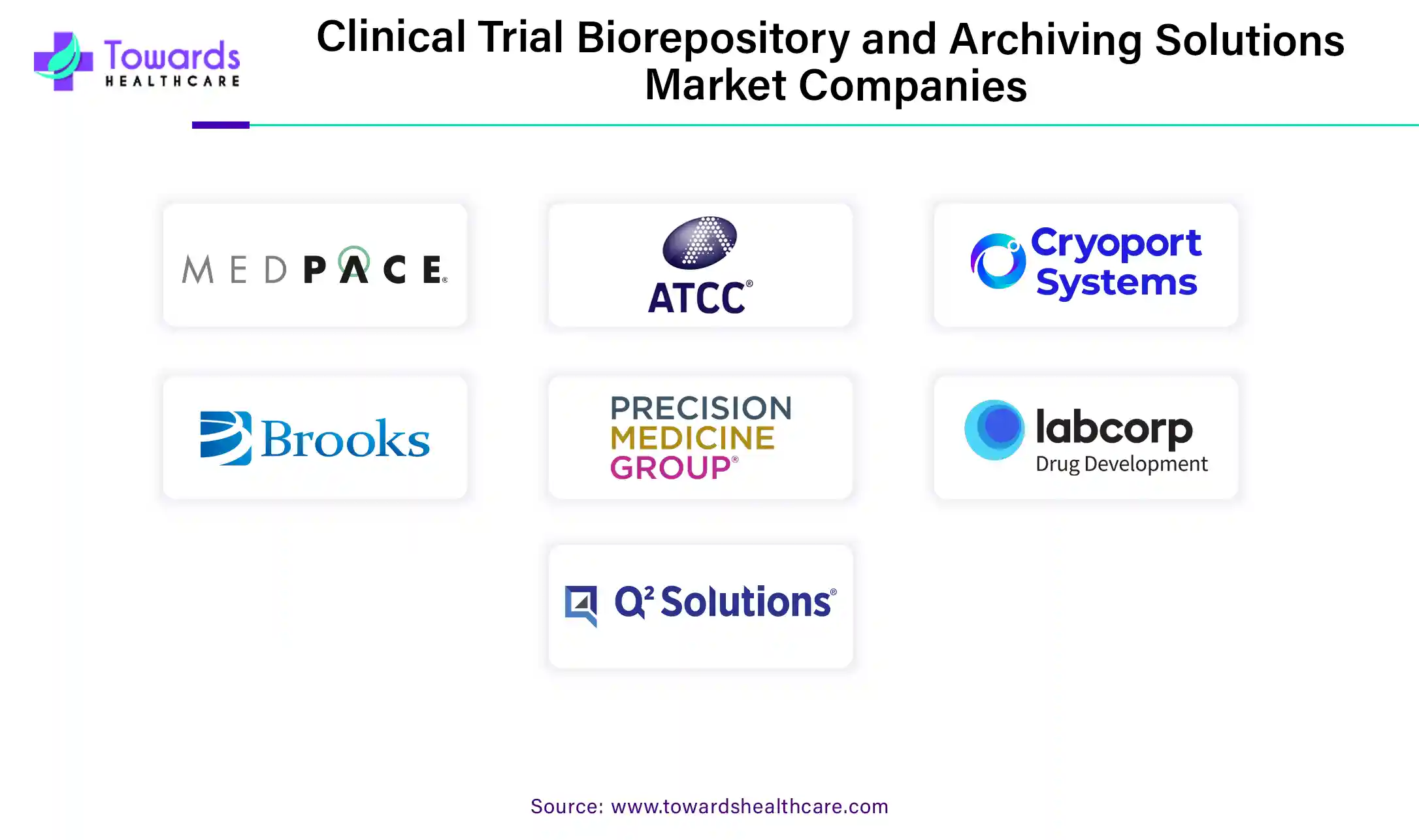
| Companies | Description |
| Medpace | Medpace offers comprehensive Clinical Trial Biorepository and Archiving Solutions for specimen management across all drug development phases (I-IV). |
| American Type Culture Collection (ATCC) | ATCC is a prominent non-profit in Clinical Trial Biorepository and Archiving Solutions, known for its focus on biological standards and safe specimen management, providing full support for clinical research, including sample collection kits and cGMP-compliant storage and distribution. |
| Cell&Co BioServices (Cryoport) | Cell&Co BioServices, a Cryoport subsidiary, provides ISO-compliant biorepository, archiving, and clinical sample management services, ensuring secure management of biological and chemical samples throughout their lifecycle. |
| Brooks Life Sciences (Azenta, Inc.) | The company features a unified 'sample-to-insight' system that manages biological assets throughout the clinical trial process, from collection and transport to long-term storage. |
| Patheon (Thermo Fisher Scientific, Inc.) | Patheon, part of Thermo Fisher Scientific, offers end-to-end, cGMP-compliant solutions for the secure storage and management of biological samples and clinical materials during all drug development phases. |
Strengths
Weaknesses
Opportunities
Threats
By Service
By Product
By Phase
By Region







Principal Consultant
Payal Rabde is a Healthcare Market Research Analyst at Towards Healthcare Research & Consulting with 4+ years of experience in pharmaceuticals, biotechnology, medical devices, and life sciences.
Learn more about Payal Rabde

Reviewed By
Aditi Shivarkar is a seasoned professional with over 14 years of experience in healthcare market research. As a content reviewer, Aditi ensures the quality and accuracy of all market insights and data presented by the research team.
Learn more about Aditi Shivarkar