The global deep brain stimulation devices market size is predicted to increase from USD 2.34 billion in 2026 to approximately USD 5.04 billion by 2035, expanding at a CAGR of 8.9% from 2026 to 2035. The growth in brain-related disorders globally is increasing the demand for deep-brain stimulation (DBS) devices. Growing demand for minimally invasive procedures, expanding healthcare, technological advancements, and new device launches are also enhancing the market growth.
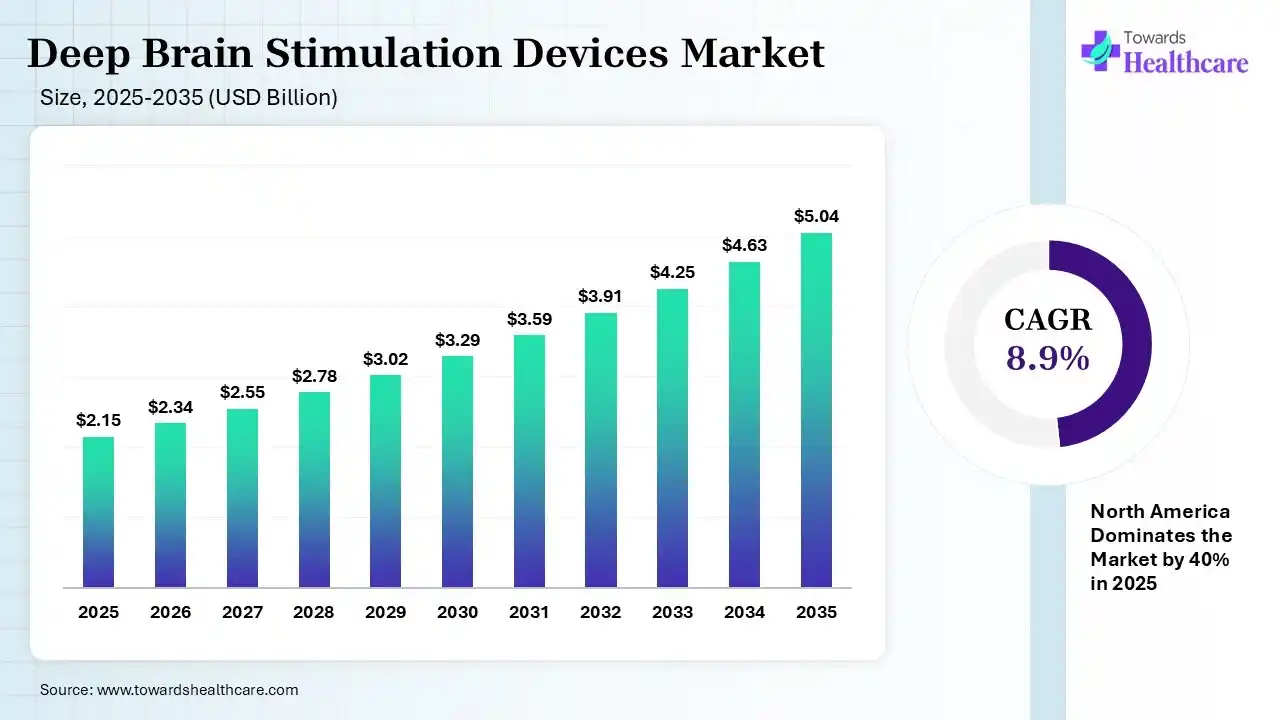
The deep brain stimulation devices market is driven by growing neurological disorders, increasing geriatric population, and technological advancements. The deep brain stimulation devices refer to small, implantable electronic systems that stimulate the brain to control abnormal signals and treat brain-related disorders. These devices are used for the treatment of movement disorders, severe tremors, mental health conditions, and other neurological symptoms.
Deep brain stimulation (DBS) devices are implantable medical system that deliver controlled electrical impulses to specific areas of the brain to treat neurological and movement disorders such as Parkinson’s disease, essential tremor, dystonia, epilepsy, and selected psychiatric conditions. The deep brain stimulation devices market is expanding due to the rising prevalence of neurological disorders, increasing preference for minimally invasive treatment options, and growing demand for long-term symptom management. Technological advancements in adaptive (closed-loop) stimulation, AI-assisted programming, directional leads, MRI-compatible systems, and rechargeable implantable pulse generators are enabling treatment precision and improved patient outcomes. Increasing clinical research, expanding indicators for neuromodulation, and greater investment in neuroscience innovation are creating significant future opportunities. Improved healthcare infrastructure, supportive reimbursement policies, and continuous advancements in neuroimaging and digital health integration are further accelerating market growth and expanding patient access to advanced DBS therapies.
AI plays an important role in the deep brain stimulation devices market as it offers adaptive stimulation, enabling real-time adjustment of brain signals. It helps in symptom prediction, the development of personalized treatments based on patient brain activity patterns, remote monitoring, better decision-making, and processing larger neural datasets. AI also helps in optimization of stimulation parameters, enhances the accuracy, and minimizes the side effects associated with the devices.
Shift Towards Minimally Invasive Surgeries
The growing demand for minimally invasive surgeries is increasing the adoption of deep brain stimulation devices over traditional brain surgeries to reduce damage to the brain tissues. Their adjustability and reversibility are also increasing their demand.
Expanding Applications
The expanding applications of the deep-brain stimulation devices are increasing their use for the treatment of various neurological disorders beyond movement disorders. Their growing innovations are introducing their new application for the treatment of obsessive-compulsive disorders, depression, Alzheimer’s disease, and anxiety.
Technological Advancements
A rise in technological advancements is driving the development of new deep brain stimulation devices with closed-loop systems, AI-based adaptive stimulation, and rechargeable implants. These growing innovations are enhancing the device accuracy, safety, and patient outcomes.
| Table | Scope |
| Market Size in 2026 | USD 2.34 Billion |
| Projected Market Size in 2035 | USD 5.04 Billion |
| CAGR (2026 - 2035) | 8.9% |
| Leading Region | North America by 40% |
| Key Applications | Parkinson's Disease, Essential Tremor, Dystonia, Epilepsy, Obsessive-Compulsive Disorder (OCD), Treatment-Resistant Depression, Chronic Neurological Disorders |
| Primary End Users | Hospitals, Neurosurgical Centers, Specialty Neurology Clinics, Academic Medical Centers |
| Key Growth Drivers | Rising neurological disease prevalence, aging population, expanding indications, technological advancements, rechargeable neurostimulators |
| Measurable Values | USD Millions/Units/Volume |
| Market Segmentation | By Product Type, By Application, By End User, By Technology, By Region |
| Top Key Players | Medtronic plc., Abbott Laboratories, Boston Scientific, Beijing PINS Medical, Aleva Neurotherapeutics, SceneRay Corporation, Newronika S.p.A., Renishaw plc, NeuroPace, Inc. |
| Segment | Share 2025 (%) |
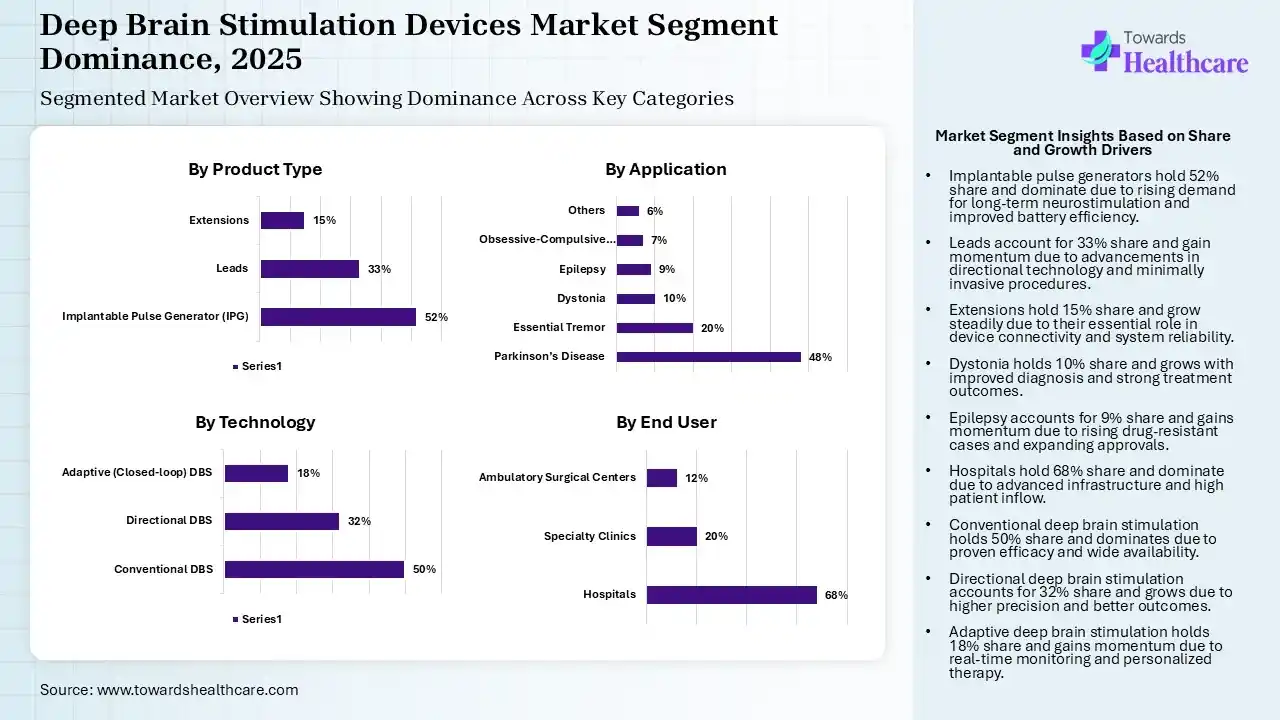
| Implantable Pulse Generator (IPG) | 52% |
| Leads | 33% |
| Extensions | 15% |
The Implantable Pulse Generator (IPG) Segment Dominated the Market With 52% in 2025
The implantable pulse generator (IPG) segment led the deep brain stimulation devices market with 52% share in 2025, due to rising demand for long-term neurostimulation therapies. A growth in the patient pool with neurological disorders also increased the demand for these devices. Continuous technological advancements also enhanced battery life and efficiency, which increased their use.
The leads segment held the second-largest share of 33% of the market in 2025 and is expected to witness the fastest growth with a CAGR of 9.8% during the forecast period, driven by increasing use of directional leads, which improves precision and outcomes. Surge in minimally invasive neurosurgeries is also driving their demand. Advancements in electrode design enhance targeting accuracy, promoting their adoption rates.
The extensions segment held 15% of the deep brain stimulation devices market share in 2025, as it acts as the essential component ensuring connectivity between IPG and leads, driving steady demand. Increasing replacement procedures also contribute to their growth. Growing focus on enhancing the system reliability and durability is reducing complications and supporting their adoption.
| Segment | Share 2025 (%) |
| Parkinson’s Disease | 48% |
| Essential Tremor | 20% |
| Dystonia | 10% |
| Epilepsy | 9% |
| Obsessive-Compulsive Disorder (OCD) | 7% |
| Others | 6% |
The Parkinson’s Disease Segment Dominated the Market With 48% in 2025
The Parkinson’s disease segment held a major revenue share of 48% of the deep brain stimulation devices market in 2025, due to the high prevalence of Parkinson’s globally, which contributed to the major adoption of deep brain stimulation devices. DBS significantly improved motor symptoms and quality of life, which enhanced their adoption rates. Their strong clinical validation also supported their widespread usage.
The Essential Tremor segment held the second-largest share of 20% of the market in 2025, due to increasing diagnosis rates. An aging population also contributes to their higher incidence, which boosts the adoption of deep-brain stimulation devices. DBS offers effective tremor suppression where medication fails, enhancing patient satisfaction.
The Dystonia segment held 10% of the deep brain stimulation devices market share in 2025, due to growing awareness and improved diagnosis rates, which increases the demand for deep brain stimulation devices. DBS shows strong outcomes in refractory cases, which drives their adoption rates. Expanding clinical trials are also propelling their innovations.
The Epilepsy segment held 9% of the market share in 2025 and is expected to expand rapidly with a CAGR of 9.7% during the forecast period, due to rising drug-resistant epilepsy cases, driving DBS demand. Advancements in neurostimulation are improving seizure control. Growing regulatory approvals are expanding their application scope, creating new opportunities.
| Segment | Share 2025 (%) |
| Hospitals | 68% |
| Specialty Clinics | 20% |
| Ambulatory Surgical Centers | 12% |
The Hospitals Segment Dominated the Market With 68% in 2025
The hospitals segment contributed the biggest revenue share of 68% of the deep brain stimulation devices market in 2025, due to the availability of advanced surgical infrastructure, which supported their dominance. The presence of skilled neurosurgeons and emergency management capability also increased the use of deep-brain stimulation devices. High patient inflow also solidified the hospital-based treatments.
The specialty clinics segment held the second-largest share of 20% of the market in 2025 and is expected to gain the highest share with a CAGR of 9.4% during the forecast period, due to increasing focus on neurological specialty care, which boosts their adoption. These clinics offer cost-effective and targeted treatment solutions, which attract patients. Additionally, rising outpatient procedures and personalized patient management are also supporting their growth.
The ambulatory surgical centers segment held 12% of the deep brain stimulation devices market share in 2025, due to growing preference for minimally invasive outpatient surgeries, which increases their use. Reduced hospital stay and faster recovery rates lower overall costs. Moreover, the presence of advanced DBS devices also enables complex procedures in ASCs.
| Segment | Share 2025 (%) |
| Conventional DBS | 50% |
| Directional DBS | 32% |
| Adaptive (Closed-loop) DBS | 18% |
The Conventional Deep Brain Stimulation Segment Dominated the Market With 50% in 2025
The conventional deep brain stimulation segment held the largest revenue share of 50% of the deep brain stimulation devices market in 2025, due to well-established technology with proven efficacy, which contributed to the widespread use. Strong clinical history also supported their continued adoption. Cost-effectiveness, high availability, safety, and simple designs also increased their use.
The directional deep brain stimulation segment held the second-largest share of 32% of the market in 2025, due to enhanced precision that reduces side effects and improves outcomes. Increasing surgeon preference also drives their demand, where technological innovation accelerates adoption. They also help in the development of personalized therapies, which promote their use in complex cases.
The adaptive (closed-loop) deep brain stimulation segment held 18% of the deep brain stimulation devices market share in 2025 and is expected to grow with the fastest CAGR of 11.2% during the forecast period, due to real-time brain signal monitoring, which improves treatment personalization. Ongoing R&D is expanding their clinical applications, and the rising demand for advanced neuromodulation also fuels their growth. Their enhanced energy efficiency, better clinical outcomes, and integration with sensors are also increasing their adoption rates.
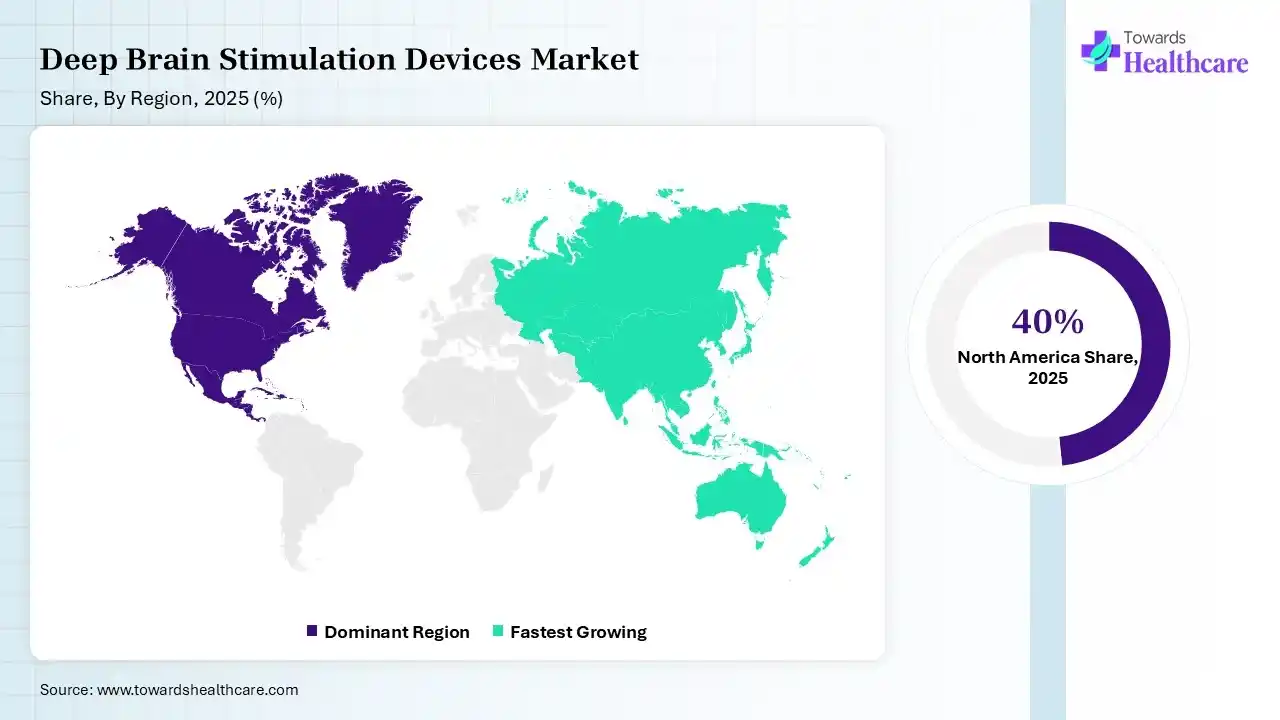
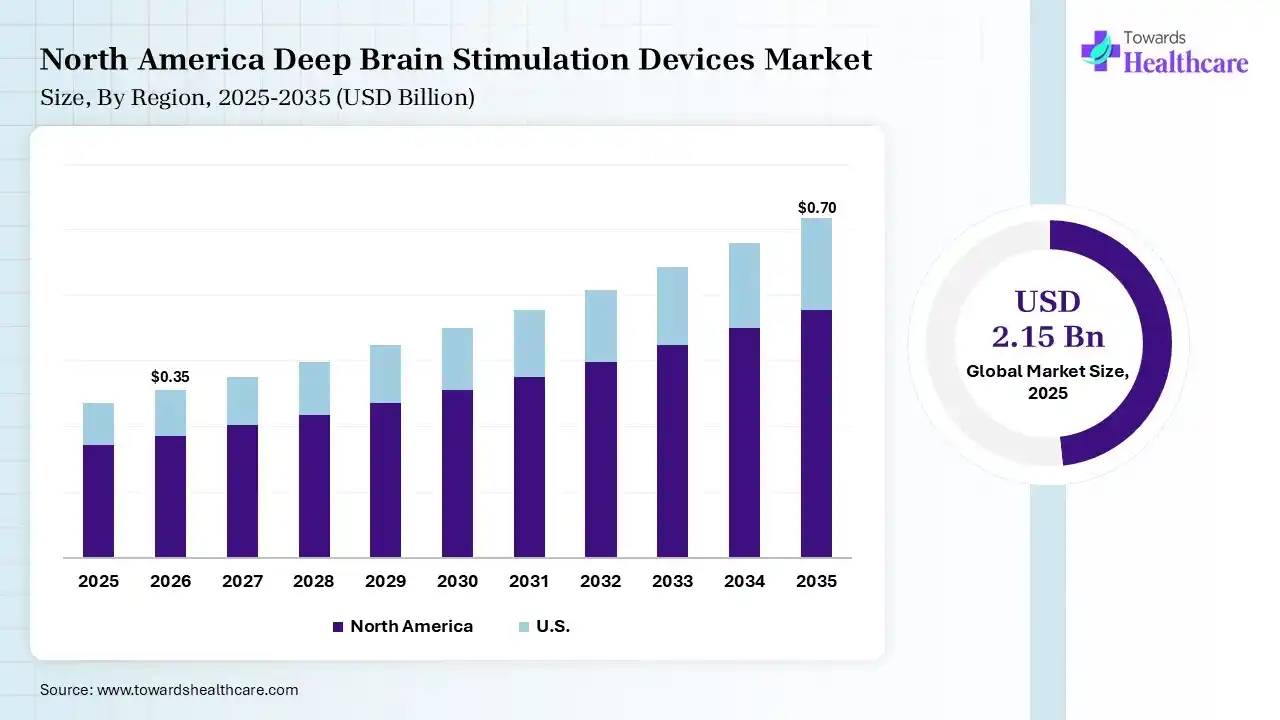
North America dominated the deep brain stimulation devices market with 40% in 2025, due to the presence of a strong healthcare infrastructure, which supported high adoption of deep brain stimulation devices. Favorable reimbursement policies also increased their procedures, where the presence of key market players accelerated their innovation. High healthcare spending and advanced R&D ecosystems also increased their innovations, which contributed to the market growth.
US Market Growth
The high prevalence of neurological disorders in the U.S. is driving the demand for deep-brain stimulation devices. Advanced technology adoption and a strong clinical research ecosystem also promote the growth of these devices. Advanced healthcare systems, major medical device companies, and high disease prevalence also increase the adoption and advancements of these devices.
Canada Strengthens Growth in the Deep Brain Stimulation Devices Market
Canada is experiencing significant growth in the deep brain stimulation devices market due to the rising prevalence of Parkinson’s disease and other neurological disorders, increasing adoption of advanced neuromodulation therapies, and strong government support for neuroscience research. Well-established healthcare infrastructure, growing availability of specialized neurosurgical centers, and continuous technological advancements in DBS systems are improving treatment outcomes and further accelerating market expansion.
Asia Pacific held 20% share of the deep brain stimulation devices market in 2025 and is expected to grow at the fastest CAGR of 10.1% during the forecast period, due to rapid healthcare infrastructure development, which increases the adoption of deep brain stimulation devices. A large patient pool also increases their demand, where growing medical tourism is also increasing their use. Growing health awareness and expanding government initiatives are also increasing their adoption rates, enhancing the market growth.
China Market Trends
The presence of a large population base in China drives high demand for deep-brain stimulation devices. Increasing healthcare investments and rising awareness also boost their adoption. Expanding healthcare infrastructures, medical device industries, and clinical research are also increasing their adoption as well as propelling their innovations.
India Emerges as a Fast-Growing Deep Brain Stimulation Devices Market
India is significantly growing in the deep brain stimulation devices market due to the increasing prevalence of Parkinson's disease and other neurological disorders, rising awareness of advanced neuromodulation therapies, and expanding access to specialized neurological care. Growing investments in healthcare infrastructure, increasing adoption of minimally invasive procedures, and advancements in neurotechnology are driving market growth. Improving affordability and expanding medical expertise are further supporting market expansion.
Europe is growing at a notable rate in the market. The growing prevalence of movement disorders in aged people and high neurologist density increase the adoption of deep brain stimulation devices. The shift to adaptive DBS systems and the rise in graphene-based brain implants help with expansion. The rise in adjustable neurostimulation devices and the established pain management ecosystem supports the overall growth.
Germany Market Trends
Germany is a major contributor to the market. The rise in neurodegenerative diseases and the strong medical technology industry increase the adoption of deep brain stimulation devices. The availability of specialized neurological centers and the rise in neuromodulation devices help with expansion. The transition to dual-channel devices and the neurological research base drive the overall growth.
France Market Trends
France is rapidly growing in the market. The increased suffering from diseases like tremors and Parkinson’s disease increases the adoption of deep brain stimulation devices. The rise in age-based degenerative disorders and strong reimbursement frameworks help with expansion. The increasing digital health research and the rise in obsessive-compulsive disorders boost the overall growth of the market.
Latin America is growing steadily in the market. The surge in neurological conditions and the prevalence of age-related brain diseases increase the adoption of deep brain stimulation devices. The rise in rechargeable DBS batteries and the expansion of trained functional neurosurgeons help with expansion. The rise in device intervention and enhanced reimbursement policies drive the overall growth.
Brazil Market Trends
Brazil is rapidly growing in the market. The rise in brain disorders and the prevalence of dystonia increases the adoption of deep brain stimulation devices. The increased clinical burden of chronic pain and device miniaturization help with expansion. The robust neurosurgery centers and knowledge of neurostimulation help with expansion. The surge in device-aided therapies boosts the overall market growth.
Argentina Market Trends
Argentina is growing in the market due to the prevalence of epilepsy and Parkinson’s disease. The increased rate of Alzheimer’s disease and the rise in surgical neuromodulation therapies increase demand for deep brain stimulation devices. The established public university hospitals and the rise in functional neurosurgery help with expansion. The high spending on pain management drives the growth.
The Middle East & Africa (MEA) is growing in the market. Surging neurodegenerative disorders and the need for long-term therapeutic solutions increase adoption of deep brain stimulation devices. The presence of advanced tertiary hospitals and national vision strategies helps with expansion. The increased awareness of DBS supports the overall growth of the market.
Saudi Arabia Market Trends
Saudi Arabia is growing substantially in the market. The high investments in neurological treatments and the increasing movement disorder conditions increase the adoption of deep brain stimulation devices. The rise in dementia and the high utilization of MRI-safe devices help with expansion. The surge in minimally invasive care and the expansion of neurostimulation technology help with growth. The interest in complex neuromodulation therapies boosts the overall market growth.
| Ecosystem Segment | Key Participants | Role in Market |
| Technology Providers | Medtronic, Abbott, Boston Scientific | Develop neurostimulation platforms, electrodes, pulse generators, programming technologies |
| Product Manufacturers | Medtronic, Abbott, Boston Scientific, PINS Medical, SceneRay | Manufacture implantable DBS systems and accessories |
| Service Providers | Mayo Clinic, Cleveland Clinic, Barrow Neurological Institute | DBS implantation, patient management, post-operative programming |
| Platform Providers | Medtronic, Abbott, Boston Scientific | Integrated neuromodulation platforms with physician programming software |
| CROs (Clinical Research) | ICON plc, IQVIA, Syneos Health, Medpace | Support DBS clinical trials and regulatory studies |
| Software Vendors | Abbott, Medtronic, Boston Scientific | Device programming, remote monitoring, patient management software |
| Research Institutions | University of Oxford, Mayo Clinic, Cleveland Clinic, Stanford University, University College London | Conduct DBS innovation, clinical studies, and indication expansion research |
| End-User Industries | Healthcare Providers, Academic Research Centers, Specialty Neurology Networks | Clinical deployment and research utilization |
| Tier 1 | Tier 2 | Tier 3 | |
| Typical Market Influence | 85% | 10% | 5% |
| Tier 1 | ||||
| Company Name | Headquarters | Country | Why Relevant to This Market | Key Products/Services |
| Medtronic | Minneapolis, Minnesota | USA | Pioneer and global market leader in DBS with extensive clinical evidence and installed base | Percept™ PC, Percept™ RC, Activa DBS Systems |
| Abbott | Abbott Park, Illinois | USA | Major neuromodulation company with advanced directional DBS technology | Infinity™ DBS System |
| Boston Scientific | Marlborough, Massachusetts | USA | Strong global DBS portfolio with segmented lead technology | Vercise™ Genus, Vercise™ Cartesia™ Leads |
| Tier 2 | ||||
| Company Name | Headquarters | Country | Why Relevant to This Market | Key Products/Services |
| Aleva Neurotherapeutics | Lausanne | Switzerland | Developing advanced directional DBS technologies | DirectSTIM DBS Platform |
| NeuroPace | Mountain View, California | USA | Strong implantable neurostimulation expertise applicable to neurological disorders | RNS System |
| Newronika | Milan | Italy | Commercializing closed-loop adaptive DBS systems | AlphaDBS System |
| Tier 3 | ||||
| Company Name | Headquarters | Country | Why Relevant to This Market | Key Products/Services |
| Rune Labs | San Francisco, California | USA | Supports DBS optimization through digital biomarkers and analytics | DBS Data Analytics Platform |
| Cala Health | Burlingame, California | USA | Neuromodulation expertise and neurological disorder treatment focus | Wearable Neuromodulation Solutions |
| Bioinduction Ltd | Bristol, England | United Kingdom | Developing advanced implantable neuromodulation technologies | Picostim Neurostimulator Platform |
In April 2026, “We are extremely proud to introduce this advanced technology in India, where Parkinson’s disease is an increasingly significant healthcare concern. Our mission has always been to alleviate pain, restore health, and extend life, and the introduction of this system reflects our continued commitment to that mission. This milestone not only reaffirms our dedication to addressing the growing burden of Parkinson’s disease but also strengthens our leadership in bringing cutting-edge healthcare technologies to India to ultimately improve patients’ quality of life”, said, Prateek Tiwari, Senior Director, Neuroscience & Specialty therapies, Medtronic India
By Product Type
By Application
By End User
By Technology
By Region






Principal Consultant
Payal Rabde is a Healthcare Market Research Analyst at Towards Healthcare Research & Consulting with 4+ years of experience in pharmaceuticals, biotechnology, medical devices, and life sciences.
Learn more about Payal Rabde

Reviewed By
Aditi Shivarkar is a seasoned professional with over 14 years of experience in healthcare market research. As a content reviewer, Aditi ensures the quality and accuracy of all market insights and data presented by the research team.
Learn more about Aditi Shivarkar