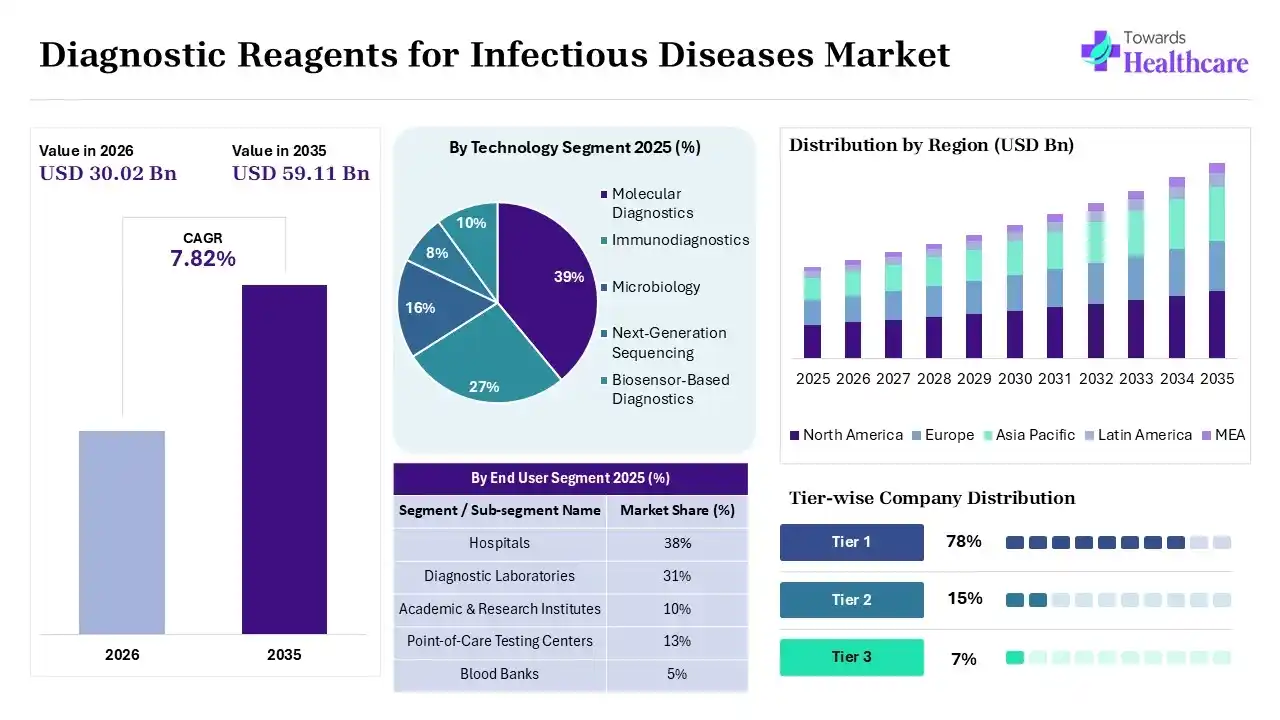
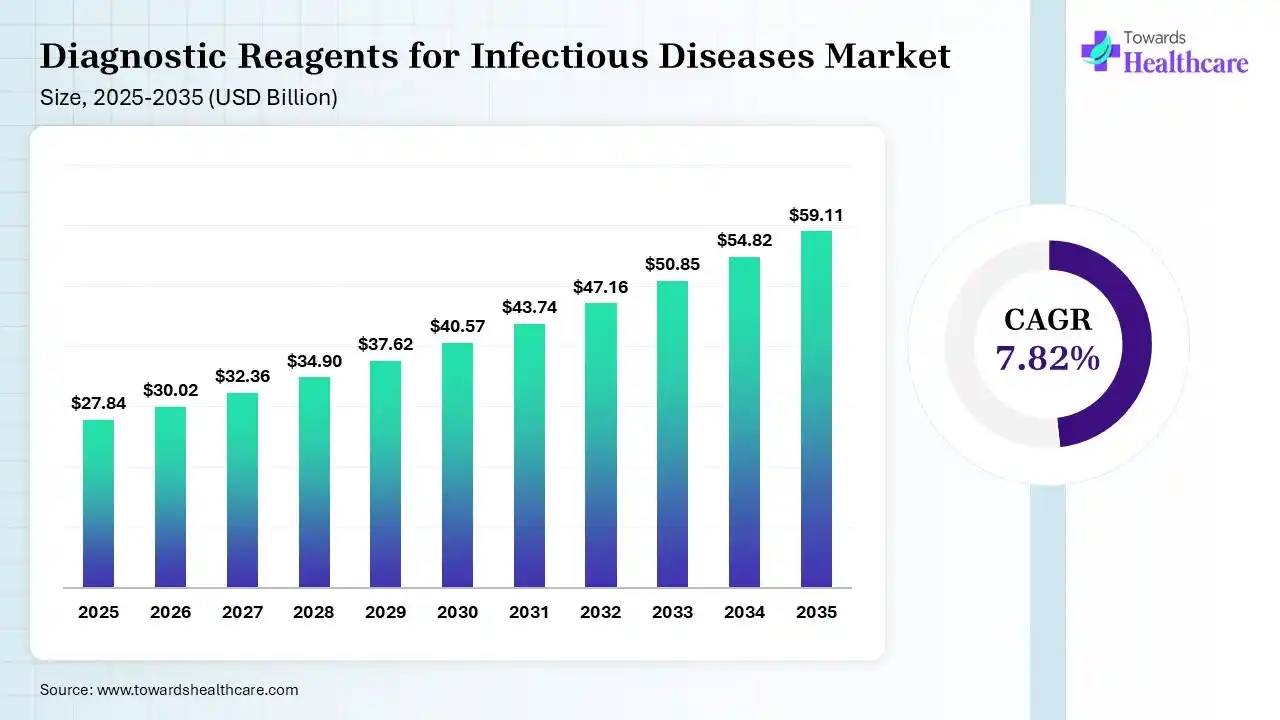
The global diagnostic reagents for infectious diseases market size is calculated at USD 27.84 billion in 2025, driven by growth in demand for high-throughput syndromic molecular assays. The market continues to grow in 2026 at USD 30.02 billion due to the growing adoption of multiplex diagnostic reagents, advancements in companion diagnostics, and improvements in next-generation sequencing reagents. It is expected to reach USD 59.11 billion by 2035 as growing healthcare investments, technological advancements, and demand for home-based care accelerate market expansion. The market is expected to grow at a CAGR of 7.82% during the forecasted period 2026-2035. North America accounted for 37% of the market in 2025 due to advanced healthcare infrastructure, robust reimbursement support, and continuous innovations.
The diagnostic reagents for infectious diseases refer to chemical, molecular, or biological substances used for the detection and identification of various infectious pathogens. They help in early disease detection, disease monitoring, and reducing the chances of their outbreaks.
Previously, infectious diseases were detected with the use of staining techniques and culture-based diagnostic techniques. The growth of antigens and antibodies led to an increase in the development of ELISA platforms, where interest in molecular diagnostics led to the development of the PCR technique. Furthermore, a rise in R&D activities promoted the development of multiplex molecular testing and next-generation sequencing platforms. The rapid healthcare digitalization is now accelerating the advancements in digital diagnostics and home-based testing solutions.
Based on the Payal Rabde analysis, the growing incidence of infectious diseases, rising demand for high-throughput syndromic molecular assays, and shift towards point-of-care testing are driving the market growth. The rise in the adoption of multiplex diagnostic reagents, advancements in next-generation sequencing reagents, expanding companion diagnostics, biosensor technologies, and AI integrations are also contributing to the market expansion.
Expansion of Molecular Diagnostic Testing
Increasing adoption of PCR and multiplex diagnostics is creating new market opportunities. The rise in the use of digital PCR and other molecular platforms are also increasing the use of diagnostic reagents.
Rising Adoption of Point-of-Care Testing
Expanding decentralized healthcare and rapid testing solutions are driving demand for point-of-care testing, which in turn is increasing the adoption of easy-to-use diagnostic reagents.
Increasing Integration of Automation and Digital Laboratories
Growing advancements in laboratory automation, workflow optimization, and digital diagnostic platforms are increasing the demand for diagnostic reagents for infectious disease diagnosis.
Growing Demand for Multiplex Infectious Disease Panels
The use of multiplex infectious disease panels is driving continuous usage of diagnostic reagents for simultaneous detection of multiple pathogens, improving clinical efficiency.
Shift Toward Precision Infectious Disease Diagnostics
Growing health awareness is increasing the use of personalized diagnostics, which are supported by genomic sequencing and advanced biomarkers.
| Table | Scope |
| Market Size in 2026 | USD 30.02 Billion |
| Projected Market Size in 2035 | USD 59.11 Billion |
| CAGR (2026 - 2035) | 7.82% |
| Historical Data | 2020 - 2023 |
| Base Year | 2025 |
| Forecast Period | 2026 - 2035 |
| Measurable Values | USD Millions/Units/Volume |
| Market Segmentation | By Product Type, By Disease Type, By Technology, By Sample Type, By End User, By Distribution Channel, By Region |
| Top Key Players | F. Hoffmann-La Roche Ltd, Danaher Corporation, Abbott Laboratories, Thermo Fisher Scientific Inc., bioMérieux SA |

| Segment | Share 2025 (%) |
| PCR Reagents & Kits | 32% |
| Immunoassay Reagents | 25% |
| Rapid Diagnostic Test (RDT) Reagents | 18% |
| Microbiology Reagents | 12% |
| Next-Generation Sequencing (NGS) Reagents | 8% |
| Other Diagnostic Reagents | 5% |
The PCR Reagents & Kits Segment Dominated the Market With 32% in 2025
The PCR reagents & kits segment led the diagnostic reagents for infectious diseases market with a 32% share in 2025, driven by high adoption of molecular diagnostics across hospitals and laboratories. They were also used for accurate pathogen detection. Continuous innovation also supported wider testing applications.
The rapid diagnostic test (RDT) reagents segment held the second-largest share of 18% of the market in 2025 and is expected to witness the fastest growth with a CAGR of 9.42% during the forecast period, due to expanding point-of-care testing, which increases demand. As per information gathered by Payal Rabde, rapid outbreak response also encourages their adoption. Low-cost decentralized diagnostics also accelerate market growth.
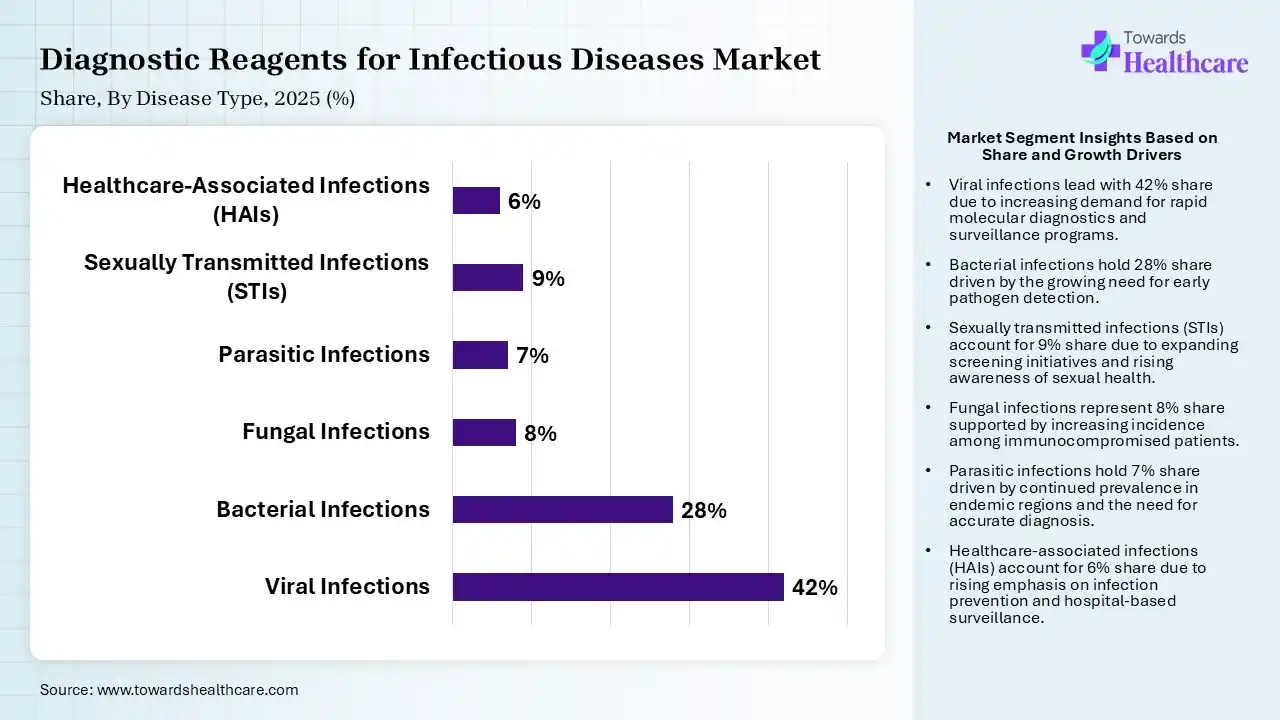
| Segment | Share 2025 (%) |
| Viral Infections | 42% |
| Bacterial Infections | 28% |
| Fungal Infections | 8% |
| Parasitic Infections | 7% |
| Sexually Transmitted Infections (STIs) | 9% |
| Healthcare-Associated Infections (HAIs) | 6% |
The Viral Infections Segment Dominated the Market With 42% in 2025
The viral infections segment accounted for the highest revenue share of 42% of the diagnostic reagents for infectious diseases market in 2025, driven by continuous monitoring of viral outbreaks, which sustained testing demand. Large screening programs also increased reagent consumption. Molecular diagnostics also improved detection accuracy, which increased test use.
The sexually transmitted infections (STIs) segment held the second-largest share of 9% of the market in 2025 and is expected to show the highest growth with a CAGR of 9.10% during the forecast period, due to expanded screening programs, which increase test volumes. Multiplex diagnostics also improves efficiency, increasing reagent consumption. Rising awareness also supports preventive healthcare.
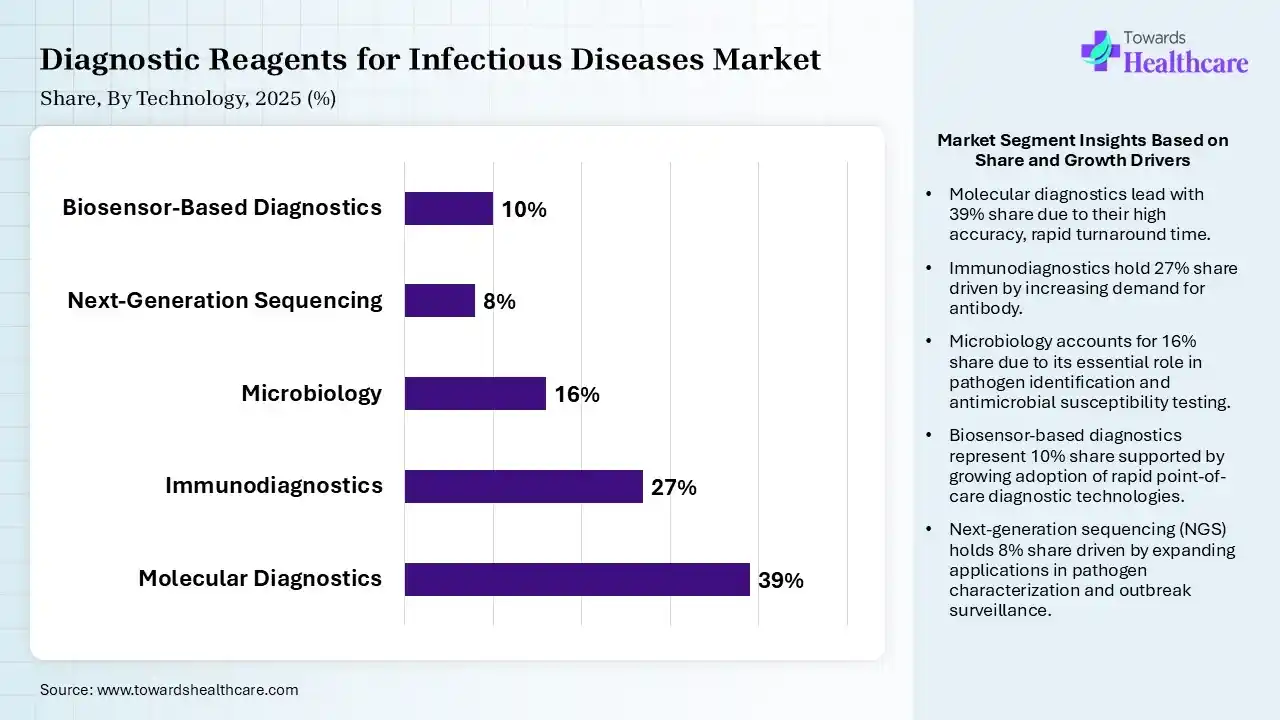
| Segment | Share 2025 (%) |
| Molecular Diagnostics | 39% |
| Immunodiagnostics | 27% |
| Microbiology | 16% |
| Next-Generation Sequencing | 8% |
| Biosensor-Based Diagnostics | 10% |
The Molecular Diagnostics Segment Dominated the Market With 39% in 2025
The molecular diagnostics segment held a major revenue share of 39% of the diagnostic reagents for infectious diseases market in 2025, due to high analytical sensitivity, which increased their adoption. Automation also increased laboratory efficiency. Multiplex assays also expanded clinical applications.
The next-generation sequencing segment held the second-largest share of 8% of the market in 2025 and is expected to expand rapidly with a CAGR of 9.55% during the forecast period, due to pathogen genome surveillance expanding globally. Precision diagnostics gain clinical acceptance. Sequencing costs continue to decline, which increases their adoption.
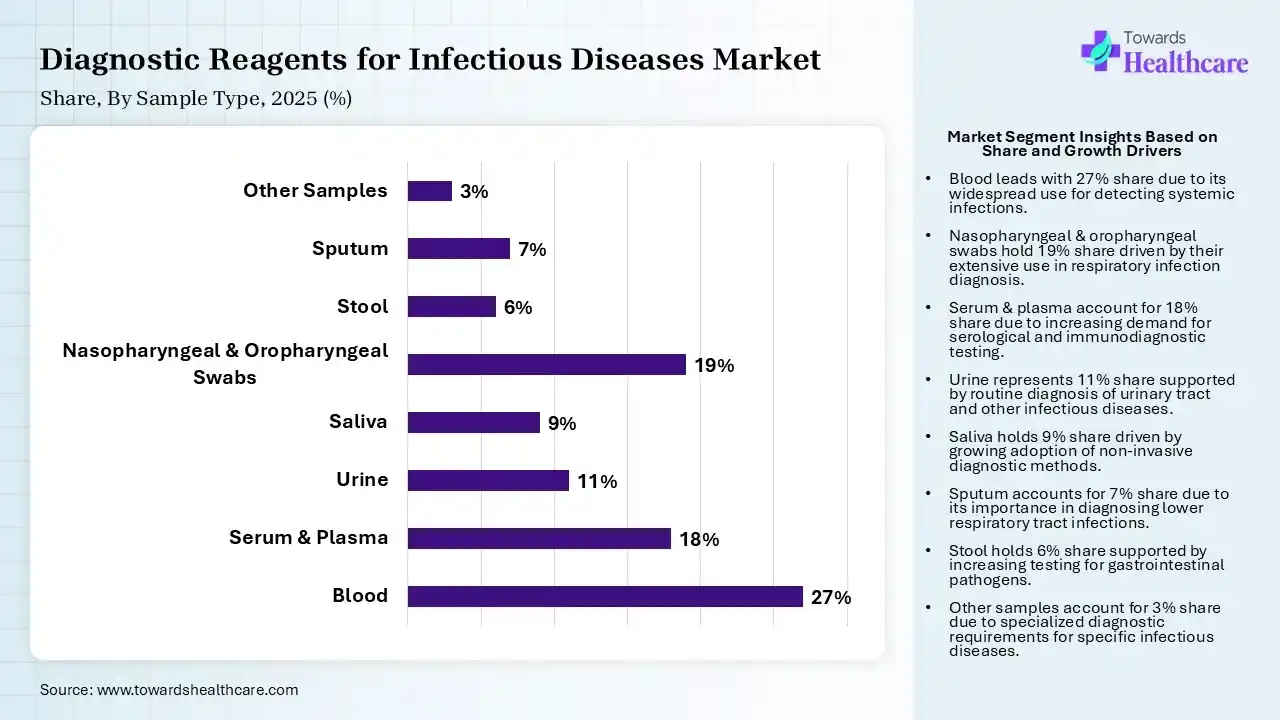
| Segment | Share 2025 (%) |
| Blood | 27% |
| Serum & Plasma | 18% |
| Urine | 11% |
| Saliva | 9% |
| Nasopharyngeal & Oropharyngeal Swabs | 19% |
| Stool | 6% |
| Sputum | 7% |
| Other Samples | 3% |
The Blood Segment Dominated the Market With 27% in 2025
The blood segment contributed the biggest revenue share of 27% of the diagnostic reagents for infectious diseases market in 2025, driven by blood-based infectious disease testing, which remained standard practice. High diagnostic reliability also supported their utilization. Hospital testing volume also remained strong.
The saliva segment held the second-largest share of 9% of the market in 2025 and is expected to gain the highest share with a CAGR of 9.10% during the forecast period, due to non-invasive molecular testing gaining popularity. Home-based diagnostics encourage adoption. Technological improvements also enhance sensitivity.
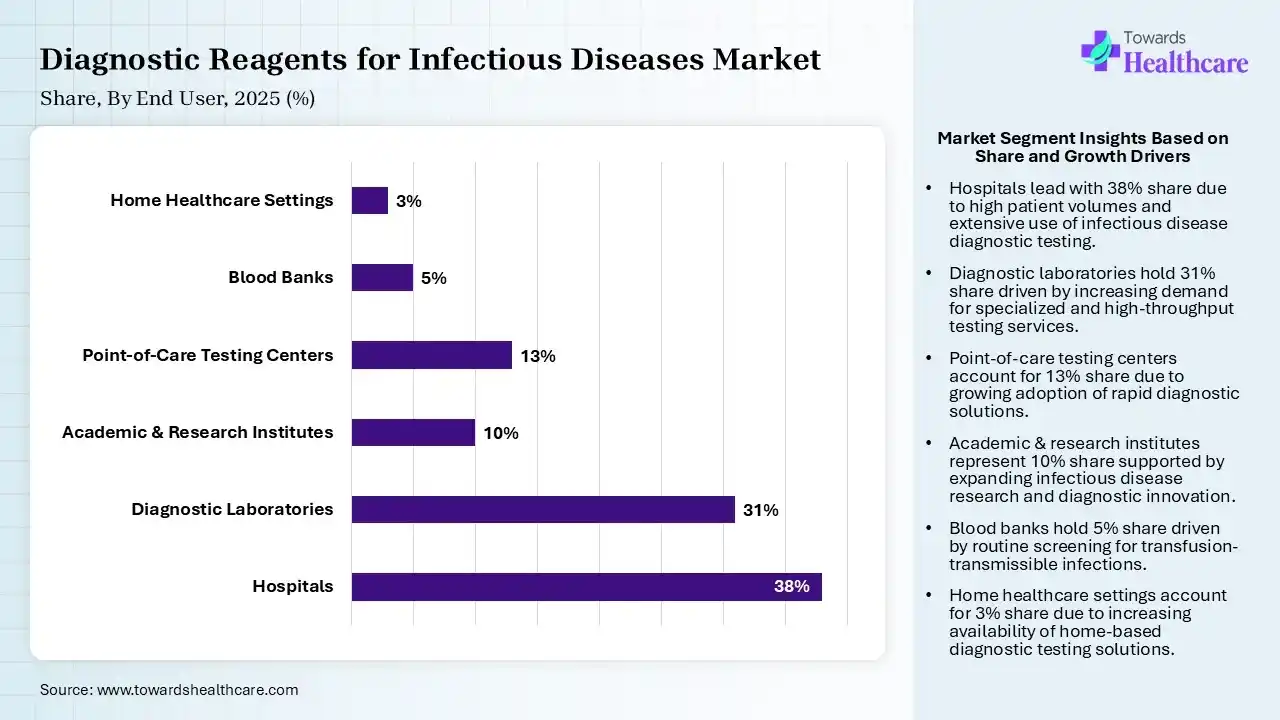
| Segment | Share 2025 (%) |
| Hospitals | 38% |
| Diagnostic Laboratories | 31% |
| Academic & Research Institutes | 10% |
| Point-of-Care Testing Centers | 13% |
| Blood Banks | 5% |
| Home Healthcare Settings | 3% |
The Hospitals Segment Dominated the Market With 38% in 2025
The hospitals segment held the largest revenue share of 38% of the diagnostic reagents for infectious diseases market in 2025, driven by large patient volumes that required extensive testing. Integrated laboratories also supported reagent consumption. Advanced diagnostic platforms also expanded their adoption.
The point-of-care testing centers segment held the second-largest share of 13% of the market in 2025 and is expected to grow with the fastest CAGR of 9.30% during the forecast period, due to decentralized healthcare, which increases rapid testing adoption. According to Payal Rabde's survey, portable diagnostic devices improve accessibility, increasing the use of reagents. Faster diagnosis also enhances patient management, driving their demand.
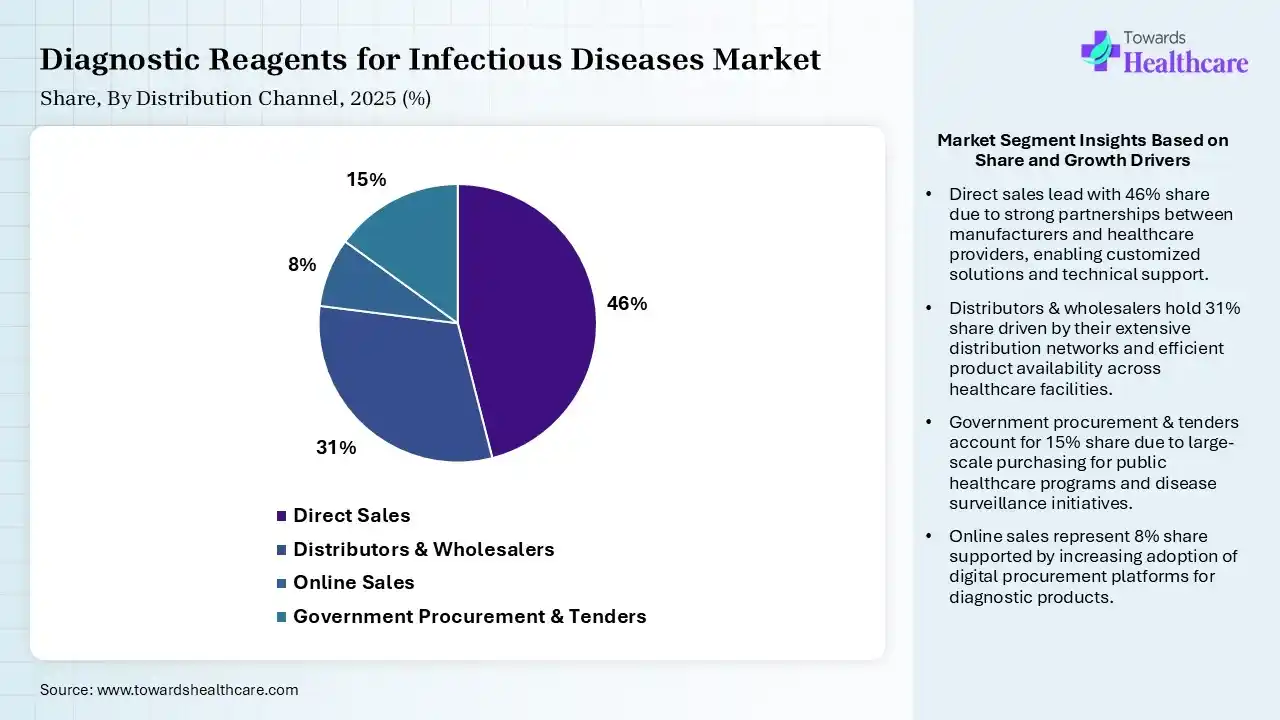
| Segment | Share 2025 (%) |
| Direct Sales | 46% |
| Distributors & Wholesalers | 31% |
| Online Sales | 8% |
| Government Procurement & Tenders | 15% |
The Direct Sales Segment Dominated the Market With 46% in 2025
The direct sales segment accounted for the highest revenue share of 46% of the diagnostic reagents for infectious diseases market in 2025, due to large healthcare institutions, which preferred direct procurement. Strong manufacturer relationships also improved service quality. Technical support also enhanced customer retention.
The online sales segment held the second-largest share of 8% of the market in 2025 and is expected to show the highest growth with a CAGR of 9.60% during the forecast period, driven by digital procurement platforms, which improve purchasing efficiency. Smaller laboratories increasingly buy online products. E-commerce platforms are also expanding market accessibility.
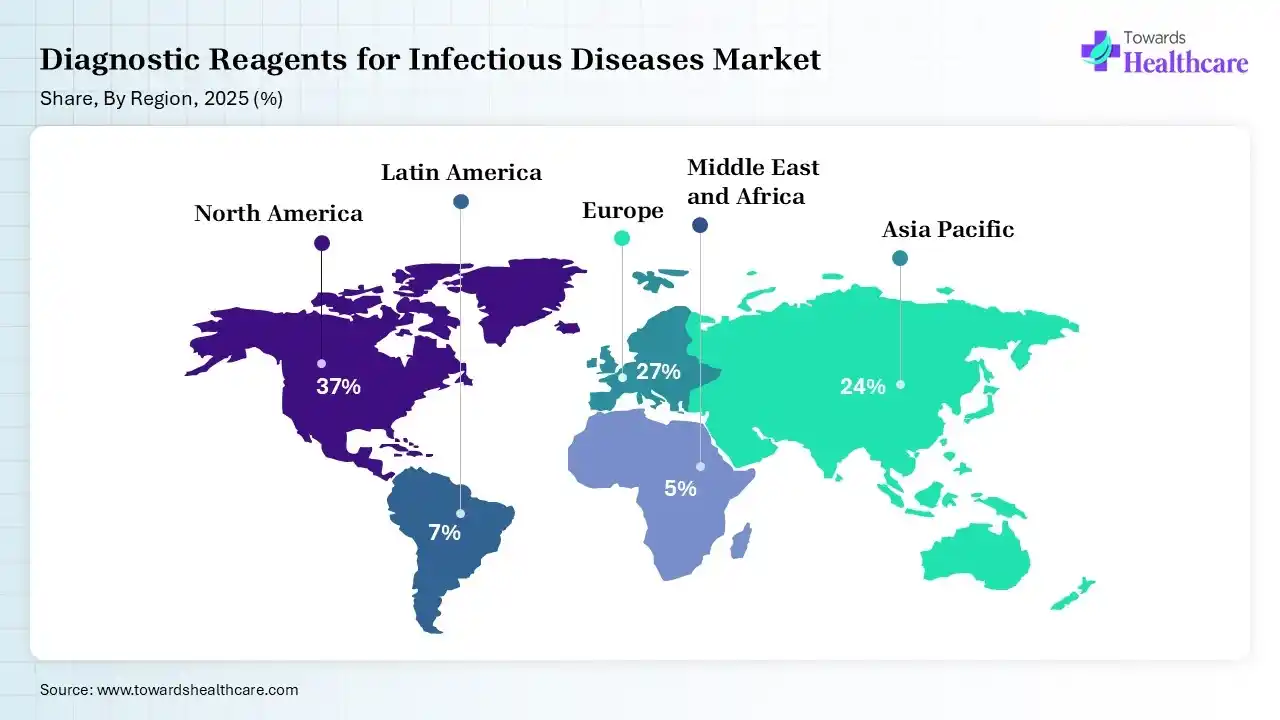
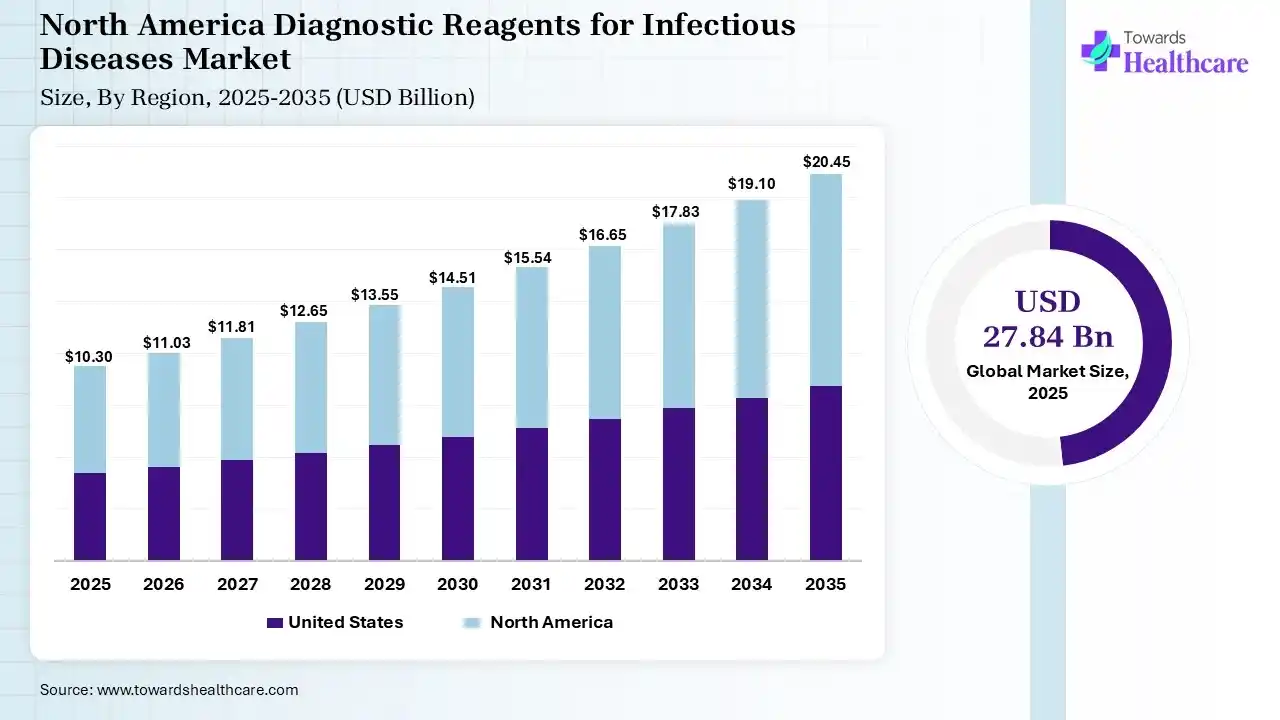
North America dominated the diagnostic reagents for infectious diseases market with 37% in 2025, due to the presence of advanced healthcare infrastructure, which supported high diagnostic volumes. As per Payal Rabde's analysis, strong reimbursement also encouraged infectious disease testing, which increased the demand for diagnostic reagents. Continuous innovations also strengthened market leadership. The growth in R&D investments and government funding also increased their use for pandemic preparedness, where a rise in healthcare expenditure also contributed to market expansion.
US Market Growth
U.S. held an 82% share of the diagnostic reagents for infectious diseases market in 2025, driven by extensive molecular diagnostics adoption. High healthcare expenditure also supported innovations, where the strong presence of leading manufacturers also increased the use of diagnostic reagents. Strong government support and the R&D ecosystem also increased their use for various diagnostic technologies. A rise in the demand for point-of-care testing solutions and molecular diagnostic tests also increased their adoption rate. Additionally, the presence of companies like Abbott Laboratories, with global sales of $44.3 billion for the year 2025, also strengthened its market position.
Canada Market Trends
Canada is growing substantially in the market. The rise in seasonal threats and the demand for home-testing solutions increase the adoption of diagnostic reagents for infectious diseases. The investment in cloud-linked laboratories and the interest in genomic technologies help with expansion. The innovations in immunoassay technologies and the growing chronic complexities drive the overall growth of the market.
Mexico Market Growth
Mexico held a 3% share in the market in 2025 and is expected to grow with the highest CAGR of 7.3% during the studied years, due to rising healthcare investments, which improved diagnostic capacity. Expansion of private laboratories is also increasing the adoption of diagnostic reagents for infectious disease detection. Growing disease surveillance initiatives are also increasing their use, where the growing shift towards preventive healthcare is also increasing their adoption rates. Expanding demand for molecular diagnostics is also driving their usage.
Europe held a 27% share of the diagnostic reagents for infectious diseases market and is expected to grow significantly during the forecast period, due to harmonized healthcare systems, which support routine testing. Strong regulatory standards are also improving quality, where the rising aging populations are also increasing the demand for diagnostic reagents. Increasing focus on preventive healthcare and infectious disease surveillance is also increasing their use. Growing government support is also driving the adoption of R&D activities and pandemic preparedness, enhancing market growth.
Germany Market Growth
Germany held a 24% share in the diagnostic reagents for infectious diseases market in 2025, driven by a large diagnostics industry, which supported innovation. High laboratory automation improves efficiency, which increases the demand for diagnostic reagents for infectious disease diagnosis. Growth in research funding also increased advancements, where the rise in the use of molecular diagnostics and PCR platforms also increased their usage. Growth in collaborations and advanced technology integration also accelerated their innovations.
France Market Trends
France is growing robustly in the market. The focus on infectious disease prevention and the rise in antimicrobial-resistance surveillance increases the adoption of diagnostic reagents. The rise in molecular platforms and the increasing public health backing increase the use of diagnostic reagents. The production of custom antibodies and the rise in sensitive pathogen identification support the overall growth.
United Kingdom Market Trends
The United Kingdom is growing significantly in the market. The NHS modernization and the focus on pandemic preparedness increase the adoption of diagnostic reagents. The rise in multiplex immunoassays and increasing antibiotic-resistant infections increases the use of diagnostic reagents. The rise in government-backed genomics and the increasing pathogen identification drives the overall growth.
Rest of Europe Market Growth
Rest of Europe held a 15% share in the market in 2025 and is expected to witness the fastest growth with a CAGR of 7.7% over the forecast period, due to emerging healthcare markets improving testing infrastructure. EU funding strengthens diagnostic capabilities, driving the demand for their diagnostic reagents. Continuous innovation adoption is also creating new opportunities, promoting the development of advanced infectious disease diagnostic solutions. A supportive regulatory framework and new collaborations are also increasing their use.
Asia Pacific held a 24% share of the diagnostic reagents for infectious diseases market in 2025 and is expected to grow at the fastest CAGR of 9.30% during the forecast period, due to expanding healthcare infrastructure, which increases testing. Large patient populations support a rise in the demand for diagnostic reagents for infectious disease detection. Government investments are also accelerating laboratory modernization, driving the adoption of advanced diagnostic technologies and encouraging their advancements, promoting market growth.
China Market Growth
China held a 34% share of the diagnostic reagents for infectious diseases market in 2025, driven by rapid expansion of domestic diagnostics manufacturing capabilities. Growth in public health investment also drives testing volumes, which increases the use of diagnostic reagents. A rise in innovation also strengthened its competitiveness, where expansion of hospitals also increased their use for acute and early infectious disease detection. Additionally, a rise in health awareness also increased the demand for point-of-care testing solutions.
India Market Growth
India held a 20% share in the market in 2025 and is expected to expand rapidly with a CAGR of 10.2% in the coming years, due to expanding diagnostic chains which are improving accessibility. Government disease control programs increase testing, which drives the demand for diagnostic reagents. Healthcare spending rises steadily, which supports the development of molecular diagnostics and other rapid testing technologies, increasing their use. Growing health awareness, disease burden, and healthcare expenditure are also supporting their expansion.
Japan Market Trends
Japan is growing significantly in the market. The rise in respiratory infections and the increasing routine screening programs increase the adoption of diagnostic reagents. The rise in polymerase chain reaction platforms and the strong innovation frameworks help with expansion. The rise in urgent care facilities and the focus on preventing hospital overcrowding boost the overall growth.
Latin America held a 7% share in the diagnostic reagents for infectious diseases market in 2025 and is expected to show lucrative growth during the forecast period, due to public healthcare expansion, which increases diagnostic access. Infectious disease surveillance strengthens demand for their diagnostic reagents, where laboratory modernization also supports their growth. Growing investments and healthcare expenditures are also driving the adoption of diagnostic reagents for the development of new testing platforms, fueling market expansion.
Brazil Market Growth
Brazil held a 49% share in the diagnostic reagents for infectious diseases market in 2025, driven by the largest healthcare market in the region. Government screening initiatives expanded testing volumes, which increased the adoption of diagnostic reagents. Continued growth in private laboratories also increased their use for the development of various rapid testing products. A rise in investments also increased their innovations, where growth in patient population and pandemic preparedness also increased their use.
Argentina Market Trends
Argentina is rapidly growing in the market. The rise in chronic overlapping conditions and the interest in cost-effective screening increase the adoption of diagnostic reagents. The increasing therapeutic decision-making and the investment in regulatory modernization help with expansion. The rise in PoC tools and the growing sexually transmitted infections drive the overall growth.
Rest of LA Market Growth
The rest of Latin America held a 30% share in the market in 2025 and is expected to gain the highest market share with a CAGR of 8.1% during the forecast period, due to expansion of diagnostic accessibility supporting growth. Regional healthcare reforms also improve capacity, where growing disease surveillance is also increasing adoption of diagnostic reagents. Rising shift towards preventive healthcare and home-based care also increases their use for the development of rapid and point-of-care testing products
MEA held a 5% share in the diagnostic reagents for infectious diseases market in 2025 and is expected to show notable growth during the forecast period, due to rising healthcare infrastructure investments, which improve diagnostics adoption. Government disease surveillance expands testing volumes, encouraging the use of diagnostic reagents. International funding also supports laboratory development, promoting advancements in infectious disease diagnostic tests. A rise in healthcare modernization investments and pandemic preparedness is also increasing their demand, propelling market growth.
Saudi Arabia Market Growth
Saudi Arabia held a 35% share in the diagnostic reagents for infectious diseases market in 2025 and is expected to show the fastest growth with a CAGR of 8.4% over the forecast period, driven by healthcare transformation programs, which increase diagnostics adoption. Hospital expansion also supports reagent demand, where growing laboratory automation also improves efficiency. Growth in the use of molecular diagnostics, point-of-care testing platforms, and PCR techniques also increases their demand.
UAE Market Trends
UAE is rapidly growing in the market. The rise in cross-border pathogens and the increasing prevalence of seasonal influenza increase demand for diagnostic reagents. The high use of multiplex PCR panels and rapid disease diagnostics increases the use of diagnostic reagents. The rise in national screening programs and enhanced reagent availability boost the overall growth.
South Africa Market Trends
South Africa is growing in the market. The antiretroviral programs and the rise in tuberculosis testing increase the adoption of diagnostic reagents. The interest in whole-genome sequencing and the transition to POC testing help with expansion. The demand for reagent kits supports the overall growth.
Rest of MEA Market Growth
Rest of the Middle East & Africa held a 23% share in the market in 2025, due to improved healthcare access across emerging markets. International collaborations are also strengthening diagnostics, where continuous expansion of laboratory networks is also driving the demand for diagnostic reagents. The growing focus on preventive healthcare and disease surveillance initiatives are also increasing their use, where a rise in investments are supporting the development of advanced diagnostic tools.
| Companies | Headquarters | Solutions |
| F. Hoffmann-La Roche Ltd | Basel, Switzerland | Elecsys, LightCycler, and cobas |
| Danaher Corporation | Washington, U.S. | Xpert and Access |
| Abbott Laboratories | Abbott Park, U.S. | Alinity i/ Architech and BinaxNOW |
| Thermo Fisher Scientific Inc. | Waltham, U.S. | Applied Biosystems TaqMan and Oxoid |
| bioMérieux SA | Marcy-l’Étoile, France | BioFire FilmArray, VIDAS, and VITEK |
In July 2026, after the grant of CE Mark for the Elecsys IGRA TB test, the CEO of Roche Diagnostics, Matt Sause, stated that “Addressing latent tuberculosis is critical to reducing the global health burden of this devastating disease, and that begins with better, more accessible testing.” “The Elecsys IGRA TB test brings an automated solution for latent TB to Roche’s industry-leading immunoassay platforms, which will enable screening programs and drive significant progress toward achieving global TB elimination targets."
Competitive Market Structure
The competitive market structure depends on the major companies with concentration, competition intensity, market shares, and strategic positioning of leading companies.
Company Benchmarking
The company benchmarking highlights leading companies based on product portfolio, innovation, geographic presence, R&D investment, partnerships, manufacturing capacity, and strategic focus.
Strategic Developments
Strategic development focuses on mergers, acquisitions, licensing, collaborations, new product launches, regulatory approvals, and expansion strategies.
Innovation Pipeline Assessment
Innovation pipeline assessment highlights emerging technologies, next-generation diagnostic platforms, and future commercialization potential.
| Company Overview | Offers products and services to improve patient outcomes |
| Product Portfolio | PCR, digital PCR, next-generation sequencing, genomic services, and point-of-care instruments |
| Financial Performance | Net sales for Q1 2026 rose 2% on a reported basis to $492 million |
| Strategic Initiatives | Public health response to the growing number of cyclosporiasis cases reported across the United States |
| Recent Developments | New additions to its QIAcuity digital PCR (dPCR) ecosystem |
| SWOT Analysis |
Strengths:
Weakness:
Opportunities:
Threats:
|
| Company Overview | Focuses on diagnostics |
| Product Portfolio | Immune diagnostics and molecular diagnostics |
| Financial Performance | € 1,195 million, +4% at CER vs. 2024, +5% excluding COVID, in line with FY 2025 guidance |
| Strategic Initiatives | Strategic distribution agreement with McKesson Medical Surgical |
| Recent Developments | Received 510(k) clearance and CLIA waiver from the U.S. FDA for its Group A Streptococcus (GAS) assay |
| SWOT Analysis |
Strengths:
Weakness:
Opportunities:
Threats:
|
| Company Overview | Focuses on driving innovation across medical essentials, connected care, biopharma systems, and interventional |
| Product Portfolio | Offers various infection prevention, home care, and molecular diagnostic solutions |
| Financial Performance | Q2 total revenue; $4.7 bn |
| Strategic Initiatives | Partnership with the Cardiovascular and Interventional Radiological Society of Europe (CIRSE) |
| Recent Developments | Named among the top-performing U.S.-based companies by TIME |
| SWOT Analysis |
Strengths:
Weakness:
Opportunities:
Threats:
|
Diagnostic Reagent Pricing by Product Category
The diagnostic reagent pricing by product category encompasses pricing across molecular, immunodiagnostic, microbiology, and rapid diagnostic reagents.
Regional Pricing Differences
Regional pricing differences highlight pricing variations by reimbursement, procurement models, and healthcare infrastructure.
Factors Influencing Pricing
Factors influencing pricing are manufacturing costs, regulatory compliance, raw materials, technology complexity, and competitive intensity.
Raw Material Supply Landscape
The raw material supply landscape focuses on the sourcing of enzymes, antibodies, primers, probes, buffers, and specialty chemicals.
Manufacturing Network
The manufacturing network includes production hubs, capacity, quality standards, and contract manufacturing.
Distribution Ecosystem
The distribution ecosystem involves direct sales, distributors, online procurement, and government purchasing.
Supply Chain Risks
Supply chain risks are driven by geopolitical issues, logistics, inventory management, and supply resilience.
Upstream Industry Analysis
Midstream Industry Analysis
Downstream Industry Analysis
Key Stakeholders
Key stakeholders in the market refer to the manufacturers, research organizations, healthcare providers, regulatory agencies, distributors, investors, and public health institutions.
Industry Relationships
Industry relationships are driven by expanding collaboration among diagnostics companies, healthcare providers, governments, and academic institutions.
Molecular Diagnostic Innovations
Molecular diagnostic innovations are driven by rising demand for rapid pathogen detection, growing infectious disease outbreaks, and demand for personalized medicines.
Next-Generation Sequencing Advances
Next-generation sequencing advances focus on advancements in genomics surveillance, precision diagnostics, and patient monitoring.
CRISPR-Based Diagnostic Technologies
CRISPR-based diagnostic technologies encompass rising demand for highly sensitive diagnostics, portable solutions, and advancements in gene editing technologies.
Digital and AI-Powered Diagnostics
Growing demand for fast and accurate result interpretation, automated diagnostic technologies, and expanding healthcare digitalization drives digital and AI-powered diagnostics.
Future Technology Roadmap
Future technology roadmap highlights expansion of multiplex PCR, AI-assisted diagnostic platforms, advancements in CRISPR-based diagnostic assays, and portable molecular diagnostics devices.
Key Purchasing Criteria
Key purchasing criteria highlight factors such as accuracy, turnaround time, price, regulatory approval, ease of use, automation compatibility, and supplier reputation.
Procurement Trends Across End Users
Procurement trends across end users focus on purchasing behavior among hospitals, laboratories, government agencies, and point-of-care providers.
Venture Capital and Private Equity Activity
Venture capital and private equity activity encompasses growth in molecular diagnostics, point-of-care testing, CRISPR technologies, and NGS platforms.
Government Funding Programs
Government funding programs are driven by a focus on infectious disease surveillance, pandemic preparedness, antimicrobial resistance monitoring, and expansion of diagnostic laboratories.
Strategic Corporate Investments
Expanding diagnostic products portfolio, collaborations, and digital health tools drives strategic corporate investments.
High-Growth Investment Opportunities
High-growth investment opportunities focus on expanding syndromic molecular assays, multiplex testing reagents, decentralized diagnostic systems, and outbreak monitoring systems.
High-Growth Product Opportunities
The high-growth product opportunities encompass rising demand for multiplex testing reagents, molecular diagnostics solutions, point-of-care diagnostic reagents, and self-testing diagnostic kits.
Untapped Geographic Markets
Untapped geographical markets focus on emerging markets across MEA, India, China, and Latin America as well as across underserved regions.
Emerging Clinical Applications
Increasing interest in antimicrobial resistance monitoring, outbreak surveillance, pandemic preparedness, and companion diagnostics are the emerging clinical applications of the diagnostic reagents.
White Space Opportunities
White space opportunities are driven by growing demand for eco-friendly diagnostic reagents, affordable molecular diagnostics, portable diagnostics, and integrated digital health platforms.
Benchmarking by Product Innovation
bioMérieux SA, QuidelOrtho Corporation, and Danaher Corporation are the market leaders in benchmarking by product innovations.
Benchmarking by Geographic Expansion
Benchmarking by geographical expansion was led by F. Hoffmann-La Roche Ltd, Abbott Laboratories, and Danaher Corporation.
Benchmarking by R&D Investment
F. Hoffmann-La Roche Ltd, Abbott Laboratories, and Siemens Healthineers AG dominated the market by benchmarking R&D investments.
Benchmarking by Manufacturing Capability
Benchmarking by manufacturing capabilities was led by Abbott Laboratories, Becton, Dickinson and Company, and Thermo Fisher Scientific.
Short-Term Market Outlook (2026–2028)
The growing adoption of rapid diagnostics reagents, point-of-care testing solutions, and pandemic preparedness are driving the short-term market outlook.
Medium-Term Market Outlook (2029–2032)
The medium-term market outlook is driven by rising demand for multiplex testing, syndromic testing, home-based testing, and next-generation sequencing platforms.
Long-Term Market Outlook (2033–2035)
Long-term market outlook encompasses a shift towards personalized infectious disease management, automated diagnostic tools, genomic monitoring, and focus on antimicrobial resistance monitoring.
Future Growth Scenarios
The future growth scenarios highlight a rise in molecular diagnostics, multiplex testing, next-generation sequencing, point-of-care testing, government investments, and healthcare programs.
As per Payal Rabde's analysis, a wide range of factors are responsible for the significant growth of the diagnostic reagents for infectious diseases market in the forecast period. The growing advances in point-of-care testing, molecular diagnostics, next-generation sequencing, syndromic testing, and companion diagnostics are driving the continuous usage of diagnostic reagents for infectious diseases. Rising disease burden, disease surveillance initiatives, focus on antimicrobial resistance monitoring, minimization of disease outbreaks, shift towards home-based care, and continued healthcare digitalization are also contributing to their increased use. Segments such as PCR reagents & kit, rapid diagnostic test (RDT) reagents, viral infections, sexually transmitted infections (STIs), molecular diagnostics, next-generation sequencing, and blood are expected to show significant growth, which will make them ideal for investments. Additionally, major companies like F. Hoffmann-La Roche Ltd, QIAGEN NV, Danaher Corporation, BD, Abbott Laboratories, Thermo Fisher Scientific Inc., and bioMérieux SA are anticipated to expand their diagnostics portfolio, creating new investment opportunities.
By Product Type
By Disease Type
By Technology
By Sample Type
By End User
By Distribution Channel
By Region











Principal Consultant
Payal Rabde is a Healthcare Market Research Analyst at Towards Healthcare Research & Consulting with 4+ years of experience in pharmaceuticals, biotechnology, medical devices, and life sciences.
Learn more about Payal Rabde

Reviewed By
Aditi Shivarkar is a seasoned professional with over 14 years of experience in healthcare market research. As a content reviewer, Aditi ensures the quality and accuracy of all market insights and data presented by the research team.
Learn more about Aditi Shivarkar