Pipeline Programs

CGT Companies Tracked

Manufacturing Facilities


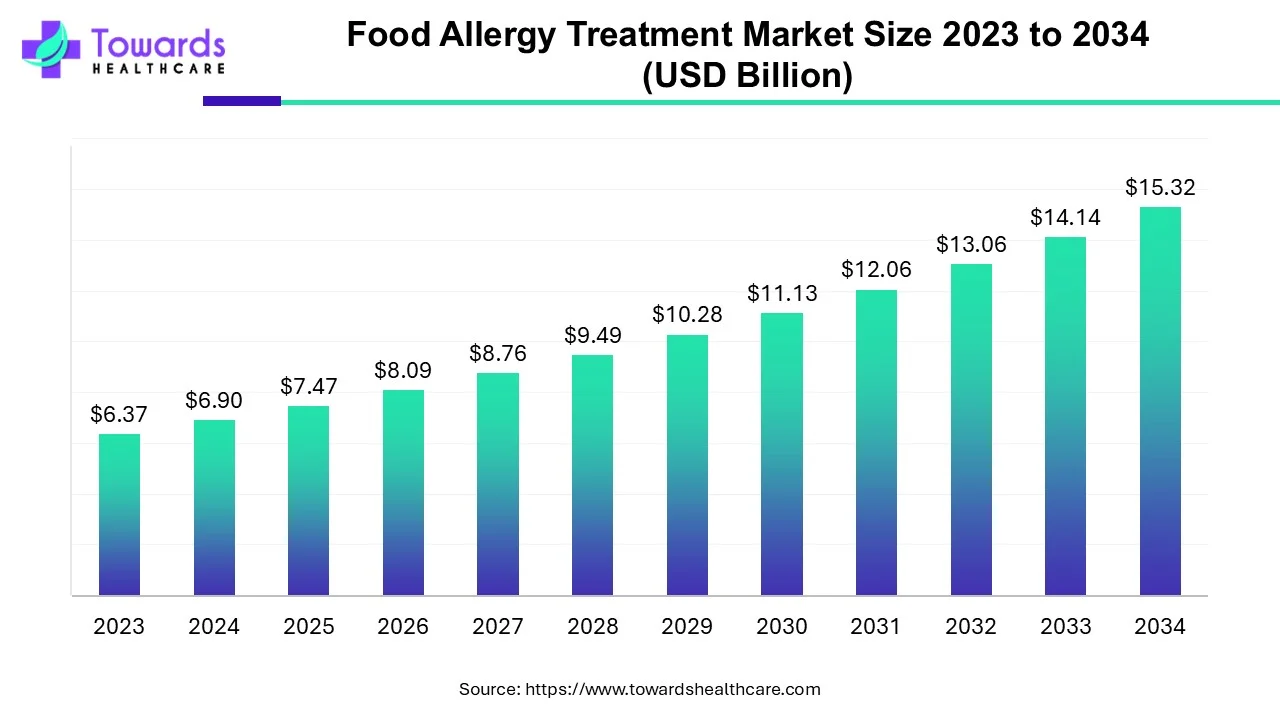
The global food allergy treatment market size is calculated at USD 7.47 billion in 2025, grew to USD 8.09 billion in 2026 and is projected to reach around USD 15.32 billion by 2034. The market is expanding at a CAGR of 8.3% between 2025 and 2034. The increasing prevalence of food allergies, growing research and development, and sedentary lifestyles drive the market.
Food allergy is a condition that causes unusual reactions in the body after consuming certain foods. Some common examples of foods that cause allergies in individuals are peanuts, milk, eggs, fish, shellfish, wheat, soy, and sesame. Symptoms of food allergies affect different areas of the body, resulting in an itchy sensation inside the mouth, throat, or ears, swelling of the face, vomiting, diarrhea, shortness of breath, etc. These food allergies are treated depending on the severity. Patients are treated with either omalizumab injections, oral immunotherapy, sublingual immunotherapy, or emergency medications such as epinephrine auto-injectors, corticosteroids, and antihistamines.
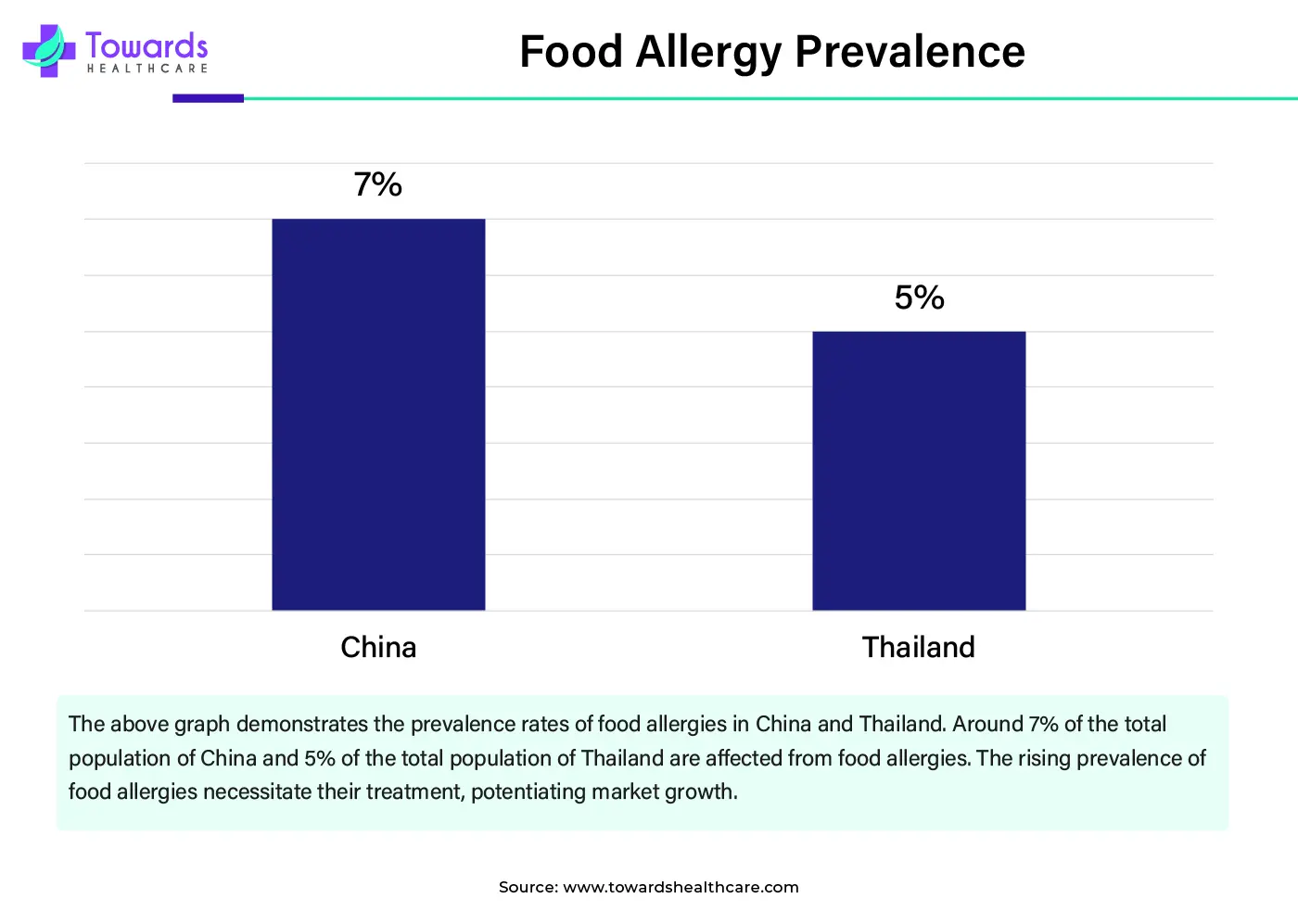
The rising prevalence of food allergies necessitates early diagnosis and treatment. Food allergies affect more than 7% of children worldwide. They can be of two types: minor, causing fewer symptoms, and major, causing emergency-like conditions. The growing preference for over-the-counter (OTC) drugs and the availability of generic pharmaceuticals boost the market. Researchers are investigating novel treatment regimens to cure food allergies. Hence, growing research and development activities contribute to the market growth. Favorable government support and stringent regulatory guidelines increase awareness among the public about food allergies and their treatment, potentiating market growth.
The advent of advanced technologies such as artificial intelligence (AI) and machine learning (ML) drives the latest innovations in food allergy treatment. AI and ML can revolutionize the way food allergies are diagnosed and treated. AI could analyze food ingredient lists to detect the presence of any of the top nine food allergens, alerting individuals about the same. AI and ML can also create customized food alerts based on an individual’s dietary preferences and medical records. AI-enabled wearable devices and sensors can track allergen exposure, monitor symptoms, and provide real-time alerts in case of anaphylaxis. Moreover, AI and ML can also aid in transforming the research and development activities for novel drugs. They can facilitate the development of personalized medicines based on individual needs. This ultimately improves the efficiency, accuracy, and precision of treatment regimens.
Food allergy treatment refers to medical approaches used to prevent, control, or reduce allergic reactions triggered by specific foods. These approaches include emergency medications, dietary management, allergen immunotherapy, and targeted therapies. The food allergy treatment market is expanding as improved awareness and better diagnostic capabilities lead to more identified cases and greater demand for effective management options. A major trend is the shift from emergency reaction control toward therapies that can increase patients’ tolerance to specific allergens. Technological advancements in biologic medicines, oral immunotherapy, precision diagnostics, and digital patient-monitoring tools are broadening treatment possibilities. Future opportunities include personalized allergy therapies, combination treatment, improved pediatric solutions, and longer-term disease management. Increasing investment in allergy research, development of novel therapies, stronger healthcare access, and growing patient preference for proactive treatment strategies are supporting market growth.
Driver
Increasing Awareness
The major growth of the food allergy treatment market is the increasing awareness among the general public about food allergies. Several government organizations release guidelines and initiatives to increase awareness of food allergies and their effective treatment. Government and private institutes organize conferences, workshops, and seminars to create awareness about early detection and treatment of food allergies. The rising prevalence of food allergies globally has raised significant awareness about food allergy treatment. Advanced technologies, such as the rising adoption of smartphones and the increasing use of social media apps, also help to raise awareness. Numerous healthcare professionals use social media to teach people to manage allergy symptoms through easy-to-share messages and infographics. Some schools also implement educational programs to teach students how to respond to an allergic anaphylaxis emergency.
Restraint
Lack of Effective Treatment
The major challenge of the food allergy treatment market is the lack of effective treatment. At present, there are no proven treatments that can prevent or completely relieve symptoms. Only generalized treatment options are available to cater to different food allergies, restricting market growth.
Opportunity
Growing Research and Development
The growing research and development activities to develop novel ways to treat food allergies present future food allergy treatment market growth opportunities. Several researchers are investigating different treatment regimens for treating food allergies. Some novel approaches include allergen immunotherapy, DNA or viral-like particle vaccines, biologics such as anti-IgE antibodies, as well as cell and gene therapy. The growing demand for biologics and regenerative medicine promotes the development of novel drugs. The increasing investments and public-private partnerships potentiate the market. Technological advancements also favor advanced R&D activities. Apart from developing novel drugs, animal models are also developed to study the safety and effectiveness of drugs. Animal models are combined with biomarker panels, advanced in vitro platforms, and state-of-the-art methods such as physiological-like elastic hydrogels and nanotextured 3D systems.
| Metric | Details |
| Market Size in 2025 | USD 7.47 Billion |
| Projected Market Size in 2034 | USD 15.32 Billion |
| CAGR (2025 - 2034) | 8.3% |
| Leading Region | North America |
| Market Segmentation | By allergen type, By drug type, By route of administration, By end-use, By region |
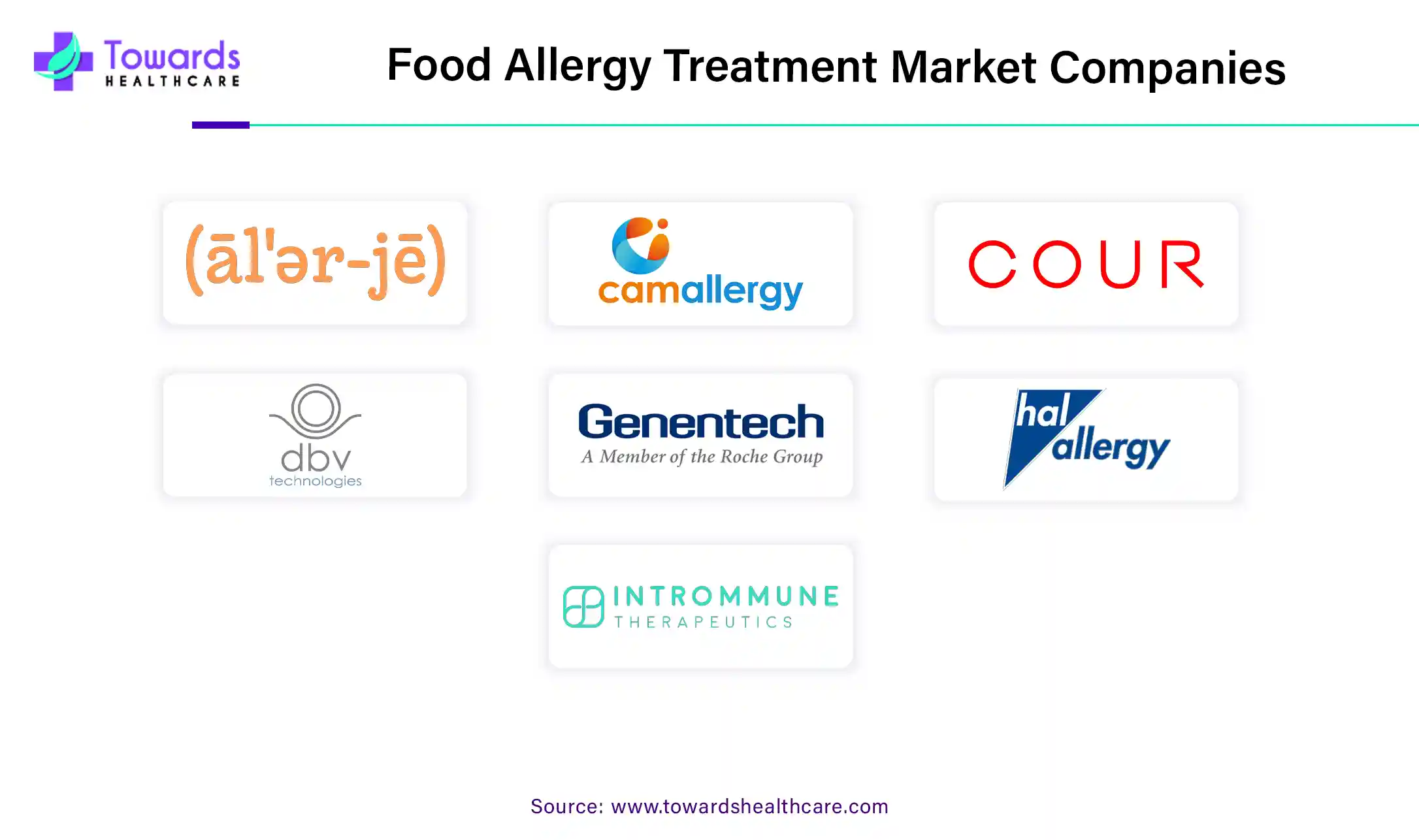
| Top Key Players | Alerje, Inc., Camallergy, Cour Pharmaceuticals Development Company, Inc., DBV Technologies, Genentech, HAL Allergy, Inimmune Corporation, Intrommune Therapeutics, NemaGen Discoveries, Prota Therapeutics Pty. Ltd., Siolta Therapeutics, Stallergenes Greer, Vedanta Biosciences |
By allergen type, the peanuts segment held a dominant presence in the food allergy treatment market in 2025 and is estimated to grow at the fastest rate during the forecast period. Peanuts can cause allergies in a wide range of populations globally. It can cause mild to severe symptoms, including skin reactions, itching or tingling, digestive problems, tightening of the throat, and shortness of breath. The growing research and development and the rising incidences of peanut allergies boost the segment’s growth. It has been found that peanut allergies account for around 28% of all food allergies in children.
By allergen type, the tree nuts segment is predicted to witness significant growth in the market over the forecast period. Tree nuts can cause severe life-threatening anaphylaxis reactions in some individuals. Tree nut allergies are caused by walnuts, almonds, hazelnuts, cashews, and pistachios. Individuals suffering from tree nuts allergy need to carry an epinephrine auto-injector along with them. Tree nuts allergy is one of the nine most common food allergies in the world.
By drug type, the epinephrine segment held the largest share of the food allergy treatment market in 2025. Epinephrine is the only effective treatment option to relieve symptoms of severe food allergic reactions. It is the treatment of choice for anaphylaxis. The development of novel drug delivery devices and technological advancements fuel the segment’s growth. The availability of auto-injectors simplifies their administration by any person, eliminating the need for skilled professionals during emergencies.
By drug type, the immunotherapy segment is expected to grow at the fastest rate in the market during the forecast period. Immunotherapy is a rapidly emerging therapeutic for treating food allergies. Immunotherapy involves administering gradually increasing quantities of food allergens under medical supervision. The favorable regulatory frameworks and new product launches favor the segment’s growth.
By route of administration, the parenteral segment led the global food allergy treatment market in 2025 and is expected to achieve the fastest CAGR during the forecast period. The parenteral route is the most effective due to 100% bioavailability. The drugs administered through the parenteral route eliminate the first-pass metabolism, resulting in complete absorption of the drugs. They have a faster onset of action, possessing a stronger effect than oral medications.
By route of administration, the oral segment is anticipated to grow with a steady CAGR in the market during the studied years. Oral drugs are easy to administer without the need for any healthcare professional to administer them. They are relatively cost-effective and can be taken by any age group. Thus, the oral route is the most convenient, safest, and the least expensive.
By end-use, the hospital pharmacies segment registered its dominance over the global food allergy treatment market in 2025. The segmental growth is attributed to the availability of desired drugs, the presence of trained professionals, and the increasing number of hospital pharmacies. This increases accessibility to advanced treatment drugs and personalized therapy for all patients visiting hospitals.
By end-use, the retail pharmacies segment is projected to expand rapidly in the market in the coming years. The segment’s growth is attributed to the increasing number of retail pharmacies, the availability of OTC and generic drugs, and special discounts. There are around 46,230 pharmacies and drug stores in the U.S. as of 2024, an increase of 2.9% from 2023. Retail pharmacies also offer 24/7 facilities and same-day home delivery, augmenting the segment’s growth.
North America dominated the global food allergy treatment market in 2025. The presence of key players, new product launches, and technological advancements drive the market. The favorable regulatory frameworks and suitable government policy also promote market growth. The U.S. Food and Drug Administration enforces regulations requiring companies to list ingredients on packaged foods. Similarly, Health Canada launched the Food Allergen Research Program, a research initiative to minimize risks associated with inadvertent consumption of food allergens. The rising prevalence of food allergies in North America also contributes to the market. According to a Health Canada report, more than 3 million Canadians suffer from food allergies.
U.S. Food Allergy Treatment Market: Accelerating Advanced Allergy Care
The U.S. is significantly increasing in the food allergy treatment market due to rising awareness, widespread allergy screening, and strong demand for effective therapies. Growing adoption of immunotherapy and biologic treatments is expanding treatment options. Strong Pharmaceutical R&D, advanced healthcare infrastructure, and increasing focus on early diagnosis and personalized care are further supporting market growth.
Canada Food Allergy Treatment Market: Expanding Advanced Allergy Care
Canada is notably expanding in the food allergy treatment market due to increasing awareness, better diagnosis, and rising demand for effective allergy management. Growing adoption of immunotherapy and emerging treatment options are creating new opportunities. Increased research activity, improving healthcare access, and greater focus on early intervention are supporting market development. Rising demand for personalized allergy care is further encouraging the adoption of advanced treatment approaches across Canada.
Asia-Pacific is anticipated to grow at the fastest rate in the food allergy treatment market during the forecast period. The rising prevalence of food allergies, increasing awareness, and growing research and development drive the market. The favorable government policies and increasing investments also support market growth. The Chinese government is investing in the development of standardized diagnostics, ensuring equitable access to emergency care and treatment options for individuals affected by food allergies. Government organizations from China, India, and Japan emphasize advanced research. Seafoods are the major cause of food allergies in Asia-Pacific countries. The rising adoption of advanced technologies also contributes to market growth.
India Food Allergy Treatment Market: Expanding Allergy Care
India is significantly growing in the food allergy treatment market due to increasing awareness of food-related allergic reactions and improving diagnostic capabilities. Growing demand for specialized allergy care is encouraging healthcare providers to adopt advanced testing and treatment approaches. Expansion of healthcare infrastructure, rising research activity, and greater availability of immunotherapy and targeted therapies are creating new opportunities. Increasing focus on early diagnosis and personalized treatment further supports market growth.
China Food Allergy Treatment Market: Advancing Specialized Allergy Care
China is notably expanding in the food allergy treatment market due to growing awareness, improved diagnosis, and increasing demand for specialized allergy management. Expanding healthcare infrastructure and research into immunotherapy and targeted treatments are supporting innovation. Rising investments in biotechnology and pharmaceutical development, along with greater focus on early intervention and personalized care, are creating further growth opportunities.
Europe is expected to grow significantly in the food allergy treatment market during the forecast period. The developing research and development sectors are utilizing various technological advancements in Europe. This, in turn, is used to enhance the production of various food allergy treatments. At the same time, they are also developing new treatment approaches for rising allergies. All these factors, along with the government support, are promoting the market growth.
Dr. Carlos Bosques, CEO of the Food Allergy Science Initiative, commented on his appointment as the new CEO that he aims to advance scientific knowledge, find innovative solutions, and provide hope and relief to patients and families affected by food allergies. Such steps are necessary as food allergies impact millions of people worldwide, and the availability of very limited treatment options.
By Allergen Type
By Drug Type
By Route of Administration
By End-Use
By Region




Principal Consultant
Payal Rabde is a Healthcare Market Research Analyst at Towards Healthcare Research & Consulting with 4+ years of experience in pharmaceuticals, biotechnology, medical devices, and life sciences.
Learn more about Payal Rabde

Reviewed By
Aditi Shivarkar is a seasoned professional with over 14 years of experience in healthcare market research. As a content reviewer, Aditi ensures the quality and accuracy of all market insights and data presented by the research team.
Learn more about Aditi Shivarkar