

Pipeline Programs

CGT Companies Tracked

Manufacturing Facilities


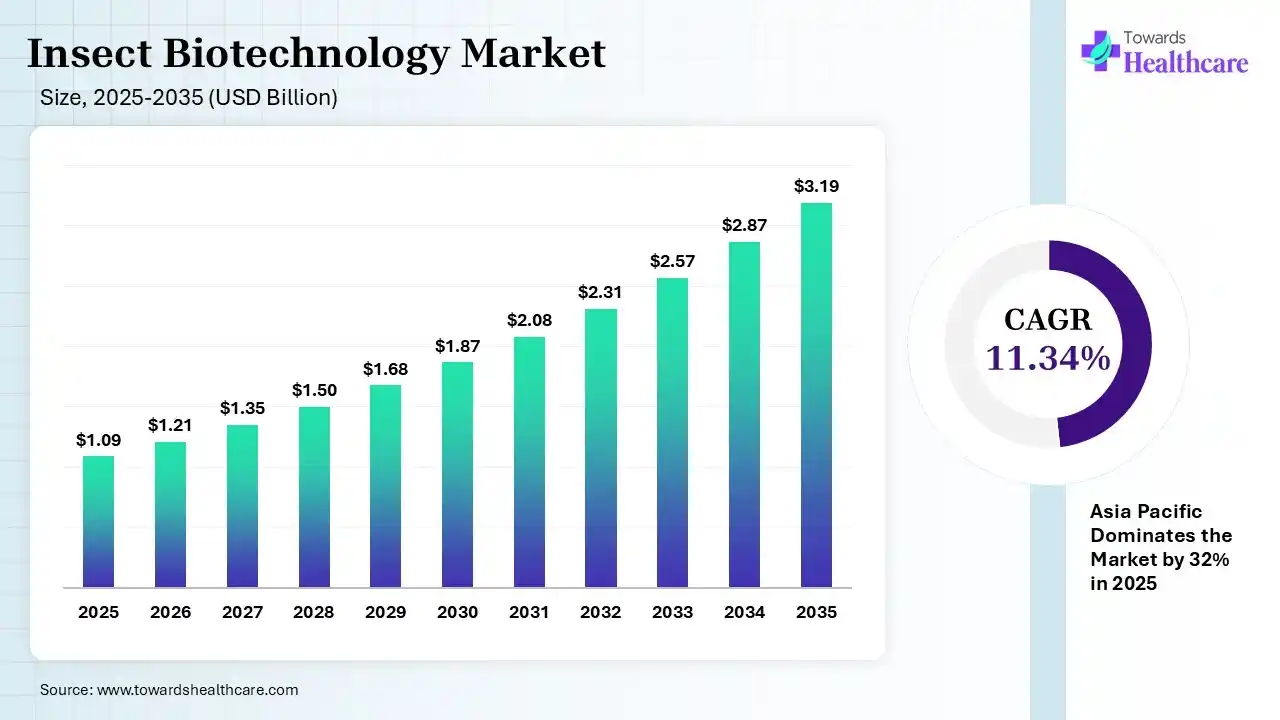
The global insect biotechnology market size was estimated at USD 1.09 billion in 2025 and is predicted to increase from USD 1.21 billion in 2026 to approximately USD 3.19 billion by 2035, expanding at a CAGR of 11.34% from 2026 to 2035.
A notable surge in demand for sustainable protein, bioactive compounds, and breakthroughs in genetic engineering is driving the global market expansion. Alongside, the widespread companies are focusing on implementing novel technologies in insect farming, bioconversion processes, and AI-powered real-time monitoring.
It is a branch that increasingly leverages advanced genetic and molecular techniques to alter insects, their cells, or symbiotic microbes for human purposes. The global insect biotechnology market is focused on implementing insect approaches in enhancing pest-resistant genetically modified (GM) crops & developing biopesticides, along with the adoption of insect cell lines to manufacture complex proteins, vaccines, & identify new bioactive compounds, such as antimicrobial peptides.
Ongoing breakthroughs across the globe have been incorporating AI algorithms in the respective market, such as the implementation of AI-driven smart bins, which utilise sensors & computer vision to track the progression & environmental settings of profitable insects or natural enemies. Alongside, the leading firms are exploring modern traps, which are operated with cameras and acoustic sensors to find, count, and categorize insect pests in real-time, sharing data via IoT to mobile dashboards. Additionally, these tools, like the VespAI system, are allowing over 90% accuracy in determining invasive species.
Fostering Insect Cell Culture
The emergence of rigorous insect cell lines supports expressing complex proteins, producing vaccines, and demonstrating toxicological research, to facilitate safer and rapid substitutes to mammalian cells.
Looking for Insect-Based Industrial Products
Ongoing developments include the production of chitin-based materials for biodegradable plastics & the use of insect enzymes (chitinases) for industrial purposes.
Discovering RNA Interference (RNAi)
Researchers are focusing on the revolution of topical RNAi-based bio-insecticides, which particularly silence essential genes in pests without impacting non-target species.
| Table | Scope |
| Market Size in 2026 | USD 1.21 Billion |
| Projected Market Size in 2035 | USD 3.19 Billion |
| CAGR (2026 - 2035) | 11.34% |
| Leading Region | Asia Pacific by 32% |
| Historical Data | 2020 - 2023 |
| Base Year | 2025 |
| Forecast Period | 2026 - 2035 |
| Measurable Values | USD Millions/Units/Volume |
| Market Segmentation | By Application, By Types, By Region |
| Top Key Players | Protix, Nutrition Technologies Group, EnviroFlight Corporation, InnovaFeed, SFly Comgraf SAS, AgriProtein, BioflyTech, Entofood Sdn Bhd, Hexafly, F4F SpA |
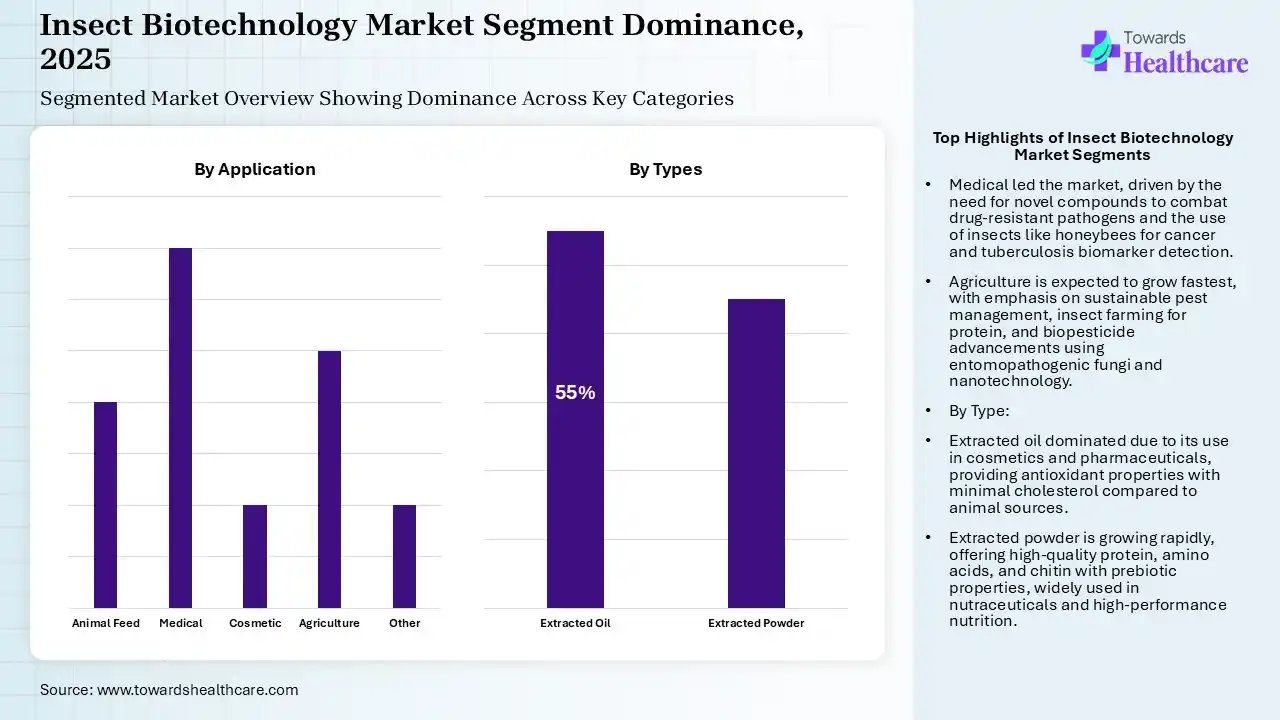
The Medical Segment Dominated the Market in 2025
| Segment | Share 2025 (%) |
| Animal Feed | 20% |
| Medical | 35% |
| Cosmetic | 10% |
| Agriculture | 25% |
| Other | 10% |
Explanation
In 2025, the medical segment captured a major revenue share of the insect biotechnology market by 20%. An expedited expansion of drug-resistant pathogens is fueling the discovery of novel compounds, for which insect immune systems provide a massive repository. Besides this, certain insects, such as Apis mellifera, i.e., honeybees, are assisting the detection of volatile organic compounds (VOCs) that act as biomarkers for cancer and tuberculosis. The market is actively pushing Melittin & Pierisin to combat cancer cells, specifically by damaging cell membranes & inducing apoptosis.
On the other hand, the agriculture segment is predicted to expand fastest. This is prominently transforming due to the broadening emphasis on sustainable pest management, insect farming for protein, & crop protection. A key development covers the adoption of entomopathogenic fungi, such as Beauveria bassiana, Metarhizium anisopliae, bacteria, and viruses to control pests, especially for organic farming. Moreover, the market is executing nanotechnology to boost the stability & controlled release of biopesticides to spotlight the risk of faster degradation of bio-agents in the field.
The Extracted Oil Segment Led the Market in 2025
| Segment | Share 2025 (%) |
| Extracted Oil | 55% |
| Extracted Powder | 45% |
Explanation
The extracted oil segment led the insect biotechnology market by 55% in 2025. A significant catalyst is the use of various insects that possess antioxidant polyphenols, with minimal cholesterol levels as compared to other animal origins, which have higher utilization in cosmetics and pharmaceuticals. Many companies are employing advanced techniques, like ultrasound-assisted extraction, SC-CO2 extraction, and aqueous extraction, with a focus on maintaining stability and quality of oil.
However, the extracted powder segment is anticipated to show rapid expansion in the market. These kinds of powders facilitate high-quality protein, increased digestibility, and essential amino acids & widely employed in nutraceuticals and high-performance nutrition due to their bioactive compounds. A major benefit of insect powder is the presence of chitin, which serves as a dietary fiber with prebiotic properties, improving gut health, though extraction processes are refining chitin concentration for precision applications.
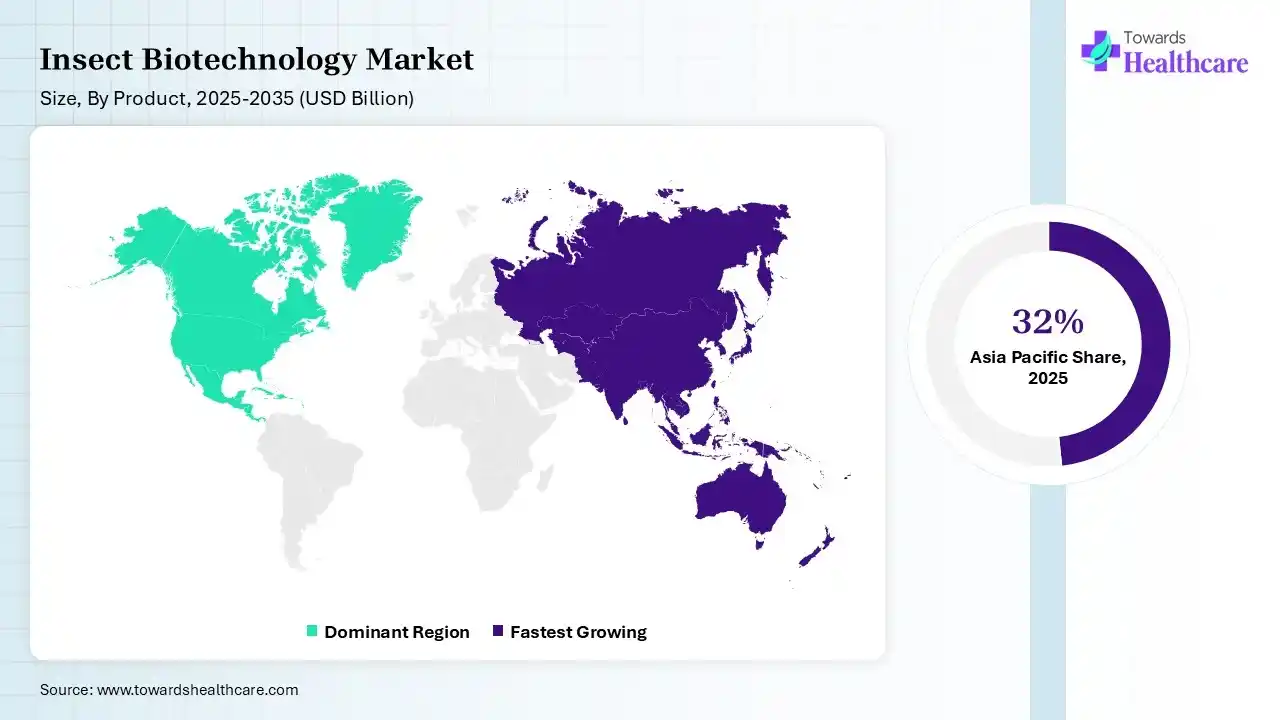
Asia Pacific led the insect biotechnology market with a major share by 32% in 2025. Drivers are rising demand for sustainable protein, advancements in genetic engineering & surging needs for biocontrol agents. Countries, like China, are leading as a key hub for the Black Soldier Fly (BSF) and mealworms to convert food waste into high-quality animal feed. Also, the APAC is leveraging insects to detoxify pesticides for novel, highly efficient, and safer insect-resistant technologies & pesticide options.
India Market Trends
Whereas, India’s extensive startups and researchers are actively involved in the transformation of insect farming, which evolves sustainable feed for the broader aquaculture and livestock.
For instance,
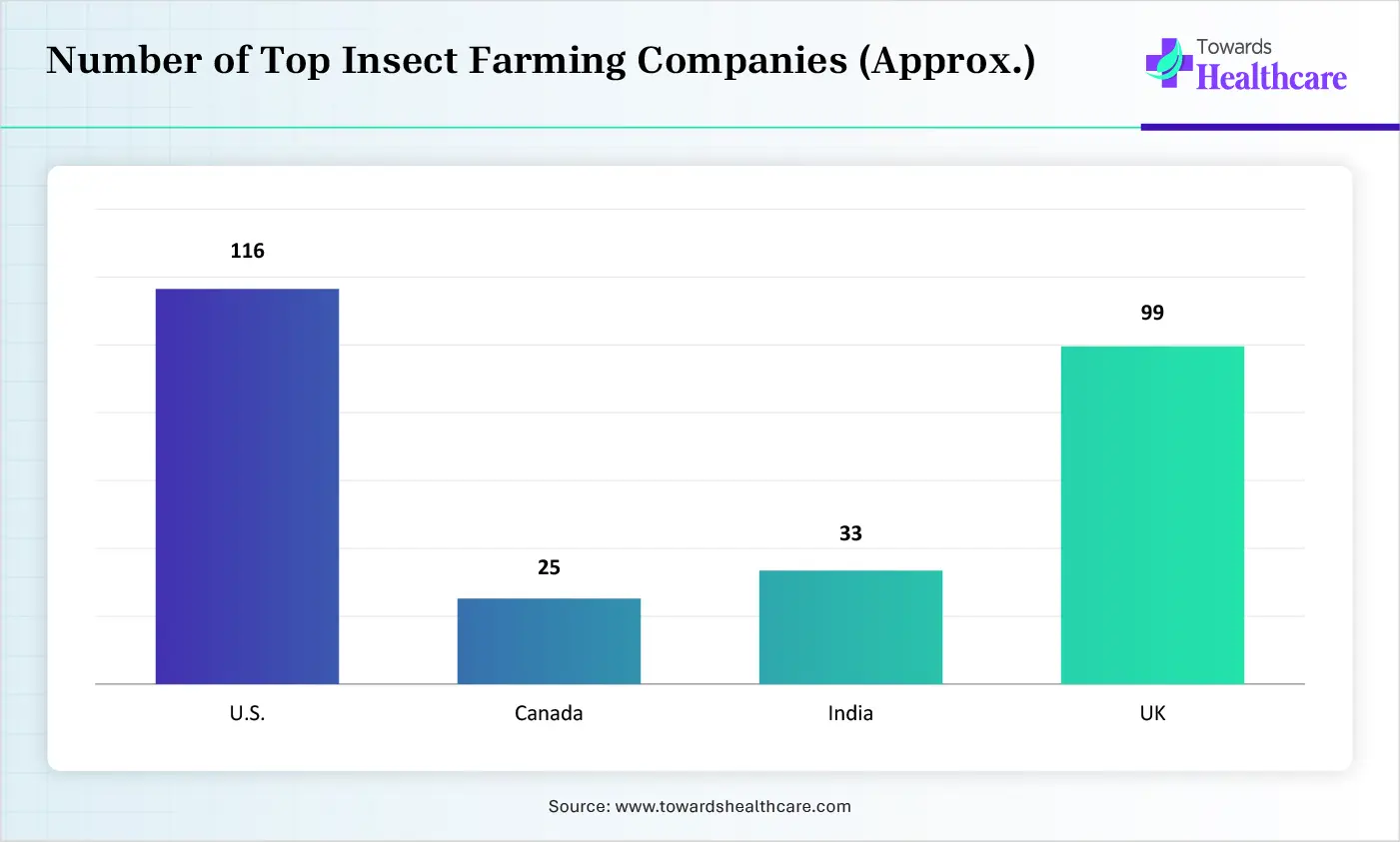
During 2026-2035, North America is anticipated to witness the fastest growth in the insect biotechnology market. This progression is hugely propelled by the increased R&D investments, well-nurtured biotechnology infrastructure, and regulatory favour for eco-friendly agriculture. Specifically, Canada is stepping into novel projects, like a Montreal-based project, which employs AI to monitor insect populations & find new species in the rainforest.
U.S. Market Trends
Although the U.S. market is estimated to grow at a rapid CAGR, with the involvement of initiatives led by USDA NIFA, focused on boosting the health and genetic resilience of pollinators & biological control agents. Moreover, the U.S. researchers are putting efforts into detecting innovative techniques, like Sterile Insect Technique (SIT) 2.0, which allows robust male-only development, optimizing SIT for controlling agricultural pests like the Mediterranean fruit fly.
Europe is extensively looking for conventional protein, where insects facilitate sustainable, producible alternatives for aquaculture, livestock, and pet food. As well as, the region is actively raising environmental values by moving from chemical farming to bio-insecticides and biodegradable pest management. However, the UK insect farming has been implementing AI and robotics to bolster breeding, rearing, & labor-intensive processes, with boosted yield and quality of larvae.
UK Market Trends
The UK insect biotechnology market is growing rapidly, propelled by rising demand for sustainable protein in animal feed and aquaculture, along with advancements in waste valorisation. The sector is expanding as start-ups and researchers develop innovative insect-based ingredients and pest management solutions. Growing environmental consciousness and support for circular economy practices drive this surge.
The insect biotechnology market in Latin America is expanding rapidly, driven by the need for sustainable animal feed and waste management solutions, particularly with black soldier fly larvae farming for aquaculture. Rich biodiversity and a growing shift toward sustainable agriculture fuel this expansion, with significant investments in biopesticides. Colombia and Brazil lead in utilizing these technologies, with insect-derived protein acting as a sustainable alternative to traditional soy and fishmeal.
Mexico Market Trends
In Mexico, the market is growing through entomophagy traditions, such as in Oaxaca, and the rising industrialization of edible insect production for protein powders, serving both domestic and export markets. Regulatory improvements are strengthening the sector, allowing insect biotechnology to enhance food security and agricultural productivity.
The insect biotechnology market in MEA and GCC is expanding rapidly, driven by the need for sustainable animal feed and food security. Key growth drivers include government policies supporting agriculture diversification and increasing investments in black soldier fly farming for aquaculture, particularly in Saudi Arabia and the UAE.
Technological advancements in vertical farming, insect rearing, and waste-to-protein processing are enhancing market efficiency. Growing awareness of high-protein alternatives to soy and fishmeal is accelerating adoption across the poultry and pet food sectors, with strong investment flow in GCC towards sustainable protein and regional startups emerging.
| Company | Description |
| Protix | A firm specializes in the industrial-scale cultivation & processing of the black soldier fly (Hermetia illucens). |
| Nutrition Technologies Group | This has unveiled Vitalis & Diptia, which serve as insect-derived biofertilizers & antimicrobial feed components for aquaculture, pets, and livestock. |
| EnviroFlight Corporation | Its offerings include conversion of low-value agricultural and food waste streams into high-value, sustainable nutrients for animal feed, pet food, & plant fertilizers |
| InnovaFeed | This widely facilitates Hilucia Protein for aqua, Hilucia Protein and Oil for pets, Hilucia Oil for feed, and Hilucia Frass for plants. |
| SFly Comgraf SAS | This company offers the bioconversion of organic waste into extensive products, like chitin, chitosan, & related larval-derived ingredients. |
| AgriProtein | Its offerings cover three core products derived from 8.5 billion black soldier flies, i.e., MagMeal, MagOil, and MagSoil |
| BioflyTech | This mainly specializes in the industrial-scale artificial breeding, rearing, and processing of insects, especially the Black Soldier Fly. |
| Entofood Sdn Bhd | A firm widely provides high-protein feed meal, unique insect oil, & organic fertilizer developed through sophisticated waste-to-nutrient bioconversion. |
| Hexafly | This company explores nutrient-rich soil enhancement fertilizer, and sustainable oil for cosmetics & industrial applications, utilizing a zero-waste, circular economy model. |
| F4F SpA | This offers diverse solutions in insect biotechnology, with an emphasis on industrial farming of Black Soldier Fly (BSF) larvae. |
Strengths
Weaknesses
Opportunities
Threats
By Application
By Types
By Region






Principal Consultant
Deepa Pandey is a focused and detail-oriented market research professional with growing expertise in the healthcare sector, delivering high-quality insights across therapeutic areas, diagnostics, biotechnology and healthcare services.
Learn more about Deepa Pandey

Reviewed By
Aditi Shivarkar is a seasoned professional with over 14 years of experience in healthcare market research. As a content reviewer, Aditi ensures the quality and accuracy of all market insights and data presented by the research team.
Learn more about Aditi Shivarkar









