


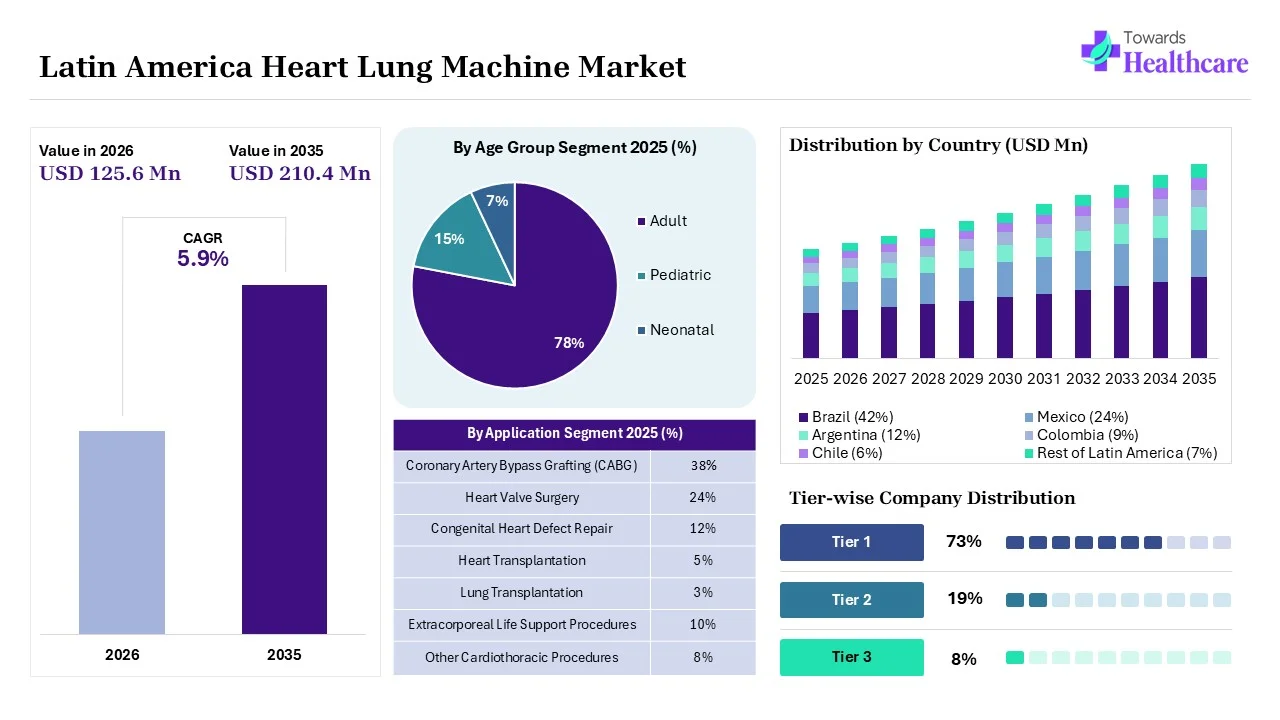
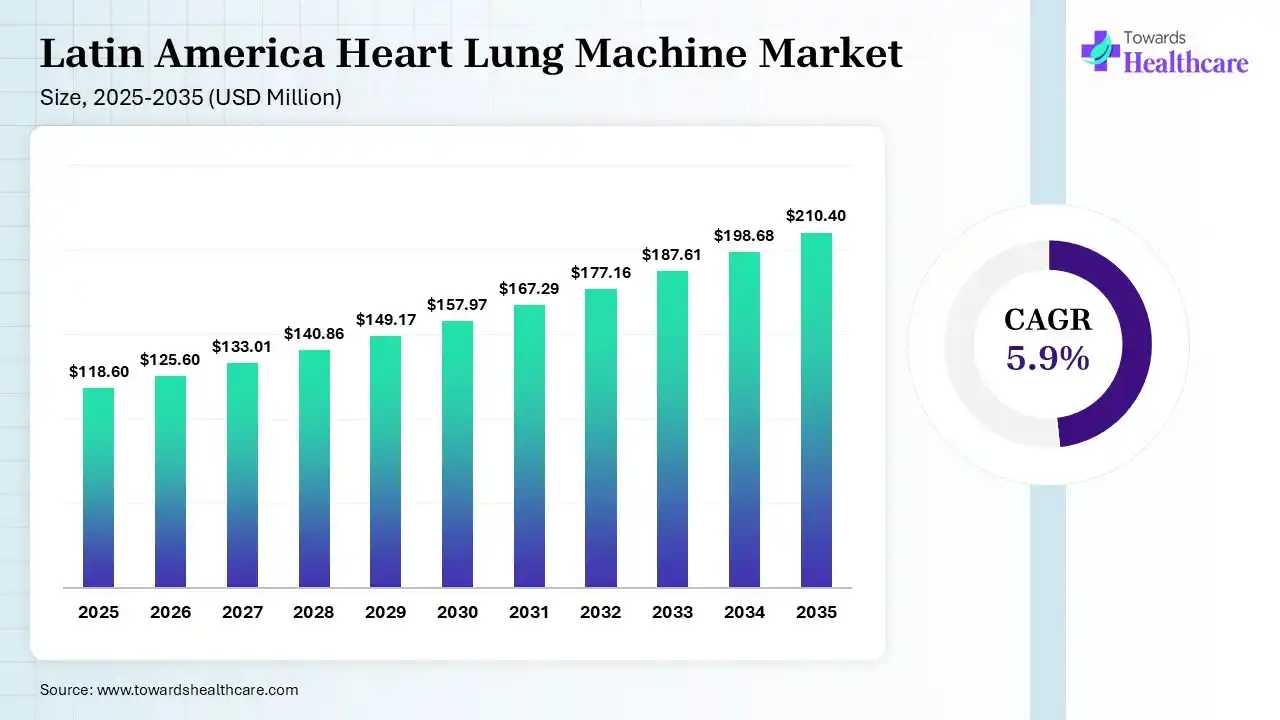
The Latin America heart lung machine market size was estimated at USD 118.6 million in 2025 and is predicted to increase from USD 125.6 billion in 2026 to approximately USD 210.4 million by 2035, expanding at a CAGR of 5.9% from 2026 to 2035.
The Latin America heart lung machine market is driven by growing cardiovascular diseases, a geriatric population, and expanding healthcare. The Latin America heart lung machine encompasses medical devices in Latin America performing the temporary function of the heart and lungs during open-heart and other complex cardiac surgeries. Cardiovascular disease (CVD) refers to a group of disorders affecting the heart and blood vessels. The different types of CVD include coronary artery disease, heart failure, heart valve disease, congenital heart defect, etc, where their growing incidences in Latin America are increasing the number of cardiovascular surgeries.
This, in turn, is increasing the demand for heart lung machines across Latin America. The wide range of heart lung machines present in the region includes single roller pump heart lung machine, dual roller pump heart-lung machines, miniaturized cardiopulmonary bypass systems, centrifugal pump heart-lung machines, integrated heart-lung machines, and portable heart-lung machines. This is driving their adoption for the treatment of various heart conditions, where their minimally invasive approach is also promoting their use in emergency conditions. At the same time, expanding cardiac centres, robotic-assisted surgeries, healthcare investments, medical tourism, training programs, and technological advancements are fueling the market growth.
The use of AI in the Latin America heart lung machine market is increasing due to its predictive analytics, which helps in the identification of potential complications. It is also being used for personalized perfusion management, real-time patient monitoring, and optimization of various performance parameters, where data analysis and automated alerts are also increasing their use to enhance surgical outcomes. AI is also being integrated with hospitals' digital systems for enhanced training, simulation, and quality control, which in turn is encouraging their innovations.
Rise of Minimally Invasive Cardiac Procedures
The growing cardiovascular disease burden in Latin America is increasing the shift towards minimally invasive cardiac procedures for smaller incisions and faster recoveries. This, in turn, is increasing the adoption of hybrid cardiac surgeries along with compact and advanced heart-lung machines. At the same time, expanding specialized cardiac centres and government support are also increasing the adoption of advanced minimally invasive techniques and devices, enhancing patient outcomes, and encouraging their early adoption.
Expanding Medical Tourism
Various countries in Latin America are experiencing a rise in medical tourism, which is attracting a large number of international patients for cardiac treatments. This is driving the adoption of a wide range of heart-lung machines to offer high-quality, affordable heart surgeries, strengthening their position as tourism destinations. Furthermore, the presence of advanced and internationally accredited healthcare facilities is also increasing their patient inflow, boosting the volume of cardiac procedures.
Flourishing Technological Advancements
The growing technological advancements in Latin America are increasing the development and adoption of various advanced heart lung machines and technologies to improve surgical outcomes and operational efficiency. The companies are developing advanced oxygenators, centrifugal pump technologies, miniaturized perfusion systems, and patient-specific perfusion systems, with enhanced efficiency, safety, and precision. Additionally, they are also integrating digital solutions for real-time performance monitoring, which is encouraging their use as well as innovations.
| Table | Scope |
| Market Size in 2026 | USD 125.6 Million |
| Projected Market Size in 2035 | USD 210.4 Million |
| CAGR (2026 - 2035) | 5.9% |
| Historical Data | 2020 - 2023 |
| Base Year | 2025 |
| Forecast Period | 2026 - 2035 |
| Measurable Values | USD Millions/Units/Volume |
| Market Segmentation | By Product Type, By Application, By Age Group, By End User, By Technology, By Region |
| Top Key Players | Braile Biomedica, Medtronic plc,LivaNova plc, Nipro Corporation, Getinge AB, Eurosets, Terumo Cardiovascular |
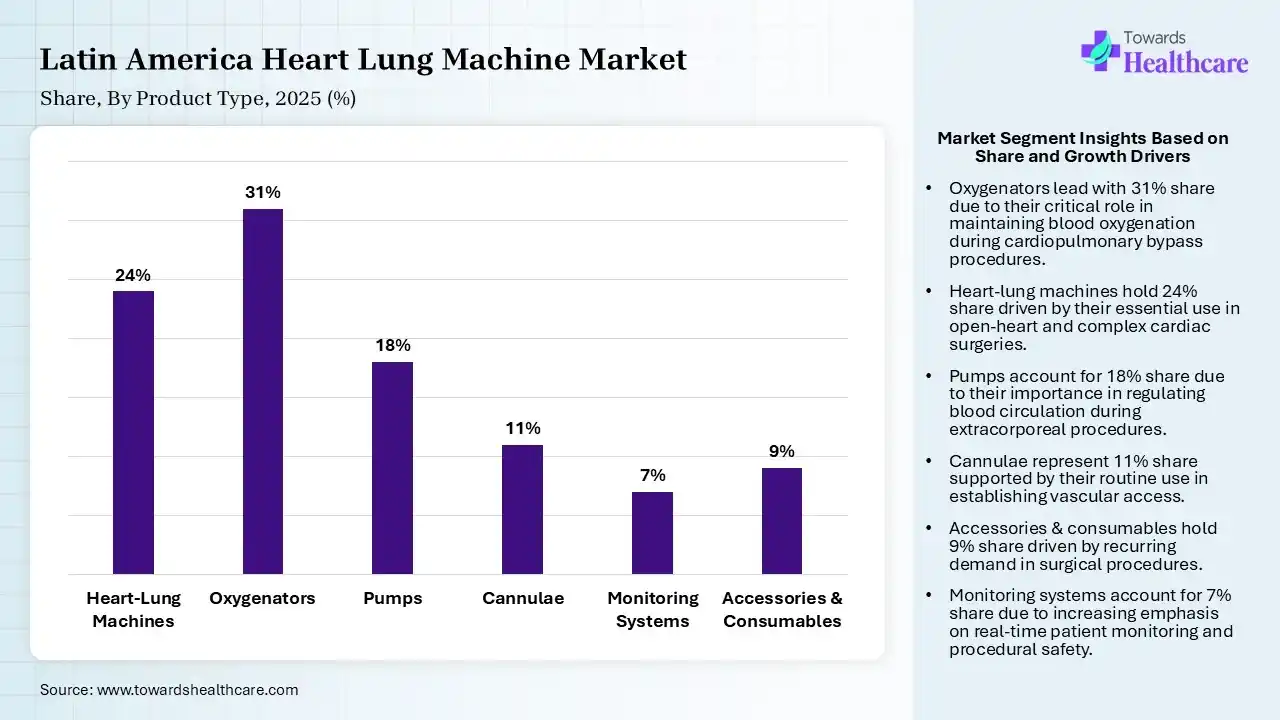
| Segment | Share 2025 (%) |
| Heart-Lung Machines | 24% |
| Oxygenators | 31% |
| Pumps | 18% |
| Cannulae | 11% |
| Monitoring Systems | 7% |
| Accessories & Consumables | 9% |
The Oxygenators Segment Dominated the Market With 31% in 2025
The oxygenators segment led the Latin America heart lung machine market with a 31% share in 2025, as it is the essential disposable component in bypass procedures. Higher surgical volumes also boosted their demand. At the same time, the growth in technology improvements also enhanced oxygen exchange efficiency, which increased their adoption rates.
The heart-lung machines segment held the second-largest share of 24% of the market in 2025, driven by the rising cardiac surgeries, which increase their utilization. Hospitals upgrade perfusion platforms, which drives their demand. Improved safety features and advanced digital connectivity are also supporting their adoption.
The pumps segment held 18% of the Latin America heart lung machine market share in 2025, driven by growing preference for advanced perfusion systems. Better flow control is also improving their outcomes. A rise in the replacement demand and increasing use of valve replacements and congenital heart surgeries are also increasing their adoption rates.
The monitoring systems segment held 7% of the market share in 2025 and is expected to witness the fastest growth with a CAGR of 6.8% during the forecast period, due to the digital monitoring adoption improving procedural precision. The growing use of real-time analytics is also enhancing patient safety. Hospitals are also investing in advanced monitoring.
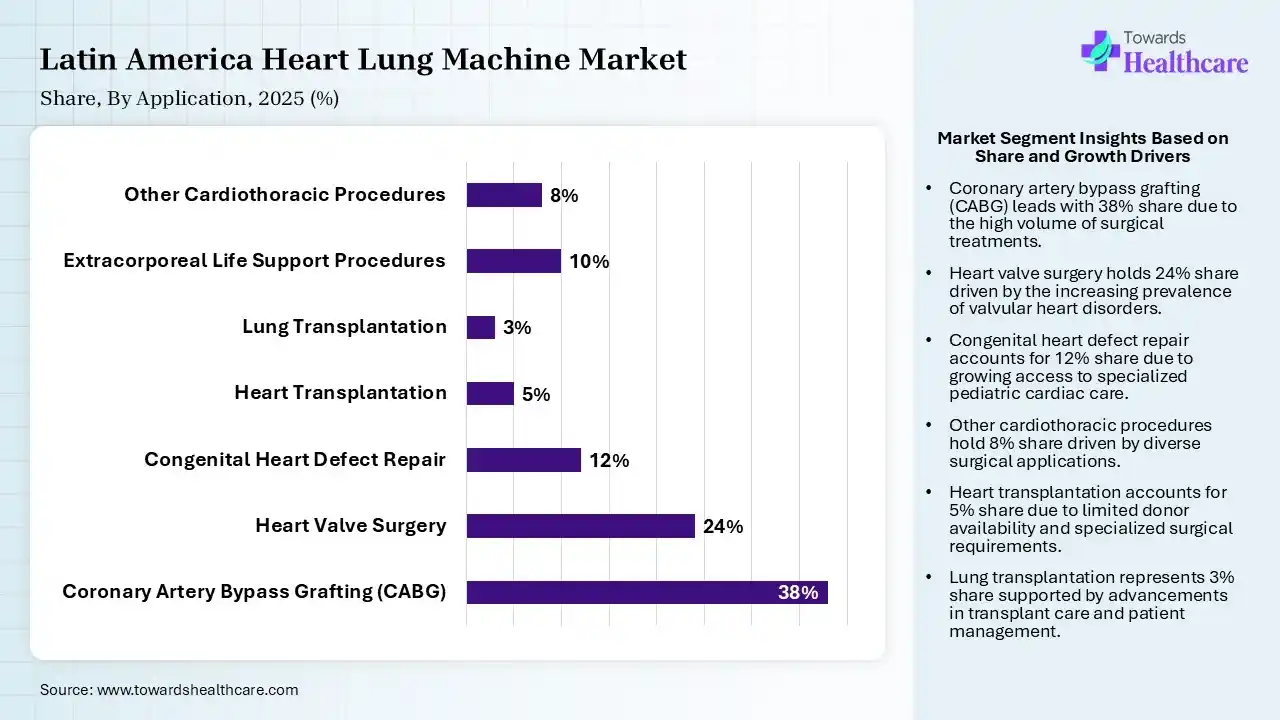
| Segment | Share 2025 (%) |
| Coronary Artery Bypass Grafting (CABG) | 38% |
| Heart Valve Surgery | 24% |
| Congenital Heart Defect Repair | 12% |
| Heart Transplantation | 5% |
| Lung Transplantation | 3% |
| Extracorporeal Life Support Procedures | 10% |
| Other Cardiothoracic Procedures | 8% |
The Coronary Artery Bypass Grafting (CABG) Segment Dominated the Market With 38% in 2025
The coronary artery bypass grafting (CABG) segment accounted for the highest revenue share of 38% of the Latin America heart lung machine market in 2025, driven by the high prevalence of coronary artery disease, which drives procedures. A growth in the aging population also increased the patient pool, which increased the demand for heart-lung machines. Established surgical protocols also sustained their demand.
The heart valve surgery segment held the second-largest share of 24% of the market in 2025, due to the rising diagnosis of valvular disorders, which supports growth. Expanding access to cardiac care also increases volumes. Better outcomes and rising health awareness are also encouraging the adoption of heart lung machines.
The congenital heart defect repair segment held 12% of the Latin America heart lung machine market share in 2025, due to pediatric cardiac programs expanding regionally. A rise in early diagnosis improves treatment rates, which promotes the use of heart lung machines. Specialized surgical centers increase capacity, driving their adoption.
The extracorporeal life support procedures segment held 10% of the market share in 2025 and is expected to show the highest growth with a CAGR of 7.1% during the forecast period, driven by expanding ECMO and critical care applications, which boost utilization. Hospitals strengthen intensive care capacity, driving their demand. Technology improvements also enhance outcomes.
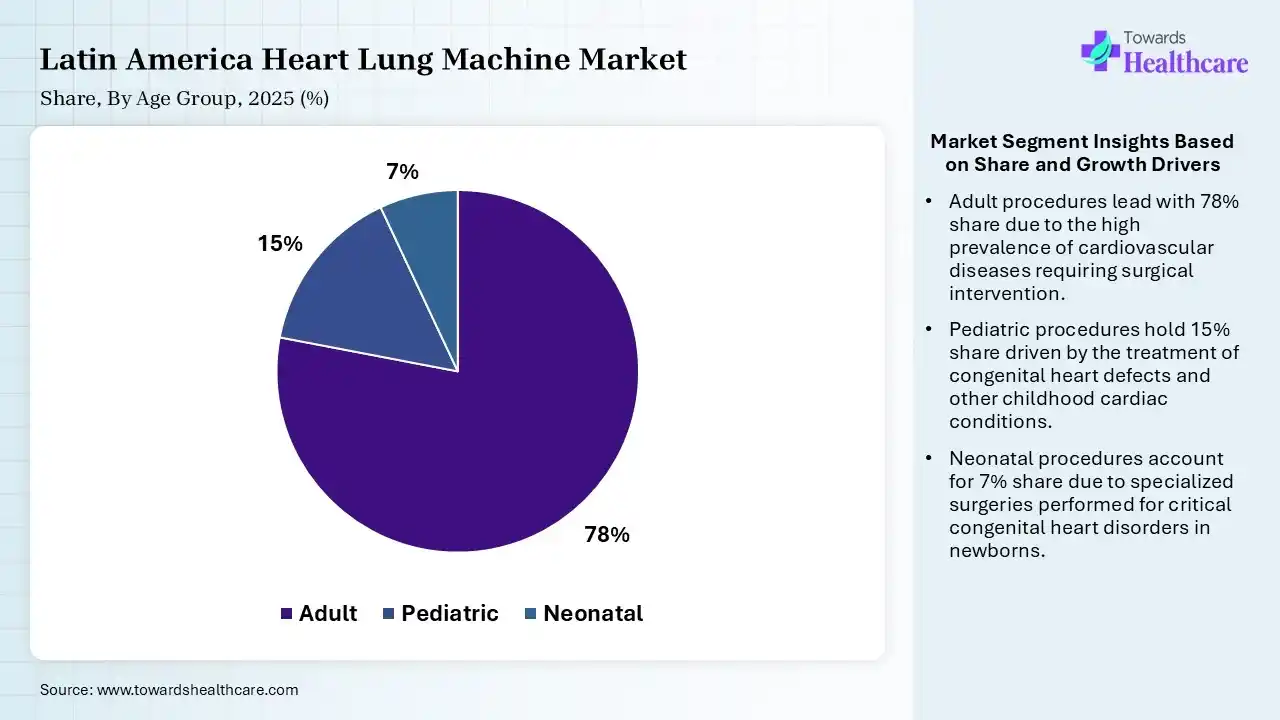
| Segment | Share 2025 (%) |
| Adult | 78% |
| Pediatric | 15% |
| Neonatal | 7% |
The Adult Segment Dominated the Market With 78% in 2025
The adult segment held a major revenue share of 78% of the Latin America heart lung machine market in 2025, due to the high prevalence of cardiovascular diseases, which increased cardiac procedures. A large elderly population required intervention, which increased the adoption of various heart lung machine. Most cardiac surgeries occurred in adults, which contributed to market growth.
The pediatric segment held the second-largest share of 15% of the market in 2025, driven by the expansion of pediatric cardiac programs, which increases treatment rates. Improved survival outcomes also support the demand for heart lung machines. Additionally, specialized centers continue to invest in advanced heart-lung machines, promoting their innovations.
The neonatal segment held 7% of the Latin America heart lung machine market share in 2025 and is expected to expand rapidly with a CAGR of 6.8% during the forecast period, due to the early detection of congenital conditions, which drives surgeries. Advanced neonatal care is improving access to the heart lung machines. Specialized perfusion technologies are also supporting their adoption.
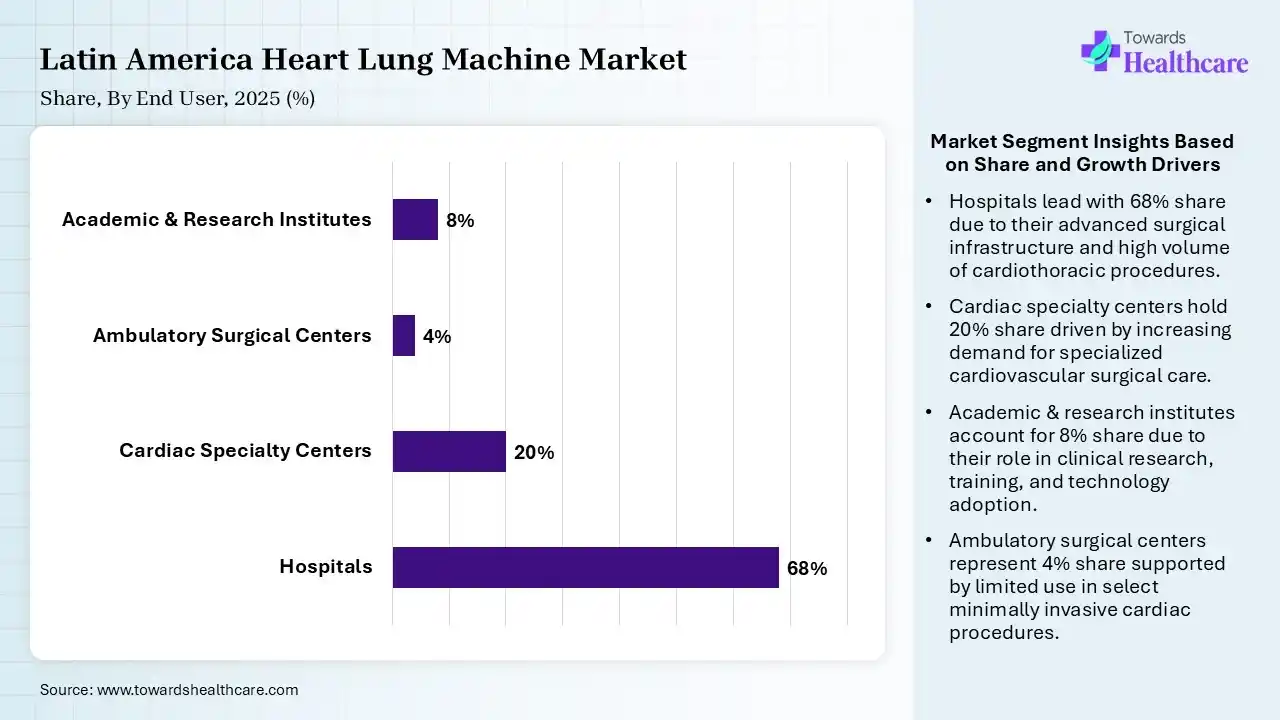
| Segment | Share 2025 (%) |
| Hospitals | 68% |
| Cardiac Specialty Centers | 20% |
| Ambulatory Surgical Centers | 4% |
| Academic & Research Institutes | 8% |
The Hospitals Segment Dominated the Market With 68% in 2025
The hospitals segment contributed the biggest revenue share of 68% of the Latin America heart lung machine market in 2025, as the majority of cardiac surgeries were performed in hospitals. A rise in infrastructure investments also improved capacity, which increased the adoption of heart lung machines. Public and private funding also supported equipment purchases.
The cardiac specialty centers segment held the second-largest share of 20% of the market in 2025, due to increasing specialization, which improves procedural efficiency. Growing patient preference is also supporting a rise in the demand for heart lung machines. Additionally, the expansion of dedicated cardiac facilities is also driving their growth.
The academic & research institutes segment held 8% of the market share in 2025, due to growing clinical research activities, which are increasing equipment demand. Training programs require advanced systems, which are fueling the adoption of various heart lung machines. A rise in government funding is also supporting various innovations.
The ambulatory surgical centers segment held 4% of the Latin America heart lung machine market share in 2025 and is expected to gain the highest share with a CAGR of 7.0% during the forecast period, driven by the shift toward cost-efficient care models, which support adoption. Growing technological advancements are enabling more procedures. Healthcare systems seek operational efficiency, promoting their use.
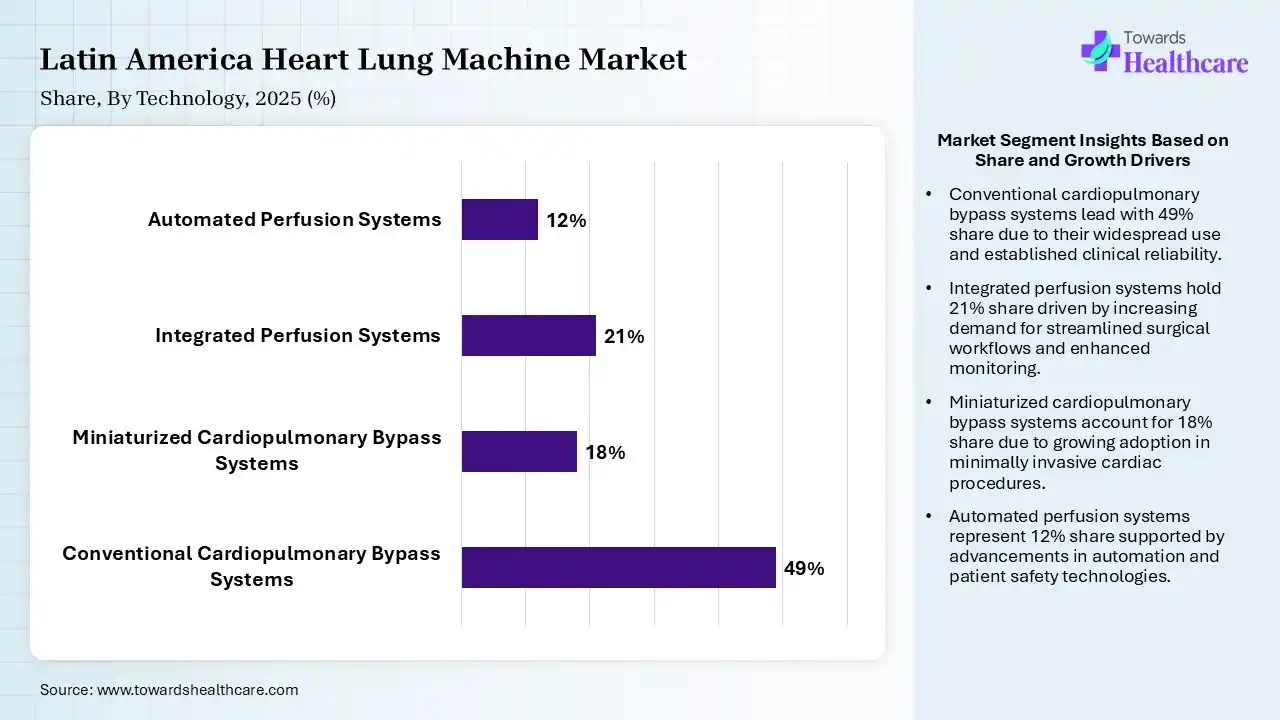
| Segment | Share 2025 (%) |
| Conventional Cardiopulmonary Bypass Systems | 49% |
| Miniaturized Cardiopulmonary Bypass Systems | 18% |
| Integrated Perfusion Systems | 21% |
| Automated Perfusion Systems | 12% |
The Conventional Cardiopulmonary Bypass Systems Segment Dominated the Market With 49% in 2025
The conventional cardiopulmonary bypass systems segment held the largest revenue share of 49% of the Latin America heart lung machine market in 2025, due to established clinical acceptance, which sustained their utilization. Existing infrastructure also supported their continued usage. At the same time, cost advantages also favored adoption in many facilities.
The integrated perfusion systems segment held the second-largest share of 21% of the market in 2025, driven by increasing digital integration, which improves workflow efficiency. Better monitoring capabilities are also supporting their adoption. Hospitals modernize operating rooms, driving their demand. Moreover, they also help in reducing the risk of human errors, which is encouraging their demand.
The miniaturized cardiopulmonary bypass systems segment held 18% of the market share in 2025 due to reduced blood trauma, which improves outcomes. Growing minimally invasive surgery trends support their demand. Advanced designs enhance efficiency. Additionally, the growing demand for patient-friendly procedures is also increasing the demand for these systems.
The automated perfusion systems segment held 12% of the Latin America heart lung machine market share in 2025 and is expected to grow at the fastest CAGR of 7.3% during the forecast period, as automation improves procedural consistency. Rising labor shortages are also encouraging their adoption. AI-assisted monitoring enhances clinical performance, promoting a rise in its use.
The Latin America heart lung machine market held a significant share in 2025 and is expected to show lucrative growth during the forecast period, due to growing cardiovascular diseases and the geriatric population. Expanding healthcare investments and government initiatives are also increasing their adoption and accessibility. Growing health awareness and rising complex surgeries are also encouraging their adoption and innovations, contributing to the market growth.
Brazil Market Trends
Brazil dominated the Latin America heart lung machine market with a 42% share in 2025, due to the presence of the largest healthcare market in the region. Strong cardiac surgery infrastructure and a rise in public-private investments, driving modernization, also supported their demand. The growth in the geriatric population and complex surgeries also promoted their use.
Colombia Market Trends
Colombia held a 9% share of the Latin America heart lung machine market in 2025 and is expected to grow at the fastest CAGR of 6.8% during the forecast period, driven by a rise in healthcare investments, which improves accessibility. Expanding cardiac specialty centers and increasing cardiovascular disease burden also support their growth. Economic development is also encouraging modernization.
R&D
Clinical Trials and Regulatory Approvals
Patient Support and Services
| Companies | Headquarters | Solutions |
| Braile Biomedica | São Paulo, Brazil | Braile Biomedica Extracorporeal Circulation Machine |
| Medtronic plc | Dublin, Ireland | Medtronic Performer CPB System |
| LivaNova plc | London, UK | LivaNova Essenz Perfusion System and Stockert S5/S3 system |
| Nipro Corporation | Osaka, Japan | Nipro Heart-Lung Machine |
| Getinge AB | Gothenburg, Sweden | Maquet Jostra HL 20 & Getinge HL 40 |
| Eurosets | Medolla, Italy | Eurosets Landing Advanced Perfusion System |
| Terumo Cardiovascular | Tokyo, Japan | Terumo Advanced Perfusion System |
In June 2025, after the launch of Cor. Sync’s technology for detecting cardiac troponin, the biomarker for heart attacks, Raul de Macedo Queixada, a Brazilian mechatronics engineer, stated that “With my engineer’s perspective, I thought, ‘it’s not possible that such an acute and frequently fatal disease takes so long to diagnose in an emergency room.’” “In the lab, this test takes one to five hours to complete. We do it in eight minutes with the same accuracy.”
By Product Type
By Application
By Age Group
By End User
By Technology
By Region










Principal Consultant
Shivani Zoting is a dedicated research analyst specializing in the healthcare industry. With a strong academic foundation, a B.Sc. in Biotechnology and an MBA in Pharmabiotechnology, she brings a unique blend of scientific understanding and strategy.
Learn more about Shivani Zoting
Reviewed By
Aditi Shivarkar is a seasoned professional with over 14 years of experience in healthcare market research. As a content reviewer, Aditi ensures the quality and accuracy of all market insights and data presented by the research team.
Learn more about Aditi Shivarkar










