

Pipeline Programs

CGT Companies Tracked

Manufacturing Facilities


The North America biologics fill-finish manufacturing market size was estimated at USD 3.67 billion in 2025 and is predicted to increase from USD 3.89 billion in 2026 to approximately USD 6.57 billion by 2035, expanding at a CAGR of 6% from 2026 to 2035. Her analysis highlights that the North America biologics fill-finish manufacturing market is rapidly expanding due to growing strategic developments, rising demand for prefilled syringes, increasing adoption of GLP-1 drugs, rising demand for single-use systems, growing approvals of biologics, and key industry players like Lonza Group AG, Novo Nordisk, Novo Holdings, Catalent, Inc., and Simtra Biopharma Solutions.
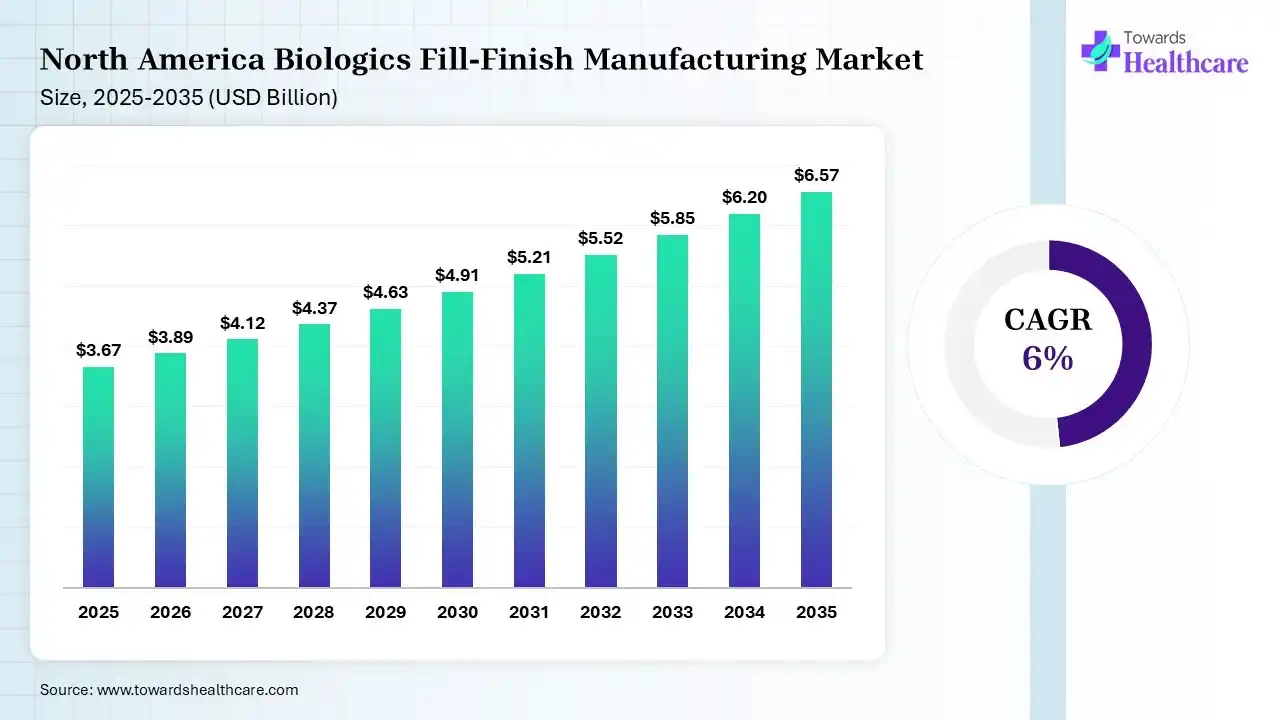
North America biologics fill-finish manufacturing refers to the sterile drug-product operations responsible for the conversion of bulk biologic drug substance such as monoclonal antibodies, vaccines, recombinant proteins, biosimilars, cell and gene therapies into ready-to-administer vials, cartridges, ampoules, and prefilled syringes across the U.S., Canada, and Mexico. The biologics fill-finish manufacturing operation includes aseptic filling, lyophilization, sterile formulation, inspection, and packaging. These processes help maintain product sterility, enhance safety and quality, and reduce the risk of contamination.
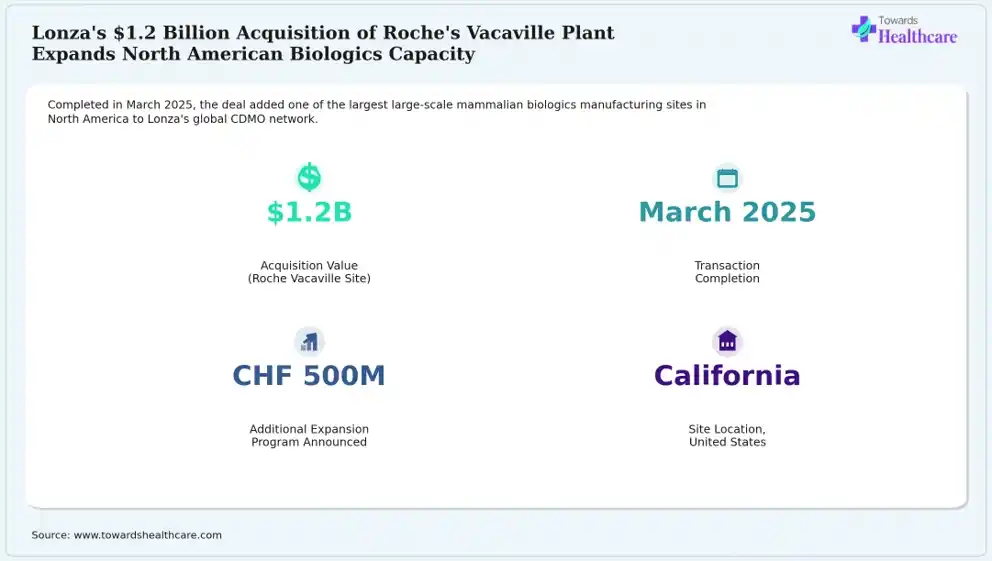
Graph 1: As the market research analyst, I interpret that the given infographic stat panel illustrates Lonza–Roche Vacaville acquisition metrics, which contributed to one of the largest large-scale mammalian biologics manufacturing sites in North America. The acquisition value accounted for $1.2 billion, while the additional expansion program announced a total of CHF 500 million. Furthermore, the transaction completion was announced in March 2025 for the site located in Vacaville, California, U.S.
Key Insight:
The decision to acquire an existing large-scale site rather than building a new site for Lonza highlighted that acquisitions are faster than greenfield construction, even for top-tier CDMOs for enhancing North American commercial-scale biologics capacity.
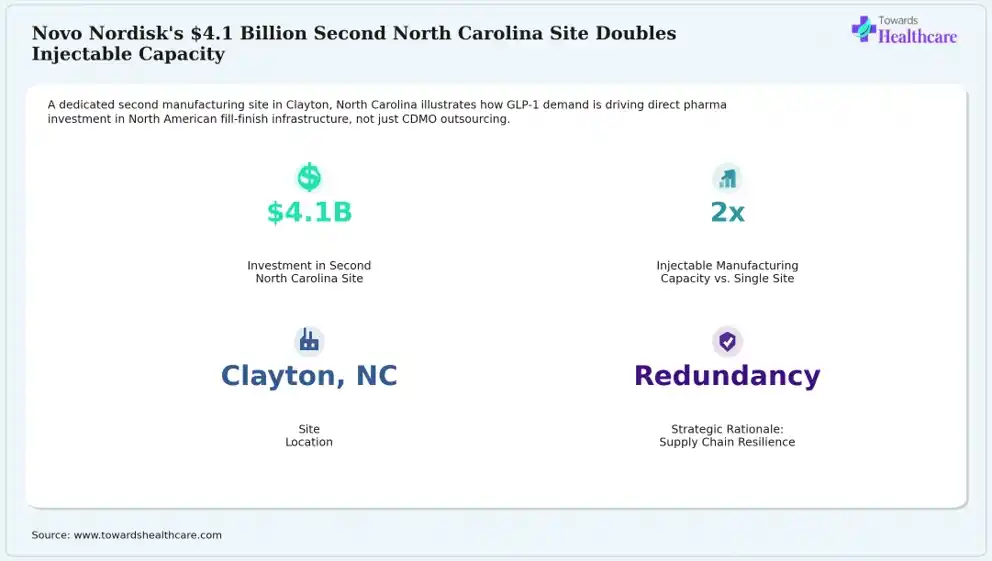
Graph 2: The given infographic stat panel covers Novo Nordisk North Carolina site metrics along with growing demand for GLP-1, attracting pharma investments. To focus on supply redundancy and resilience, an investment of $4.1 billion was announced by Novo Nordisk at the site located in Clayton, North Carolina, U.S., which doubled injectable manufacturing capacity.
Key Insight:
The development of a second full-scale site by Novo Nordisk instead of relying on acquisition reflected that supply redundancy has become a major priority for GLP-1 manufacturing.
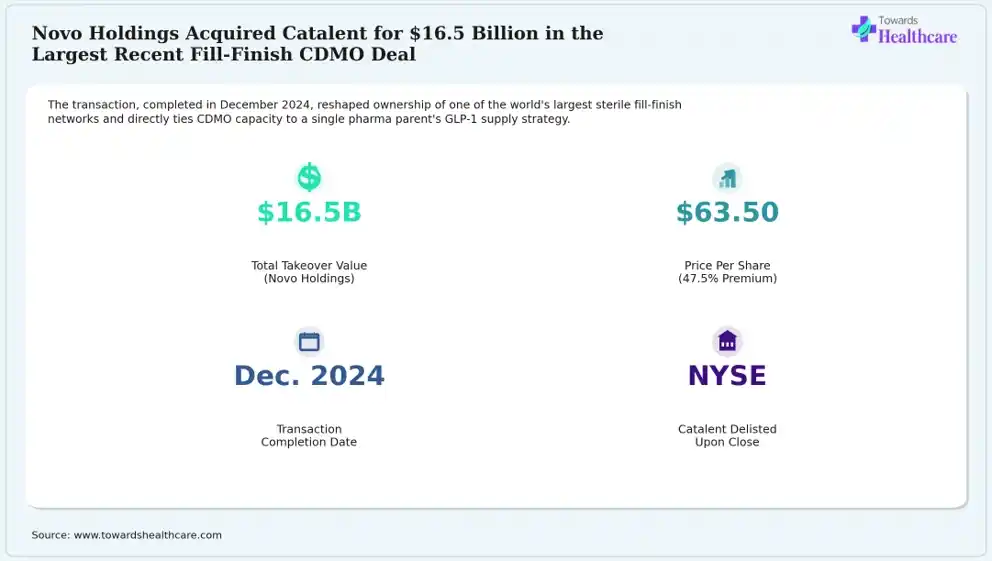
Graph 3: Based on our research, this infographic stat panel encompasses Novo Holdings–Catalent acquisition metrics, which reshaped ownership of one of the largest sterile fill-finish networks. The transaction completion date was noted to be December 2024, which contributed to $16.5 billion, with related direct site purchases of 3 sites noted to be $11 billion, where one of the 3 sites was situated in Bloomington, Indiana, in North America.
Key Insight:
This largest fill-finish CDMO transaction confirmed that large pharma companies are willing to pay a premium for sterile injectable manufacturing capacity to expand their presence across North America.
Source: Catalent, “Novo Holdings Completes Acquisition of Catalent,” Dec. 20, 2024.
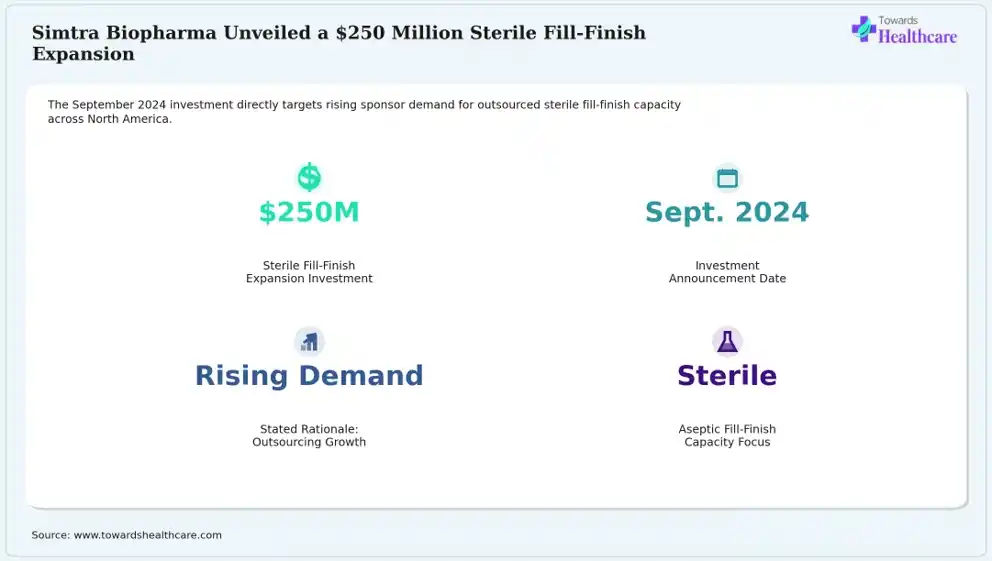
Graph 4: The above-mentioned infographic stat panel focuses on Simtra Biopharma expansion metrics. The expansion of Simtra Biopharma was announced in September 2024, which accounted for a $250 million investment to enhance sterile fill-finish capacity in order to address rising outsourcing demand.
Key Insight:
With the quarter-billion-dollar investment from a mid-size specialist CDMO, along with growing acquisitions by Lonza and Novo, it indicates that capacity expansion is one of the major drivers for North American fill-finish operators.
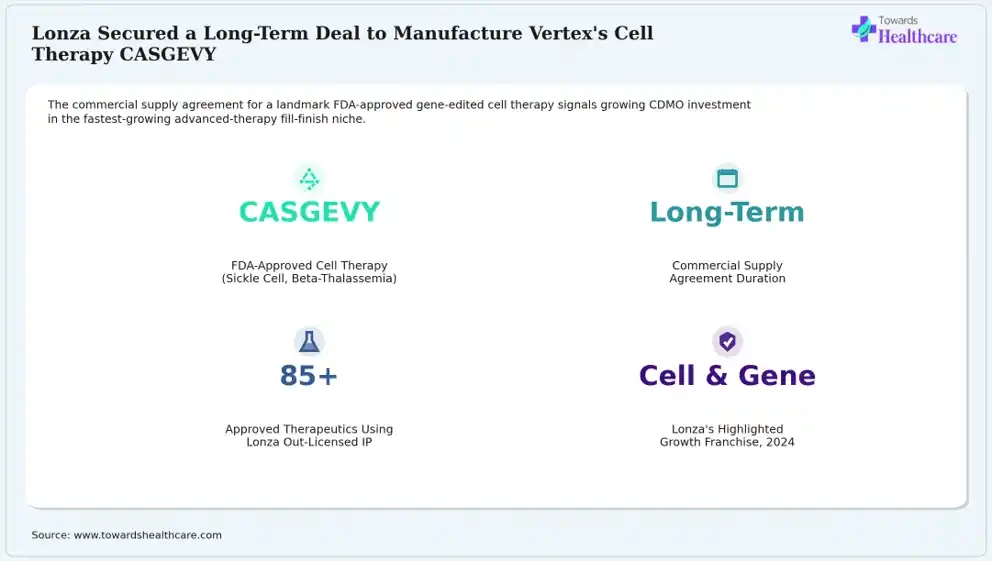
Graph 5: As the market research analyst, I interpret that the given infographic stat-panel outlines the Lonza-Vertex CASGEVY manufacturing agreement, with a focus on enhancing the advanced-therapy fill-finish niche. Lonza, consisting of more than 85 approved therapeutics out-licensed IP, announced a long-term commercial supply agreement for CASGEVY, which is a product for sickle cell disease and beta-thalassemia, which in turn will enhance Lonza's cell & gene portfolio.
Key Insight:
With this commercial manufacturing agreement for one of the first approved gene-edited cell therapies, Lonza is placed at the edge in the fastest-growing biologic modality.
Source: Lonza, “2024 Annual Report Our Businesses: Biologics,” 2025.
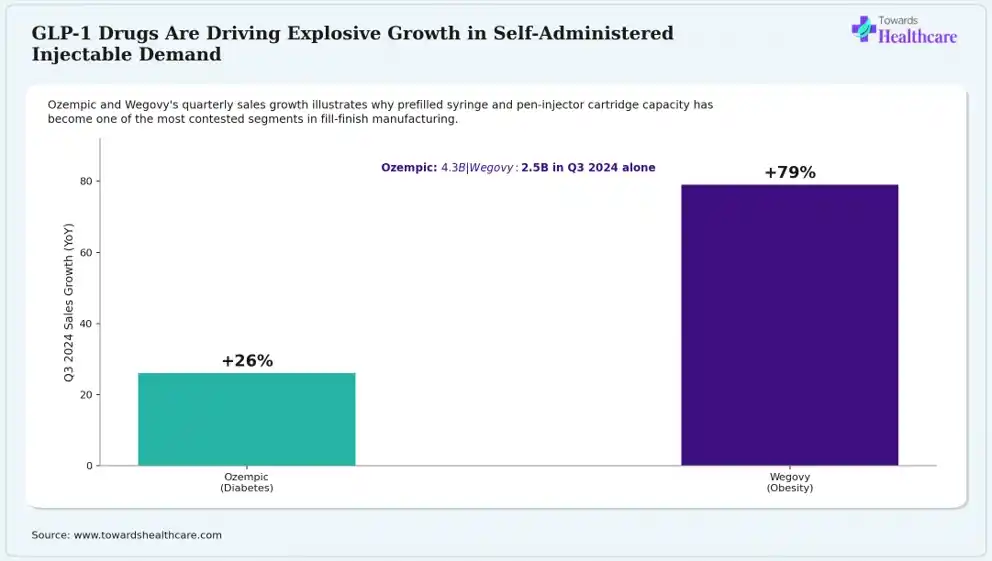
Graph 6: The bar chart compares the Q3 2024 sales growth of Ozempic and Wegovy, which drives the demand for prefilled syringe and pen-injector cartridge fill-finish capacity. The Q3 2024 sales for Ozempic, which is a diabetes drug, were reported to be $4.3 billion, reflecting a rise of 26%, while Q3 2024 sales for Wegovy, an obesity drug, indicate a rise of 79%, achieving $2.5 billion.
Key Insight:
The growth in sales of Wegovy confirms that the obesity-drug segment is responsible for rapid expansion of new prefilled syringe and auto-injector fill-finish capacities across North America.
Source: BioPharma Dive, “Novo Holdings to buy contract drugmaker Catalent for $16.5B,” Feb. 2024 (citing Novo Nordisk Q3 2024 sales data).
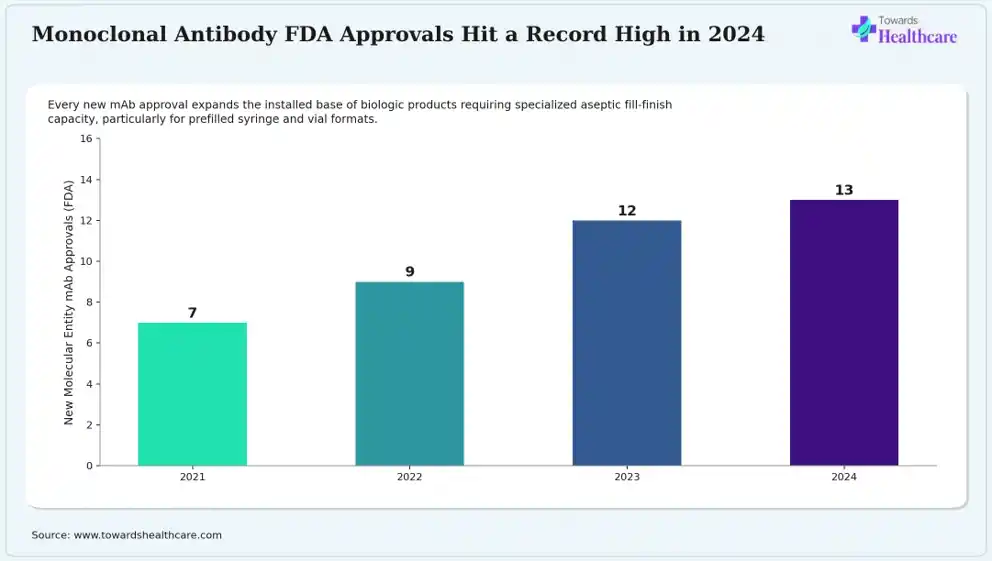
Graph 7: As per our analysis, the above-mentioned bar chart compares annual FDA mAb approvals from 2021 to 2024, representing gradual growth. A total of 7 new molecular entity mAbs were approved by the FDA in 2021, which increased to 9 in 2022. In 2023, the number of new molecular entity mAb approved by the FDA were recorded to be 12, which increased to 13, setting a new record in 2024.
Key Insight:
The growing approvals of monoclonal antibodies expand biologics manufacturing, driving the demand for aseptic fill-finish capacity across the North American market.
Source: PMC, “The Pharmaceutical Industry in 2024: An Analysis of the FDA Drug Approvals,” peer-reviewed.
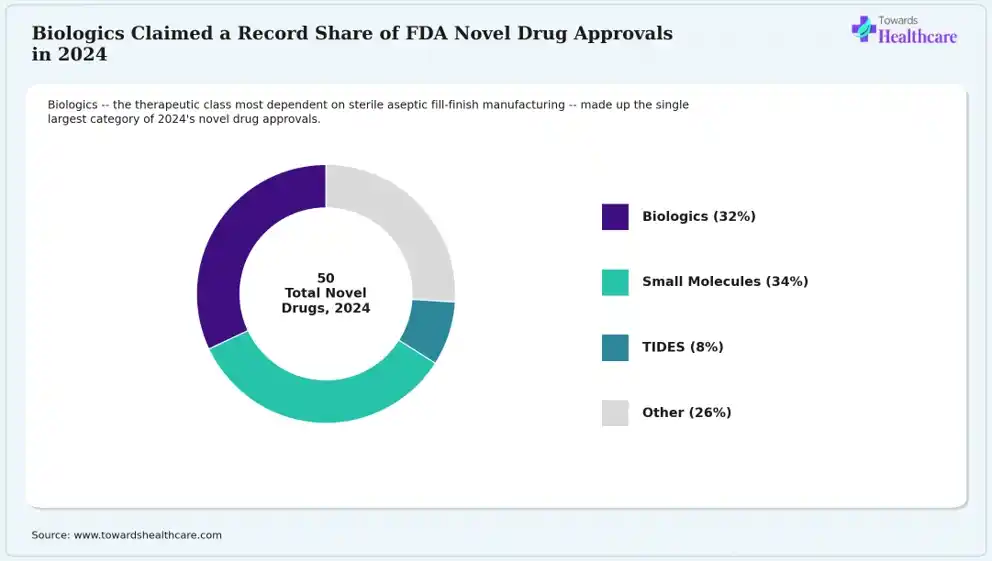
Graph 8: The given donut chart highlights FDA novel drug approvals by category in 2024. The share held by biologics in 2024 FDA novel drug approvals contributed 32%, which increased the demand for sterile aseptic fill-finish manufacturing. Small molecules held the largest share at 34% of 2024 FDA novel drug approvals, while TIDES (peptides/oligonucleotides) held 8%, and 26% contributed to other products.
Key Insight:
The addressable North American fill-finish market is expanding faster than pharmaceutical approvals due to growing biologics and TIDES approvals representing 40% of novel approvals.
Source: PMC, “The Pharmaceutical Industry in 2024: An Analysis of the FDA Drug Approvals,” peer-reviewed
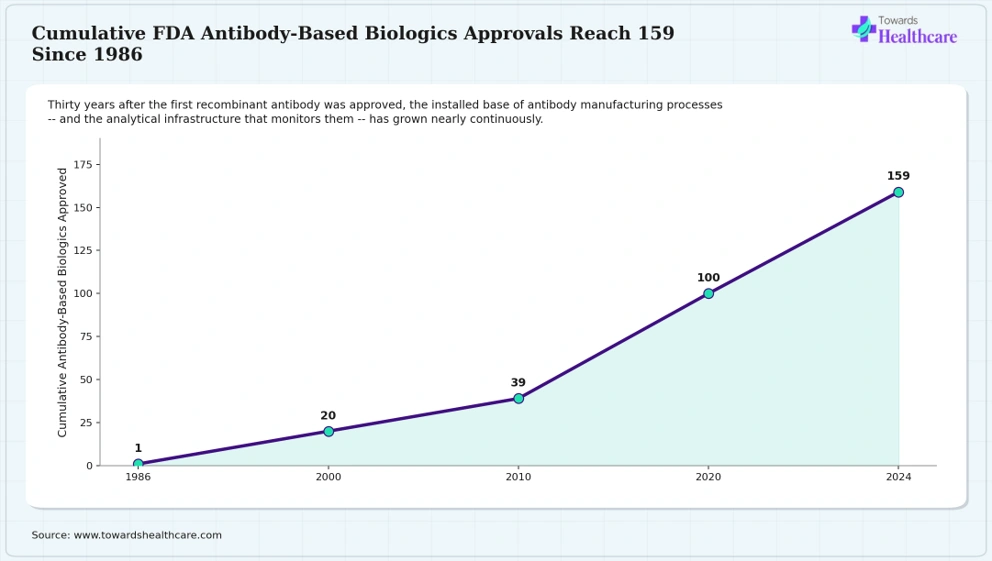
Graph 9: The above-mentioned line chart illustrates cumulative FDA antibody-based biologics approvals from 1986 to 2024, representing exponential growth and encouraging the use of dedicated sterile fill-finish capacity. In 1986, 1 antibody-based biologic was approved, which increased to 20 in 2000 and rose to 39 in 2010. Furthermore, in 2020, the cumulative number of antibody-based biologics approved was recorded to be 100, which reached 159 in 2024.
Key Insight:
The growth in the cumulative antibody approvals indicates that biologics fill-finish demand is compounding rather than merely growing linearly.
Source: Oxford Academic, Antibody Therapeutics journal, “Structure and function of therapeutic antibodies approved by the U.S. FDA in 2024,” June 2025.
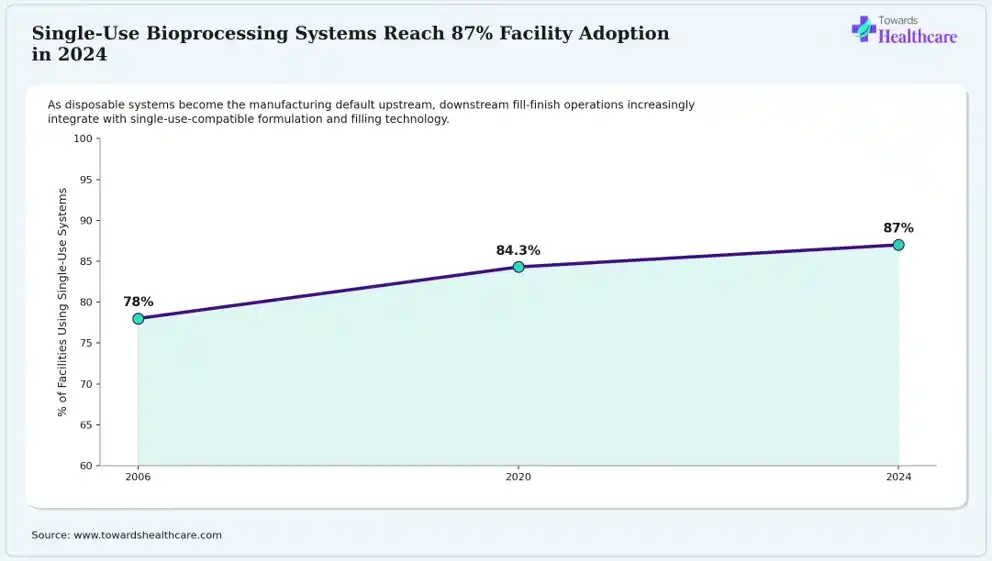
Graph 10: As the market research analyst, I interpret that the line chart represents single-use bioprocessing system adoption from 2006 to 2024, which demonstrates gradual growth. In 2006, approximately 78% of facilities utilized single-use systems, which increased to 84.3% in 2020. Furthermore, 2024 recorded that 87% of facilities utilized single-use systems.
Key Insight:
The growing use of single-use systems, leading to near-saturation adoption, indicates that fill-finish operators are focusing on integrating filling lines with single-use formulation and hold systems instead of focusing on aseptic capability alone.
Source: BioPlan Associates, 21st Annual Report and Survey of Biopharmaceutical Manufacturing Capacity, 2024.
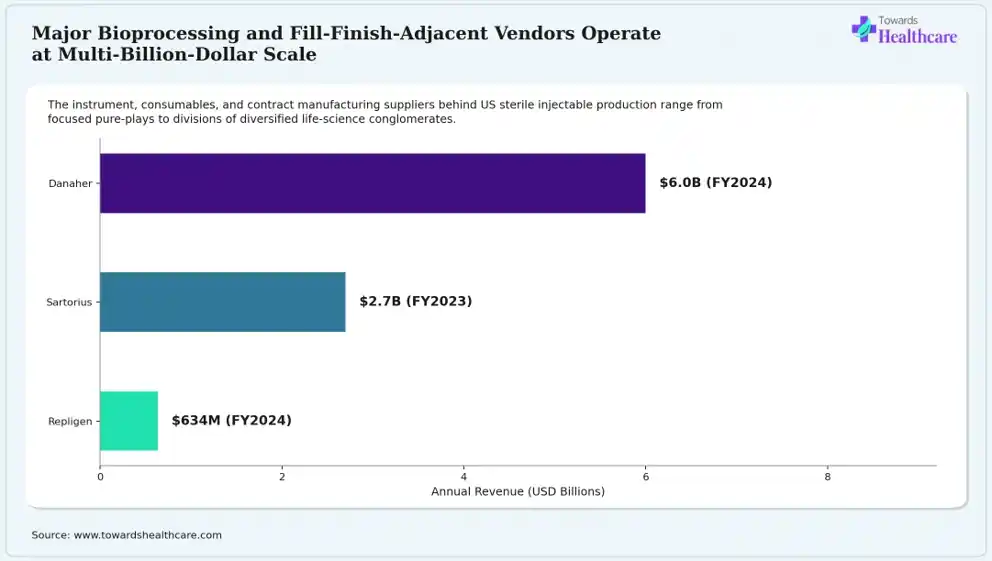
Graph 11: Based on our research, the horizontal bar chart covers major bioprocessing vendors' annual revenue. Sartorius Bioprocess Solutions contributed $2.7 billion in revenue for FY2023. The FY2024 revenue of Repligen Corporation and the Danaher Biotechnology segment were reported to be $634 million and approximately $6.0 billion, respectively.
Key Insight:
The gap in Danaher's and Repligen's annual revenue highlights the different competitive strategies among the fill-finish operators depending on equipment across North America.
Source: Danaher 2024 Annual Report; Sartorius Group FY2023 Results; Repligen Q4/FY2024 Earnings Release, Feb. 2025.
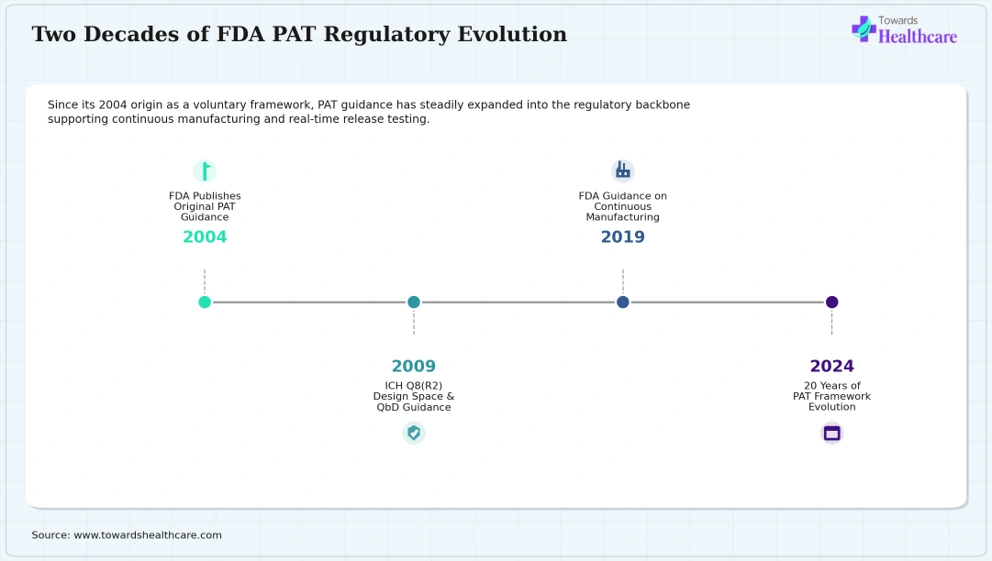
Graph 12: According to the information gathered by Aman, the timeline infographic illustrates FDA PAT regulatory milestones, from 2004 to 2024, shaping the in-line inspection and real-time release systems across North American fill-finish operations. The FDA's original PAT guidance was published in 2004, followed by the formalization of Quality by Design principles by ICH Q8(R2) in 2009. In 2019, FDA published continuous manufacturing guidance, while 2024 marked the 20th anniversary of the PAT framework.
Key Insight:
The PAT's evolution supports automated visual inspection and container closure integrity testing systems, which help distinguish modern fill-finish operations.
Source: FDA Federal Register, Oct. 2004; ISPE Pharmaceutical Engineering, Sept.–Oct. 2020.
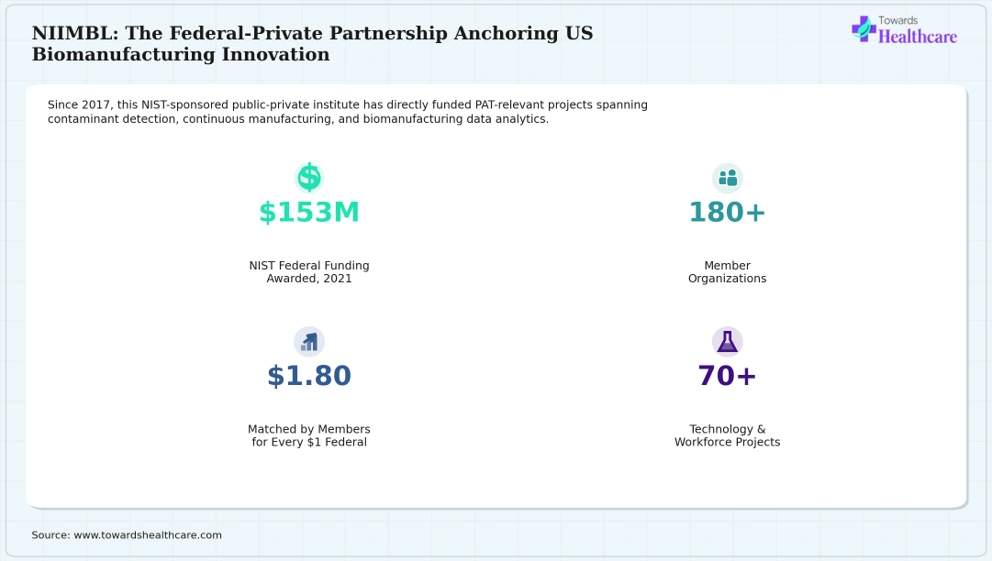
Graph 13: The given infographic stat panel encompasses NIIMBL federal-private partnership metrics relevant to biologics fill-finish and continuous manufacturing capacity. In 2021, $153 million in NIST federal funding was awarded, where the non-federal funding matched per $1 federal was reported to be $1.80. Furthermore, it consists of more than 180 members and has provided funds to more than 70 technology/workforce projects to date.
Key Insight:
A policy-level complement to the private capital flowing into North American sterile fill-finish capacity is provided by NIIMBL federal investment in biomanufacturing innovations.
Source: U.S. Department of Commerce/NIST Press Release, July 14, 2021.
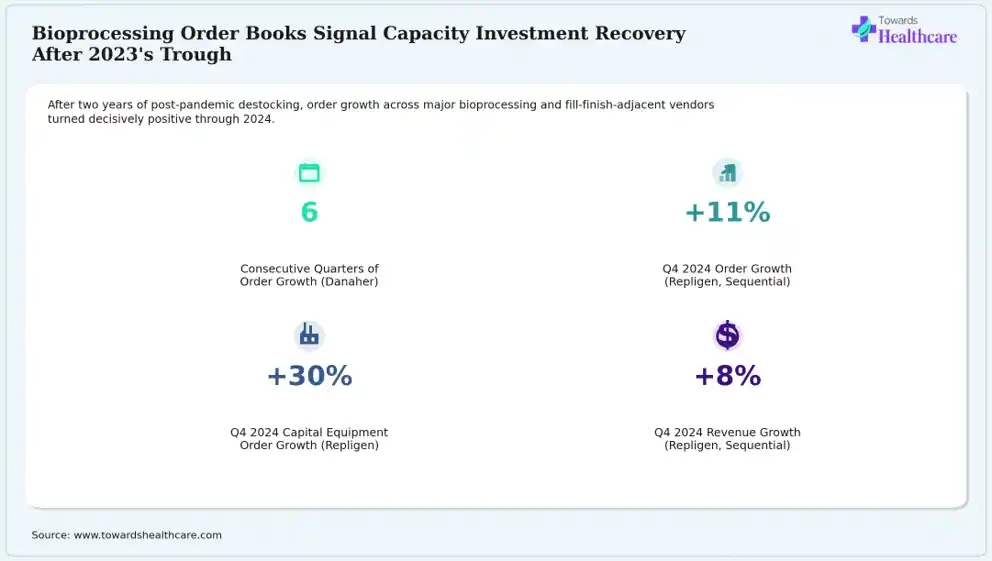
Graph 14: As per the survey conducted by Aman, the infographic stat panel highlights bioprocessing vendor order recovery metrics. The consecutive quarters of order growth for Danaher were valued at 6, where the Q4 2024 capital equipment order growth of Repligen represented a rise of 30%. The Q4 2024 order growth by Repligen, sequential increased by 11%, while its Q4 2024 revenue growth demonstrated a rise of 8%.
Key Insight:
The six consecutive quarters of accelerating orders helped resume capital investment in fill-finish-adjacent equipment by biomanufacturers after the sharpest post-pandemic inventory correction.
Source: Danaher Q4 2024 Earnings Call Transcript, Jan. 2025; Repligen Q4/FY2024 Earnings Release, Feb. 2025.
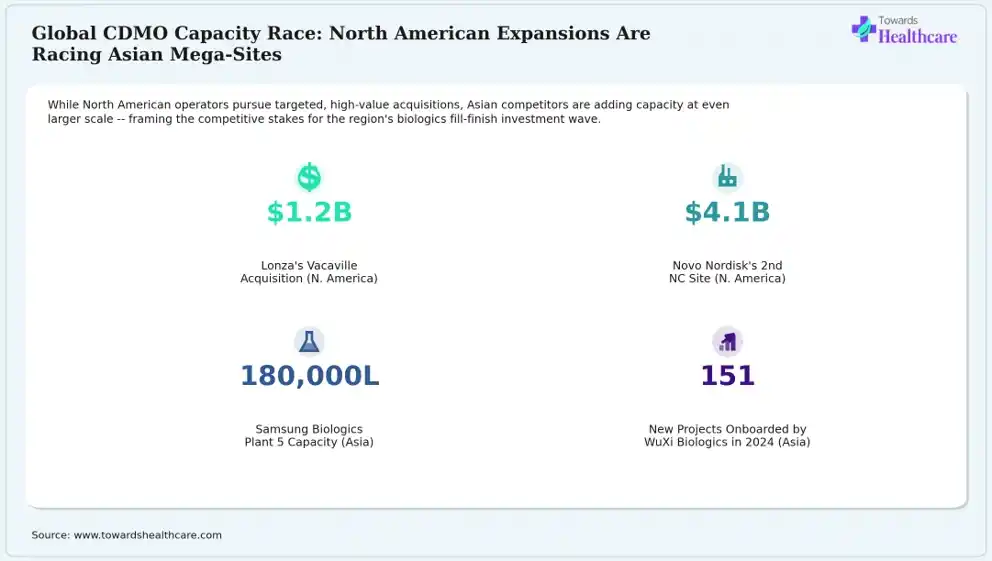
Graph 15: As the market research analyst, I interpret that the given infographic stat panel compares CDMO capacity across North America and Asia, driving a biologics fill-finish investment wave. In North America, Lonza contributed to the $1.2B Vacaville acquisition, while Novo Nordisk represented a $4.1B investment in a second NC site. Whereas Asia accounted for Samsung Biologics’ launch of 180,000L Plant 5 capacity and 151 new projects onboarded by WuXi Biologics in 2024.
Key Insight:
The two largest recent capacity moves in North America matched the single-site Asian expansions, which indicated that the North American operators must focus on integration and quality track record, not raw capacity volume alone.
| Indicator | Value |
| Largest recent fill-finish CDMO acquisition (Novo Holdings–Catalent) | $16.5 billion |
| Lonza's acquisition of Roche's Vacaville biologics plant | $1.2 billion |
| Novo Nordisk's second North Carolina site investment | $4.1 billion |
| Simtra Biopharma sterile fill-finish expansion | $250 million |
| Cumulative FDA antibody-based biologic approvals (2024) | 159 |
| Single-use bioprocessing facility adoption (2024) | 87% |
Table 1: Based on our research, the table covers verifiable transaction and regulatory indicators, contributing to market growth. The largest recent fill-finish CDMO acquisition, Novo Holdings-Catalent, was valued at $16.5 billion, while Lonza's acquisition of Roche's Vacaville biologics plant was noted to be $1.2 billion. Novo Nordisk's second North Carolina site investment was reported to be $4.1 billion, while Simtra Biopharma sterile fill-finish expansion accounted for $250 million. The cumulative FDA antibody-based biologic approvals as of 2024 contributed to 159, while single-use bioprocessing facility adoption in the same year was reported to be 87%.
This section covers Demand-Supply Analysis, Biologics Pipeline and Procedure Volume Analysis, and Epidemiology and Disease Burden Analysis.
| Metric | Value |
| Lonza's Vacaville capacity addition (acquisition-based) | $1.2 billion, March 2025 |
| Novo Nordisk's North Carolina capacity addition (greenfield) | $4.1 billion, doubles injectable capacity |
| Simtra's sterile fill-finish capacity addition | $250 million, Sept. 2024 |
| Samsung Biologics' Plant 5 capacity addition (Asia, comparative) | 180,000 liters, Jan. 2025 |
| WuXi Biologics new projects onboarded (Asia, comparative) | 151 projects, 2024 |
Table 2: The above-mentioned table represents growing demand, capacity expansion, and new projects. Lonza's Vacaville capacity addition was reported in March 2025 with $1.2 billion; Novo Nordisk's North Carolina capacity addition was noted to be $4.1 billion, which doubled the injectable capacity. In September 2024, Simtra's sterile fill-finish capacity addition accounted for $250 million, while WuXi Biologics' new projects onboarded were recorded as 151 projects. Additionally, Samsung Biologics' Plant 5 capacity addition contributed to 180,000 liters in January 2025.
| Metric | Value | Source |
| New molecular entity mAb approvals (2024) | 13 (record) | PMC, peer-reviewed, 2025 |
| Cumulative antibody-based biologic approvals (since 1986) | 159 (as of 2024) | Oxford Academic, Antibody Therapeutics, 2025 |
| Biologics' share of 2024 FDA novel drug approvals | 32% (16 of 50) | PMC, peer-reviewed, 2025 |
| Ozempic Q3 2024 sales growth (proxy for injectable volume growth) | +26% ($4.3B) | BioPharma Dive, citing Novo Nordisk Q3 2024 data |
| Wegovy Q3 2024 sales growth (proxy for injectable volume growth) | +79% ($2.5B) | BioPharma Dive, citing Novo Nordisk Q3 2024 data |
| Approved therapeutics using Lonza out-licensed IP | 85+ | Lonza 2024 Annual Report |
Table 3: The given table illustrates growth in biologics approvals and net sales. In 2024, a total of 13 new molecular entity mAb approvals were recorded, while from 1986 to 2024, 159 cumulative antibody-based biologic were approvals. Biologics' share of 2024 FDA novel drug approvals contributed 32%, that is, 16 of 50, where approved therapeutics using Lonza out-licensed IP contributed to more than 85. Furthermore, Ozempic Q3 2024 sales growth increased by 26%, leading to $4.3B, while Wegovy Q3 2024 sales growth was noted to be $2.5B, indicating a rise of 79%.
The growing incidence of diseases such as oncology, autoimmune disease, infectious disease, and metabolic disorders is responsible for growth in demand for biologic treatment, as reported in the CDC, NCI, and NIH surveillance data. But the data about proprietary epidemiology-to-manufacturing conversion modelling are not published by any single source. On the other hand, the growth in GLP-1 sales indicates a rise in the metabolic-disorder-driven biologic demand.
The Value Chain and Ecosystem, Supply Chain Analysis, Technology and Innovation, Manufacturing Infrastructure and Capacity, Pricing, Cost Structure, and Profitability, and Competitive Landscape are covered in this section.
The biologics fill-finish value chain covers drug substance manufacturing and storage, along with formulation, aseptic filling, sterile filtration, lyophilization, labeling, stoppering/capping, inspection, secondary packaging, serialization, and cold-chain distribution. In Lonza's 2024 disclosure of investment “in all five technology areas needed for manufacturing bioconjugates,” covering drug substance and newly added drug product manufacture indicates leading operators are integrating this chain rather than only specializing in a single stage.
Source: Lonza, “2024 Annual Report - Our Businesses,” 2025.
With no verified data published by any supplier highlighting supply chain across North America, the pattern of sponsors pursuing direct site ownership, such as Novo Nordisk's $11B Catalent-site purchase and its separate $4.1B North Carolina greenfield investment, acts as the clearest available evidence of supply-chain risk awareness. This indicates that the sponsors are expanding their capabilities rather than relying solely on multi-sourced CDMO contracts.
| Metric | Value | Source |
| Single-use bioprocessing facility adoption (2024) | 87% | BioPlan Associates, 2024 |
| FDA final guidance on decentralized/continuous manufacturing | 2019 (continuous manufacturing guidance) | FDA Federal Register |
| Lonza-Rapid Micro Biosystems automated EM integration | 4 cell and gene therapy sites across North America, Europe, Asia | Rapid Micro Biosystems SEC Form 10-K, 2024 |
Table 4: The above-mentioned table illustrates the adoption of advanced technologies and FDA guidance. In 2019, FDA final guidance on decentralized/continuous manufacturing was published. In 2024, single-use bioprocessing facility adoption contributed to 87%, while Lonza-Rapid Micro Biosystems automated EM integration was reported across 4 cell and gene therapy sites in North America, Europe, and Asia.
|
Metric
|
Value
|
|
Lonza–Roche Vacaville site acquisition
|
$1.2 billion, March 2025
|
|
Novo Nordisk North Carolina site (greenfield)
|
$4.1 billion investment
|
|
Simtra Biopharma expansion
|
$250 million, Sept. 2024
|
|
Lonza Stein site new ADC-dedicated filling line
|
115 new jobs, opening 2027
|
Table 5: As per the analysis conducted, the given table covers the manufacturing infrastructure and acquisitions. In March 2025, the Lonza-Roche Vacaville site acquisition accounted for $1.2 billion, while the Lonza Stein site's new ADC-dedicated filling line is offering 115 new jobs and will commence its operation in 2027. Novo Nordisk North Carolina site contributed a $4.1 billion investment, while the Simtra Biopharma expansion in September 2024 accounted for $250 million.
At an industry-aggregate level, no information regarding price-per-unit, price-per-batch, or margin figures specific to biologics fill-finish services are published by any fill-finish operators. While Novo Nordisk's combined $15.1 billion in site acquisitions and greenfield investment in 2024 highlights that the capital sponsors are willing to secure dedicated fill-finish capacity directly instead of depending on conventional CDMO contracting.
| Company | Recent Capacity/Strategic Development |
| Catalent (now Novo Holdings-owned) | Acquired for $16.5B (Dec. 2024); 3 fill-finish sites separately acquired by Novo Nordisk for $11B |
| Lonza | Acquired Roche's Vacaville site for $1.2B (March 2025); secured long-term CASGEVY manufacturing deal with Vertex |
| Novo Nordisk (in-house) | Investing $4.1B in a second North Carolina site to double injectable capacity |
| Simtra Biopharma Solutions | Unveiled $250M sterile fill-finish expansion (Sept. 2024) |
| Samsung Biologics (Asia, comparative) | Launched Plant 5 with 180,000L capacity (Jan. 2025) |
| WuXi Biologics (Asia, comparative) | Onboarded 151 integrated projects in 2024 |
Table 6: According to the survey I conducted, the table outlines the major market players and their strategic developments. Catalent, which is now owned by Novo Holdings, was acquired for $16.5B in December 2024, while its 3 fill-finish sites were also acquired for $11B separately. In 2024, WuXi Biologics contributed to 151 integrated projects, while in the same year (September), a $250M sterile fill-finish expansion was reported by Simtra Biopharma Solutions. In January 2025, Samsung Biologics announced the launch of Plant 5 with 180,000L capacity, followed by the March 2025 recorded acquisition of Roche's Vacaville site by Lonza for $1.2B, as well as it signed a long-term CASGEVY manufacturing deal with Vertex. Furthermore, to double injectable capacity, a total of $4.1B was invested in a second North Carolina site by Novo Nordisk.
This section covers nine segmentation dimensions such as Primary Packaging Container, Type of Biologic Manufactured, Scale of Operation, Fill-Finish Service, Manufacturing Process, Therapeutic Area, End User, Company Size, and Region, along with their market share, CAGR percentages, and recent advancements.
| Segment | Recent Advancements |
| By Primary Packaging Container - Prefilled Syringes | The growth in Wegovy's 79% Q3 2024 sales indicates accelerating demand for self-administration-oriented format |
| By Type of Biologic - Monoclonal Antibodies | Since 1986, a total of 159 cumulative FDA antibody-based biologics were approved, with 13 new mAbs in 2024 |
| By Type of Biologic - Cell Therapies | Long-term CASGEVY manufacturing agreement between Lonza and Vertex represents real commercial-scale cell-therapy fill-finish demand |
| By Fill-Finish Service - Aseptic Filling | 87% single-use bioprocessing adoption highlights the growth in modern aseptic infrastructure |
| By End User - Pharmaceutical Companies (in-house) | Novo Nordisk's $4.1B North Carolina greenfield investment indicates large pharma are expanding rather than only outsourcing |
| By End User - CDMOs | Lonza's $1.2B Vacaville acquisition and Simtra's $250M expansion reflect rising CDMO capacity investment at multiple scale tiers |
| By Region - United States | All major verified capacity transactions covered in this report, such as Lonza Vacaville, Novo NC, Novo/Catalent Bloomington, and Simtra Indianapolis, are U.S. located |
Table 7: As the market research analysis, I interpret that the given table highlights the major segments along with their recent developments. By primary packaging container, the prefilled syringes segment is expected to show the fastest CAGR growth with 8.10%, due to increasing self-administration trends. By type of biologic, the monoclonal antibodies segment dominated the market with 35.60% due to expansion of oncology and autoimmune pipelines, while the cell therapies segment is expected to expand rapidly with 10.2% CAGR, driven by growing personalized therapies. By fill-finish service, the aseptic filling segment led the market with 31% due to increasing biologics volumes. By end user, the pharmaceutical companies segment held a major share of 52%, driven by expanding biologics pipelines, while the CDMOs segment is expanding with the fastest CAGR at 7.8% due to sponsors increasingly outsourcing capital-intensive sterile operations. By region, the U.S. held 88.3% due to a dense concentration of biopharma companies driving manufacturing demand.
In March 2025, a $1.2 billion acquisition of Roche's Vacaville biologics plant was successfully completed by Lonza, which also announced a CHF 500 million expansion program for the site.
Source: BioProcess International, 2024–2025
In January 2025, Plant 5 operations, with the addition of 180,000 liters of capacity and AI-guided preventive maintenance, were launched by Samsung Biologics in South Korea, fueling capacity investment competition between Asia and North America.
In January 2025, with growing academic-industry collaboration on North American manufacturing capability, a consortium between Purdue University, Eli Lilly, and Merck was launched with a goal to accelerate pharmaceutical manufacturing science.
On December 18, 2024, following FTC clearance, the Novo Holdings-Catalent transaction was closed, and Catalent stock was also delisted from the NYSE.
Source: Catalent press release; Davis Polk, Dec. 2024
In September 2024, to address rising outsourcing demand, Simtra Biopharma Solutions revealed its $250 million sterile fill-finish expansion.
On February 5, 2024, an agreement to acquire Catalent for $16.5 billion was announced by Novo Holdings, along with a direct acquisition of Catalent's three fill-finish sites for a $11 billion transaction by Novo Nordisk.
Source: BioPharma Dive, Feb. 2024
In 2024, to manufacture CASGEVY for the treatment of sickle cell disease and beta-thalassemia, a long-term supply agreement was announced by Lonza with Vertex, which will help in the expansion of its Cell & Gene commercial portfolio.
Source: Lonza 2024 Annual Report, 2025
It is the global CDMO with major North American biologics fill-finish operations, which acquired Roche's Vacaville site for $1.2B in 2025 and a long-term CASGEVY manufacturing deal with Vertex.
It is a large pharmaceutical company and GLP-1 manufacturer supported by major North American fill-finish investment, where it announced a $4.1B second North Carolina site and a $11B direct acquisition of 3 Catalent fill-finish sites.
It is the investment arm of the Novo Nordisk Foundation, which completed the acquisition of Catalent for $16.5 billion in December 2024.
It is the former independent global CDMO, delisted from NYSE upon the $16.5B acquisition in December 2024, and offers major North American fill-finish operations.
It is a sterile fill-finish CDMO that announced a $250M sterile fill-finish expansion in September 2024.
It is a diversified life-sciences conglomerate, with a Biotechnology segment that secured approximately $6.0B in FY2024 revenue and supports the use of fill-finish-adjacent equipment.
It is a global bioprocessing equipment and consumables supplier, with the Bioprocess Solutions division accounting for FY2023 revenue of $2.7B.
It is a pure-play bioprocessing technology company with FY2024 revenue of $634M, which rose by 11% in Q4 2024 orders.
It is a federal agency that regulates biologics requiring sterile fill-finish manufacturing and has approved 13 new mAbs in 2024, achieving a new milestone.
It is a NIST-sponsored public-private biomanufacturing innovation institute that consists of more than 180 members and has received $153M in NIST federal funding in 2021.
Aditi is a life science research expert with strong experience in manufacturing infrastructure, cell and gene therapies, and biologics markets. She conducted detailed market research, analyzed company data, clinical trends, and industry developments. Based on her comprehensive analysis, the following strategic key takeaways highlight the most important market insights and opportunities.
For Service Providers & CDMOs
For Pharma & Biotech Companies
For Investors & Corporate Strategy Teams
Based on my assessment, the market is expected to grow significantly due to increasing acquisitions and new facility development, which is expanding biologics fill-finish manufacturing capacities across North America. I also anticipate that growing demand for obesity drugs and mAbs will increase their use. Additionally, growth in collaboration and investments will also accelerate the development of advanced fill-finish manufacturing technologies. I also see strong growth in the demand for prefilled syringes and cell and gene therapies, which will create new market opportunities.
Payal Rabde led the primary market research, developed the methodology, analyzed trends, segmentation, competition, forecasts, and strategic opportunities, forming the report's analytical foundation.
Aman was responsible for collecting and validating clinical trial data, research publications, company information, partnerships, and other quantitative datasets, strengthening evidence-based analysis and market estimations.
Aditi reviewed the complete research document, performed quality checks, validated findings, refined content, corrected inconsistencies, and finalized the report, ensuring accuracy, clarity, credibility, and publication-ready quality.
By Primary Packaging Container
By Type of Biologic Manufactured
By Scale of Operation
By Fill-Finish Service
By Manufacturing Process
By Therapeutic Area
By End User
By Company Size/Player Type
By Region

















Principal Consultant
Payal Rabde is a Healthcare Market Research Analyst at Towards Healthcare Research & Consulting with 4+ years of experience in pharmaceuticals, biotechnology, medical devices, and life sciences.
Learn more about Payal Rabde

Reviewed By
Aditi Shivarkar is a seasoned professional with over 14 years of experience in healthcare market research. As a content reviewer, Aditi ensures the quality and accuracy of all market insights and data presented by the research team.
Learn more about Aditi Shivarkar









