Pipeline Programs

CGT Companies Tracked

Manufacturing Facilities


The global protein degradation therapy market size was estimated at USD 1.48 billion in 2025 and is predicted to increase from USD 1.57 billion in 2026 to approximately USD 2.74 billion by 2035, expanding at a CAGR of 6.34% from 2026 to 2035.
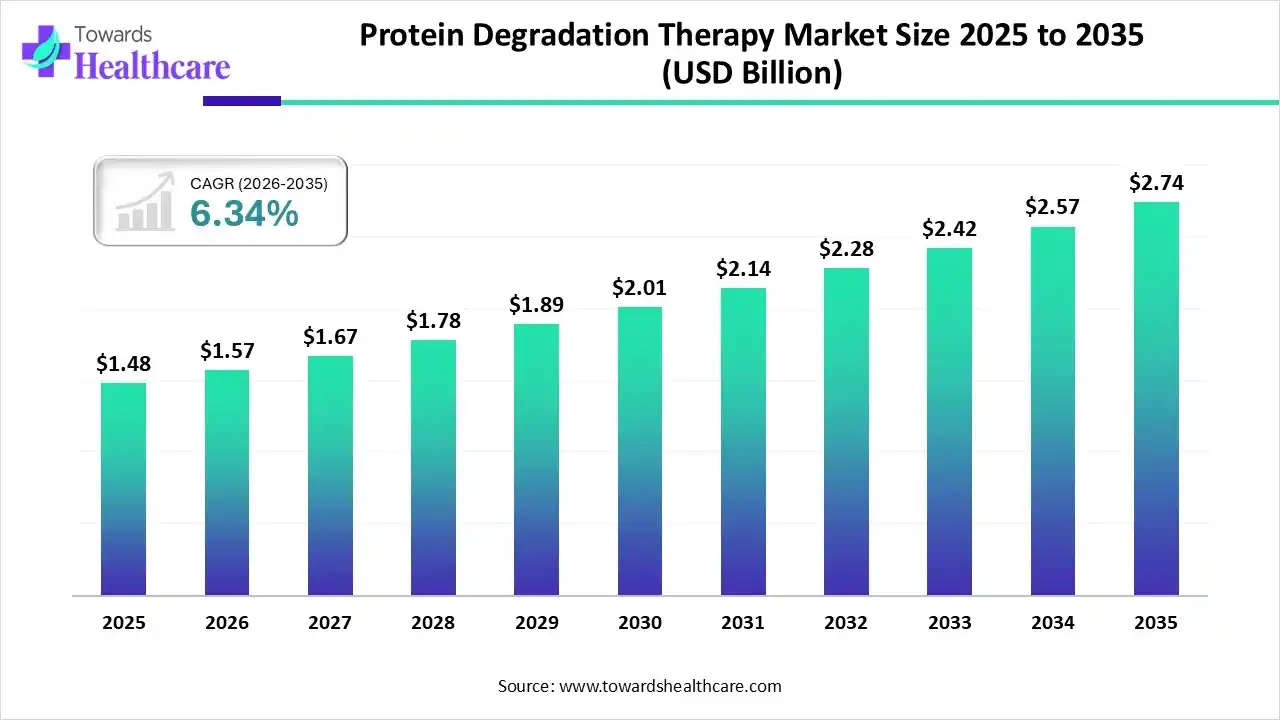
The market focuses on eliminating disease-causing proteins using targeted technologies like disease-causing proteins using targeted technologies like PROTACs. Growth driven by advances in research and demand for therapies addressing previously undruggable targets.
Protein degradation therapy is a targeted treatment approach that works by selectively eliminating disease-causing proteins inside cells rather than simply inhibiting their activity. The protein degradation therapy market is growing due to its ability to selectively eliminate disease-causing proteins that are difficult to target with conventional drugs. Advances in PROTAC and molecular glue technologies, strong oncology pipelines, increasing R&D investments, and rising interest in precision medicine are accelerating clinical development and expanding therapeutic applications across cancer, neurodegenerative, and rare diseases.
Protein degradation therapy is an advanced therapeutic approach that selectively eliminates disease-causing proteins by harnessing the body's natural protein degradation systems, such as the ubiquitin-proteasome pathway, rather than simply inhibiting protein activity. The protein degradation therapy market is expanding due to increasing demand for targeted therapies, growing investment in precision medicine, and the need to address previously undruggable protein targets. Key trends include the rapid advancement of PROTACs, molecular glue degraders, and strategic collaborations between biotechnology and pharmaceutical companies. Technological advancements in AI-driven drug discovery, structure-based protein design, and high-throughput screening are accelerating therapeutic development. Future opportunities are driven by expanding applications in oncology, neurodegenerative, autoimmune, and rare diseases, increasing clinical trial activity, and rising investments in next-generation targeted protein degradation platforms.
AI can revolutionize the protein degradation therapy market by accelerating target identification, optimizing PROTAC and molecular glue design, and predicting protein–ligand interactions with higher accuracy. Machine learning improves compound screening, reduces development timelines, and enhances clinical success rates by identifying responsive patient populations, enabling faster, more precise, and cost-efficient development of next-generation protein degradation therapies.
| Key Elements | Scope |
| Market Size in 2026 | USD 1.57 Billion |
| Projected Market Size in 2035 | USD 2.74 Billion |
| CAGR (2026 - 2035) | 6.34% |
| Leading Region | North America by 47% |
| Historical Data | 2020 - 2023 |
| Base Year | 2025 |
| Forecast Period | 2026 - 2035 |
| Measurable Values | USD Millions/Units/Volume |
| Market Segmentation | By Technology, By Therapeutic Area, By Route of Administration, By End-User, By Region |
| Top Key Players | Arvinas, Inc., Bristol Myers Squibb (BMS), Pfizer Inc., Nurix Therapeutics, Inc., Kymera Therapeutics, C4 Therapeutics, Inc. |
Why Did the PROTACs Segment Dominate in the Market in 2025?
The PROTACs segment dominated the protein degradation therapy market with a share of 48% in 2025 due to its advanced clinical maturity and broad applicability across multiple disease targets. PROTAC technology enables selective and sustained degradation of pathogenic proteins, offering advantages over traditional inhibitors. Strong oncology pipelines, increasing clinical trial activity, favorable efficacy data, and growing pharmaceutical partnerships further strengthened PROTAC’s leading market position.
Molecular Glues
The molecular glues segment is expected to grow at the fastest rate due to its simpler molecular structure, improved cell permeability, and oral bioavailability compared to PROTACs. Molecular glues can modulate protein-protein interactions using smaller compounds, enabling cost-effective development. Increasing research interest, expanding therapeutic potential, and successful clinical validation are accelerating adoption across oncology and immune-related diseases.
How the Oncology Segment Dominated the Protein Degradation Therapy Market in 2025?
The oncology segment dominated the market with a revenue share of 60% in 2025 due to the high prevalence of cancer and strong demand for targeted treatments. Protein degradation technologies effectively eliminate oncogenic proteins that are resistant to conventional therapies. Extensive oncology-focused clinical pipelines, increased investment in cancer research, and faster regulatory pathways for oncology drugs further reinforced this segment’s market leadership.
Neurological Disorders
The neurological disorders segment is expected to grow at the fastest rate as protein degradation therapies offer a novel way to remove toxic and misfolded proteins linked to neurodegenerative diseases. Rising prevalence of Alzheimer’s and Parkinson’s improved brain-penetrant molecules, increasing R&D focus, and growing unmet medical needs are driving rapid adoption and accelerating pipeline development in this therapeutic area.
| Age | % of people with Alzheimer’s disease |
| 65-74 | 5% |
| 75-84 | 13% |
| 85 and above | 33% |
Why Oral Segment Dominated the Protein Degradation Therapy Market?
The oral segment dominated the market with a share of 65% in 2025 due to its convenience, patient compliance, and cost-effectiveness compared to injectable therapies. Advancements in PROTAC and molecular glue technologies have improved oral bioavailability and stability, making oral administration feasible for complex protein degraders. Strong preference in chronic treatments, coupled with ongoing trials and supporting efficacy, reinforced the dominance of the oral route in the market.
Intravenous
The intravenous segment is expected to grow at the fastest rate as it allows direct delivery of protein degradation therapies with precise dosing and rapid systemic distribution, critical for complex or high-molecular-weight molecules. IV administration is preferred in severe or advanced diseases, including oncology and neurological disorders, and ongoing clinical advancements coupled with increasing hospital and infusion-based treatments are driving its rapid adoption during the forecast period.
Why Pharmaceutical & Biotech Cos Segment Dominated the Protein Degradation Therapy Market?
The pharmaceutical & biotech cos segment dominated the market with a share of 55% due to their strong R&D capabilities, significant investment in clinical development, and access to advanced technologies like PROTACs and molecular glues. Their focus on developing innovative therapies for oncology, neurological, and rare diseases, along with strategic collaborations and licensing agreements, has enabled them to lead the market and drive the commercialization of next-generation protein degradation treatment.
Hospitals & Clinical Labs
The hospitals & clinical labs segment is expected to grow at the fastest rate as these facilities increasingly adopt protein degradation therapies for advanced treatments, particularly in oncology and rare diseases. Rising patient demand, improved access to specialized care, growing diagnostic and monitoring capabilities, and expanding clinical trial activities within hospital settings are driving rapid adoption, making this segment a key contributor to the market growth during the forecast period.
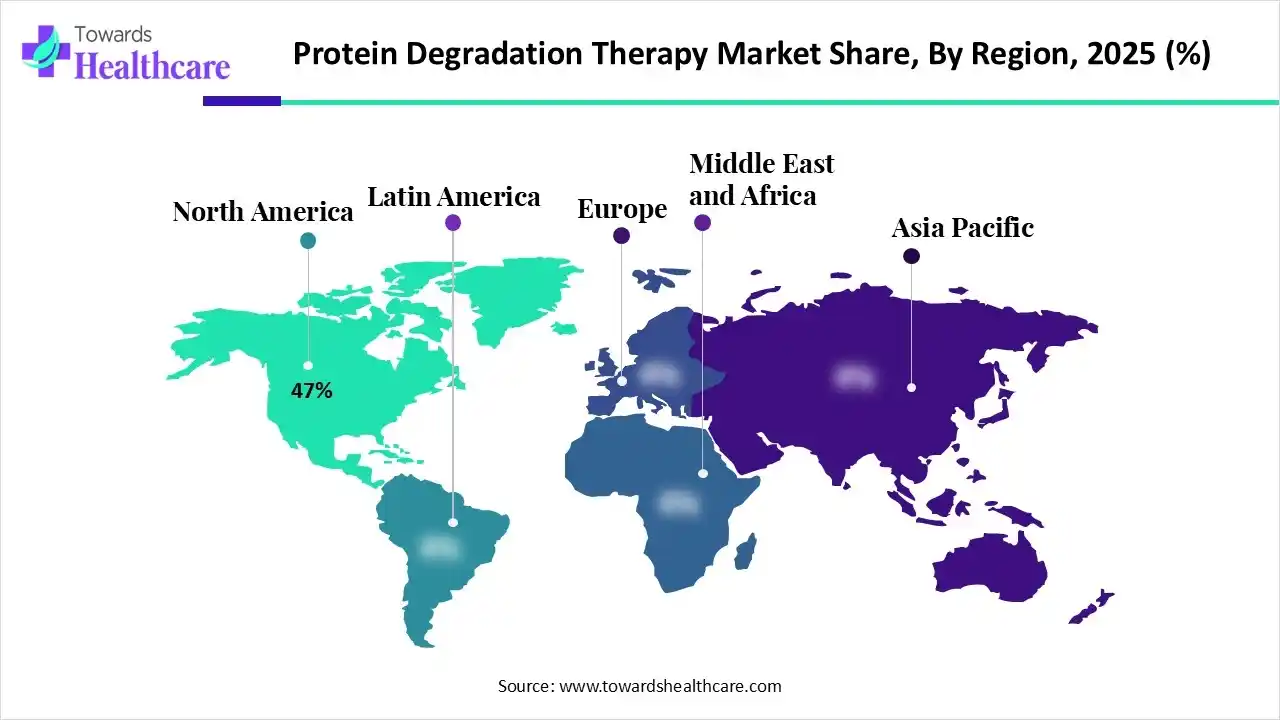
North America dominated the global market with a share of approximately 47% in 2025 due to advanced healthcare infrastructure, strong pharmaceutical and biotech presence, and high R&D investments in PROTACs and molecular glues. The region’s robust clinical trial ecosystems, favorable regulatory environment, and growing adoption of targeted therapies for oncology and rare diseases further reinforced its market leadership.
U.S. Market Trends
The U.S. led the market by securing the largest revenue share, driven by substantial R&D investment, advanced biotechnology infrastructure, and early adoption of PROTACs and molecular glues. A strong clinical trial network, favorable regulatory policies, and high demand for targeted therapies in oncology and neurological disorders further strengthened the country’s dominance in the market.
Canada's Strong Life Sciences Ecosystem Is Driving Protein Degradation Therapy Market Growth
Canada's protein degradation therapy market is growing significantly due to increasing investments in biotechnology research, expanding precision medicine initiatives, and rising demand for innovative cancer therapies. Strong collaborations between academic institutions, biotechnology companies, and pharmaceutical firms are accelerating drug discovery and clinical development. Additionally, supportive government funding, advanced research infrastructure, and growing clinical trial activity are fostering innovation and long-term market expansion.
Asia Pacific is expected to grow at the fastest CABGR due to increasing healthcare investments, rising prevalence of cancer and neurological disorders, and expanding biotechnology and pharmaceutical sectors. Improving infrastructure, growing clinical trial activities, and strategic collaborations with global companies are accelerating the adoption of protein degradation therapies, making the region a key market for next-generation targeted treatments during the forecast period.
India Market Trends
India is anticipated to grow at a rapid CAGR due to the rising prevalence of chronic diseases, expanding biotech and pharmaceutical R&D, and increasing government support for advanced therapies. Growing awareness of targeted treatments, improving healthcare infrastructure, and collaboration with global companies are driving the adoption of protein degradation therapies, positioning India as a key emerging market in the forecast period.
China's Expanding Biotech Innovation Is Accelerating Protein Degradation Therapy Market Growth
China's protein degradation therapy market is growing notably due to rapid expansion of its biotechnology sector, increasing investments in targeted drug discovery, and rising prevalence of cancer and chronic diseases. Strong government support for biopharmaceutical innovation, growing clinical trial activity, and collaborations between domestic and global pharmaceutical companies are accelerating therapeutic development. Additionally, advancements in precision medicine and AI-enabled drug discovery are creating significant growth opportunities.
Europe is expected to grow at a notable CAGR due to increasing investment in biotechnology research, strong academic-industry collaboration, and rising focus on targeted and precision medicine. Supported regulatory frameworks, expanding clinical trial activity, and growing adoption of innovative therapies for oncology and neurological disorders are further accelerating the protein degradation therapy market across the region during the forecast period.
UK Market Trends
The UK is anticipated to grow at a rapid CAGR due to its strong life science ecosystems, advanced research institutes, and increasing investment in biotechnology innovation. Government support for drug discovery, expanding clinical trial capabilities, and rising focus on targeted therapies for cancer and neurological disorders are driving the adoption of protein degradation technologies, strengthening the UK’s position during the forecast period.
Germany's Strong Biopharmaceutical Research Is Driving Protein Degradation Therapy Market Growth
Germany's protein degradation therapy market is growing significantly due to its advanced biopharmaceutical research ecosystem, increasing investments in precision medicine, and strong focus on oncology innovation. Expanding clinical trials, collaborations between biotechnology companies and research institutions, and growing adoption of targeted therapeutic platforms are accelerating development. Additionally, supportive regulatory frameworks, robust healthcare infrastructure, and rising funding for next-generation drug discovery are fostering sustained market growth.
R&D
Distribution to Hospitals, Pharmacies
Patient Support and Services
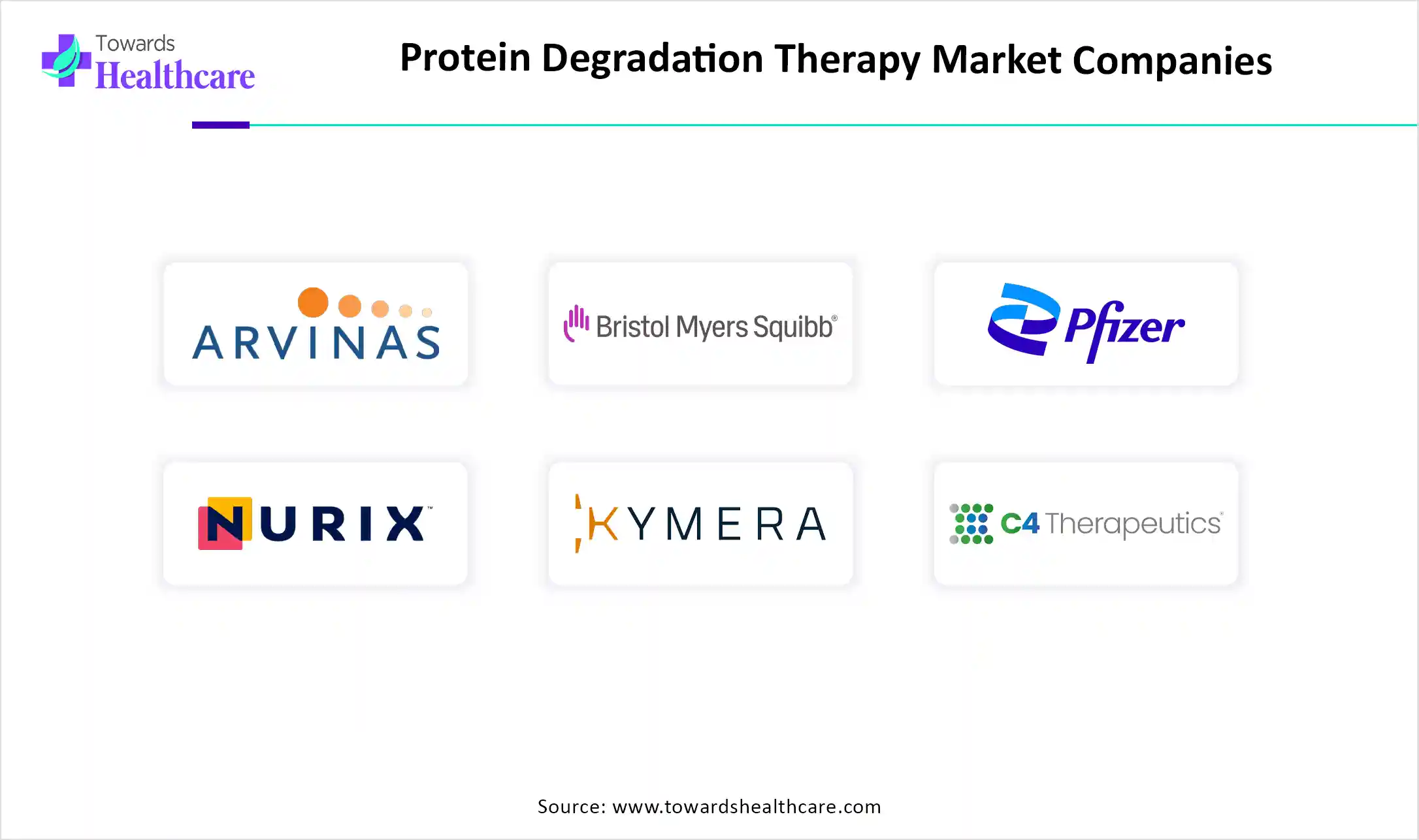
| Companies | Headquarters | Offerings |
| Arvinas, Inc. | Connecticut, USA | Arvinas is a clinical-stage biotech company pioneering PROTAC (proteolysis-targeting chimera) degraders that harness the ubiquitin-proteasome system to eliminate disease-causing proteins. Its pipeline includes ARV-110, ARV-471, ARV-766, and other targeted degraders for oncology and other indications. |
| Bristol Myers Squibb (BMS) | New York, USA | BMS integrates molecular glue degraders and E3 ligase-based strategies into its therapeutic portfolio. The company advances degraders and CRBN modulators, focusing on oncology and immunology targets while leveraging legacy assets from Celgene. |
| Pfizer Inc. | New York City, USA | Pfizer collaborates with partners like Arvinas to co-develop PROTAC degraders and supports broader TPD research across oncology and other therapeutic areas, using its global R&D and commercialization scales. |
| Nurix Therapeutics, Inc. | California, USA | Nurix uses its DELigase platform to develop protein degradation and modulation therapies, including BTK degraders and other TPD candidates for oncology and immunology |
| Kymera Therapeutics | Massachusetts, USA | Kymera employs its Pegasus™ platform to design PROTACs and molecular glue degraders. Its programs target undruggable proteins in cancer and immune-inflammatory diseases. |
| C4 Therapeutics, Inc. | Massachusetts, USA | C4 Therapeutics develops targeted protein degraders using its proprietary platform, advancing multiple PROTAC and molecular glue candidates in oncology and other areas, often in partnership with large pharma. |
In April 2026, “These data, together with our participation in the AACR Advances session, highlight the growing clinical and scientific validation of targeted protein degradation as a new therapeutic modality,” Across multiple programs, we are seeing consistent evidence that these therapies can drive deeper and more durable biological responses, supporting their potential to deliver meaningful benefit for patients”, said Arthur T. Sands, M.D., Ph.D., president and chief executive officer.
Strengths
Weaknesses
Opportunities
Threats
By Technology
By Therapeutic Area
By Route of Administration
By End-User
By Region




Principal Consultant
Payal Rabde is a Healthcare Market Research Analyst at Towards Healthcare Research & Consulting with 4+ years of experience in pharmaceuticals, biotechnology, medical devices, and life sciences.
Learn more about Payal Rabde

Reviewed By
Aditi Shivarkar is a seasoned professional with over 14 years of experience in healthcare market research. As a content reviewer, Aditi ensures the quality and accuracy of all market insights and data presented by the research team.
Learn more about Aditi Shivarkar