


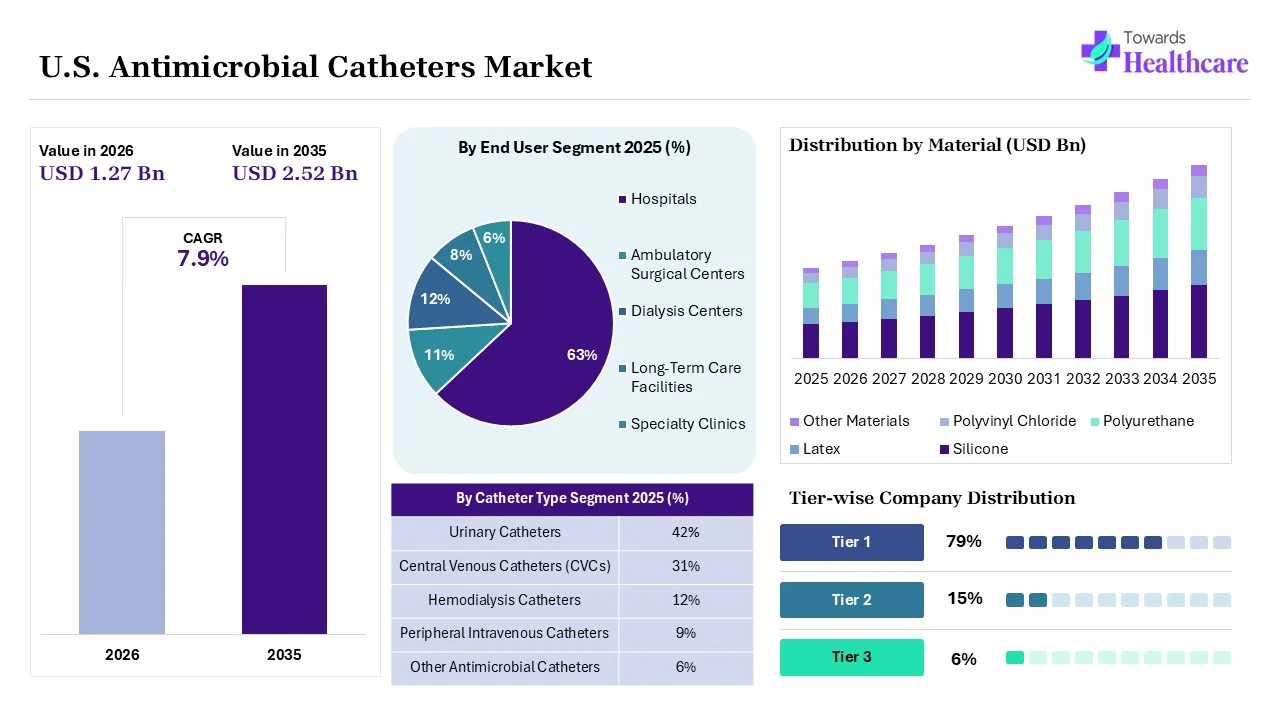
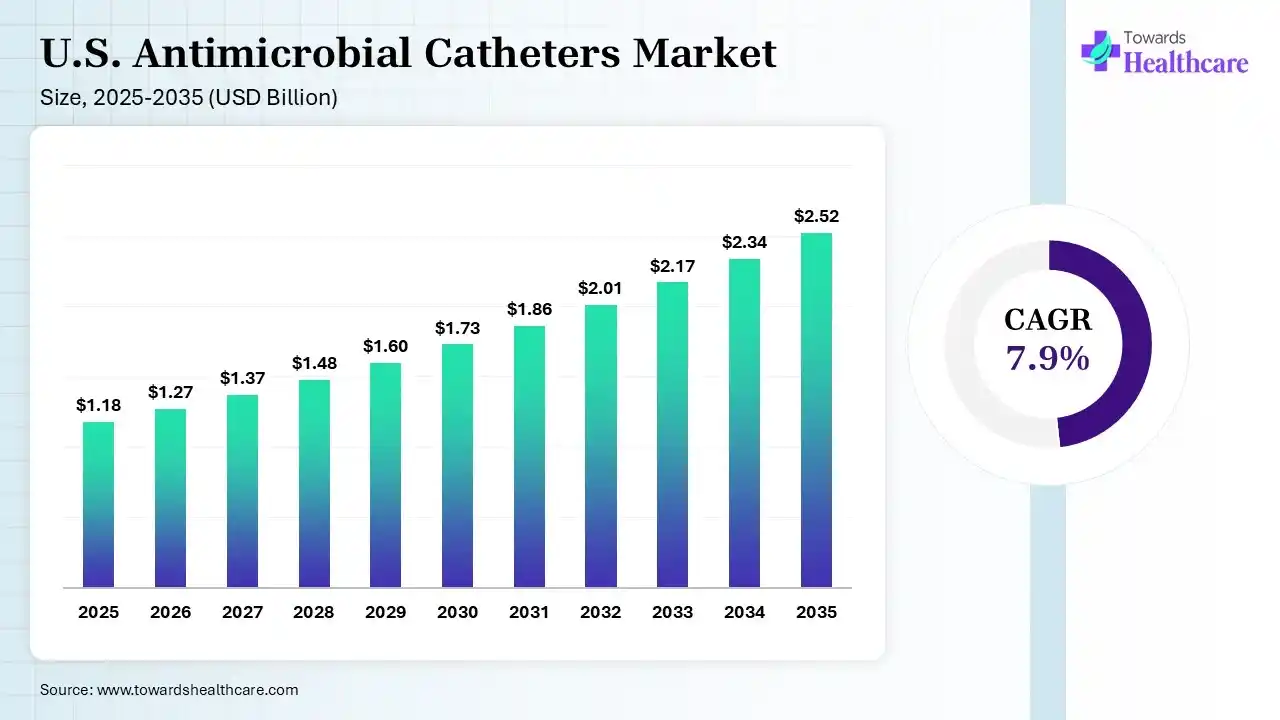
The U.S. antimicrobial catheters market size was estimated at USD 1.18 billion in 2025 and is predicted to increase from USD 1.27 billion in 2026 to approximately USD 2.52 billion by 2035, expanding at a CAGR of 7.9% from 2026 to 2035.
Antimicrobial catheters for exterior devices, drains, and CSF shunts have been under development for many decades and, more recently, have been introduced into healthcare practice. They are generally impregnated with either minocycline or clindamycin, combined with rifampin. The antimicrobial impregnation technology enables antimicrobials to be evenly distributed as molecules rather than elements throughout the catheter material, and significantly allows the molecules to move via the silicone matrix so that those at the surface, when removed by fluid flow, are refilled.
Urinary catheters are used significantly for draining urine after an operation and for urinary incontinence. Catheters are broadly applied as primary or secondary tools in a broad range of biomedical applications for addressing several healthcare requirements and purposes. Antimicrobial urinary catheters such as those coated with silver alloy or nitrofurazone, disrupt bacterial adhesion, potentially reducing infection rates and minimizing the requirement for systemic antibiotics.
Macro Factors
Micro Factors
AI-driven diagnostic devices, involving image analysis and genomic processes, enhance rapid pathogen identification and prediction of antimicrobial susceptibility. Smart catheters prepared with AI-based analytics identify early signs of infection or blockage, alerting healthcare professionals instantly. The AI-based catheter technology disrupts bacteria's flexibility upstream, removing the reliance on antibiotics or conventional antimicrobial processes. Using AI-driven 3D-printed catheter tubes and high-speed cameras, the team monitored bacterial advancement. The tubes with triangular insertions resulted in a lower level of upstream bacterial movement by two orders of magnitude. Advance AI-based technology and neural operators, the team was able to speed up the catheter optimization computations.
Technological Advancements in Coatings:
Prominent advancement in urinary catheter coatings to tackle the commonly occurring catheter-associated urinary tract infection (CAUTI) in catheterized patients. Recent developments in coating knowledge for healthcare catheters. It begins by analysing mainstream coating processes, like layer-by-layer self-assembly, biomimetic adhesion, and surface grafting.
Smart Catheters Integration:
Smart catheters, an evolving class of medical tools that integrate embedded sensors, automation, and communication technology, provide increased functionality and complexity to allow realâ€time health monitoring, diagnostics, and treatment. Smart catheters offer more than a one-way conduit by incorporating two-way feedback and control devices.
Shifting Care Settings:
Shifting catheter care from healthcare settings to home or outpatient care enhances medical care resources and prevents hospital-driven infections. It improves patient satisfaction by preserving independence, dignity, and comfort in familiar surroundings.
| Table | Scope |
| Market Size in 2026 | USD 1.27 Billion |
| Projected Market Size in 2035 | USD 2.52 Billion |
| CAGR (2026 - 2035) | 7.9% |
| Historical Data | 2020 - 2023 |
| Base Year | 2025 |
| Forecast Period | 2026 - 2035 |
| Measurable Values | USD Millions/Units/Volume |
| Market Segmentation | By Procedure Type, By Antimicrobial Coating Type, By Material, By Application, By End User |
| Top Key Players | Teleflex Incorporated, Becton, Dickinson and Company, Medtronic, B. Braun SE, Cook Medical |
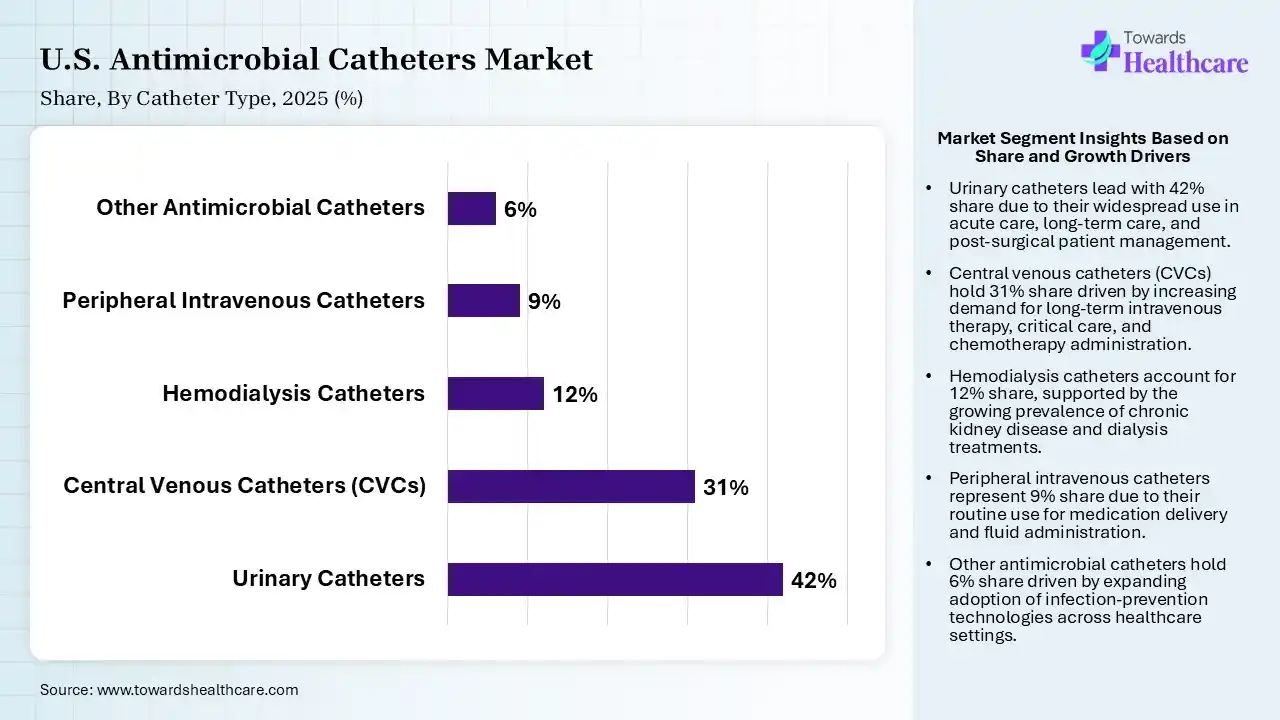
| Segment | Share 2025 (%) |
| Urinary Catheters | 42% |
| Central Venous Catheters (CVCs) | 31% |
| Hemodialysis Catheters | 12% |
| Peripheral Intravenous Catheters | 9% |
| Other Antimicrobial Catheters | 6% |
The Urinary Catheters Segment Led the U.S. Antimicrobial Catheters Market in 2025
The urinary catheters segment contributed the largest market share of 42% in 2025, as urinary catheters are medical tools that drain urine from the bladder if patients have a condition that makes it challenging or impossible to urinate. Urinary catheters are significant medical devices. They supports to lowers the challenges of infections and damage to the bladder or kidneys.
The central venous catheters (CVCs) segment held a significant share of 31%, as central venous catheters are used to give fluids, blood, or medications quickly, as it empties out in or near the cardiac region. By offering a dependable access point to the bloodstream, CVC improves the efficiency of treatment and improves patient comfort. Central Venous Catheterization is characteristically recommended for patients who exhibit some symptoms or conditions that warrant the requirement for direct venous access.
The hemodialysis catheters segment held a significant share of 12% in the U.S. antimicrobial catheters market in 2025, as hemodialysis catheters (HDCs) are an important part of kidney replacement treatment. While these catheters are considered only a bridge to long-term vascular access like arteriovenous fistulas and grafts, they are related with important morbidity and mortality and subsequent growing health care expenses.
The peripheral intravenous catheters segment held a significant share of 9%, and is expected to grow at the fastest CAGR of 9.2% during the forecast period in the market, as peripheral IVs are usually safer, simpler to place, and less painful than PICC placement. PIVCs play a significant role in enhancing the quality of infusion therapy. Helps to prevent major challenges and consequential expenses.
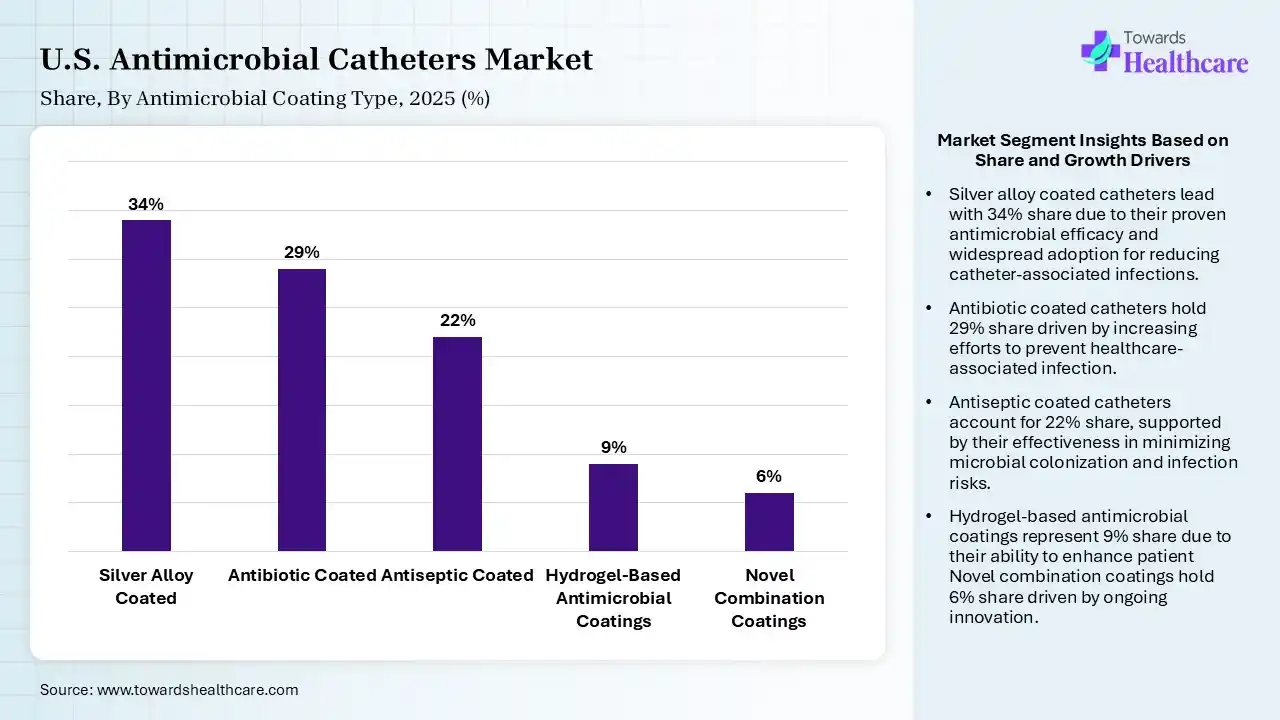
| Segment | Share 2025 (%) |
| Silver Alloy Coated | 34% |
| Antibiotic Coated | 29% |
| Antiseptic Coated | 22% |
| Hydrogel-Based Antimicrobial Coatings | 9% |
| Novel Combination Coatings | 6% |
Silver Alloy Coated Segment Led the U.S. Antimicrobial Catheters Market in 2025
The silver alloy-coated segment contributed the largest market share of 34%. Silver alloy catheters are potentially more efficient in preventing urinary tract infections than are silver oxide catheters. Applying silver alloy catheters in hospitalized patients needs short-term urinary catheterization, which lowers the incidence of symptomatic UTI and bacteremia. The application of silver alloy catheters for short-term catheterization lowers the challenges of catheter-related symptomatic UTI.
The antibiotic-coated segment held a significant share of 29% of the market. Catheters coated with antibiotics are also advantageous in lowering bacteria in hospitalized patients catheterized for less than one week. They work by leisurely releasing antibiotics from the catheter surface into the nearby tissue, thus reducing bacterial colonisation and lowering the incidence of catheter-related infections.
The antiseptic-coated segment held a significant share of 22% of the U.S. antimicrobial catheters market, as by preventing microbes from adhering and increasing on the catheter surface, significantly reducing the rates of catheter-associated urinary tract infections (CAUTIs) and catheter-related bloodstream infections (CRBSIs). By preventing severe infections and difficulties, these catheters vigorously reduce the overall duration of hospital stays.
The novel combination coatings segment held a significant share of 6% of the market and is expected to grow at the fastest CAGR of 10.3 % during the forecast period, as combinations of silver-alloy with new materials promising antimicrobial effectiveness, a standard protocol for antimicrobial efficiency needs has not been established for Ag. These combinations of antimicrobial agents need to be tested for their cytotoxicity before introduction into the market.
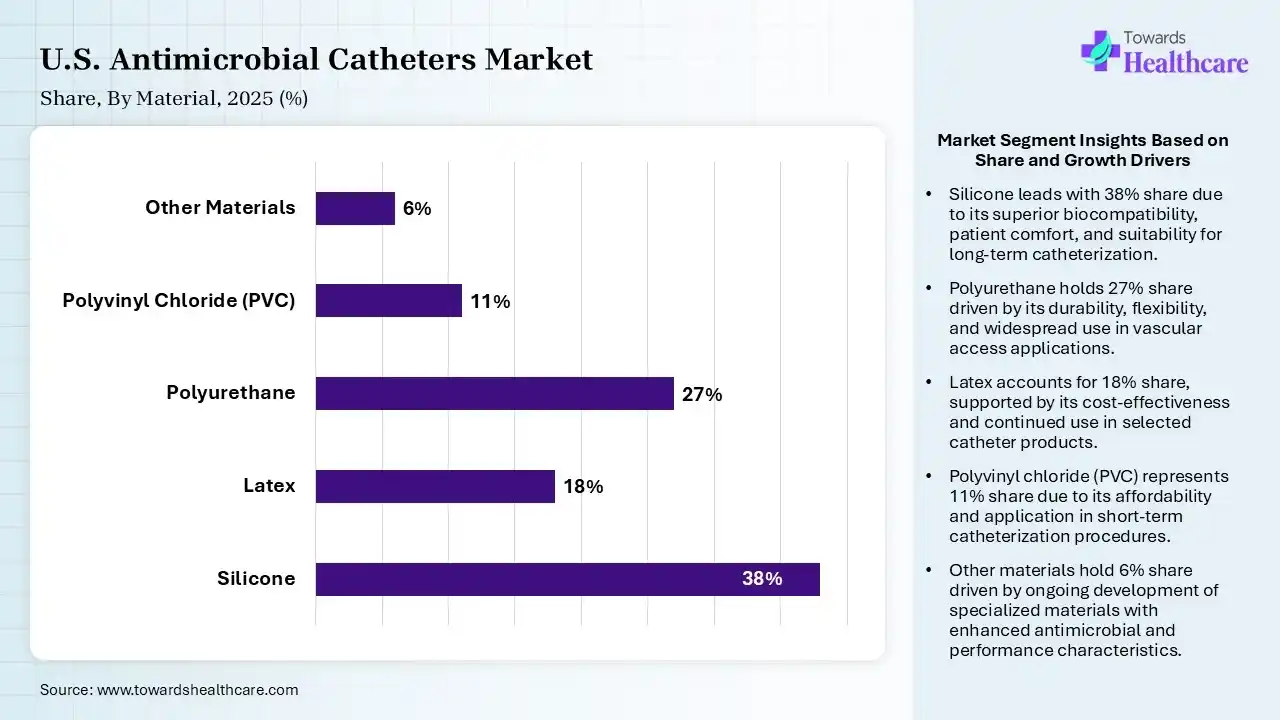
| Segment | Share 2025 (%) |
| Silicone | 38% |
| Latex | 18% |
| Polyurethane | 27% |
| Polyvinyl Chloride (PVC) | 11% |
| Other Materials | 6% |
The Silicone Segment led the U.S. Antimicrobial Catheters Market in 2025
The silicone segment held a significant share of 38% in the market, as this type of catheter is that it is non-allergenic and works well for those with delicate skin. Silicone is softer and therefore better for those who experience discomfort with clean recurrent self-catheterization. Silicone is a fabulous, smooth material with a degree of flexibility, creating insertion simple and causing less irritation to the urethra.
The polyurethane segment held a significant 27% share of the market and is expected to grow at the fastest CAGR of 8.9% during the forecast period, as these catheters provide benefits like increasing flexibility, lowering irritation to the body's tissues, and lessening the challenges of infection. Polyurethane catheters have modulated stiffness, are stiffer during insertion and softer when in place, for better patient ease. Polyurethane is very biocompatible and softens at body temperature.
The latex segment contributed a U.S. antimicrobial catheters market share of 18%, as it has high biocompatibility, flexibility, and comfort, offering user relaxation and simple insertion. These catheters are significant in medical care for patients with chronic conditions such as urinary incontinence and retention. Latex catheters are known for their elasticity and softness, which makes them more comfortable for patients during insertion and use.
The polyvinyl chloride (PVC) segment held a significant 11% share of the market, as PVC catheters reduce the challenges of bloating, sickness, and spewing, shifting forward with quiet consolation and convalescence. This type of catheter clears the mouth and airway of blood, vomit, or foreign objects, preventing aspiration and airway obstruction. This is significant for trauma patients and those in cardiac arrest or respiratory diseases.
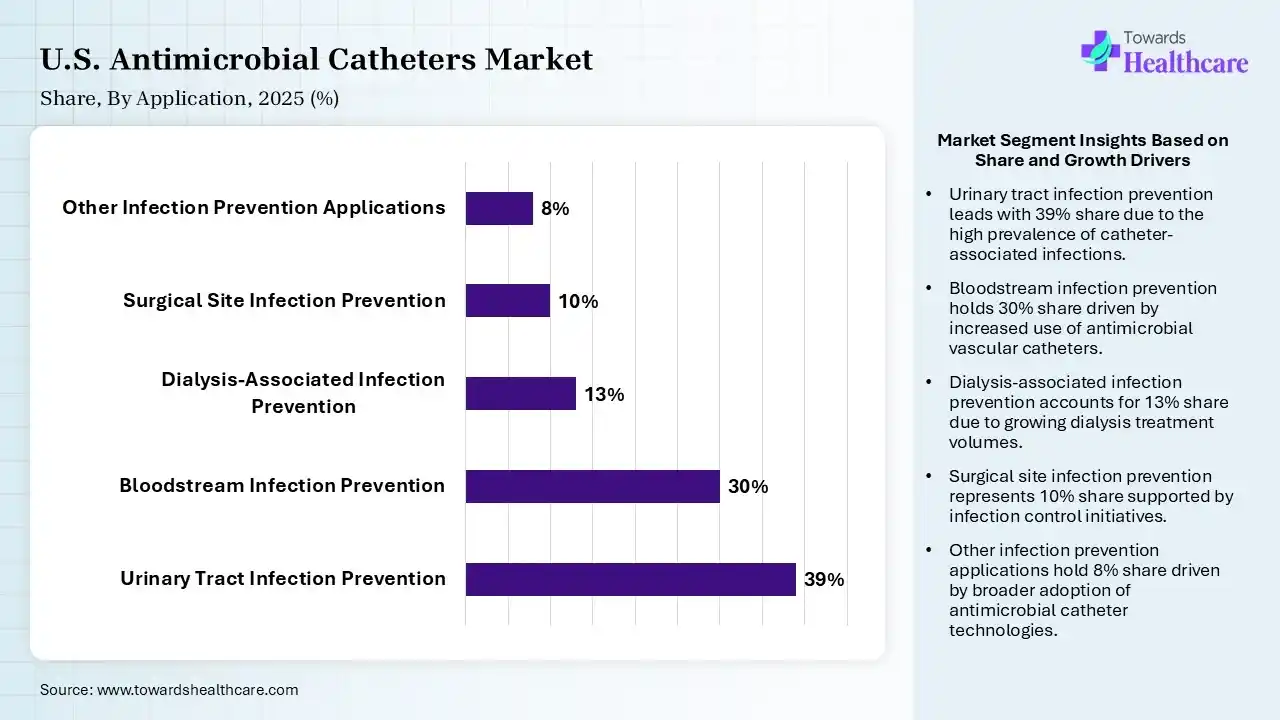
| Segment | Share 2025 (%) |
| Urinary Tract Infection Prevention | 39% |
| Bloodstream Infection Prevention | 30% |
| Dialysis-Associated Infection Prevention | 13% |
| Surgical Site Infection Prevention | 10% |
| Other Infection Prevention Applications | 8% |
The Urinary Tract Infection Prevention Segment led the U.S. Antimicrobial Catheters Market in 2025
The urinary tract infection prevention segment contributed the largest market share of 39%, as catheters embedded with agents such as nitrofurazone actively restrict bacterial growth, predominantly lowering the challenges of catheter-related urinary tract infections (CAUTIs) in targeted patients. By avoiding urinary obstructions and safeguarding complete bladder emptying, specialized catheters prevent residual urine.
The bloodstream infection prevention segment held a significant share of 30% in the market. They permit safe administration of intravenous medications that cannot be given incidentally, aid in the management of intravenous fluid recovery, and support in monitoring hemodynamic parameters in the management of patients with syndromes like septic shock and cardiogenic shock.
The dialysis-associated infection prevention segment held a significant share of 13% in the U.S. antimicrobial catheters market, as dialysis catheters offer access for kidney replacement therapy by allowing extracorporeal blood cleansing and peritoneal dialysate exchange. Dialysis catheters offer vascular or peritoneal access for renal replacement therapy in the spectrum of acute kidney injury, established end-stage kidney disease, and advanced chronic kidney disease.
The surgical site infection prevention segment held a significant share of 10% in the market and is expected to grow at the fastest CAGR of 9.1% during the forecast period, as enhanced catheter maintenance services and sensible catheter use predominantly lower CAUTI rates, therefore enhancing patient outcomes and lowering healthcare-related expenses.
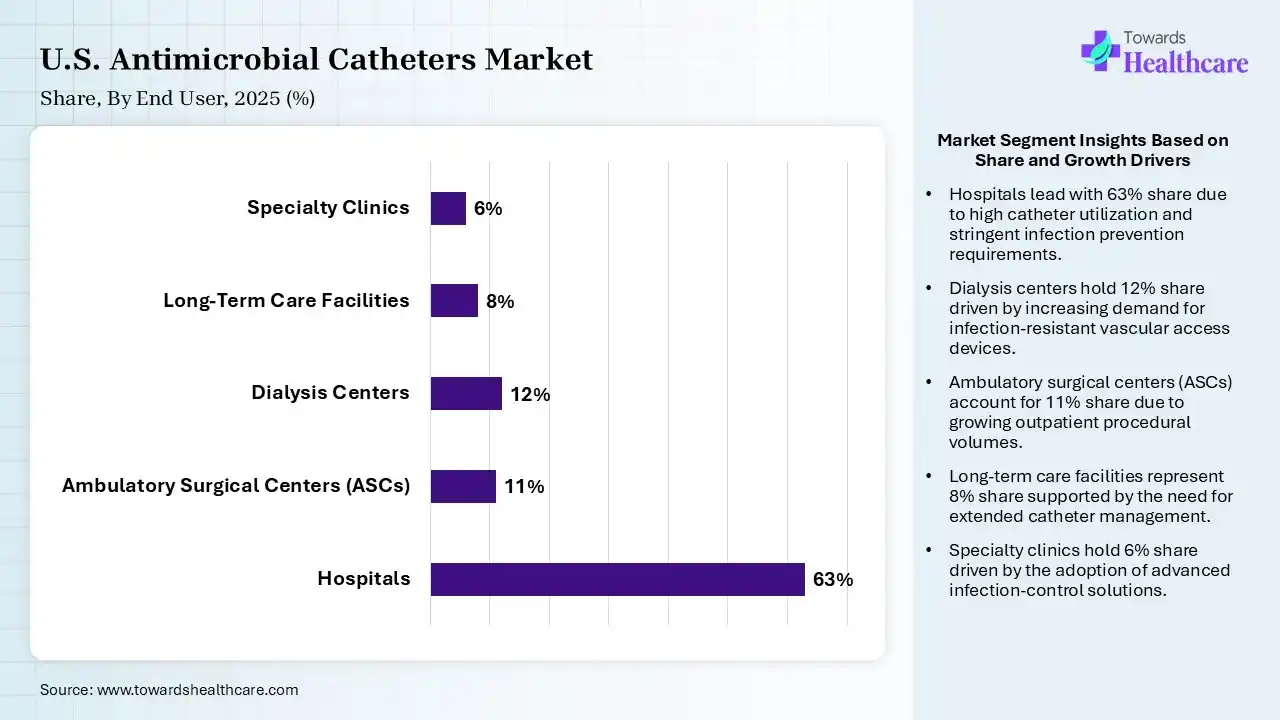
| Segment / Sub-segment Name | Share 2025 (%) |
| Hospitals | 63% |
| Ambulatory Surgical Centers (ASCs) | 11% |
| Dialysis Centers | 12% |
| Long-Term Care Facilities | 8% |
| Specialty Clinics | 6% |
The Hospitals Segment led the U.S. Antimicrobial Catheters Market in 2025
The hospitals segment contributed the largest market share of 63%, as a hospitalized patient's catheter allows the bladder to drain incessantly. It’s more convenient and prevents the repeated insertions required with intermittent catheters. Catheters used for dialysis are significant for patients whose kidneys cannot function properly.
The ambulatory surgical centers (ASCs) segment held a significant share of 11% in the market and is expected to grow at the fastest CAGR of 9.4% during the forecast period. They are less invasive and a more comfortable choice for those with urinary incontinence. These catheters are introduced into the bladder, and a port is in place for a prolonged period. They are often applied to patients who cannot pass urine naturally.
The dialysis centers segment held a significant share of 12% in the U.S. antimicrobial catheters market, as catheters offer access for renal replacement treatment by allowing extracorporeal blood purification or peritoneal dialysate exchange in the dialysis centers. The use of dialysis catheters in these centers, which do not have side holes, has been stated to have a lower catheter infection rate.
The long-term care facilities segment held a significant share of 8% in the market, as these catheter consumers were found to commonly draw on primary and community solutions, involving out-of-hours facilities, with many contacts being unplanned and rising from challenges related to the catheter. It offers consistent urine drainage for residents with severe urinary retention or neurogenic bladders. They allow efficient management of unhealed pressure ulcers.
The U.S. antimicrobial catheters market expands rapidly due to a critical healthcare priority: preventing hospital-acquired infections. As catheter-associated urinary tract infections and bloodstream complications rise, hospitals demand advanced clinical solutions. Growth is further propelled by a growing geriatric population requiring long-term care and an increase in surgical procedures. Manufacturers innovate with silver and antibiotic-coated technologies, making patient safety the primary market driver.
R&D:
Manufacturing Processes:
Patient Services:
| Company | Headquarters | Latest Update |
| Teleflex Incorporated | United States | They provide an extensive portfolio of antimicrobial technologies intended to reduce catheter-related bloodstream infections. |
| Becton, Dickinson and Company | United States | BD provides a broad variety of antimicrobial urinary (Foley) catheters and CVCs. |
| Medtronic | United States | They produce specialized antimicrobial CVCs and peripheral catheters. |
| B. Braun SE | United States | Their flagship antimicrobial product is the Certofix Protect, a central venous catheter coated with chlorhexidine to particularly lower catheter-related infections. |
| Cook Medical | United States | It provides different vascular and urological catheters impregnated with antibiotic agents, particularly geared toward challenging, long-term patient care. |
In February 2026, “We designed this multi-axial system to address procedural challenges physicians face when treating stroke,” said Christian Cuzick, Worldwide President, Neurovascular, MedTech, Johnson & Johnson. “With this expanded portfolio, we’re simplifying decisions, enhancing consistency across device sizes, and reinforcing our commitment to helping improve patient outcomes.”
By Procedure Type
By Antimicrobial Coating Type
By Material
By Application
By End User










Principal Consultant
Shivani Zoting is a dedicated research analyst specializing in the healthcare industry. With a strong academic foundation, a B.Sc. in Biotechnology and an MBA in Pharmabiotechnology, she brings a unique blend of scientific understanding and strategy.
Learn more about Shivani Zoting
Reviewed By
Aditi Shivarkar is a seasoned professional with over 14 years of experience in healthcare market research. As a content reviewer, Aditi ensures the quality and accuracy of all market insights and data presented by the research team.
Learn more about Aditi Shivarkar










