


The U.S. healthcare IT software market size was estimated at USD 178.4 billion in 2025 and is predicted to increase from USD 203.02 billion in 2026 to approximately USD 649.86 billion by 2035, expanding at a CAGR of 13.8% from 2026 to 2035. Her analysis highlights that the U.S. healthcare IT software market is rapidly expanding due to increasing EHR adoption, growing hospital interoperability engagements, rising cloud RCM platform installation, blooming telehealth platform utilization, expanding AI startup funding, and participation by key industry players like Epic Systems Corporation, Oracle Health, MEDITECH, Waystar Holding Corp., and R1 RCM Inc.
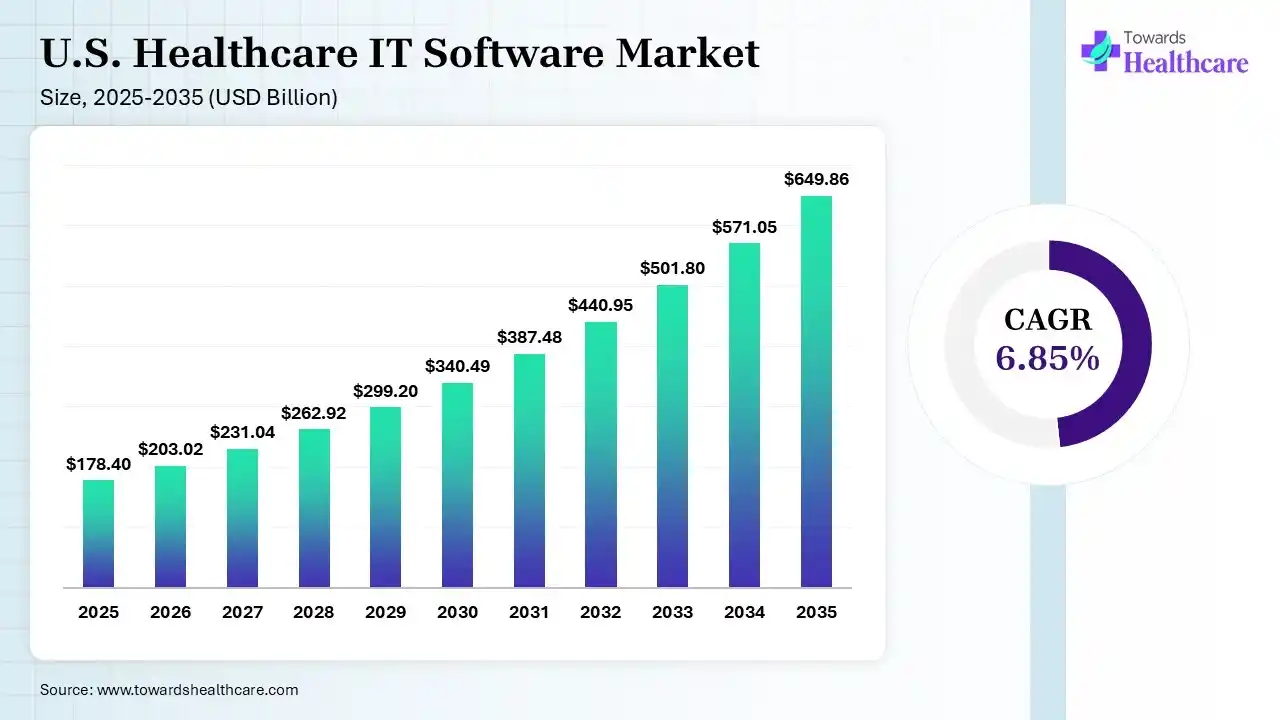
The U.S. healthcare IT software encompasses digital healthcare software and tools used by healthcare facilities for the management of administrative, financial, operational, and clinical processes. It helps in patient record management, clinical decision support, EHR management, claim processing, telemedicine services, and regulatory compliance. This increases their use across hospitals, clinics, digital laboratories, pharmacies, insurance companies, ambulatory surgery centres, and telehealth providers.
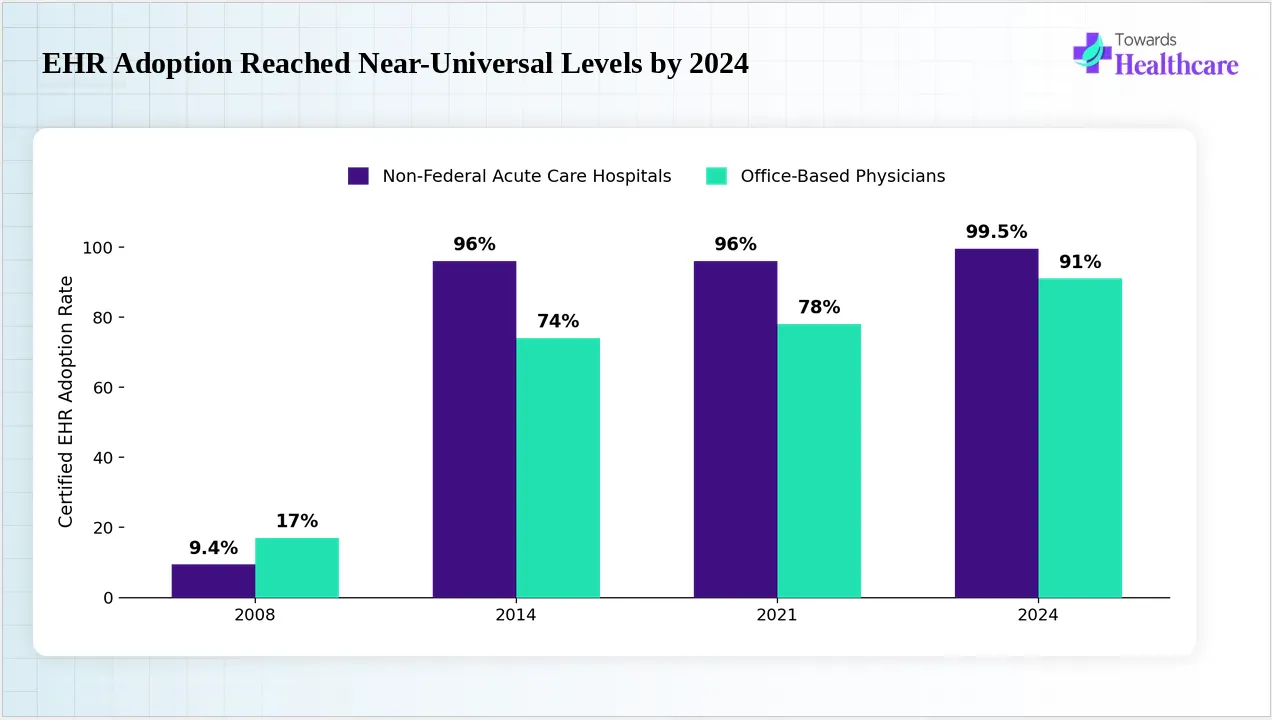
Graph 1: As the market analyst, I interpret that the above-mentioned graph represents a comparison of EHR adoption across non-federal acute care hospitals and office-based physicians. 2021 recorded the highest EHR adoption with 96% by non-federal acute care hospitals, 78% by certified office-based physicians, and 88% by other office-based physicians. It was followed in 2014 with 96% and 74% adoption by non-federal acute care hospitals and office-based physicians, respectively. 2008 reported the lowest EHR adoption with 9.4% by non-federal acute care hospitals and 17% by office-based physicians, whereas in 2024, its adoption contributed to more than 99.5% by non-federal acute care hospitals and 91% by office-based physicians, which is anticipated to grow due to increasing healthcare digitalization.
Key Insight:
The saturation of EHR adoption across hospitals, along with rising utilization by physicians, is shifting the market from net-new EHR sales to replacement, consolidation, and adjacent-software (analytics, interoperability, AI) spending, fueling healthcare IT vendors' competition for growth.
Source: ONC/ASTP, “National Trends in Hospital and Physician Adoption of Electronic Health Records,” 2024 data brief
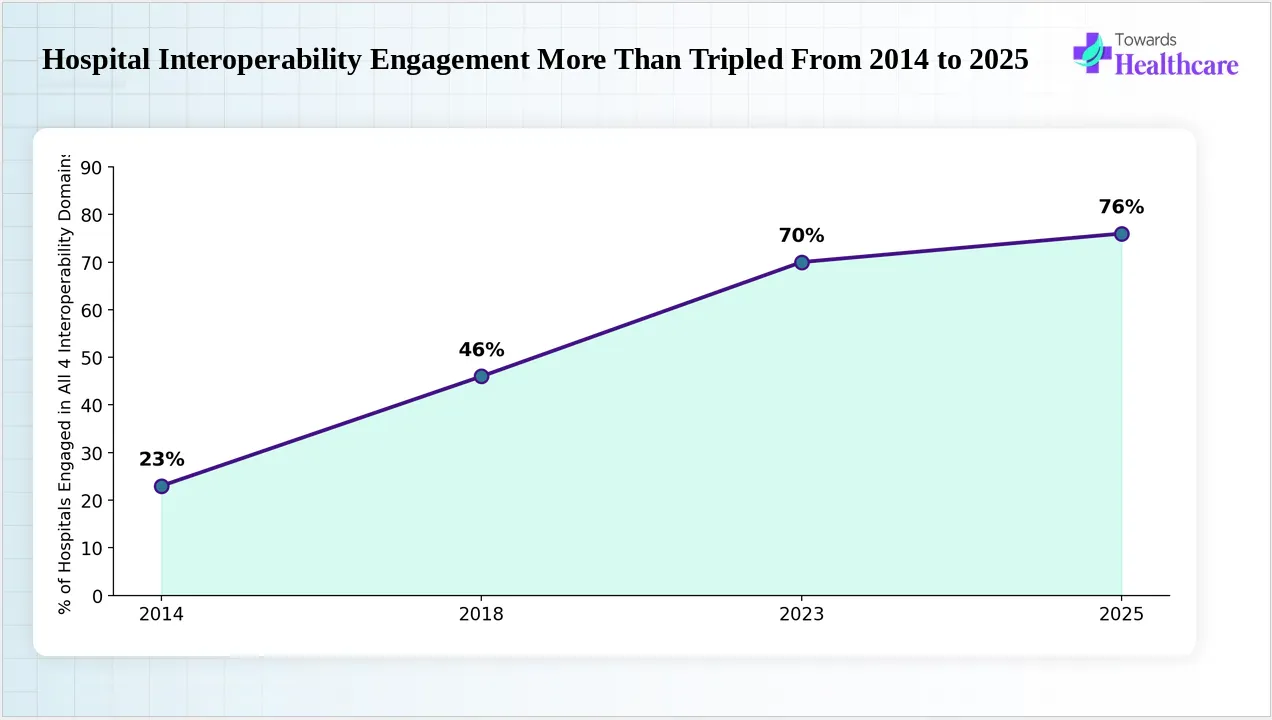
Graph 2: The graph represents the hospital interoperability engagement from 2014 to 2025, which shows exponential growth due to increasing data exchange. 2025 recorded the highest share of hospitals engaged in all 4 interoperability domains with 76%, whereas 2023 contributed to 70%. 2018 recorded 46% of hospitals engaged in all 4 interoperability domains, while 2014 held 23% of the share.
Key Insight:
The growth in interoperability engagement from 2014 to 2025 validates the core investment in population health management and analytics software, which is driven by data flow between systems, which is now being considered as the norm rather than the exception.
Source: ONC/ASTP, “Electronic Health Information Exchange by Hospitals” Data Briefs, 2024–2026
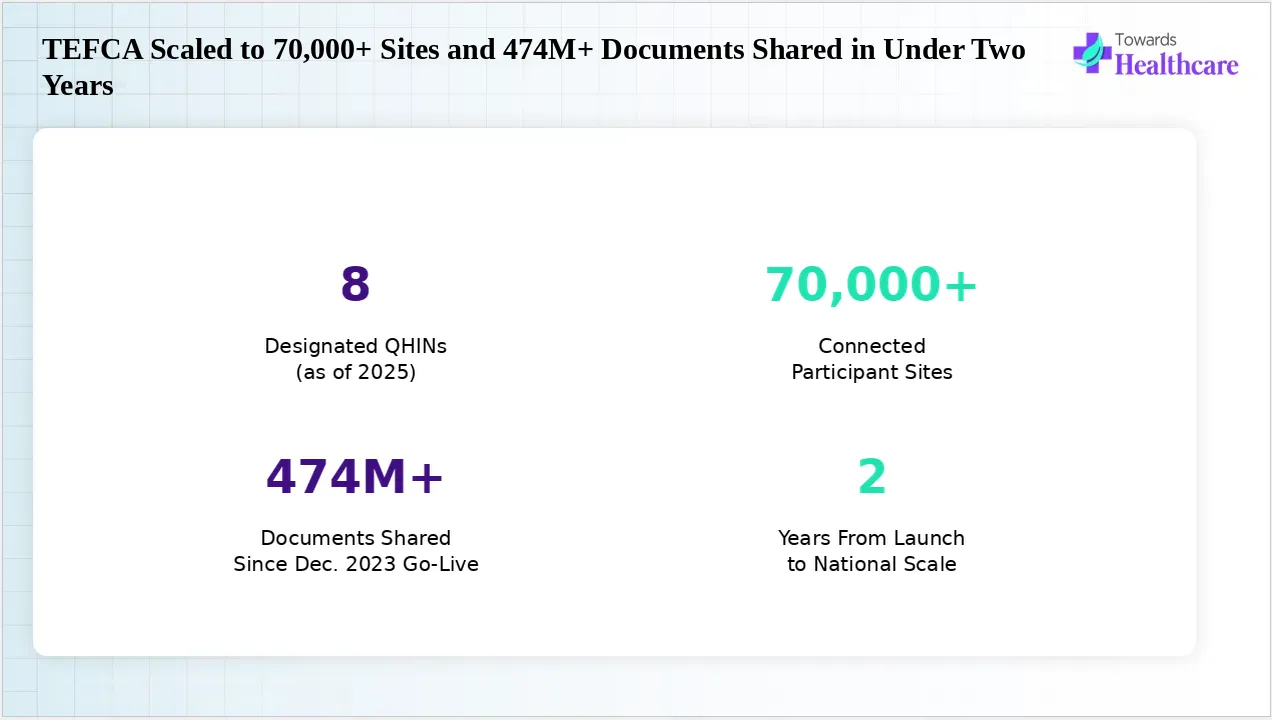
Image 1: Based on the information I gathered, the above-mentioned image highlights the rise of TEFCA adoption along with its use from 2023 to 202. The designated QHINs (Qualified Health Information Networks) numbered 8 as of 2025, with the number of connected participant sites more than 70,000. The documents shared since Dec. 2023 go-live contributed to more than 474 million, where the time from launch to national scale recorded approximate 2 years.
Key Insight:
TEFCA scaled rapidly from zero to 70,000+ connected sites in just two years, which is creating new opportunities for EHR and interoperability vendors to launch the default QHIN for their customer base.
Source: ONC/HealthIT.gov, TEFCA Update Presentation, Feb. 2026; The Sequoia Project (Recognized Coordinating Entity)
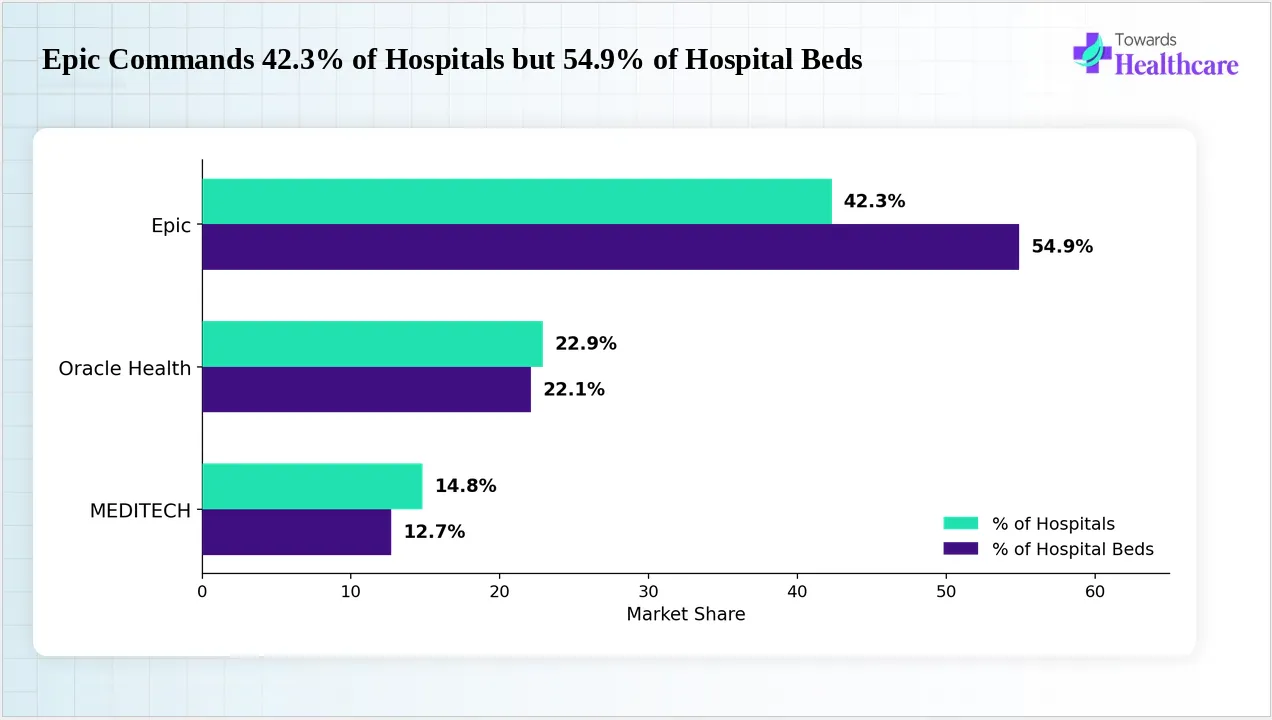
Graph 3: The graph compares healthcare vendors commanding hospitals and hospital beds. Epic held the largest share in the market by offering various IT software commending 42.3% of hospitals and 54.9% of hospital beds. The second position was secured by Oracle Health, which contributed to 22.9% of hospitals and 22.1% of hospital beds, while MEDITECH covered 14.8% of hospitals and 12.7% of hospital beds.
Key Insight:
The net gain of 176 hospitals by EPIC was recorded as the largest net gain ever, where the gap between its hospital-count share and its bed-count share discloses a shift towards the most complex health systems with high cost.
Source: KLAS Research, “U.S. Acute Care EHR Market Share 2025” Report (based on FY2024 purchasing activity)
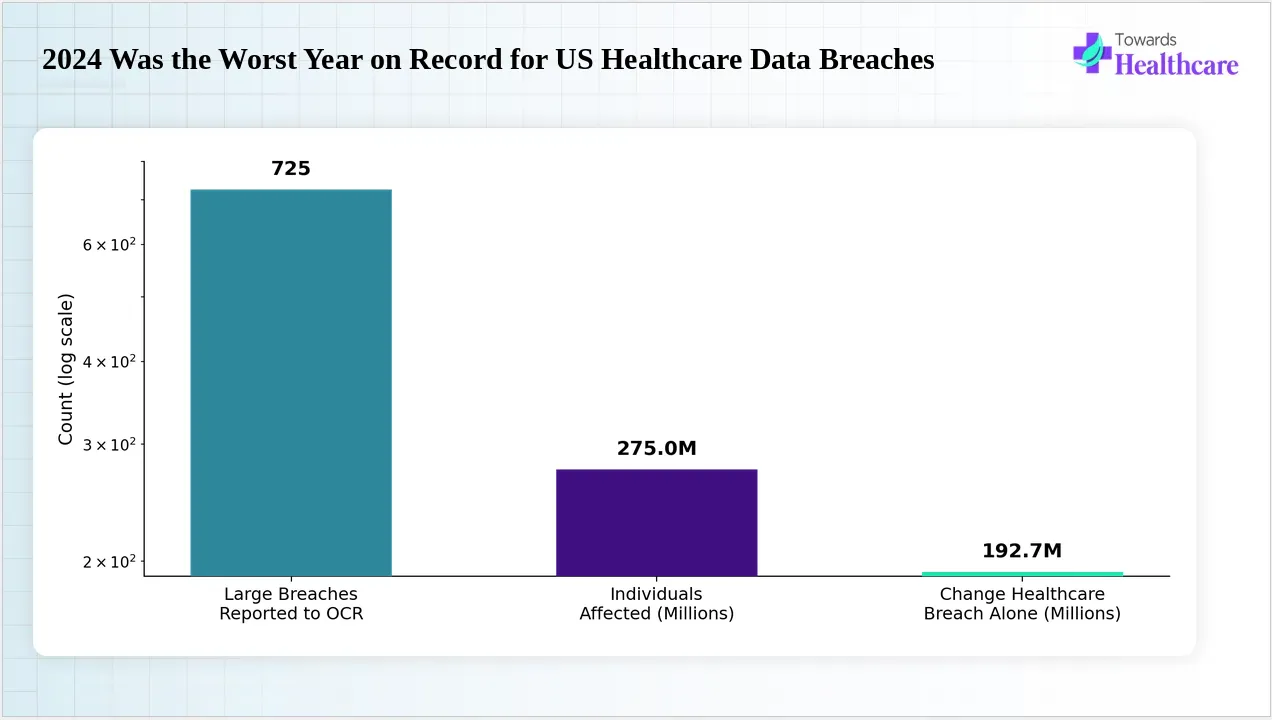
Graph 4: The graph highlights the total number of healthcare data breaches in 2024, due to a ransomware attack on a claims-clearinghouse vendor. This exposed a large number of patient records and reordered healthcare cybersecurity software's priority ranking overnight. The total number of large breaches reported to OCR in 2024 was 725, where individuals affected across all reported breaches were noted to be approximately 275-289 million. The share of large breaches caused by hacking/IT incidents was recorded to be 81%, while the Change Healthcare breach alone was reported to be 192.7 million individuals, representing the largest healthcare data breach in history.
Key Insight:
The Change Healthcare attack alone exposed approximately 57% of the U.S. population's health data in a single incident, targeting the claims-clearinghouse infrastructure utilizing revenue cycle management software, making it a board-level healthcare IT concern.
Source: HHS Office for Civil Rights Breach Portal; HIPAA Journal, 2024 Healthcare Data Breach Report
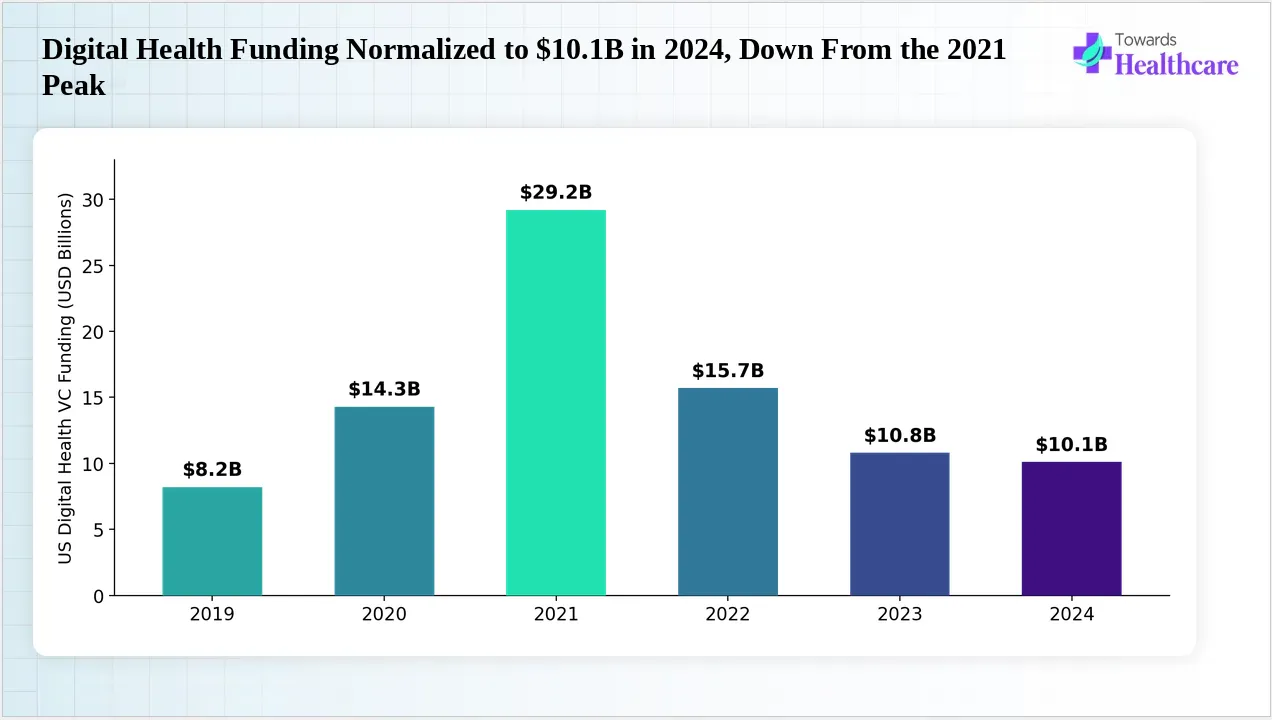
Graph 5: As the market analyst, I interpret the data based on the above-mentioned information that the digital health funding showed exponential growth from 2019 to 2021, followed by its drop in 2022 and 2023, where 2023-2024 showed stable growth. In the year 2019, U.S. digital health VC funding was reported to be $8.2 billion (425 deals), while 2020 received $14.3 billion, and 2021 recorded the highest peak with $29.2 billion in funding. It dropped in 2022 to $15.7 billion, while 2023 recorded $10.8 billion (503 deals). Furthermore, 2024 reported U.S. digital health VC funding of $10.1 billion with 497 deals.
Key Insight:
The last six years of digital health funding across the U.S. show a boom-bust-normalize cycle, which normalized the digital health software startup ecosystem from its pandemic-era boom and is directing the capital among fewer, larger, AI-focused players.
Source: Rock Health, 2024 Year-End Market Overview: “Davids and Goliaths”
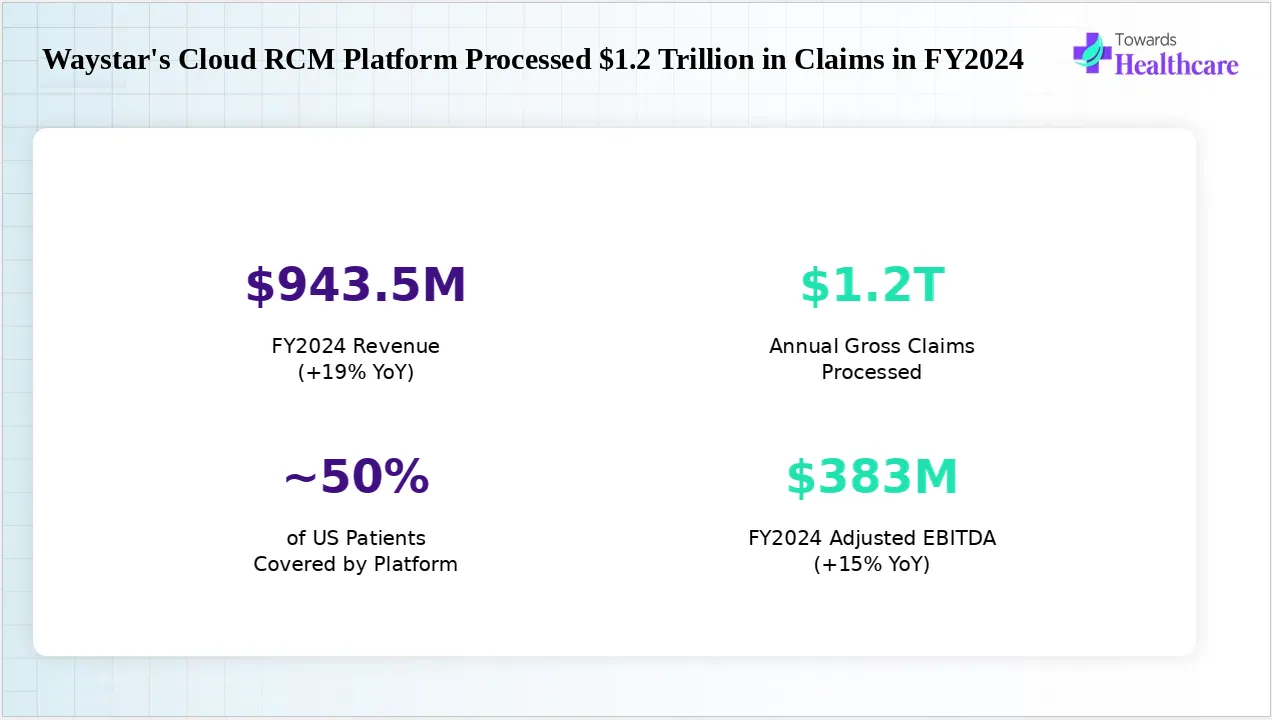
Image 2: By comparing the above-mentioned information, I conclude that Waystar’s cloud RCM platform is expanding its presence by accelerating claim processing. The total revenue generated by the cloud RCM platform was reported to be $943.5 million (+19% YoY), where the annual gross claims processed contributed to $1.2 trillion. Its adjusted EBITDA was noted to be $383 million (+15% YoY; 40% margin), while the share of U.S. patients covered by the platform was recorded to be approximately 50%.
Key Insight:
The growing use of Waystar's platform illustrates the rising demand for the revenue cycle management software layer, promoting its use across every provider-payer financial transaction in the country.
Source: Waystar Holding Corp., FY2024 Earnings Release (Feb. 2025) and SEC Form ARS
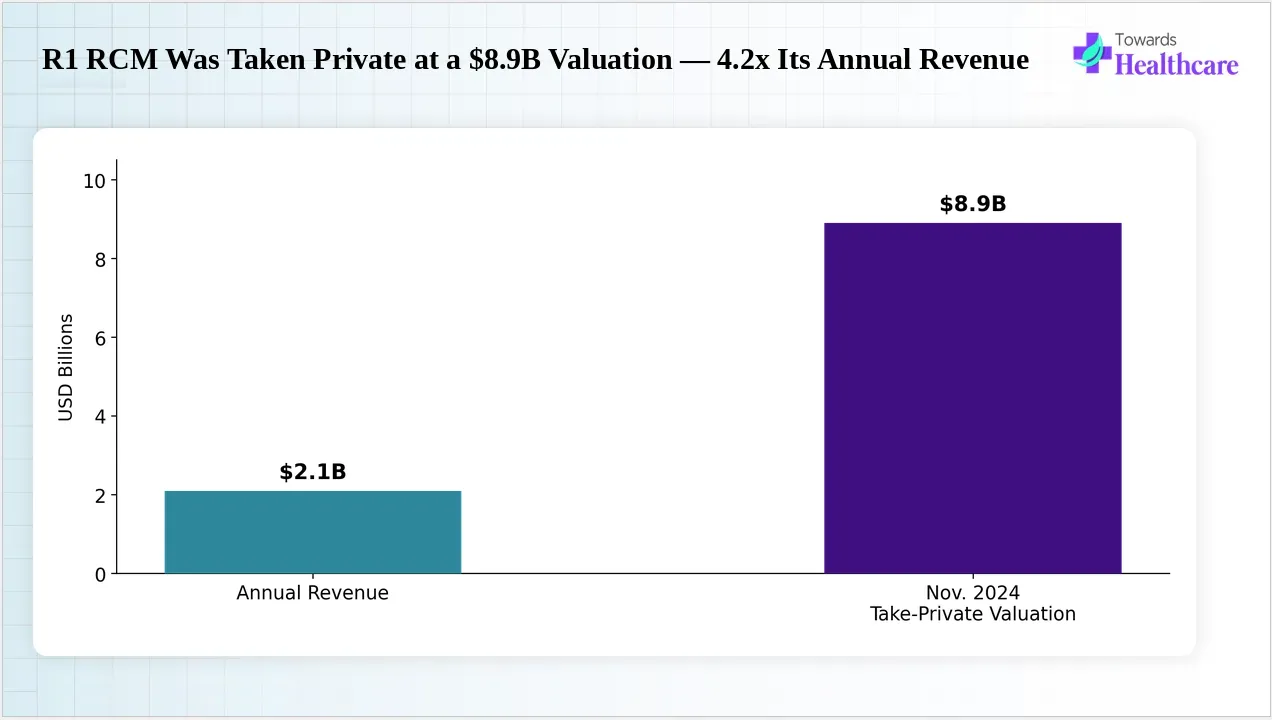
Graph 6: Based on the information gathered by Aman, the graph represents the annual revenue and take-private valuation in 2024 of the R1 RCM platform. Its annual revenue was recorded to be approximately $2.1 billion, where the employees' adoption of the platform was noted to be approximately 30,000 in 2023, which decreased to approximately 27,200 in the more recently reported data. Its utilization by clients such as hospitals, health systems, and physician groups was recorded to be more than 1,000, where its November 2024 take-private valuation was noted to be $8.9 billion.
Key Insight:
2024 highlighted the buyout of a major public RCM vendor by TowerBrook Capital Partners and Clayton, Dubilier & Rice, which continued institutional confidence, along with the rise of Waystar's public IPO in the same year. This illustrated two divergent institutional playbooks for the RCM software category, where one bet on public-market growth, the other on private operational transformation.
Source: TowerBrook Capital Partners / Clayton, Dubilier & Rice Acquisition Announcement, Nov. 2024
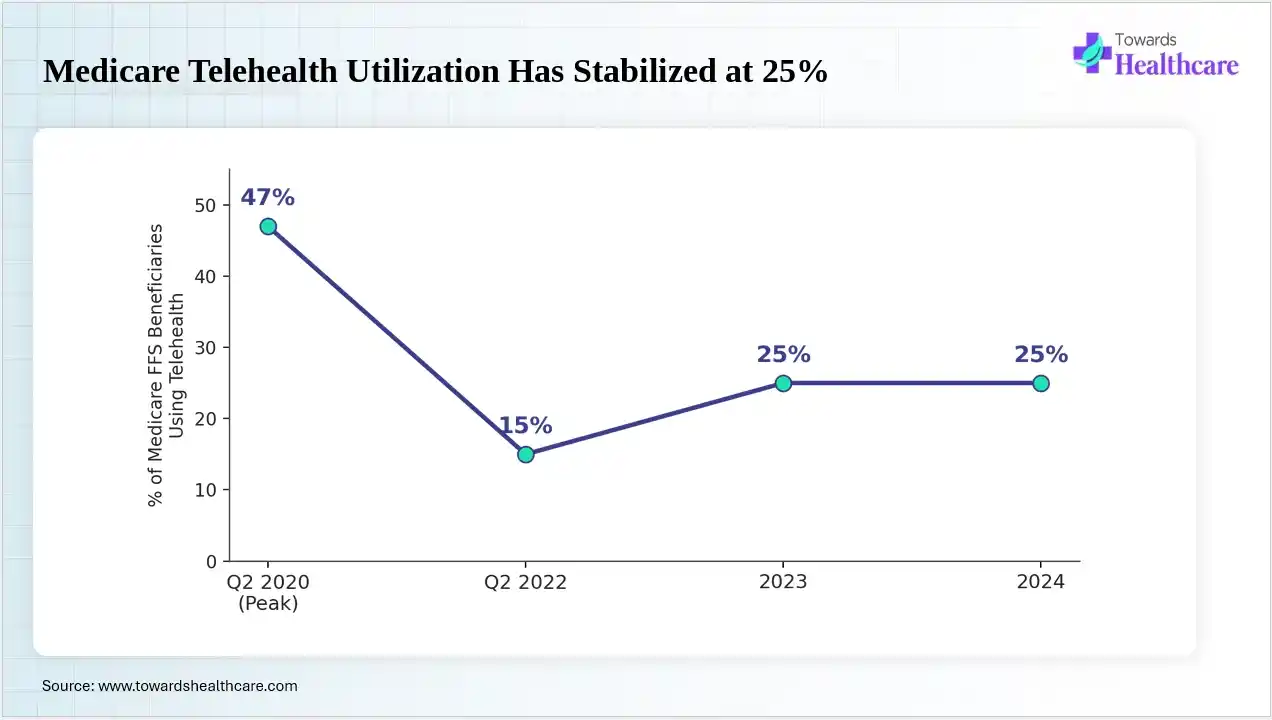
Graph 7: The graph illustrates the percentage of Medicare telehealth utilization from 2020 to 2024. Q2 2020 recorded the pandemic peak, which held 47% of Medicare FFS beneficiaries using telehealth platforms, which declined to 15% in Q2 2022, due to growth in hospital visits for physical examinations. In 2023, the percentage of Medicare FFS beneficiaries using telehealth platforms increased to 25%, which remained unchanged in 2024, indicating stable usage.
Key Insight:
The telehealth plateau indicates five times the pre-pandemic baseline in 2024, confirming virtual care platforms have secured a permanent, structural place in the healthcare IT sector.
Source: CMS, Medicare Telehealth Trends Report, data through 2024
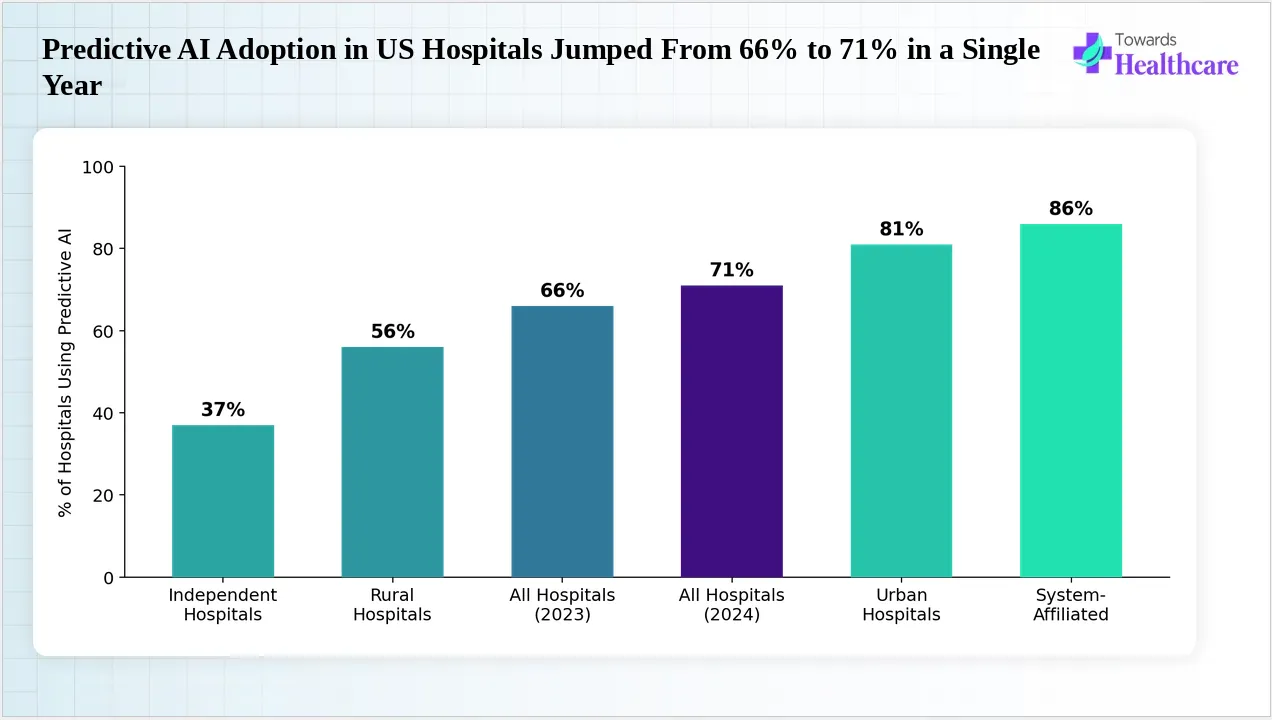
Graph 8: The graph compares the predictive AI adoption across U.S. hospitals in 2023 and 2024. In 2024, the predictive AI adoption by all non-federal acute-care hospitals was recorded to be 71%, which showed rapid growth from 2023, which contributed to 66%. The multi-hospital system-affiliated hospitals contributed to the highest adoption of predictive AI, at 86%, which was followed by urban hospitals with 81%. Rural hospitals recorded 56% predictive AI adoption, while independent facilities noted a 37% adoption rate in 2024.
Key Insight:
The highest adoption of predictive AI solutions by system-affiliated hospitals indicates that healthcare analytics and CDSS software vendors are increasingly selling their platforms into enterprise health-system IT budgets rather than individual hospital purchasing decisions.
Source: ONC/ASTP–AHA IT Supplement Survey, 2023–2024
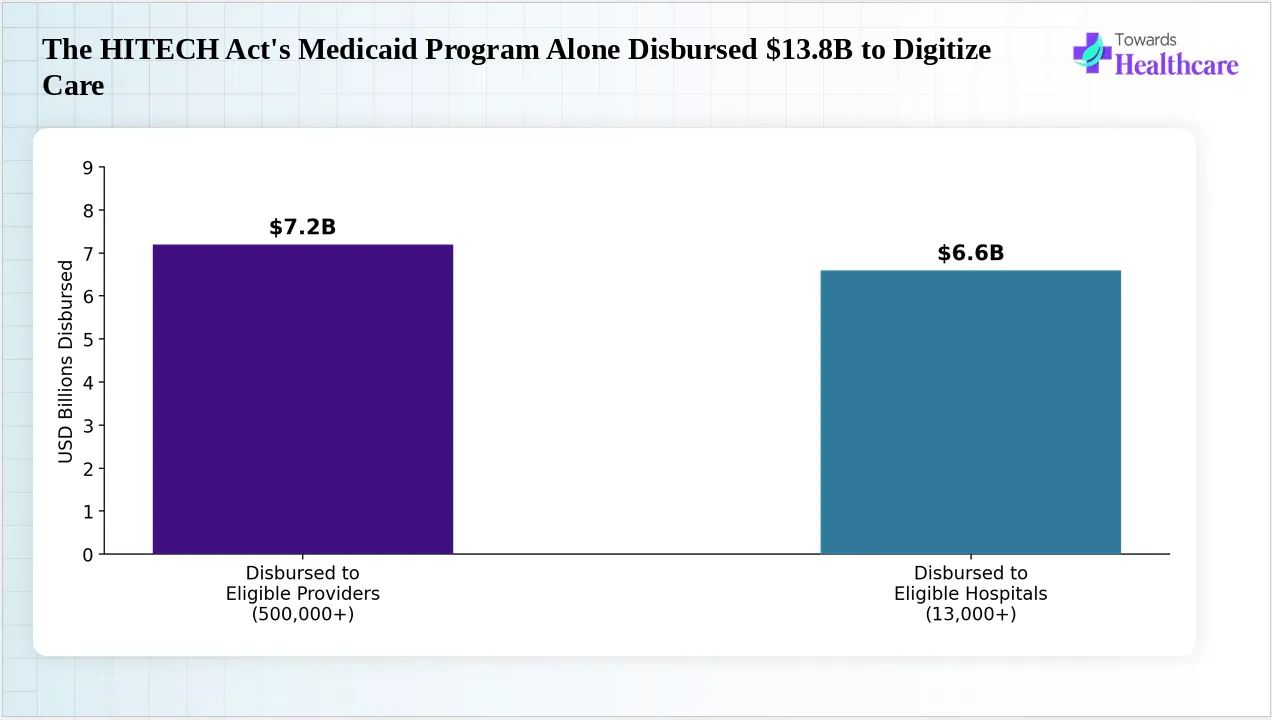
Graph 9: Based on the information gathered, the Medicaid program is disbursing a total of $ 13.8 billion to the eligible providers and hospitals. More than 500,000 eligible providers were granted a total of $7.2 billion, while more than 13,000 eligible hospitals were issued $6.6 billion. Thus, a total of $13.8 billion was disbursed by the Medicaid Promoting Interoperability Program, which promotes their use for a wide range of healthcare processes.
Key Insight:
The growth in the Medicaid incentive payments promotes the development of a multi-vendor EHR software industry, making it the single largest healthcare IT stimulus in U.S. history.
Source: HITECH Program Retrospective Analysis Close Out Report, HHS/CMS, Dec. 2022
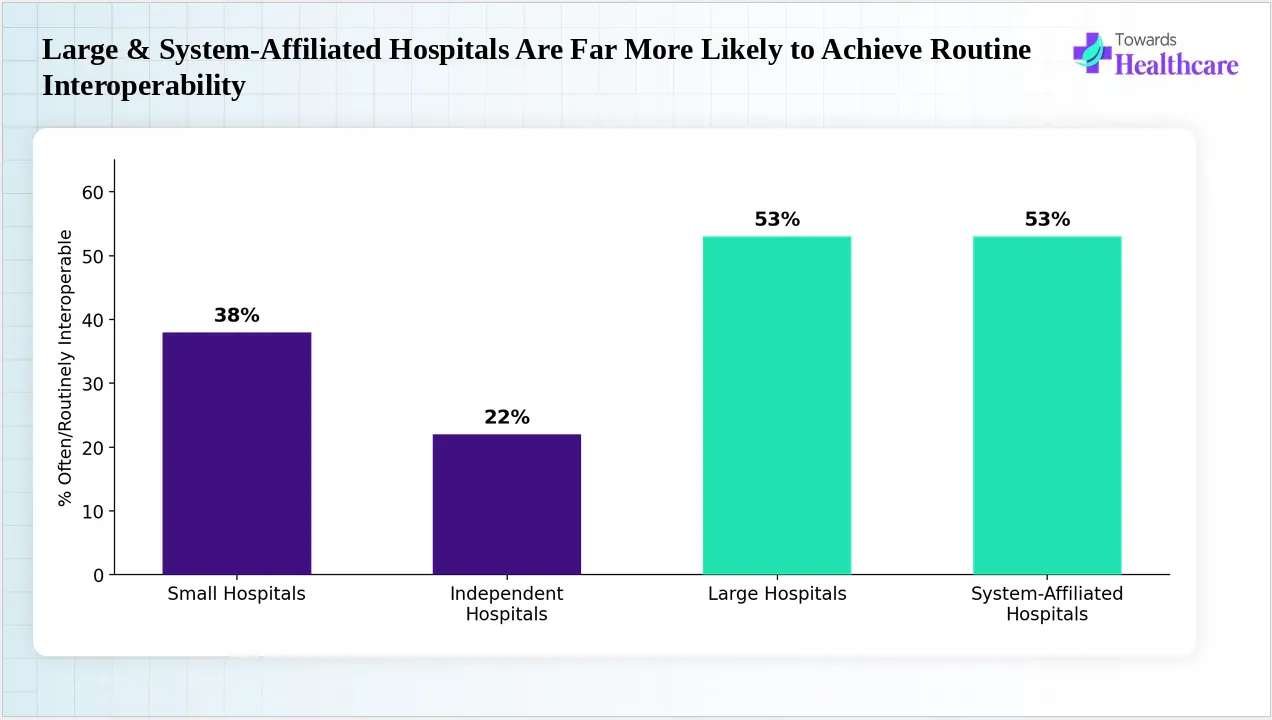
Graph 10: The graph represents hospitals that are anticipated to accomplish routine interoperability. System-affiliated hospitals and large hospitals are likely to adopt routine interoperability across all four domains with 53%. Small hospitals hold 38% favorability to adopt routine interoperability across 4 domains, while independent hospitals are least likely to adopt these processes with 22%.
Key Insight:
System-affiliated and large hospitals are rapidly achieving routine interoperability, whereas independent hospitals and small hospitals are creating challenges for healthcare IT vendors.
Source: ONC/ASTP, “Interoperable Exchange of Patient Health Information Among U.S. Hospitals: 2023”
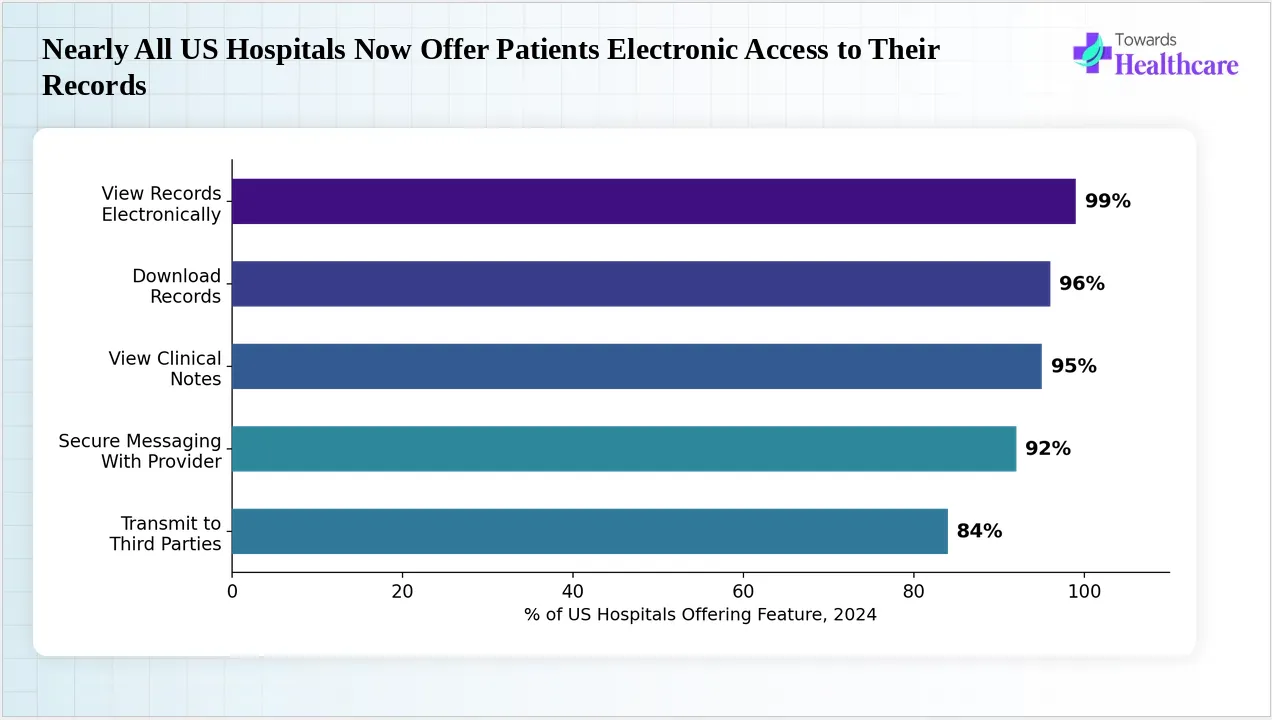
Graph 11: The graph illustrates the growing percentage of hospitals offering patients electronic access to their records in 2024. The hospitals offer different types of features to patients to view their records, where the feature, view records electronically, was used the highest, with 99% in 2024. The download records feature contributed to 96%, while the view clinical notes feature held 95%. The secure messaging with provider feature was offered by hospitals at up to 92%, while transmit records to third parties sustained its position by offering 84%.
Key Insight:
The growing adoption of patient engagement software is rivaling core EHR systems, where the gap between near-universal record viewing and lower third-party transmission capability is also creating new opportunities.
Source: ONC/ASTP Health IT Data; compiled hospital patient-engagement survey data, 2024
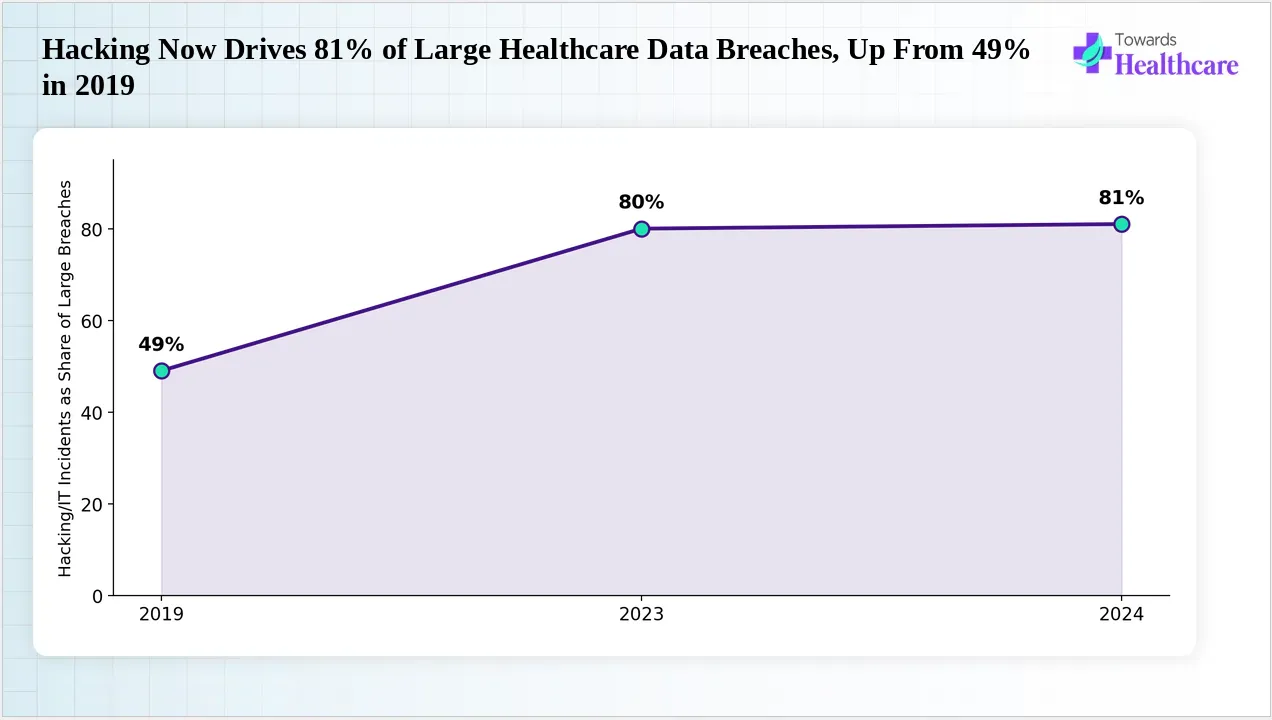
Graph 12: As per the information collected, the rising hacking incidents in the U.S. are increasing safety concerns and driving investments in cybersecurity software. In 2019, 49% of hacking or IT incidents were reported, which led to large data breaches, and this increased to 80% in 2023. 2024 contributed to 81% of hacking or IT incidents, which resulted in large healthcare data breaches.
Key Insight:
The shift from theft/loss-driven breaches to sophisticated hacking incidents is fueling the healthcare cybersecurity software investment into network intrusion detection, zero-trust architecture, and third-party vendor risk management.
Source: HHS Office for Civil Rights Breach Portal; HIPAA Journal, 2024 Healthcare Data Breach Report
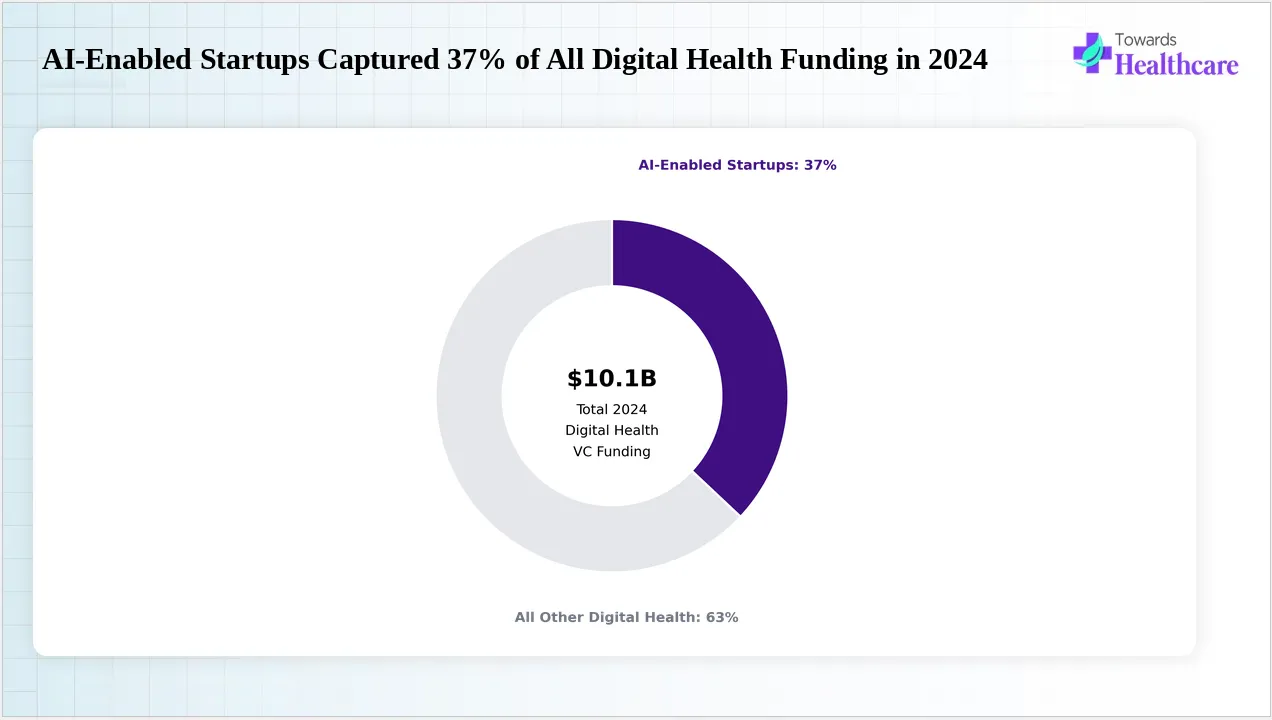
Graph 13: As the market analyst, I interpret that the given information in the pie graph highlights total digital health VC funding in digital health tools and AI-enabled startups in 2024. The share held by the AI-enabled startups in 2024 digital health VC funding contributed to 37%, with 191 of 497 deals. All other digital health startups held a 63% share of 2024 digital health VC funding, which promoted the total 2024 digital health VC funding to $10.1 billion.
Key Insight:
AI-enabled startups are capturing over a third of all digital health venture funding in a year, which confirms that healthcare facilities and companies are shifting towards clinical decision support, healthcare analytics, and AI-native software.
Source: Rock Health, 2024 Year-End Market Overview: “Davids and Goliaths”
July 28, 2026, the formalization of the healthcare software practice as a dedicated division was announced by Pegasus One, where its launch was first previewed along with the launch of FHIR-Native Accelerators and AI Agents at ViVE 2026.
Source: Des Moines Register
In 2026 (KLAS 2026 report), a significant “purchase freeze” in 2025 was reported by the U.S. acute care EHR market, which impacted hospitals, resulting in a drop of 40% year-over-year EHR purchase decisions as capital by the health systems was redirected to AI and operational-efficiency tools instead of core EHR upgrades.
Source: KLAS 2026 EHR Market Share Report, HIT Consultant, 2026
April 2025 (KLAS report), net gain of 176 hospitals in 2024 recorded Epic's largest annual net gain, where Oracle Health and MEDITECH lost a net of 74 and 57 hospitals, respectively, which was published in KLAS Research's “U.S. Acute Care EHR Market Share 2025” report.
Source: KLAS Research, HealthcareITNews, Becker's Hospital Review, 2025
January 2025, 2024 U.S. digital health venture funding reached $10.1 billion across 497 deals, with 37% of all funding being acquired by AI-enabled startups, which reported a slight decline from 2023's $10.8 billion, as per the Rock Health report.
Source: Rock Health, 2024 Year-End Market Overview
January 2025: 2024 reported 725 large healthcare data breaches, affecting more than 275 million individuals, as confirmed by HHS OCR’s breach portal, which made 2024 the worst year on record for healthcare data breaches.
Source: HIPAA Journal, 2024 Healthcare Data Breach Report
2025, TEFCA reached more than 70,000 connected participant sites, crossed 474 million documents shared, and 8 designated QHINs operating nationally since its December 2023 go-live, which was reported by the Sequoia Project.
Source: ONC/HealthIT.gov TEFCA Update, 2025–2026
November 2024, successful completion of the take-private acquisition of R1 RCM at an $8.9 billion valuation was announced by TowerBrook Capital Partners and Clayton, Dubilier & Rice, which removed a major public RCM vendor from Nasdaq.
Source: R1 RCM acquisition announcement, Nov. 2024
June 6–7, 2024, initial public offering at $21.50 per share was priced by Waystar Holding Corp., which made it a newly public healthcare payments software company processing beyond over $1.2 trillion in annual gross claims.
Source: Waystar Investor Relations, June 2024
May 8, 2024, clinical operations across 142 hospitals were disrupted along with an EHR outage lasting nearly four weeks, right after the download of a malicious file by the employee, leading to a Black Basta ransomware attack on Ascension Health.
Source: HIPAA Journal, 2024 Healthcare Data Breach Report
May 2024, hospital interoperability engagement increased to 70% across all four domains, that is, send, receive, find, and integrate, from 46% in 2018, where it also recorded a 54% increase in routine engagement, as published in a data brief by ONC.
Source: ONC/ASTP Data Brief No. 71, May 2024
February 12, 2024: Change Healthcare was breached by a ransomware affiliate, which exposed protected health information of 192.7 million individuals, which recorded the largest healthcare data breach in U.S. history and disrupted claims processing for weeks.
Source: HIPAA Journal, “Biggest Healthcare Data Breaches of 2024”
Epic Systems Corporation (Verona, WI)
It is the largest acute-care EHR vendor in the U.S. by hospital and bed share, with FY2024 recording 42.3% of hospitals and 54.9% of hospital beds, leading to a total of 176 hospitals in 2024, promoting the largest-ever annual gain.
Oracle Health (Kansas City, MO/Austin, TX)
It is the second-largest acute-care EHR vendor, with 22.9% of hospitals and 22.1% of beds in FY2024, where it also recorded a net loss of 74 hospitals in 2024 and the $28.3B Cerner acquisition.
MEDITECH (Westwood, MA)
It is the third-largest acute-care EHR vendor with a strong legacy hospital base, which contributed to 14.8% of hospitals and 12.7% of beds in FY2024, where the legacy customer retention rate increased from 30% in 2023 to 63% in 2024.
Waystar Holding Corp. (Lehi, UT/Louisville, KY)
The company offers cloud-based healthcare payments and RCM software platforms. Its FY2024 revenue was reported to be $943.5M (+19% YoY), where it processed $1.2T in annual gross claims, which covered approximately 50% of U.S. patients.
R1 RCM Inc. (Murray, UT)
It is a technology-enabled revenue cycle management outsourcing provider, with an approximate $2.1B annual revenue. It was acquired by TowerBrook Capital Partners and Clayton, Dubilier & Rice at an $8.9B valuation in 2024.
Office of the National Coordinator for Health IT (Washington, DC)
It is the federal office within HHS that is responsible for health IT policy, EHR certification, and interoperability standards (HITECH, TEFCA). It also publishes interoperability data briefs used throughout the report and authoritative national EHR adoption data.
HHS Office for Civil Rights (OCR) (Washington, DC)
It is the federal office that enforces HIPAA and operates the mandatory healthcare data breach reporting portal. It reported 2024 as the worst year on record, as it received 725 large healthcare data breach reports in 2024.
The Sequoia Project (TEFCA Recognized Coordinating Entity) (McLean, VA)
It refers to a nonprofit organization operating as the federally designated governance body responsible for TEFCA nationwide health data exchange, where it oversees 8 designated QHINs that connect more than 70,000 sites and more than 474 million shared documents since Dec. 2023.
KLAS Research (Orem, UT)
It is an independent healthcare IT research firm that publishes authoritative EHR and health IT vendor market share/satisfaction reports annually, such as the “U.S. Acute Care EHR Market Share” report.
Rock Health (San Francisco, CA)
It is a venture fund and research group that publishes the industry's most-cited digital health venture funding data, which noted $10.1B in 2024 for U.S. digital health VC funding across 497 deals, where 37% were offered to AI-enabled startups.
CMS (Centers for Medicare & Medicaid Services) (Baltimore, MD)
It is the federal agency utilizing Medicare/Medicaid, which includes the original HITECH EHR incentive programs and telehealth coverage policy, where it disbursed billions in EHR meaningful-use incentive payments and publishes ongoing Medicare Telehealth Trends data.
Aditi is a healthcare IT research expert with strong experience in EHR, RCM, and AI solution markets. She conducted detailed market research, analyzed company data, clinical trends, and industry developments. Based on her comprehensive analysis, the following strategic key takeaways highlight the most important market insights and opportunities.
Based on the information I gathered, the market is expected to expand at the fastest rate due to the rapid digital transformation of the healthcare sector. My assessment also highlights that the growing adoption of EHR, RCM, and telehealth platforms is driving their advancements. I also anticipate that increasing hospital interoperability engagements and predictive AI adoption, along with other cloud-based platforms, are also expanding their use. I also see strong growth in digital health funding, cybersecurity capabilities, and AI-enabled startups, which will ultimately promote market expansion.
Payal Rabde led the primary market research, developed the methodology, analyzed trends, competition, forecasts, and strategic opportunities, forming the report's analytical foundation.
Aman was responsible for collecting and validating clinical trial data, research publications, company information, partnerships, and other quantitative datasets, strengthening evidence-based analysis and market estimations.
Aditi reviewed the complete research document, performed quality checks, validated findings, refined content, corrected inconsistencies, and finalized the report, ensuring accuracy, clarity, credibility, and publication-ready quality.

















Principal Consultant
Payal Rabde is a Healthcare Market Research Analyst at Towards Healthcare Research & Consulting with 4+ years of experience in pharmaceuticals, biotechnology, medical devices, and life sciences.
Learn more about Payal Rabde

Reviewed By
Aditi Shivarkar is a seasoned professional with over 14 years of experience in healthcare market research. As a content reviewer, Aditi ensures the quality and accuracy of all market insights and data presented by the research team.
Learn more about Aditi Shivarkar









