Pipeline Programs

CGT Companies Tracked

Manufacturing Facilities


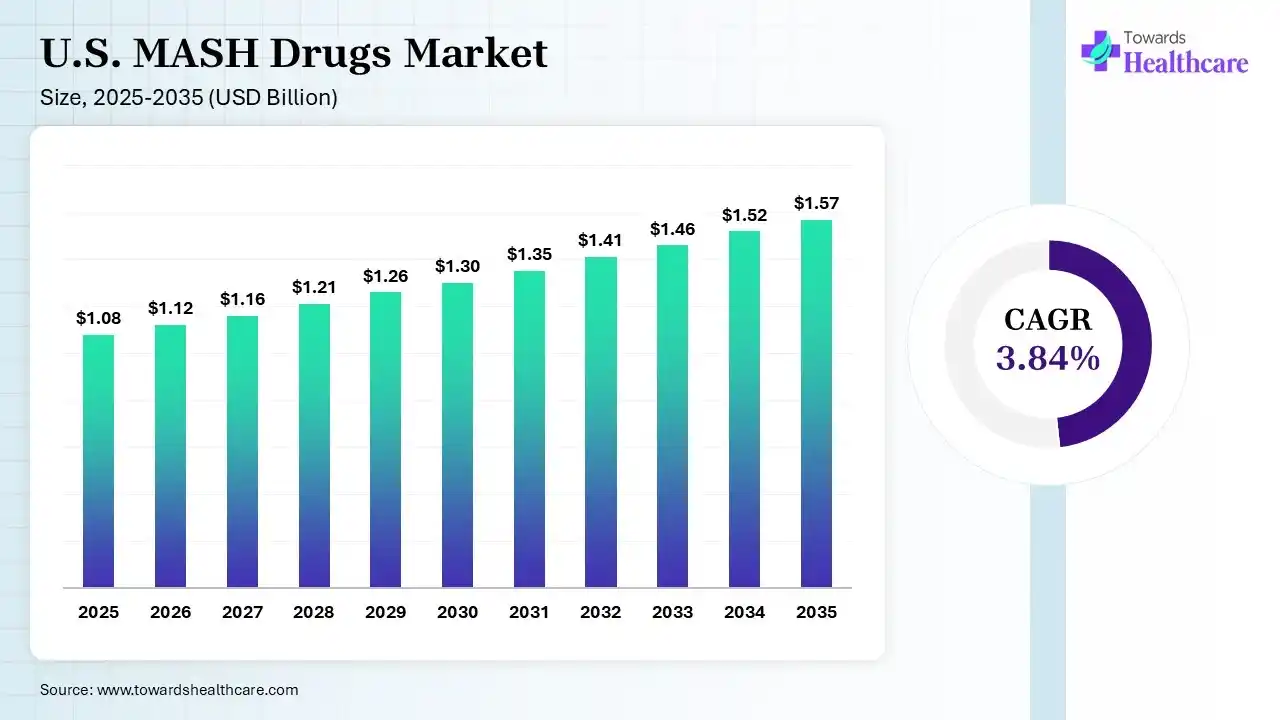
The U.S. MASH drugs market size was estimated at USD 1.08 billion in 2025 and is predicted to increase from USD 1.12 billion in 2026 to approximately USD 1.57 billion by 2035, expanding at a CAGR of 3.84% from 2026 to 2035. Her analysis highlights that the U.S. MASH drugs market is rapidly expanding due to the growing incidence of MASH, advancements in GLP-1 receptor agonists, new acquisitions, expanding net sales, growing FDA approvals, and key industry players like Madrigal Pharmaceuticals, Novo Nordisk, Roche, GSK, and Viking Therapeutics.
U.S. MASH (metabolic dysfunction-associated steatohepatitis/NASH) drugs refer to medicinal products used for the treatment of the progressive inflammatory form of fatty liver disease that can lead to fibrosis, cirrhosis, liver cancer, and transplant. The different types of drugs used for this treatment include THR-β agonists, GLP-1 receptor agonists, FGF21 analogues, GLP-1/glucagon dual agonists, PPAR agonists, ACC inhibitors, and emerging combination therapies. Additionally, their growing approvals are driving the development of microbiome-targeting strategies and personalized treatment approaches.
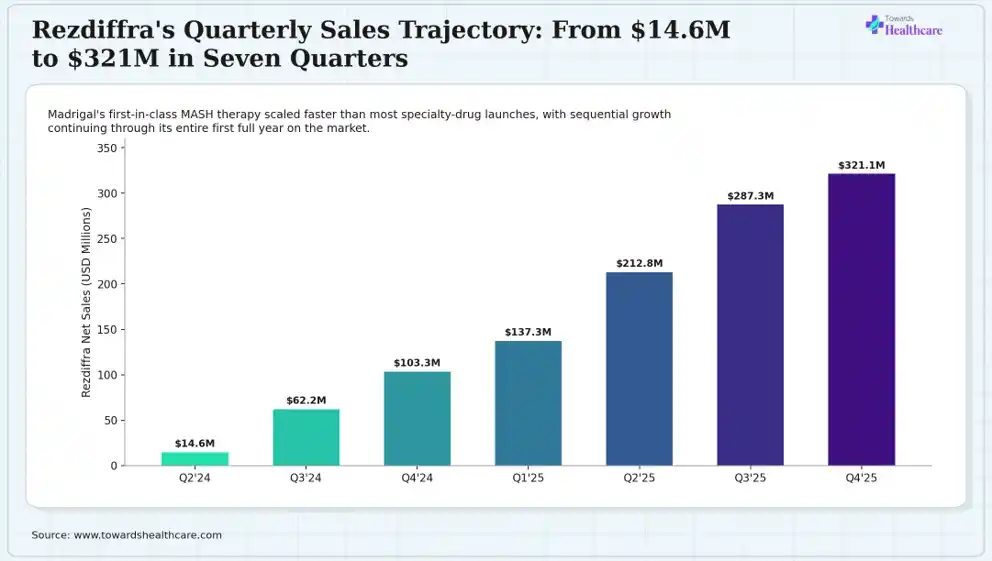
As the market research analyst, I interpret that the given bar chart illustrates Rezdiffra's quarterly net sales for Q2 2024 and Q4 2025, which indicates exponential growth. The Q2 2024 reported net sales were $14.6 million, while Q3 2024 contributed $62.2 million, which increased to $103.3 million in Q4 2024. Furthermore, Q1 2025 recorded net sales of $137.3 million, followed by Q2 2025 with $212.8 million, Q3 2025 with $287.3 million, and Q4 2025 with $321.1 million.
Key Insight:
Seven consecutive quarters of sequential growth without any decreases reflect growth in Rezdiffra’s physician and patient adoption since its launch.
Source: Madrigal Pharmaceuticals, “Fourth-Quarter and Full-Year 2025 Financial Results,” Feb. 19, 2026.
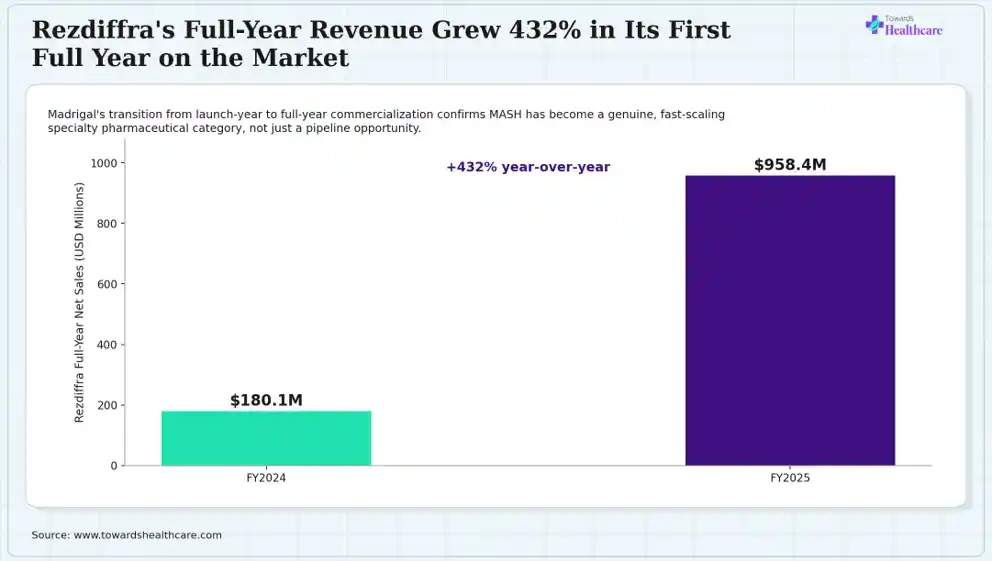
The given bar chart compares Rezdiffra's full-year net sales for the years 2024 and 2025, which represents significant growth, making it a fast-scaling specialty pharmaceutical category. FY2024 reported Rezdiffra's net sales of $180.1 million, while FY2025 recorded $958.4 million in net sales, indicating a rise of 432%.
Key Insight:
The rapid growth in the annualized sales of Rezdiffra within just 18 months of its launch makes it the fastest-scaling specialty drug in recent biopharma history.
Source: Madrigal Pharmaceuticals, “Fourth-Quarter and Full-Year 2025 Financial Results,” Feb. 19, 2026.
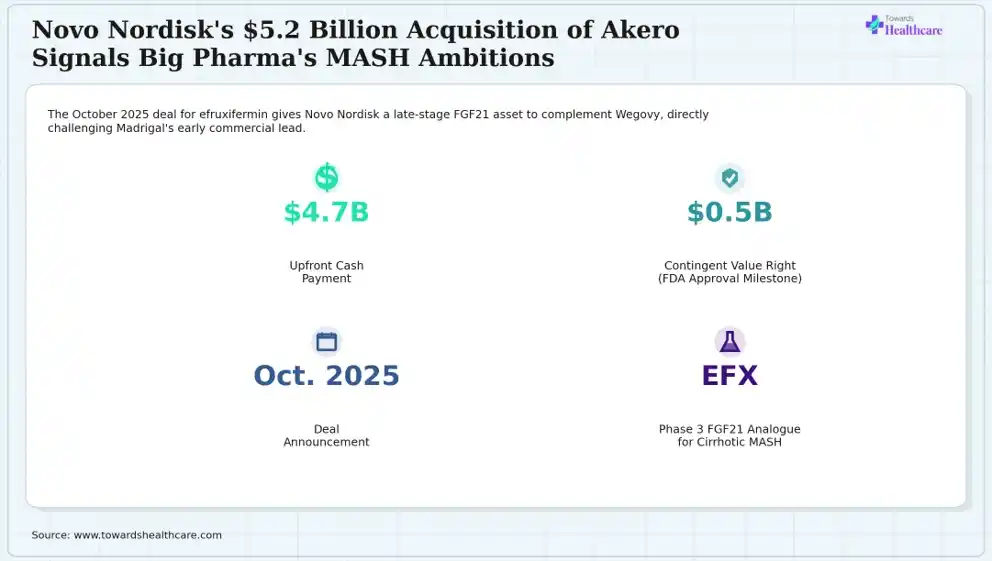
Based on our research, the infographic stat panel encompasses Novo Nordisk-Akero acquisition terms, which challenged Madrigal's early commercial lead. The deal was announced on October 9, 2025, for the acquisition of Efruxifermin (EFX), which is a Phase 3 FGF21 analogue, where the company offered an upfront cash payment of $4.7 billion that is $54.00/share, along with a contingent value right of $0.5 billion that is $6.00/share, setting a new FDA approval milestone.
Key Insight:
This acquisition by Novo Nordisk allows it to acquire full commercial and pipeline control of efruxifermin without a royalty-sharing partner, enabling it to combine EFX with Wegovy in future combination regimens freely.
Source: Novo Nordisk, SEC Form 6-K, Oct. 9, 2025; BioSpace, “Novo Nordisk to acquire Akero Therapeutics,” Oct. 2025.
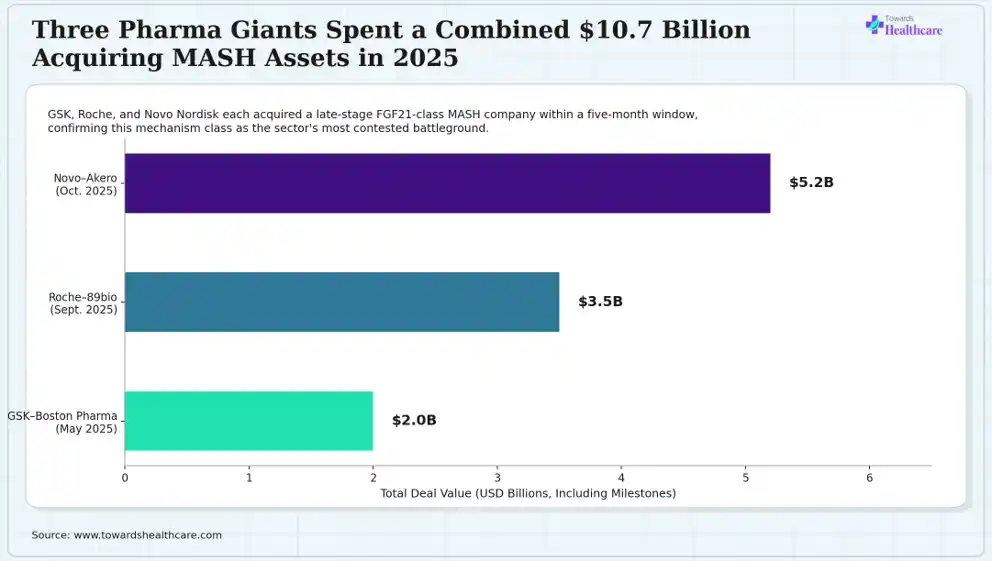
The above-mentioned horizontal bar chart reflects 2025 MASH/FGF21 acquisition values by acquirer. GSK offered a total deal value of $ 2.0 billion for the acquisition of Boston Pharmaceuticals efimosfermin, whereas Roche provided up to $3.5 billion for the pegozafermin acquisition. Additionally, up to $5.2 billion was provided as the deal value by Novo Nordisk for Akero’s efruxifermin acquisition, making it the largest MASH deal of the year.
Key Insight:
These 3 acquisitions by the world's largest pharmaceutical companies, independently, which is a rare instance across competing global pharma companies, highlighted that owning a late-stage FGF21 asset outright was worth billions.
Source: PharmExec, “Roche Acquisition of 89bio,” 2025; C&EN, “Novo Nordisk shells out $4.7 billion,” Oct. 2025; Biopharma PEG, “FGF21 agonist for MASH: Current Status,” Dec. 2025.
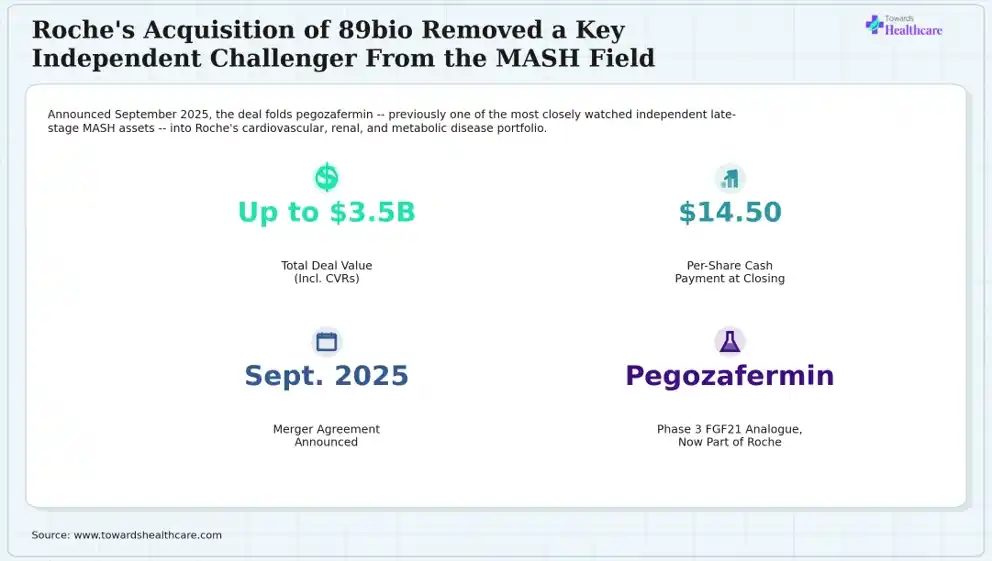
As the market research analyst, I interpret the infographic stat panel covers the Roche-89bio acquisition terms for the acquisition of pegozafermin. On September 17-18, 2025, the merger agreement was announced for the acquisition of Pegozafermin, which is a Phase 3 FGF21 analogue, with a total deal value including CVRs up to $3.5 billion, along with a per-share cash payment of $14.50 at closing.
Key Insight:
In a single announcement, 89bio moved from an independent challenger to a Roche-owned asset, indicating that MASH competitive positioning can shift within a single earnings cycle.
Source: Roche, “Roche enters into a definitive merger agreement to acquire 89bio,” Sept. 18, 2025; 89bio, SEC Form 8-K, Sept. 17, 2025.
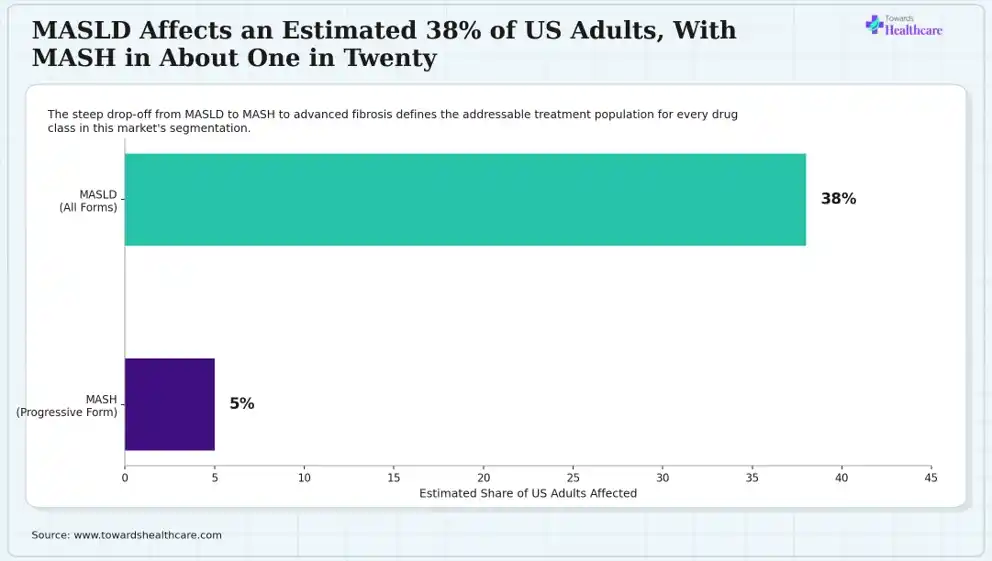
According to our analysis, the given horizontal bar chart compares MASLD and MASH prevalence among U.S. adults to identify the treatment population for every drug class. MASLD, including all forms of fatty liver disease, is estimated to hold the highest share of approximately 38%, while MASH, a progressive, inflammatory form, is anticipated to hold approximately 5% of the U.S. adult population.
Key Insight:
With the growing 1 in 5 MASLD patients progressing to MASH is anticipated to reach beyond the 36,000 patients mentioned on Rezdiffra to tens of millions of patients, with demand for approved and pipeline MASH therapies.
Source: Younossi ZM, et al., “Epidemiology of metabolic dysfunction-associated steatotic liver disease,” Clinical and Molecular Hepatology, Feb. 2025.
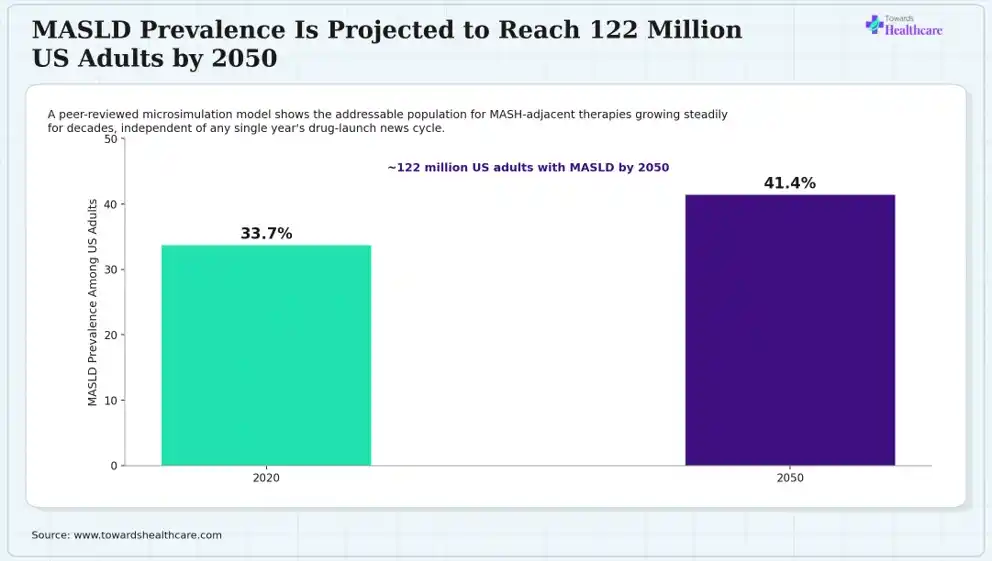
The given bar chart compares projected MASLD prevalence rates for the years 2020 and 2050, indicating significant growth. In 2020, the MASLD prevalence among U.S. adults was 33.7%, which is expected to reach 41.4%, affecting approximately 122 million U.S. adults in 2050 and ultimately driving the demand for MASH-adjacent therapies.
Key Insight:
This growth, highlighted in Novo Nordisk's own $4.7 billion Akero deal press materials, confirmed that the epidemiological growth curve is the central part for acquirers to justify multi-billion-dollar MASH deal valuations.
Source: Le P, et al., “Estimated Burden of Metabolic Dysfunction–Associated Steatotic Liver Disease in US Adults, 2020 to 2050,” JAMA Network Open, 2025.
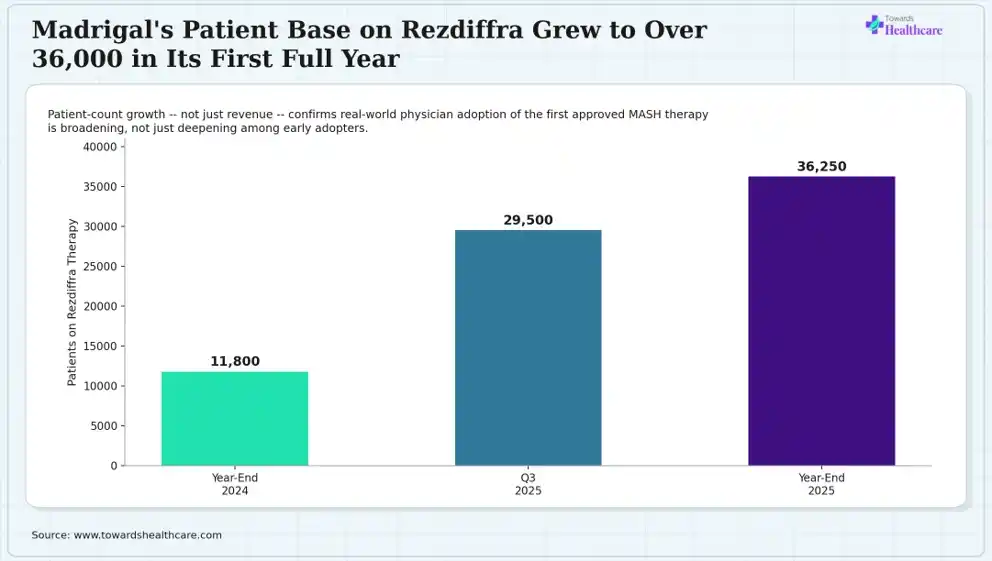
The above-mentioned bar chart focuses on the cumulative Rezdiffra patient count, year-end 2024 through year-end 2025, highlighting that the first approved MASH therapy is broadening. Year-end 2024 recorded approximately 11,800 patients on Rezdiffra, which increased to approximately 29,500 in Q3 2025, while it surpassed 36,250 at year-end 2025.
Key Insight:
The 3x rapid expansion of the diagnosed-and-treated population within a single year is driving the growth of Rezdiffra.
Source: Madrigal Pharmaceuticals, “Fourth-Quarter and Full-Year 2025 Financial Results,” Feb. 19, 2026.
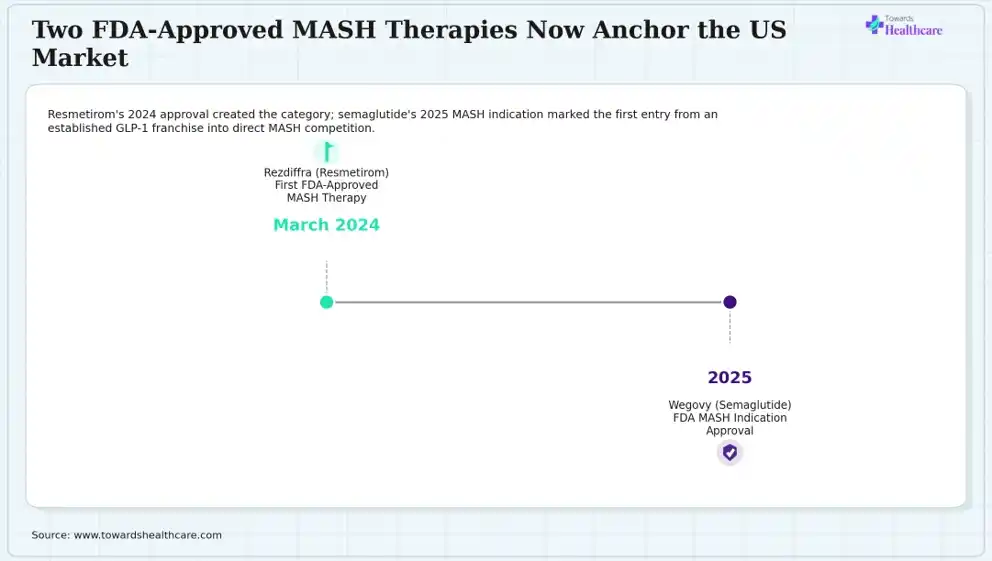
The timeline visual helps in mapping FDA MASH drug approval milestones from 2024 to 2025. In March 2025, Rezdiffra (resmetirom) was recognized as the first FDA-approved MASH therapy, while in 2025, FDA approval for a MASH indication was granted to Wegovy (semaglutide).
Key Insight:
Madrigal's commercial head start was reported as a 12-18-month gap between the first and second FDA-approved MASH therapy, where currently additional late-stage FGF21 and dual-agonist assets are approaching approval.
Source: AJMC, “Estimating the True Prevalence of MASH and MASLD in the US,” 2024–2025 (citing March 2024 FDA approval); company disclosures on Wegovy MASH indication.
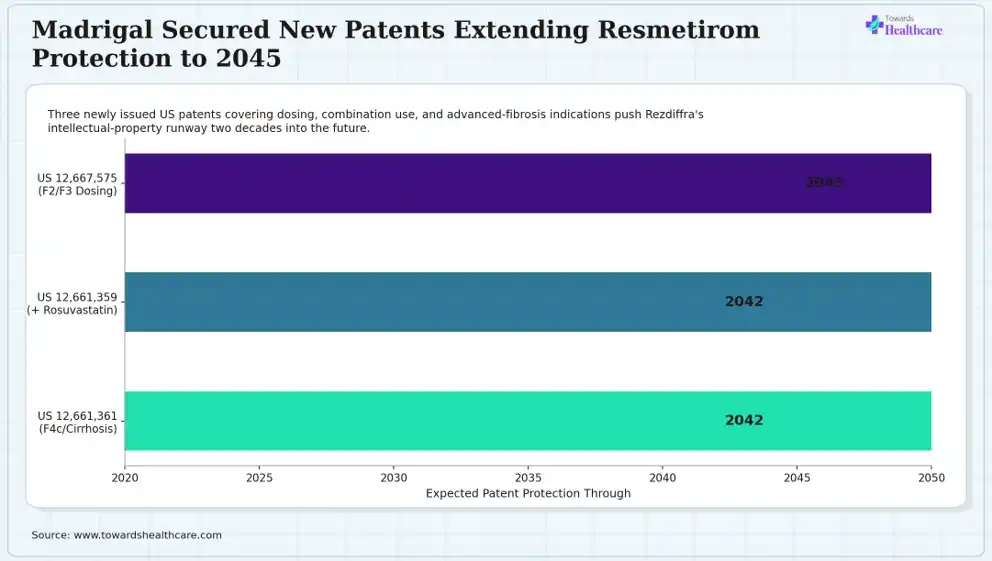
As the market research analyst, I interpret that the given horizontal bar chart represents Madrigal resmetirom patent protection horizon. The patent U.S. 12,661,361 F4c / compensated cirrhosis indication is expected to protect the product till 2042. U.S. 12,661,359 patent protection till 2042 offers a combination of Resmetirom & rosuvastatin. Furthermore, patent U.S. 12,667,575, offering an F2/F3 dosing approach, is anticipated to be protected till the year 2045.
Key Insight:
Rezdiffra's commercial exclusivity is maintained by layering combination-use and advanced-fibrosis-indication patents along with the core molecule patent.
Source: Madrigal Pharmaceuticals company patent disclosures, as supplied in company competitive intelligence benchmarking.
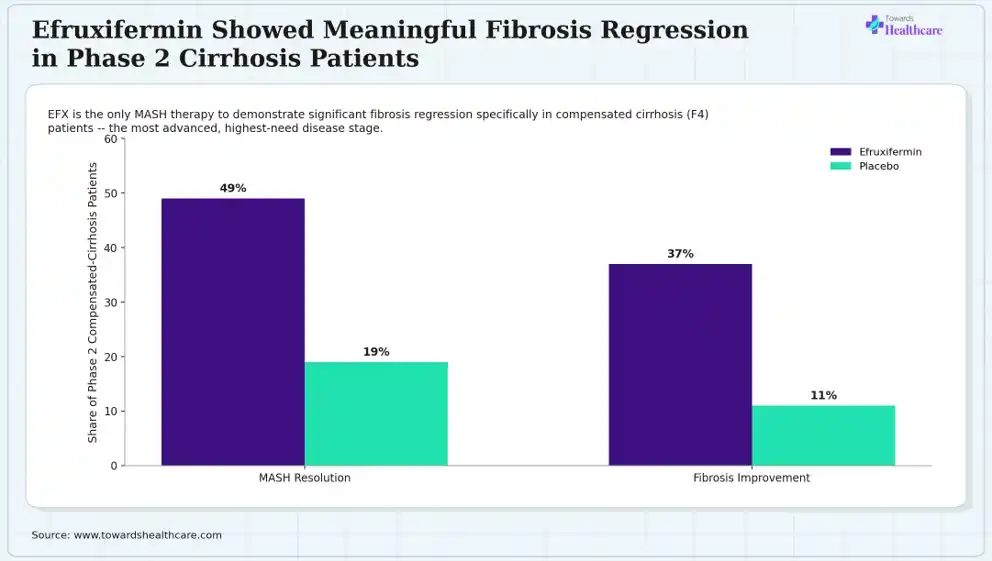
According to the survey conducted, the grouped bar chart illustrates EFX vs. placebo Phase 2 compensated cirrhosis outcomes. The outcomes provided by efrucifermin for MASH resolution were reported to be 49%, while for fibrosis improvement it was noted to be 37%. The outcomes for placebo for MASH resolution and fibrosis improvement were recorded to be 19% and 11%, respectively. This indicated better performance of EFX compared to placebo.
Key Insight:
The differentiated cirrhosis-stage efficacy of EFX attracted Novo Nordisk, leading it to pay a premium to acquire Akero instead of waiting for a licensing deal.
Source: Novo Nordisk, SEC Form 6-K, Oct. 9, 2025 (citing Akero Phase 2b HARMONY trial data).
The above-mentioned grouped bar chart compares Wegovy and placebo pivotal MASH trial outcomes. The MASH resolution provided by Wegovy (Semaglutide) was reported to be 63%, while for placebo it was 34%. Similarly, the fibrosis improvement noted by Wegovy was 37%, while that of placebo was 22%, which encouraged the use of Wegovy.
Key Insight:
With a 63% MASH resolution rate of Wegovy, along with its improved efficacy profile, it was regarded as Rezdiffra's competitor, which further represented Novo Nordisk as Madrigal's most serious near-term commercial threat.
Source: Company-reported pivotal MASH trial data for semaglutide (Wegovy), as supplied in company competitive intelligence benchmarking and cross-referenced against Novo Nordisk public disclosures.
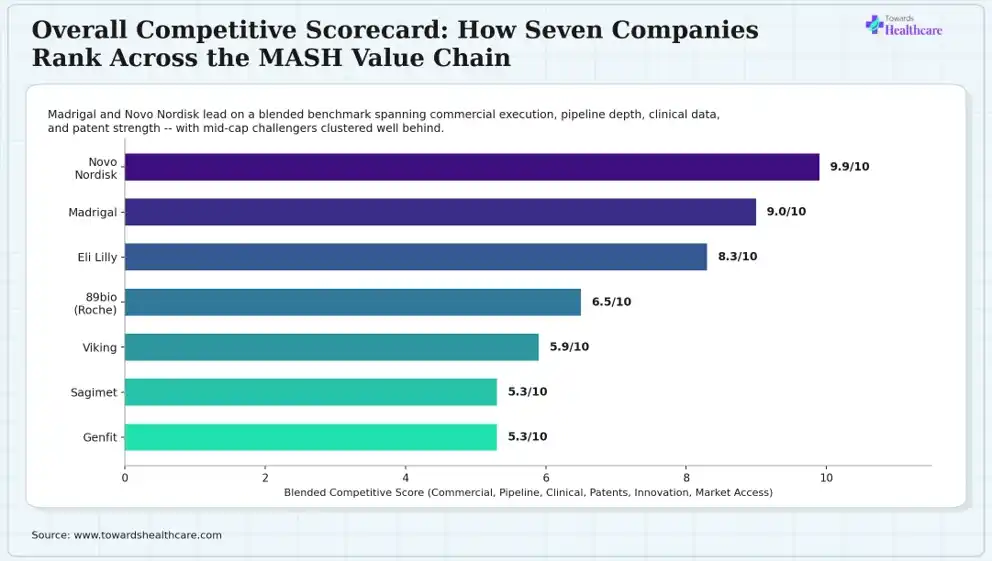
Based on the information gathered by Aman, the horizontal bar chart encompasses a blended competitive scorecard across 7 companies. Novo Nordisk dominated the market with an overall blended score of 9.9/10, while Madrigal held the second position with 9.0/10, whereas Eli Lilly held the third rank with 8.3/10. 89bio, which is now part of Roche, received a 6.5/10 overall blended score, followed by Viking Therapeutics with 5.9/10. Sagimet Biosciences held a 5.3/10 overall blended score, while Genfit received a 5.3/10 overall blended score.
Key Insight:
With a nearly 3.5-point gap between the top two companies and Eli Lilly, Novo Nordisk and Madrigal are positioned at the MASH competitive advantage, dominating commercial infrastructure and late-stage clinical data simultaneously.
Source: Competitive intelligence benchmarking methodology as supplied; commercial, pipeline, and patent figures independently cross-verified against company SEC filings and press releases.
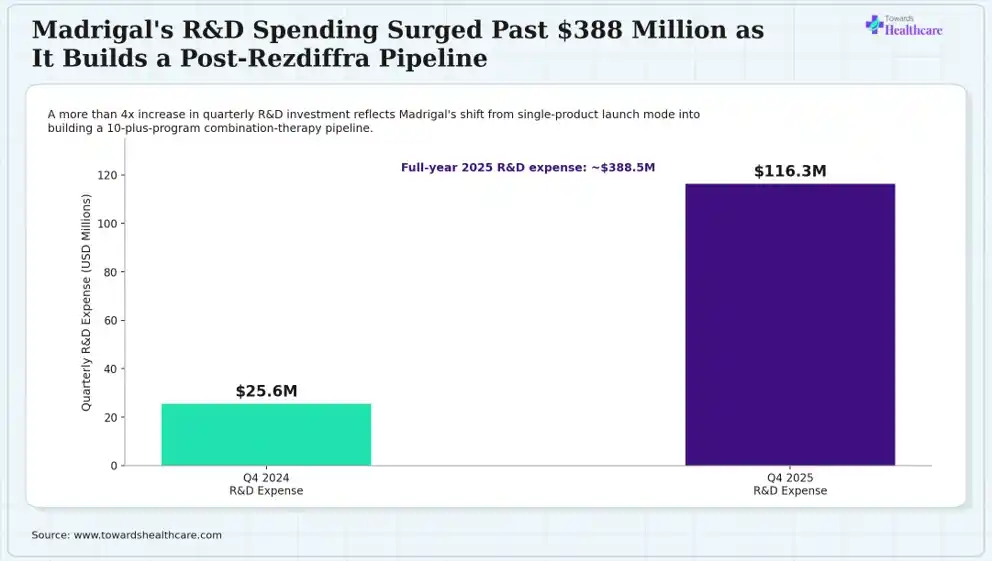
Based on our research, the bar chart highlights Madrigal's quarterly R&D expense for Q4 2024 and Q4 2025, indicating exponential growth. The Q4 2024 R&D expenses were reported to be $25.6 million, which increased to $116.3 million in Q4 2025, indicating more than a 4x increase in quarterly R&D investment. Thus, the full-year 2025 was reported to be approximately $388.5 million.
Key Insight:
The growth in R&D expense of Madrigal is funded directly by Rezdiffra's own commercial success, which is being utilized for its oral GLP-1, DGAT-2 inhibitor, and siRNA pipeline to maintain its position against Novo Nordisk and Eli Lilly, who consists of larger R&D budgets.
Source: Madrigal Pharmaceuticals, “Fourth-Quarter and Full-Year 2025 Financial Results,” Feb. 19, 2026 (full-year R&D figure derived from reported full-year operating expenses of $1,258.5M less reported SG&A of $813.8M and cost of sales of $56.1M).
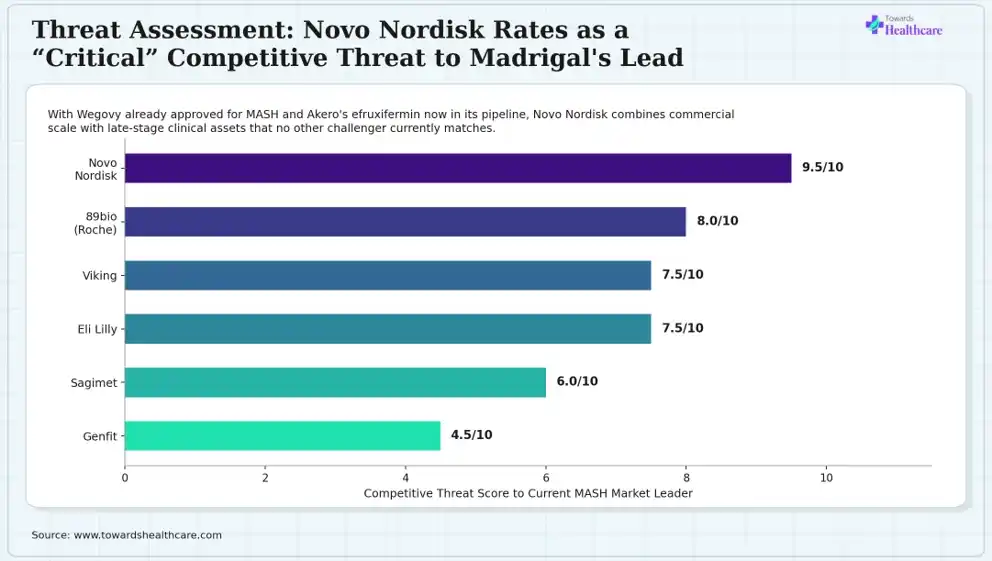
As per the analysis of Aman, the horizontal bar chart highlights competitive threat scores to the current MASH market leaders. Novo Nordisk was marked with a critical threat score of 9.5/10, while 89bio, which is now part of Roche, received a high threat score of 8.0/10, while Viking Therapeutics was noted with a high potential threat score of 7.5/10. Similarly, Eli Lilly received a high potential threat score of 7.5/10, Sagimet Biosciences was at a moderate threat score of 6.0/10, while Genfit secured its position with a moderate-low threat score of 4.5/10.
Key Insight:
Novo Nordisk is regarded as a “critical” threat rather than “high-potential” as the company combines an already-approved MASH drug, a newly acquired late-stage pipeline asset, and industry-leading commercial infrastructure simultaneously.
Source: Competitive intelligence benchmarking methodology as supplied; deal terms and commercial data independently cross-verified against company SEC filings and press releases.
| Indicator | Value | Source |
| Rezdiffra FY2025 net sales (direct MASH revenue) | $958.4 million | Madrigal Pharmaceuticals, Feb. 2026 |
| Rezdiffra FY2024 net sales | $180.1 million | Madrigal Pharmaceuticals, Feb. 2026 |
| Combined 2025 MASH/FGF21 acquisition value (3 deals) | Up to $10.7 billion | PharmExec; C&EN; Biopharma PEG, 2025 |
| Patients on Rezdiffra, year-end 2025 | 36,250+ | Madrigal Pharmaceuticals, Feb. 2026 |
| Estimated U.S. MASH patient population (progressive form) | ~5% of U.S. adults | Clinical and Molecular Hepatology, Feb. 2025 |
| Projected U.S. MASLD population by 2050 | ~122 million adults | JAMA Network Open, 2025 |
The above-mentioned table highlights the revenue of the MASH drugs across the U.S. The Rezdiffra FY2024 net sales were reported to be $180.1 million, which helped in the treatment of more than 36,250 patients, while the combined 2025 MASH/FGF21 acquisition value, led by 3 major deals, contributed to around $10.7 billion. Furthermore, the estimated U.S. MASH patient population with progressive form is expected to be approximately 5% of U.S. adults, while the projected U.S. MASLD population by 2050 is anticipated to affect approximately 122 million adults.
This section encompasses five segmentation dimensions, including Drug Class, Disease Stage, Route of Administration, Distribution Channel, and End User, with their market share, CAGR percentages, and recent advancements.
| Drug Class | Recent Advancements | Source |
| THR-β Agonists (Resmetirom/Rezdiffra) |
First FDA approval granted in March 2024 $958.4M recorded as its FY2025 net sales Helped treat more than 36,250 patients |
Madrigal Pharmaceuticals, 2026 |
| GLP-1 Receptor Agonists (Semaglutide/Wegovy) |
Received FDA MASH approval in 2025 Offered 63% MASH resolution vs. 34% placebo in pivotal trial; |
Company-reported pivotal trial data, 2025 |
| FGF21 Analogues (Efruxifermin, Pegozafermin) | Subject of 2 of the 3 major 2025 MASH acquisitions, with Novo-Akero for $5.2B and Roche-89bio for $3.5B | SEC filings, 2025 |
| GLP-1/Glucagon Dual Agonists (Survodutide) | No independently verified U.S. commercial or late-stage regulatory milestone identified in this report's research | Data gap - stated explicitly rather than estimated |
| ACC Inhibitors (Denifanstat) | No independently verified U.S. commercial or late-stage regulatory milestone identified in this report's research | Data gap - stated explicitly rather than estimated |
As the market research analyst, I interpret that the given table highlights different types of drug classes and their recent developments. By drug class, the THR-β agonists segment dominated the market with 86%; due to expanding physician familiarity, the GLP-1 receptor agonists segment held the second-largest share of 12% and is expected to show the fastest CAGR growth due to their substantial metabolic benefits. FGF21 analogues segment held 0.60% as it targets fibrosis and metabolic dysfunction, while the GLP-1/glucagon dual agonists segment held 0.30% because dual metabolic mechanisms may improve liver fat and body weight. ACC inhibitors segment held 0.30% as it directly targets hepatic lipogenesis.
Disease-stage segmentation consisting of fibrosis stages from F1 to F4 is well established, but the sources for market-share breakdown specifically by fibrosis stage are not available. Therefore, the clearest verified stage-specific evidence for this segment is highlighted by the Phase 2 data of efruxifermin in F4 patients with compensated cirrhosis, demonstrating fibrosis regression specifically at that most-advanced stage.
| Category | Examples | Source |
| Commercial (FDA-approved) | 2 therapies, namely Rezdiffra (resmetirom), approved in 2024, and Wegovy (semaglutide) with MASH indication approved in 2025 | Company disclosures, 2024–2025 |
| Late-stage pipeline, now pharma-owned |
Efruxifermin developed by Novo Nordisk Pegozafermin developed by Roche Both are formerly independent-company assets |
SEC filings, 2025 |
| Late-stage pipeline, independent |
Denifanstat developed by Sagimet Biosciences VK2809 developed by Viking Therapeutics |
Company competitive intelligence data as supplied |
The table highlights MASH drugs under commercial and pipeline phases. There are 2 commercial MASH drug therapies, such as resmetirom with the brand name Rezdiffra and semaglutide with the brand name Wegovy, which received FDA approvals in 2024 and 2025, respectively. The drugs in the late-stage pipeline are classified as pharma-owned and independent, where the pharma-owned late-stage pipeline drugs are Efruxifermin and pegozafermin, while the late-stage pipeline independent drugs consist of Denifanstat and VK2809.
On February 19, 2026, full-year 2025 Rezdiffra net sales of $958.4 million (+432% YoY), followed by treatment of more than 36,250 patients with their therapy and the expansion of more than 10 MASH and metabolic-disease programs, were announced by Madrigal Pharmaceuticals.
Source: Madrigal Pharmaceuticals, Q4/FY2025 Financial Results, Feb. 2026
On October 9, 2025, to acquire Akero Therapeutics and its Phase 3 FGF21 analogue efruxifermin, a definitive agreement of up to $5.2 billion was announced by Novo Nordisk, making it the largest of three MASH acquisitions of the year.
Source: Novo Nordisk SEC Form 6-K, Oct. 2025
On September 17-18, 2025, to acquire 89bio and its Phase 3 FGF21 analogue pegozafermin, a definitive merger agreement of up to $3.5 billion was announced by Roche.
Source: Roche press release; 89bio SEC Form 8-K, Sept. 2025
In May 2025, the first of three major 2025 FGF21-class MASH acquisitions was Boston Pharmaceuticals' lead asset, efimosfermin alfa’s acquisition by GSK for up to $2.0 billion.
Source: Biopharma PEG, “FGF21 agonist for MASH: Current Status,” Dec. 2025
In 2025, FDA approval was provided to Wegovy (semaglutide), developed by Novo Nordisk, for a MASH indication, making it the first approved MASH product of the company.
Source: Company disclosures, 2025
In March 2024, after receiving FDA approval, Rezdiffra (resmetirom) was represented as the first-ever approved therapy for MASH.
Source: AJMC, “Estimating the True Prevalence of MASH and MASLD in the US,” 2024–2025
It is the commercial market leader with $958.4M in FY2025 sales of Rezdiffra, more than 36,250 patients treated, and over 10 pipeline programs.
It is the strategic leader, with a broad range of products in the commercial and late-stage pipeline. It is well known for the approval of Wegovy in 2025 and the acquisition of Akero for up to $5.2B in October 2025.
It is a new late-stage entrant, which strengthened its position through the acquisition of 89bio and pegozafermin for up to $3.5B in September 2025.
It is the new late-stage entrant, maintaining its market position with the acquisition of Boston Pharmaceuticals' efimosfermin for up to $2.0B in May 2025.
It is well known as a late-stage independent challenger with VK2809, which is an oral THR-β agonist in Phase 2 development.
It is a specialist independent challenger focusing on clinical development of Denifanstat, which is a FASN inhibitor.
It is a specialist player with multiple MASH-related assets.
It is a powerful potential entrant, with a strong metabolic-disease pipeline and R&D scale, along with increasing interest in MASH products.
Aditi is a pharmaceutical research expert with strong experience in liver disease, FDA regulations, and advanced therapies markets. She conducted detailed market research, analyzed company data, clinical trends, and industry developments. Based on her comprehensive analysis, the following strategic key takeaways highlight the most important market insights and opportunities.
For Service Providers & CDMOs
For Pharma & Biotech Companies
For Investors & Corporate Strategy Teams
Based on my assessment, the market is expanding rapidly due to growing acquisitions, which are intensifying market competition. Growing R&D expenses and net sales are also increasing innovations. I also anticipate that the new collaboration and investments will fuel the development of advanced therapies. I also see strong growth in FDA approvals and injectable formulations, which will create new market opportunities.
Payal Rabde led the primary market research, developed the methodology, analyzed trends, segmentation, competition, forecasts, and strategic opportunities, forming the report's analytical foundation.
Aman was responsible for collecting and validating clinical trial data, research publications, company information, partnerships, and other quantitative datasets, strengthening evidence-based analysis and market estimations.
Aditi reviewed the complete research document, performed quality checks, validated findings, refined content, corrected inconsistencies, and finalized the report, ensuring accuracy, clarity, credibility, and publication-ready quality.
By Drug Class
By Disease Stage
By Route of Administration
By Distribution Channel
By End User
















Principal Consultant
Payal Rabde is a Healthcare Market Research Analyst at Towards Healthcare Research & Consulting with 4+ years of experience in pharmaceuticals, biotechnology, medical devices, and life sciences.
Learn more about Payal Rabde

Reviewed By
Aditi Shivarkar is a seasoned professional with over 14 years of experience in healthcare market research. As a content reviewer, Aditi ensures the quality and accuracy of all market insights and data presented by the research team.
Learn more about Aditi Shivarkar