




 Request Consultation
A connected healthcare platform is an ecosystem that links medical devices, healthcare systems, and patient data to enable seamless communication and real-time information exchange between patients, providers, and caregivers. It integrates tools such as remote monitoring devices, electronic records, and communication interfaces to support coordinated, efficient, and data-driven care delivery.
These platforms are increasingly shaping modern healthcare by improving access to care, enhancing patient engagement, and enabling continuous health tracking beyond traditional clinical settings. By supporting virtual consultations, real-time monitoring, and integrated data management, they help streamline workflows, reduce care gaps, and deliver a more personalized and proactive healthcare experience.
By the Numbers: The Rise of Connected Healthcare Platforms
| Parameter | Data in % |
| Healthcare providers using HER systems | 85-90% |
| Global deaths linked to chronic diseases | 74-75% |
| Increase in telehealth adoption | 60-70% |
| Patients preferring remote care services | 65% |
| Reduction in hospital visits via remote monitoring | 20-30% |
| Healthcare organizations investing in digital health | 70%+ |
Transforming Healthcare Delivery Through Seamless Connectivity
Connected healthcare platforms play a vital role in unifying fragmented healthcare systems by enabling smooth and secure data exchange across multiple touchpoints. They support better coordination among providers, reduce duplication of tests, and ensure continuity of care. These platforms also enhance operational efficiency by optimizing resource utilization and reducing administrative burdens. Furthermore, they enable faster clinical decisions and improve overall system responsiveness, helping healthcare organizations deliver a more integrated, efficient, and patient-focused care experience in an increasingly digital environment.
Powering Modern Healthcare: The Numbers Behind Connected Care
Globally, noncommunicable diseases affect over 1 billion people, increasing the need for continuous and connected care solutions. Around 90% of office-based physicians in the U.S. use electronic health records, supporting digital data exchange. Telehealth usage has surged by over 60% in recent years. Additionally, remote patient monitoring can reduce hospital readmissions by up to 20%, highlighting the growing importance of connected healthcare systems in improving care continuity and outcomes
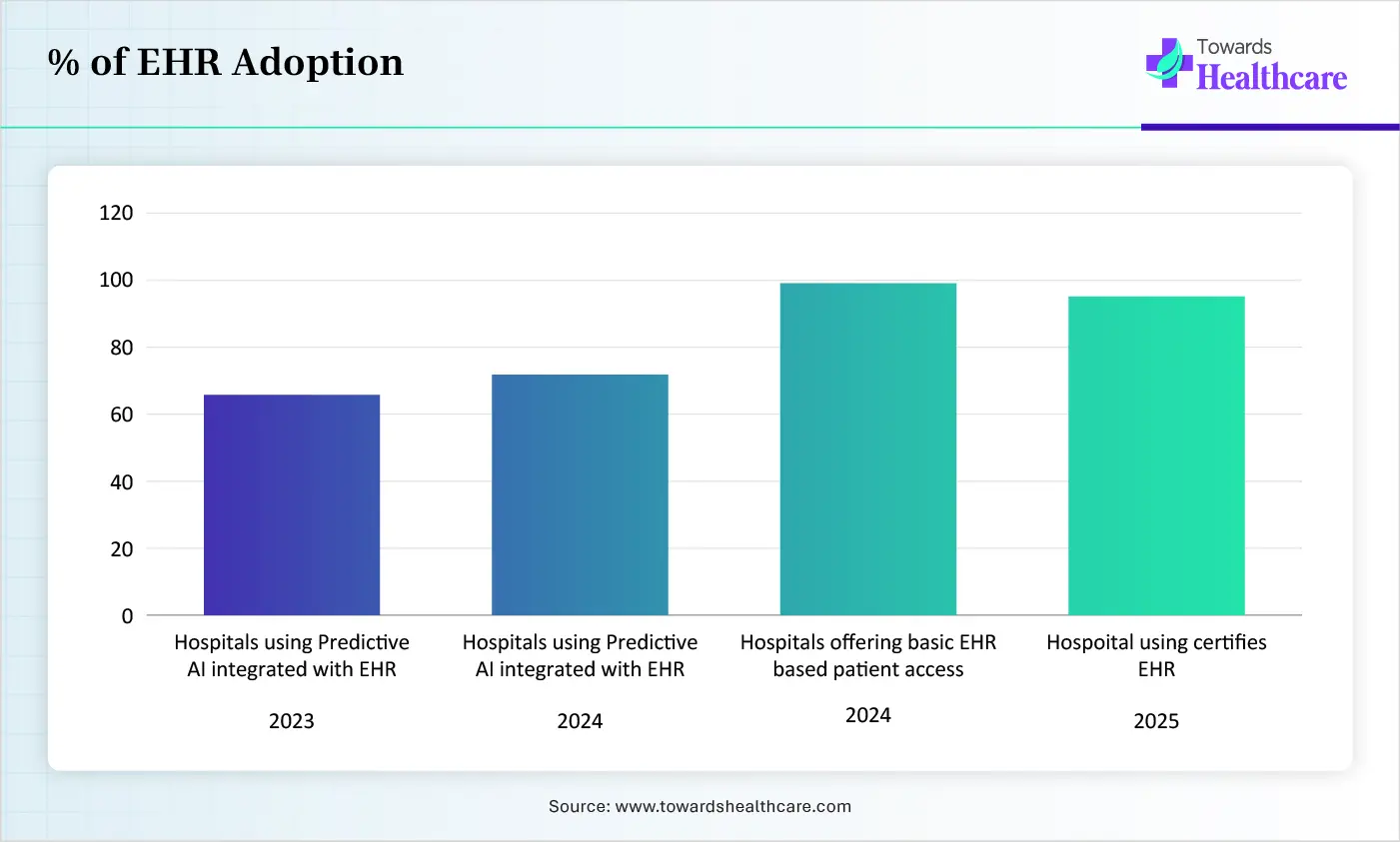
Charting the Digital Shift: HER Uptake 2023-2025
Driving the Digital Health Revolution: Forces Behind Connected Healthcare Growth
Need for Continuous Patient Monitoring
The rising demand for ongoing health tracking, especially for chronic conditions, is driving adoption. Connected platforms enable real-time data collection outside clinical settings, allowing timely interventions and reducing complications through proactive and continuous care management.
Growing Demand for Accessible Healthcare Services
Patients increasingly expect convenient and quick access to healthcare. Connected platforms support virtual consultations, digital communication, and remote services, helping overcome geographical barriers and improving access for underserved and rural populations.
Focus on Operational Efficiency in Healthcare Systems
Healthcare providers are adopting connected platforms to streamline workflows, reduce administrative burden, and optimize resource utilization. These systems help in minimizing manual processes, improving coordination, and enhancing overall efficiency in care delivery.
Increasing Adoption of Digital Health Infrastructure
Rapid advancements in digital technologies and improved internet connectivity are supporting the integration of connected healthcare solutions. Organizations are investing in modern infrastructure to enable seamless data exchange, interoperability, and scalable healthcare delivery models.
Challenges Slowing the Connected Healthcare Revolution
High implementation and integration costs can deter smaller healthcare providers. Data privacy and cybersecurity concerns remain critical as sensitive patient information must be protected from breaches. Interoperability challenges between diverse healthcare systems and devices limit seamless data exchange. Additionally, resistance from healthcare professionals unfamiliar with digital tools can slow adoption. Limited infrastructure in rural or underdeveloped regions further restricts access, creating barriers to the widespread implementation of connected healthcare solutions.
What’s Trending in Connected Healthcare
Integration of Smart Medical Devices
Connected platforms increasingly use IoT-enabled devices to collect real-time patient data, enabling accurate monitoring, early detection of health issues, and seamless integration into clinical workflows.
Real-time Data Analytics
Platforms are leveraging analytics to process patient data in real time, helping providers identify patterns, monitor treatment effectiveness, and support timely clinical decisions.
Emphasis on Value-Based Care Metrics
Healthcare organizations are using connected systems to track outcomes, optimize resource use, and support care models that prioritize efficiency and measurable patient benefits.
Mobile-First Engagement Tools
Mobile apps and platforms are widely used for patient engagement, providing appointment management, medication reminders, and direct communication with providers for improved care coordination.
Strengthened Security and Compliance
There is a strong focus on data protection, encryption, and adherence to regulatory standards to ensure safe handling and exchange of sensitive health information.
Digital Health Gets a Boost: Government Initiatives
Governments worldwide are promoting connected healthcare platforms through policies and programs that support digital health transformation. Initiatives focus on expanding electronic health record (EHR) adoption, enabling telemedicine services, and integrating remote patient monitoring into national healthcare systems. Funding and grants are provided to modernize healthcare IT infrastructure, improve interoperability, and ensure data security. Regulatory frameworks encourage innovation while protecting patient privacy. These measures aim to enhance healthcare accessibility, streamline workflow, and improve population health management, accelerating the adoption of connected platforms across hospitals, clinics, and community health settings.
Tracking RPM Growth Worldwide
| Year | Patients Using RPM Globally |
| 2023 | 76.7 million |
| 2024 | 80-90 million |
| 2025 | 115 million |
Connected Care in Action: Main Uses
- Tracks patient vitals and health metrics in real-time, allowing early detection and proactive interventions.
- Enables remote doctor-patient interactions, improving access to care and reducing hospital visits.
- Centralizes patient data for seamless sharing across healthcare providers, ensuring coordinated care.
- Supports continuous monitoring and personalized care plans for patients with long-term conditions.
- Provides tools for appointment scheduling, medication reminders, health education, and direct communication with providers.
- Uses analytics and AI to assist healthcare professionals in diagnosis, treatment planning, and risk assessment.
- Analyzes patient data to identify trends, forecast risks, and improve healthcare outcomes.
- Monitors prescriptions, adherence, and alerts both patients and providers for timely interventions.
Future Horizons for Connected Healthcare Platforms
The connected healthcare platform market holds significant future opportunities as integration of AI-driven analytics, wearable devices, and personalized digital therapeutics expands. There is growing potential in remote patient monitoring for aging populations, home-based chronic disease management, and mental health tracking. Emerging markets present untapped adoption prospects, while increasing interoperability standards and cloud-based solutions enable scalable, data-driven healthcare delivery. Partnerships between technology providers and healthcare organizations will further drive innovation, efficiency, and improved patient outcomes globally.
Transformative Advances in Connected Healthcare
| Date | Development | Impact/Summary |
| October 2025 | BD launched the BD Incada Connected Care Platform, a cloud-based, AI-enabled solution integrating data from millions of devices. | Enables enterprise-wide insights, improves clinical decision-making, and streamlines workflows across healthcare settings. |
| May 2025 | Innovaccer introduced Innovaccer Gravity, a cloud-agnostic healthcare intelligence platform unifying data from EHRs, claims, and core systems. | Accelerates digital transformation, supports AI-driven insights, and enhances clinical, operational, and financial decision-making. |
| January 2025 | Philips expanded the HealthSuite digital platform to integrate remote monitoring and patient engagement tools. | Improves chronic disease management, supports telehealth adoption, and increases patient adherence. |
| August 2024 | Epic Systems rolled out Care Everywhere enhancements for seamless EHR interoperability. | Facilitates cross-provider data exchange, reduces errors, and ensures coordinated patient care. |
| June 2024 | Cerner (Oracle Health) launched AI-assisted analytics modules within its connected platform. | Enhances predictive care, risk stratification, and clinical efficiency. |
Connected Healthcare: Transforming Care, Today and Beyond
Connected healthcare platforms are redefining how care is delivered by enabling real-time monitoring, seamless data exchange, and enhanced patient engagement. They streamline clinical workflows, improve treatment outcomes, and empower patients to take an active role in their health. As technology adoption grows, these platforms will continue to bridge gaps in care, reduce costs, and drive more efficient, patient-centered healthcare. Their integration marks a pivotal step toward a smarter, more connected health ecosystem worldwide.
Expert Insights
According to a recent report on the Connected Healthcare Platform Market, published on Towards Healthcare. Experts emphasize that the increasing adoption of telehealth, remote patient monitoring, and cloud-based healthcare solutions is significantly driving market expansion. The growing integration of artificial intelligence, IoT, and predictive analytics is enhancing clinical decision-making and enabling personalized, data-driven care delivery. Additionally, rising demand for real-time patient data access and improved care coordination is accelerating platform adoption across healthcare systems. However, challenges such as data security concerns, interoperability issues, and high implementation costs remain key barriers. Overall, the market is expected to witness steady growth, supported by digital transformation initiatives.