




 Request Consultation
The process of manufacturing own drugs in own facilities, specifically by pharmaceutical companies are referred to as in-house drug manufacturing. However, outsourced manufacturing consists of the involvement of a third-party Contract Manufacturing Organization (CMO) to produce the drug.
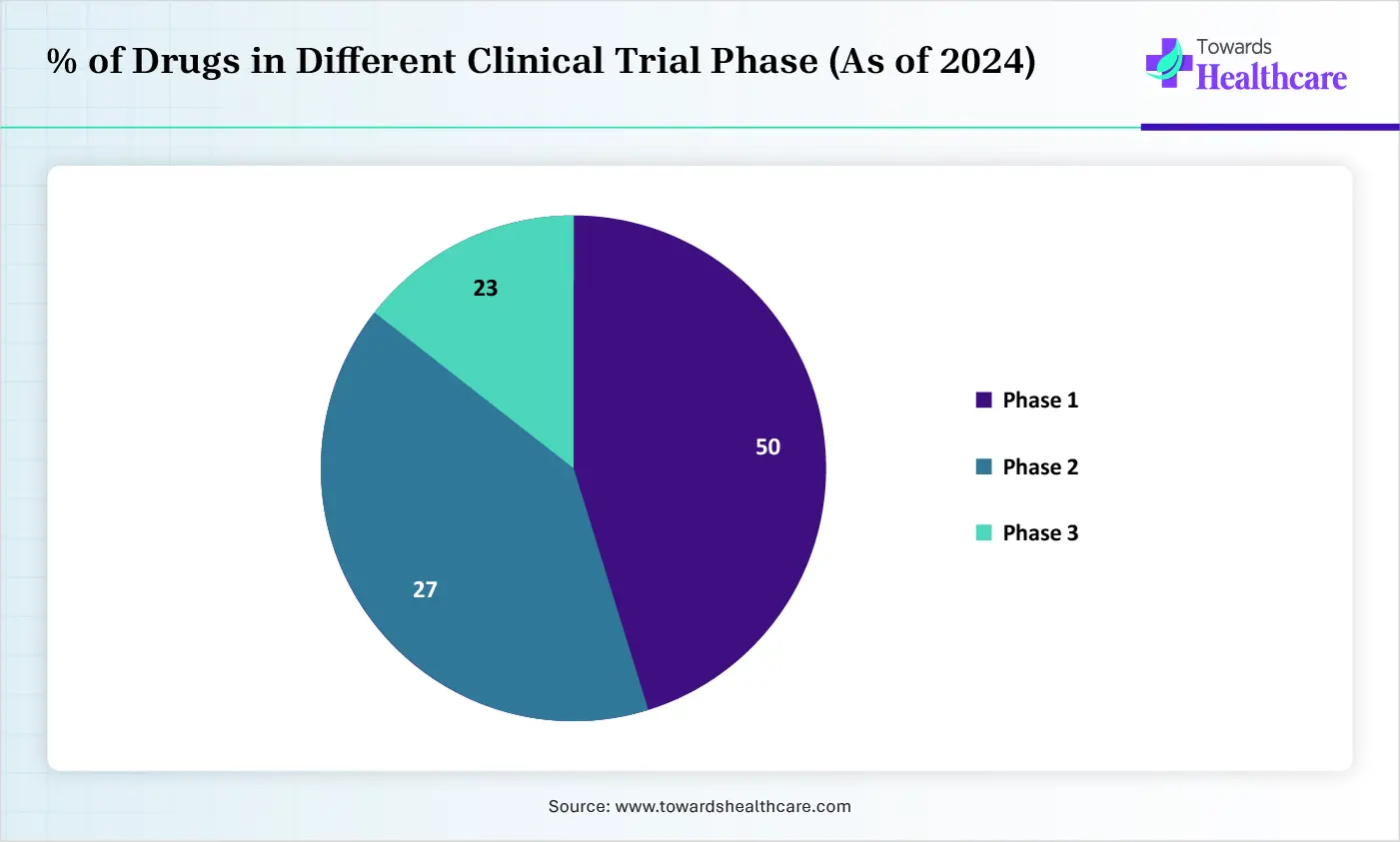
The presence of over 12,700 drugs in clinical development, including 1,200 gene therapies and numerous biologics, is significantly increasing demand for flexible manufacturing models. Rising clinical activity across Phase 1, 2, and 3 trials is accelerating pharmaceutical outsourcing, specialized CDMO expansion, and advanced manufacturing investments globally.
Why Pharmaceutical Companies Are Reconsidering Manufacturing Strategies
Pharmaceutical companies are reconsidering manufacturing strategies due to increasing pressure for resilient supply chains, accelerated drug commercialization, and rising biologics demand. Post-pandemic disruptions exposed vulnerabilities in globally dependent production networks, encouraging firms to diversify manufacturing approaches. Simultaneously, the need for faster product launches and flexible production capacities is driving investments in both in-house facilities and outsourced partnerships. Advanced therapies, personalized medicines, and evolving regulatory expectations are further reshaping manufacturing decisions across the pharmaceutical industry.
Prominent Drivers of In-house & Outsourced Drug Manufacturing are:
In-house Drug Manufacturing
Rising emphasis on preserving complex, proprietary, or highly sensitive processes internally further mitigates potential disclosures to competitors in shared vendor environments. Another catalyst is that immersive internal facilities offer total visibility & control, enabling real-time pivoting & direct oversight of quality management instead of depending on a third-party's schedule.
Outsourced Drug Manufacturing
Along with higher scalability & flexibility, outsourcing manufacturing skips huge upfront capital expenditure on specialized facilities & equipment. Moreover, these firms facilitate access to advanced technologies, which omits hiring or training of specialized staff internally.
Key Advantages and Challenges of In-house Manufacturing
- Strong intellectual property (IP) protection and confidentiality
- Better quality control with direct operational oversight
- Faster internal decision-making and process modifications
- Requires high capital expenditure (CAPEX) for facility setup
- Involves strict regulatory compliance and validation procedures
- Needs a highly skilled workforce and continuous staff training
Key Benefits and Challenges of Outsourced Manufacturing
- Offers higher scalability and manufacturing flexibility
- Reduces infrastructure and equipment investment costs
- Enables faster product launch through established facilities
- Creates dependency on third-party manufacturing partners
- May result in communication and coordination challenges
- Raises compliance, quality assurance, and data security concerns
Cost Analysis Between In-house & Outsourced Drug Manufacturing
In-House Drug Manufacturing Outsourced Drug Manufacturing
- This needs higher CAPEX, which includes building, validating, & equipping facilities from scratch. CMO requires minimal to no CAPEX and proceeds with plug-and-play access to ready facilities.
- In-house facilities necessitate 3 to 5 years to build & rollout the first commercial batch. Outsourced approaches explore an initial Good Manufacturing Practice (GMP) batch in 12–18 months.
- In the case of operating expenses, in-house drug manufacturing demands fixed spending for labor, equipment upkeep, & facility maintenance. This majorly shows variances in OpEX, including scaling volume up or down based on market contract demands.
Technological Advancements Influencing the Market
Technological advancements are significantly transforming pharmaceutical manufacturing through AI-driven production optimization, advanced automation, and continuous manufacturing systems. Smart factories improve operational efficiency by integrating real-time data analytics and connected equipment. Additionally, digital quality monitoring enhances compliance, minimizes production errors, and supports faster, more reliable drug manufacturing across global pharmaceutical facilities.
Substantial Diversity in Market Focus Impacts the Comprehensive Adoption of In-house Vs Outsourced Drug Manufacturing
Especially, numerous giant, well-nurtured pharmaceutical leaders prefer an in-house approach, with an emphasis on fostering proprietary technology & direct oversight of quality control. On the other hand, outsourcing is massively employed by startups & establishing biotech companies, aiming at their capital on R&D & core marketing over infrastructure. Many robust CDMOs broadly offer highly specialized expertise for complex drugs, particularly biologics, cell therapies, & injectables without the requirement of continuous internal training.
However, in-house drug manufacturing follows complete control over periods & intellectual property (IP), while outsourced solutions are highly reliant on shared supervision & need strong contracts, though regulatory accountability finally remains with the drug sponsor.
Regulatory Environment and Compliance
Pharmaceutical manufacturing operates under stringent FDA and EMA regulations alongside mandatory Good Manufacturing Practice (GMP) requirements to ensure product safety, consistency, and efficacy. Both in-house manufacturers and outsourcing partners must undergo regular validation procedures and quality audits. Despite outsourcing production activities, ultimate regulatory accountability, compliance responsibilities, and product approval obligations remain with the pharmaceutical drug sponsor.
What is the Future of Drug Manufacturing?
The future of pharmaceutical manufacturing is expected to witness growing adoption of hybrid manufacturing models combining internal production with strategic outsourcing partnerships. Increasing biologics demand is accelerating outsourcing activities toward specialized CDMOs offering advanced technological expertise. Furthermore, strategic collaborations between pharmaceutical firms and manufacturing providers are projected to strengthen innovation, scalability, operational flexibility, and global commercial manufacturing capabilities.
Conclusion
In conclusion, both in-house and outsourced drug manufacturing models offer distinct advantages depending on operational priorities, financial capabilities, and product complexity. While in-house manufacturing ensures greater control, intellectual property protection, and quality oversight, outsourcing provides scalability, flexibility, and faster commercialization opportunities. Rising biologics demand, technological advancements, and strategic collaborations are further reshaping pharmaceutical manufacturing decisions. Consequently, hybrid manufacturing approaches are expected to gain substantial traction across the evolving global pharmaceutical industry landscape.