




 Request Consultation
In recent decades, the skincare industry has gone through a spectacular revolution. Consumers are now not satisfied only with generic moisturizers or cleansers marketed towards specific skin types, such as oily, dry, or combination skin. In this era, buyers are seeking skin products created especially for their skin concerns, daily routines, environmental exposure, age, diet, stress level, & lifestyle habits.
These particular expectations have developed one of the fastest-growing segments in the beauty industry called personalized skincare. Here, rather than asking, ‘Which moisturizer is best?’, consumers now ask,
- Which products are suitable for acne-prone skin with hormonal imbalances?
- Which routine works for recurring travelers?
- What ingredients should someone living in polluted cities use?
- How should skincare pivot with ageing, pregnancy, menopause, or seasonal weather?
Emerging as important queries are fueling skincare brands to move towards AI-driven diagnostics, dermatology-led assessments, ingredient customization, DNA-based analysis, & lifestyle-based recommendations.
According to Towards Healthcare, the global skincare market is valued at USD 123.64 billion in 2025, estimated to reach USD 132.13 billion in 2026, and predicted to grow to USD 240.28 billion by 2035, expanding at a 6.87% CAGR. Alongside, the personalized skincare products market is expanding much faster from USD 33.09 billion in 2025 to USD 66.37 billion by 2034, representing an 8.04% CAGR, substantially outperforming the broader skincare industry.
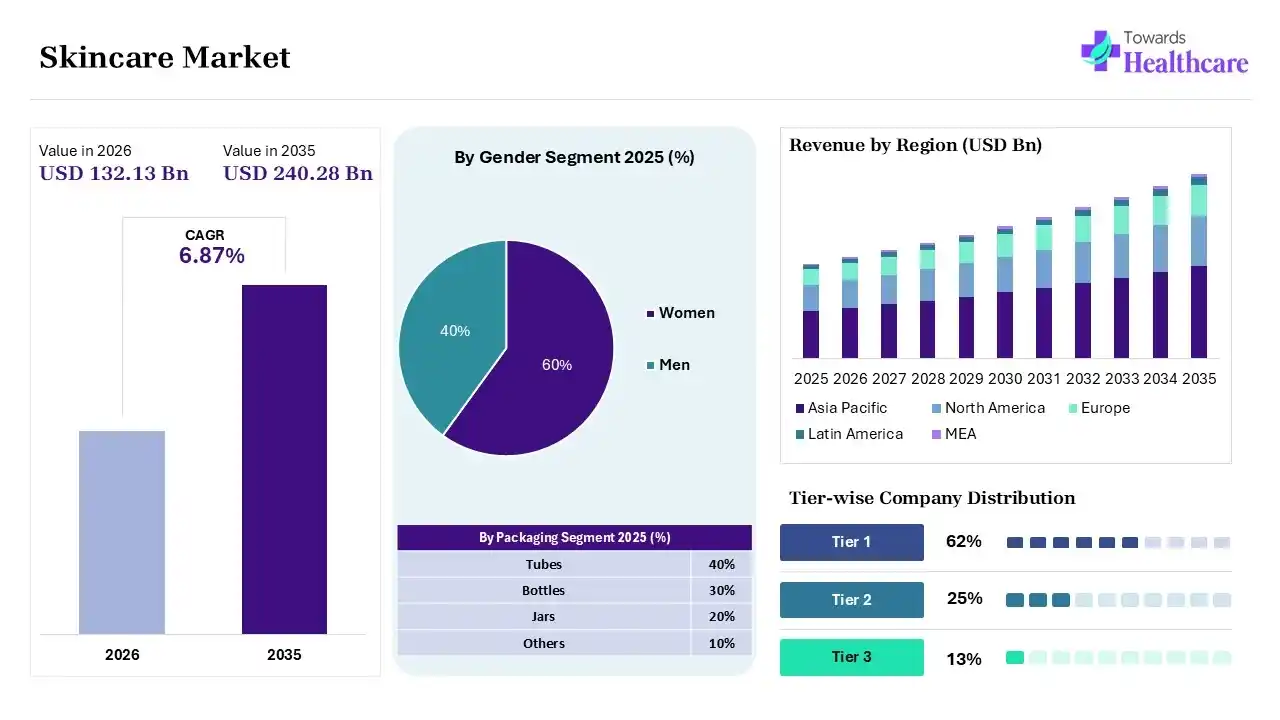
Whereas the AI in skincare market is forecast to grow from USD 4.92 billion in 2025 to USD 27.41 billion by 2035, registering a remarkable 18.74% CAGR, making AI one of the most disruptive technologies in modern beauty.
The Evolution from One-Size-Fits-All to Personalized Beauty
Traditional skincare products were developed around a broad range of demographic categories. Most common product labels included: oily skin, dry skin, anti-ageing, sensitive skin, brightening, & acne care. Despite being useful, these classifications miss many significant factors; let's consider two people with oily skin who may have completely different issues. Person A lives in humid Singapore, exercises every day, has acne scars, & sleeps 8 hours. On the other hand, Person B lives in New York, works night shifts, witnesses stress-induced breakouts, & uses retinol regularly. Based on these descriptions, both people need diverse formulations, & by recognizing this, brands have pushed towards hyper-personalized skincare routines.
What Does Personalized Skincare Actually Mean?
Primarily, the emergence of personalized skincare means designing recommendations or sometimes tailoring formulations according to multiple individual characteristics instead of skin type alone. Key factors are
- Skin Concerns: Acne, Hyperpigmentation, Fine lines, Rosacea, Dryness, Dehydration, Eczema, Large pores, Sensitivity, & Uneven tone.
- Lifestyle: Sleep Quality, Water intake, Diet, Smoking, Alcohol, Stress, Exercise frequency, Shift work, & Travel habits.
- Environment: UV exposure, Humidity, Pollution, Seasonal weather, & Altitude.
- Biological Factors: Age, Hormonal changes, Pregnancy, Menopause, Genetics, & Skin microbiome.
Market Statistics Supporting Personalized Skincare Across the World
Global Skincare Market
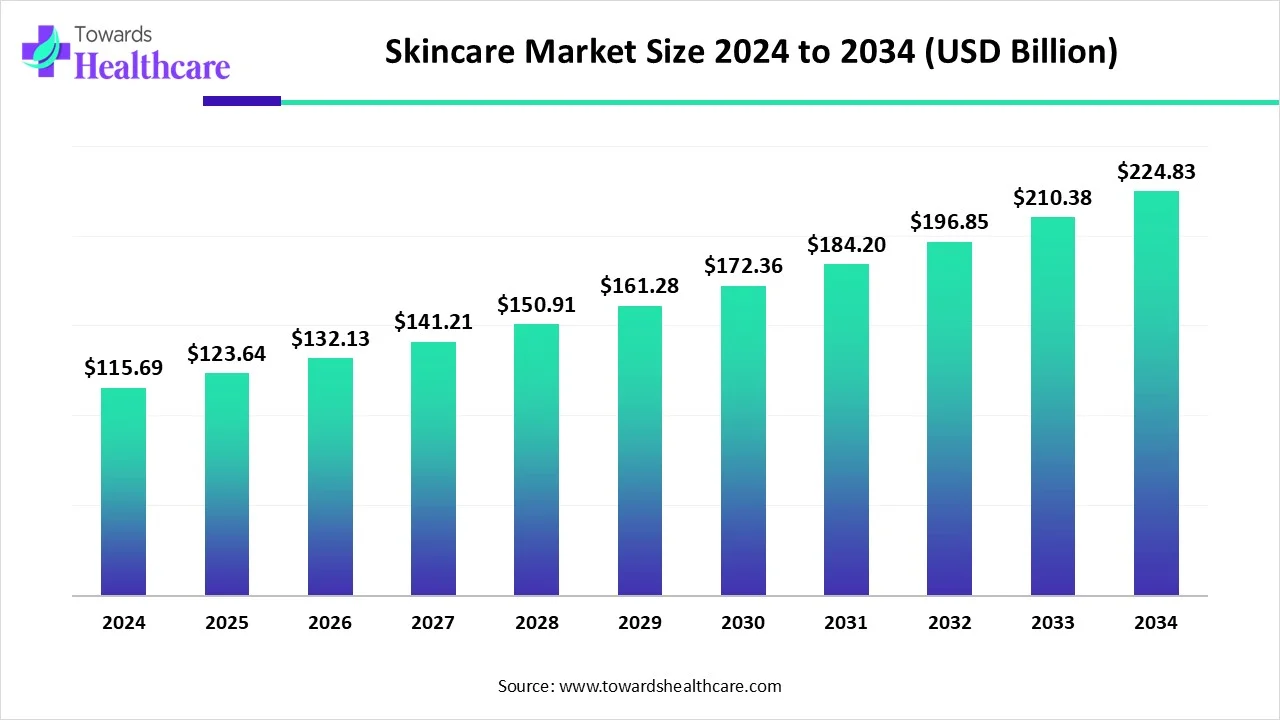
| Year | Market Size |
| 2025 | $123.64 Billion |
| 2026 | $132.13 Billion |
| 2035 | $240.28 Billion |
As per my analysis, the global skincare market is expected to show rapid expansion at 6.87% CAGR during 2026-2035.
Personalized Skincare Products Market
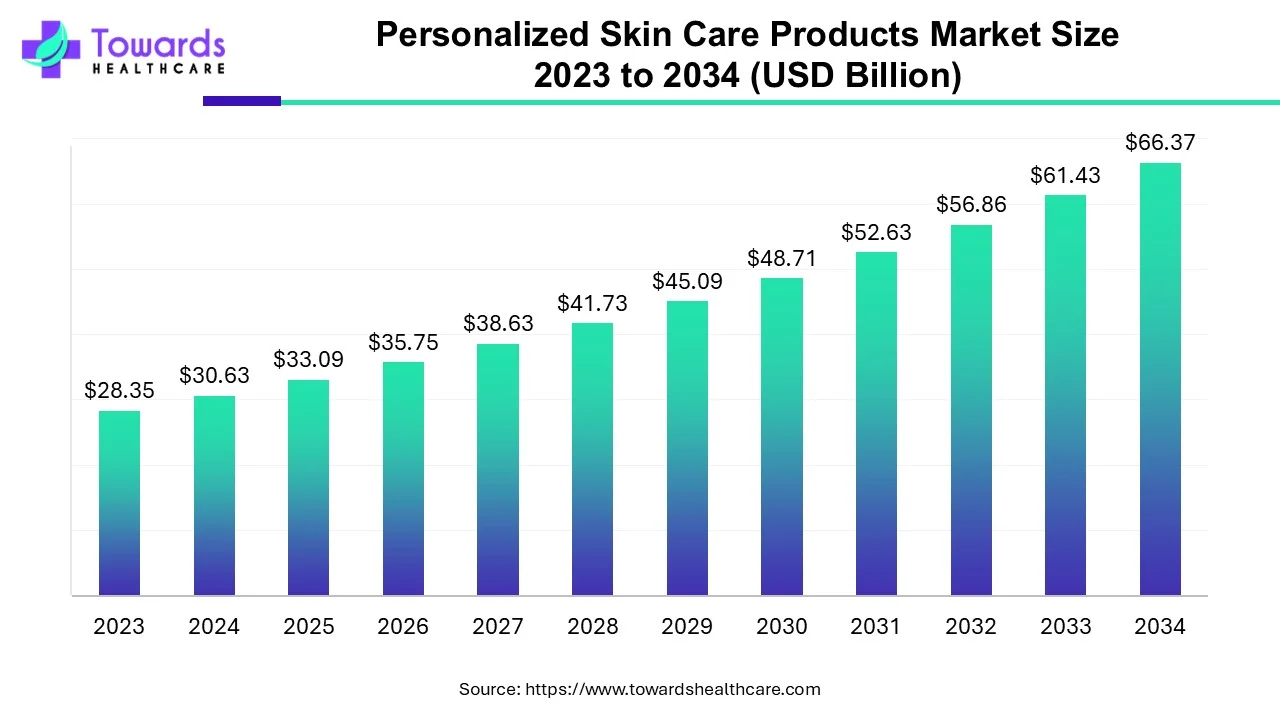
| Year | Market Size |
| 2024 | $30.63 Billion |
| 2025 | $33.09 Billion |
| 2034 | $66.37 Billion |
In the coming years, the market will expand fastest at 8.04% CAGR, & compared to traditional skincare, personalized skincare is growing nearly 17% faster than the overall industry.
AI in Skincare

| Year | Market Size |
| 2025 | $4.92 Billion |
| 2026 | $5.84 Billion |
| 2035 | $ 27.41 Billion |
As per analysis, the AI skincare industry will expand at a 18.74% CAGR during the forecast period, & this represents that AI is becoming one of the fastest-growing technology segments within beauty.
Why Consumers Want Personalized Skincare?
There are several major drivers & behavioral changes fuels the demand for personalized skincare.
Better Ingredient Awareness: Nowadays, consumers are highly aware of ingredients, including niacinamide, ceramides, retinol, peptides, hyaluronic acid, vitamin C, salicylic acid, & azelaic acid. Regardless of buying brands, consumers are now comparing ingredients' efficacy.
Surge of Social Media Education: In 2026, there are many platforms, like TikTok, Instagram, Reddit, & YouTube, that have modified skincare education globally. So nowadays, consumers regularly check for ingredient interactions, product layering, dermatologists' recommendations, clinical evidence, & before-and-after results. Eventually, this has been raising demand for tailored routines instead of generic regimens.
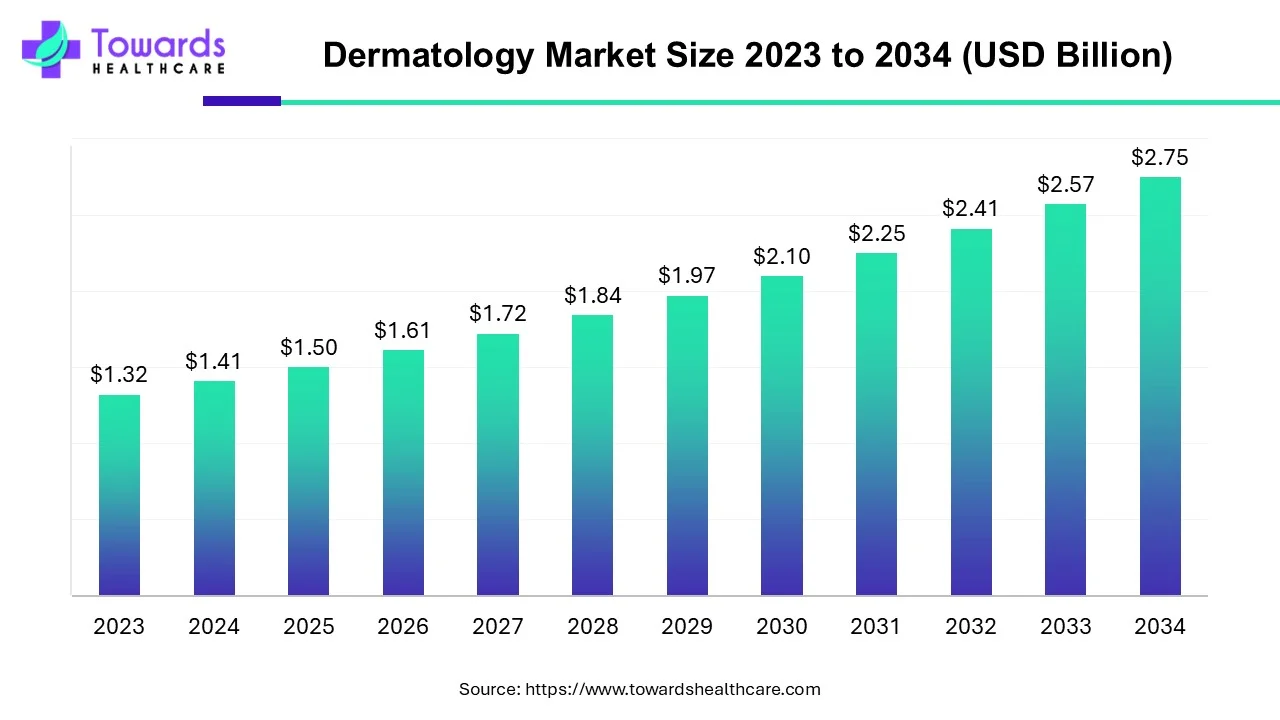
Progression of Teledermatology: Currently, virtual consultations have made expert skincare advice more accessible. The global dermatology market, valued at USD 1.51 billion in 2025, & is estimated to reach USD 2.95 billion by 2035. This is mainly propelled by rising skin disorders & massive demand for healthy, youthful skin. However, digital dermatology plays a pivotal role in encouraging consumers to look for more customized product recommendations.
Increased Expectations from Beauty Brands: Day by day, consumers are highly expecting brands to recognize their skin, track progress, recommend products dynamically, offer educational content, and adjust routines over time. Personalization has become part of the consumer experience & not just the product itself.
Major Skin Concerns Driving Personalization
- Acne: It is known as one of the most common concerns worldwide. Tailored solutions change depending on hormonal acne, adult acne, teen acne, maskne, acne scars, & inflammatory acne.
- Hyperpigmentation: Personalized recommendations are based on melasma, post-inflammatory pigmentation, sun damage, & ethnic skin differences.
- Ageing: Gradually, consumers are widely seeking customized anti-ageing strategies based on wrinkle depth, elasticity, UV exposure, collagen loss, and lifestyle.
- Sensitive Skin: Current recommendations frequently exclude fragrance, alcohol, essential oils, & strong exfoliants, instead of focusing on barrier repair ingredients.
- 2026 is an era where brands are considering lifestyle factors & highly asking about daily stress, sleep duration, indoor versus outdoor work, exercise frequency, screen exposure, air travel, climate, dietary habits, & water consumption. These variables are increasingly influencing product recommendations & routines.
How is AI Changing Personalized Skincare?
The widespread exploration of AI solutions is impacting skincare as the backbone of next-generation customization. Major applications of AI algorithms cover facial skin analysis, including wrinkles, redness, texture, pigmentation, oil levels, & acne severity, by employing smartphone images. AI also supports recommending product matching depending on numerous skin profiles & ingredient databases. Besides this, AI solutions foster routine optimization according to seasonal changes, product efficiency, user feedback, & skin improvements. The use of machine learning offers prediction of prospective concerns before they appear. This includes early wrinkle formation, moisture loss, & pigmentation risks.
Leading Brands Personalizing Skincare by Skin Concern & Lifestyle
| Lifestyle | Skin Concern |
| Proven Skincare |
A brand designs personalized skincare formulas utilizing comprehensive consumer questionnaires integrated with AI-powered ingredient selection. They also emphasize age, environment, lifestyle, hormonal factors, sleep, stress, & individual skin issues to recommend precision routines. This brand is widely aimed at highly tailored daily regimens, such as anti-ageing, hyperpigmentation, & sensitive skin. It reported an estimated $210 million in revenue for the financial year 2025. |
| Curology |
The brand is mainly focusing on acne treatment & it has broadened into expansive skincare personalization through licensed dermatology providers. However, customers are receiving prescription-strength formulations based on skin evaluations & continuous progress monitoring. Curology is best for acne, hormonal breakouts, prescription skincare, & long-term treatment plans. Curology's total revenue for 2025 ranged from $200 million to $250 million. |
| Skin + Me |
A subscription-based platform facilitates tailored formulations created with dermatology expertise. Moreover, consumers complete detailed questionnaires & upload photos to gain precision active ingredients adapted over time. The respective brand is highly suitable for ageing skin, acne, hyperpigmentation, & maintenance routines. It has an estimated annual revenue ranging from $23.9 million to $47.3 million in 2025. |
| Function of Beauty (Skincare) |
It is popular for haircare personalization, & also enables customers to develop tailored routines aligned with individual skin goals & lifestyle preferences. It is prominently favourable for personalized formulation, daily skin routines, & ingredient customization. |
| Atolla |
Its offerings include a combination of skin assessments with data-driven recommendations. Also, it has been adjusting serum formulations based on changing skin conditions, with an emphasis on hydration, barrier repair, & acne management. Atolla is best for sensitive skin, seasonal adjustments, & hydration-focused care. |
| Skin Authority |
This mixes professional skincare expertise with customized consultations & targeted treatment strategies, pursuing issues like ageing, inflammation, & environmental damage. This is hugely suitable for professional-grade skincare, lifestyle-focused routines, & clinical skincare solutions. |
Market Share by Personalization Approach (Illustrative Industry View)
- Skin concern questionnaires: 32%
- AI-powered facial analysis: 24%
- Dermatologist-guided recommendations: 18%
- Ingredient customization: 15%
- DNA & microbiome testing: 6%
- Lifestyle & environmental profiling: 5%
These projections indicate how digital questionnaires & AI currently hold the dominant share of tailoring plans, while advanced genetic & microbiome approaches remain developing niches.
Regional Trends in Personalized Skincare
North America
The region registered dominance in the market because of higher digital adoption, high-end skincare expenditure, & broader availability of dermatologist-powered subscription services.
Europe
Many European consumers are highly prioritizing sustainable, science-led formulations & regulatory visibility, which supports demand for tailored skincare.
Asia-Pacific
Being the fastest-growing region, fueled by beauty-conscious users, modern beauty technology ecosystems, & robust digital engagement in nations like South Korea, Japan, & China.
Latin America
Notable growth of the region is strengthened by widening e-commerce, accelerating skincare awareness, & increasing disposable incomes.
Middle East & Africa
The region is witnessing lucrative growth as demand surges, with high-value products becoming more accessible through online retail & international brand progression.
Glimpse of Personalized Skincare Industry Across South Korea
The widespread demand for tailored skincare in South Korea is primarily propelled by tech-savvy consumers, AI diagnostic tools, & higher demand for precision care. Whereas South Korean trends are promoting advanced tools, such as Olive Young's AI Skin Scan and Amorepacific’s real-time sensor patches that map skin health immediately, while SmartSKN's K-OWN develop tailored products at the point of sale. In addition, South Korean brands are bolstering smart home devices, including the incorporation of LED therapy & microcurrents customized to individual diagnostic data. Furthermore, the trend is transitioning towards precision formulations targeting individual skin flora, employing fermented endemic botanicals & targeted postbiotics.
Key 5 South Korean brands focused on AI diagnostics & custom formulations:
- CUSTOM.ME: An innovator of 1:1 hyper-personalized beauty leveraging AI mobile skin analysis & lifestyle data to freshly dispense tailored essences on-site at flagship lounges.
- Laneige: A brand renowned for modern water sciences & interactive digital skin-mapping tools on their platform, coupled with personalized offline mixing stations at their Seoul flagship store for targeted hydration routines.
- Innisfree: A popular brand for their ‘My Daily Dose’ custom serum blending system, where users mix active booster ampoules based on daily environmental & personal skin changes.
- IOPE: They use clinical bio-science tracking to facilitate tailored high-performance corrective serums derived from consumer skin profiling.
- DR. Jart+: A brand that integrates dermatological lab diagnostics with modular, tailor-built layering lines to treat fluctuating reactive or compromised skin barriers.
Personalized Skincare & the Skin Repair Opportunity
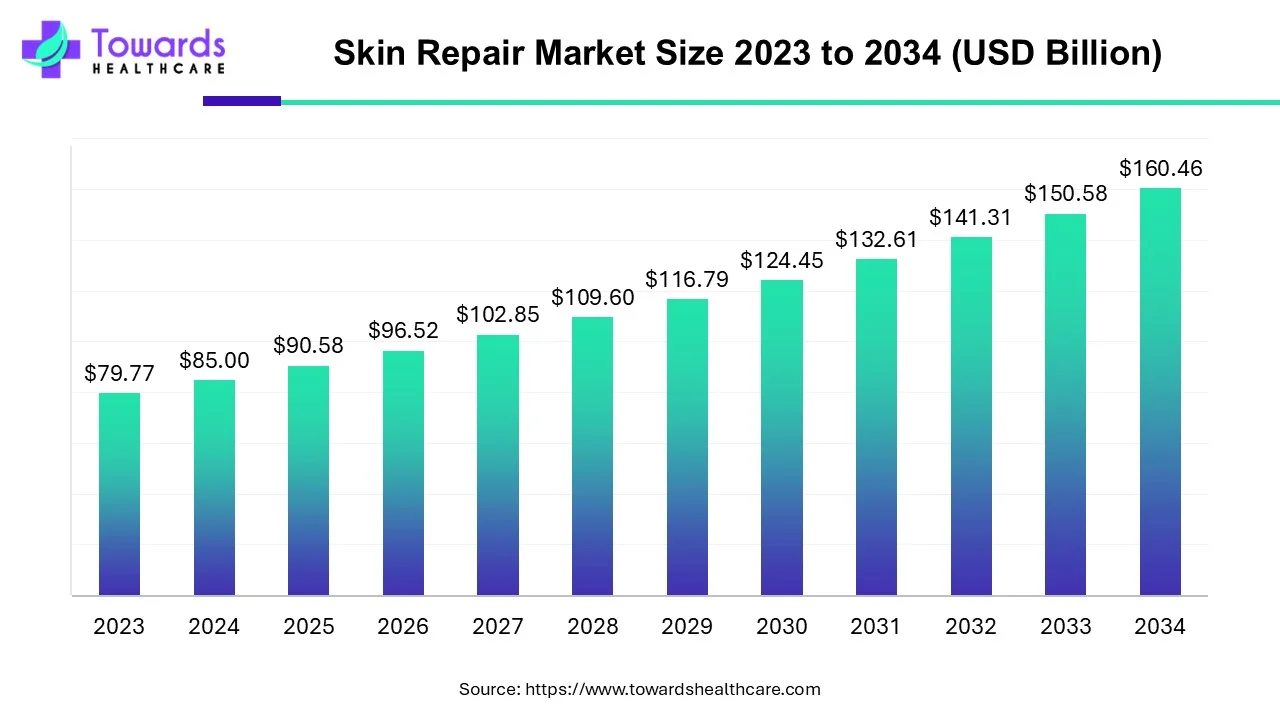
The global skin repair market, valued at $90.58 billion in 2025, is predicted to reach $160.46 billion by 2034. This primarily highlights growing demand for products that assist skin barrier recovery, wound healing, & regeneration. Apart from this, personalized skincare is highly incorporating barrier repair plans by matching ingredients, like ceramides, panthenol, & peptides, to individual skin requirements rather than recommending universal solutions.
Emerging Technologies Shaping the Next-Generation of Personalized Skincare
Future innovation is reinforcing beyond AI-enabled quizzes & photo analysis, coupled with the next effort projected to comprise skin microbiome profiling to recommend products that help beneficial bacteria. Also, implement wearable skin sensors that monitor hydration, UV exposure, & environmental stress in real-time, & genomic testing to find predisposition to pigmentation, collagen loss, or sensitivity. Whereas smart mirrors will offer daily skin assessments & routine suggestions, while connected skincare devices are unified with mobile applications for continuous monitoring. Furthermore, the latest predictive analytics are anticipating seasonal changes & recommending preventive skincare adaptations. With the inclusion of these technologies, personalization is likely to become more spectacular, transitioning from one-time evaluations to consistently improved skincare routines.
Diverse Technologies Used in 2026 to Bolster Personalized Skincare & Analysis
| Diagnostics & Data Tools | |
| AI Face Scans | The adoption of smartphone apps is mapping the face to record hydration, wrinkles, & pigmentation from a quick photo. |
| Smart Mirrors | These devices are scanning skin texture & UV exposure in real-time to update daily routines. |
| DNA & Microbiome Swabs | These lab tests spur the analysis of genetic traits & skin bacteria to recommend precise, biologically active ingredients. |
| Delivery & Treatment Devices | |
| Smart Skincare Tools | The emergence of handheld gadgets syncing with phones to adjust vibration, microcurrents, or thermal output based on live skin data. |
| Wearable Patches | The adoption of micro-needling or slow-release patches is delivering active ingredients precisely over time. |
| Modular Manufacturing | Advanced scalable systems blend custom concentrations of active ingredients to meet individual profile reports. |
Challenges Facing Personalized Skincare Brands
Regardless of robust momentum, many hurdles remain across these brands, such as protecting consumer data & ensuring privacy for AI-powered evaluations. Also, brands are going through limitations, like demonstrating clinical efficacy of tailored formulations through strong research, & balancing personalization with production effectiveness & scalability. Another obstacle includes educating consumers about realistic treatment timelines & expected outcomes. However, navigating varying regulatory guidelines for cosmetic & dermatology-related claims across global markets is also impacting the brand's position. Alongside, addressing these challenges will be crucial for maintaining consumer trust & sustaining long-term expansion.
Recent Funding & Collaborations Across the Skincare Industry in 2026
In June 2026, Haut.AI collaborated with OLAY, a Procter & Gamble (P&G) brand, to launch an innovative Virtual Companion technology within the OLAY Skin Advisor experience.
In June 2026, Korean beauty and skincare startup KorinMi raised ₹10 crore from Lotus Herbals’ innovation fund to foster clinic progression and speed up growth of its direct-to-consumer skincare business in India.
In June 2026, Park Ha Biological joined with Star Plus Action to establish AI-enabled skincare and wellness services, with the first product already unveiled & additional AI solutions planned across its retail and customer service network.
In April 2026, Life Biosciences secured an $80 million Series D round, which will fund the completion of a recently begun Phase I clinical trial of a gene therapy developed to restore old, damaged cells to a younger, healthier state.
In March 2026, Beiersdorf raised its second-generation Skin Care Innovation Fund with €100 million to emphasize investments and strategic collaborations with innovating startups in life sciences, sustainability, AI, & digital health at the intersection of skincare.
In March 2026, Stratum Biosciences closed a $2M seed funding round led by the Harvard Business School Alumni Angels of Greater New York and Skin Angels to boost the company's proprietary AI-driven skin biology discovery platform, mining over 200,000 real skin samples for innovative insights & translating findings into expedited product development.
In March 2026, Health-E Commerce broadened its telehealth collaboration with Wisp to evolve prescription treatment for hormonal acne & migraine relief.
In January 2026, Perfect Corp. partnered with PHOENIX Pharma Italia Group to expand access to AI-driven skin analysis & tailored product recommendation experience.
Latest Launches in Skincare & Digital Technologies for Skin Disorders in 2026
In July 2026, Haut.AI unveiled its new Body Analysis platform, a first-of-its-kind AI-powered body skin analysis technology, to assist beauty and wellness brands in delivering personalized, data-driven bodycare experiences for beauty consumers at scale.
In July 2026, BYOSOM, the biotechnology-driven skincare brand redefining personalization through genetics, rolled out a novel generation of skincare formulated from each customer's unique DNA. BYOSOM shifts beyond skin-type assessments to design personalized skincare helping how each individual's skin functions, ages, and responds to environmental factors.
In July 2026, KINS Clinic unveiled KINS BioRevive Gel Mask, a rinse-off gel mask formulated for acne-prone and sensitive skin, reinforced by SmartArrow, a patented precision microbiome ingredient developed by ArrowBiome Pte. Ltd.
In July 2026, L’Oréal Paris launched Revitalift Melasyl Dark Spot Creamy-Serum, a new formulation to visibly correct dark spots, enhance skin tone uniformity and smooth wrinkles.
In July 2026, OZiva introduced its Acne Spot Corrector, a plant-based acne care product leveraging plant-derived active ingredients to act on active acne within 24 hours without drying the skin or affecting the skin barrier.
In July 2026, NUVÉE Skin Lab officially unveiled its AI-powered skincare brand to personal care by providing highly customized, dual-action day and night serums tailored to the specific biological needs of individual consumers.
In June 2026, Glenmark rolled out Winlevi for acne vulgaris across European markets & expanding availability of clascoterone cream for adults and adolescents in Europe.
In June 2026, Clear Health launched Isoclear, the first prescription topical acne treatment created around isotretinoin, the same active ingredient used in oral Accutane - delivered through a multi-phase regimen.
In May 2026, PCCA unveiled ExoBlue, a modern cosmetic topical base to comply with the rising demand for more unified, tailored skincare solutions, to assist the appearance of healthy-looking skin.
In March 2026, O Boticário unifies genetics into the skincare journey & introduced an unprecedented partnership with Genera to personalize skin care, coupled with connecting DNA analysis to product recommendations from the Botik line & strengthened the brand’s strategy of using science and technology to guide skincare choices.
In February 2026, Revieve introduced a real-time augmented reality capability that revolutionizes digital skin analysis into an interactive experience, enabling consumers to view skin concerns live and supporting brands to deliver more engaging, personalised skin care journeys.
In February 2026, British brand LYMA launched an innovative digital platform to support users in monitoring and managing their at-home anti-ageing treatments employing artificial intelligence and personalised guidance.
Compare Acne & Eczema Cases Across the Globe & U.S. Per Year and the Role of Personalized Skincare
| Skin Concern | Cases in the World (Approx.) | Cases in the U.S. (Approx.) |
| Acne | 239 million | 50 million |
| Eczema | 223 million | 31.6 million |
The above statistics indicate the number of cases of acne & eczema across the globe & the U.S. per year. Whereas in acne instances, tailored skincare approaches, like custom formulas, enable adjustment of active strengths to meet individual oil production & lower irritation. Besides this, in acne concerns, users use customized cleansers & non-comedogenic moisturizers buffer and mitigate dryness resulting from aggressive prescription acne drugs.
On the other hand, in eczema cases, the use of custom lipid-rich & ceramide-led formulations pushes the repair of the compromised stratum corneum specific to each eczema patient. However, next-generation tailored topicals factor in local skin flora & Staphylococcus levels, spurring the prevention of inflammatory flares.
Future Outlook
The global personalized skincare market has been moving towards adoption of various kinds of technologies, like advanced AI algorithms to assess images, environmental factors, & biological data to establish dynamic skincare routines. Eventually, breakthroughs will launch devices to conduct skin analysis via multispectral sensors & deliver a precisely metered, freshly mixed dose of serum or moisturizer customized to that day’s accurate necessities. Implementation of Skintelligence will assist in tracking precise metrics, including lipid barrier density, sebum oxidation levels, sub-surface pigmentation, & microbiome health. Future era will introduce nanotechnology & innovative active ingredients, enabling formulas to safely dispense molecules, such as retinoids & targeted peptides directly to the cellular layer. Advanced custom skincare apps show cross-reference wearable health data & localized environmental data to modify product recommendations on the fly. Furthermore, the industry will step toward DNA-sequencing & microbiome swabbing to design preventive, lifelong skincare roadmaps.
Conclusion
Globally surging prevalence of skin issues, like acne, hyperpigmentation, eczema, etc., drives the demand for novel personalized routine skincare solutions. Alongside, several lifestyle & environmental factors, like pollution exposure, sleep quality, diet habits, exercise frequency, shift factors, etc., along with biological factors, such as age, genetics, hormonal changes, menopause, and pregnancy, are fueling demand for custom formulations to resolve arising skin concerns. Along with broader user awareness, leading brands, especially Proven Skincare, Curology, & Atolla, are widely executing new tailored skincare approaches, with AI-driven diagnostic tools & platforms. Alongside, the prospective era will focus on the development of smart mirrors, connected skincare devices, predictive analytics and many more modern diagnosis & analysis platforms to raise the detection of skin issues before they become visible.