


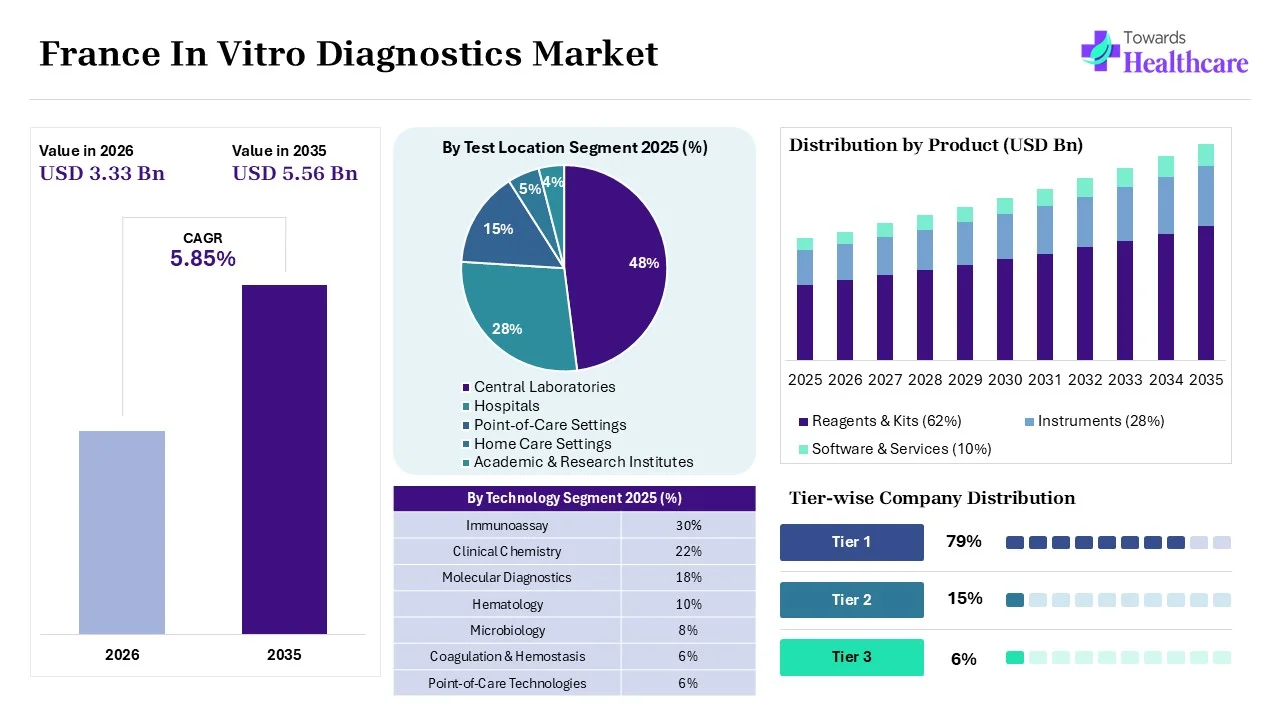
The France in vitro diagnostics market size was estimated at USD 3.15 billion in 2025 and is predicted to increase from USD 3.33 billion in 2026 to approximately USD 5.56 billion by 2035, expanding at a CAGR of 5.85% from 2026 to 2035. A growing aging population, increasing chronic disease burden, rising demand for rapid point-of-care testing kits, increasing health awareness, shift towards personalized medicines, and technological advancements are promoting the market growth.
The France in vitro diagnostics refers to the development, manufacturing, and distribution of diagnostic tests and tools for the diagnosis, monitoring, and treatment of diseases across France. These tests utilize a wide range of biological samples, which include blood, saliva, urine, and tissue. These diagnostics help in the diagnosis of infectious diseases, diabetes, cardiovascular diseases, genetic testing, and cancer.
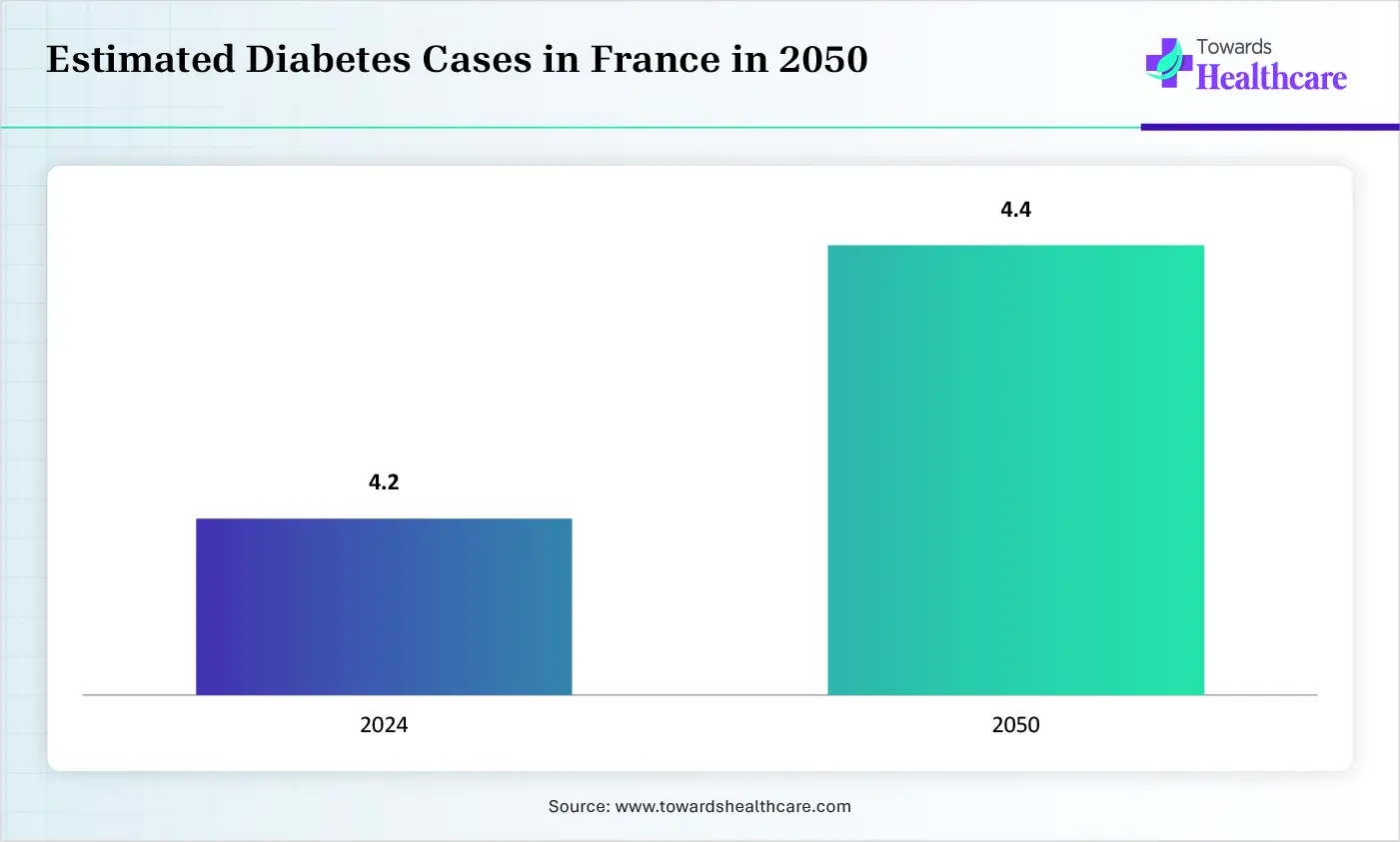
The graph represents a comparison between the diabetes cases in France for the years 2025 and 2050. It indicates that there will be a rise in diabetes cases, which will drive the demand for various diabetes detection and glucose monitoring devices. This, in turn, will increase the adoption of in vitro diagnostic products for the accurate diagnosis and effective management of diabetes, which will ultimately promote market growth.
By product type, the reagents & kits segment accounted for the highest revenue share of 62% of the France in vitro diagnostics market in 2025, due to growth in the volume of diagnostic tests. The rise in the screening programs also increased their frequent demand. Expansion of the immunoassays and microbiology assays also increased their use.
By technology type, the immunoassay segment held a major revenue share of 30% of the France in vitro diagnostics market in 2025, driven by its high sensitivity and specificity. Their fastest and most accurate results also increased their demand. Additionally, they were also used for the detection of a wide range of chronic diseases.
By application type, the infectious diseases segment held the largest revenue share of 26% of the France in vitro diagnostics market in 2025, due to growth in the demand for early disease diagnostics. A rise in government initiatives also increased the adoption of various in vitro diagnostics. Expansion of the point-of-care testing and multiplex testing also increased their use in multiple infectious disease detection.
By test location type, the central laboratories segment contributed the biggest revenue share of 48% of the France in vitro diagnostics market in 2025, driven by their affordable diagnostic tests. Their advanced infrastructure and skilled professionals also increased their use. The presence of advanced diagnostics and standardized procedures also increased their demand.
By end user, the hospitals segment led the France in vitro diagnostics market with a 38% share in 2025, due to the large patient volume. Growth in complex surgeries and a rise in chronic disease burden also increased their preference. This increased the use of in vitro diagnostics for routine screening and treatment management.
The France in vitro diagnostics market held a significant share and is expected to show lucrative growth during the predicted time, due to the expanding healthcare sector and increasing disease incidence. Growing demand for personalized medicine and point-of-care testing solutions is also increasing their adoption rates. Increasing investments are also driving the development of advanced in vitro diagnostics, which is enhancing the market growth.
bioMérieux SA registered dominance over the market with its BIOFIRE Panel, VIDAS Assays, VITEK Cards, and Bac T/Alert Blood Culture Bottles, where F. Hoffmann-La Roche Ltd was its closest competitor, which offered Cobas PCR Kits, Cedex Kits, Elecsys Kits, and Accu-Check. Abbott Laboratories also sustained its position by providing Panbio Kits, Alinity i/c Reagents, i-STAT Cartridges, and Architect Assays, where Siemens Healthineers AG also contributed to the market growth with its Advia Kits, Novus Strips, Atellica IM/CH Reagents, and Enlite/Dimension Packs.
By Product
By Technology
By Application
By Test Location
By End User


