Increasing outsourcing trends, a surge in the demand for biologics, growing chronic disease burden, rising R&D activities, increasing advancements in biosimilars, expanding healthcare investments, growing strategic partnerships, and technological innovations are promoting the market growth.
Market at a Glance: Inside the U.S. Antibody Contract Manufacturing Market Bloom
The antibody contract manufacturing refers to the process where companies outsource antibodies to the specialised third-party manufacturers for their development and large-scale production. They offer affordable manufacturing facilities, advanced technologies, expertise, and accelerated product development and commercialization. This drives their use for the development of cancer therapies, personalized medicines, and biosimilars, where they are also used for autoimmune diseases, infectious diseases, and diagnostic applications.
Global Market Growth
The global antibody contract manufacturing market size was estimated at USD 18.6 billion in 2025 and is predicted to increase from USD 20.4 billion in 2026 to approximately USD 46.94 billion by 2035, expanding at a CAGR of 9.7% from 2026 to 2035.
Forecasting the Future: Unlocking the U.S. Antibody Contract Manufacturing Growth Trajectory
- Growing outsourcing trends in the U.S. to reduce costs and production complexities are driving the demand for antibody contract manufacturing services.
- Increasing demand for biologics is also increasing the adoption of these services.
- Expansion in the monoclonal antibodies and biosimilar production is also increasing their use.
- A growth in the demand for personalized and precision medicine is also promoting the adoption of these services.
- Increasing strategic collaborations and government investments are also propelling the adoption of antibody contract manufacturing services.
- Expanding antibody and technological innovations are also driving their adoption rates.
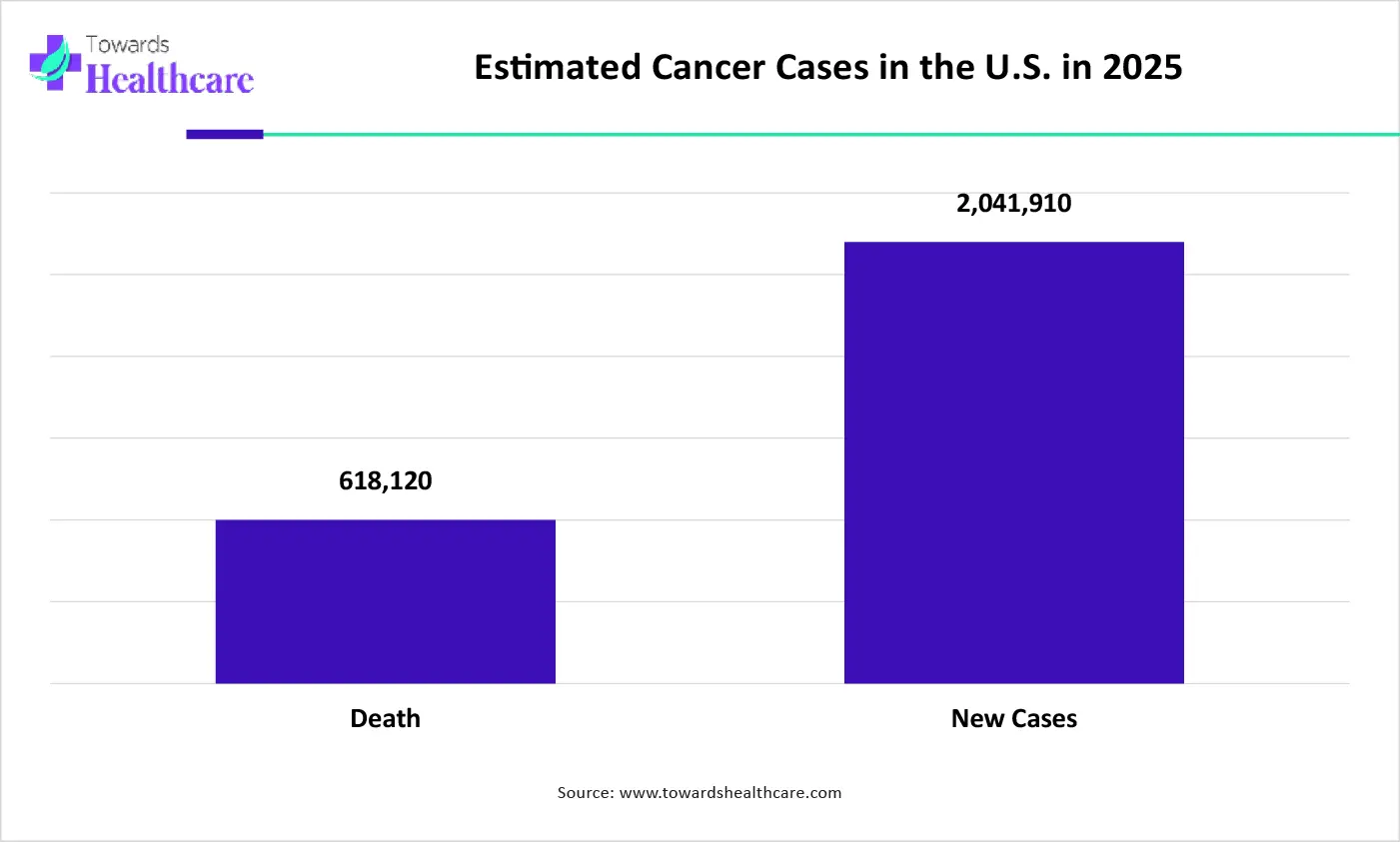
The graph represents the estimated number of cancer cases and deaths in the U.S. for the year 2026. It indicates that there will be a rise in cancer burden, which will drive the demand for effective treatment options. This, in turn, will increase the adoption of antibody contract manufacturing services to reduce the growing cancer burden by developing new antibody therapies, which will ultimately promote the market growth.
Market Segmentation Overview
- By service type, the upstream processing segment accounted for the highest revenue share of 24% of the U.S. antibody contract manufacturing market in 2025, as it is essential for cell line development and growth. The expertise and enhanced quality production also attracted the clients. Their large-scale commercial production also increased their use.
- By antibody type, the monoclonal antibodies (mAbs) segment held a major revenue share of 62% of the U.S. antibody contract manufacturing market in 2025, driven by their enhanced therapeutic success and wide range of applications. Growth in the pipeline also promoted their development and clinical trials. Their high specificity and safety profile also increased their use in the development of various biologics.
- By expression system type, the mammalian systems segment contributed the biggest revenue share of 68% of the U.S. antibody contract manufacturing market in 2025, due to the development of antibodies with the correct structure and biological activity. They also offered human-like post-translational modification, which increased their adoption. They also ensured product stability, quality, and reduced immunogenicity, which promoted their use.
- By scale of operation type, the commercial scale segment held the largest revenue share of 45% of the U.S. antibody contract manufacturing market in 2025 and is expected to gain the highest share with a CAGR of 10.5% during the forecast period, due to growth in the adoption of approved antibody therapies. A rise in the demand for biologics also increased their use. Additionally, their established manufacturing processes and regulatory support also increased their adoption rates.
Regional Analysis
The U.S antibody contract manufacturing market held 30% share in 2025 and is expected to show notable growth during the forecast period, due to the presence of robust biotech and pharmaceutical companies. The growth in R&D investments and the biologics pipeline also increased their outsourcing trends, driving the use of antibody contract manufacturing services. Their advanced manufacturing infrastructure, regulatory compliance, and advanced technologies are also increasing their collaboration, which is enhancing the market growth.
Industry Titans: Unveiling the Leaders in the U.S. Market
Thermo Fisher Scientific (Patheon) held the dominant position in the market with its end-to-end Accelerator drug development platform, where Lonza Group was its closest contender with its ADC platform and expertise in complex biologics. Catalent, Inc. also held its position by offering GPEx Lightning cell line technology and SMARTag ADC platform, where AbbVie Contract Manufacturing also contributed to the market growth with its commercial-grade facilities.
Segments Covered in the Report
By Service Type
- Cell Line Development
- Stable Cell Line Development
- Transient Expression Systems
- Upstream Processing
- Mammalian Cell Culture
- Microbial Expression Systems
- Downstream Processing
- Purification
- Filtration
- Chromatography
- Fill-Finish Services
- Aseptic Filling
- Lyophilization
- Analytical & Quality Control
- Bioanalytical Testing
- Stability Testing
- Regulatory Support
By Antibody Type
- Monoclonal Antibodies (mAbs)
- Murine
- Chimeric
- Humanized
- Fully Human
- Bispecific Antibodies
- Antibody-Drug Conjugates (ADCs)
- Polyclonal Antibodies
By Expression System
- Mammalian Systems
- CHO Cells
- HEK293 Cells
- NS0 Cells
- Microbial Systems
- Others
- Insect Cells
- Plant-Based Systems
By Scale of Operation
- Preclinical Scale
- Clinical Scale
- Phase I
- Phase II
- Phase III
- Commercial Scale
By End User
- Pharmaceutical Companies
- Biotechnology Companies
- Academic & Research Institutes
- Contract Research Organizations (CROs)
By Application
- Oncology
- Autoimmune Diseases
- Infectious Diseases
- Neurology
- Cardiovascular Diseases
- Others




