The growing shift towards patient-friendly and long-term treatment options, increasing health awareness, early hereditary angioedema (HAE) diagnosis, growing R&D activities, expanding healthcare, technological advancements, and government support are also promoting the market growth
Market Highlights: Uncovering the U.S. HAE Therapeutics Landscape
The hereditary angioedema therapeutics refer to the medication used to treat and prevent swelling attacks caused by excess bradykinin, which is driven by deficiency or dysfunction of C1 inhibitors. These therapeutics help in the treatment of acute swelling attacks, prevention of recurrent HAE attacks, management of airway swelling, prevention of complications, and support long-term disease control. They also support home-based treatments, personalized treatments, and reduced hospital visits and emergency admissions, enhancing quality of life.
Global Market Growth
The global hereditary angioedema therapeutics market size was estimated at USD 5.42 billion in 2025 and is predicted to increase from USD 5.89 billion in 2026 to approximately USD 12.55 billion by 2035, expanding at a CAGR of 8.76% from 2026 to 2035.
Forecasting Breakthroughs: The Future Opportunities in U.S. HAE Therapeutics
- The growing development of new oral therapies is increasing the adoption of the hereditary angioedema therapeutics across the U.S.
- Expanding advancements in gene therapies and personalized medicines are also increasing their use and driving new opportunities.
- Increasing focus on preventive therapies is also increasing their innovations.
- Growing health awareness is fueling the early diagnosis of hereditary angioedema, increasing the demand for its therapeutics.
- A rise in paediatric healthcare and growing reimbursement policies are also increasing their adoption and innovations.
- Expanding technological innovations and strategic collaborations are accelerating the development of advanced hereditary angioedema therapeutics.
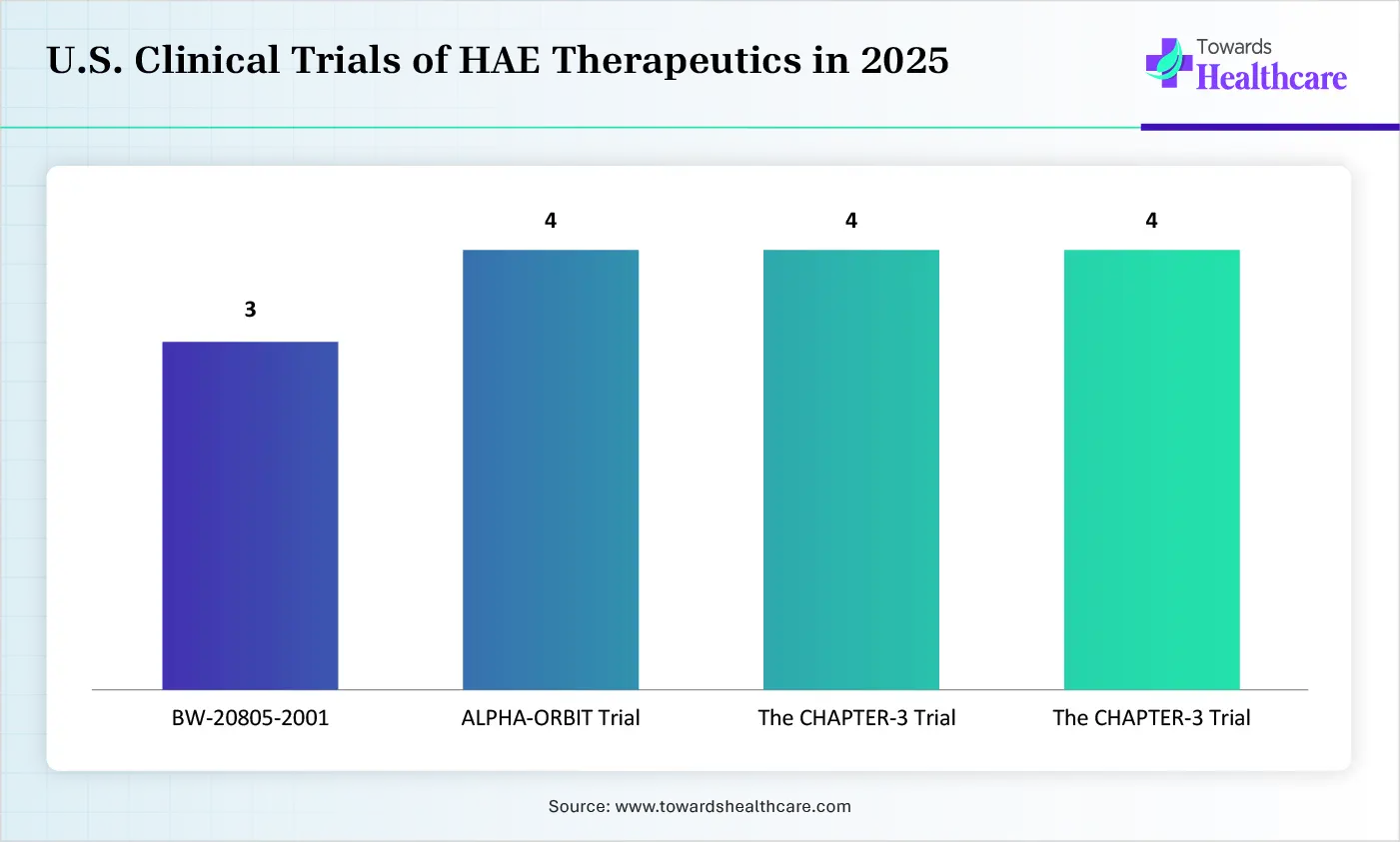
The graph represents the total number of hereditary angioedema therapeutics under clinical trials in the U.S. in the year 2025. It indicates that there will be a rise in the development of new HAE products, which will help in the treatment and prevention of HAE. This, in turn, will increase the adoption as well as innovations of hereditary angioedema therapeutics, which will ultimately promote the market growth.
Market Segmentation Overview
- By drug class type, the C1 esterase inhibitors segment accounted for the highest revenue share of 48% of the U.S. hereditary angioedema therapeutics market in 2025, due to their target-specific action. Their high effectiveness and enhanced safety profiles also increased their adoption rates. Their faster relief and self-administration approach also increased their long-term use.
- By route of administration type, the intravenous segment held a major revenue share of 46% of the U.S. hereditary angioedema therapeutics market in 2025, due to its immediate action and high bioavailability. Their widespread availability also increased their use for long-term prophylaxis. This increased their use in acute and life-threatening attacks.
- By treatment type, the prophylactic treatment segment contributed the biggest revenue share of 58% of the U.S. hereditary angioedema therapeutics market in 2025 and is expected to grow at the fastest CAGR of 9.90% during the forecast period, due to growth in the use of HAE therapeutics to reduce attack frequencies and improve quality of life. They were also used for the prevention of life-threatening attacks or their complications. Growth in health awareness and new drugs also increased their use.
- By distribution channel type, the hospital pharmacies segment held the largest revenue share of 52% of the U.S. hereditary angioedema therapeutics market in 2025, due to the presence of high-cost therapies and specialty biologics. The presence of injectable treatment options and reimbursement systems also attracted the patients. Skilled storage and handling of the products also increased their use during emergency conditions.
- By end user, the hospitals segment led the U.S. hereditary angioedema therapeutics market with 55% share in 2025, due to high patient volumes and the presence of skilled personnel. The presence of advanced therapies, orphan drugs, and injectables also increased their use. The well-established infrastructure also increased its use during complex cases or emergencies.
Regional Analysis
The U.S. hereditary angioedema therapeutics market held 32% share in 2025 and is expected to show notable growth during the forecast period, due to increased health awareness, which drives early hereditary angioedema diagnosis. The presence of advanced healthcare infrastructures and companies also increased their adoption and innovations. Additionally, favourable reimbursement policies, faster regulatory approvals, and high healthcare spending have also increased their growth opportunities, driving the market growth.
The Market Leaders: The Top Players Dominating the U.S. Market
The market was dominated by Takeda Pharmaceuticals with its Takhzyro, Firazyr, and Cinryze products, where CSL Behring was its closest competitor, providing Haegarda, Andembry, and Berinert. BioCryst Pharmaceuticals also sustained its position in the market with its Orladeyo product, where Pharming Group also contributed to the market growth with Ruconest.
Segments Covered in the Report
By Drug Class
- C1 Esterase Inhibitors
- Plasma-Derived C1-INH
- Recombinant C1-INH
- Kallikrein Inhibitors
- Monoclonal Antibodies
- Small Molecule Inhibitors
- Bradykinin B2 Receptor Antagonists
- Others
- Androgen Derivatives
- Antifibrinolytics
By Route of Administration
- Intravenous
- Subcutaneous
- Oral
By Treatment Type
- On-demand Treatment
- Prophylactic Treatment
- Short-term Prophylaxis
- Long-term Prophylaxis
By Distribution Channel
- Hospital Pharmacies
- Retail Pharmacies
- Online Pharmacies
By End User
- Hospitals
- Specialty Clinics
- Homecare Settings




