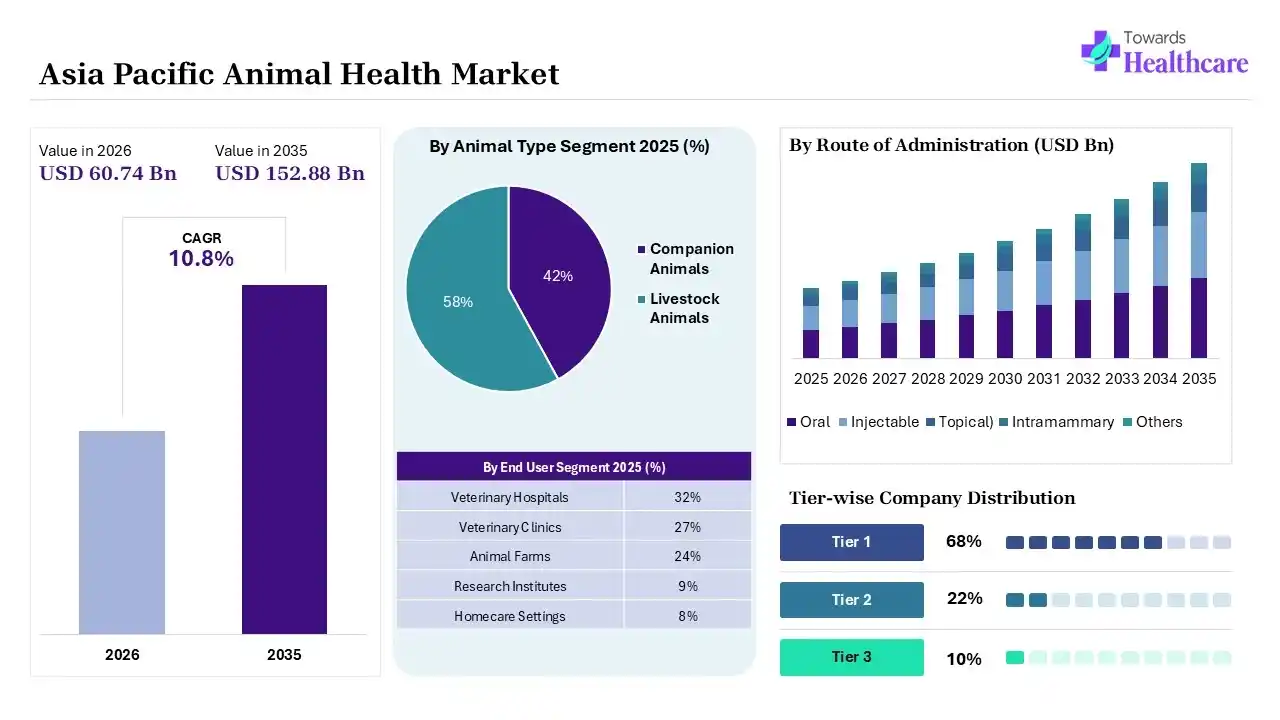
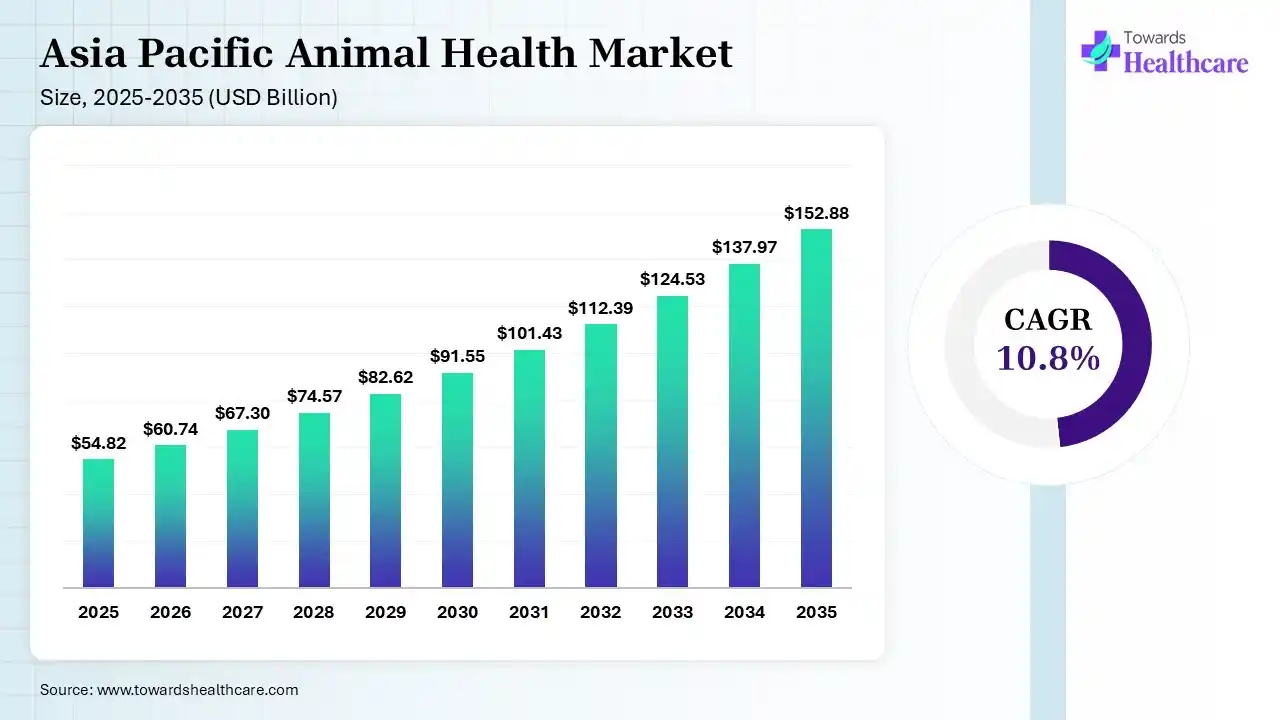
The Asia Pacific animal health market size was estimated at USD 54.82 billion in 2025 and is predicted to increase from USD 60.74 billion in 2026 to approximately USD 152.88 billion by 2035, expanding at a CAGR of 10.8% from 2026 to 2035. The Asia Pacific health market is experiencing significant growth driven by increasing demand for livestock products, rising companion animal adoption, and growing focus on animal disease prevention and veterinary care. Expanding investments in vaccines, pharmaceuticals, diagnostics, and advanced animal healthcare technologies are further supporting market expansion across major economies, including China, India, Japan, and Australia.
Animal Health refers to the prevention, diagnosis, and treatment of diseases in livestock and companion animals through vaccines, medicines, diagnostics, and nutritional care. The Asia Pacific animal health market is growing due to rising livestock production, increasing pet ownership, and greater awareness about animal disease prevention and food safety. Expanding demand for meat, dairy, and poultry products, along with government initiatives supporting veterinary pharmaceuticals, diagnostics, and animal nutrition, solutions are contributing to the rapid expansion of the regional animal health industry.
Artificial intelligence is transforming the market by improving disease detection, livestock monitoring, and veterinary diagnostics through real-time data analysis and predictive technologies. AI-powered solutions help farmers and veterinarians enhance animal productivity, reduce disease outbreaks, and optimize feed and treatment management. Increasing adoption of smart farming, wearable monitoring devices, and precision livestock technologies across countries such as China, Japan, and Australia is further accelerating market growth.
Porter’s Five Forces Analysis
Competitive Rivalry (High): Competition is strong. Global companies such as Zoetis, Boehringer Ingelheim, Elanco, Merck, and Virbac compete with regional manufacturers. Local firms often compete on price. Larger companies compete through broad portfolios, vaccines, diagnostics, and technology. AI-based diagnostics and digital veterinary tools are adding another layer of competition.
Threat of New Entrants (Moderate): Entry is possible in supplements, diagnostics, digital platforms, and niche products. However, veterinary medicines require regulatory approvals, testing, manufacturing standards, and distribution networks. These requirements make large-scale entry harder.
Supplier Power (Moderate): Producers depend on APIs, biological materials, packaging, and specialized equipment. Supply disruptions can raise costs. Local sourcing is increasing, but advanced biologics still rely on specialized suppliers.
Buyer Power (Moderate): Veterinary hospitals, farms, distributors, and pet owners have many product choices. Price matters, especially in livestock care. Yet trusted brands and proven treatments can reduce switching.
Threat of Substitutes (Low to Moderate): Preventive vaccines, diagnostics, and medicines have limited direct substitutes. Still, better farm hygiene, nutrition, biosecurity, and digital monitoring can reduce medicine use. Rising disease surveillance and preventive care continue supporting demand across the region.
| Table | Scope |
| Market Size in 2026 | USD 60.74 Billion |
| Projected Market Size in 2035 | USD 152.88 Billion |
| CAGR (2026 - 2035) | 10.8% |
| Historical Data | 2020 - 2023 |
| Base Year | 2025 |
| Forecast Period | 2026 - 2035 |
| Measurable Values | USD Millions/Units/Volume |
| Market Segmentation | By Product Type, By Animal Type, By Indication, By Route of Administration, By Distribution Channel, By End User, By region |
| Top Key Players | Hester Biosciences, Indian Immunologicals Limited (IIL), Intas Pharmaceuticals, CAVAC (Cambodia Animal Vaccine Company), Vetoquinol Asia (regional operations), Meiji Animal Health (Meiji Holdings Group) |
| Segment | Share 2025 (%) |
| Pharmaceuticals | 39% |
| Feed Additives | 24% |
| Diagnostics | 14% |
| Medical Devices | 9% |
| Veterinary Services | 14% |
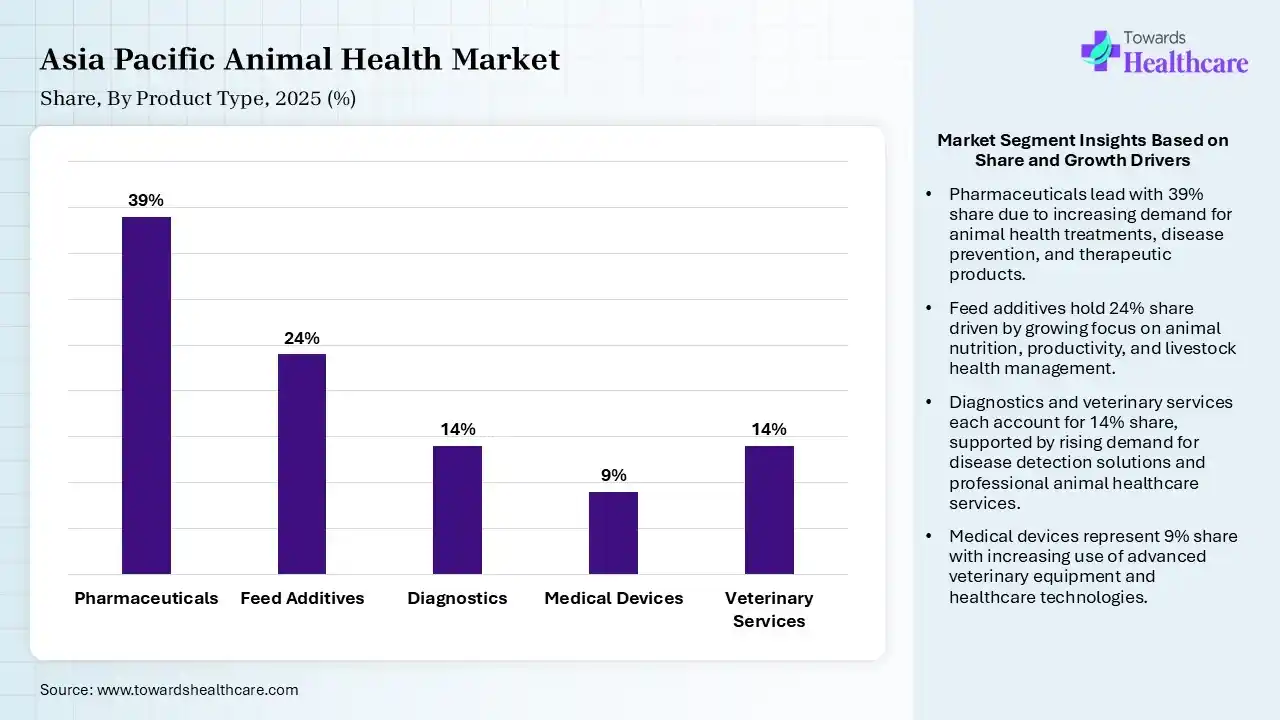
The Pharmaceuticals Segment Dominated the Asia Pacific Animal Health Market in 2025
The pharmaceuticals segment held a dominant share of 39% in 2025 due to the high demand for anti-infectives, antiparasitic drugs, vaccines, and medicated feed additives used in livestock and companion animal care. The increasing prevalence of animal diseases, growing focus on preventive healthcare, and the rising livestock production across countries such as China and India are further driving pharmaceutical adoption. Continuous advancements in veterinary drug development and expanding veterinary healthcare access also contribute significantly to segment growth.
The feed additives segment held the second-largest share of 24% in 2025 and is expected to grow at the fastest CAGR of 9.82% in the market during the forecast period due to its crucial role in improving animal growth, immunity, and feed efficiency. Rising demand for high-quality meat, dairy, and poultry products is driving the use of vitamins, amino acids, enzymes, and other products. Additionally, growing focus on disease prevention, reduced antibiotic use, and enhanced livestock productivity across intensive farming systems in countries like China and India support segment growth.
The diagnostics segment held a 14% share of the Asia Pacific animal health market due to the rising demand for early disease detection, prevention healthcare, and improved livestock productivity. Increasing outbreaks of infectious and zoonotic diseases are pushing farmers and veterinarians to adopt advanced diagnostic tools. Growth in pet healthcare, expansion of veterinary infrastructure, and adoption of rapid testing, molecular diagnostics, and digital monitoring technologies across China, India, and Japan further support this segment's expansion.
The veterinary services segment held a 14% market share due to rising pet ownership, increasing livestock populations, and growing awareness of animal welfare and preventive care. Demand for routine check-ups, vaccinations, surgeries, and emergency treatments is increasing across urban and rural areas. Expansion of veterinary clinics, government support for animal healthcare infrastructure, and adoption of advanced diagnostic and tele-veterinary services are further driving segment growth across the region.
| Segment | Share 2025 (%) |
| Companion Animals | 42% |
| Livestock Animals | 58% |
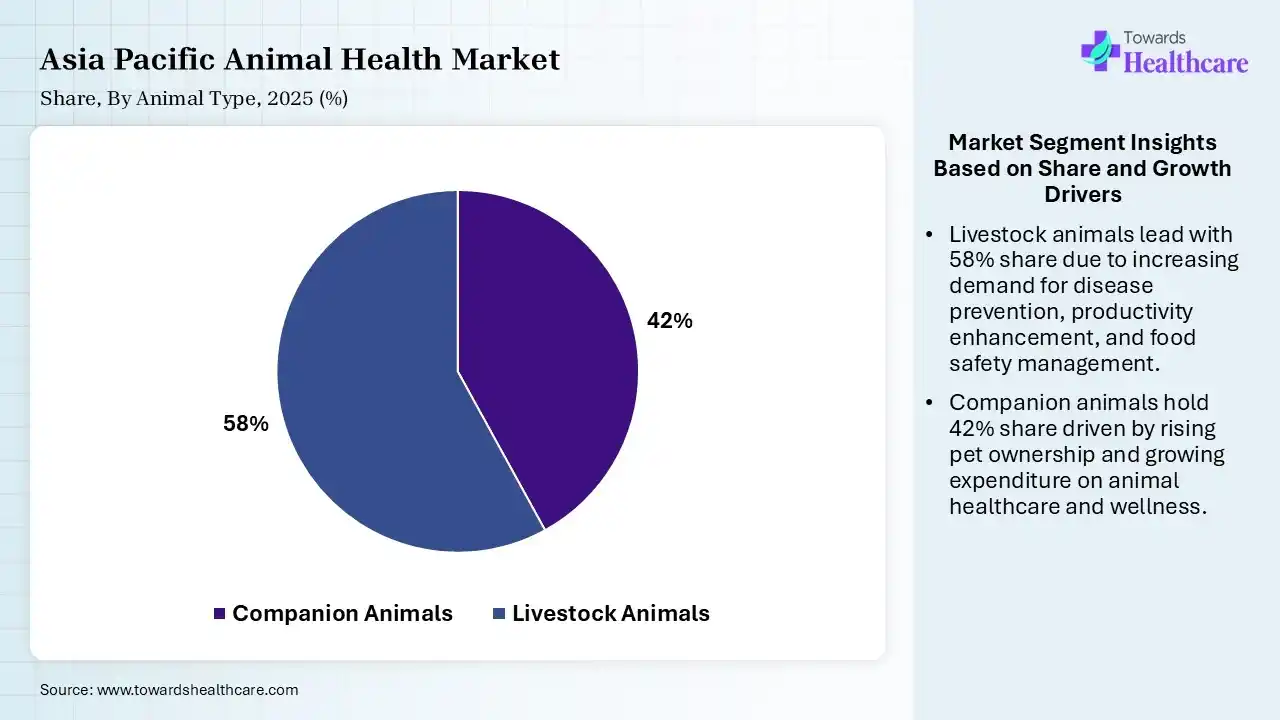
The Livestock Animals Segment Led the Asia Pacific Animal Health Market in 2025 with the Largest Share
The livestock animals segment held a dominant share of 58% in 2025 due to the region’s large-scale production of poultry, cattle, swine, and aquaculture for food supply. Rising demand for meat, milk, and eggs, along with increasing population and income levels, is driving intensive farming practices. High prevalence of infectious diseases in livestock and a strong focus on productivity, food safety, and preventive healthcare further support the dominance of this segment across the Asia Pacific.
The companion animals segment held the second-largest share of 42% in 2025 and is expected to grow at the fastest CAGR of 9.66% in the Asia Pacific animal health market during the forecast period due to rising pet adoption, increasing urbanization, and growing humanization of pets across the Asia Pacific. Higher spending on premium pet food, veterinary care, and preventive treatments is also boosting demand. Additionally, expanding pet insurance, improving access to veterinary services, and rising awareness of animal health and wellness are driving strong growth in this segment.
| Segment | Share 2025 (%) |
| Infectious Diseases | 29% |
| Pain Management | 15% |
| Dermatological Disorders | 11% |
| Metabolic Disorders | 10% |
| Reproductive Health | 12% |
| Respiratory Diseases | 13% |
| Gastrointestinal Disorders | 7% |
| Others | 3% |
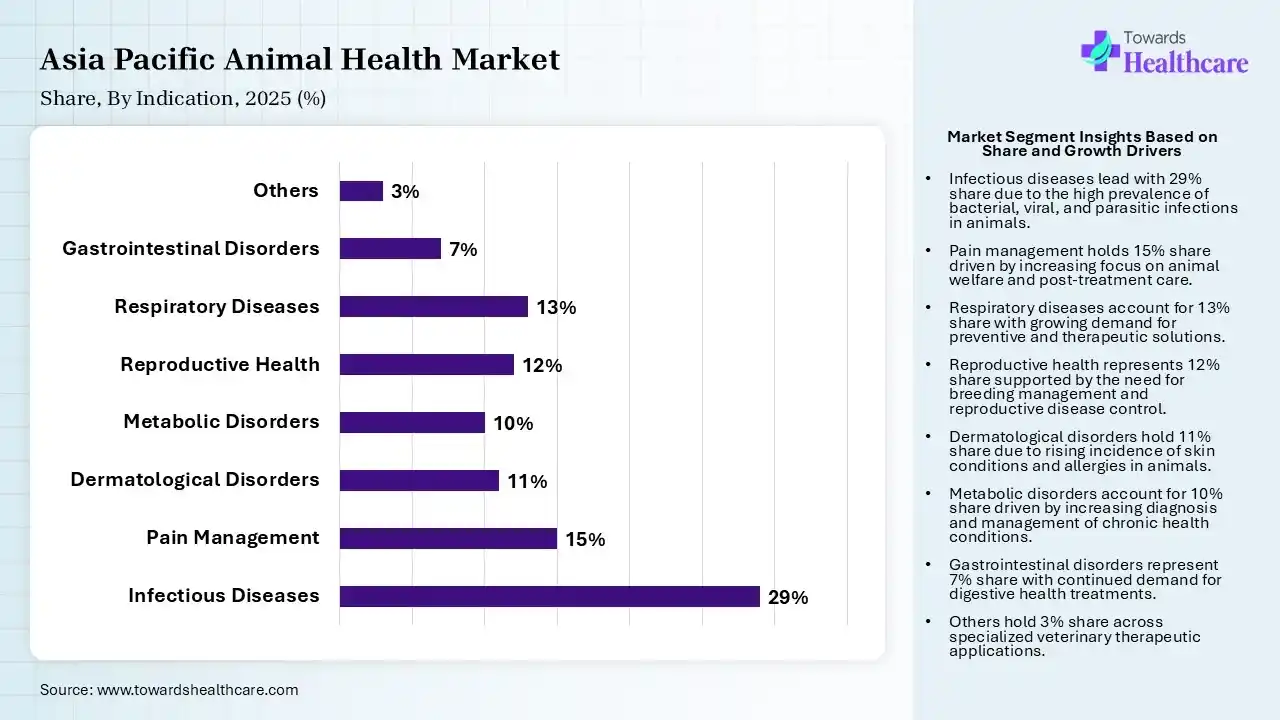
The Infectious Diseases Segment Led the Market in 2025 with the Largest Share
The infectious diseases segment held a 29% share in 2025 and is expected to grow at the fastest CAGR of 9.32% in the Asia Pacific animal health market during the forecast period due to the high prevalence and rapid spread of bacterial, viral, and parasitic infections among livestock and companion animals. Intensive farming practices, large animal populations, and inadequate biosecurity in some regions increase outbreak rise. Strong demand for vaccines, antibiotics, and preventive treatments, along with government disease control programs and food safety concerns, further drives the dominance of this segment.
The pain management segment held the second-largest share of 15% in 2025 due to increasing awareness of animal welfare and the need to improve the quality of life in both livestock and company animals. Rising surgical procedures, injuries, and chronic conditions are driving demand for analgesic and anti-inflammatory drugs. Growing pet humanizations, expanding veterinary care services, and improved access to advanced pain-relief therapies further support segment growth.
The reproductive health segment held 12% of the Asia Pacific animal health market share due to rising demand for improved livestock productivity and efficient breeding practices. Increasing adoption of artificial insemination, hormonal therapies, and fertility management solutions is enhancing reproduction rates in cattle, poultry, and swine. Growing meat and dairy consumption, along with government support for livestock modernization and genetic improvement programs, further drives the need for advanced reproductive healthcare solutions across the region.
The dermatological disorders segment held a 11% of the market share due to the rising incidence of skin infection, allergies, parasites, and environmental irritations of skin infections, allergies, parasites, and environmental irritations in both companies and livestock animals. Increasing pet ownership and awareness of pet grooming and hygiene are boosting demand for topical treatments and medicated shampoos. Growth in veterinary visits, improved diagnostic capabilities, and the availability of advanced dermatology products further support segment expansion across the region.
| Segment | Share 2025 (%) |
| Oral | 41% |
| Injectable | 34% |
| Topical | 14% |
| Intramammary | 7% |
| Others | 4% |
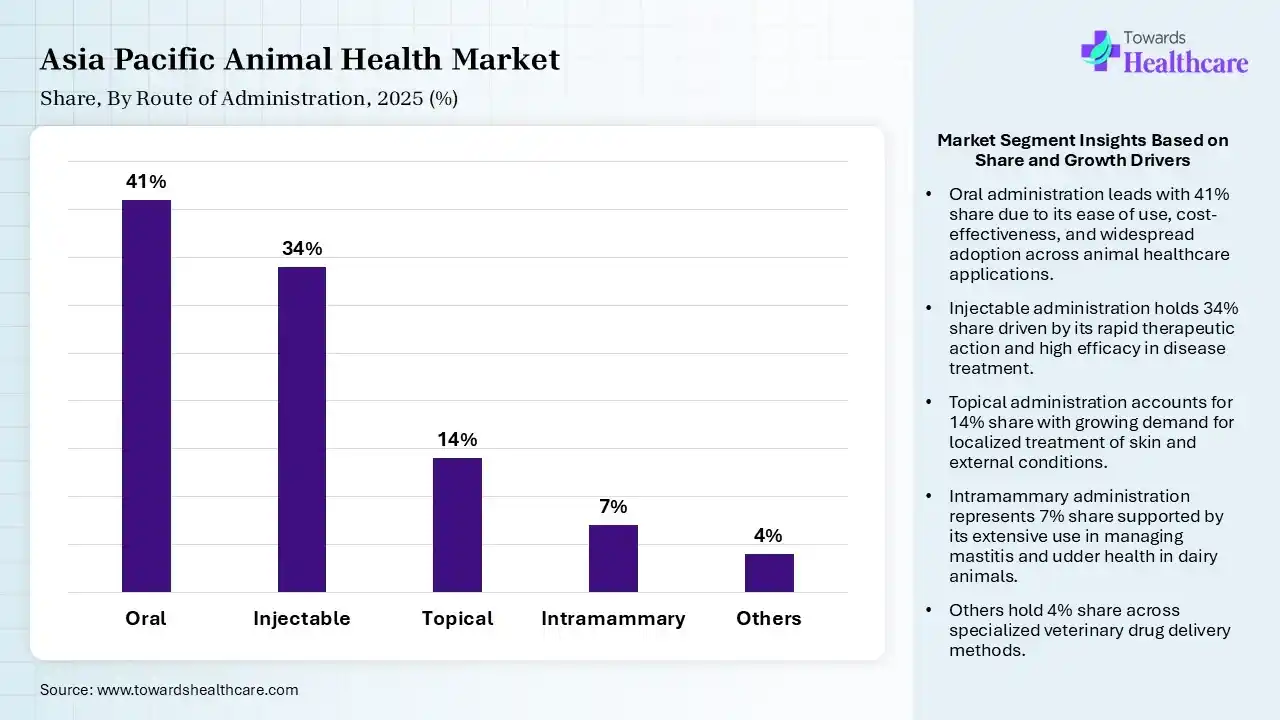
The Oral Segment Dominated the Asia Pacific Animal Health Market in 2025
The oral segment led the market with a share of 52% in 2025 due to its ease of administration, cost-effectiveness, and suitability for large-scale livestock treatment. Oral drugs, including tablets, powders, and medicated feed additives, allow efficient mass medication in poultry, swine, and cattle. Higher compliance reduces stress on animals, and convenience for farmers further drives adoption. Additionally, widespread use of oral antibiotics, antiparasitics, and nutritional supplements supports the segment’s leading position.
The injectable segment held the second-largest share of 34% in 2025 and is expected to grow at the fastest CAGR of 9.44% in the market during the forecast period due to its fast therapeutic action and high effectiveness in treating acute and severe conditions. It is widely used for vaccines, antibiotics, and pain management in both livestock growing vaccination programs, and the need for precise dosing in veterinary care further drives demand for injectable formulations across the region.
The topical segment held 14% of the Asia Pacific animal health market share due to its effectiveness in treating skin infections, parasites, and dermatological disorders with minimal systemic side effects. Increasing pet ownership and awareness of animal hygiene are boosting demand for easy-to-apply creams, sprays, and ointments. Rising cases of fleas, ticks, and allergies, along with expanding veterinary dermatology products and improved accessibility, further drive the adoption of topical treatments across the region.
The intramammary segment held 7% of the market share due to the high prevalence of mastitis in dairy cattle, which significantly affects milk production and quality. Growing dairy consumption and modernization of dairy farming practices are increasing the use of intramammary antibiotics and anti-inflammatories. Rising awareness of udder health, along with government initiatives for milk safety and productivity improvements, further drives the adoption of this route.
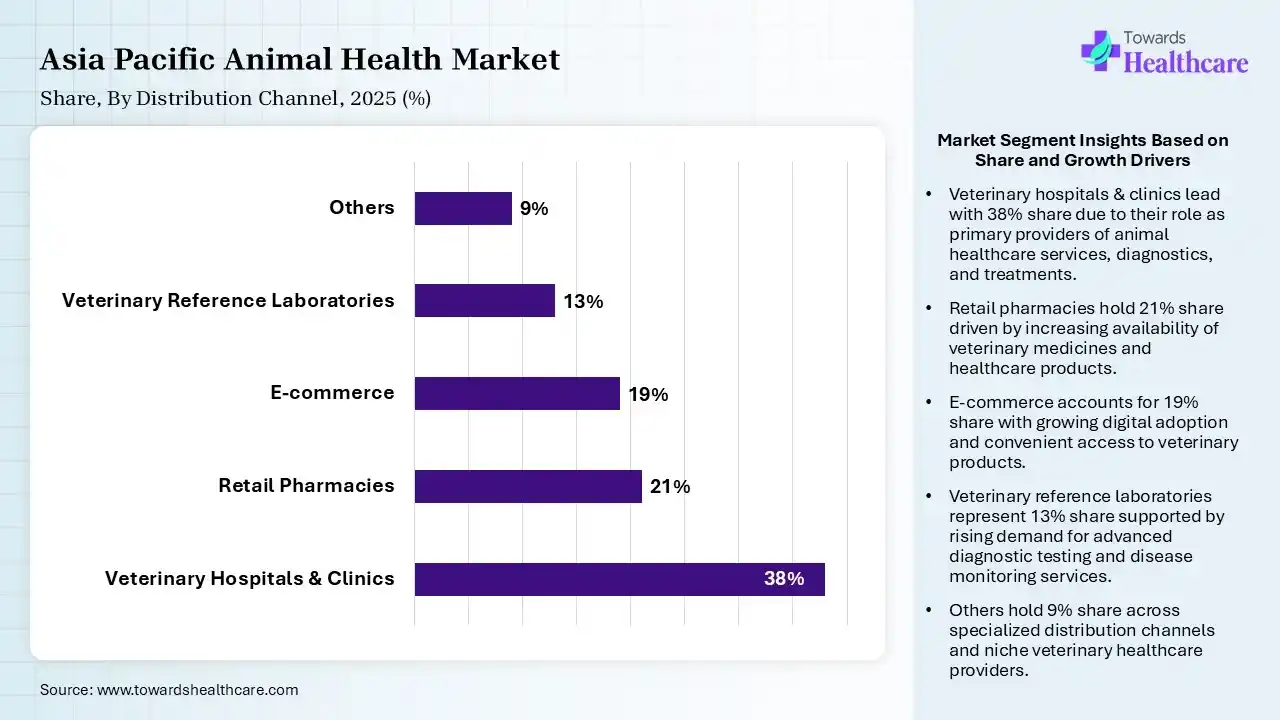
| Segment | Share 2025 (%) |
| Veterinary Hospitals & Clinics | 38% |
| Retail Pharmacies | 21% |
| E-commerce | 19% |
| Veterinary Reference Laboratories | 13% |
| Others | 9% |
The Veterinary Hospitals & Clinics Segment Led the Asia Pacific Animal Health Market in 2025 with the Largest Share
The veterinary hospitals & clinics segment dominated the market with a share of 38% in 2025 due to their role as primary centers for animal diagnosis, treatment, and vaccination. These facilities offer access to skilled veterinarians, advanced diagnostic tools, and a wide range of pharmaceuticals and services under one roof. Rising pet healthcare demand, increasing livestock disease management needs, and growing awareness of professional veterinary care further strengthen the dominance of this distribution channel.
The retail pharmacies segment held the second-largest share of 21% in 2025 due to easy accessibility, wide product availability, and convenience for pet owners and livestock farmers. They provide over-the-counter medicines, supplements, and preventive care products without requiring clinic visits. Expanding rural reach, growing pet ownership, and increasing awareness of animal healthcare products further support strong demand through retail pharmacies across the region.
The E-commerce segment held a 19% share in 2025 and is expected to grow at the fastest CAGR of 11.02% in the Asia Pacific animal health market during the forecast period due to increasing digital adoption, the convenience of online purchasing, and the wide availability of veterinary products. Rising internet penetration, mobile commerce, and doorstep delivery services are driving preference for online platforms. Additionally, competitive pricing, product variety, and growing trust in digital veterinary pharmacies further accelerate the shift towards e-commerce channels across the region.
The veterinary reference laboratories segment held a 13% market share due to increasing demand for accurate, specialized, and advanced diagnostic testing. The rising incidence of infectious and chronic animal diseases is driving the need for molecular diagnostics, pathology, and genetic testing services. Expansion of veterinary healthcare infrastructure, growing pet ownership, and outsourcing of complex tests by clinics and hospitals further support the strong growth of this segment across the region.
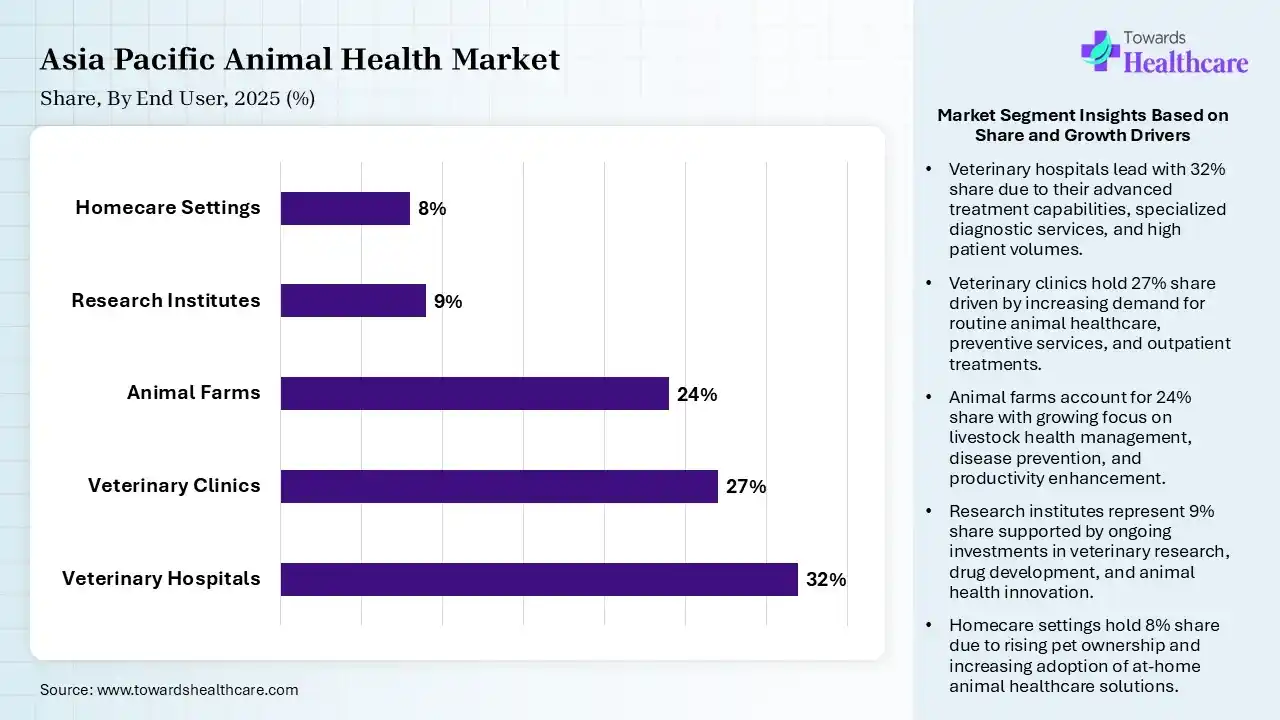
| Segment | Share 2025 (%) |
| Veterinary Hospitals | 32% |
| Veterinary Clinics | 27% |
| Animal Farms | 24% |
| Research Institutes | 9% |
| Homecare Settings | 8% |
The Veterinary Hospitals Segment Led the Market in 2025 with the Largest Share
The veterinary hospitals segment led the Asia Pacific animal health market with a share of 32% in 2025 due to their comprehensive care services, including diagnostics, surgery, emergency treatment, and vaccination under one roof. They are equipped with advanced medical technologies and skilled veterinarians, making them the primary choice for both company animals and livestock care. Rising pet ownership, increasing awareness of animal health, and growing demand for professional and specialized veterinary services further strengthen their market dominance.
The veterinary clinics segment held the second-largest share of 27% in 2025 due to their wide accessibility and role as primary care providers for routine check-ups, vaccinations, and minor treatments. Growing pet ownership, increasing awareness of preventive healthcare, and rising livestock health management needs drove frequent clinic visits. Expansion of small and mid-sized clinics across urban and rural areas further supports steady demand for veterinary services.
The animal farms segment held 24% of the Asia Pacific animal health market share and is expected to grow at the highest rate of 9.36% during the forecast period due to rising demand for high-quality livestock products and increasing adoption of modern farming practices. Expansion of large-scale commercial farms. Growing focus on productivity and rising use of preventive healthcare, vaccines, and nutrition solutions are driving growth. Government support for livestock modernization and disease control further accelerates farm-level animal health adoption.
The research institutes segment held 9% of the market share due to increasing investment in veterinary research, vaccine development, and disease surveillance. A growing focus on zoonotic diseases, antimicrobial resistance, and livestock productivity is driving demand for advanced studies and innovations. Collaboration between government, universities, and pharmaceutical companies, along with rising funding for animal health R&D, is further supporting the growth of research institutes across the region.
China’s animal health market is growing rapidly due to its large livestock population, expanding companion animal ownership, and rising demand for meat and dairy products. Increasing awareness of animal disease prevention, government support for veterinary healthcare, and strong adoption of vaccines and pharmaceuticals are key drivers. Additionally, advancements in animal diagnostics, rising pet humanization, and modernization of livestock farming practices are further accelerating market growth in the country.
India is expanding due to its large livestock population, growing dairy and poultry industries, and increasing demand for animal protein. Rising awareness of animal disease prevention, government livestock health programs, and improved veterinary infrastructure are key drivers. Additionally, increasing pet adoption, growing use of vaccines and pharmaceuticals, and adoption of modern farming practices are further accelerating market growth across the country.
Japan’s animal health market is shifting toward preventive care, diagnostics, and longer-term pet wellness. In 2024, imports of veterinary medicines for dogs and cats reached 74,493 products, up sharply from 40,256 in 2022. This reflects wider product availability and rising treatment needs. Companion animals remain a key demand driver, while livestock disease control supports farm applications. Competition includes Japanese specialists, global animal health companies, and veterinary distributors. The government is also funding practical veterinary drug projects and new technology standards. Biologics, regenerative medicine, digital monitoring, and antimicrobial stewardship are likely to shape product development and purchasing decisions in Japan further.
Regulatory Approvals
Formulation and Final Dosage Preparation
Animal Support and Services
| Companies | Headquarters | Offerings |
| Hester Biosciences | Ahmedabad, India | Offers poultry and livestock vaccines, veterinary biologicals, and animal health pharmaceuticals focused on disease prevention. |
| Indian Immunologicals Limited (IIL) | Hyderabad, India | Provides vaccines for livestock and companion animals, including rabies, foot-and-mouth disease (FMD), and other preventive biologics. |
| Intas Pharmaceuticals | Ahmedabad, India | Develops veterinary antibiotics, antiparasitics, anti-inflammatory drugs, and nutritional supplements for livestock and pets. |
| CAVAC (Cambodia Animal Vaccine Company) | Phnom Penh, Cambodia | Specializes in veterinary vaccines and disease control solutions for poultry and livestock in Southeast Asia. |
| Vetoquinol Asia (regional operations) | Tokyo, Japan | Offers pharmaceuticals, dermatology products, pain management drugs, and parasiticides for companion and production animals. |
| Meiji Animal Health (Meiji Holdings Group) | Tokyo, Japan | Focuses on veterinary vaccines, antibiotics, and nutritional products for livestock health and productivity. |
Strengths
Weaknesses
Opportunities
Threats
By Product Type
By Animal Type
By Indication
By Route of Administration
By Distribution Channel
By End User
By region










Principal Consultant
Payal Rabde is a Healthcare Market Research Analyst at Towards Healthcare Research & Consulting with 4+ years of experience in pharmaceuticals, biotechnology, medical devices, and life sciences.
Learn more about Payal Rabde

Reviewed By
Aditi Shivarkar is a seasoned professional with over 14 years of experience in healthcare market research. As a content reviewer, Aditi ensures the quality and accuracy of all market insights and data presented by the research team.
Learn more about Aditi Shivarkar