Pipeline Programs

CGT Companies Tracked

Manufacturing Facilities


The global bioregenerative aesthetic injectable market size is calculated at USD 3.82 billion in 2025, grew to USD 4.35 billion in 2026, and is projected to reach around USD 13.92 billion by 2035. The market is expanding at a CAGR of 13.80% between 2026 and 2035.
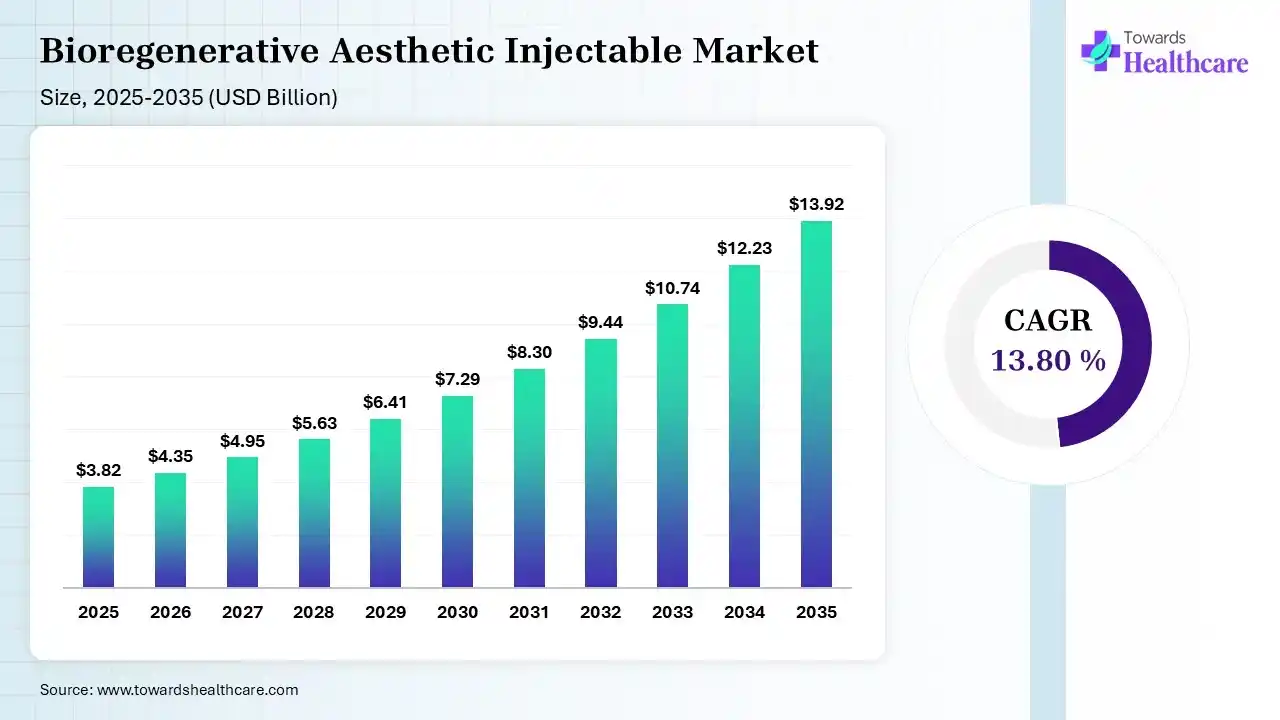
The market is rapidly growing, driven by demand for minimally invasive, natural-looking rejuvenation. Growth is led by collagen-stimulating and regenerative injectables, especially in Asia Pacific and North America, supported by innovation and increasing aesthetic awareness.
Bioregenerative aesthetic injectables are minimally invasive treatments that stimulate the body’s natural tissue regenerative such as collagen production, to restore skin volume, texture, and youthful appearance without using traditional synthetic fillers. The bioregenerative aesthetic injectable market is growing rapidly as consumers seek natural, long-lasting, and minimally invasive cosmetic solutions. Rising awareness of regenerative treatments, technological innovation like collagen stimulators and exosome therapies, and expanding medical aesthetics clinics in regions like the Asia Pacific and North America are driving adoption. Increasing social medical influence and preference for youthful, natural-looking results further boost market growth.
The bioregenerative aesthetic injectable market is booming because people want natural results. These minimally invasive treatments help the body repair itself. They boost your own collagen to smooth wrinkles and fix skin volume. This means patients do not have to use traditional synthetic fillers anymore. Instead, they choose advanced options like exosome therapies and collagen stimulators. Doctors everywhere are opening specialized clinics to meet this high demand. This trend is moving fastest in North America and the Asia Pacific region. Social media also plays a huge role by showing real, youthful results online. As modern technology gets better, these treatments become safer, more reliable, and longer lasting for everyone.
Artificial intelligence is transforming the market by enabling personalized treatment planning, precise skin analysis, and outcome prediction. AI-driven tools help practitioners select optimal injectable types, dosages, and injection points, improving safety and natural-looking results. Additionally, AI supports product innovation, clinical decision-making, and patient engagement, accelerating the adoption of advanced regenerative aesthetic solutions worldwide.
| Table | Scope |
| Market Size in 2026 | USD 4.35 Billion |
| Projected Market Size in 2035 | USD 13.92 Billion |
| CAGR (2026 - 2035) | 13.80% |
| Leading Region | North America by 39% |
| Key Applications | Facial rejuvenation, collagen stimulation, skin quality improvement, volume restoration, anti-aging treatments, scar correction, neck and décolleté rejuvenation |
| Primary End Users | Dermatology clinics, aesthetic medicine clinics, plastic surgery centers, cosmetic hospitals, medical spas |
| Key Growth Drivers | Rising demand for minimally invasive procedures, preference for natural-looking outcomes, aging population, advances in regenerative injectables, increasing medical tourism |
| Measurable Values | USD Millions/Units/Volume |
| Market Segmentation | By Product Type, By Application, By End User, By Gender, By Distribution Channel, By Region |
| Top Key Players | Galderma S.A., AbbVie (Allergan Aesthetics), Merz Aesthetics, Sinclair Pharma (Huadong Medicine), CromaPharma GmbH, IBSA Group, Regen Biotech. |
The Poly-L-Lactic Acid (PLLA) Injectables Segment Led the Market in 2025
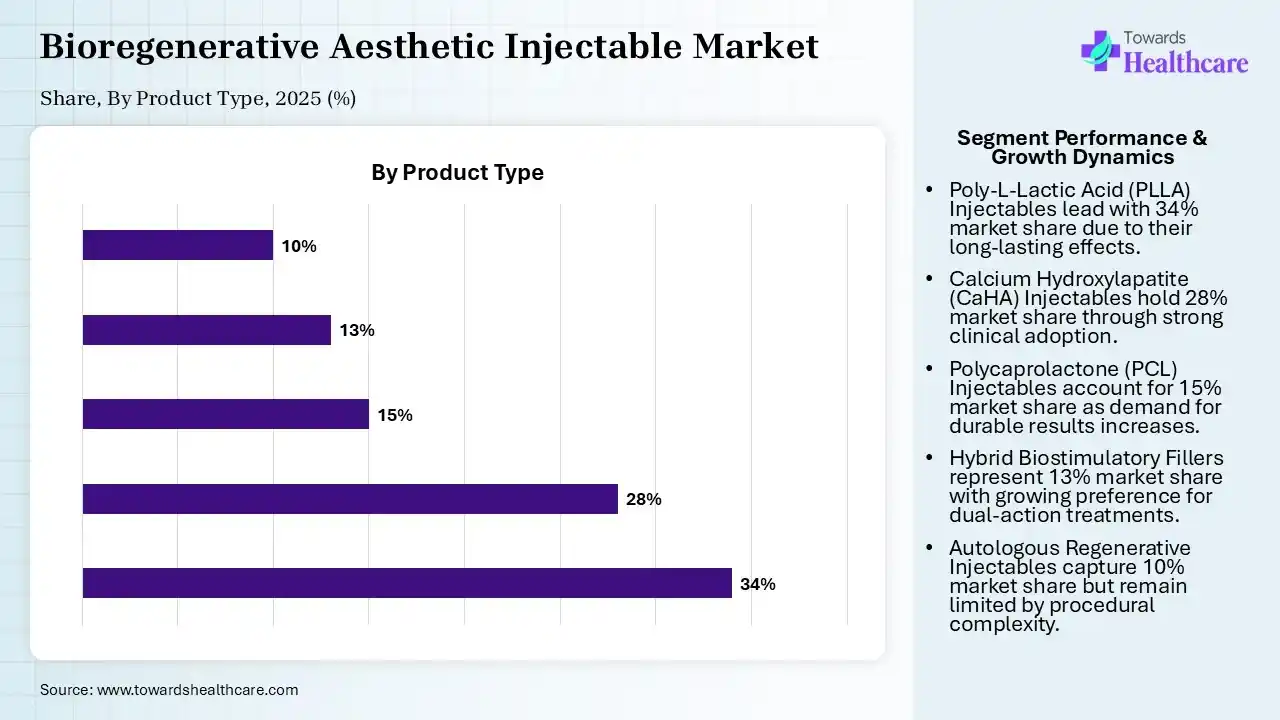
In 2025, the Poly-L-Lactic Acid (PLLA) injectables segment held a 34% share of the bioregenerative aesthetic injectable market. This dominance is driven by their robust collagen stimulation capabilities, coupled with higher adoption for long-term facial rejuvenation. In clinical studies, rising integration of PLLA with microneedling, radiofrequency (RF), & ultrasound-based treatments to boost overall collagen regeneration drives the overall demand.
The Calcium Hydroxylapatite (CaHA) injectables segment captured the second-largest share of 28% in 2025. This product type delivers immediate volumization & biostimulation. It has a wider demand in facial contouring procedures & increasing acceptance in hand rejuvenation.
The Polycaprolactone (PCL) injectables segment held a 15% share in 2025 & is estimated to expand fastest. Key drivers are the longer-lasting outcomes of these injectables, appealing to patients. Also, the raised demand for durable regenerative treatments fuels the adoption of these products. Globally surging product rollouts are also fostering the adoption of PCL injectables.
Whereas the hybrid biostimulatory fillers segment accounted for a 13% share of the bioregenerative aesthetic injectable market in 2025. They are explored as combination products that enhance aesthetic results. Also, many physicians are looking for customizable solutions, & ongoing advances in filler technologies propel the growth of these fillers.
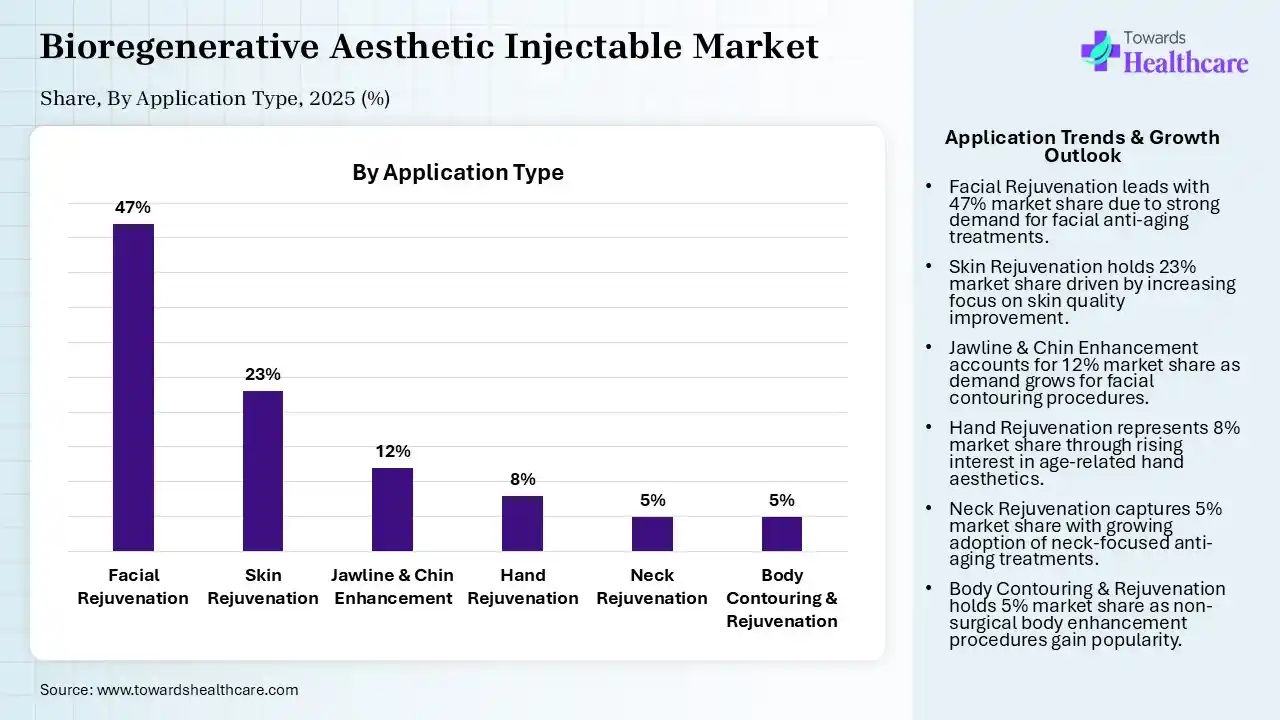
The Facial Rejuvenation Segment Dominated the Market in 2025
In 2025, the facial rejuvenation segment captured a 47% share of the market due to increased patient demand for anti-ageing procedures. Alongside, the market is experiencing continuous expansion of full-face treatment protocols, with optimized outcomes supporting repeat treatments. The widespread population prefers a minimally invasive approach to lower lengthy & expensive procedures.
Moreover, the skin rejuvenation segment captured a 23% share in 2025 & is predicted to show rapid expansion. Respective progression is propelled by rising demand for collagen induction, with accelerating interest in preventive aesthetics. Alongside, many of the latest, sophisticated regenerative techniques are enhancing skin quality, impacting the segmental growth.
The jawline & chin enhancement segment held a notable share of 12% of the bioregenerative aesthetic injectable market in 2025. Emerging facial profiling trends are highly supporting the demand for this procedure. Also, social media influence is boosting procedure volumes, coupled with improved filler precision, which bolsters the adoption.
In 2025, the hand rejuvenation segment captured an 8% share due to the geriatric population seeking comprehensive rejuvenation. Moreover, the rising use of biostimulatory fillers fosters hand rejuvenation. Global rising awareness among practitioners about this procedure also supports the overall market expansion.
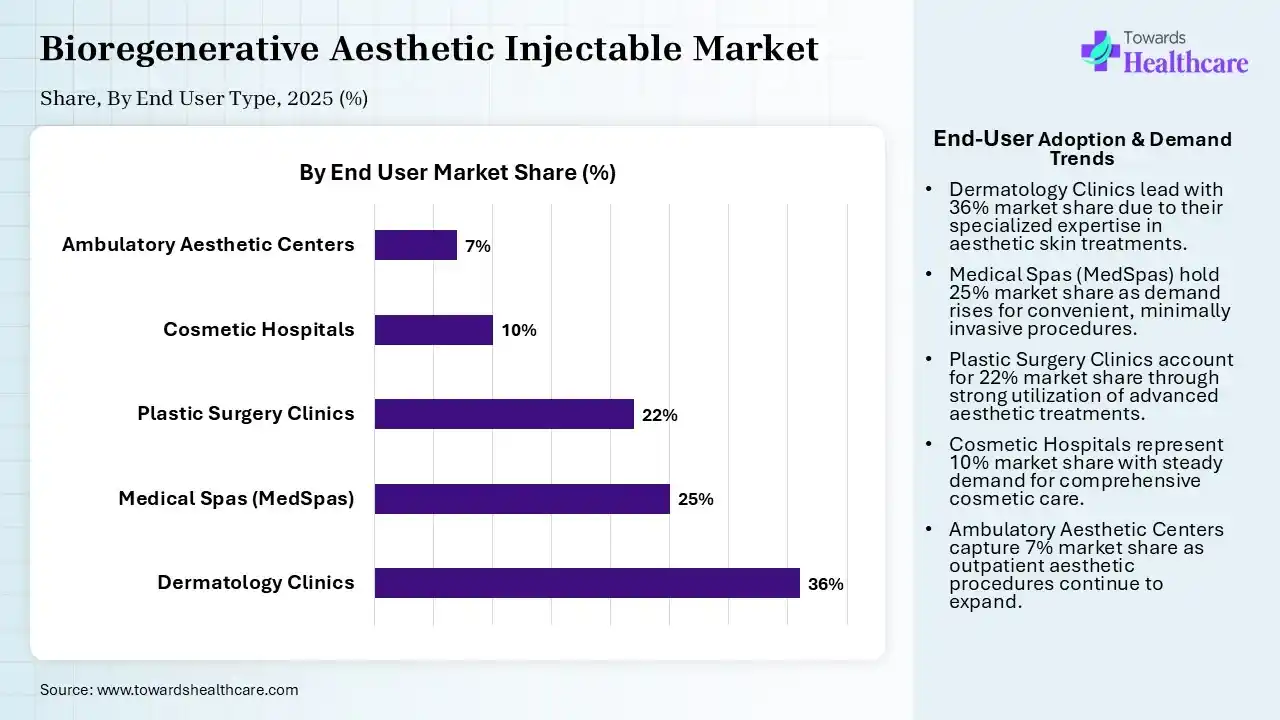
The Dermatology Clinics Segment Was Dominant in the Market in 2025
The dermatology clinics segment led with a 36% share of the bioregenerative aesthetic injectable market in 2025. Their dominance is fueled by large procedure volumes, which impel the revenue of these clinics. Also, these clinics possess strong physician expertise, along with growing patient trust, which pushes the overall development & benefits of these clinics.
On the other hand, the medical spas (MedSpas) segment held a 25% share in 2025 & is anticipated to expand fastest in the coming era. They offer higher accessibility to aesthetic treatments. While increasing consumer preference for minimally invasive procedures is also fostering their demand. Ongoing growth of premium wellness centres assists in the respective progression.
The plastic surgery clinics segment captured a lucrative share of 22% of the market in 2025, due to the elevated demand for combination aesthetic procedures. Gradually surging emphasis on facial rejuvenation, & also well-developed patient bases are driving the overall sales of plastic surgery approaches.
Moreover, the cosmetic hospitals segment accounted for a 10% share of the bioregenerative aesthetic injectable market in 2025. They mainly provide advanced treatment capabilities, which encourage utilisation. As well as growing investment in the aesthetic department & growth in medical tourism is also contributing to the demand for these kinds of hospitals.
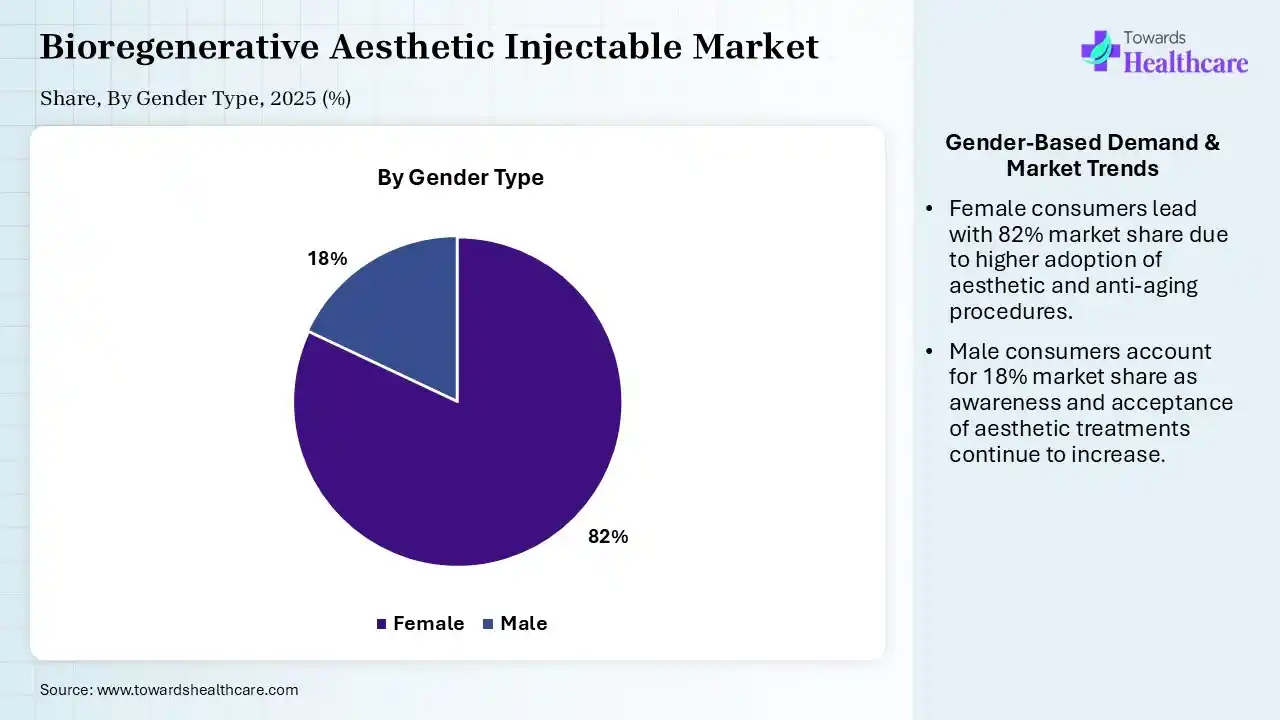
The Female Segment Led the Market in 2025
The female segment held a major share of 82% of the market in 2025. A prominent driver is that women remain the primary consumers of aesthetic procedures. However, day by day, the globe is broadening robust anti-ageing awareness, which fuels the demand for the latest aesthetic procedures. Also, females’ higher treatment frequency supports comprehensive growth.
Whereas the male segment captured an 18% share in 2025 & is predicted to expand at the fastest CAGR in the bioregenerative aesthetic injectable market. AN eventual rise in acceptance of aesthetic treatments among men & growing corporate appearance trends are raising the overall adoption. Alongside a surging marketing focus, it spurs awareness.
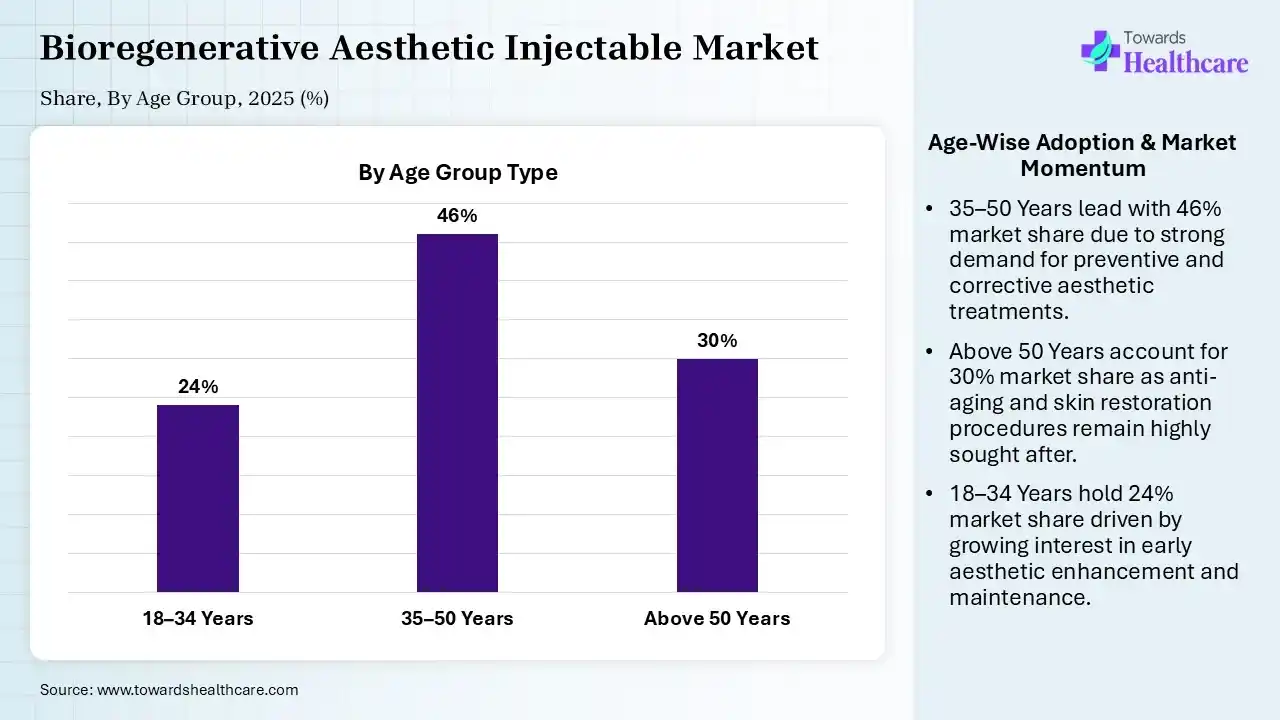
The 35-50 Years Segment Dominated the Market in 2025
In 2025, the 35-50 years segment held a dominant share of 46% of the market. This age group is highly demanding for facial rejuvenation. They have high disposable income, which supports expenditure on aesthetic procedures. Whereas long-term collagen stimulation is attracting this age group.
The above-50-year segment held a 30% share in 2025, due to ageing demographics expanding the treatment pool. Also, this age group's demand for volume restoration, with preference for non-surgical solutions, impacts the overall demand & adoption.
The 18-34 years segment captured a 24% share in 2025 & is estimated to show the fastest expansion in the bioregenerative aesthetic injectable market. This age group is highly focused on preventive aesthetics, which has gained popularity across the globe. Additionally, social media influence is driving procedure demand among this age group. Many younger consumers are favouring minimally invasive options, which bolsters the global market expansion.
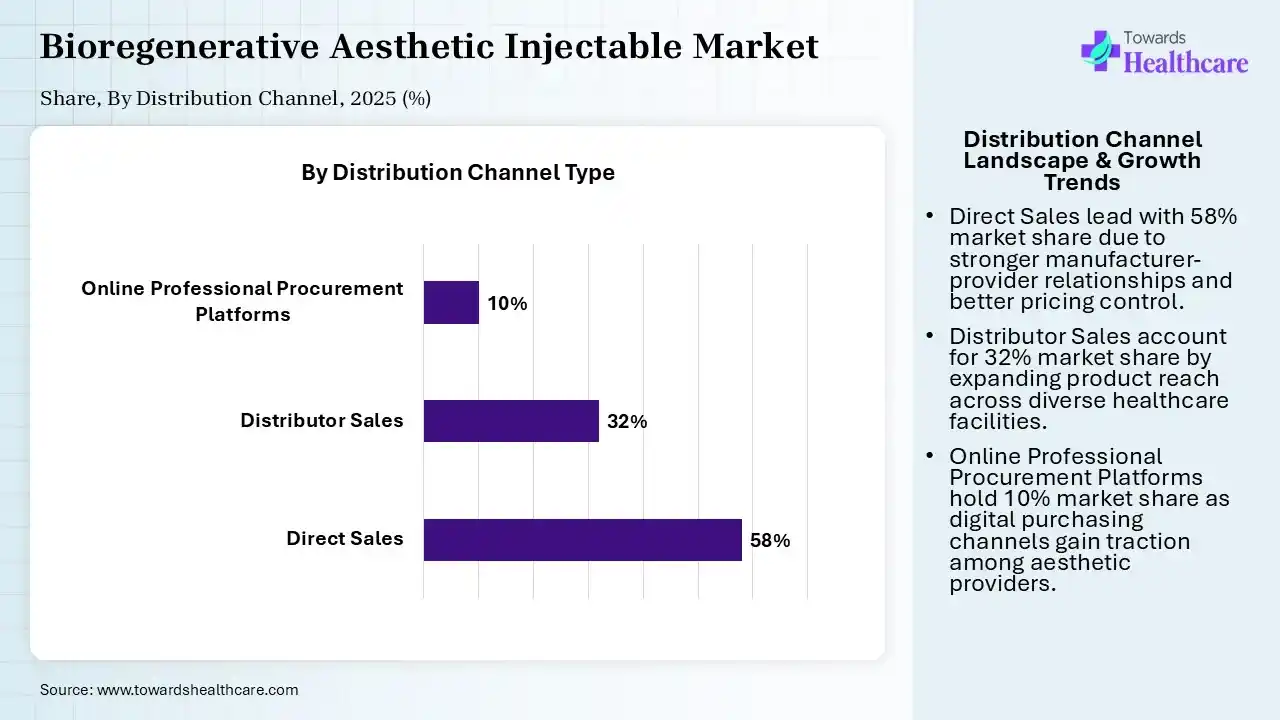
The Direct Sales Segment Led the Market in 2025
In 2025, the direct sales segment dominated with 58% of the market. Dominance is fueled by manufacturers maintaining rigorous relationships with clinics. Also, product training programs foster adoption. Majorly, direct procurement ensures product authenticity in the market. Many direct sales models are allowing manufacturers to closely monitor stricter cold-chain shipping & storage requirements.
Moreover, the distributor sales segment accounted for a 32% share in 2025, due to the broad geographic coverage and expanding reach. Also, local market expertise is supporting impressive sales. However, distribution partnerships are enhancing availability.
In 2025, the online professional procurement platforms segment held a 10% share of the market & is anticipated to expand fastest. The worldwide rising adoption of digital purchasing & rising clinics seeking procurement efficiency drive the segmental growth. Although progressing professional e-commerce platforms are fostering demand for these platforms.
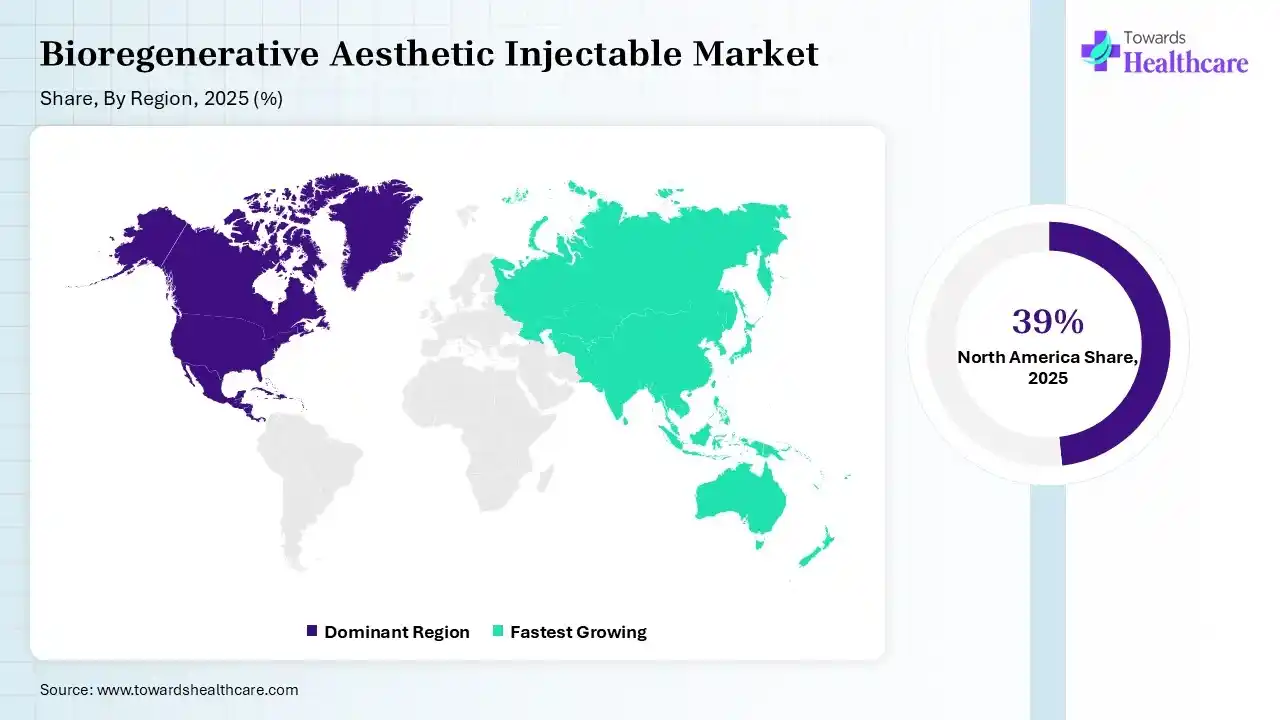
In 2025, North America registered dominance with a 39% share of the bioregenerative aesthetic injectable market due to high adoption of aesthetic technologies, strong presence of skilled practitioners, and early acceptance of regenerative treatment. Rising demand for minimally invasive, natural-looking procedures, strong consumer spending power, and continuous product innovation further supported market leadership across the U.S. and Canada.
U.S. Market Trends
The U.S. captured the largest revenue share in 2026 due to widespread adoption of advanced bioregenerative aesthetic injectables and a strong network of dermatology clinics and medSpas. High consumer awareness, early acceptance of innovative regenerative technologies, favorable reimbursement for aesthetic procedures, and continuous product launches by leading manufacturers further strengthened the country’s dominant position in the market.
Canada Market Trends
The bioregenerative aesthetic injectable market in Canada is growing fast. People in major urban areas increasingly prefer treatments that look natural over traditional synthetic fillers. This shift is creating high demand for advanced options like biostimulatory injectables and platelet-rich plasma treatments. Medical spas and dermatology clinics across the country are rapidly expanding their services to offer these therapies. Rising consumer interest in long-term skin health, along with active local injector training programs, directly ensures that the Canadian market continues to thrive and expand steadily.
Asia Pacific captured a 23% share in 2025 & is estimated to expand rapidly in the market in the prospective period due to rising aesthetic awareness, expanding middle-class population, and increasing demand for minimally invasive cosmetic treatments. The rapid growth of medical tourism, improving access to advanced dermatology clinics and medSpas, and growing acceptance of regenerative injectables in countries like South Korea, Japan, China, and India are further accelerating regional market expansion.
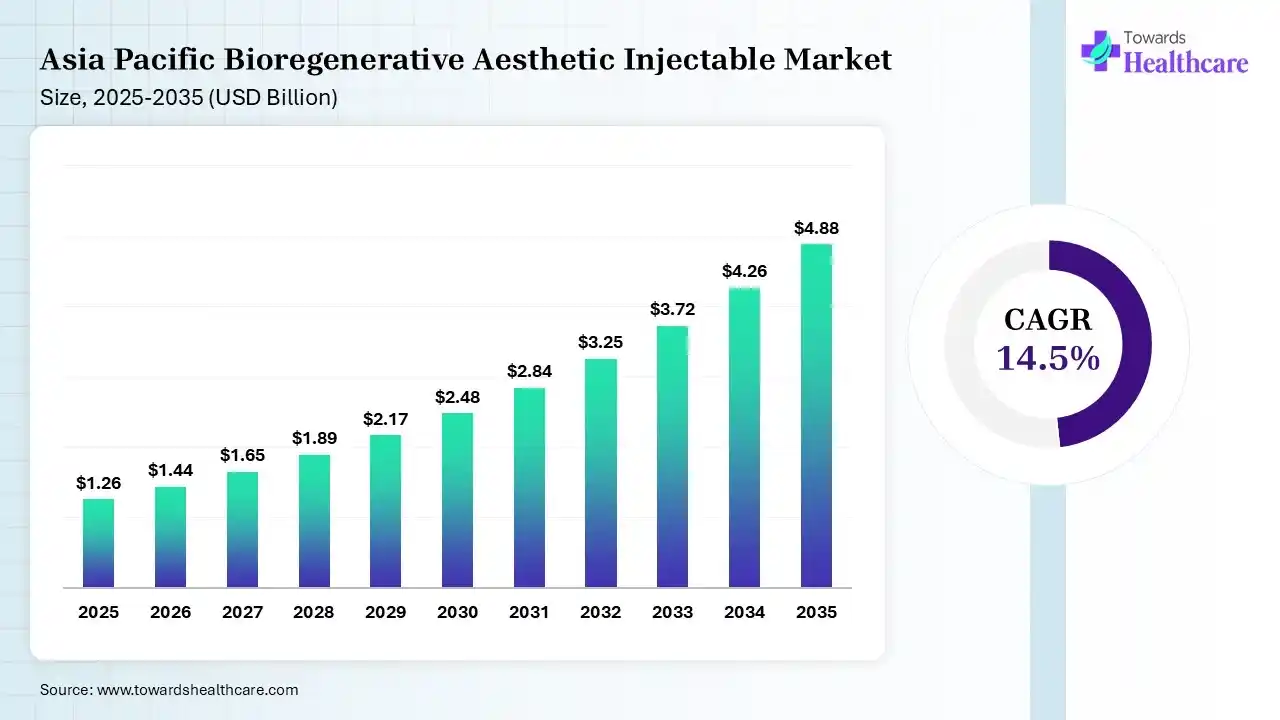
Asia Pacific Bioregenerative Aesthetic Injectable Market Growth
The Asia Pacific bioregenerative aesthetic injectable market size was estimated at USD 1.26 billion in 2025 and is predicted to increase from USD 1.44 billion in 2026 to approximately USD 4.88 billion by 2035, expanding at a CAGR of 14.5% from 2026 to 2035.
India Market Trends
India is anticipated to grow at a notable CAGR during the forecast period due to increasing aesthetic awareness, rising disposable incomes, and growing demand for minimally invasive cosmetic treatments. The expansion of dermatology clinics and medSpas, improving access to advanced regenerative injectables, and strong growth in medical tourism are further supporting market expansion. A younger population seeking preventive aesthetic solutions also contributes to sustained demand.
South Korea Market Trends
South Korea has successfully established itself as a massive global hub for advanced regenerative aesthetics. The local market is growing rapidly due to an incredibly beauty-conscious population that demands cutting-edge anti-aging solutions. High interest in innovative biotech developments has made treatments like exosome therapies and specialized skin boosters highly popular in urban clinics. Strong partnerships between local biotech companies and aesthetic practitioners ensure quick product adoption. Additionally, a booming medical tourism sector brings international patients to Seoul specifically for these advanced bioregenerative treatments.
Europe is expected to grow at a notable CAGR of 13.00% during the forecast period due to strong demand for natural-looking, minimally invasive aesthetic treatments. High awareness of skin rejuvenation, growing adoption of biostimulatory and regenerative injectables, and a well-established network of dermatology clinics support growth. Additionally, favorable regulatory frameworks, continuous product innovation, and an increasing aging population across key European countries are driving sustained market expansion.
Germany Market Trends
The market in Germany is expanding steadily, driven by a strong focus on clinical safety and high-quality evidence. German consumers prefer subtle, non-surgical facial rejuvenation that works naturally with the body. This demand encourages well-established local pharmaceutical and medical device companies to introduce advanced biostimulatory products. Furthermore, highly rigorous training programs for dermatologists and plastic surgeons ensure precise injection techniques. As the aging population seeks sustainable skin health with minimal recovery time, the acceptance and use of bioregenerative treatments continue to rise across the country.
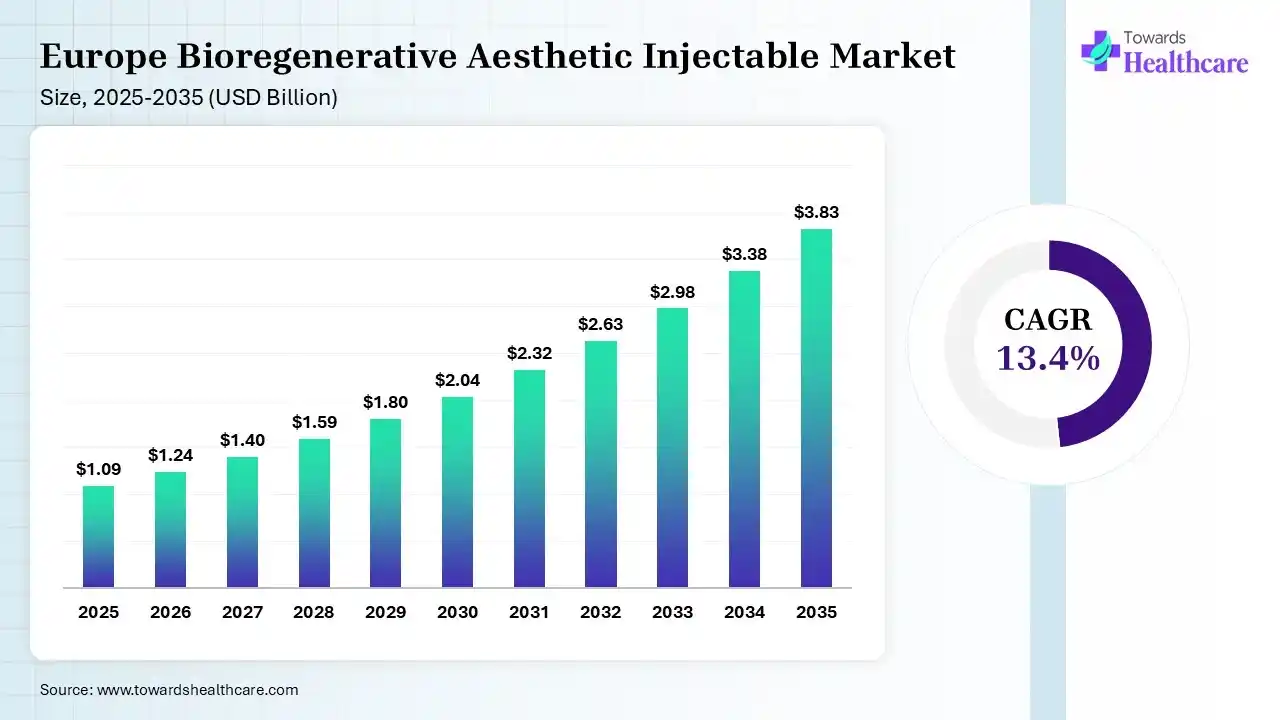
Europe Bioregenerative Aesthetic Injectable Market Growth
The Europe bioregenerative aesthetic injectable market size was estimated at USD 1.09 billion in 2025 and is predicted to increase from USD 1.24 billion in 2026 to approximately USD 3.83 billion by 2035, expanding at a CAGR of 13.4% from 2026 to 2035.
The UK’s Fast Track Growth in the Bioregenerative Aesthetic Injectable Market
The UK is anticipated to grow at a rapid CAGR during the forecast period due to rising demand for non-surgical aesthetic procedures and strong acceptance of regenerative treatments. Increasing aesthetic awareness, growth of advanced dermatology clinics and medSpas, and high adoption of innovative injectables are key drivers. Additionally, an aging population seeking natural rejuvenation and continuous products launched further support market expansion.
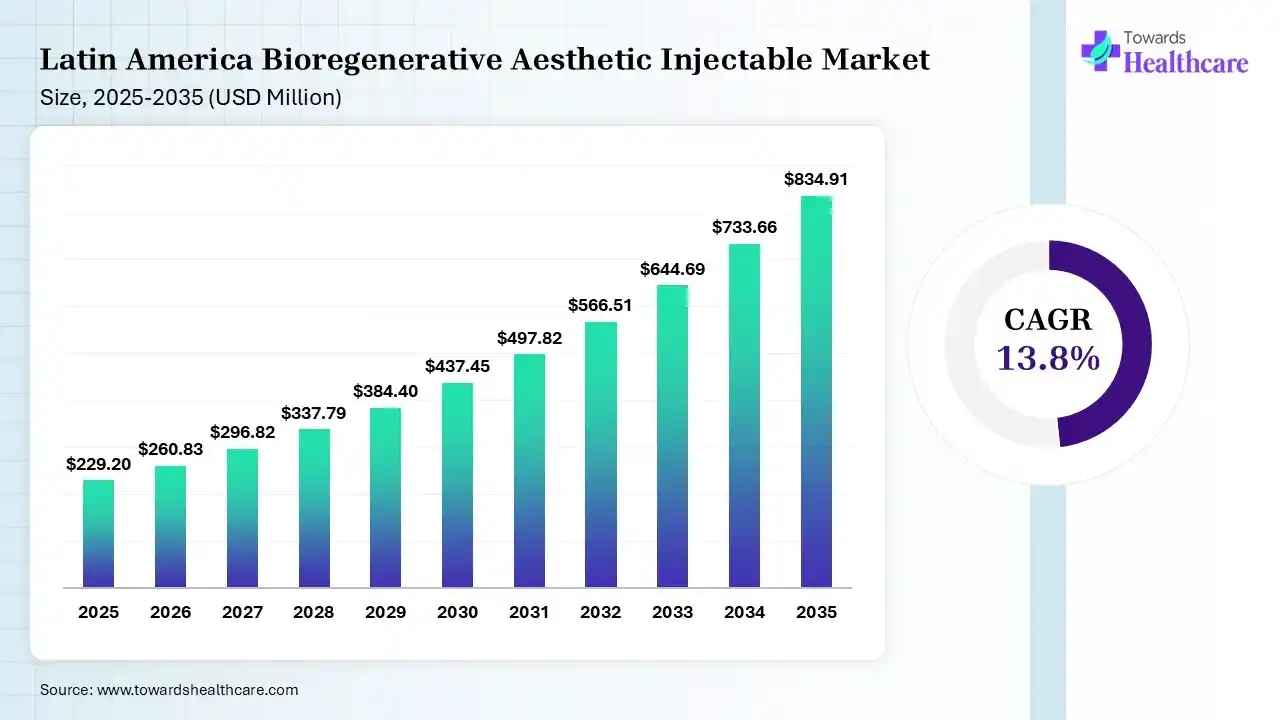
The Latin America bioregenerative aesthetic injectable market size stood at US$ 229.2 million in 2025, grew to US$ 260.83 million in 2026, and is forecast to reach US$ 834.91 million by 2035, expanding at a CAGR of 13.8% from 2026 to 2035.
| Ecosystem Category | Key Participants | Role in Market |
| Technology Providers | Caregen, PharmaResearch Products, Fidia Farmaceutici | Develop regenerative biomaterials, polynucleotide technologies, peptides, and tissue-regeneration platforms |
| Product Manufacturers | Galderma, Merz Aesthetics, AbbVie (Allergan Aesthetics), Sinclair, VAIM | Manufacture commercial biostimulators and regenerative injectables |
| Service Providers | Dermatology clinics, aesthetic clinics, plastic surgery centers | Administer treatments and patient management |
| Platform Providers | Allergan Medical Institute, Merz Institute of Advanced Aesthetics, Galderma Aesthetic Injector Network | Training, certification, physician education, and treatment support |
| CROs/CDMOs | Recipharm, Lonza, Catalent | Manufacturing and development support for injectable formulations |
| Software Vendors | Canfield Scientific, Symmetry, Vectra | Imaging, treatment planning, and aesthetic outcome assessment |
| Research Institutions | Academic dermatology centers, regenerative medicine institutes, aesthetic medicine societies | Clinical research and validation of regenerative therapies |
| End-User Industries | Medical aesthetics, dermatology, plastic surgery, cosmetic medicine | Commercial utilization of products |
Formulation and Final Dosage Preparation
Packaging and Serialization
Patient Support and Services
| Tier 1 | Tier 2 | Tier 3 | |
| Market Influence | 55–70% | 20–30% | 10–15% |
| Tier 1 | ||||
| Company Name | Headquarters | Country | Why Relevant to This Market | Key Products/Services |
| Galderma | Zug | Switzerland | Global leader in regenerative aesthetics and collagen biostimulation | Sculptra, Restylane Skinboosters |
| Merz Aesthetics | Raleigh, North Carolina | USA | Major collagen stimulation platform provider | Radiesse, Belotero Revive |
| AbbVie | North Chicago, Illinois | USA | Large injectable aesthetics portfolio with regenerative expansion | Juvéderm portfolio, Skinvive |
| Tier 2 | ||||
| Company Name | Headquarters | Country | Why Relevant to This Market | Key Products/Services |
| PharmaResearch Products | Seongnam | South Korea | Developer of leading PN-based regenerative injectables | Rejuran |
| Croma Pharma | Leobendorf | Austria | Expanding injectable aesthetics portfolio globally | Saypha, regenerative aesthetics products |
| Fidia Farmaceutici | Abano Terme, Padua | Italy | Hyaluronic acid and regenerative medicine expertise | Profhilo alternatives, regenerative injectables |
| Tier 3 | ||||
| Company Name | Headquarters | Country | Why Relevant to This Market | Key Products/Services |
| VAIM | Daejeon | South Korea | Fast-growing PDLLA biostimulator developer | Juvelook, Lenisna |
| Mastelli | Sanremo | Italy | Polynucleotide-based regenerative aesthetics specialist | Plinest |
Strengths
Weaknesses
Opportunities
Threats














Principal Consultant
Rohan Patil is a seasoned market research professional with over 5+ years of focused experience in the healthcare sector, bringing deep domain expertise, strategic foresight, and analytical precision to every project he undertakes.
Learn more about Rohan Patil

Reviewed By
Aditi Shivarkar is a seasoned professional with over 14 years of experience in healthcare market research. As a content reviewer, Aditi ensures the quality and accuracy of all market insights and data presented by the research team.
Learn more about Aditi Shivarkar