
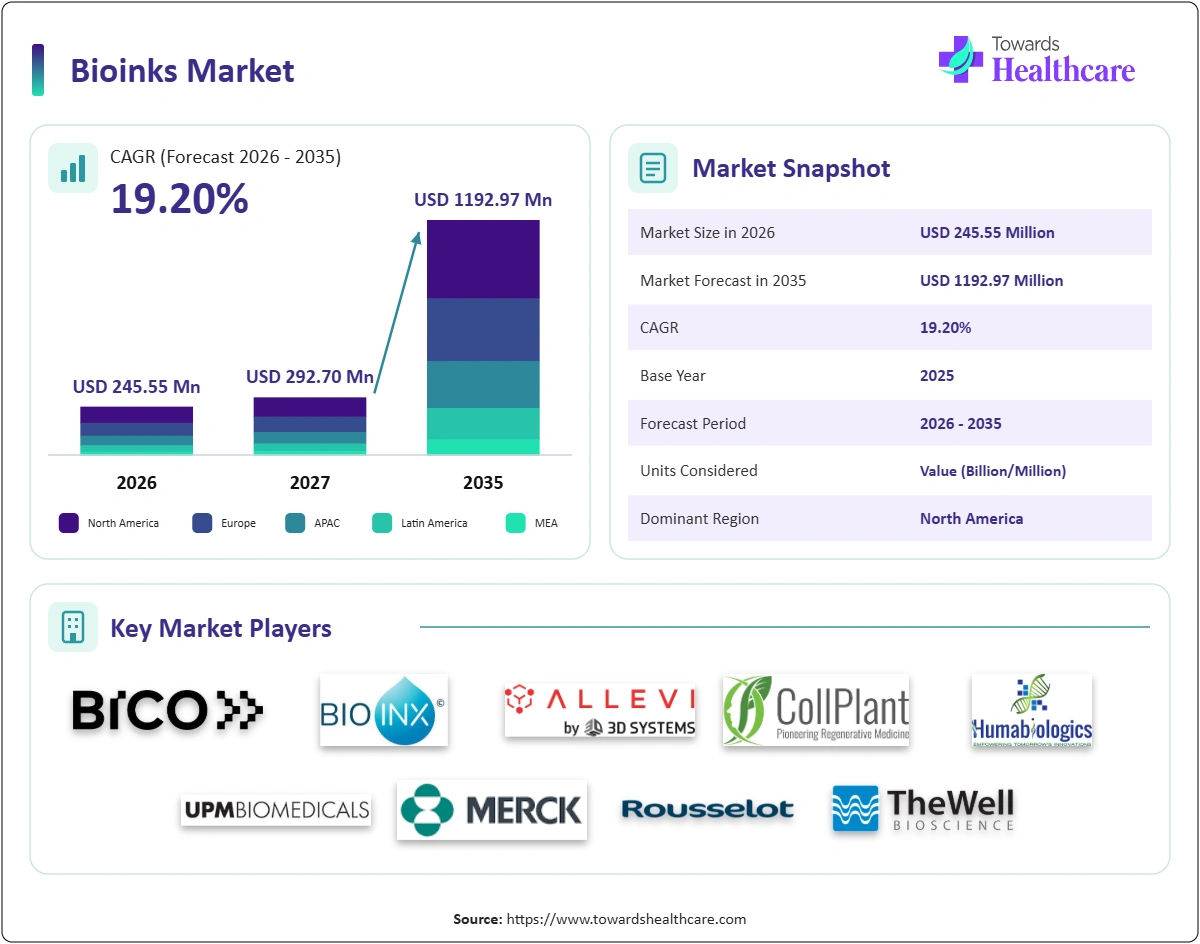
The market is forecasted to expand from USD 206.00 million in 2025 to USD 1,192.97 million by 2035 because 3D bioprinting is advancing from academic experiments to routine use in drug discovery, toxicology, and tissue engineering, and every printed construct consumes bioink. Regulatory support for non-animal testing, growing pharma use of 3D tissue models, new recombinant and hybrid materials, and expanding bioprinter installed bases drive very strong growth, propelling the market to USD 495.73 million by 2030 and maintaining a CAGR of 19.20% during the forecast period.
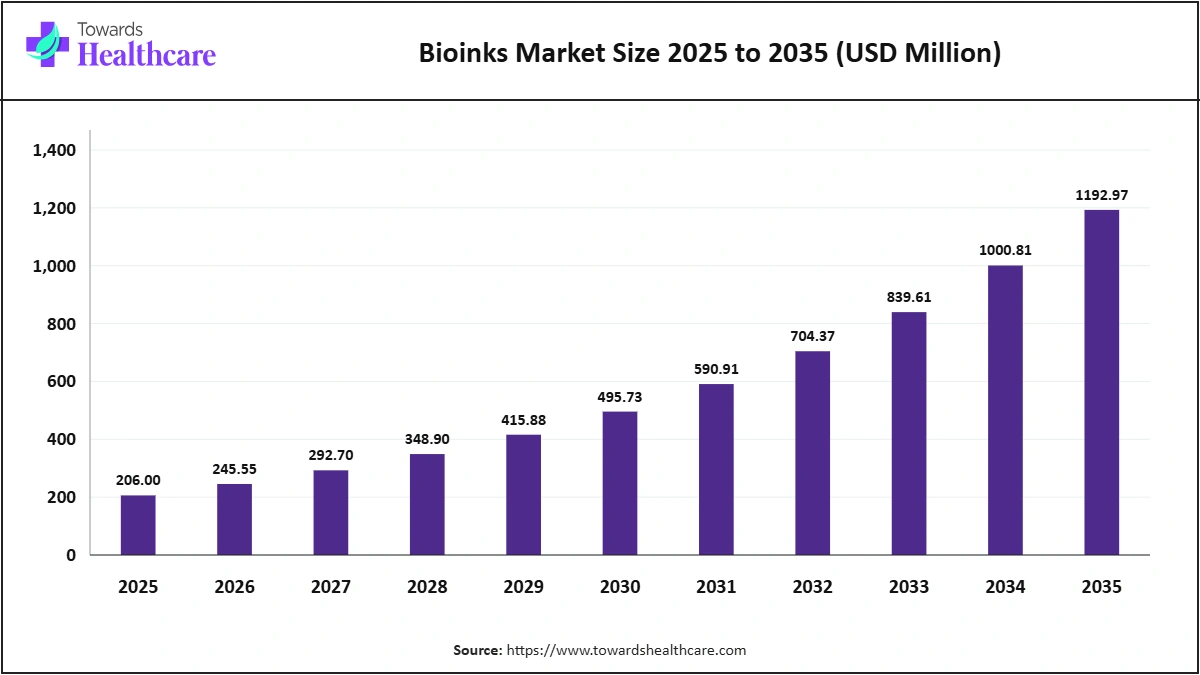
Analyst View: We built the estimate from the installed base of research and commercial bioprinters, bioink consumption per system, the mix of materials and kits, and mean prices, adding bioinks used with non-printing 3D culture methods where sold as bioinks. Consumption highlights academic tissue engineering activity, pharmaceutical adoption of bioprinted models, and regenerative medicine programs. The total was cross-checked against the revenues of prominent bioink suppliers and against published estimates, which places our base year slightly above the highest credible comparable figure. The growth rate is a testament to strong regulatory momentum for non-animal methods, which supports a slightly higher rate than comparable estimates, moderated by standardization and reproducibility challenges.
Driver: Tissue engineering research is expanding, and the pharmaceutical industry is incorporating 3D tissue models. Regulations drive the shift towards non-animal methods, and the installed base of bioprinters is growing. Next-generation material help in the improvement of performance.
Restraint: Formulations lack standardization, and reproducibility continues to be a concern. High-quality bioinks come with steep costs, and regulatory pathways for printed tissues are not clear. Scaling of operations involves significant intricacies.
Opportunity: Animal-free bioinks reaching regulated users have significant market growth potential. Organoid and screening applications are growing, and clinical bioprinting creates GMP demand. Bioinks research investment in Asia is expanding, and kits help in simplifying the adoption process.
Note: 2025 is the base year; 2035 values are forecasts.
Sources: Expert interviews, secondary sources, Towards Healthcare database and Towards Healthcare analysts.
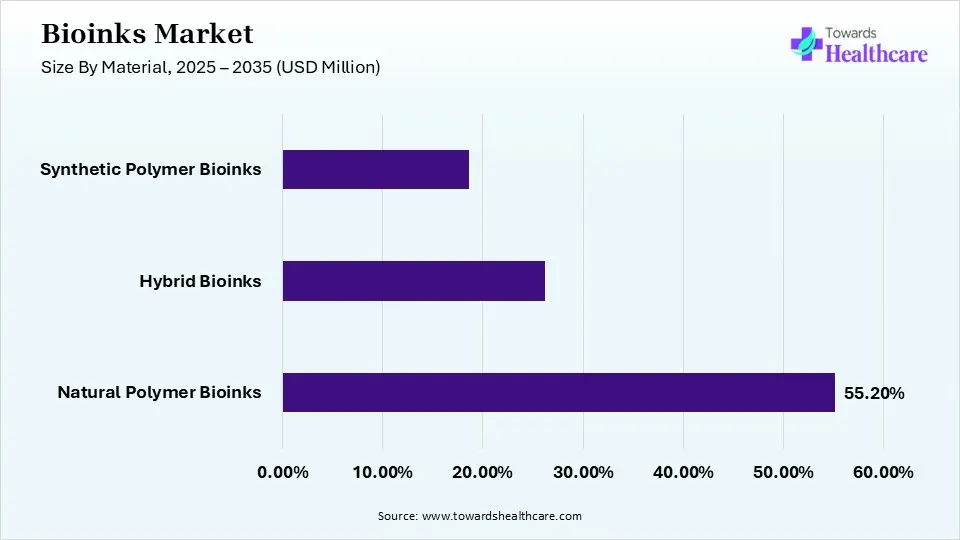
Natural polymer bioinks held a market share of 55.20% (USD 113.71 million) in 2025 and are projected to reach USD 626.27 million by 2035, expanding at a CAGR of 18.60% over the forecast period. Natural polymer bioinks are made from collagen, gelatin and gelatin methacryloyl (GelMA), alginate, hyaluronic acid, fibrin, nanocellulose and decellularised extracellular matrix. The dominance of natural polymer bioinks can be attributed to the fact that they provide the biological signals cells require to attach, grow, and form tissue, and researchers have used them for many years. Suppliers are increasingly focusing on recombinant and animal-free versions, such as CollPlant's rhCollagen and UPM's nanocellulose, to improve consistency and remove animal-derived variability.
Hybrid bioinks combine natural and synthetic components, for example, GelMA with PEG or alginate with nanocellulose, to maintain a balance between biological activity, printability, and mechanical strength. This segment is growing at the fastest rate in the material category because users need bioinks that print at high resolution, hold their shape, and still support living cells, especially for light-based printing and load-bearing tissues.
Synthetic polymer bioinks such as PEG, Pluronic, and polycaprolactone offer precise control of stiffness, degradation, and reproducibility, and are often used as sacrificial or support materials and for structural scaffolds. They lack natural cell signals, so they are often modified with peptides or blended with natural polymers.
Note: 2025 is the base year; 2035 values are forecasts.
Sources: Expert interviews, secondary sources, Towards Healthcare database and Towards Healthcare analysts.
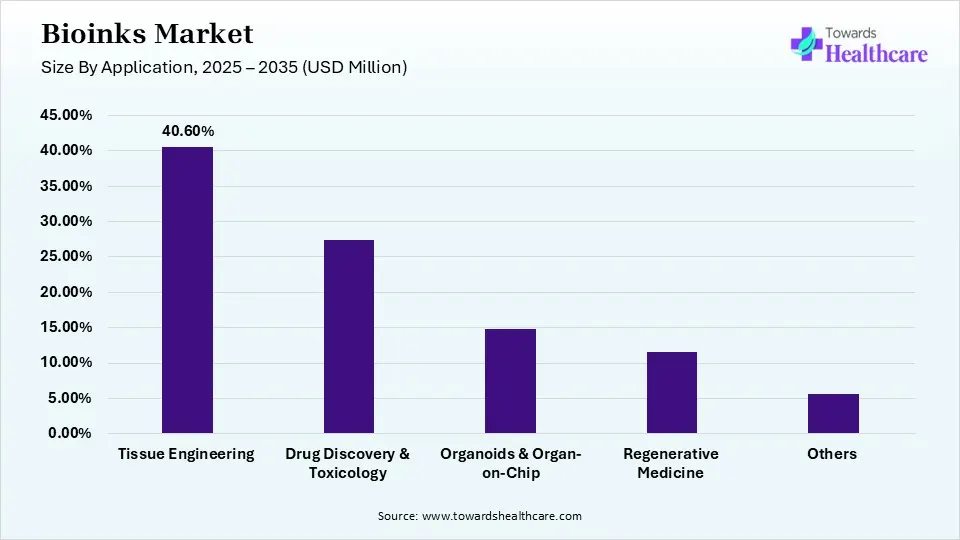
Tissue Engineering held a 40.60% (USD 83.64 million) share in 2025 and is projected to reach USD 462.13 million by 2035, expanding at a CAGR of 18.64% during the forecast period. Tissue engineering is the largest application, as it covers bioprinted skin, cartilage, bone, liver, cardiac, and vascular tissue for research. Academic laboratories use bioinks to study how cells build tissue and to develop implantable constructs.
Drug discovery and toxicology use bioprinted liver, kidney, skin, and tumor models for testing drug efficacy and safety in human-relevant tissues. Regulations are driving the shift towards non-animal methods, which increases pharmaceutical use of bioinks.
Organoids and organ-on-chip applications use bioinks to position cells and build structured organoids and tissue chips with controlled architecture. This is the fastest-growing application owing to the fact that bioprinting improves the reproducibility and scale of organoid production for screening.
Regenerative medicine includes the development of bioprinted grafts and implants, such as skin, cartilage, and corneal tissue. The development is moving towards the clinical trials phase.
Others segment includes cosmetics testing, food science, and education.
Note: 2025 is the base year; 2035 values are forecasts.
Sources: Expert interviews, secondary sources, Towards Healthcare database and Towards Healthcare analysts.
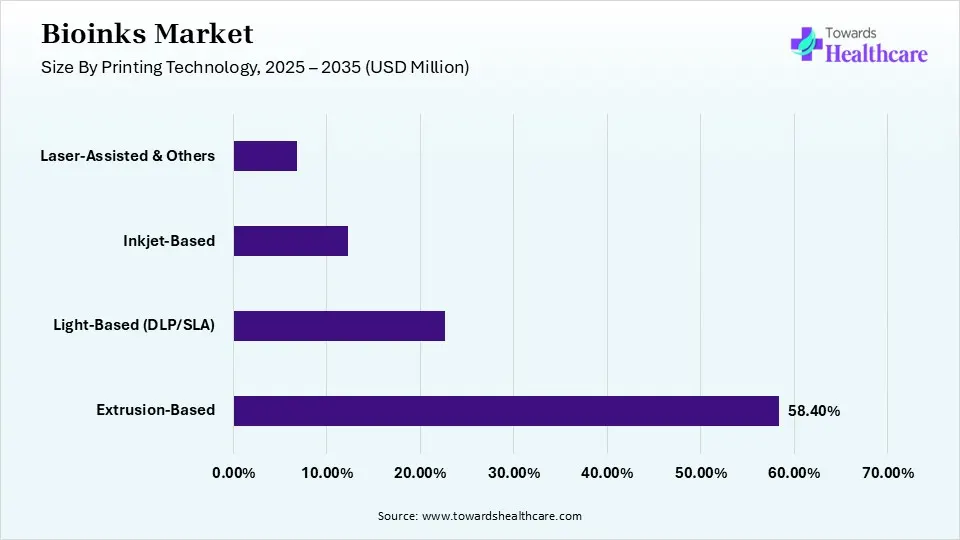
Extrusion-based held the largest share of 58.40% (USD 120.30 million) in 2025 and is forecasted to expand to USD 666.43 million by 2035, growing at a CAGR of 18.67% from 2026 to 2035. Extrusion-based bioprinting pushes bioink through a nozzle, is the most common and affordable method, and is compatible with many viscous bioinks. The leadership of this segment can be attributed to the fact that most installed bioprinters, including CELLINK's BIO X systems, use extrusion.
Light-based bioprinting, including digital light processing and stereolithography, cures photosensitive bioinks layer by layer, delivering high resolution and speed. This technology is growing at the highest rate as users want finer features and faster printing, and suppliers are launching dedicated kits such as CollPlant's BioFlex.
Inkjet-based bioprinting deposits small droplets of low-viscosity bioink and is used for high-throughput patterning of cells in screening plates.
Laser-assisted and other methods, including volumetric and acoustic bioprinting, offer high precision or speed for specialized applications.
Note: 2025 is the base year; 2035 values are forecasts.
Sources: Expert interviews, secondary sources, Towards Healthcare database and Towards Healthcare analysts.
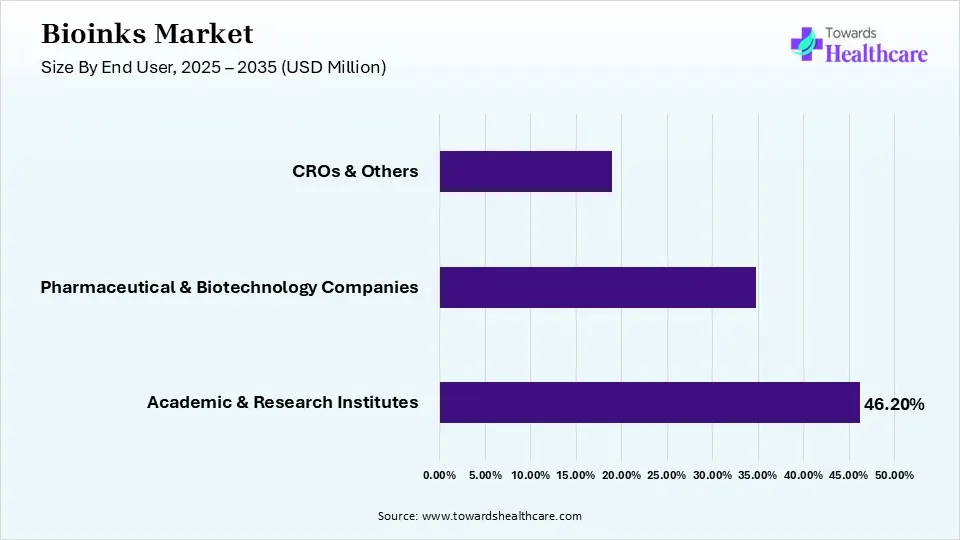
Academic & Research Institutes held a market share of 46.20% (USD 95.17 million) in 2025 and are projected to reach USD 521.71 million by the end of the forecast period, expanding at a CAGR of 18.55% from 2026 to 2035. Academic and research institutes represent the largest end-user base, as they use bioinks in tissue engineering, biomaterials, and regenerative medicine research funded by government grants.
Pharmaceutical and biotechnology companies use bioinks to build tissue models for drug screening and toxicology. This segment is growing at the highest rate in the end-user category as companies adopt human-relevant models to reduce late-stage failures and animal testing.
CROs and others include contract research organizations offering 3D tissue model services, cosmetics companies, and hospitals running translational research.
Analyst View: Segment values were allocated by matching bioink consumption and prices to materials, applications, printing technologies, and end users, using supplier portfolios and research activity. Natural polymers, tissue engineering, extrusion printing and academic users hold a leading position. We expect the shares of hybrid bioinks, organoid applications, light-based printing and pharmaceutical users to increase.
| Region | 2025 Share | 2025 Value (USD Million) | 2035 Value (USD Million) | CAGR 2026–2035 |
| North America | 39.20% | 80.75 | 442.43 | 18.54% |
| Europe | 27.60% | 56.86 | 322.17 | 18.94% |
| Asia Pacific | 26.20% | 53.97 | 346.66 | 20.44% |
| Latin America | 4.00% | 8.24 | 46.69 | 18.94% |
| Middle East & Africa | 3.00% | 6.18 | 35.02 | 18.94% |
Note: 2025 is the base year; 2035 values are forecasts.
Sources: Expert interviews, secondary sources, Towards Healthcare database and Towards Healthcare analysts.
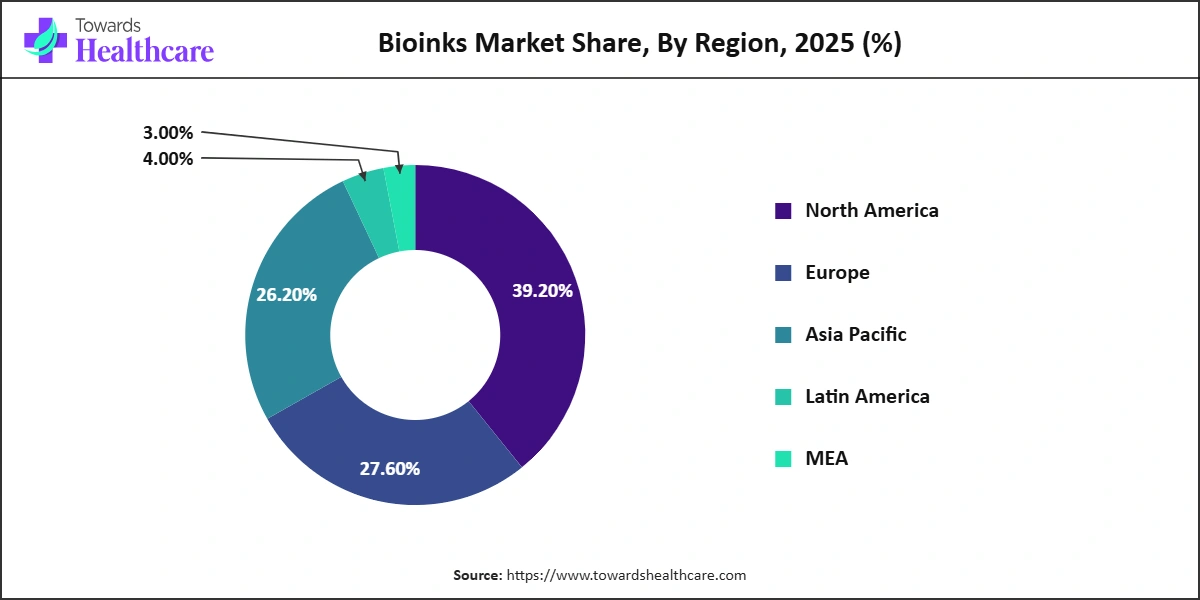
North America held a 39.20% (USD 80.75 million) share in 2025 and is forecasted to reach USD 442.43 million by 2035, expanding at a CAGR of 18.54% during the forecast period. The United States has the largest tissue engineering research community, strong NIH funding, a significant presence of pharmaceutical companies that are adopting 3D tissue models, and regenerative medicine start-ups. The FDA's move to reduce animal testing in drug development is boosting investment in bioprinted models.
Europe accounted for 27.60% (USD 56.86 million) of revenue in 2025 and is projected to reach USD 322.17 million by the end of the forecast period, expanding at a CAGR of 18.94% from 2026 to 2035. Europe has strong biomaterials research and benefits from key players such as BICO (CELLINK) in Sweden, UPM Biomedicals in Finland, BIO INX in Belgium, and Merck KGaA in Germany. EU policies are in favor of reducing animal testing, and research programs in Germany, the UK, the Netherlands, and Switzerland drive regional market demand.
Asia Pacific held a 26.20% (USD 53.97 million) share in 2025 and is projected to reach USD 346.66 million by 2035, expanding at a CAGR of 20.44% during the forecast period. This region is growing at the highest rate due to large research investments in China, Japan, South Korea, and Singapore, growing biopharmaceutical industries, and government programs in regenerative medicine. Domestic bioprinter and bioink suppliers are expanding their operations in China and South Korea.
Latin America accounted for 4.00% (USD 8.24 million) of revenue in 2025 and is forecasted to expand to USD 46.69 million by 2035, growing at a CAGR of 18.94% from 2026 to 2035. Regional market ecosystem benefits from university research in Brazil and Mexico, although funding constraints limit adoption.
Middle East & Africa held a market share of 3.00% (USD 6.18 million) in 2025 and is projected to reach USD 35.02 million by 2035, expanding at a CAGR of 18.94% during the forecast period. Key regional demand drivers include research investment in Israel, home of CollPlant, and in Saudi Arabia and the UAE.
Analyst View: Regional shares were built from bioprinter installed bases, research activity, and pharmaceutical adoption in each region. North America continues to be a leader because of research funding and pharma adoption. We assign Asia Pacific the highest growth premium because research and biopharma investment is expanding at the fastest rate in this region.
| Rank | Company Name | Market-Specific Revenue (USD Million) | 2025 Share | Key Products / Business | Headquarters |
| 1 | CELLINK & Advanced BioMatrix (BICO) | 52.00 | 25.24% | CELLINK bioinks, Advanced BioMatrix collagen and GelMA | Sweden |
| 2 | Merck KGaA | 18.00 | 8.74% | TissueFab bioinks and biomaterials | Germany |
| 3 | Rousselot | 8.00 | 3.88% | X-Pure GelMA and gelatin biomaterials | Netherlands |
| 4 | UPM Biomedicals | 6.00 | 2.91% | GrowInk nanocellulose bioinks | Finland |
| 5 | 3D Systems (Allevi) | 5.00 | 2.43% | Allevi bioinks and bioprinting | United States |
| 6 | BIO INX | 5.00 | 2.43% | Bioinks for extrusion and light-based printing | Belgium |
| 7 | CollPlant | 4.00 | 1.94% | rhCollagen bioinks and BioFlex kit | Israel |
| 8 | Humabiologics | 4.00 | 1.94% | Human-derived collagen and ECM bioinks | United States |
| 9 | TheWell Bioscience | 3.00 | 1.46% | VitroInk peptide bioinks | United States |
| 10 | Inventia Life Science | 3.00 | 1.46% | RASTRUM bioinks and matrices | Australia |
Note: Company revenues and shares are 2025 estimates.
Sources: Company press releases, expert interviews, secondary sources, Towards Healthcare database and Towards Healthcare analysts.
BICO leads because of CELLINK, the pioneer of commercial bioinks, and Advanced BioMatrix, a supplier of collagen and GelMA, sold alongside its large installed base of bioprinters. Merck KGaA provides TissueFab bioinks through its Sigma-Aldrich channel, and Rousselot supplies high-purity GelMA and gelatin. UPM Biomedicals, 3D Systems, BIO INX, CollPlant, Humabiologics, TheWell Bioscience and Inventia compete through nanocellulose, bioprinting-linked, light-curable, recombinant collagen, human-derived, peptide and screening bioinks.
The top 10 companies held a market share of 52.43% (USD 108.00 million) in 2025, while the remaining 47.57% (USD 98.00 million) was shared among start-ups, academic spin-offs and regional biomaterial suppliers. The market is moderately concentrated around bioprinter companies and biomaterial specialists, and competition revolves around printability, cell compatibility, reproducibility, animal-free sourcing, compatibility with printers, regulatory documentation, and price. Start-ups are continuously entering the market with new chemistries and tissue-specific formulations.
The bioinks ecosystem links raw biomaterial producers with bioink formulators, bioprinter makers, distributors and research, pharmaceutical and clinical users.
| Ecosystem Stage | Role in the Market | Key Companies |
| Raw Biomaterials | Supply collagen, gelatin, alginate and polymers | Rousselot, CollPlant, UPM, chemical suppliers |
| Bioink Formulators | Develop and sell bioinks and kits | CELLINK, Merck KGaA, BIO INX, Humabiologics, TheWell Bioscience |
| Bioprinter Makers | Build printers and validate bioinks | BICO, 3D Systems, Inventia, regional printer makers |
| Distribution | Sell bioinks to laboratories | Direct channels, Sigma-Aldrich, distributors |
| End Users | Print tissues and models | Universities, pharma companies, CROs, regenerative medicine developers |
Sources: Company press releases, expert interviews, secondary sources, Towards Healthcare database and Towards Healthcare analysts.
The Towards Healthcare Companies Quadrant positions important participants in the bioinks market by market strength, reflecting revenue scale, market share and geographic reach, and by innovation and growth strategy, reflecting product portfolio breadth, research and development intensity and collaborations. Positions reflect each company's estimated 2025 bioink revenue and our examination of its materials, product launches, and partnerships.
Sources: Company press releases, expert interviews, secondary sources, Towards Healthcare database and Towards Healthcare analysts.
Leaders: CELLINK & Advanced BioMatrix (BICO), Merck, Rousselot and UPM Biomedicals bring together the largest bioink revenue and broad portfolios and strong distribution.
Innovators: 3D Systems (Allevi), BIO INX, CollPlant, Humabiologics, TheWell Bioscience and Inventia Life Science offer recombinant, animal-free, light-curable and tissue-specific bioinks.
By Material
By Application
By Printing Technology
By End User
By Region
The market is defined as natural, synthetic, and hybrid bioinks, crosslinkers, support materials, and ready-to-print kits for 3D bioprinting in research, drug discovery, and regenerative medicine, worldwide. The 2025 base year was built bottom-up from bioprinter installed base, bioink consumption by material, application, technology, end user and region, and average prices, and checked top-down against the bioink revenues of leading bioprinting and biomaterial suppliers.
Segment, regional and company values were allocated from materials, applications, printing technologies, end users and regional demand. Key estimates were verified by cross-checking company disclosures, regulatory and industry data, and published third-party estimates, and inputs that could not be reconciled have not been included. All segment, regional and company figures were reconciled to the same 2025 base year, and the 2026–2035 forecast, which applies a constant CAGR from the 2025 base, was recalculated and validated.
Analyst View: The market is a small but fast-growing segment of the 3D bioprinting value chain, with growth tied to the shift from animal studies to human-relevant tissue models. Our estimate links demand to bioprinter use, consumption, and prices, so the forecast follows research funding, pharma adoption, and regulatory change. The main upside comes from drug discovery and organoid applications, while the main risks are standardization and reproducibility.