Pipeline Programs

CGT Companies Tracked

Manufacturing Facilities


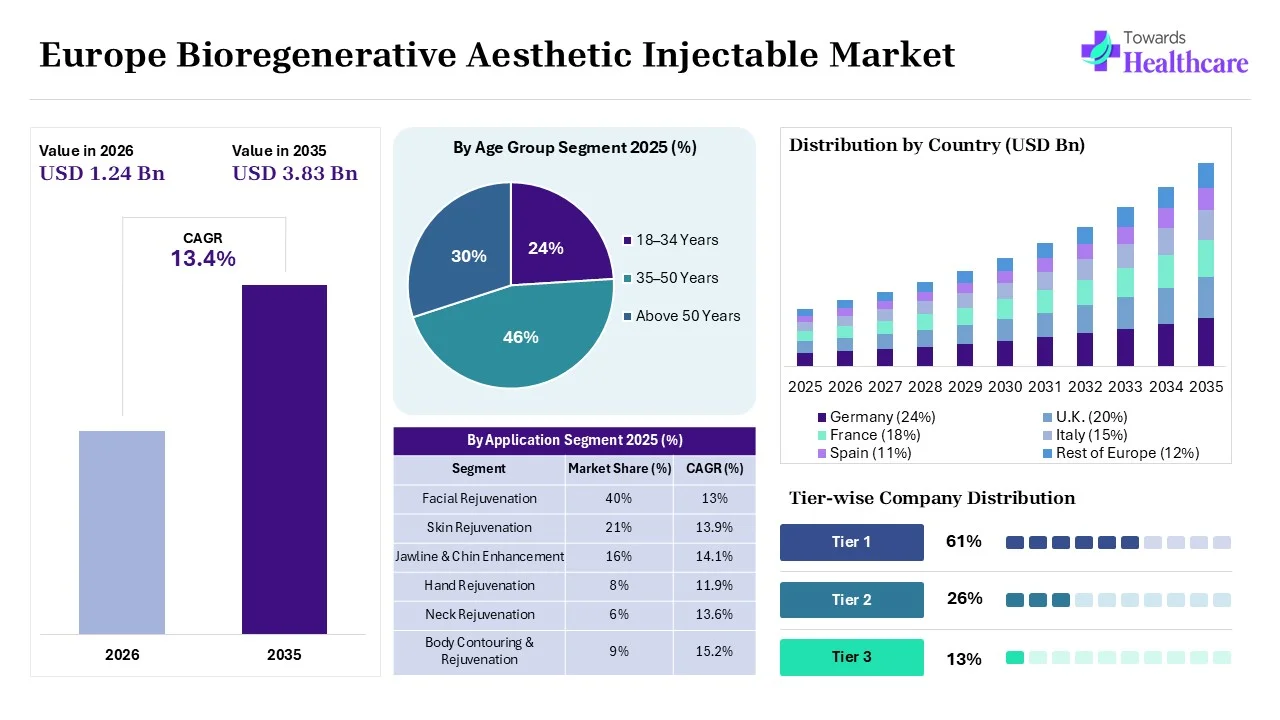
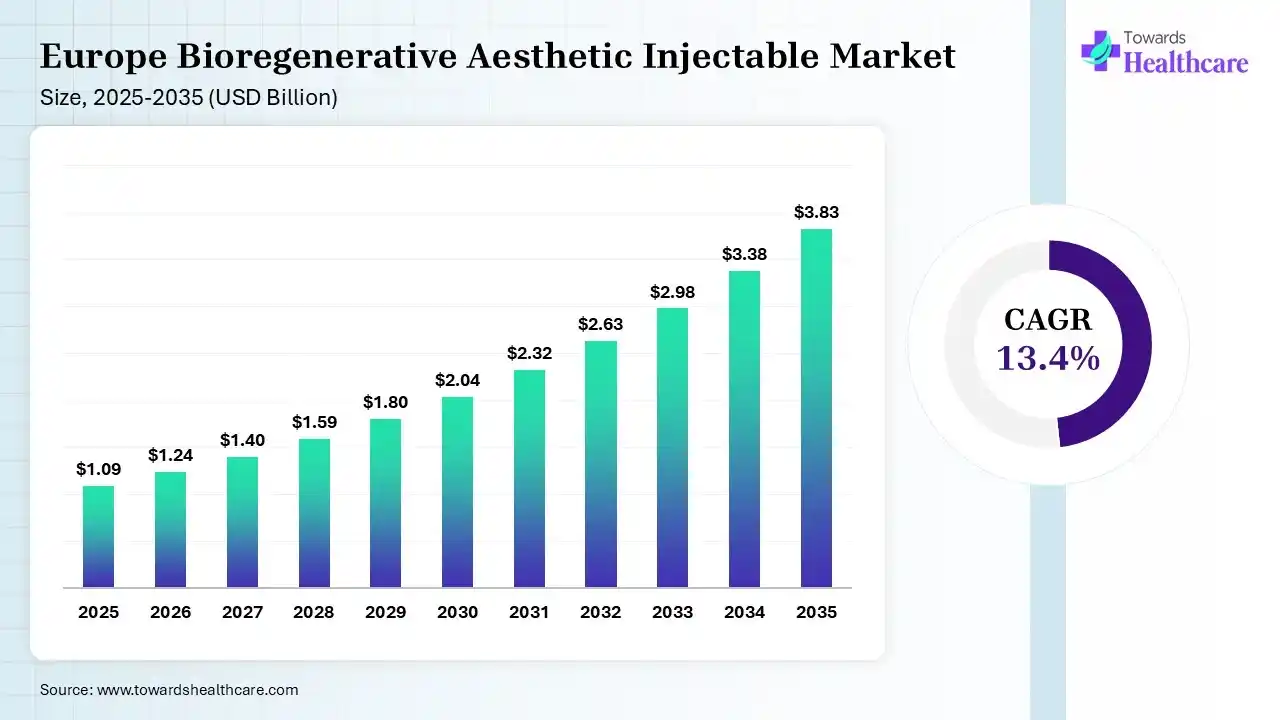
The Europe bioregenerative aesthetic injectable market size stood at US$ 1.09 billion in 2025, grew to US$ 1.24 billion in 2026, and is forecast to reach US$ 3.83billion by 2035, expanding at a CAGR of 13.4% from 2026 to 2035.
Bioregenerative therapeutics harness the body’s inborn capability to heal and regenerate itself. Various traditional cosmetic technologies, this approach doesn’t involve invasive operations and artificial implants. Bio-regenerative fillers are injectable materials applied to restore facial volume, plump wrinkles, and improve tissue structure. Biological bio-regenerators, involving polynucleotides, polydeoxyribonucleotides, and extracellular vesicles, present strong mechanistic plausibility. Bioregenerative injectables aid the skin in regenerating itself. They are about helping renewal and not immediate masking. These treatments slowly enhance texture, tone, and firmness.
Rising consumer demand for natural-looking, minimally invasive anti-aging treatments drives the Europe bioregenerative aesthetic injectable market. Innovations in polynucleotides, platelet-rich plasma, and exosomes provide lucrative expansion opportunities. An expanding patient demographic features up to a 70% increase in demand among males, while younger demographics increasingly seek preventive care.
Artificial intelligence is also beginning to influence product selection and skin health maintenance. Using AI face analysis tests, practitioners can now prescribe skincare with greater precision, matching formulations to specific patient profiles. AI could help practitioners forecast treatment longevity, predict patient satisfaction levels, and automate documentation across multiple visits. AI also streamlines record-keeping, supports compliance, and enables long-term tracking of results, all vital for modern clinical governance. With tools that analyse facial symmetry, predict ageing, and visualise outcomes, injectors can make more confident decisions while improving communication and trust with patients. AI could help practitioners forecast treatment longevity, predict patient satisfaction levels, and automate documentation across multiple visits. Generative AI applications analyze skin elasticity, volume deficits, and facial features to assist in creating customized treatment plans.
Rise of Biostimulators and Polynucleotides:
Biostimulators are injectable treatments intended to stimulate the body’s natural regenerative systems, specifically collagen and elastin production. Polynucleotides are naturally derived biostimulators which functioning at a cellular level to encourage skin regeneration, hydration, and elasticity. They are composed of purified DNA fragments which supports to trigger fibroblast activity, causing improved elastin production.
Hyper-Active Aesthetic Biostimulators:
Hyper-diluting aesthetic biostimulators, long-lasting dermal fillers are applied in aesthetics to restore lost volume, construction, and support, which happens as a result of the aging process.
Hybrid Injectables:
Recent advancement in a hybrid product that contains hyaluronic acid and dextranomer microparticles. This makes for an amplified contouring and filling result for the mid to deep dermis. It provides a rapid application with less downtime, making it the standard anti-aging treatment for patients seeking non-surgical dermal rejuvenation. It improves skin elasticity and texture via collagen stimulus.
| Table | Scope |
| Market Size in 2026 | USD 1.24 Billion |
| Projected Market Size in 2035 | USD 3.83 Billion |
| CAGR (2026 - 2035) | 13.4% |
| Historical Data | 2020 - 2023 |
| Base Year | 2025 |
| Forecast Period | 2026 - 2035 |
| Measurable Values | USD Millions/Units/Volume |
| Market Segmentation | By Product Type, By Application, By End User, By Gender, By Age Group, By Distribution Channel, By Region |
| Top Key Players | Galderma, IBSA Group, Merz Aesthetics, Sinclair Pharma, Fillmed |
| Segment | Share 2025 (%) |
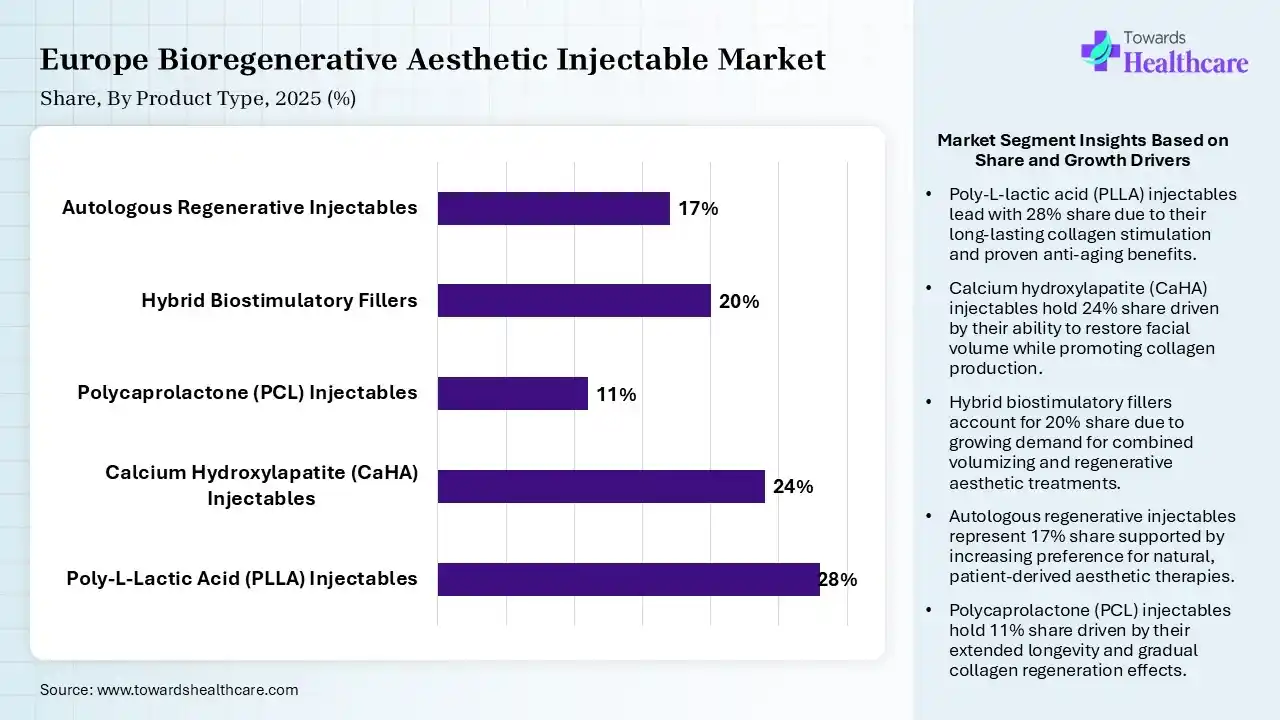
| Poly-L-Lactic Acid (PLLA) Injectables | 28% |
| Calcium Hydroxylapatite (CaHA) Injectables | 24% |
| Polycaprolactone (PCL) Injectables | 11% |
| Hybrid Biostimulatory Fillers | 20% |
| Autologous Regenerative Injectables | 17% |
The Poly-L-Lactic Acid (PLLA) Injectables Segment Led the Europe bioregenerative aesthetic injectable market in 2025
The poly-l-lactic acid (PLLA) injectables segment contributed the largest market share of 28% in 2025, as applications of PLLA in managing facial wrinkles, volume loss, and improving skin elasticity and hydration, with consumer satisfaction beyond 90%. Technical advancement, involving particle-size optimization and composite formulations, has further improved the biocompatibility, efficiency, and duration of effect of PLLA, potentially lowering adverse events.
The calcium hydroxylapatite (CaHA) injectables segment held a significant share of 24% in 2025, as CaHA filler demonstrated efficient and sustained volume restoration while predominantly enhancing skin hydration, barrier function, and elasticity. CaHA functions not only as a volumizer but also as a skin promoter, providing an inclusive strategy to facial rejuvenation. Calcium hydroxyapatite (CaHA) fillers are broadly recognized for their volumizing characteristics in soft tissue augmentation.
The hybrid biostimulatory fillers segment held a significant share of 20% of the Europe bioregenerative aesthetic injectable market in 2025, and is expected to grow at the fastest CAGR during the forecast period in the market, as it stimulates natural collagen making for sustained results, enhanced skin texture, thickness, and elasticity, lowers volume loss, and improves facial contours and provides long-lasting advancement with minimal maintenance.
The polycaprolactone (PCL) injectables segment held a significant share of 11% in 2025, as this injection demonstrated greater effectiveness in lowering NLF wrinkle severity and achieving increasing patient satisfaction compared to PLLA injections over 12 months. PCL is a continuing synthetic polymer that offers structural support and induces collagenesis.
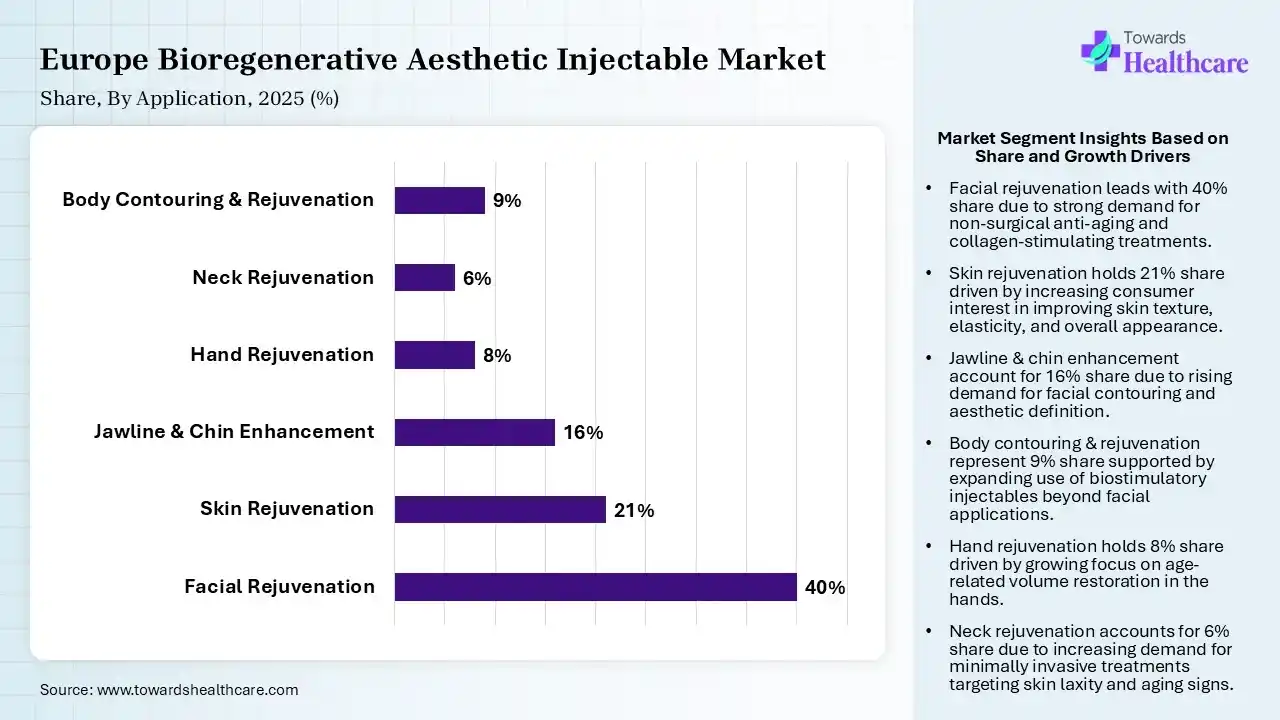
| Segment | Share 2025 (%) |
| Facial Rejuvenation | 40% |
| Skin Rejuvenation | 21% |
| Jawline & Chin Enhancement | 16% |
| Hand Rejuvenation | 8% |
| Neck Rejuvenation | 6% |
| Body Contouring & Rejuvenation | 9% |
Facial Rejuvenation Segment Led the Europe bioregenerative aesthetic injectable market in 2025
The facial rejuvenation segment contributed the largest market share of 40% in 2025, as it enhances skin texture, reduces dark circles, lowers fine lines, and diminishes the appearance of acne scars. This innovation process encourages collagen growth to support skin becoming fuller and more youthful. Skin rejuvenation treatments an easy and effective remedy for age spots.
The skin rejuvenation segment held a significant share of 21% of the market in 2025, as it lowers the appearance of under-eye wrinkles and hollows. Elimination of dark spots, sun damage, and blemishes. The skin rejuvenation technology, such as chemical peels, helps to get rid of persistent skin marks. In this technology, safe and lab-tested chemicals are applied to the skin to destroy the upper layer of skin so the patient has a novel and better layer of skin, which looks spotless, tighter, and rejuvenated.
The jawline & chin enhancement segment held a significant share of 16% of the market in 2025, as jawline augmentation improves facial definition, enhances symmetry, and offers a more youthful appearance. It increases self-confidence. Chin augmentation is an efficient way to improve the appearance of the chin and enhance the balance and regularity of the face.
The body contouring & rejuvenation segment held a significant share of 9% of the market, and is expected to grow at the fastest CAGR during the forecast period, as this technology supports eliminating excess fat, tightening loose skin, and improving the entire shape. Body contouring significantly increases confidence and self-esteem by addressing the regions of the body that cause insecurity.
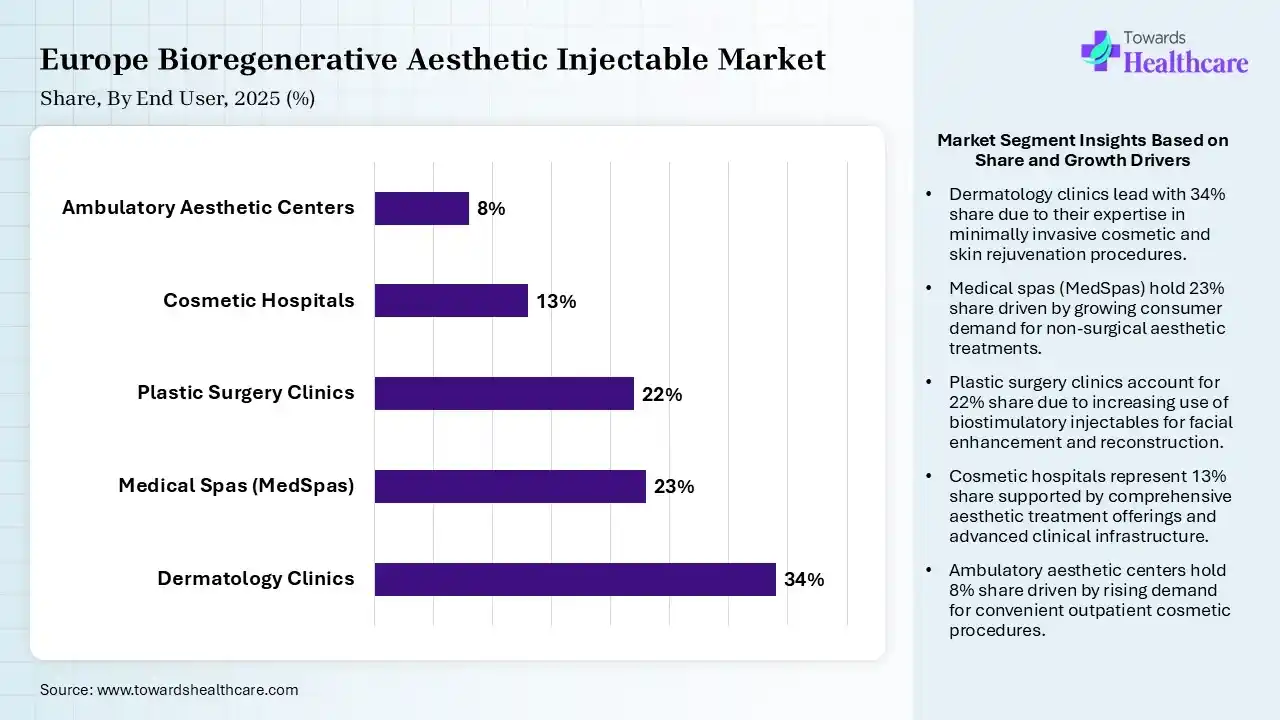
| Segment | Share 2025 (%) |
| Dermatology Clinics | 34% |
| Medical Spas (MedSpas) | 23% |
| Plastic Surgery Clinics | 22% |
| Cosmetic Hospitals | 13% |
| Ambulatory Aesthetic Centers | 8% |
The Dermatology Clinics Segment led the Europe bioregenerative aesthetic injectable market in 2025
The dermatology clinics segment contributed the largest market share of 34% in 2025, as dermatology clinic an excellent choice for preserving healthy skin, addressing healthcare challenges, and improving appearance. The clinic is being allowed to access well-developed treatments and knowledge. Clinics are being allowed to access well-developed treatments and technologies. Supports the early diagnosis of skin diseases and offers targeted treatment plans.
The medical spas (MedSpas) segment held a significant share of 23% in the market and is expected to grow at the fastest CAGR during the forecast period, as medical spas are equipped with advanced technology and staffed by extremely trained professionals for safe and efficient treatment. Technologies like radiofrequency skin tightening, laser resurfacing, and injectable treatments such as Botox and fillers are performed by licensed and experienced technicians using progressive equipment to achieve superior outputs.
The plastic surgery clinics segment held a significant 22% share of the Europe bioregenerative aesthetic injectable market in 2025. The plastic surgery advantages extend beyond aesthetics. It enhances physical health, increasing confidence, and improves overall health. Plastic surgery clinics provide both cosmetic improvements and reconstructive technology.
The cosmetic hospitals segment held a significant 13% share of the market in 2025, as cosmetic hospitals provide specific, progressive care to enhance physical appearance and improve quality of life. Significant benefits involve targeted treatments, long-lasting outputs, and important boosts to mental health and confidence.
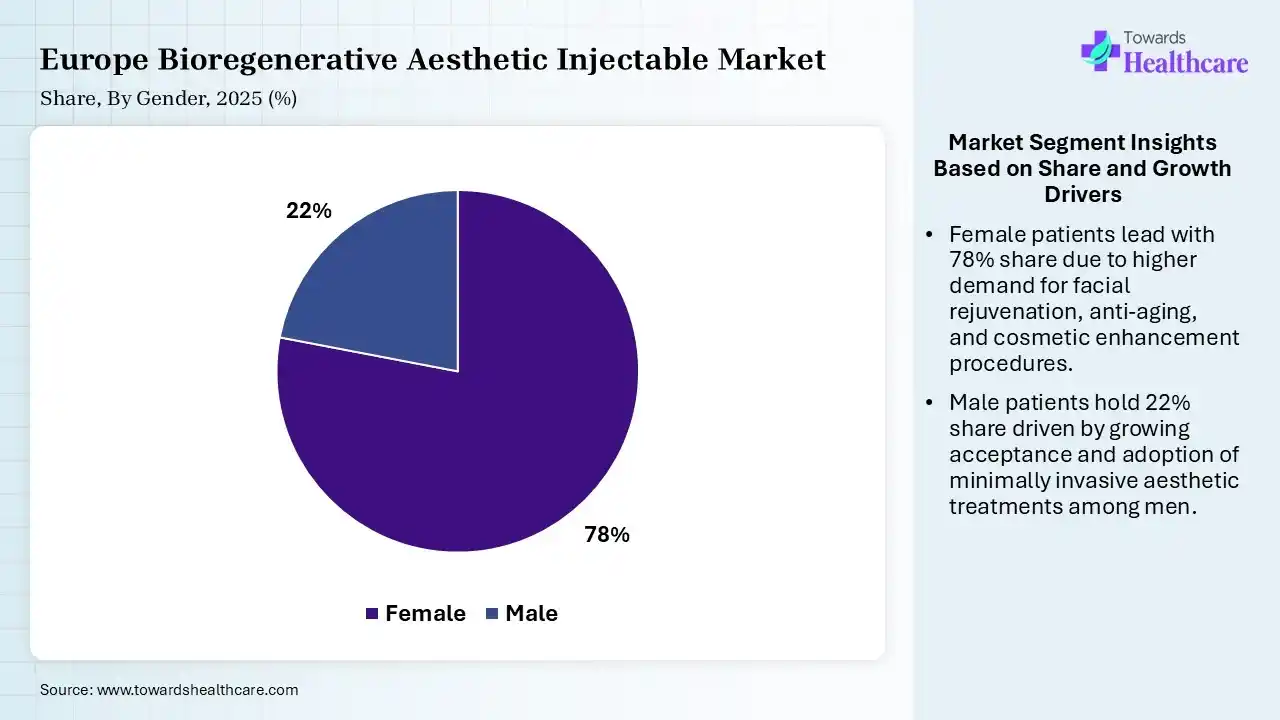
| Segment | Share 2025 (%) |
| Female | 78% |
| Male | 22% |
The Female Segment led the Europe bioregenerative aesthetic injectable market in 2025
The female segment contributed the largest market share of 72% in 2025, as bio-regenerative injectables stimulate the body's own production and tissue repair over time. Treatments increase collagen creation by 53%, enhance circulation, lower fine lines and dark undereye circles, and increase skin plumpness. Bio-remodelling injections lie in their capability to trigger profound cellular regeneration at the deepest levels of the skin.
The male segment held a significant share of 22% in the market and is expected to grow at the fastest CAGR during the forecast period, as injectables provide transformative advantages for men seeking to improve their facial appearance, offering strategic solutions that go far beyond traditional cosmetic treatments. Modern injectable technology addresses multiple aesthetic anxieties while preserving a distinctly masculine aesthetic strategy.
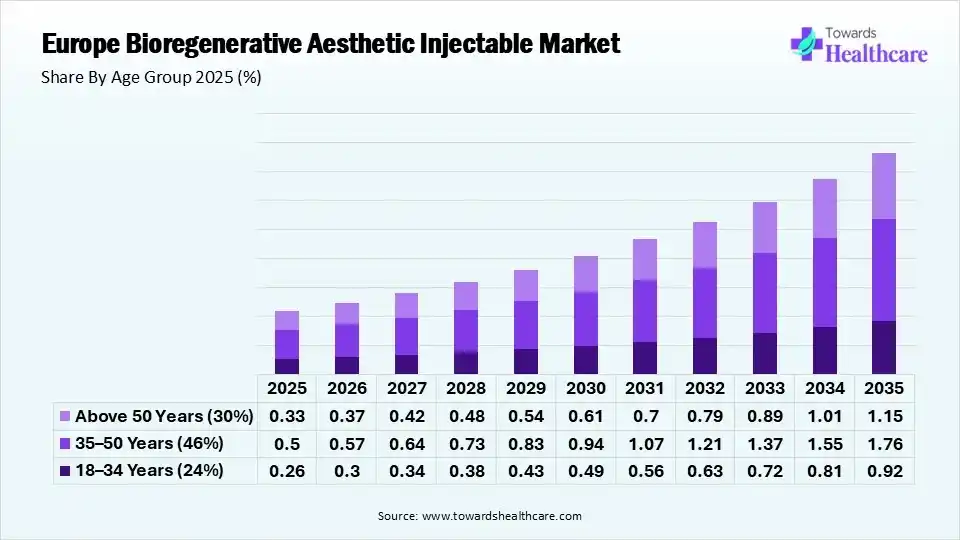
| Segment | Share 2025 (%) |
| 18–34 Years | 24% |
| 35–50 Years | 46% |
| Above 50 Years | 30% |
The 35–50 Years Segment led the Europe bioregenerative aesthetic injectable market in 2025
The 35–50 years segment contributed the largest market share of 46% in 2025, as patients sought treatment for wrinkles, skin laxity, volume loss, and crepiness. CaHA-CMC allows physicians to provide a single, negligibly invasive product that yields various visible aesthetic advancements. These treatments stimulate collagen production, lower wrinkles, and enhance skin texture via biological procedures rather than synthetic materials.
The above-50-year segment held a significant share of 30% in the Europe bioregenerative aesthetic injectable market, as intradermal collagen injections provide unique advantages in skin regeneration, involving proliferation, biocompatibility, flexibility, and controlled degradation. Bioregenerative aesthetic injections advanced lifetime patient value.
The 18–34 years segment held a significant share of 24% in the market, and is expected to grow at the fastest CAGR during the forecast period, as bio-regenerative injectables stimulate the body's own collagen manufacturing and tissue repair over time. Bioregenerative choice enhances tone, texture, and brightness. Skin feels smoother and even overall.
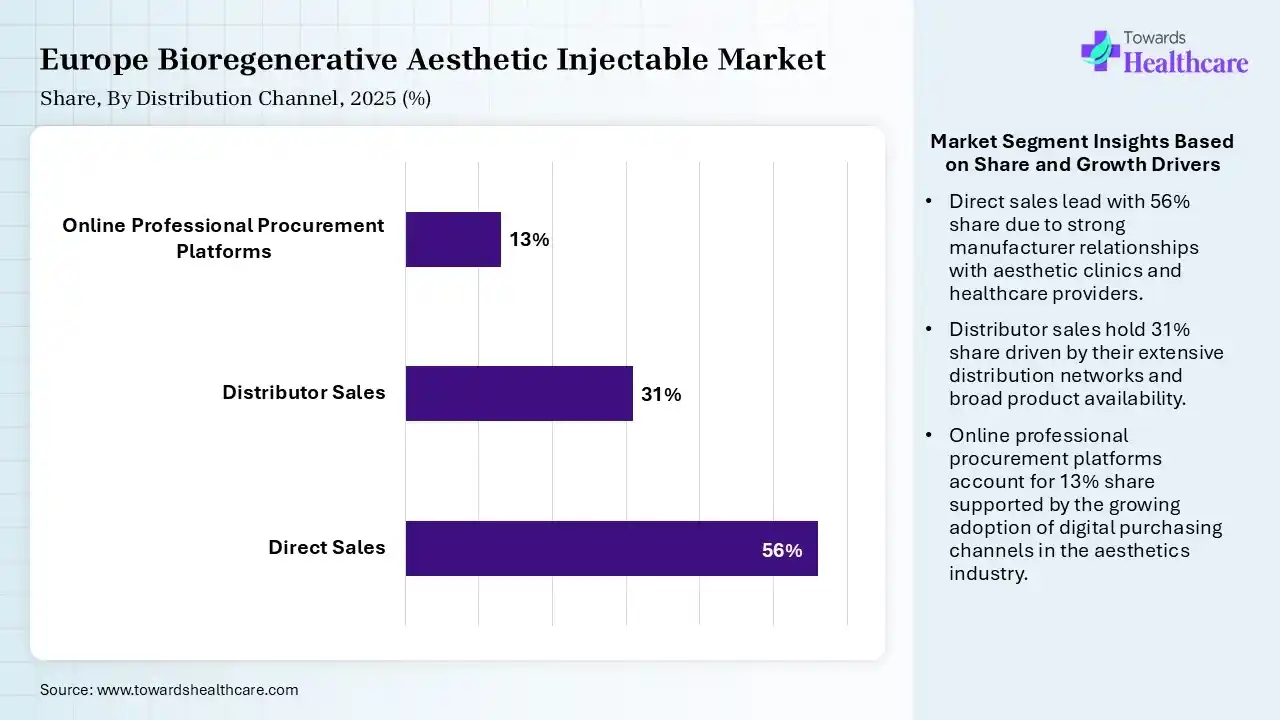
| Segment | Share 2025 (%) |
| Direct Sales | 56% |
| Distributor Sales | 31% |
| Online Professional Procurement Platforms | 13% |
The Direct Sales Segment led the Europe bioregenerative aesthetic injectable market in 2025
The direct sales segment contributed the largest market share of 56% in 2025, as direct sales is which it lowers the difficulty in the business plans and commission calculation, and enhances scalability and efficacy of increasing business technology. Direct selling enables a high degree of personal interaction between sales representatives and consumers, which leads to more targeted and customized services.
The distributor sales segment held a significant share of 31% in the marketin 2025, as distributors, some of them include expansion, consumer exposure, improved consumer solutions, and many more. Distributor sales permit producers to scale quickly by offloading logistics, warehousing, and local consumer acquisition to third-party partners.
The online professional procurement platforms segment held a significant share of 13% in the market in 2025, and is expected to grow at the fastest CAGR during the forecast period, as e-procurement for rationalization, procurement technology, lowering expenses, and increasing organisational efficiency. It permits procurement professionals in the world to communicate information simply and proficiently, streamlining the global procurement technology.
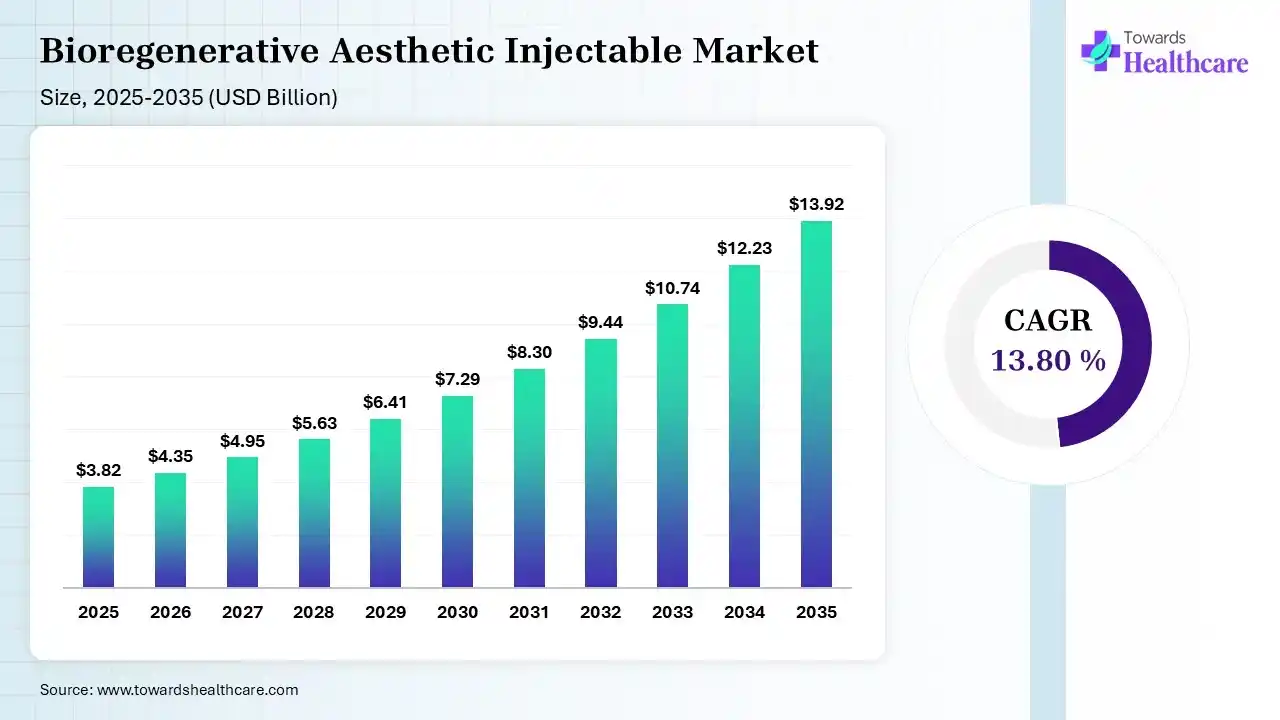
The global bioregenerative aesthetic injectable market size is calculated at US$ 3.82 billion in 2025, grew to US$ 4.35 billion in 2026, and is projected to reach around US$ 13.92 billion by 2035. The market is expanding at a CAGR of 13.80% between 2026 and 2035.
European consumers are increasingly choosing subtle, natural-looking aesthetic enhancements instead of dramatic, volume-focused procedures, reflecting changing beauty preferences across the region. Europe’s well-established yet adaptable regulatory framework supports the faster clinical evaluation, approval, and adoption of advanced bioregenerative injectable materials. Strong investments in research, innovation, and practitioner education further encourage the widespread acceptance of safer, scientifically validated, and minimally invasive aesthetic treatment options across European healthcare markets.
Germany Market Trends
Germany held a significant 24% share of the Europe bioregenerative aesthetic injectable market in 2025, supported by its strong position as a center for leading global aesthetic and biopharmaceutical companies, including Merz Aesthetics. Continuous investments in research, product development, and clinical innovation have enabled the regular introduction of advanced collagen-stimulating and minimally invasive injectable solutions. Strong healthcare infrastructure and skilled practitioners further strengthen Germany’s market leadership across Europe.
UK Market Trends
The UK accounted for a significant 20% share of the Europe bioregenerative aesthetic injectable market and is projected to register the fastest CAGR during the forecast period. Although aesthetic botulinum toxin treatments operate under limited regulatory oversight despite being prescription-only medications, the country maintains internationally recognized training and certification standards for practitioners. Rising consumer demand, expanding aesthetic clinics, and continuous professional education are expected to support sustained market growth ahead.
France Market Trends
France captured a significant 18% share of the Europe bioregenerative aesthetic injectable market, supported by its reputation as a hub for leading healthcare innovators and advanced medical research. The country emphasizes comprehensive practitioner training through specialized dermatology centers and educational programs that promote evidence-based techniques and anatomical precision. Strong clinical expertise, continuous innovation, and increasing demand for minimally invasive aesthetic procedures continue to strengthen France’s competitive position in the regional market.
R&D:
Manufacturing Processes:
Patient Services:
| Company | Headquarters | Latest Update |
| Galderma | Switzerland | It increasingly reconstructs the skin’s structural foundation over months, smoothing wrinkles and enhancing overall skin quality. |
| IBSA Group | Italy | IBSA Derma applies its innovative strategies to enhance authentic beauty, in line with the uniqueness of the individual, on the face and body. |
| Merz Aesthetics | Germany | Merz Aesthetics is investing in AI diagnostics, targeted treatment planning, and sustainability. |
| Sinclair Pharma | UK | It provides inclusive injectable portfolios involving Sculptra biostimulator |
| Fillmed | France | FILLMED's expertise covers hyaluronic acid injectables, polyrevitalizing services, and professional cosmeceutical skincare. |
In March 2026, “With new approvals, BELOTERO® Balance further strengthens its position as a versatile hyaluronic acid dermal filler, with a wide range of approved facial indications1 designed to integrate seamlessly within the skin and deliver predictable, harmonious aesthetic outcomes,” said Dr. Kerstin Olsson, Head of Medical Affairs EMEA
By Product Type
By Application
By End User
By Gender
By Age Group
By Distribution Channel
By Region











Principal Consultant
Rohan Patil is a seasoned market research professional with over 5+ years of focused experience in the healthcare sector, bringing deep domain expertise, strategic foresight, and analytical precision to every project he undertakes.
Learn more about Rohan Patil

Reviewed By
Aditi Shivarkar is a seasoned professional with over 14 years of experience in healthcare market research. As a content reviewer, Aditi ensures the quality and accuracy of all market insights and data presented by the research team.
Learn more about Aditi Shivarkar