
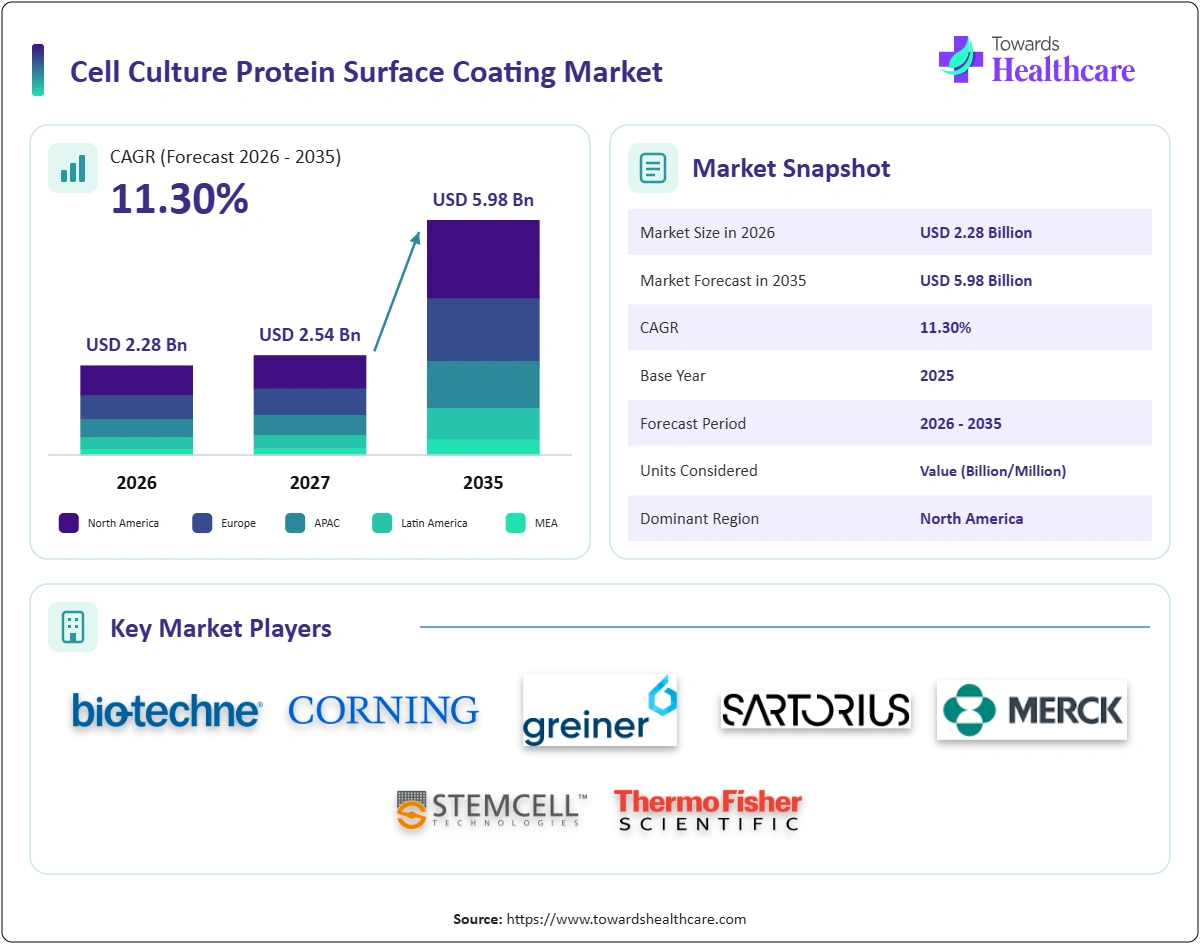
The cell culture protein surface coating market is projected to grow from USD 2.05 billion in 2025 to USD 5.98 billion by 2035 because many cell types, especially stem cells and primary cells, need protein coatings to attach and grow, and stem cell research, 3D culture and cell therapy manufacturing are expanding quickly. Growth of induced pluripotent stem cell and organoid research, cell and gene therapy manufacturing, demand for defined animal-free and recombinant coatings and wider use of pre-coated cultureware support strong growth, lifting the market to USD 3.50 billion by 2030 and sustaining a CAGR of 11.30% from 2026 to 2035.
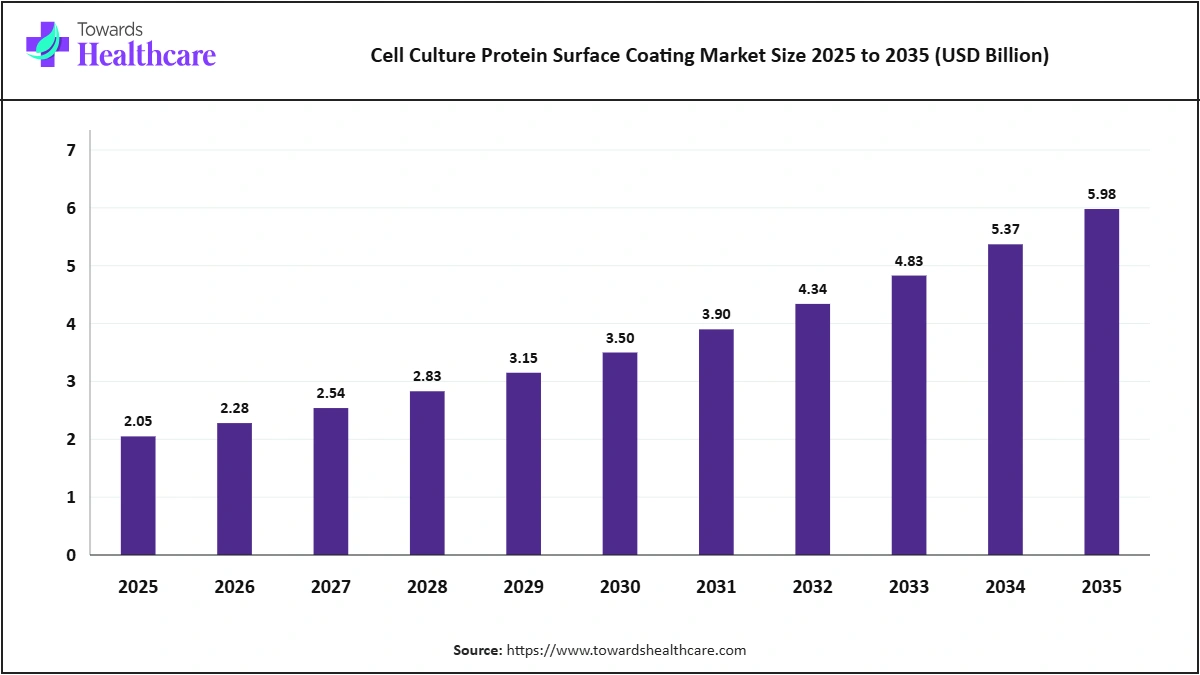
Analyst View: The market estimate was developed using a bottom-up approach, based on the volume of protein coating reagents and pre-coated cultureware used across coating types, protein sources, protein types, applications, end users, and regions. These volumes were multiplied by average selling prices, with higher prices assigned to recombinant and GMP-grade proteins. Volume estimates reflect cell culture activity across research, drug discovery and cell therapy manufacturing, while pricing assumptions account for the gradual shift from animal-derived coatings to defined recombinant alternatives.
The resulting market estimate was cross-checked against the cell culture surface and matrix revenues of leading suppliers and published market estimates. This comparison places the 2025 base-year estimate slightly above the highest credible comparable estimate. The forecast growth rate reflects our assessment of demand from stem cell research and cell therapy manufacturing, which is expected to support growth above more conservative market estimates. However, the forecast also accounts for constraints such as pressure on research budgets and the relatively high cost of recombinant proteins.
Driver: Stem cell research is expanding. Organoids and 3D culture need matrices. Cell therapy manufacturing scales up. Drug screening uses cell assays. Regulators favour defined materials.
Restraint: Recombinant proteins are expensive. Animal-derived matrices vary by lot. Research budgets are under pressure. Coating protocols need skill. Regulatory validation adds cost.
Opportunity: Defined GMP coatings for therapies. Synthetic and peptide surfaces. Asia Pacific research growth. Coatings for automated systems. Tissue-specific matrices.
Note: 2025 is the base year; 2035 values are forecasts.
Sources: Expert interviews, secondary sources, Towards Healthcare database, and Towards Healthcare analysts.
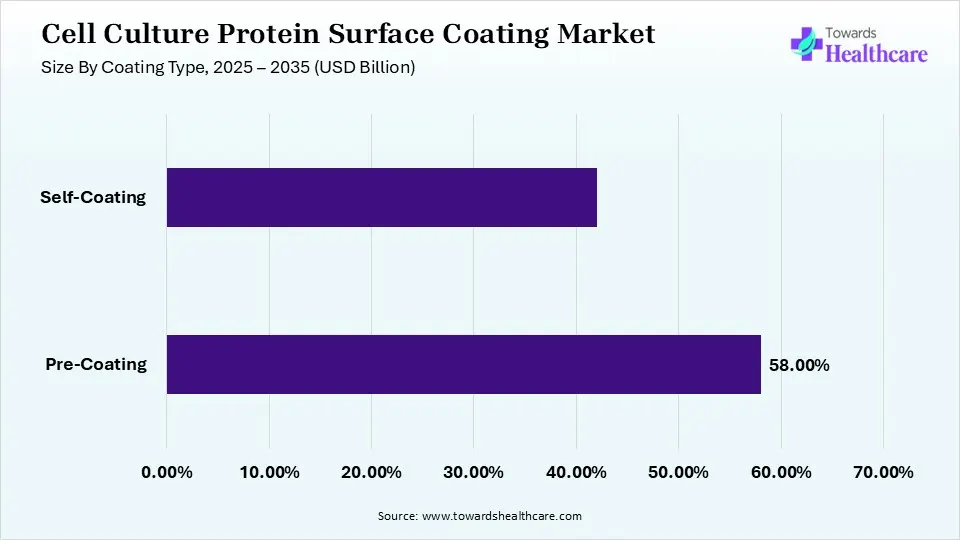
Pre-Coating: Pre-coated cultureware accounted for 58.00% of the cell culture protein surface coating market in 2025, representing a value of USD 1.19 billion. The segment is projected to reach USD 3.34 billion by 2035, growing at a CAGR of 10.87% based on the 2025-2035 figures. These products include plates, dishes, flasks, slides, and microcarriers with a protein coating applied before use. Their leading position is largely due to their ready-to-use format, consistent coating quality, and ability to reduce preparation time in screening, stem cell, and primary cell research.
Self-coating reagents are protein solutions that users apply to their own vessels. They are growing slightly faster because they offer flexibility to choose coating proteins and concentrations and are more cost-effective when scaling up cell therapy and bioprocessing cultures.
Note: 2025 is the base year; 2035 values are forecasts.
Sources: Expert interviews, secondary sources, Towards Healthcare database, and Towards Healthcare analysts.
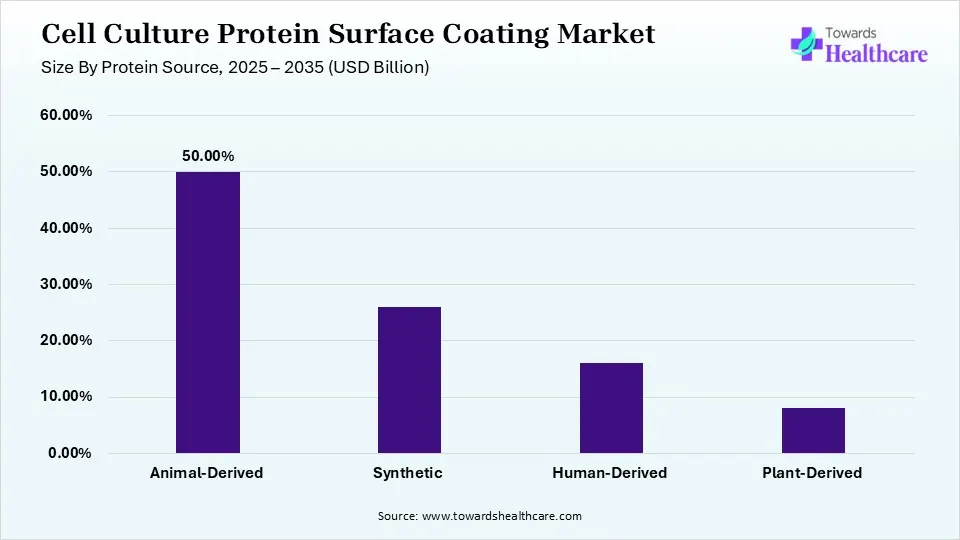
Animal-Derived: This segment accounted for 50.00% (USD 1.02 billion) of the cell culture protein surface coating market in 2025 and is projected to reach USD 2.79 billion by 2035, expanding at a CAGR of 10.54% from 2026 to 2035. Animal-derived proteins, such as mouse tumour basement membrane extracts and bovine and rat collagen, are the largest source because they are well established, widely published, and effective for many cell types.
It is also the fastest-growing source segment, supported by demand for recombinant and peptide-based coatings. These products offer defined compositions, avoid animal-derived components, and provide greater batch-to-batch consistency, making them suitable for cell therapy manufacturing, where process control and product consistency are important.
Human-derived proteins, including human fibronectin, vitronectin, and recombinant human laminins, are used for human stem cell and primary cell culture where species-matched matrices give better results.
Plant-derived proteins are produced in plant expression systems and offer animal-free alternatives for coating applications.
Note: 2025 is the base year; 2035 values are forecasts.
Sources: Expert interviews, secondary sources, Towards Healthcare database and Towards Healthcare analysts.
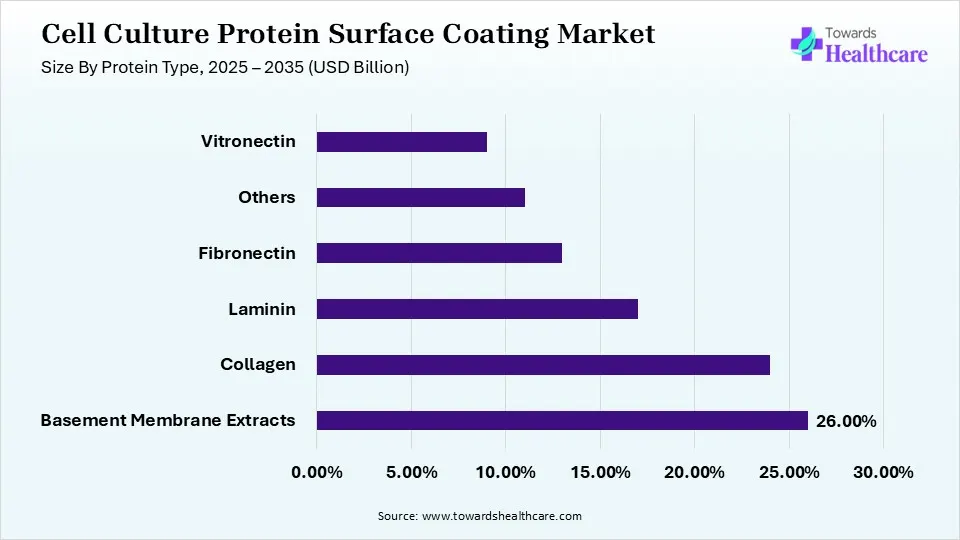
Basement Membrane Extracts: Basement membrane extracts accounted for 26.00% of the cell culture protein surface coating market in 2025, representing a value of USD 0.53 billion. The segment is projected to reach USD 1.45 billion by 2035, growing at a CAGR of 10.54% based on the 2025-2035 figures. Basement membrane extracts, including Corning's Matrigel matrix, represent the largest protein type due to their widespread use in organoid models, 3D cell culture, stem cell studies, and cancer research.
Collagen coatings support attachment of many cell types and are used in 2D and 3D culture, tissue engineering, and primary cell work.
Laminin is also the fastest-growing protein type, driven by the increasing use of recombinant human laminins in pluripotent stem cell culture. These proteins support stem cell expansion and differentiation under defined, animal-free conditions, which are important for cell therapy manufacturing. Suppliers such as BioLamina are also expanding their production capacity to meet this demand.
Fibronectin promotes cell adhesion and spreading and is used for fibroblasts, endothelial cells, and stem cells.
Others include gelatin, elastin, poly-lysine-protein combinations, and other adhesion proteins.
Recombinant vitronectin is particularly important in this segment, as it provides a defined culture surface for feeder-free human pluripotent stem cell growth.
Note: 2025 is the base year; 2035 values are forecasts.
Sources: Expert interviews, secondary sources, Towards Healthcare database and Towards Healthcare analysts.
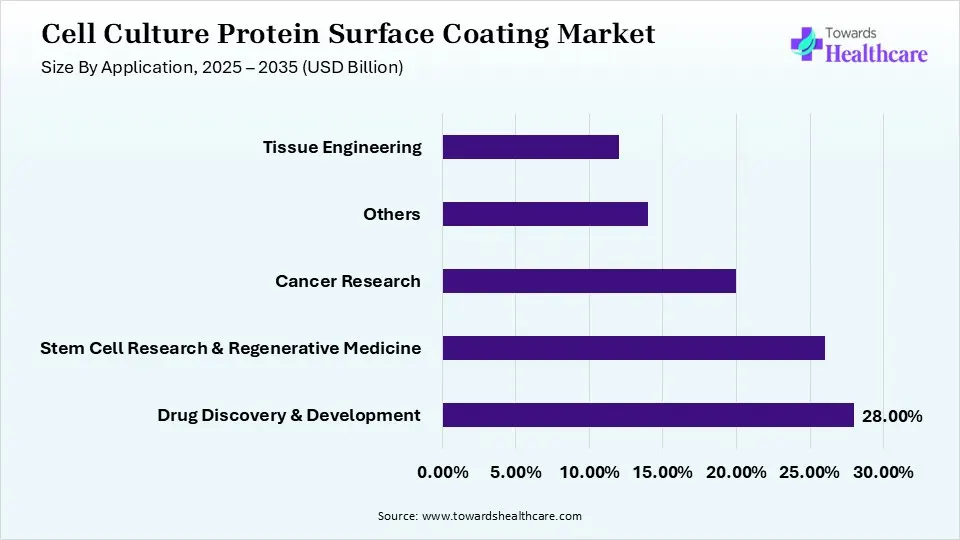
Drug Discovery & Development: This segment accounted for 28.00% (USD 0.57 billion) of the cell culture protein surface coating market in 2025 and is projected to reach USD 1.54 billion by 2035, expanding at a CAGR of 10.30% from 2026 to 2035. Drug discovery and development is the largest application because coated plates support cell-based assays, high-throughput screening, and toxicity testing in pharmaceutical research.
It is also the fastest-growing application segment, supported by increasing research involving induced pluripotent stem cells (iPSCs), wider use of organoid models, and the development of stem cell-derived therapies.
Protein coatings are used in cancer research to support tumour cell culture, invasion assays and the development of patient-derived organoid models.
Others include neuroscience, virology, and basic cell biology research.
Tissue engineering uses protein coatings on scaffolds and surfaces to support cell attachment and tissue formation.
Note: 2025 is the base year; 2035 values are forecasts.
Sources: Expert interviews, secondary sources, Towards Healthcare database, and Towards Healthcare analysts.
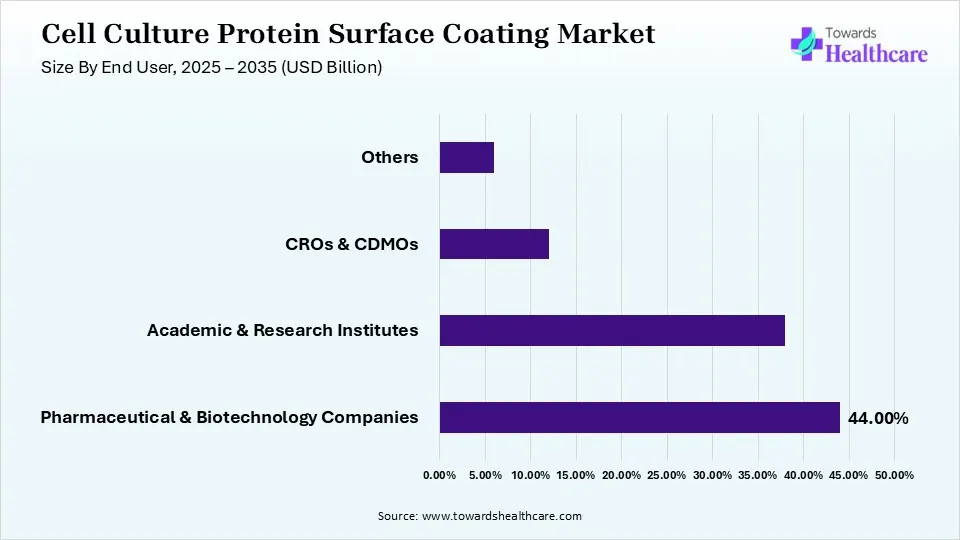
Pharmaceutical & Biotechnology Companies: This segment accounted for 44.00% (USD 0.90 billion) of the cell culture protein surface coating market in 2025 and is projected to reach USD 2.51 billion by 2035, expanding at a CAGR of 10.74% from 2026 to 2035. Pharmaceutical and biotechnology companies are the largest users because of their scale in drug screening, biologics development, and cell therapy manufacturing.
These institutions are major users of protein coatings, which support a wide range of research activities, including stem cell studies, cancer research, and cell biology.
CROs and CDMOs are the fastest-growing users because drug developers increasingly outsource cell-based assays and cell therapy manufacturing.
Others include hospitals, cell banks, and diagnostic laboratories.
Analyst View: Segment values were allocated by matching coating volumes and prices to coating types, protein sources, protein types, applications and end users, using supplier portfolios and research activity. Pre-coated products, animal-derived proteins, basement membrane extracts, drug discovery and pharmaceutical users lead. We expect synthetic and recombinant proteins, laminin, stem cell applications and CROs and CDMOs to gain share.
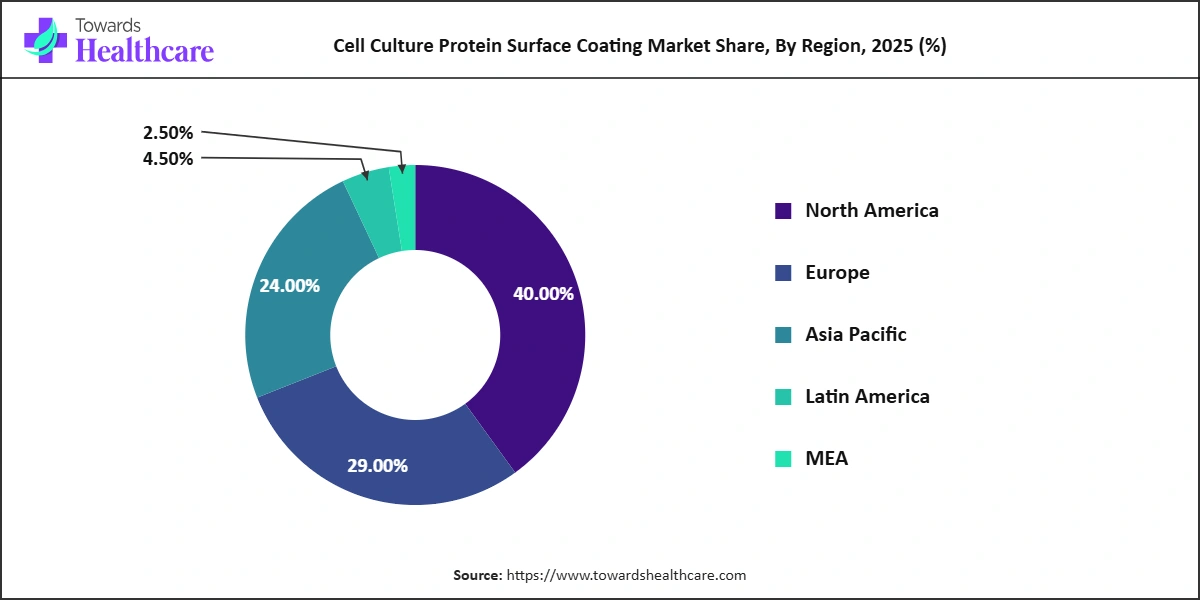
| Region | 2025 Share | 2025 Value (USD Billion) | 2035 Value (USD Billion) | CAGR 2026–2035 |
| North America | 40.00% | 0.82 | 2.24 | 10.60% |
| Europe | 29.00% | 0.59 | 1.69 | 11.00% |
| Asia Pacific | 24.00% | 0.49 | 1.64 | 12.80% |
| Latin America | 4.50% | 0.09 | 0.26 | 11.00% |
| Middle East & Africa | 2.50% | 0.05 | 0.15 | 11.00% |
Note: 2025 is the base year; 2035 values are forecasts.
Sources: Expert interviews, secondary sources, Towards Healthcare database, and Towards Healthcare analysts.
North America: This region accounted for 40.00% (USD 0.82 billion) of the cell culture protein surface coating market in 2025 and is projected to reach USD 2.24 billion by 2035, expanding at a CAGR of 10.60% from 2026 to 2035. North America is the largest region because of large biomedical research funding, many cell and gene therapy developers, and leading suppliers such as Thermo Fisher Scientific and Corning.
Europe: Europe accounted for 29.00% of the cell culture protein surface coating market in 2025, representing a value of USD 0.59 billion. The regional market is projected to reach USD 1.69 billion by 2035, growing at a CAGR of 11.00% based on the 2025–2035 figures. Its market position is supported by established stem cell and regenerative medicine research, the presence of suppliers such as Merck KGaA, Sartorius, Greiner Bio-One and BioLamina, and the expansion of cell therapy manufacturing across the region.
Asia Pacific: This region accounted for 24.00% (USD 0.49 billion) of the cell culture protein surface coating market in 2025 and is projected to reach USD 1.64 billion by 2035, expanding at a CAGR of 12.80% from 2026 to 2035. Asia Pacific is the fastest-growing region, supported by Japan's leadership in induced pluripotent stem cell research and regenerative medicine, fast-growing biopharmaceutical and cell therapy industries in China and South Korea, and rising research investment in India and Singapore.
Latin America: Latin America accounted for 4.50% of the cell culture protein surface coating market in 2025, representing a value of approximately USD 0.09 billion. The regional market is projected to reach USD 0.26 billion by 2035, growing at a CAGR of 11.00% based on the 2025–2035 figures. Market growth is supported by increasing academic research activity and the expansion of the biopharmaceutical sector in Brazil and Mexico.
Middle East & Africa: This region accounted for 2.50% (USD 0.05 billion) of the cell culture protein surface coating market in 2025 and is projected to reach USD 0.15 billion by 2035, expanding at a CAGR of 11.00% from 2026 to 2035. The Middle East and Africa are supported by research investment and new life science centres in Gulf countries.
Analyst View: Regional shares were built from cell culture activity and coating use in each region. North America leads because of its research funding and cell therapy industry. We assign Asia Pacific the highest growth premium because stem cell research and biopharmaceutical investment are expanding fastest there.
| Rank | Company Name | Market-Specific Revenue (USD Billion) | 2025 Share | Key Products / Business | Headquarters |
| 1 | Thermo Fisher Scientific | 0.39 | 19.02% | Gibco coatings and Nunc coated cultureware | United States |
| 2 | Corning | 0.33 | 16.10% | Matrigel matrix and BioCoat cultureware | United States |
| 3 | Merck KGaA | 0.24 | 11.71% | ECM proteins and coated surfaces | Germany |
| 4 | Bio-Techne | 0.10 | 4.88% | Cultrex basement membrane extracts | United States |
| 5 | Greiner Bio-One | 0.08 | 3.90% | Coated cell culture vessels | Austria |
| 6 | STEMCELL Technologies | 0.07 | 3.41% | CellAdhere matrices | Canada |
| 7 | Sartorius | 0.06 | 2.93% | Cell culture surfaces and microcarriers | Germany |
| 8 | BioLamina | 0.04 | 1.71% | Recombinant human laminins | Sweden |
| 9 | Revvity | 0.03 | 1.46% | Coated microplates | United States |
| 10 | Advanced BioMatrix | 0.03 | 1.22% | Collagen and recombinant matrices | United States |
Note: Company revenues and shares are 2025 estimates.
Sources: Company press releases, expert interviews, secondary sources, Towards Healthcare database and Towards Healthcare analysts.
Thermo Fisher Scientific held the leading position in the cell culture protein surface coating market in 2025, with an estimated 19.02% share, equivalent to USD 0.39 billion in revenue. Corning ranked second with a 16.10% share (USD 0.33 billion), followed by Merck KGaA at 11.71% (USD 0.24 billion).
Thermo Fisher Scientific has a broad offering that includes Gibco coating proteins and Nunc pre-coated cultureware for research and cell culture applications. Corning supplies Matrigel matrix and BioCoat pre-coated products, which are widely used in organoid and stem cell research. Merck KGaA also competes in this market through its range of extracellular matrix proteins and coated surfaces.
Other notable participants include Bio-Techne, Greiner Bio-One, STEMCELL Technologies, Sartorius, BioLamina, Revvity and Advanced BioMatrix. These companies offer products across several categories, including basement membrane extracts, coated culture vessels, stem cell matrices, microcarriers, recombinant laminins, coated microplates and collagen-based products.
The top 10 companies collectively accounted for an estimated 66.34% of market revenue in 2025, equivalent to USD 1.36 billion. The remaining 33.66%, or approximately USD 0.69 billion, was distributed among specialised protein producers, cultureware manufacturers and regional distributors. This indicates a moderately concentrated market, where competition is shaped by coating performance, lot-to-lot consistency, defined and animal-free formulations, GMP-grade availability, product breadth and technical support. Suppliers are also expanding their recombinant protein and GMP-grade portfolios to address the requirements of cell therapy manufacturing.
The cell culture protein surface coating ecosystem links protein producers and cultureware makers with distributors, research users, drug developers, and cell therapy manufacturers.
| Ecosystem Stage | Role in the Market | Key Companies |
| Protein Producers | Make ECM and recombinant proteins | BioLamina, Bio-Techne, Advanced BioMatrix, Merck KGaA |
| Cultureware Makers | Produce pre-coated vessels | Corning, Thermo Fisher, Greiner Bio-One, Sartorius |
| Distributors | Supply laboratories worldwide | Life science distributors |
| Research Users | Culture and study cells | Universities, institutes, pharma R&D |
| Cell Therapy Makers | Scale stem cell production | Cell therapy developers, CDMOs |
Sources: Company press releases, expert interviews, secondary sources, Towards Healthcare database and Towards Healthcare analysts.
The Towards Healthcare Companies Quadrant positions key participants in the cell culture protein surface coating market by market strength, reflecting revenue scale, market share and geographic reach, and by innovation and growth strategy, reflecting product portfolio breadth, R&D intensity and partnerships. Positions reflect each company's estimated 2025 cell culture protein surface coating revenue and our assessment of its product innovation, range and support.
Sources: Company press releases, expert interviews, secondary sources, Towards Healthcare database and Towards Healthcare analysts.
Leaders: Thermo Fisher Scientific, Corning, Merck, Bio-Techne, Greiner Bio-One and STEMCELL Technologies combine large coating revenue with broad portfolios and strong brands.
Innovators: Sartorius, BioLamina, Revvity and Advanced BioMatrix bring defined, recombinant and stem cell-focused matrices.
By Coating Type
By Protein Source
By Protein Type
By Application
By End User
By Region
The cell culture protein surface coating market covers protein-based coating reagents and pre-coated cultureware used in cell culture applications worldwide. The market includes basement membrane extracts, collagen, laminin, fibronectin, vitronectin, and other protein coatings.
The 2025 base-year estimate was developed using a bottom-up approach, based on the volume and average selling prices of protein coating reagents and pre-coated cultureware across coating types, protein sources, protein types, applications, end users and regions. The estimate was then cross-checked using a top-down approach against the cell culture surface and matrix revenues of leading suppliers.
Market values for individual segments, regions and companies were allocated based on their respective shares across coating types, protein sources, protein types, applications, end users and regional demand. Key estimates were further reviewed against company disclosures, regulatory and industry data, and published third-party market estimates. Inputs that could not be reconciled were excluded from the assessment.
All segment, regional, and company estimates were aligned with the same 2025 base year. The forecast for 2026–2035 was then calculated using a constant CAGR from the 2025 base and checked for consistency across the market breakdown.
Analyst View: The cell culture protein surface coating market is a fast-growing segment of cell culture products, shaped by stem cell research, 3D culture and cell therapy manufacturing. Our estimate links demand to coating volumes and prices, so the forecast follows cell culture activity, the shift to defined recombinant proteins and cell therapy scale-up. The main upside comes from stem cell and cell therapy applications, while the main risks are high recombinant protein costs and research budget pressure.