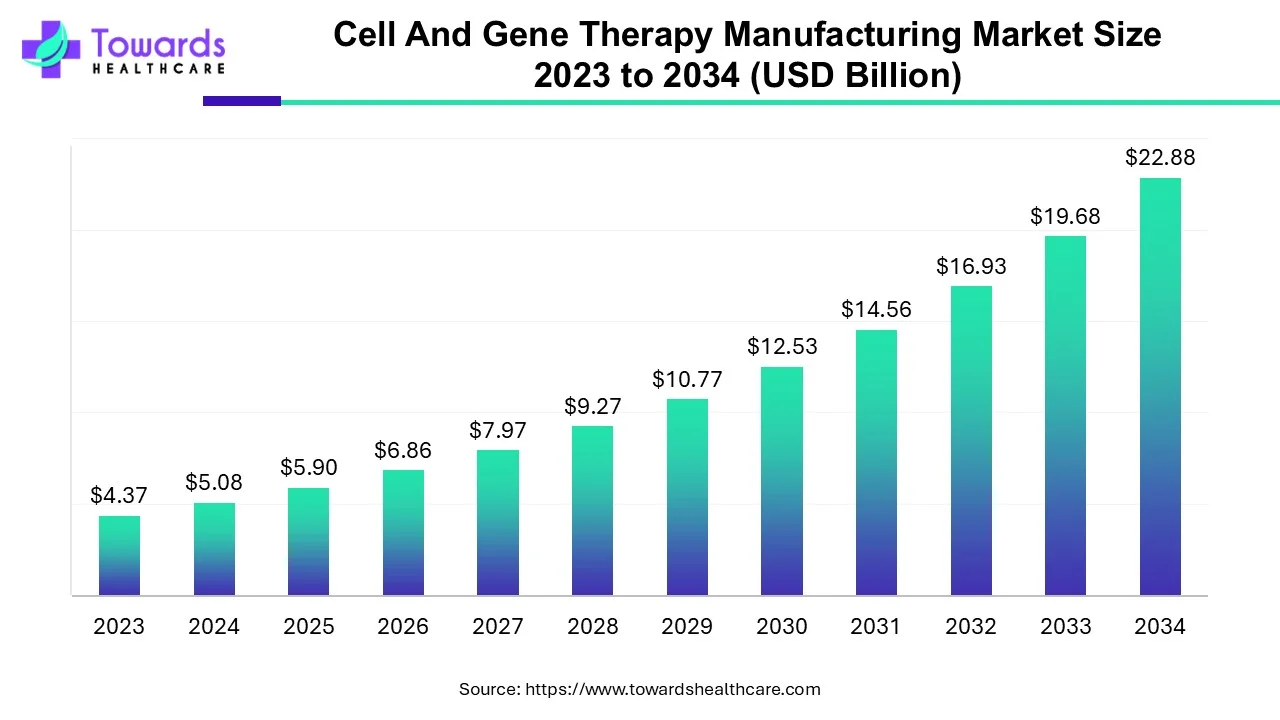
The cell and gene therapy manufacturing market size is estimated to be USD 5.90 billion in 2025 to reach an estimate of USD 26.59 billion by 2035, at a 16.25% CAGR between 2026 to 2035. The burgeoning biotechnology sector, growing cell and gene therapy research, and increasing investments drive the market.
Cell and gene therapy manufacturing is a specialized process that produces cell and gene therapy (CGT) products on a large scale. It requires advanced facilities, equipment, and expertise. Cell therapy involves transplanting cells into a patient to replace or repair damaged tissue, and gene therapy involves inserting, deleting, or modifying genes in a patient’s cells to treat or prevent disease. Both cell and gene therapy products undergo different manufacturing processes. Steps involved in cell therapy manufacturing are sourcing and isolation of cells, activation, and genetic modification, and expansion and culture. The steps involved in gene therapy manufacturing are viral vector expression, cell growth, harvest of viral vector, and filtration & purification.
Considering its potential to treat cancer, cell and gene therapy has sparked a lot of interest. With a complicated and expanding sector, a Contract Development and Manufacturing Company (CDMO) may assist customers in smoothing commercial cell and gene therapy manufacturing needs.
In August 2022, Cytiva, a subsidiary of Danaher Corporation, and Forecyte Bio, a provider of CDMO service designed for cell gene therapy, collaborated to accelerate the development and manufacturing of cell and gene therapies in China and the U.S. Forecyte Bio will use Cytiva’s Flex Factory platform to launch its contract development and manufacturing organization (CDMO) business.
Artificial intelligence (AI) plays a vital role in the manufacturing of CGT products. AI introduces automation in the manufacturing process, overcoming the challenges faced during conventional processes. AI can aid in the large-scale manufacturing of CGT. Automation enhances efficiency and reproducibility, reducing the time and cost of manufacturing. The use of AI and robots is still in its infancy. However, it is favorable for large-scale and homogenous production, reducing variability. Moreover, AI and machine learning (ML) algorithms can be used in R&D to develop novel CGTs. AI and ML can be used to rapidly screen more candidates and select designs that fulfill the desired criteria. AI and ML can also aid in streamlining the supply chain of CGTs, resulting in timely delivery to large consumers.
A recent survey on the cell and gene therapy (CGT) industry reveals that while CGT innovators and healthcare providers have had a positive view of the sector over the past 12–18 months (86% and 83%, respectively), contract development and manufacturing organizations (CDMOs) were less optimistic (66%). Looking forward, optimism increases across all groups for the next 12–18 months, with CGT innovators (93%), healthcare providers (86%), and CDMOs (83%) expecting positive developments. Gene therapies are anticipated to have a more favorable outlook compared to autologous and allogeneic cell therapies.
Driver
Burgeoning Biotech Sector
The rapidly expanding biotechnology sector promotes cell and gene therapy manufacturing owing to its growing demand. The increasing number of biotechnology companies is accelerating research and development activities and manufacturing of CGT products. The increasing investment and expanding manufacturing facilities play a major role in expanding the biotech sector. Several institutions and organizations regularly conduct seminars, workshops, and conferences to increase awareness about biotech products and aid in the training of researchers. The increasing number of biotech startups globally also augments market growth. This also leads to the growing research and development activities to develop novel CGTs. The increasing number of FDA-approved therapies fuel the growth of CGT manufacturing.
Opportunity
Growing Demand for Precision Medicine
The growing demand for precision medicine presents future growth opportunities for the cell and gene therapy manufacturing market due to rapidly changing demographics and increasing population. Several government organizations release guidelines and initiatives to support precision medicine development. The government and private organizations also provide funding for precision medicine research. CGT products are the most personalized forms of medicine. Autologous cell therapies and CRISPR-directed gene therapy enable a new era of precision medicine. Moreover, technological advancements in CGT manufacturing facilitate the development of precision medicine.
Restraints
Hurdles Faced During Market Growth
One of the most significant issues is the high cost of cell treatments, which has financial consequences for patients, payers, and providers. As a result, firms must lower their pricing in order to increase the acceptance of these medicines, which is projected to hamper market growth throughout the forecast period.
| Table | Scope |
| Market Size in 2026 | USD 6.86 Billion |
| Projected Market Size in 2035 | USD 26.59 Billion |
| CAGR (2026 - 2035) | 16.25% |
| Leading Region | North America by 37% |
| Historical Data | 2020 - 2023 |
| Base Year | 2025 |
| Forecast Period | 2026 - 2035 |
| Measurable Values | USD Millions/Units/Volume |
| Market Segmentation | By Therapy, By Technology, By Source, By Application, By Region |
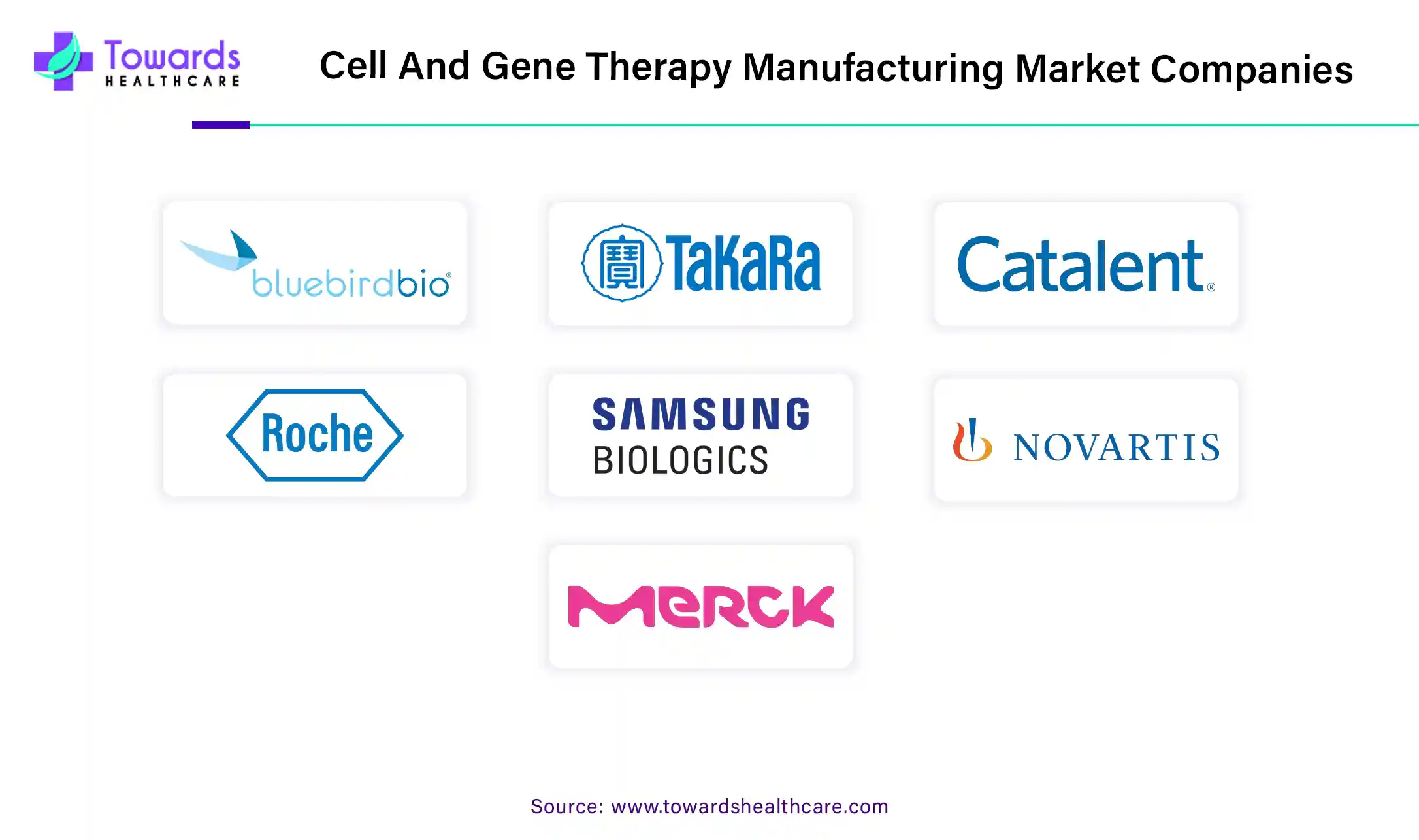
| Top Key Players | Bluebird Bio Inc., Hitachi Chemical Co., Ltd., Takara Bio Inc., Catalent Inc., F. Hoffmann-La Roche Ltd., Samsung Biologics, Novartis AG, Lonza, Merck KGaA, Wuxi Advanced Therapies, Boehringer Ingelheim, Cellular Therapeutics, Miltenyi Biotec, Thermo Fisher Scientific |
| Segments | Shares % |
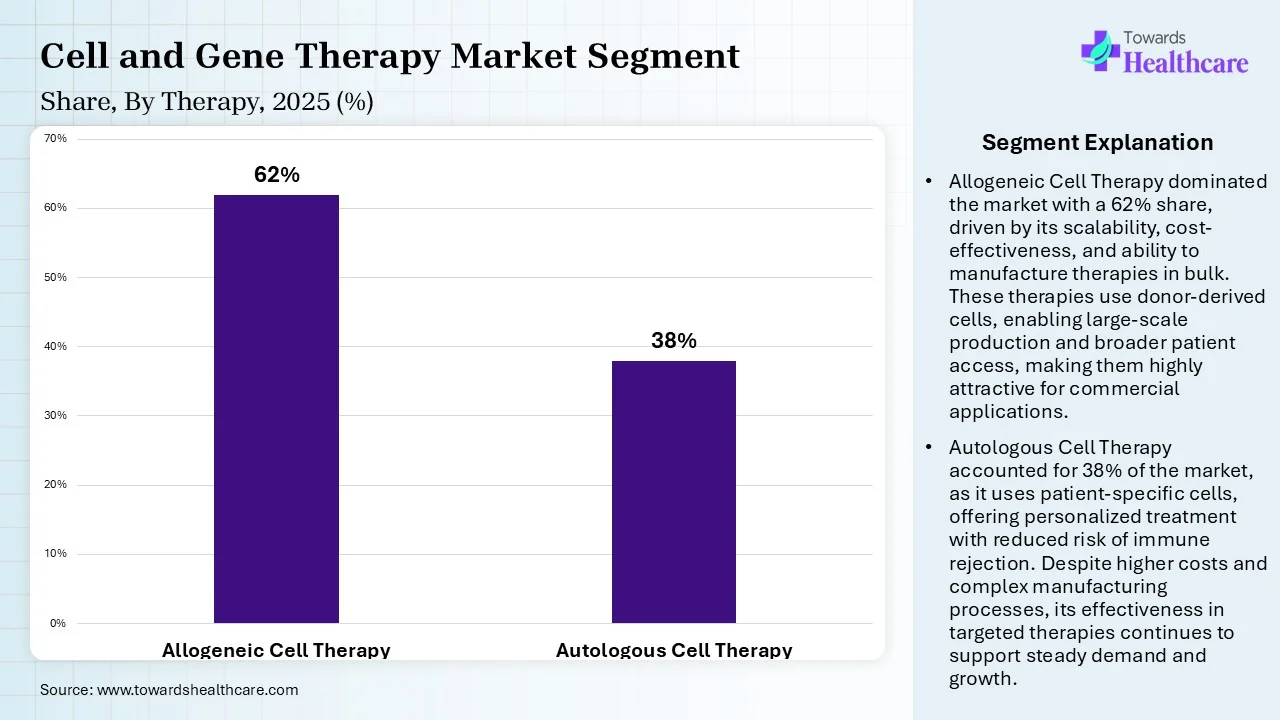
| Allogeneic Cell Therapy | 62% |
| Autologous Cell Therapy | 38% |
By therapy, the allogeneic cell therapy segment held a dominant presence in the cell and gene therapy manufacturing market by share of 62% in 2025. Allogeneic cell therapy is a process in which the donor’s healthy blood-forming cells (stem cells) are introduced into a patient’s body. Allogeneic stem cells are used to treat one or more patients. They are predominantly used in medical emergencies. They also offer superior advantages over autologous stem cells. Cells from healthy, young donors are derived to reduce the risk of co-morbidities associated with disease states. The latest innovations in the effective storage and availability of these cells in healthcare settings augment the segment’s growth.
| Segments | Shares % |
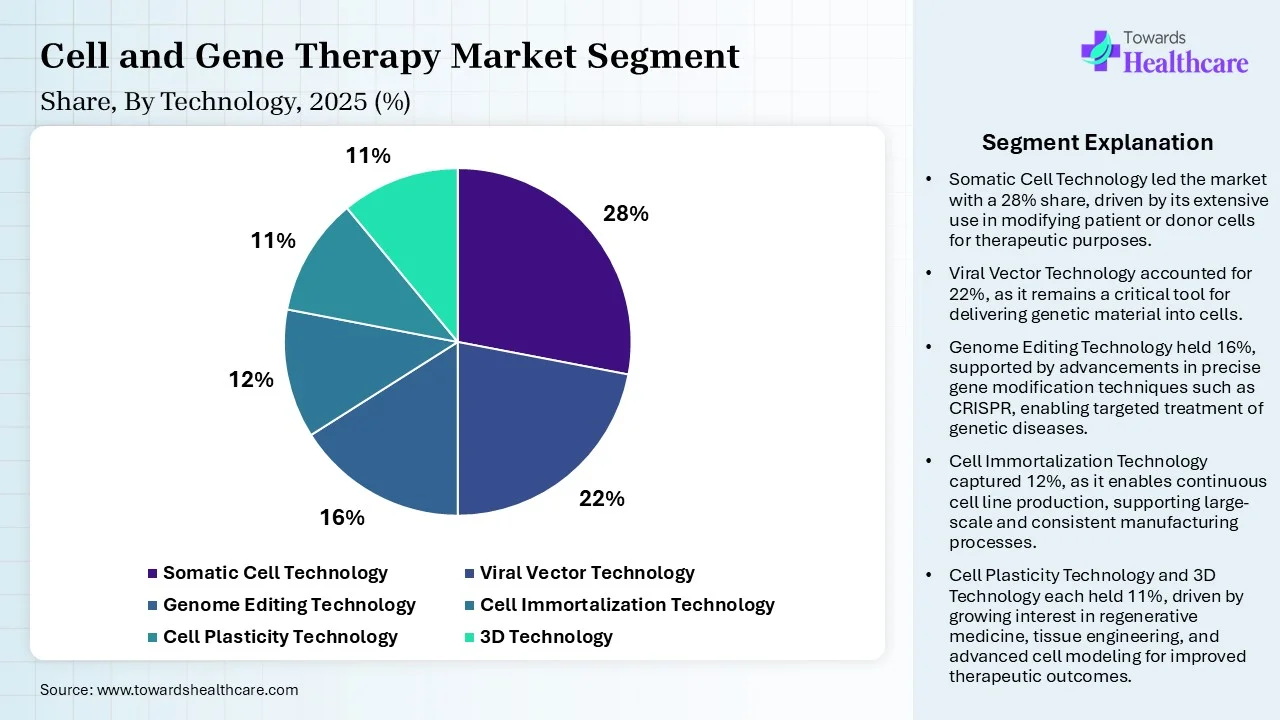
| Somatic Cell Technology | 28% |
| Viral Vector Technology | 22% |
| Genome Editing Technology | 16% |
| Cell Immortalization Technology | 12% |
| Cell Plasticity Technology | 11% |
| 3D Technology | 11% |
By technology, the somatic cell technology segment led the global cell and gene therapy manufacturing market with share of 28% in 2025. Somatic cell technology is a technique by which the nucleus of a differentiated cell is introduced into an oocyte from which its genetic material has already been removed. This technique allows the development of near-identical genetic copies of valuable animals with known and desirable traits to be reproduced. Stem cells derived from somatic cells can help cure degenerative diseases. The rising incidences of degenerative diseases and advancements in technology promote the segment’s growth.
| Segments | Shares % |
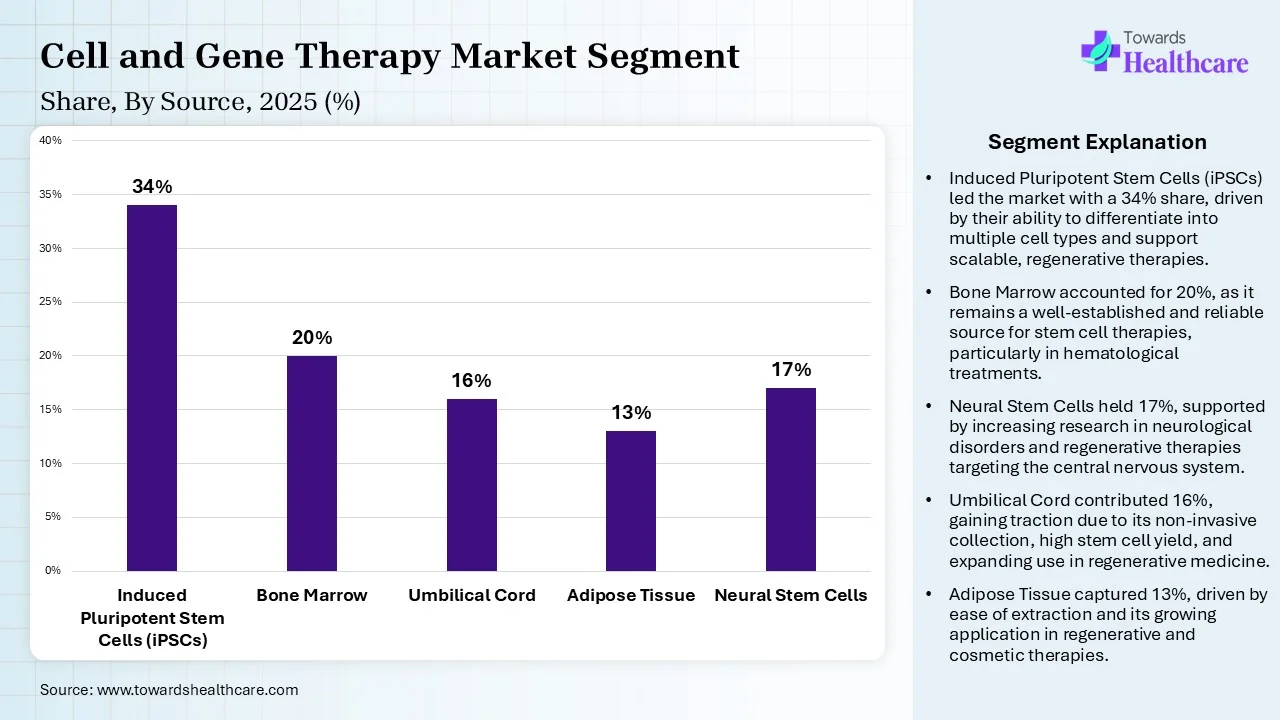
| Induced Pluripotent Stem Cells (iPSCs) | 34% |
| Bone Marrow | 20% |
| Umbilical Cord | 16% |
| Adipose Tissue | 13% |
| Neural Stem Cells | 17% |
By source, the induced pluripotent stem cells segment registered its dominance over the global cell and gene therapy manufacturing market by 34% share in 2025. Induced pluripotent stem cells (iPSCs) are immature cells derived from adult cells that have the ability to differentiate into any cell type in the body. They are used to model human development and diseases and perform high-throughput drug screening. The rising incidences of neurological and other chronic disorders, increasing investments & collaborations, and technological advancements potentiate the segment’s growth.
| Segments | Shares % |
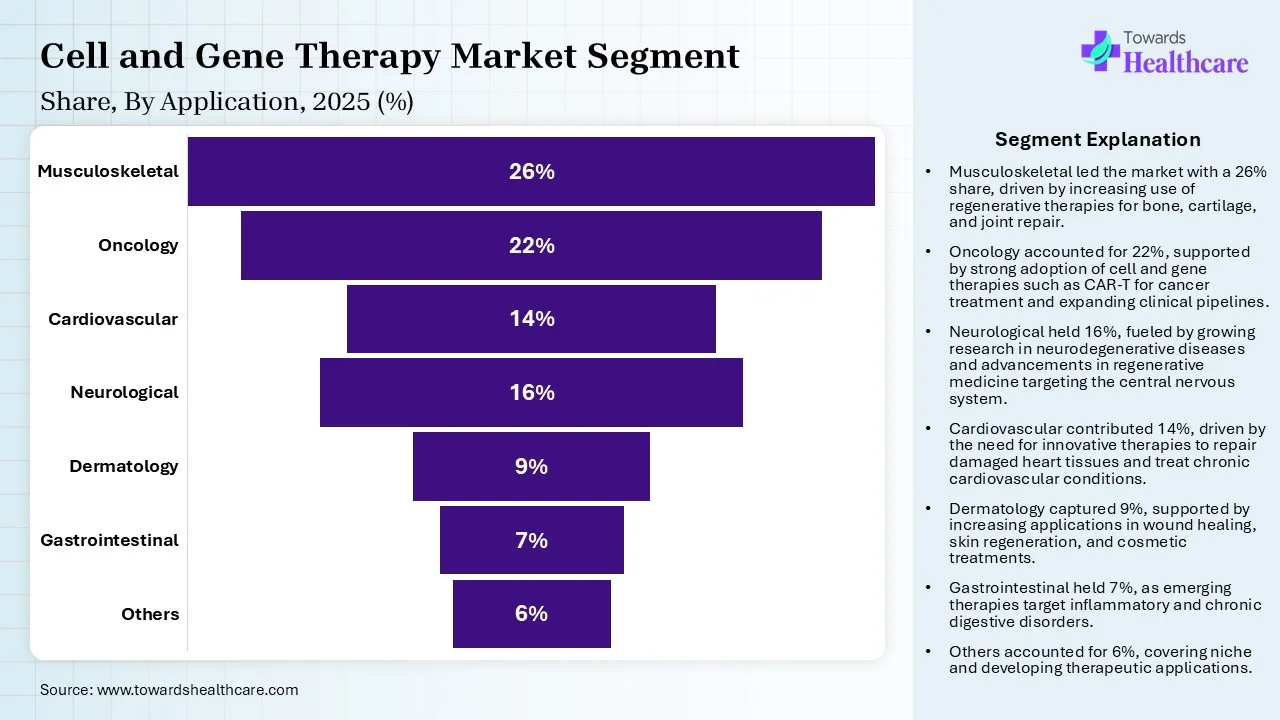
| Musculoskeletal | 26% |
| Oncology | 22% |
| Cardiovascular | 14% |
| Neurological | 16% |
| Dermatology | 9% |
| Gastrointestinal | 7% |
| Others | 6% |
By application, the musculoskeletal segment held the largest share of the cell and gene therapy manufacturing market by 26% in 2025. The rising incidences and prevalence of musculoskeletal disorders and growing research and development activities boost the segment’s growth. According to the World Health Organization, approximately 1.71 billion globally suffer from musculoskeletal disorders. The growing demand for CGT to treat musculoskeletal disorders also propels the segment’s growth.
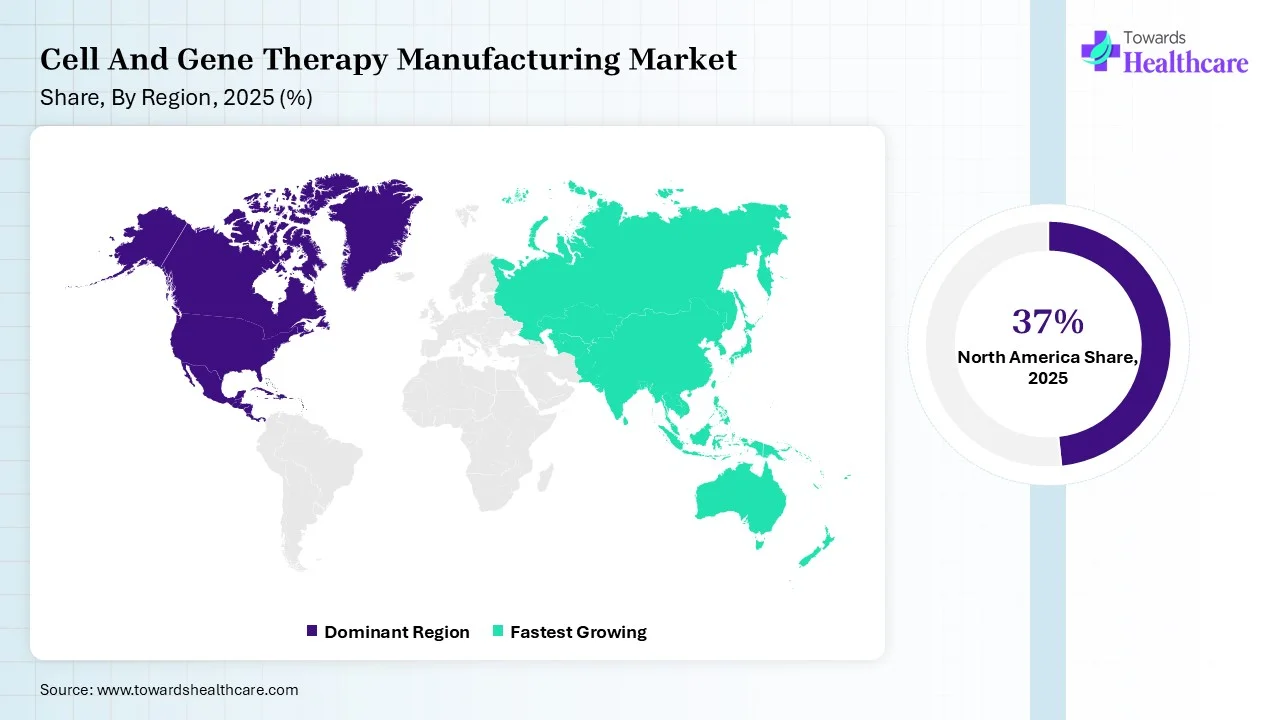
North America dominated the cell and gene therapy manufacturing market by 37% share in 2025. The presence of key players, technological advancements, and favorable government policies drive the market. The U.S. Department of Health and Human Services will launch the Cell and Gene Therapy Access Model in January 2025, inviting drug manufacturers to provide access to CGT products at lower prices. The rising investments in North America also show positive growth in the market. The Government of Canada invested around $2.2 billion from 2020 to 2024 to strengthen domestic biomanufacturing and life sciences capabilities.
The increasing number of FDA-approved CGT products potentiates market growth. As of December 2024, 41 CGT products have been approved by the U.S. FDA. In 2022, the U.S. FDA approved 12 CGTs, while in 2023, it approved 7 CGT products for different purposes.
U.S. Market Trends
The U.S. leads in the cell and gene therapy manufacturing market through strong biotech clusters, large clinical pipelines, and deep venture funding. California, Boston, and Philadelphia remain important production hubs. CDMOs are adding viral vector, plasmid, and automated cell-processing capacity. FDA flexibility around CMC requirements is also supporting faster development. Competition is intense, with large suppliers and specialist firms investing in closed systems, digital manufacturing, and end-to-end services at scale worldwide today rapidly.
Canada Market Trends
Canada is strengthening cell and gene therapy manufacturing through academic research, public funding, and specialized GMP networks. Toronto, Montreal, and Vancouver support translational programs and clinical production. Demand is rising for local manufacturing and process development. CellCAN and university-linked facilities add ecosystem depth. Competition includes emerging Canadian CDMOs alongside global suppliers. Focus is shifting toward scalable processes, quality systems, and partnerships that move therapies closer to commercialization at scale now.
Asia-Pacific is anticipated to grow at the fastest rate in the cell and gene therapy manufacturing market by 25% share during the forecast period. The rising incidences and prevalence of chronic disorders, expanding manufacturing ecosystem, and rising foreign direct investment drive the market. The Chinese government permits foreign investment in CGT and wholly foreign-owned hospitals in selected cities of China. It has also pledged to encourage more research in CGT at the country’s biotech hub in the eastern Chinese city of Suzhou. The Indian Government also supports CGT manufacturing with the growing biotech sector and encourages collaboration to boost market growth.
China Market Trends
China is rapidly building domestic cell and gene therapy manufacturing capacity. More CAR-T programs are entering clinical and commercial stages, increasing demand for reliable production. Beijing, Shanghai, and Shenzhen are key biotechnology centers. Local companies compete on speed, cost, and integrated services. CDMOs are expanding viral vector and plasmid capabilities, while automation gains attention. Regulatory streamlining and stronger domestic innovation are helping manufacturers reduce dependence on overseas supply chains locally.
India Market Trends
India is emerging as a cost-conscious manufacturing base for cell and gene therapies. Hyderabad, Bengaluru, and Pune are attracting facilities, research partnerships, and biotech startups. Lower operating costs and a large scientific workforce support process development. Domestic CAR-T activity is creating manufacturing experience. Competition is growing among specialist firms and biopharma companies. Manufacturers are prioritizing GMP upgrades, viral vectors, automation, and technology transfer to serve local and global programs.
Europe plays a significant role in the cell and gene therapy manufacturing market by 28%, stemming from its well-established infrastructure for research and development. The region is a major hub for innovation, poised for substantial growth, driven by expanding healthcare infrastructure, a proliferating biotechnology sector, and increasing investments in research and development. The region has a strong track record of scientific breakthroughs in areas like gene editing, CRISPR, and CAR-T cell therapies.
Contract Development and Manufacturing Organizations are particularly pivotal in propelling this growth by providing specialized expertise, cutting-edge manufacturing capabilities, and strategic geographic advantages. Furthermore, the European region is detecting a high number of clinical trials for cell and gene therapies by promoting a strong pipeline of novel therapies in development.
For Instance,
UK Market Trends
The UK benefits from strong academic science, established ATMP expertise, and government-backed manufacturing initiatives. London, Oxford, and Stevenage connect research with clinical translation. Cell and Gene Therapy Catapult supports process development and commercialization. Manufacturers are expanding flexible facilities for viral vectors and cell therapies. Competition involves specialist CDMOs, universities, and global companies. The market is also moving toward automated, closed processing to improve consistency, reduce labor, and support scalable production.
Germany Market Trends
Germany has a mature biopharma base, strong engineering skills, and deep expertise in advanced therapy medicinal products. Berlin, Munich, and other research centers support manufacturing development. Companies such as Miltenyi Biotec strengthen the specialist landscape. Demand is rising as clinical pipelines expand across Europe. German manufacturers emphasize high-quality GMP production, automation, and process control. Collaboration between hospitals, universities, and industry remains important for translating complex therapies into repeatable commercial manufacturing.
By Therapy
By Technology
By Source
By Application
By Region








Principal Consultant
Payal Rabde is a Healthcare Market Research Analyst at Towards Healthcare Research & Consulting with 4+ years of experience in pharmaceuticals, biotechnology, medical devices, and life sciences.
Learn more about Payal Rabde

Reviewed By
Aditi Shivarkar is a seasoned professional with over 14 years of experience in healthcare market research. As a content reviewer, Aditi ensures the quality and accuracy of all market insights and data presented by the research team.
Learn more about Aditi Shivarkar