
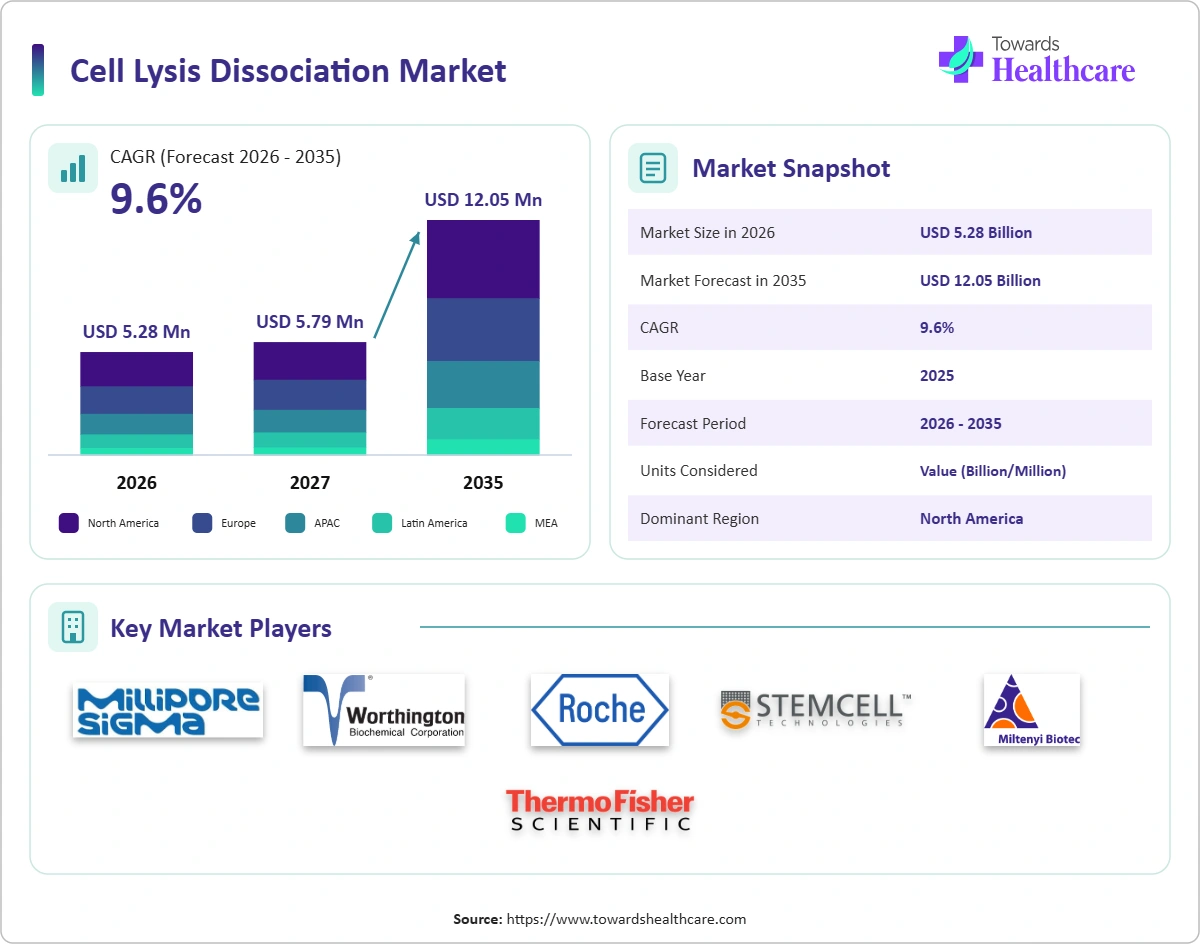
The global cell lysis dissociation market is projected to grow from USD 4.82 billion in 2025 to USD 12.05 billion by 2035, supported by the requirement for efficient cell disruption and tissue dissociation across life science research and biopharmaceutical development. Cell lysis and dissociation are crucial in laboratory processes, especially with single-cell technologies, which require maintaining cell viability and sample integrity. Demand for high-quality single-cell suspensions is increasing in research fields such as genomics and therapeutic development. This trend is driving the adoption of optimized enzymatic formulations and automated dissociation systems.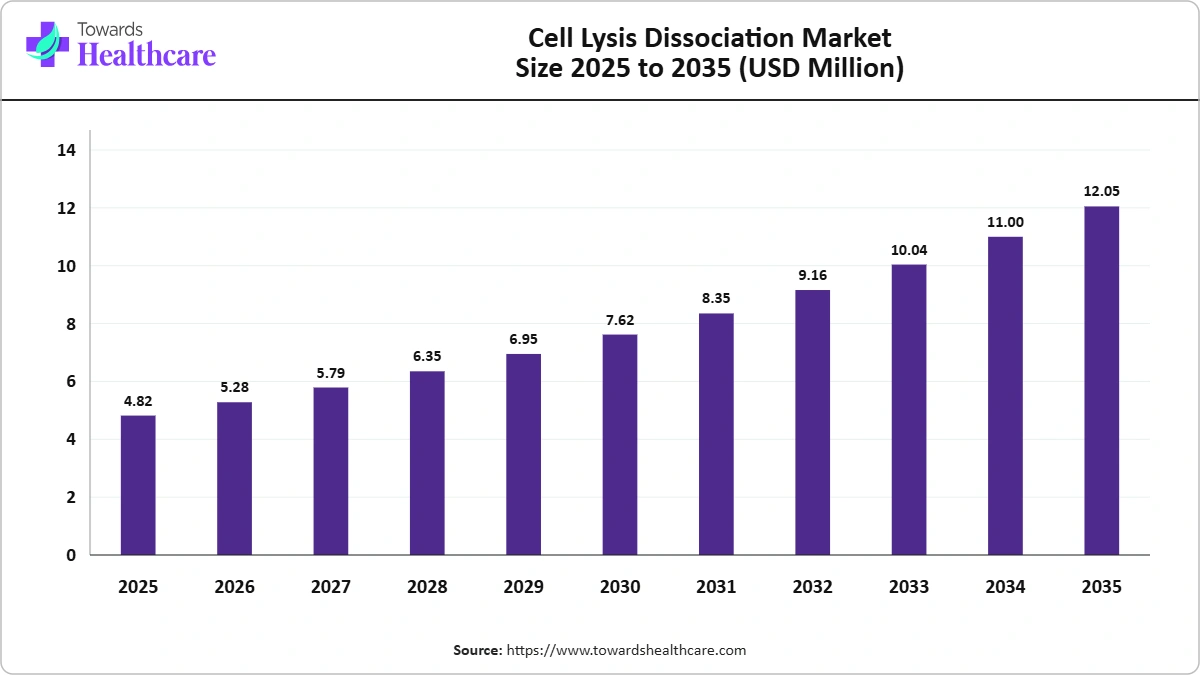
The expanding cell and gene therapy market is creating a need for controlled processing methods and GMP-compatible reagents. The reliance on next-generation sequencing and proteomics emphasizes the necessity for standardized sample preparation to enhance throughput and consistency. These developments are expected to increase market revenue to USD 7.62 billion by 2030 and sustain a CAGR of 9.6% through 2035.
Analyst View: Our market assessment includes cell lysis and tissue dissociation reagents, enzymes, kits, and instruments used across research, pharmaceutical development, and bioprocessing workflows. The estimate considers product-specific demand, consumable utilization, instrument placements, average pricing, supplier portfolios, and regional research activity, alongside trends in single-cell research, cell therapy development, genomics and proteomics applications, and automated dissociation platforms.
| Driver | Impact | ≈ CAGR Contribution | Time Horizon | Key Regions |
| Single-cell research grows | High | +3.75 pp | Short to long term | Global, strongest in North America |
| Cell therapy needs gentle dissociation | Medium | +3.16 pp | Medium to long term | Global, fastest uptake in Asia Pacific |
| Proteomics and genomics expand | Medium | +2.69 pp | Short to medium term | Global |
| Biopharma R&D | Low | +2.11 pp | Long term | Developed and emerging markets |
Note: Contributions are indicative estimates of each factor's effect on annual growth.
Sources: Expert interviews, secondary sources, Towards Healthcare database, and Towards Healthcare analysts.
The cell lysis dissociation market is projected to grow by approximately 11.71 percentage points annually, driven by single-cell research, which is experiencing increased adoption of single-cell sequencing and spatial analysis. This trend boosts the demand for high-quality tissue dissociation products. Demand will be influenced in North America and Europe, with Asia Pacific seeing benefits from growing research investments and biotechnology infrastructure.
| Restraint | Impact | ≈ Negative CAGR Contribution | Time Horizon | Key Regions |
| Variability between tissues | High | -0.95 pp | Short to medium term | Global |
| Cost of instruments | High | -0.70 pp | Medium term | Price-sensitive and emerging markets |
| Cell damage risks | Medium | -0.46 pp | Short term | North America and other mature markets |
Note: Contributions are indicative estimates of each factor's effect on annual growth.
Sources: Expert interviews, secondary sources, Towards Healthcare database, and Towards Healthcare analysts.
Annual market growth in tissue processing is anticipated to decline by around 2.11 percentage points due to variability in tissue composition, high instrument costs, and potential cell damage. The primary constraint arises from tissue-specific processing needs, which impact dissociation efficiency and experimental reproducibility. High costs of automation may hinder adoption in smaller labs. Despite these challenges, advancements in product development, enzyme formulations, and automation are expected to sustain a CAGR of 9.6% from 2026 to 2035.
The development of automated tissue dissociation platforms offers significant opportunities for manufacturers with demand for single-cell analysis, spatial biology, and high-throughput sample preparation. There is a demand for GMP-compatible and animal-origin-free enzymes and reagents, driven by the expansion of cell therapy and advanced biomanufacturing, necessitating specialized products that meet strict quality and consistency standards.
Asia Pacific also presents considerable growth potential due to biotechnology investment, expanding pharmaceutical R&D, and improvements in research infrastructure. China, Japan, South Korea, and India are strengthening their capabilities in genomics, cell therapy, and advanced biomedical research.
Manufacturers can enhance market presence by creating tailored reagents for organoid research, tissue engineering, spatial biology, and complex biological samples. Additionally, combining dissociation instruments with analytical platforms may lead to unique product offerings and sustained customer relationships.
Note: 2025 is the base year; 2035 shares and CAGRs are forecasts.
Sources: Expert interviews, secondary sources, Towards Healthcare database, and Towards Healthcare analysts.
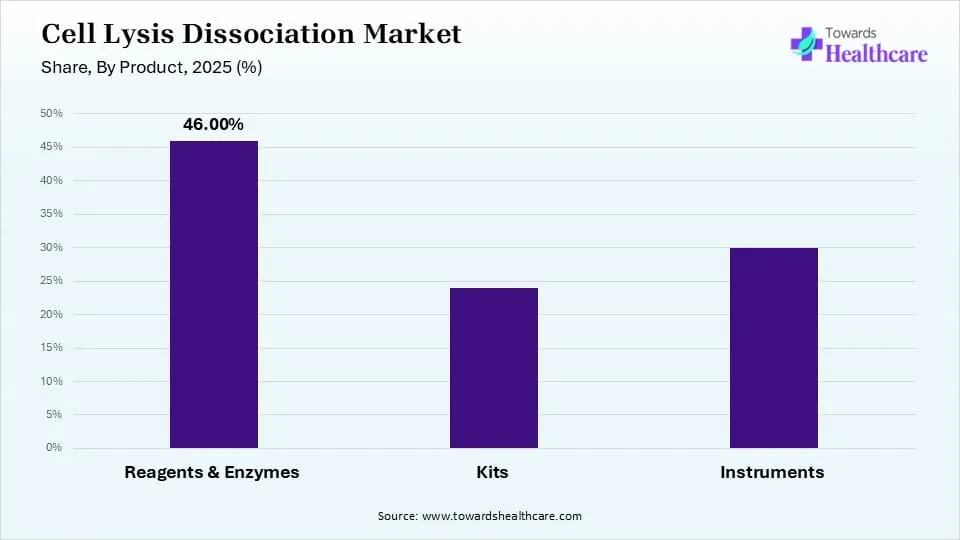
Reagents and enzymes accounted for 46% of the market in 2025 and are projected to expand at a CAGR of 8.74% from 2026 to 2035. Reagents and enzymes play a critical role in cellular breakdown and tissue separation for analysis. Their frequent use in research and biopharmaceutical sectors helps maintain a strong market presence, although growth may lag behind the overall market due to faster instrument adoption.
The kits cell lysis and dissociation kits offer standardized reagents and components for sample preparation and experimental consistency. Their relevance extends to academic labs, biotech firms, and pharmaceutical research, with growing demand driving segment expansion.
Instruments category includes automated systems for tissue dissociation such as tissue dissociators, homogenizers, and sonicators. The growth of single-cell research and high-throughput sample preparation is fueling investment in automation. The STEMprep Tissue Dissociator System by STEMCELL Technologies exemplifies the trend toward improved automation and standardized workflows.
Segment Outlook: Reagents and enzymes are expected to remain the largest product category through 2035, although their share is projected to decline to approximately 42.49%. Instruments are anticipated to record the fastest growth, increasing their share to 34.52% by 2035. This transition reflects the increasing importance of automation, throughput, and reproducibility in advanced cell biology workflows.
Note: 2025 is the base year; 2035 shares and CAGRs are forecasts.
Sources: Expert interviews, secondary sources, Towards Healthcare database, and Towards Healthcare analysts.
Reagent-based techniques accounted for 58% of the market in 2025 and are projected to expand at a CAGR of 8.90% from 2026 to 2035. These methods employ enzymes, detergents, chemical buffers, and specialized formulations to dissociate cellular structures and isolate tissues into single cells. Their versatility across various sample types and workflows, combined with established roles in molecular biology, protein extraction, and cell culture, ensures their market dominance.
Physical and mechanical techniques such as homogenization, sonication, mechanical disruption, and automated tissue dissociation are essential for processing complex tissue samples and enhancing experimental throughput. The increasing use of automated dissociation systems is expected to promote significant growth throughout the forecast period.
Segment Outlook: During the forecast period, reagent-based methods are expected to remain the largest technique segment, accounting for around 54.36% of the market. However, physical and mechanical techniques are projected to record the highest CAGR of 10.50%, increasing their share to 45.64%. The trend reflects growing demand for automation and alternative sample processing approaches in advanced research workflows.
Note: 2025 is the base year; 2035 shares and CAGRs are forecasts.
Sources: Expert interviews, secondary sources, Towards Healthcare database, and Towards Healthcare analysts.
Mammalian cells captured 62% of the market in 2025. The segment is projected to expand at a CAGR of 9.82% from 2026 to 2035. Mammalian cells are essential for biomedical research, pharmaceutical development, and therapeutic investigations, driven by needs in single-cell analysis, cancer research, and gene therapy. The demand for gentle dissociation methods that maintain cell viability is expected to strengthen during the forecast period.
The bacterial cells lysis plays a crucial role in recombinant protein production, microbial research, and biotechnology. The growing demand for microbial proteins and enzymes is likely to sustain the usage of lysis reagents and mechanical disruption technologies.
Plant and others tissue processing is integral to agricultural biotechnology and molecular biology, aiding in plant genomics and specialized research. Other cell types fulfill demand within microbial and non-mammalian biological applications. The expected rise in plant biotechnology research is projected to enhance segment development.
Segment Outlook: Mammalian cells are expected to remain the largest cell type category across the forecast period, increasing their market share to roughly 63.32%. The segment is also projected to record the highest CAGR of 9.82%, reflecting the increasing use of mammalian cell systems in pharmaceutical development, single-cell analysis, and cell therapy research.
Note: 2025 is the base year; 2035 shares and CAGRs are forecasts.
Sources: Expert interviews, secondary sources,Towards Healthcare database, and Towards Healthcare analysts.
Pharma and Biotech Companies accounted for 44% of the market in 2025 and are projected to register a CAGR of 9.00% from 2026 to 2035. Pharmaceutical and biotechnology companies use lysis reagents, enzymes, kits, and instruments in various applications such as drug discovery and cell therapy development. Their market share is projected to decrease slightly as academic research and specialized laboratory applications increase.
Academic and Research Institutes universities, laboratories, and research institutes employ cell lysis and dissociation technologies for various fields, including genomics and proteomics. Growing investments in spatial biology and advanced sequencing are driving the demand for specialized reagents and automated instruments.
CROs and other utilize cell lysis and tissue dissociation products in outsourced research, sample preparation, molecular analysis, and biopharmaceutical testing. Increasing outsourcing of laboratory activities is expected to support steady segment growth.
Segment Outlook: Pharmaceutical and biotechnology companies will dominate the market through 2035, comprising about 41.58% of it. Meanwhile, academic and research institutes are anticipated to achieve the highest CAGR of 10.40%, increasing their market share to 38.76%, emphasizing the significance of single-cell research, spatial biology, and advanced molecular studies in these settings.
Analyst View: Based on our analysis, reagents and enzymes, reagent-based techniques, mammalian cells, and pharmaceutical and biotechnology companies currently represent the largest categories. However, instruments, physical and mechanical methods, and academic research institutes are expected to gain market share as automated sample preparation, single-cell research, and advanced biological applications expand.
Note: 2025 is the base year; 2035 shares and CAGRs are forecasts.
Sources: Expert interviews, secondary sources, Towards Healthcare database, and Towards Healthcare analysts.
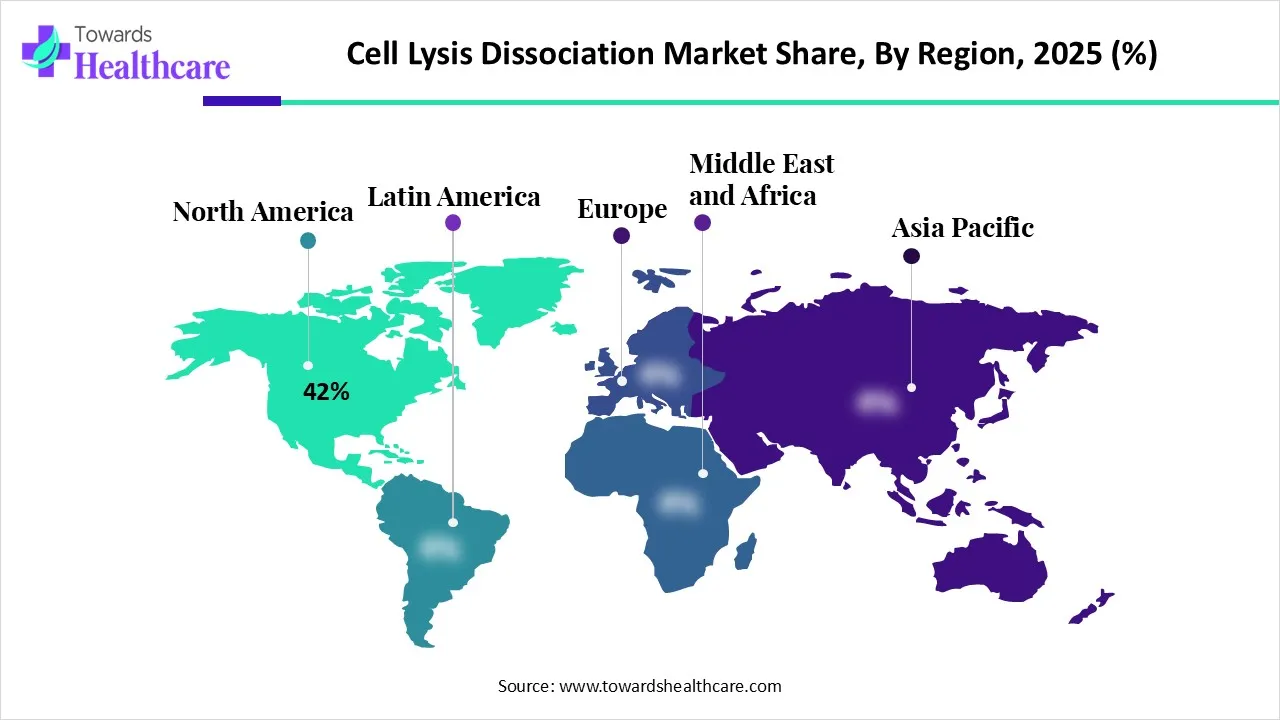
North America held 42% of the global cell lysis dissociation market in 2025, with a projected CAGR of 9.06% from 2026 to 2035. The region's growth is driven by strong pharmaceutical and biotechnology research, substantial academic funding, and advanced laboratory facilities. The U.S. leads due to its concentration of pharmaceutical firms and research institutions, with increasing demand for specialized reagents and automated instruments. Key suppliers such as Thermo Fisher Scientific and Bio-Rad Laboratories support this competitive landscape. Canada also contributes to market sustainability through its biotechnology sector and investments in cell therapy, though North America's market share is expected to decline slightly as the Asia Pacific region grows more rapidly.
Europe key markets such as Germany, the UK, France, Switzerland, and Italy are driven by established biotechnology companies and R&D initiatives. The rising adoption of single-cell analysis, molecular diagnostics, and advanced sequencing technologies, along with a focus on GMP-compatible enzymes and high-quality reagents, is expected to fuel significant growth in Europe.
Asia Pacific region is set for substantial growth in the pharmaceutical and biotechnology sectors, fueled by increased R&D, improved infrastructure, and advanced molecular biology technologies. Innovations such as single-cell sequencing and automated sample preparation will drive demand, establishing the region as a major market through 2035.
Latin America Brazil and Argentina are emerging research markets supported by academic and biotechnology ventures, with prospects for growth driven by improved laboratory facilities and pharmaceutical development efforts. While opportunities in genomics and cell-based research are increasing, challenges such as dependence on imported lab instruments, inconsistent research funding, and unequal institutional purchasing power could impede the uptake of advanced sample preparation technologies.
The Middle East and Africa regional demand is supported by investments in healthcare research, university infrastructure, biotechnology development, and scientific collaborations. GCC countries and South Africa are developing as research hubs with investments in advanced laboratories and biomedical research, increasing the need for cell lysis reagents and laboratory instruments. However, challenges such as a limited manufacturing base, dependence on international suppliers, and inconsistent funding may impede adoption of specialized technologies in the region.
Analyst View: North America will maintain its leading position because of its established life science research ecosystem, pharmaceutical R&D expenditure, and major supplier presence. Asia Pacific is expected to receive the highest regional growth premium due to expanding biotechnology investment, research infrastructure, and adoption of advanced cell analysis technologies. Europe will retain a substantial market position through its pharmaceutical and academic research capabilities, while Latin America and the Middle East and Africa will benefit from gradual improvements in laboratory infrastructure.
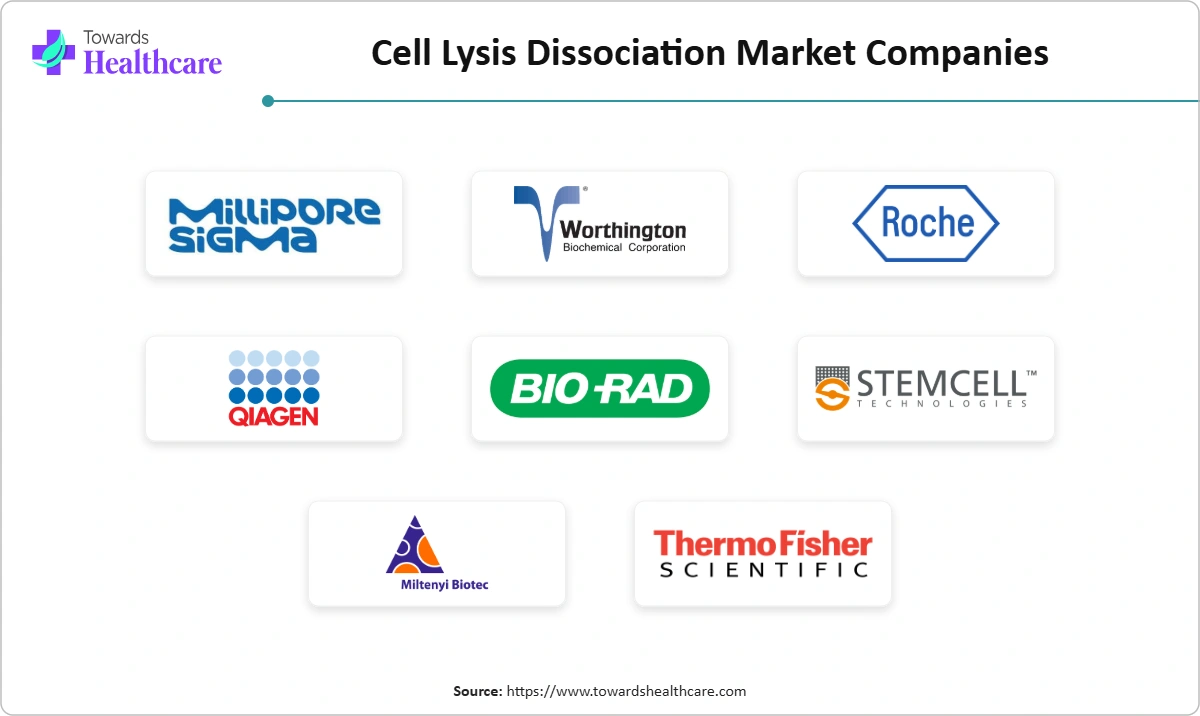
| Rank | Company Name | 2025 Share (%) | Key Products / Business | Headquarters |
| 1 | Thermo Fisher Scientific | 22.00% | Lysis reagents, TrypLE and kits | United States |
| 2 | Merck KGaA (MilliporeSigma) | 12.00% | Enzymes and lysis reagents | Germany |
| 3 | Miltenyi Biotec | 8.00% | gentleMACS dissociators and kits | Germany |
| 4 | STEMCELL Technologies | 6.00% | STEMprep dissociator and reagents | Canada |
| 5 | Bio-Rad Laboratories | 5.00% | Lysis kits and reagents | United States |
| 6 | QIAGEN | 5.00% | Lysis and extraction kits | Netherlands |
| 7 | Promega | 4.00% | Lysis reagents | United States |
| 8 | Roche | 3.00% | Collagenase and Liberase enzymes | Switzerland |
| 9 | Corning | 3.00% | Cell dissociation reagents | United States |
| 10 | Worthington Biochemical | 2.00% | Dissociation enzymes | United States |
Note: Company shares are 2025 estimates.
Sources: Company press releases, expert interviews, secondary sources, Towards Healthcare database, and Towards Healthcare analysts.
Thermo Fisher Scientific led the cell lysis dissociation market with an estimated 22% share in 2025, followed by Merck KGaA (MilliporeSigma) at 12% and Miltenyi Biotec at 8%. These companies benefit from robust product portfolios and established partnerships. Thermo Fisher Scientific leads with its lysis reagents and sample preparation kits. Merck KGaA and Miltenyi Biotec also maintain competitive edges with their enzyme products and automated tissue dissociation technologies, respectively. Additional significant players include STEMCELL Technologies, Bio-Rad Laboratories, QIAGEN, Promega, Roche, Corning, and Worthington Biochemical, each contributing through specialized extraction and processing solutions.
The top 10 companies collectively accounted for an estimated 70% of the market based on the supplied rounded company shares, while the remaining around 30% was distributed among regional reagent manufacturers, specialized enzyme producers, and emerging instrument developers.
Competition is influenced by cell viability, recovery efficiency, product consistency, enzyme specificity, automation capabilities, GMP compatibility, workflow integration, and pricing. Suppliers offering integrated solutions that combine reagents, kits, instruments, and technical support are positioned to strengthen their competitive standing.
Thermo Fisher Scientific: Thermo Fisher Scientific is headquartered in the United States and held an estimated 22% share of the market in 2025. Its product portfolio includes lysis reagents, TrypLE products, and sample preparation kits. In the Towards Healthcare Companies Quadrant, it is positioned as a Leader.
Merck KGaA (MilliporeSigma): Merck KGaA is based in Germany and accounted for an estimated 12% market share in 2025. The company's global life science presence and established research reagent portfolio support its competitive position. It is placed as a Leader in the Towards Healthcare Companies Quadrant.
Miltenyi Biotec: Miltenyi Biotec is headquartered in Germany and held an estimated 8% market share in 2025. The company benefits from its specialized capabilities in cell isolation, tissue processing, and cellular analysis. According to the Towards Healthcare Companies Quadrant, it is recognized as a Leader.
STEMCELL Technologies: STEMCELL Technologies, based in Canada, held an estimated 6% market share in 2025, focusing on research tools for cell biology and stem cell research, including tissue dissociation reagents and the STEMprep Tissue Dissociator System. Their investment in automated tissue processing enhances their competitive edge, positioning them as a Leader in the Towards Healthcare Companies Quadrant.
Bio-Rad Laboratories: Bio-Rad Laboratories is headquartered in the United States and represented an estimated 5% of the market in 2025. Its product portfolio features lysis kits and reagents for protein analysis, molecular biology, and sample preparation. The company is recognized as a Leader in the Towards Healthcare Companies Quadrant, supported by its strong presence in life science research.
QIAGEN: QIAGEN, based in the Netherlands, had an estimated 5% market share in 2025, focusing on lysis and nucleic acid extraction kits for molecular biology and sample preparation. Its significant role in molecular diagnostics and life science research guarantees ongoing demand, and it is identified as a Leader in the Towards Healthcare Companies Quadrant.
Promega: Promega is headquartered in the United States and accounted for an estimated 4% market share in 2025. The company offers lysis reagents and related products for protein analysis, cell biology, and molecular research. In the Towards Healthcare Companies Quadrant, it is acknowledged as an Innovator.
Roche: Roche, based in Switzerland, held an estimated 3% market share in 2025 and is recognized as an Innovator in the Towards Healthcare Companies Quadrant. Its portfolio features collagenase and Liberase enzymes, which are utilized in tissue dissociation and specialized cellular research workflows.
Corning: Corning, based in the United States, held an estimated 3% share in 2025 of the market in 2025, focusing on cell dissociation reagents and laboratory products. Its strong presence in cell culture and life science consumables enhances its market role, identifying it as an Innovator in the Towards Healthcare Companies Quadrant.
Worthington Biochemical: Worthington Biochemical is headquartered in the United States and accounted for an estimated 2% share in 2025. The company specializes in dissociation enzymes used in tissue processing and biological research. Its enzyme-focused portfolio supports specialized laboratory applications. It is positioned as an Innovator in the Towards Healthcare Companies Quadrant.
The cell lysis dissociation ecosystem connects upstream enzyme and chemical suppliers with reagent manufacturers, instrument developers, distributors, research institutions, pharmaceutical companies, and regulatory authorities. Each participant contributes to product development, manufacturing, distribution, and utilization across laboratory and biopharmaceutical workflows.
| Ecosystem Stage | Role in the Market | Key Companies |
| Raw Material Suppliers | Supply enzymes and chemicals | Enzyme producers |
| Product Makers | Make reagents, kits, and instruments | Thermo Fisher, MilliporeSigma, Miltenyi, STEMCELL |
| Distributors | Supply labs | Fisher Scientific, Avantor |
| Users | Prepare samples | Pharma, universities, CROs |
| Regulators | Set GMP rules for therapy use | FDA, EMA |
Sources: Company press releases, expert interviews, secondary sources, Towards Healthcare database, and Towards Healthcare analysts.
Raw Material Suppliers: Suppliers of enzymes, chemicals, detergents, and biological materials are crucial for producing cell lysis and dissociation products, ensuring consistency in raw materials, quality of products, and continuity of supply.
Product Makers: Manufacturers such as Thermo Fisher Scientific, Merck KGaA, Miltenyi Biotec, and STEMCELL Technologies develop and market lysis reagents, dissociation enzymes, sample preparation kits, and laboratory instruments.
Distributors: Distributors provide access to laboratory consumables, reagents, and instruments through direct sales, regional networks, and online procurement channels. Fisher Scientific and Avantor support product availability across research and industrial customers.
Users: Pharmaceutical and biotechnology companies, academic institutions, research laboratories, and CROs utilize cell lysis and dissociation technologies in genomics, proteomics, cell therapy, and bioprocessing applications.
Regulators: Regulatory authorities, including the FDA and EMA, set requirements for product quality, laboratory operations, and manufacturing standards in biopharmaceutical manufacturing and advanced therapy applications.
The market value chain begins with upstream enzyme, chemical, and biological material suppliers. Manufacturers convert these inputs into standardized reagents, kits, and instruments, which are distributed through direct and indirect sales networks to research and biopharmaceutical customers. Regulatory and quality requirements influence product development and manufacturing, while end-user requirements determine demand for specialized formulations, automated equipment, and application-specific workflows.
The Towards Healthcare Companies Quadrant positions key participants in the cell lysis dissociation market by market strength, reflecting revenue scale, market share, and geographic reach, and by innovation and growth strategy, reflecting product portfolio breadth, R&D intensity, and partnerships. Positions reflect each company's estimated 2025 share of the cell lysis dissociation market and our assessment of its product innovation, portfolio breadth, and partnerships.
Sources: Company press releases, expert interviews, secondary sources, Precedence Research database, and Precedence Research analysts.
Leaders: Thermo Fisher Scientific, Merck KGaA (MilliporeSigma), Miltenyi Biotec, STEMCELL Technologies, Bio-Rad Laboratories, and QIAGEN combine high market share with broad portfolios and strong innovation.
Innovators: Promega, Roche, Corning, and Worthington Biochemical bring newer technologies and specialised products.
By Product
By Technique
By Cell Type
By End User
By Region
The global cell lysis and dissociation market is estimated using a product-level bottom-up approach covering qualifying reagents, enzymes, kits and instruments. Consumable revenue is assessed using estimated product sales volumes, utilization rates, average selling prices and purchasing patterns across research and biopharmaceutical customers. Instrument revenue is calculated separately using annual system placements, average selling prices, installed-base estimates and replacement cycles. Bundled products are allocated across relevant categories using estimated standalone selling values to prevent double counting. Regional estimates are developed using country-level demand, supplier presence, research expenditure and product adoption patterns. Forecasts from 2026 to 2035 incorporate expected changes in single-cell research, cell therapy development, genomics and proteomics activity, and automated sample preparation.
Analyst View: The cell lysis dissociation market is poised for significant growth, driven by the increasing need for efficient sample preparation in cell biology, molecular analysis, and biopharmaceutical development. Reagents and enzymes will remain the leading product category, though instruments for automated tissue dissociation and high-throughput processing are expected to gain traction. Mammalian cells will continue to dominate due to their role in pharmaceutical development and cell therapy. Growth opportunities are particularly strong in automated dissociation instruments, GMP-compatible enzymes, and specialized solutions for single-cell research. North America will maintain market leadership, while Asia Pacific is projected to grow rapidly due to biotechnology investments. However, the market faces challenges such as tissue variability and instrument costs, with suppliers that offer comprehensive solutions likely to consolidate their competitive edge through 2035