


The global dental AI screening market size was estimated at USD 1.18 billion in 2025 and is predicted to increase from USD 1.47 billion in 2026 to approximately USD 10.64 billion by 2035, expanding at a CAGR of 24.6% from 2026 to 2035. The market is expanding steadily due to the growing use of AI in dental diagnosis, improving accuracy in detecting oral diseases, and supporting faster clinical decisions. Rising adoption of digital dentistry solutions and increasing awareness of preventive oral healthcare are further contributing to market growth.
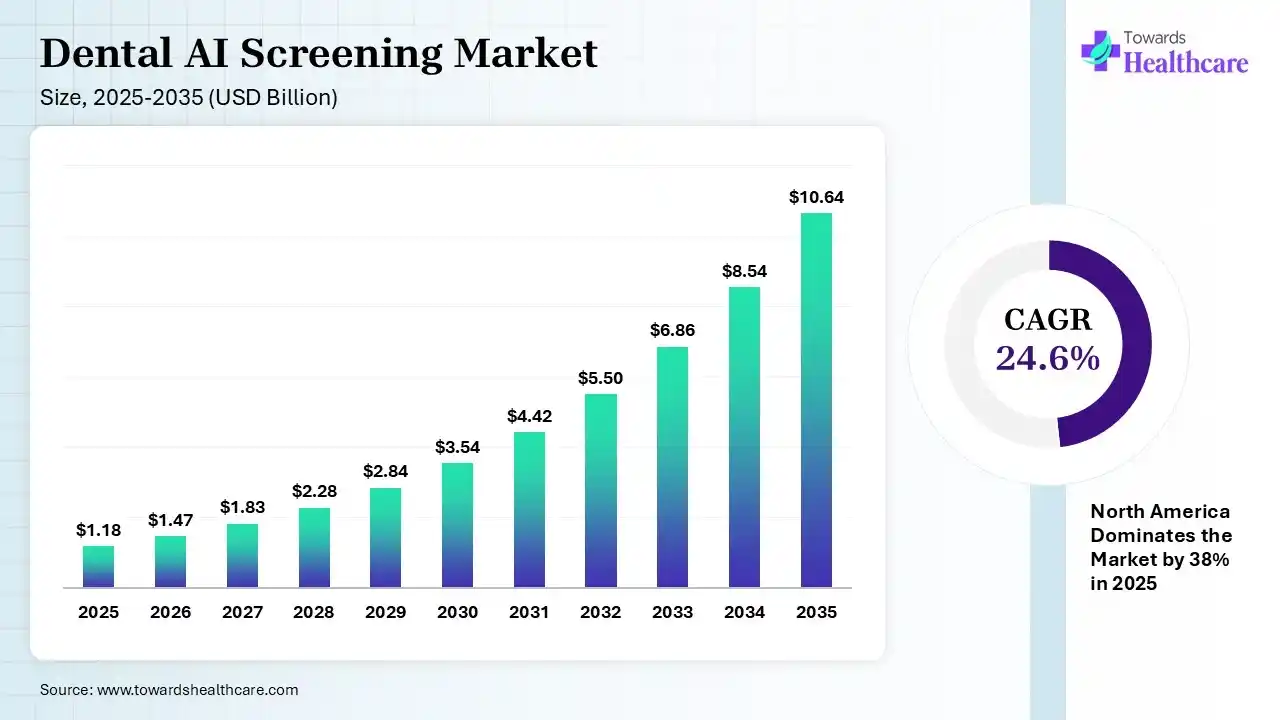
Dental AI screening is the use of artificial intelligence to analyze dental images and patient data for early detection of oral diseases and treatment planning. The dental AI screening market is growing rapidly due to the increasing demand for accurate and early detection of oral diseases, including cavities, gum disease disorders, and oral cancers. Rising adoption of digital dentistry, advances in AI-driven imaging technologies, and growing awareness about preventive dental care are further supporting market expansion. Additionally, AI helps dentists improve diagnostic efficiency, reduce treatment time, and enhance patient outcomes, making it an essential tool in modern dental practices.
Growing Integration of AI with 3D Dental Imaging
The use of AI with 3D imaging technologies is improving the accuracy of dental screenings and treatment planning. Advanced image analysis helps dentists identify hidden oral conditions more efficiently, supporting better clinical outcomes and enhancing precision in complex dental procedures.
Rising Focus on Preventive Oral Healthcare
Patients and healthcare providers are increasingly emphasizing early diagnosis and preventive dental care. AI-based screening solutions help detect oral diseases at earlier stages, reducing the risk of severe complications and encouraging timely and cost-effective treatment approaches.
Development of Personalized Dental Treatment Solutions
AI technologies are enabling more personalized dental care by analyzing patient-specific oral health data and treatment history. Future innovations are expected to support customized treatment recommendations, improving patient satisfaction and strengthening long-term dental health management.
| Table | Scope |
| Market Size in 2026 | USD 1.47 Billion |
| Projected Market Size in 2035 | USD 10.64 Billion |
| CAGR (2026 - 2035) | 24.6% |
| Leading Region | North America by 38% |
| Key Applications | AI-assisted dental imaging analysis, caries detection, oral cancer screening, periodontal disease detection, orthodontic assessment, radiograph interpretation, clinical workflow automation |
| Primary End Users | Dental clinics, hospitals, dental service organizations (DSOs), diagnostic centers, dental laboratories, academic and research institutions |
| Key Challenges | Regulatory approval complexity, clinical validation requirements, high implementation costs, data privacy concerns, integration challenges with existing dental practice management systems |
| Measurable Values | USD Millions/Units/Volume |
| Market Segmentation | By Component, By Technology, By Screening Type, By Imaging Type, By Deployment Mode, By End User, By Application, By Region |
| Top Key Players | Align Technology, Inc., Apteryx Imaging Inc., Carestream Dental LLC, Dentsply Sirona Inc., Diagnocat Inc., Envista Holdings Corporation, Henry Schein One |
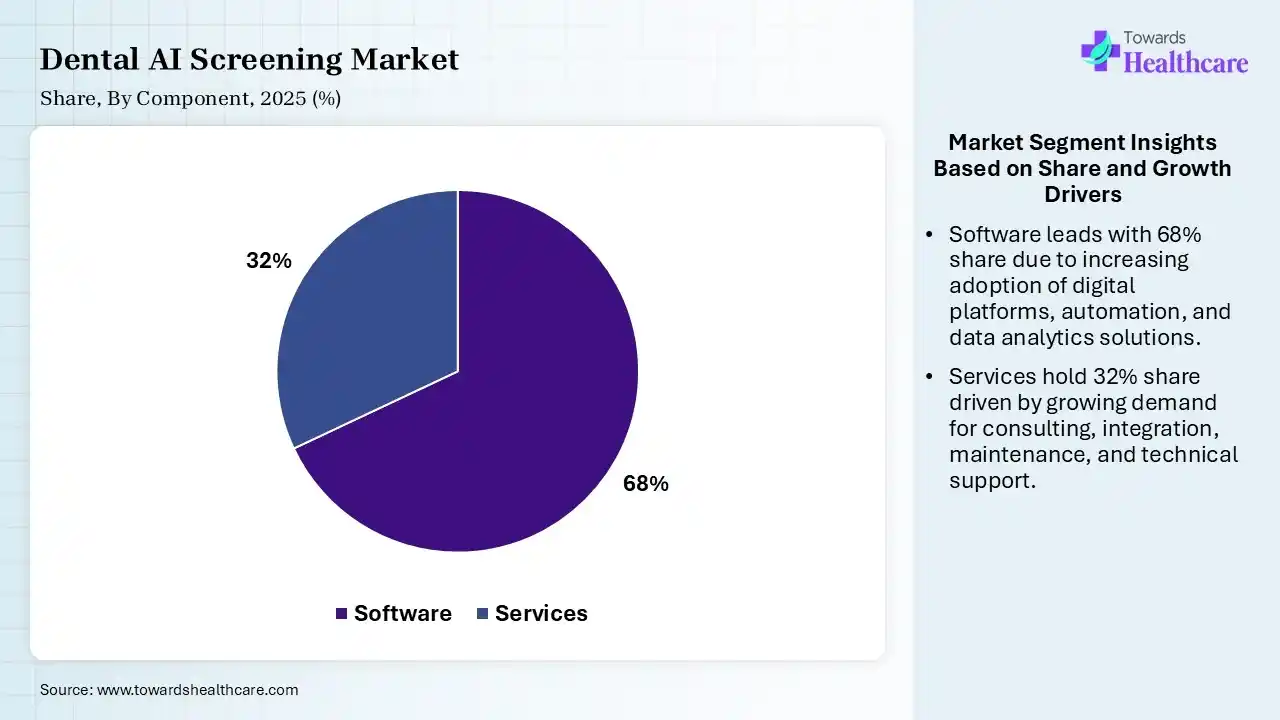
| Segment | Share 2025 (%) |
| Software | 68% |
| Services | 32% |
The Software Segment Dominated the Dental AI Screening Market in 2025
The software segment led the dental AI screening market with a share of 68% in 2025 and is expected to grow at the fastest CAGR in the market during the forecast period due to rising adoption of AI-driven diagnostic platforms and cloud-based dental systems. Increasing demand for real-time image analysis, improved diagnostic accuracy, and seamless integration with clinical workflows is driving growth. Continuous software advancements and updates are further enhancing automation and decision-making in dental practices.
The services segment held the second-largest share of 32% in 2025 due to increasing dental AI screening market due to the increasing demand for implementation, training, maintenance, and technical support for AI-based dental systems. Dental clinics rely on service providers for smooth integration, system upgrades, and data management. Growing adoption of advanced AI tools and the need for continuous support, customization, and workflow optimization further strengthen the importance of the services segment.
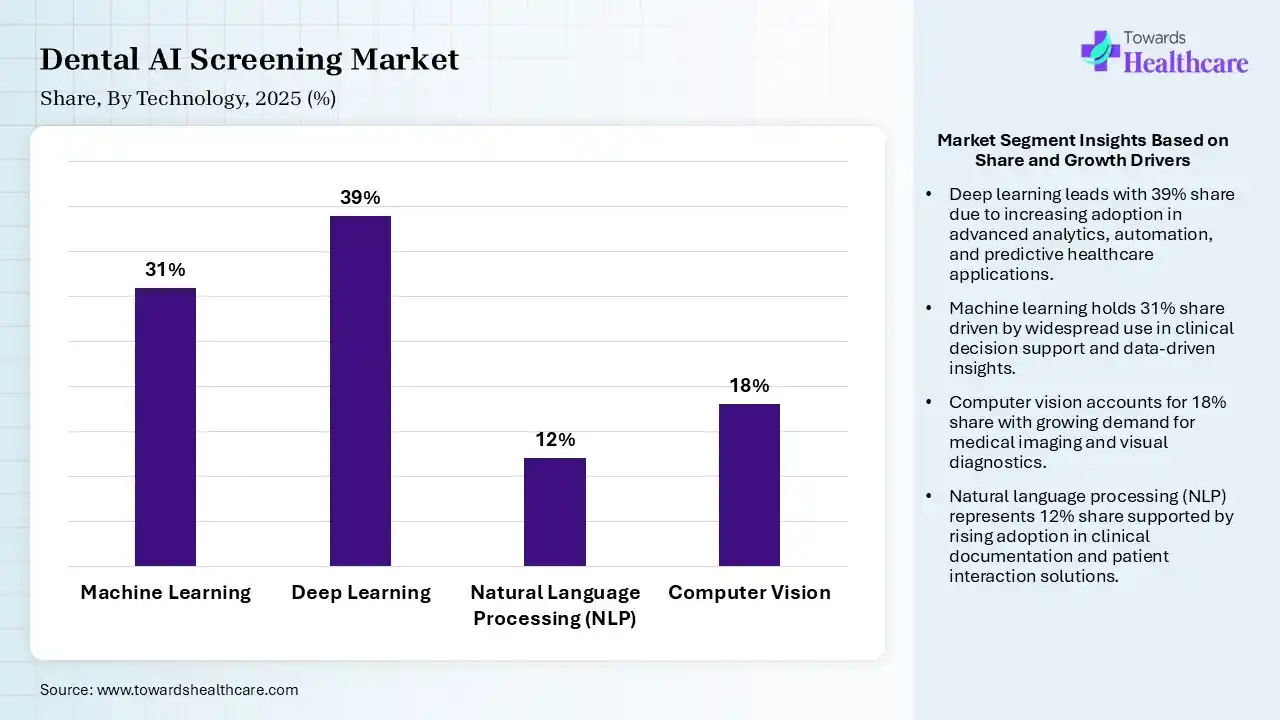
| Segment | Share 2025 (%) |
| Machine Learning | 31% |
| Deep Learning | 39% |
| Natural Language Processing (NLP) | 12% |
| Computer Vision | 18% |
The Deep Learning Segment Led the Market in 2025 with the Largest Share
The deep learning segment held 39% share in 2025 and is expected to grow at the fastest CAGR in the dental AI screening market during the forecast period due to its high accuracy in analyzing complex dental images and detecting subtle oral diseases. It effectively processes X-rays and 3D scans, enabling early diagnosis of cavities, gum disease, and abnormalities. Continuous improvements in neural networks, large dental datasets, and automation capabilities make deep learning highly reliable, driving its dominant adoption in dental AI screening technologies.
The machine learning segment held the second-largest share of 31% in 2025 due to its strong capability in pattern recognition and predictive analysis of dental data. It efficiently supports the diagnosis of common oral conditions using structured datasets and imaging inputs. Lower computational requirements, ease of integration into existing systems, and cost-effectiveness make machine learning widely adopted across dental clinics and diagnostic platforms globally.
The computer vision segment held a 18% of the dental AI screening market share due to its ability to accurately analyze dental images such as X-rays, intraoral scans, and 3D models. It enables precise detection of cavities, misalignment, and periodontal diseases. Advancements in image processing algorithms, rising adoption of digital dentistry, and increasing demand for automated and real-time diagnosis are further driving the expansion of computer vision technologies.
The natural language processing (NLP) segment held a 12% of market share due to its ability to interpret clinical notes, patient records, and unstructured dental data. It helps automate report generation, improve communication between dentists and patients, and support better decision-making. Rising adoption of electronic health records and AI-driven documentation tools is further driving the demand for NLP solutions in dental practices.
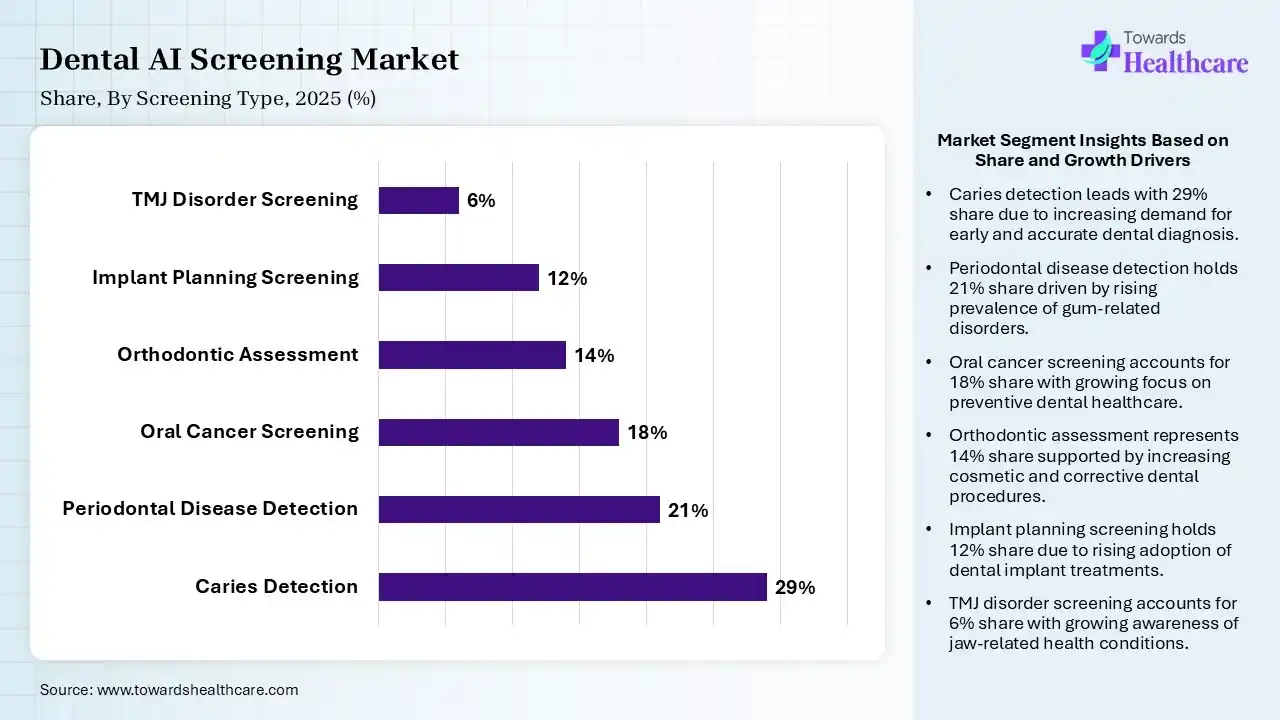
| Segment | Share 2025 (%) |
| Caries Detection | 29% |
| Periodontal Disease Detection | 21% |
| Oral Cancer Screening | 18% |
| Orthodontic Assessment | 14% |
| Implant Planning Screening | 12% |
| TMJ Disorder Screening | 6% |
The Caries Detection Segment Led the Dental AI Screening Market in 2025 with the Largest Share
The caries detection segment held a dominant share of 29% in 2025 due to the high global prevalence of dental cavities and the strong need for early diagnosis. AI-powered tools accurately identify caries at initial stages using X-rays and imaging data, reducing the risk of severe complications. Increasing focus on preventive dental care, rising patient awareness, and widespread adoption of digital diagnostic systems further strengthen this segment’s market leadership.
The periodontal disease detection segment held the second-largest share of 21% in 2025 due to the high prevalence of gum diseases worldwide, especially among adults. AI-based tools help in the early identification of inflammation, bone loss, and infection through dental imaging analysis. Growing awareness of oral hygiene, rising geriatric population, and increasing demand for preventive and minimally invasive dental treatment further support this segment’s growth.
The oral cancer screening segment held a share of 18% in 2025 and is expected to grow at the fastest CAGR in the dental AI screening market during the forecast period due to rising global awareness of early cancer detection and increasing prevalence of oral cancer risk factors such as tobacco and alcohol use. Advancements in AI-based imaging and diagnostic accuracy enable earlier identification of lesions, improving survival rates. Additionally, growing adoption of preventive dental check-ups and supporting government screening initiatives are accelerating segment growth.
The orthodontics assessment segment held a 14% of market share due to rising demand for teeth alignment correction and cosmetic dentistry. AI-powered tools help in the precise analysis of jaw structure, bite issues, and tooth positioning using digital scans. Increasing awareness of aesthetic appearance, growing adoption of clear aligners, and advancements in 3D imaging technologies are further driving faster and more accurate orthodontic assessments.
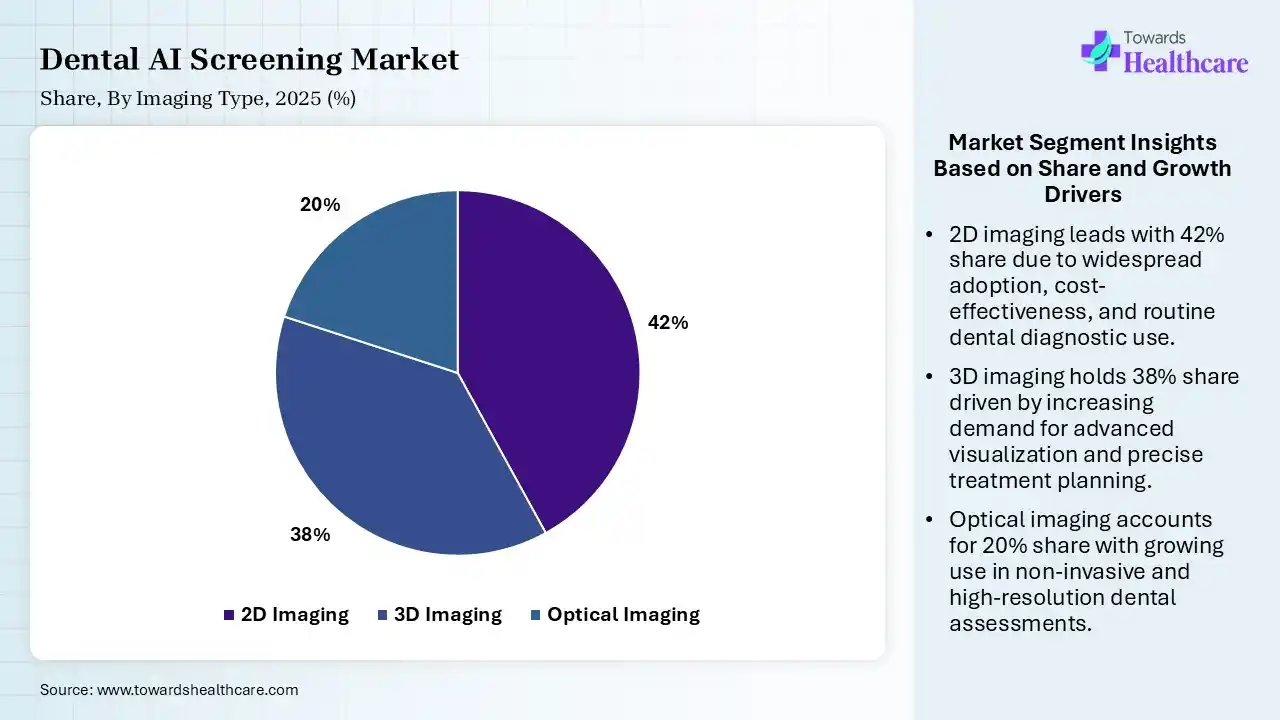
| Segment | Share 2025 (%) |
| 2D Imaging | 42% |
| 3D Imaging | 38% |
| Optical Imaging | 20% |
The 2D Imaging Segment Led the Market in 2025 with the Largest Share
The 2D imaging segment held a dominant share of 42% in 2025 due to its cost-effectiveness, easy accessibility, and widespread use in routine dental examinations. It efficiently detects common oral issues such as cavities, bone loss, and infections with reliable accuracy. High adoption in clinics and diagnostic centers, along with seamless integration with A-based screening solutions, further strengthens its dominance across both developed and emerging healthcare markets globally.
The 3D imaging segment held the second-largest share of 38% in 2025 and is expected to grow at the fastest CAGR in the dental AI screening market during the forecast period due to its high precision in capturing detailed views of teeth, jaw structure, and surrounding tissues. It enabled accurate diagnosis of complex dental conditions and supports advanced treatment planning. Although costlier than 2D imaging, increasing adoption in orthodontics and implant procedures is driving its steady market growth.
The optical imaging segment held a 20% of the dental AI screening market share due to its ability to provide real-time, high-resolution visualization of oral structure without radiation exposure. It supports accurate detection of early-stage dental issues and improves patient comfort during examinations. Growing demand for non-invasive diagnostic methods, advancements in intraoral scanners, and increasing adoption in cosmetic and preventive dentistry are further driving its market growth.
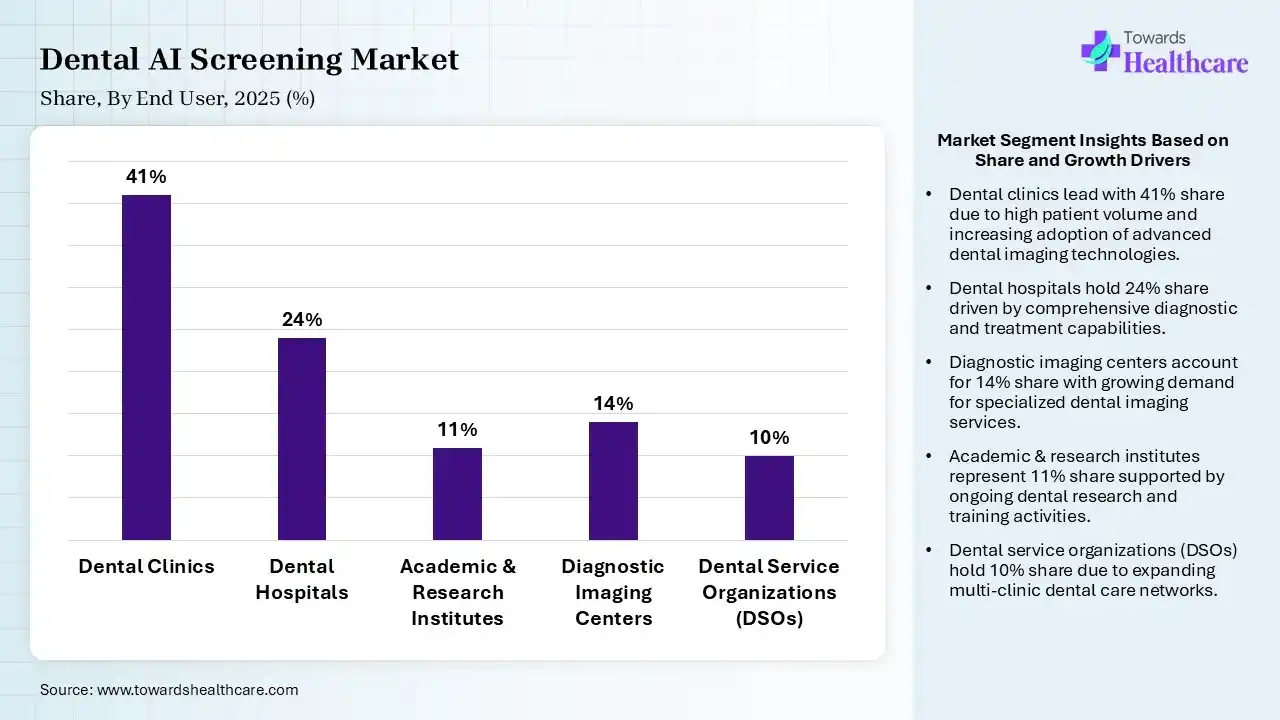
| Segment | Share 2025 (%) |
| Dental Clinics | 41% |
| Dental Hospitals | 24% |
| Academic & Research Institutes | 11% |
| Diagnostic Imaging Centers | 14% |
| Dental Service Organizations (DSOs) | 10% |
The Dental Clinics Segment Led the Market in 2025 with the Largest Share
The dental clinics segment dominated the dental AI screening market with a share of 41% in 2025 due to high patient volume and routine use of AI-enabled diagnostic tools in everyday oral care. Clinics widely adopt advanced screening systems to improve diagnostic accuracy, efficiency, and patient outcomes. Growing demand for preventive dental care, availability of trained professionals, and integration of digital imaging technologies further support their dominant position in the market.
The dental hospitals segment held the second-largest share of 24% in 2025 due to their advanced infrastructure, availability of specialized dental professionals, and ability to manage complex oral cases. Hospitals are increasingly adopting AI-based screening tools for accurate diagnosis and treatment planning. Rising patient inflow, government support, and integration of advanced imaging and digital systems further strengthen their strong market position globally.
The diagnostic imaging centers segment held 14% of the market share due to increasing demand for advanced and high-precision dental diagnostics. These centers offer specialized imaging services such as 2D,3D, and AI-enhanced scans for accurate disease detection. Rising patient referrals from clinics, growing adoption of digital radiography, and a focus on early diagnosis and preventive care are further driving strong segment growth.
The dental service organizations (DSOs) segment held 10% share in 2025 and is expected to grow at the fastest CAGR in the dental AI screening market during the forecast period due to increasing consolidation of dental practices, which improves operational efficiency and access to advanced technologies like AI screening. DSOs enable centralized management, bulk purchasing, and standardized care protocols, making AI adoption easier and more cost-effective. Rising demand for scalable, technology-driven dental care models further accelerates their rapid market expansion.
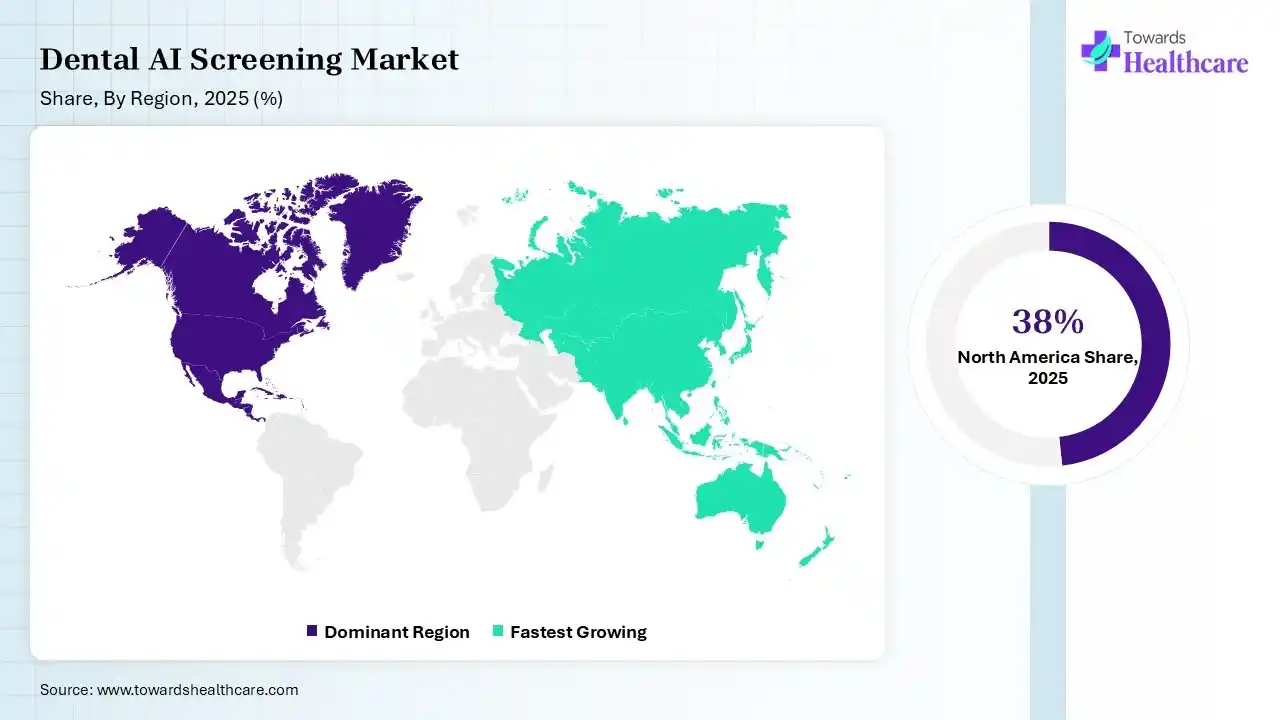
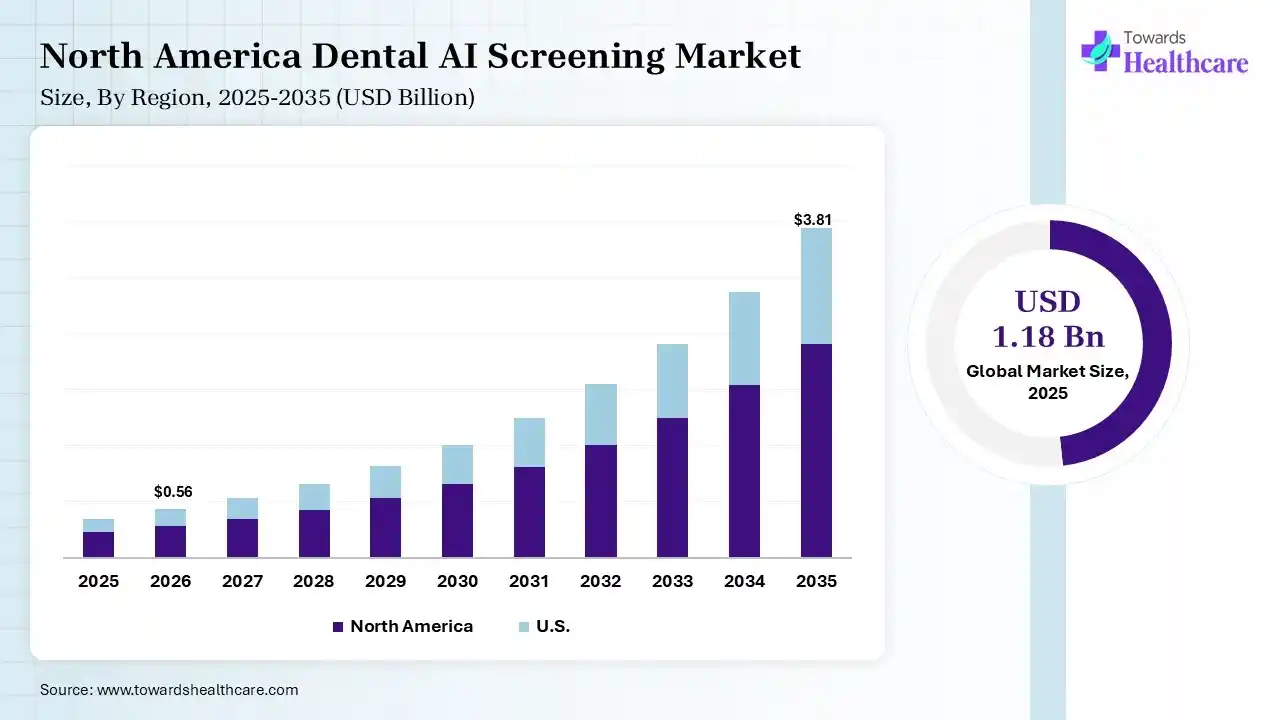
North America dominated the dental AI screening market with a share of 38% in 2025 due to its advanced healthcare infrastructure, high adoption of AI-based dental technologies, and strong presence of leading market players. The region benefits from increased awareness of preventive oral care, high healthcare spending, and rapid integration of digital dentistry solutions. Favorable regulatory support and continuous technological innovation further strengthen its leadership position in the global market.
U.S. Market Trends
The U.S. leads the dental AI screening market due to its advanced healthcare infrastructure, strong adoption of AI-driven diagnostic technologies, and presence of major industry players. High healthcare expenditure, growing awareness of preventive oral care, and rapid digitization of dental practices further support growth. Continuous innovation, strong research ecosystems, and a favorable regulatory environment also contribute to its market leadership.
Asia Pacific held 24% share of the dental AI screening market in 2025 and is expected to grow at the fastest CAGR in the market during the forecast period due to rising healthcare investment, expanding dental infrastructure, and increasing adoption of digital dentistry solutions. Growing population, higher awareness of oral health, and improving access to advanced diagnostic technologies further drive demand. Additionally, rapid technological advancements and the increasing presence of AI startups are accelerating regional market expansion.
India Market Trends
India is anticipated to grow at the fastest CAGR in the dental AI screening market due to its large population base, rising burden of dental diseases, and increasing awareness of preventive oral healthcare. Rapid expansion of dental infrastructure, growing adoption of digital dentistry, and affordable AI-based diagnostic solutions are further driving demand. Additionally, supportive government initiatives and expanding private healthcare investment are accelerating market growth.
|
Ecosystem Category
|
Companies / Participants | Role in Dental AI Screening Market |
| Technology Providers | Pearl, Overjet, VideaHealth | Develop AI algorithms, diagnostic models, and clinical decision-support systems |
| Product Manufacturers | Planmeca, Dentsply Sirona | Provide dental imaging hardware integrated with AI-based workflows |
| Service Providers | AI dental imaging solution providers, dental software companies | Provide AI screening tools, cloud platforms, and workflow integration |
| Platform Providers | Pearl, Overjet, VideaHealth | AI-powered dental screening and diagnostic platforms |
| Software Vendors | Carestream Dental, Dentrix | Dental practice management, imaging, and workflow software |
| Research Institutions | Universities, dental research centers, AI healthcare research groups | Clinical validation, AI model development, dental imaging research |
| End-User Industries | Dental clinics, hospitals, DSOs, dental laboratories | Deployment and utilization of AI screening technologies |
| Tier 1 | Tier 2 | Tier 3 | |
| Typical Market Influence | 55% | 30% | 15% |
| Tier 1 | ||||
| Company Name | Headquarters | Country | Why Relevant to This Market | Key Products/Services |
| Pearl | Los Angeles, California, USA | USA | One of the most recognized dental AI companies focused specifically on real-time clinical dental diagnostics | Second Opinion AI platform for radiographic dental analysis and disease detection |
| Overjet | Boston, Massachusetts, USA | USA | Leading dental AI company with FDA-cleared solutions and strong adoption among dental providers | Dental AI platform for caries, bone loss, and pathology detection |
| Dentsply Sirona | Charlotte, North Carolina, USA | USA | Global dental technology leader integrating digital dentistry and AI-enabled workflows | Digital dentistry systems, imaging technologies, AI-supported dental solutions |
| Tier 2 | ||||
| Company Name | Headquarters | Country | Why Relevant to This Market | Key Products/Services |
| VideaHealth | Boston, Massachusetts, USA | USA | Specialized dental AI company focused on radiographic diagnosis and clinical efficiency | Videa AI dental diagnostic platform |
| Carestream Dental | Atlanta, Georgia, USA | USA | Established dental imaging company developing digital imaging and AI-enabled solutions | Dental imaging systems and image management software |
| Align Technology | Tempe, Arizona, USA | USA | Major digital dentistry company using AI and imaging technologies in orthodontics | iTero scanners, AI-powered orthodontic workflows |
| Tier 3 | ||||
| Company Name | Headquarters | Country | Why Relevant to This Market | Key Products/Services |
| Overjet Technologies | Boston, Massachusetts, USA | USA | Specialized AI dental diagnostics provider expanding AI adoption in dental practices | AI dental imaging analysis |
| Diagnocat | Wilmington, Delaware, USA | USA | AI dental imaging startup focused on automated CBCT and radiographic analysis | AI-based dental imaging interpretation platform |
| Pearl AI | Los Angeles, California, USA | USA | AI dental software innovator focused on automated radiograph interpretation | Dental AI screening software |
Strengths
Weaknesses
Opportunities
Threats
By Component
By Technology
By Screening Type
By Imaging Type
By Deployment Mode
By End User
By Application
By Region










Principal Consultant
Rohan Patil is a seasoned market research professional with over 5+ years of focused experience in the healthcare sector, bringing deep domain expertise, strategic foresight, and analytical precision to every project he undertakes.
Learn more about Rohan Patil

Reviewed By
Aditi Shivarkar is a seasoned professional with over 14 years of experience in healthcare market research. As a content reviewer, Aditi ensures the quality and accuracy of all market insights and data presented by the research team.
Learn more about Aditi Shivarkar









