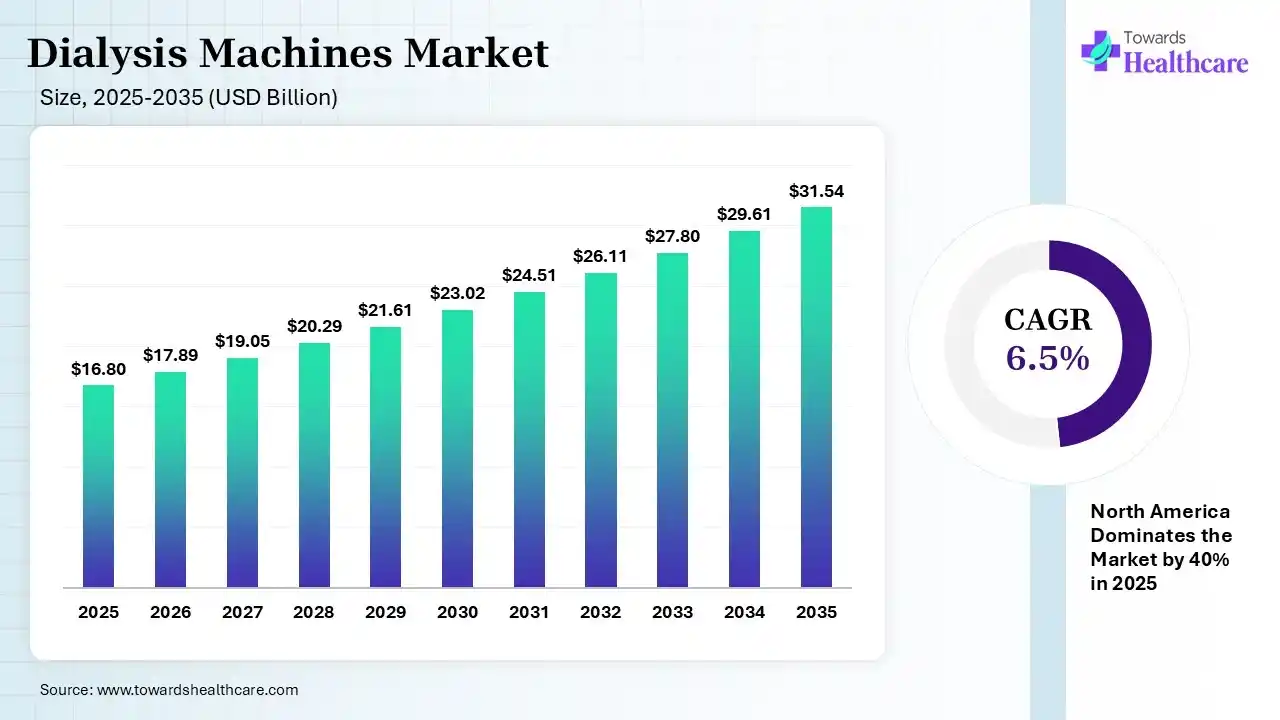
The global dialysis machines market size was estimated at USD 16.8 billion in 2025 and is predicted to increase from USD 17.89 billion in 2026 to approximately USD 31.54 billion by 2035, expanding at a CAGR of 6.5% from 2026 to 2035. The dialysis machines market is growing because of the increasing prevalence of lifestyle diseases, increasing geriatric population, enhanced technology and novelty, and increase in home-driven dialysis.
The dialysis machines market is growing, as this machine combines and monitors the dialysate. Dialysate is the fluid that helps remove the unwanted waste products from the blood. It helps electrolytes and minerals reach their proper levels in the body. The machine also monitors the flow of blood while it is outside the body. A dialysis machine is used to filter a patient's blood, eliminating excess water and waste products when the kidneys are dysfunctional, damaged, or no longer working. The machine acts as an artificial kidney, consisting of plastic tubing that carries blood to a dialyser, a bundle of hollow fibres that serves as a semipermeable membrane for sifting out impurities. Dialysis works by representing the function of healthy kidneys, eliminating waste, excess fluids, and contaminants from the blood.
Dialysis machine are medical devices designed to remove waste product, excess fluids, and toxins from the blood when the kidneys can no longer perform these functions effectively. The kidneys can no longer perform these functions effectively. They support patients with chronic kidney diseases (CKD) or end-stage renal disease (ESRD) through hemodialysis or peritoneal dialysis treatments.
The dialysis machines market is expanding due to the rising prevalence of chronic kidney disease, diabetes, hypertension, and the growing elderly population requiring renal replacement therapy. Technological advancements in portable and wearable dialysis systems, AI-enabled treatment monitoring, remote patient management, and automated fluid balancing are improving treatment efficiency and patient outcomes. Key trends include the increasing adoption of home dialysis, connected digital healthcare platforms, and personalized dialysis solutions. Future opportunities lie in miniaturized wearable devices, regenerative kidney technologies, and smart monitoring systems. Growing healthcare investments, improved reimbursement policies, and increasing awareness of early kidney disease management continue to drive sustained market growth.
AI-based technology is revolutionizing dialysis medical care by predicting hospitalizations, personalizing treatment, and increasing clinic efficiency. AI-based innovations, from predictive maintenance to wearables, and explore the future of AI-based technology in increasing results and access to care. Integrating AI-based technology and regenerative medicine technology to progress wearable dialysis tools. These devices conduct continuous dialysis, eliminate toxins efficiently, and have little effect on hemodynamics. Smart AI-based dialysis machine that leverages artificial intelligence (AI) and Internet of Things (IoT) technologies to improve patient care and outcomes.
Rise of Home Dialysis:
Home dialysis has various clinical advantages, as it lowers the long interdialytic gap and favors the control of hyperphosphatemia, left ventricular hypertrophy, and resistant hypertension.
Increasing Digitalization:
Integrating dialysis with machine data into the electronic medical record reduced wasted nursing time by approximately 28 minutes. Automated settings and real-time monitoring reduce the risk of complications or errors during treatment.
Hemodiafiltration (HDF) Advancements:
Hemodiafiltration (HDF) combines two methods to more efficiently cleanse blood. HDF removes toxins more proficiently compared to consistent hemodialysis. This enhances the overall well-being and quality of life.
| Table | Scope |
| Market Size in 2026 | USD 17.89 Billion |
| Projected Market Size in 2035 | USD 31.54 Billion |
| CAGR (2026 - 2035) | 6.5% |
| Leading Region | North America by 40% |
| Historical Data | 2020 - 2023 |
| Base Year | 2025 |
| Forecast Period | 2026 - 2035 |
| Measurable Values | USD Millions/Units/Volume |
| Market Segmentation | By Product Type, By Applications, By End User, By Region |
| Top Key Players | Fresenius Medical Care AG & Co. KGaA, Baxter International Inc., Nipro Corporation, B. Braun Melsungen AG, Nikkiso Co., Ltd. |
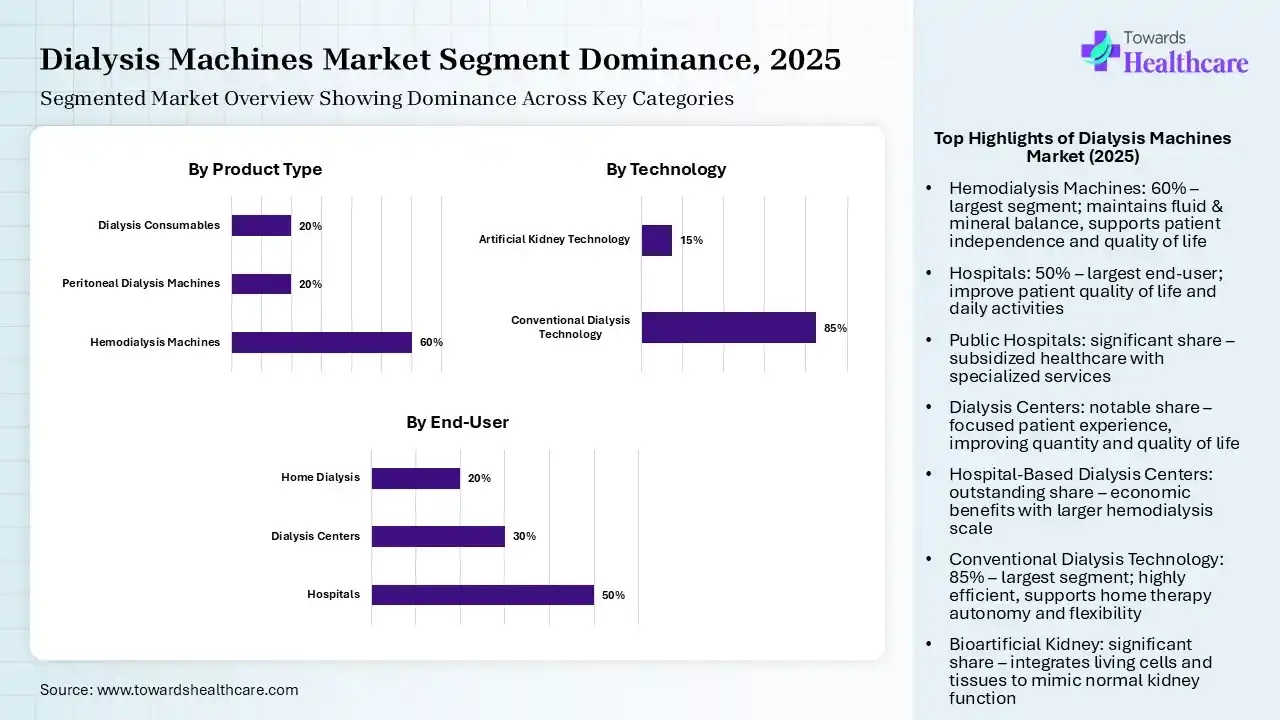
| Segment | Share 2025 (%) |
| Hemodialysis Machines | 60% |
| Peritoneal Dialysis Machines | 20% |
| Dialysis Consumables | 20% |
Hemodialysis Machines Segment Led the Dialysis Machines Market in 2025
The hemodialysis machines segment contributed the largest market share of 60% in 2025, as hemodialysis supports body control blood pressure and maintains the correct balance of fluid and different minerals such as potassium and sodium in the body. Hemodialysis begins well before the kidneys shut down to the point of causing life-threatening challenges. It reinstates balance, endorsing independence and allowing a better quality of life for patients.
The peritoneal dialysis machines segment held a notable share as PD provides patient survival comparable to or better than in-center hemodialysis while preserving residual kidney function, empowering patient autonomy, and lowering financial burden to spenders. The majority of patients suffering from kidney failure are qualified for PD.
The dialysis consumables segment held a significant share of the market in 2025, as these consumables control excess waste and fluid during treatment, which helps reduce the stress on the body. It also supports increased flexibility with diet and the quantity of therapies needed to take while on dialysis.
| Segment | Share 2025 (%) |
| Hospitals | 50% |
| Dialysis Centers | 30% |
| Home Dialysis | 20% |
Hospitals Segment Led the Dialysis Machines Market in 2025
The hospitals segment contributed the largest market share of 50% in 2025, as dialysis devices majorly improve patient quality of life by enabling patients to remain with their daily activities of life. Dialysis often makes patients feel better because it helps clear the waste products that have built up in the blood during the treatments.
The stand-alone dialysis centers segment is expected to grow at the fastest rate during the forecast period. Stand-alone dialysis centers are significant substitutes to HDUs in meeting the increasing demand in a cost-effective model. These centres work separately from traditional hospitals to offer lower-cost, accessible, and convenient care, often near housing areas.
The public hospitals segment held a significant share of the dialysis machines market in 2025. This hospital is funded by the management and typically offers free or subsidised healthcare services. Public hospitals often provide a broad range of healthcare services at a high standard, and major hospitals are equipped with specialised sections.
The private hospitals segment held a significant share of the market in 2025, as private hospitals show themselves with convenient health care, multi-level and diversified solutions, attention to detail, advanced service quality, reasonable fees, and emphasis on brand reputation.
The dialysis centers segment held a notable share of the market in 2025. Center Dialysis provides a targeted patient experience from start to finish. Dialysis supports patients with renal disease to surge quantity and quality of life.
The hospital-based dialysis centers segment held an outstanding share of the dialysis machines market in 2025 as CDDS brings significant economic benefits to dialysis centers with a greater scale of hemodialysis machines. Dialysis is a very efficient treatment choice for clearing waste products and extra fluid from the blood.
The home dialysis segment held a notable share of the market in 2025. As home dialysis has various clinical benefits, it lowers the long interdialytic gap and favors the control of hyperphosphatemia, left ventricular hypertrophy, and resistant hypertension.
| Segment | Share 2025 (%) |
| Conventional Dialysis Technology | 85% |
| Artificial Kidney Technology | 15% |
The Conventional Dialysis Technology Segment held the Largest Share in the Market in 2025
The conventional dialysis technology segment contributed the largest market share of 85% in 2025, as conventional HHD provides the advantages of home therapy with regard to patient autonomy and flexibility. The conventional technology is highly efficient at eliminating toxins and excess fluid.
The artificial kidney technology segment is expected to grow at the fastest rate of 15% during the forecast period, as this type of kidney is an implantable biomedical device that will work like a natural kidney and provide 24/7 treatment. Artificial kidneys are presently designed for the advantages of less fluid resistance and a healthier surface area.
The wearable artificial kidneys (WAK) segment held a notable share of the dialysis machines market in 2025, as wearable kidneys keep patients healthier. This is because they work around the clock like real kidneys. This leads to improved blood pressure control, less fluid weight gain with fewer stress on the heart, better-quality clearance of wastes from the blood, and a less stringent diet.
The bioartificial kidney segment held a significant share of the market in 2025, as bioartificial kidneys offer an extension to predictable artificial kidneys and dialysis schemes by integrating aspects of living cellular and tissue function in an effort to better mimic normal kidneys.
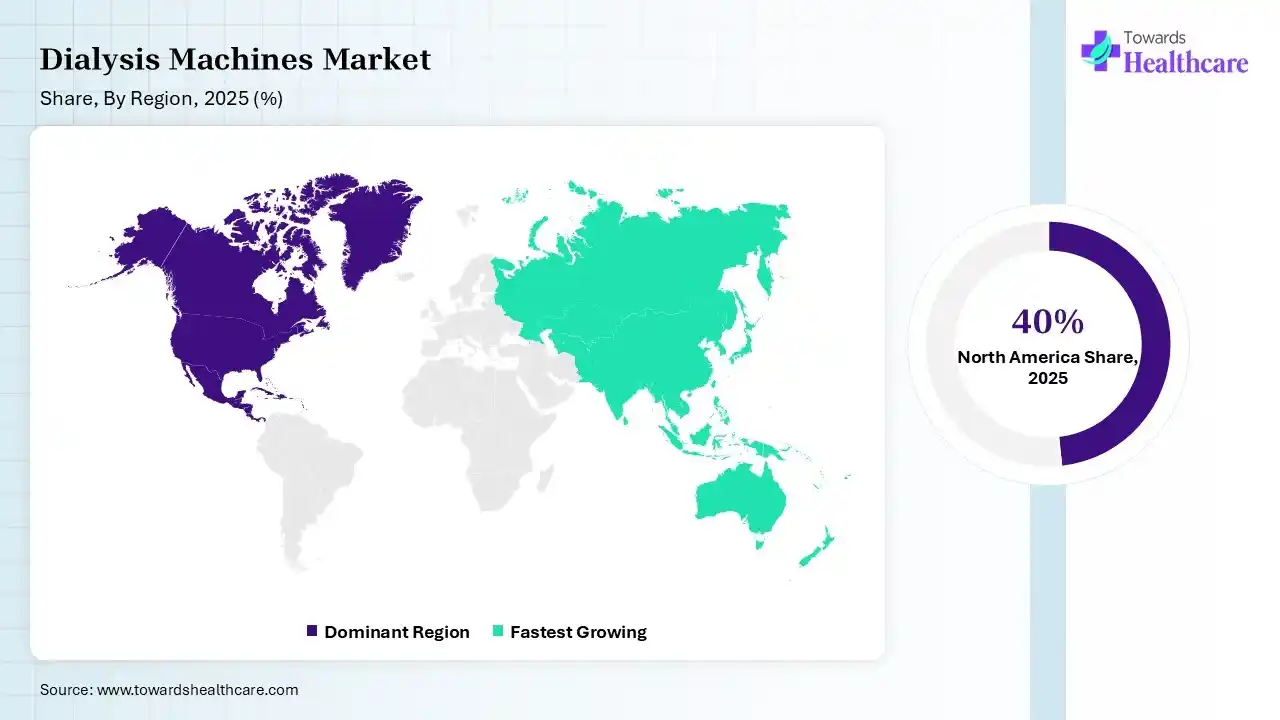
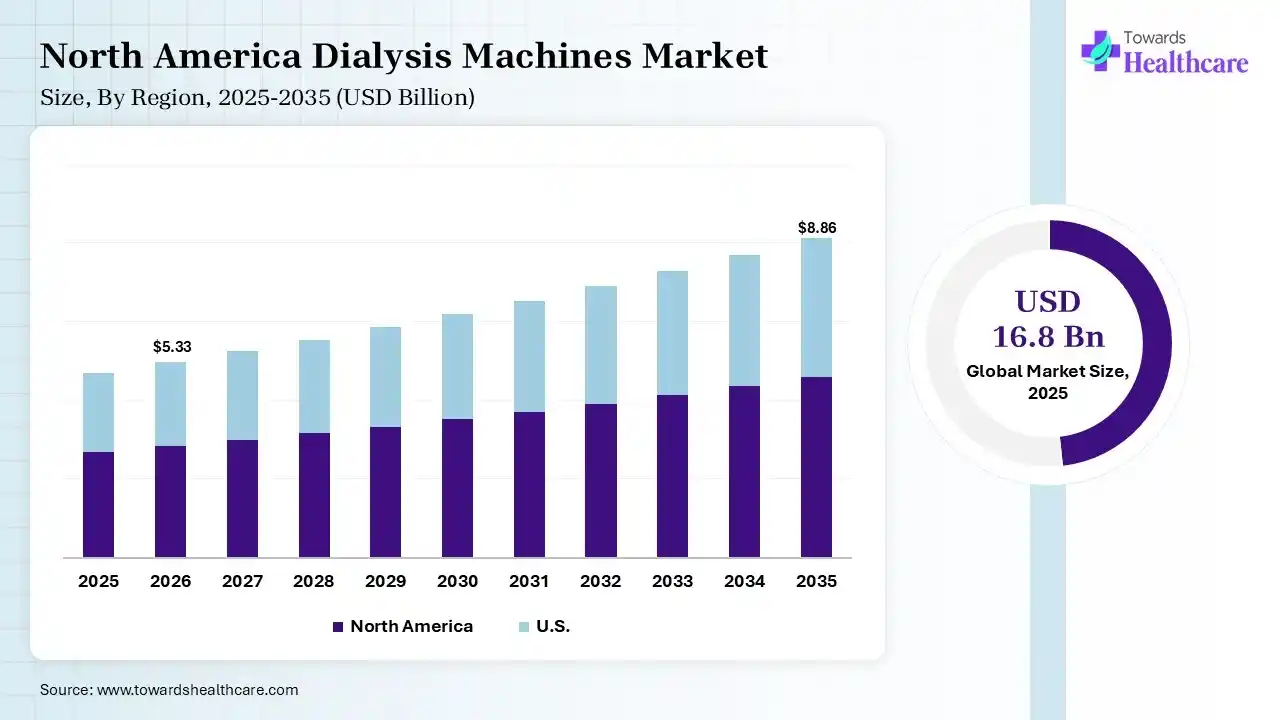
In 2025, North America dominated the dialysis machines market with a share of 40% in 2025, because of the rapidly aging populations and associated demographic shifts, growing disease burdens, and wide gaps in equity demand, which accelerated actions. Medicare investment in prescription drugs is substantial and growing rapidly. An increasing concentration of outpatient dialysis centers and specialized facilities, specifically in urban areas, helps the high volume of treatments, which drives the growth of the market.
For Instance,
U.S. Market Trends
The U.S. is multifaceted, encompassing lifestyle choices, environmental factors, and genetic disposition. Medicaid expansion was related to increased medical care access for 45–64-year-olds, hypothetically resulting in improved healthcare experience.
Canada Expands Dialysis Machine Adoption Through Advanced Renal Care
The Canada dialysis machines market is growing significantly due to the increasing burden of chronic kidney disease, expanding home dialysis programs, and strong investments in renal healthcare infrastructure. Rising adoption of technologically advanced hemodialysis and peritoneal dialysis systems, supportive reimbursement policies, and increasing focus on patient-centered kidney care are improving treatment accessibility. Continuous innovation in remote monitoring and portable dialysis technologies further drives market growth.
Asia Pacific is expected to experience the fastest growth during the forecast period, as the rapid advancement of dialysis clinics and centers, specifically in China and India, has intensely growing access to care. Regulatory bodies are increasing healthcare budgets, realizing reimbursement schemes for dialysis treatments, and spending on renal care infrastructure, which drives the growth of the market.
China Market Trends
The Chinese government has significantly enlarged healthcare budgets and prolonged reimbursement, making treatments more cost-effective. Chinese organizations such as SWS Medical and Shandong Weigao have successfully developed high-quality, lower-cost machines. The fast establishment of independent and community hemodialysis centers in China has sped up the installation.
India Accelerates Dialysis Machine Market Growth Through Expanding Renal Care
The India Dialysis machines market is growing significantly due to the rising prevalence of chronic kidney diseases, diabetes, and hypertension, coupled with increasing demand for affordable renal replacement therapy. Expansion of dialysis centers in urban and rural regions, growing government initiatives to improve kidney care access, and rising adoption of locally manufactured, cost-effective dialysis systems are driving market growth. Continuous healthcare infrastructure development further supports long-term expansion.
R&D:
Manufacturing Processes:
Patient Services:
| Company | Headquarters | Latest Update |
| Fresenius Medical Care AG & Co. KGaA | Germany | Fresenius Medical Care researchers present multiple abstracts that demonstrate proven, real-world advantages of hemodiafiltration (HDF), which are accepted as an oral presentation. |
| Baxter International Inc. | United States | Baxter completed the divestiture of its Kidney Care business, which recently operated as a novel independent company named Vantive. |
| Nipro Corporation | Japan | In January 2025, NIPRO CORPORATION is pleased to announce that sales of its DIAMAX WOW single-patient dialysis machines. |
| B. Braun Melsungen AG | Germany | In March 2026, B. Braun Announces Significant Reduction of Greenhouse Gas Emissions through Renewable Electricity Purchase Agreements. |
| Nikkiso Co., Ltd. | Japan | In December 2025, Nikkiso Co., Ltd. (hereafter "Nikkiso") is pleased to announce the launch of its hemodialysis machine "DBB-06 PRO" and dedicated bloodline set for the U.S. |
In June 2025, “Going forward, we plan to scale up our manufacturing capacity and reduce the total cost of ownership of the RxT21 by 40 per cent compared to imported machines. We also aim to develop a broader range of technologically advanced devices over the next three years, including a home dialysis model,” Said, Shyam Vasudeva Rao, founder and director of Renalyx Health Systems, said RxT21 would bring dialysis closer to patients’ homes, helping reduce dropout rates.
Strengths
Weaknesses
Opportunities
Threat
By Product Type
By Applications
By End User
By Region






Principal Consultant
Payal Rabde is a Healthcare Market Research Analyst at Towards Healthcare Research & Consulting with 4+ years of experience in pharmaceuticals, biotechnology, medical devices, and life sciences.
Learn more about Payal Rabde

Reviewed By
Aditi Shivarkar is a seasoned professional with over 14 years of experience in healthcare market research. As a content reviewer, Aditi ensures the quality and accuracy of all market insights and data presented by the research team.
Learn more about Aditi Shivarkar