


The global breast biopsy devices market size was estimated at USD 6.52 billion in 2025 and is predicted to increase from USD 7.03 billion in 2026 to approximately USD 13.82 billion by 2035, expanding at a CAGR of 7.8% from 2026 to 2035. The overall market progression is propelled by the massive burden of breast cancer cases, widespread demand for minimally invasive procedures, & continuous breakthroughs in AI-powered solutions. Additionally, giant firms are developing portable, wireless localization & robot-assisted systems.
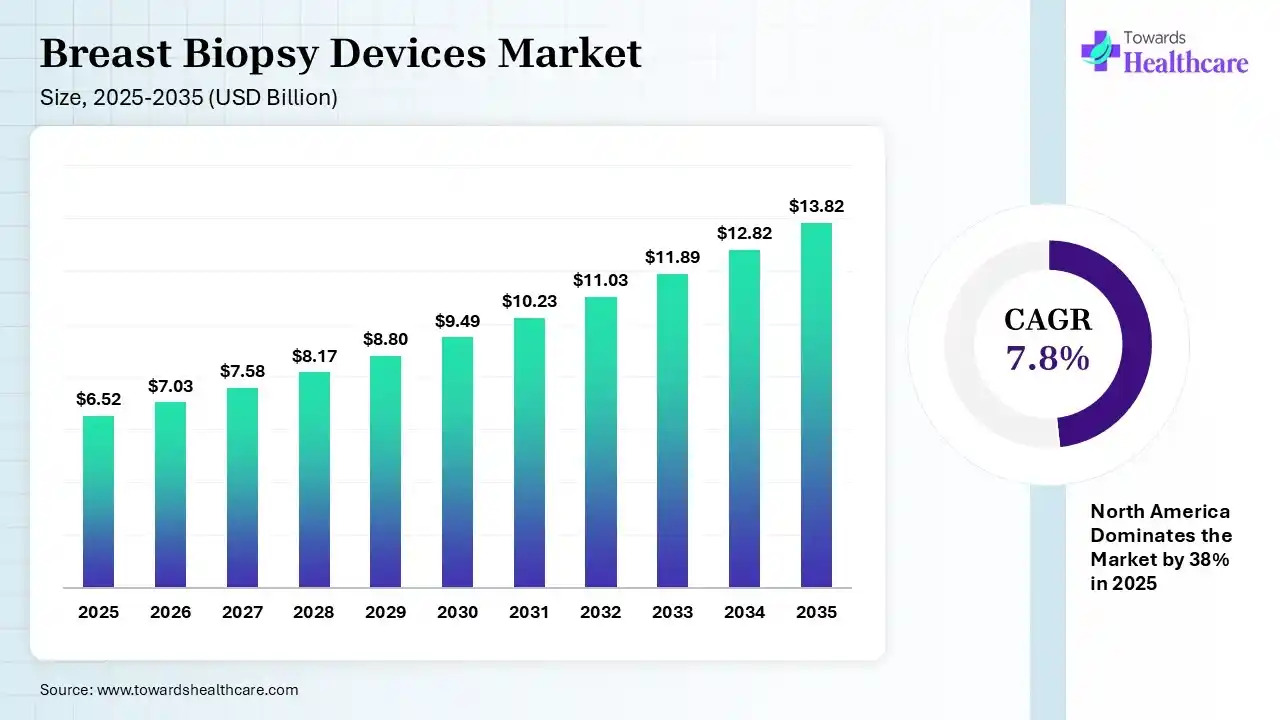
The use of specialized, minimally invasive medical instruments, i.e. breast biopsy devices, is widely leveraged in the removal of small samples of breast tissue for cancer analysis. Whereas, the breast biopsy devices market growth is driven by the notable rise in cases of breast cancer, a substantial shift towards vacuum-assisted biopsy (VAB) & core needle biopsy (CAB) to foster less invasions & rapid recovery.
Breast biopsy devices are specialized medical instruments used to collect tissue smaples form suspiciouse breast lesions for microscopic examination. These devices support accurate diagnostics of benign and malignant breast abnormalities through minimally invasive procedures guided by imaging technologies such as ultrasound, MRI, stereotactic mammography, and digital breast tomosynthesis.
The breast biopsy devices market is expanding due to the increasing prevalence of breast cancer, growing awareness of early diagnosis, and rising participation in breast cancer screening programs. Technological advancement sin vaccume-assisted biopsy systems, AI-powered imaging analysis, robotic-assisted procedures, and real-time image-guided navigation are improving diagnostic precision and patient comfort. Emerging trends include minimally invasive outpatient procedures, digital pathology integration, and personalized cancer diagnostics. Future opportunities lie in smart biopsy platforms, advanced molecular diagnostics, and automated tissue analysis. Rising healthcare investments, favorable reimbursement policies, and expanding access to advanced breast imaging continue to drive sustained market growth.
Specifically, the adoption of AI-CAD tools shows efficient spotting of clear signs of cancer in dense breast tissue. Besides this, AI has broader applications when combined with ultrasound devices, which offer real-time, automated analysis of breast lesions & further increase the operator’s efficiency by targeting the proper site at the time of biopsy. In addition, AI tools assist with the segmentation & categorization of lesions based on BI-RADS criteria during ultrasound.
Stepping Towards Wireless Localization
The market firms are actively using magnetic & RFID-based localization tags to replace traditional wire localization to bolster patient comfort & scheduling flexibility.
Promoting Disposable & Portable Devices
The globe is surging demand for single-use, disposable needles & portable, user-friendly ultrasound biopsy systems to decline cross-contamination challenge.
Emerging Robot-Assisted Biopsy Systems
Pivotal research studies are implementing robot-assisted ultrasound-guided biopsy systems to push automation, optimize maneuvering, & lower manual error.
| Table | Scope |
| Market Size in 2026 | USD 7.03 Billion |
| Projected Market Size in 2035 | USD 13.82 Billion |
| CAGR (2026 - 2035) | 7.8% |
| Leading Region | North America by 38% |
| Key Applications | Breast cancer diagnosis, lesion characterization, tissue sampling, image-guided biopsy procedures, vacuum-assisted biopsy, stereotactic biopsy, ultrasound-guided biopsy, MRI-guided biopsy |
| Primary End Users | Hospitals, Breast Care Centers, Diagnostic Imaging Centers, Ambulatory Surgical Centers, Oncology Clinics |
| Key Challenges | High procedure costs, reimbursement variations, competition from liquid biopsy technologies, regulatory requirements, shortage of specialized radiologists |
| Measurable Values | USD Millions/Units/Volume |
| Market Segmentation | By Product Type, By Technique, By Imaging Modality, By End User, By Application, By Region |
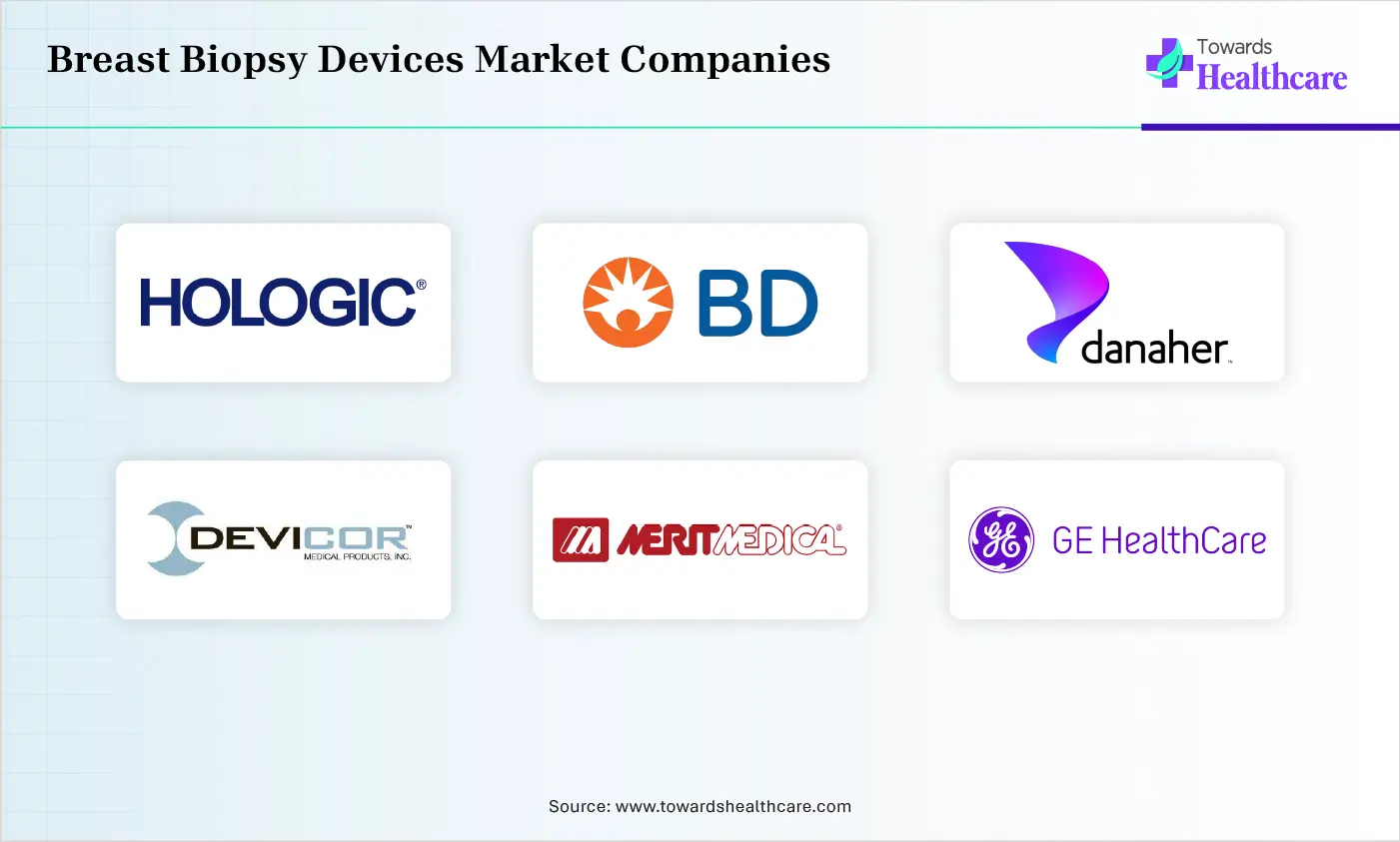
| Top Key Players | Hologic, Inc., Becton, Dickinson and Company (BD), Danaher Corporation (Leica Biosystems), Devicor Medical Products, Inc., Merit Medical Systems, GE HealthCare, Cook Medical, Trivitron Healthcare, Siemens Healthineers, Fujifilm Healthcare |
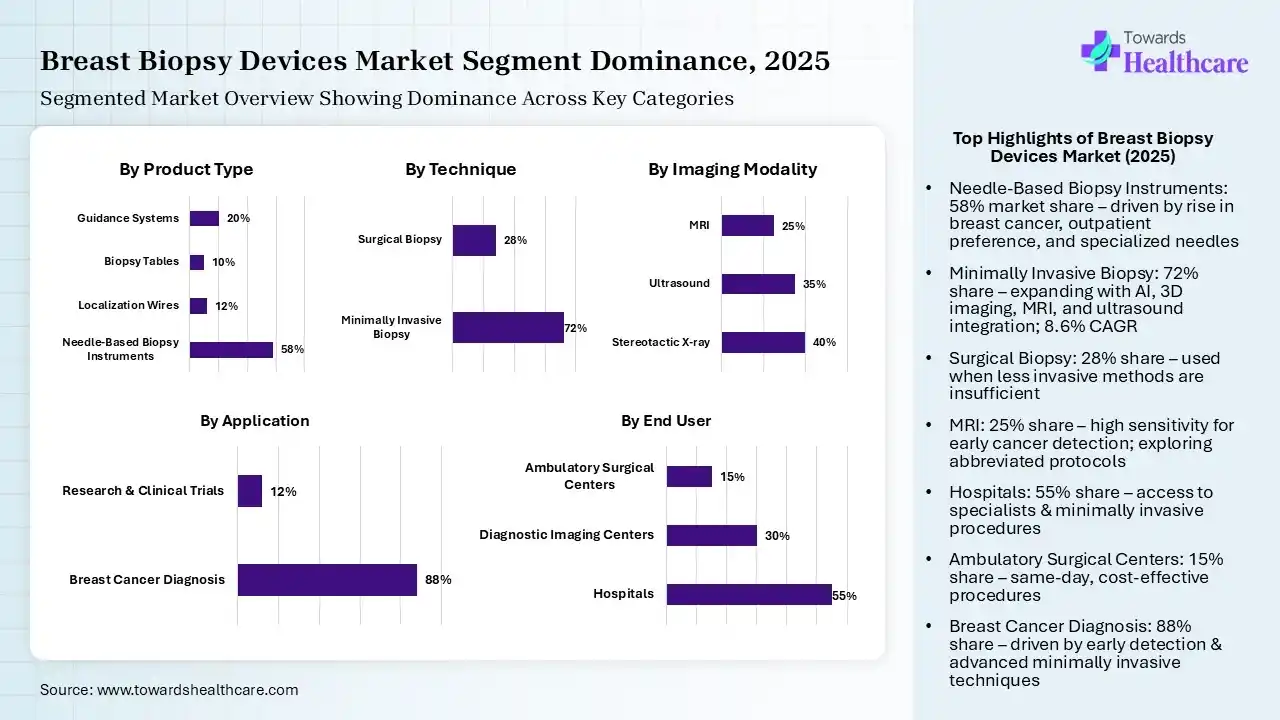
| Segment | Share 2025 (%) |
| Needle-Based Biopsy Instruments | 58% |
| Localization Wires | 12% |
| Biopsy Tables | 10% |
| Guidance Systems | 20% |
The Needle-Based Biopsy Instruments Segment Led the Market in 2025
In 2025, the needle-based biopsy instruments segment captured 58% share of the breast biopsy devices market. Drivers include the increase in breast cancer incidence, broader preference for outpatient procedures, & the emergence of specialized needles for higher-quality tissue samples. Ongoing developments cover the use of novel 8-gauge (8G) & 7-gauge (7G) needles for robust tissue yield, specifically for non-palpable lesions.
Although the guidance systems segment held the second-largest share of 20% in 2025, it is predicted to expand at 9.50% CAGR. Patients are seeking systems with minimal anxiety, pain, & recovery period over surgical biopsies, while advanced guidance is supporting the reduction of false negatives & ensures precise sampling of non-palpable, BIRADS 4-5 lesions.
The localization wires segment captured 12% share in 2025, due to the higher cost-effectiveness and increased compatibility with diverse imaging techniques, like stereotactic mammography, ultrasound, & MRI.
The biopsy tables segment accounted for 10% share of the market. They are a common part of Stereotactic Guided Systems, which enable radiologists to accurately position patients for breast imaging & tissue sampling.
| Segment | Share 2025 (%) |
| Minimally Invasive Biopsy | 72% |
| Surgical Biopsy | 28% |
The Minimally Invasive Biopsy Segment Dominated the Market in 2025
The minimally invasive biopsy segment captured 72% share in 2025 & is estimated to grow at 8.6% CAGR in the breast biopsy devices market. Apart from the global preference, the surging breast cancer cases require integration of this technique with expanded mammography & ultrasound screening programs. Also, the latest trend includes 3D tomosynthesis, MRI, & AI-enabled targeting, to enhance accuracy in targeting non-palpable lesions & microcalcifications.
The surgical biopsy segment held 28% share in 2025, due to the escalating need for the absolute diagnosis when less invasive methods, like core needle biopsy (CNB), are insufficient, indefinite, or indicate high-risk lesions. Several times, a surgeon uses radar technology to locate the lesion, to facilitate greater precision & flexibility in surgical timing.
| Segment | Share 2025 (%) |
| Stereotactic X-ray | 40% |
| Ultrasound | 35% |
| MRI | 25% |
The Stereotactic X-ray Segment Was Dominant in the Market in 2025
In 2025, the stereotactic X-ray segment led with 40% share of the breast biopsy devices market. Particular adoption of stereotactic biopsy is significant in the detection of microcalcifications & non-palpable lesions, which elevates early diagnosis. Whereas, Contrast-Enhanced Stereotactic Biopsy (CRSB) executes as an inexpensive, more accessible option to MRI-guided biopsy for finding areas of neoangiogenesis.
Moreover, the ultrasound segment accounted for 35% share in 2025 & is anticipated to register rapid growth at 8.4% CAGR. The worldwide accelerating preference for ultrasound-guided techniques by patients & clinicians offers wider affordability & precise results with reduced discomfort. Gradual breakthroughs encourage 3D ultrasound, which facilitates reconstructed images in coronal, sagittal, & transverse planes, with extensive evaluation of tumor margins.
The MRI segment captured 25% share of the market, due to its higher sensitivity for the detection of earlier cancer, the development of high-risk patients, & the rising need for the determination of the full extent of cancer. Immersive trends are following Abbreviated MRI protocols to lower scan times, which leads to affordable screening & biopsy planning.
| Segment | Share 2025 (%) |
| Hospitals | 55% |
| Diagnostic Imaging Centers | 30% |
| Ambulatory Surgical Centers | 15% |
The Hospitals Segment Led the Market in 2025
The hospitals segment dominated with 55% share of the breast biopsy devices market in 2025. Dominance is fueled by the strong access to specialized radiologists & pathologists, instant on-site care, & the ability to conduct minimally invasive procedures as outpatients. With a perfect treatment strategy, hospitals leverage advanced imaging to guide needles accurately to the suspicious area.
Whereas the diagnostic imaging centers segment captured 30% share in 2025 & is estimated to expand at 8.5% CAGR. They mainly provide specialized radiologists, who read the scans & operate the biopsies, work with pathologists to find if abnormalities are benign, suspicious, or malignant. Also, explore period diagnostics with biopsies that are conducted within a week of starting abnormal screening.
The ambulatory surgical centers segment held 15% share, due to their safe, robust, and inexpensive option to conventional hospital inpatient environments. They usually specializes in same-day procedures, enabling patients to return home shortly after their biopsy.
| Segment | Share 2025 (%) |
| Breast Cancer Diagnosis | 88% |
| Research & Clinical Trials | 12% |
The Breast Cancer Diagnosis Segment Dominated the Market in 2025
In 2025, the breast cancer diagnosis segment held a major share of 88% of the breast biopsy devices market. According to a study, there were nearly 2.3 million breast cancer cases around the globe, with rising demand for early diagnosis & the use of the latest MIS, driving the segmental dominance. Key efforts are emphasising improvements in diagnostic accuracy using AI & liquid biopsies for real-time monitoring.
However, the research & clinical trials segment held 12% share & is predicted to expand rapidly at 8.80% CAGR. This is widely driven by the notable need to recognize tumor biology at a molecular level, recruit patients for targeted therapies, & evaluate drug efficacy in real-time. Trend has been using serial biopsies to investigate why treatments cease working, & assists researchers in identifying novel mechanisms of drug resistance.
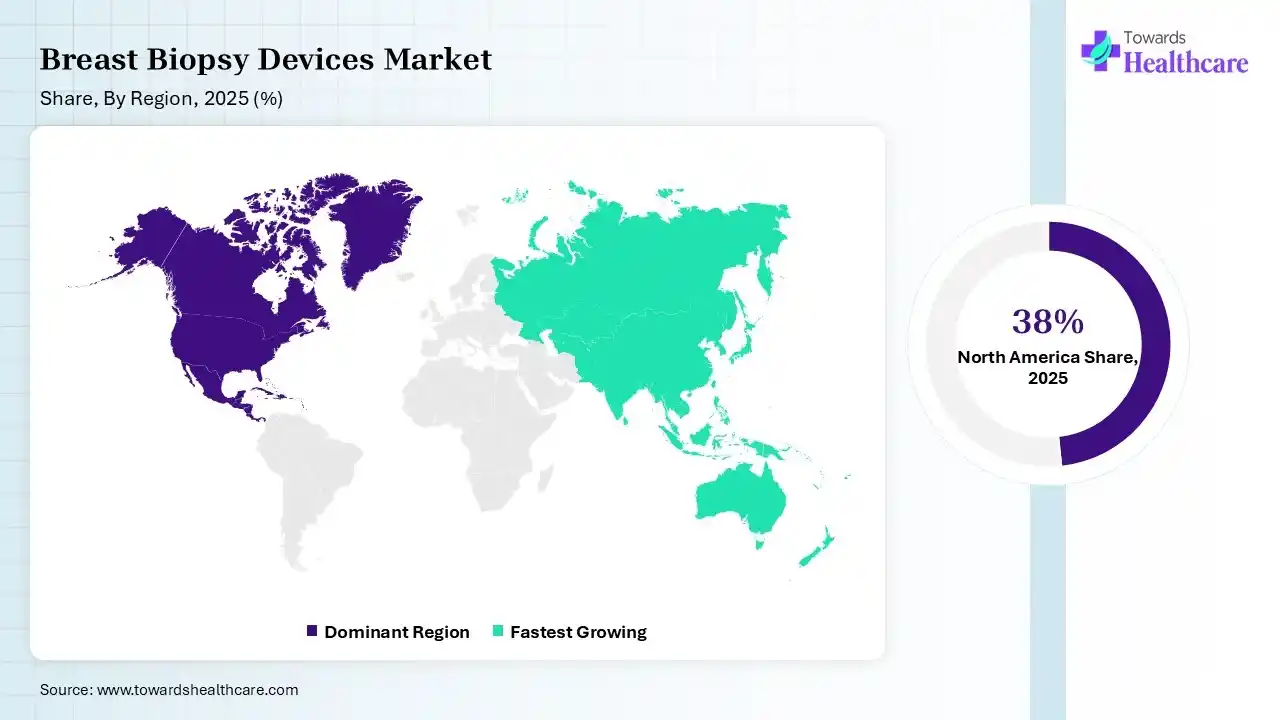
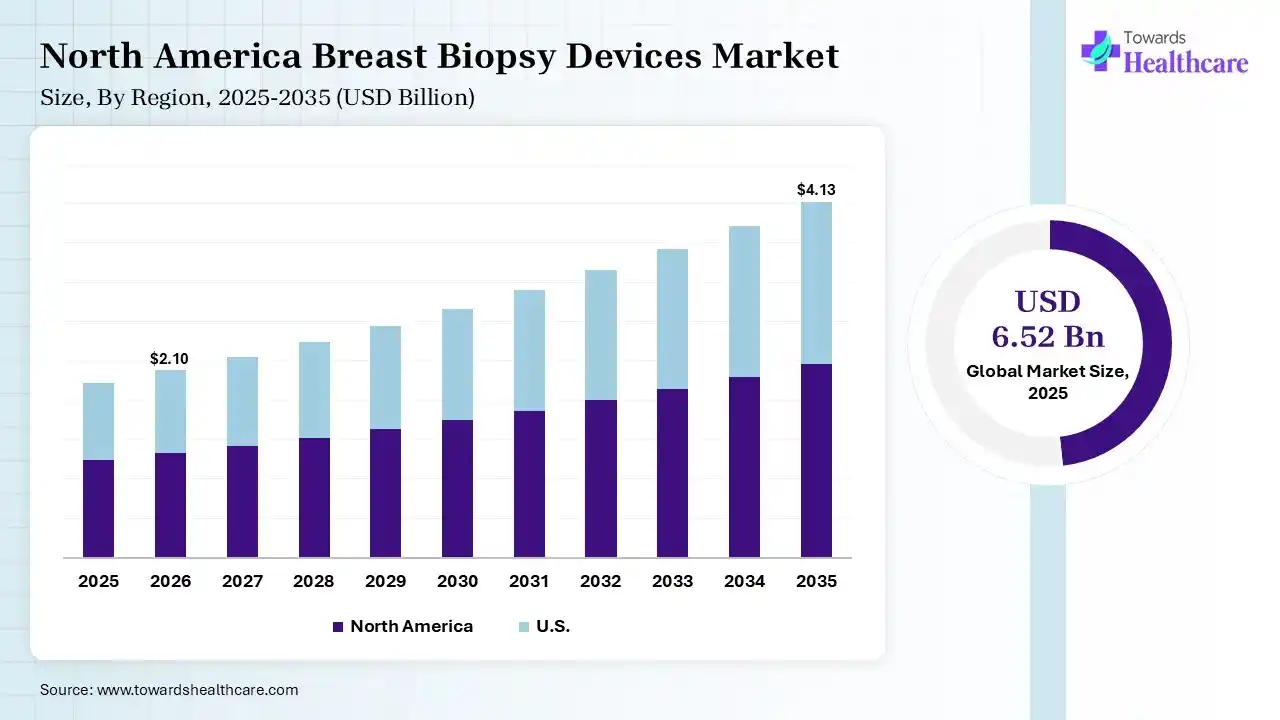
North America registered dominance with 38% share of the breast biopsy devices market, due to the well-established healthcare infrastructure & massive demand for minimally invasive procedures in the growing breast cancer cases. Alongside, the region is fostering rigorous reimbursement policies & empowering breast cancer awareness programs to promote advanced biopsy approaches.
For instance,
U.S. Market Trends
The U.S. market was the largest contributor to the market, as it is reinforcing consumables to meet the requirement for sterile, single-use components in biopsy procedures. Also, the U.S. is focusing on AI-driven imaging software to boost lesion detection accuracy & further combine real-time feedback loops with imaging platforms & biopsy devices.
Canada Strengthened Breast Biopsy Devices Market Through Advanced Breast Cancer Screening
The Canada breast biopsy market is growing significantly due to expanding nationwide breast cancer screening programs, increasing adoption of minimally invasive diagnostic procedures, and strong investments in women’s healthcare. Growing availability of advanced imaging technologies, rising use of image-guided biopsy techniques, and continuous improvements in hospital diagnostic infrastructure are enhancing diagnostic accuracy. Increasing awareness of early breast cancer detection further supports sustained market growth.
Asia Pacific is anticipated to expand at the fastest CAGR of 9.20% in the breast biopsy devices market. Many APAC governments & private organizations have widened their breast cancer screening programs, especially in India & China, which has spurred the adoption of biopsy devices for prior diagnosis. In South Korea, the market has recorded a major rise in breast cancer in women in their 20s and 30s.
India Market Trends
The Indian market is actively revolutionizing innovative techniques, like Vacuum-Assisted Breast Biopsy (VABB) & AI-assisted imaging.
For instance,
China Expands Breast Biopsy Devices Market Through Advancing Diagnostic Capabilities
The China breast biopsy devices market is expanding significantly due to the increasing incidence of breast cancer, rapid modernization of healthcare facilities, and wider adoption of advanced diagnostic imaging technologies. Growing investments in oncology care, expanding access to minimally invasive biopsy procedures, and rising demand for early and accurate cancer diagnosis are driving market growth. Continuous technological innovation and improved healthcare accessibility further support long-term expansion.
| Ecosystem Segment | Key Participants | Role in Market |
| Technology Providers | Hologic, Mammotome, BD, GE HealthCare, Siemens Healthineers | Develop imaging-guided biopsy technologies and navigation systems |
| Product Manufacturers | Hologic, Mammotome, BD, Merit Medical, Argon Medical, Cook Medical | Manufacture biopsy needles, vacuum-assisted biopsy systems, localization devices, markers |
| Service Providers | Hospital Networks, Breast Imaging Centers | Conduct breast biopsy procedures and patient management |
| Platform Providers | Hologic, GE HealthCare, Siemens Healthineers, Fujifilm Healthcare | Provide integrated imaging and biopsy workflow platforms |
| CROs/CDMOs | Not a major segment in this market | Limited relevance due to device-focused commercialization |
| Software Vendors | Siemens Healthineers, GE HealthCare, Hologic | Imaging workflow, AI-assisted lesion detection, procedure planning |
| Research Institutions | National Cancer Institute, Mayo Clinic, MD Anderson Cancer Center | Clinical validation, breast cancer research, device evaluation |
| End-User Industries | Healthcare Providers, Oncology Centers, Diagnostic Laboratories | Utilization of biopsy systems for breast cancer diagnosis |
R&D
Clinical Trials & Regulatory Approvals
Patient Support & Services
| Tier 1 | Tier 2 | Tier 3 | |
| Typical Market Influence | 70% | 22% | 8% |
| Tier 1 | ||||
| Company Name | Headquarters | Country | Why Relevant to This Market | Key Products/Services |
| Hologic, Inc. | Marlborough, Massachusetts | USA | Global leader in breast health and biopsy technologies with dominant installed base | Affirm Breast Biopsy System, Eviva, ATEC, Brevera |
| Mammotome | Cincinnati, Ohio | USA | Specialized breast biopsy market leader focused entirely on breast intervention | Mammotome Revolve EX, Mammotome Elite, HydroMARK |
| BD | Franklin Lakes, New Jersey | USA | Major biopsy device manufacturer through Bard biopsy portfolio | EnCor Enspire, EnCor EnCompass, Mission Biopsy System |
| Tier 2 | ||||
| Company Name | Headquarters | Country | Why Relevant to This Market | Key Products/Services |
| Merit Medical Systems | South Jordan, Utah | USA | Strong biopsy needle and intervention portfolio | Temno Biopsy Systems |
| Argon Medical Devices | Plano, Texas | USA | Major soft tissue biopsy manufacturer | SuperCore Advantage, Semi-Automatic Biopsy Instruments |
| Cook Medical | Bloomington, Indiana | USA | Long-standing biopsy needle supplier | Cook Breast Localization and Biopsy Products |
| Tier 3 | ||||
| Company Name | Headquarters | Country | Why Relevant to This Market | Key Products/Services |
| INRAD | Kentwood, Michigan | USA | Specialized MRI-guided biopsy accessories | MRI Breast Biopsy Solutions |
| SteryLab | Milan | Italy | Dedicated biopsy needle manufacturer | Breast Biopsy Needles |
| TransMed7 | White Bear Lake, Minnesota | USA | Focused breast biopsy innovation company | VacuPac Vacuum-Assisted Systems |
In June 2026, “The current backlog is not an isolated operational convenience, but rather, it represents a broader patient and public health concern, particularly in high-volume centers and safety-net institutions where alternatives may be limited or unavailable”, said Dana Smetherman, MD, MPH, CEO of the American College of Radiology, sent a letter to the FDA, detailing the organization's concerns about the needle shortage.
Strengths
Weaknesses
Opportunities
Threats
By Product Type
By Technique
By Imaging Modality
By End User
By Application
By Region






Principal Consultant
Payal Rabde is a Healthcare Market Research Analyst at Towards Healthcare Research & Consulting with 4+ years of experience in pharmaceuticals, biotechnology, medical devices, and life sciences.
Learn more about Payal Rabde

Reviewed By
Aditi Shivarkar is a seasoned professional with over 14 years of experience in healthcare market research. As a content reviewer, Aditi ensures the quality and accuracy of all market insights and data presented by the research team.
Learn more about Aditi Shivarkar









