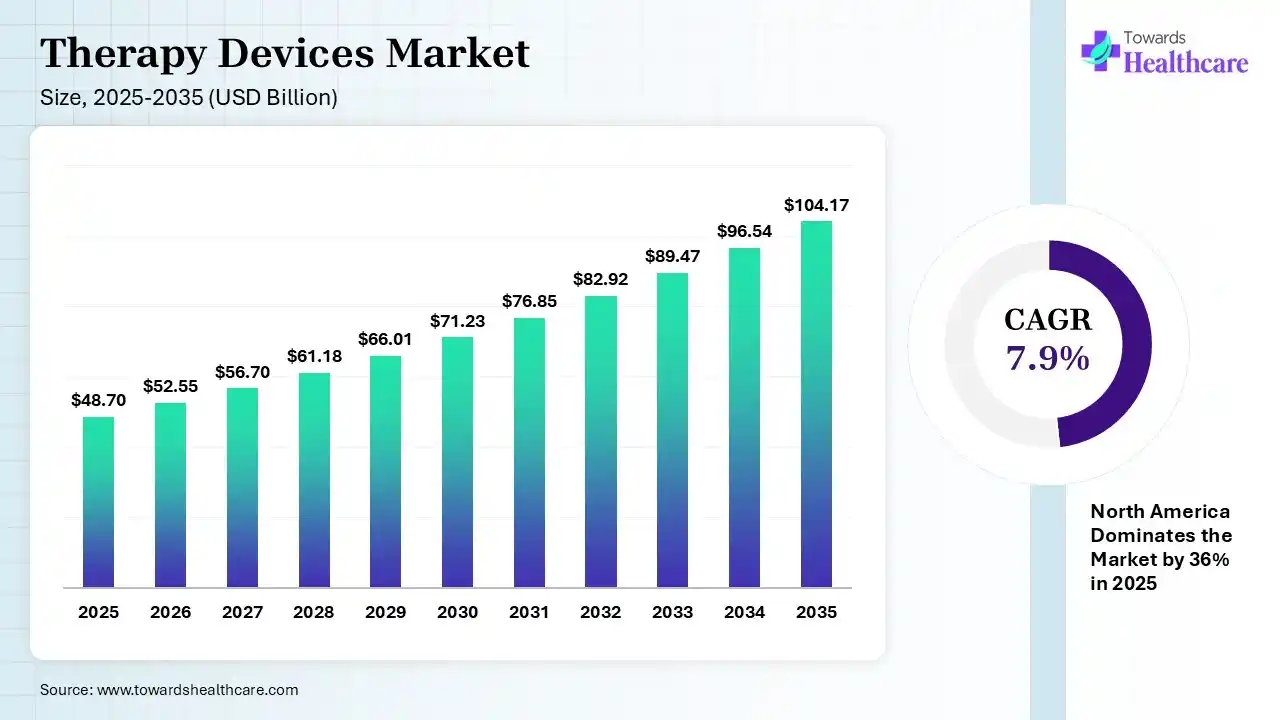
The global therapy devices market size was estimated at USD 48.7 billion in 2025 and is predicted to increase from USD 52.55 billion in 2026 to approximately USD 104.17 billion by 2035, expanding at a CAGR of 7.9% from 2026 to 2035. The therapy devices market is growing because these devices are intended to diagnose, manage, or prevent diseases and wounds, or to rehabilitate and enhance an individual's quality of life.
The therapy devices market is growing, as these devices are instruments or apparatuses designed to diagnose, manage, or prevent disease, and to maintain or restore health. It is used for therapeutic purposes for diagnosing, preventing, monitoring, alleviating, treating, curing, or compensating for a disease, ailment, defect, or injury. These devices are designed to make it easier for the individual to live normally. Common therapeutic tools include wheelchairs, walkers or canes, mobility scooters, adaptive tools like eating utensils, hearing aids or glasses, glucose meters, and blood pressure monitors.
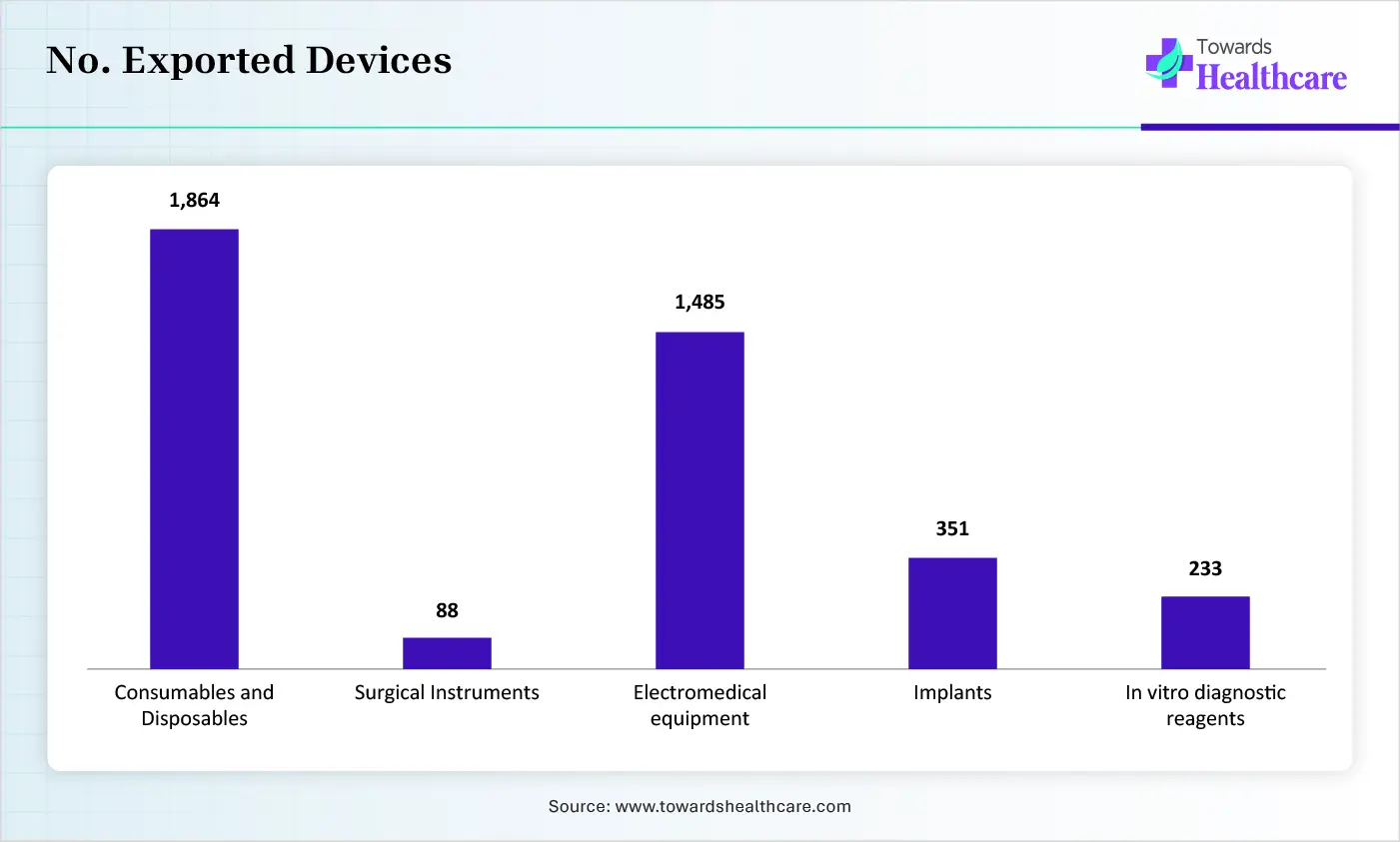
| Types of Devices | No. Exported Devices |
| Consumables and disposables | 1,863 |
| Surgical instruments | 86 |
| Electromedical equipment | 1,483 |
| Implants | 350 |
| In vitro diagnostic reagents | 232 |
AI/ML-based technologies have the strength to transform health care by deriving novel and significant insights from the wide amount of data generated during the delivery of health care on a single day. AI-based virtual therapists and chatbots provide scalable services to the increasing demand for health care support. With the increasing ability to interact with many consumers simultaneously, these digital entities offer cost-effective substitutes to traditional therapy. AI-based tools streamline practice and improve care for therapists. AI-based robots provide adaptive support during physical therapy, responding to patient movement to enhance motor relearning, specifically for stroke and spinal cord damage.
Expansion of Digital Therapeutics (DTx):
Digital therapeutics have the potential to show techniques in treatment that give amplified patient access, reduce side effects, and reduce the risk for addiction while helping to gain cognitive capabilities such as attention.
Immersive Technologies (VR/AR):
Immersive technologies VR/AR improve traditional healthcare technology and present new treatment options to explore, eventually saving money and producing better results for patient health.
Remote Monitoring:
Remote therapeutic monitoring offers providers insight into the treatment efficiency and patient adherence to the care plan. It's enhanced patient care, increased efficiency, and reduced expenses.
| Table | Scope |
| Market Size in 2026 | USD 52.55 Billion |
| Projected Market Size in 2035 | USD 104.17 Billion |
| CAGR (2026 - 2035) | 7.9% |
| Leading Region | North America by 36% |
| Historical Data | 2020 - 2023 |
| Base Year | 2025 |
| Forecast Period | 2026 - 2035 |
| Measurable Values | USD Millions/Units/Volume |
| Market Segmentation | By Product Type, By Applications, By End User, By Modality, By Technology, By Distribution Channel, By Region |
| Top Key Players | Enovis Corporation, BTL Industries, Zimmer MedizinSysteme GmbH, Zynex Inc., Dynatronics Corporation |
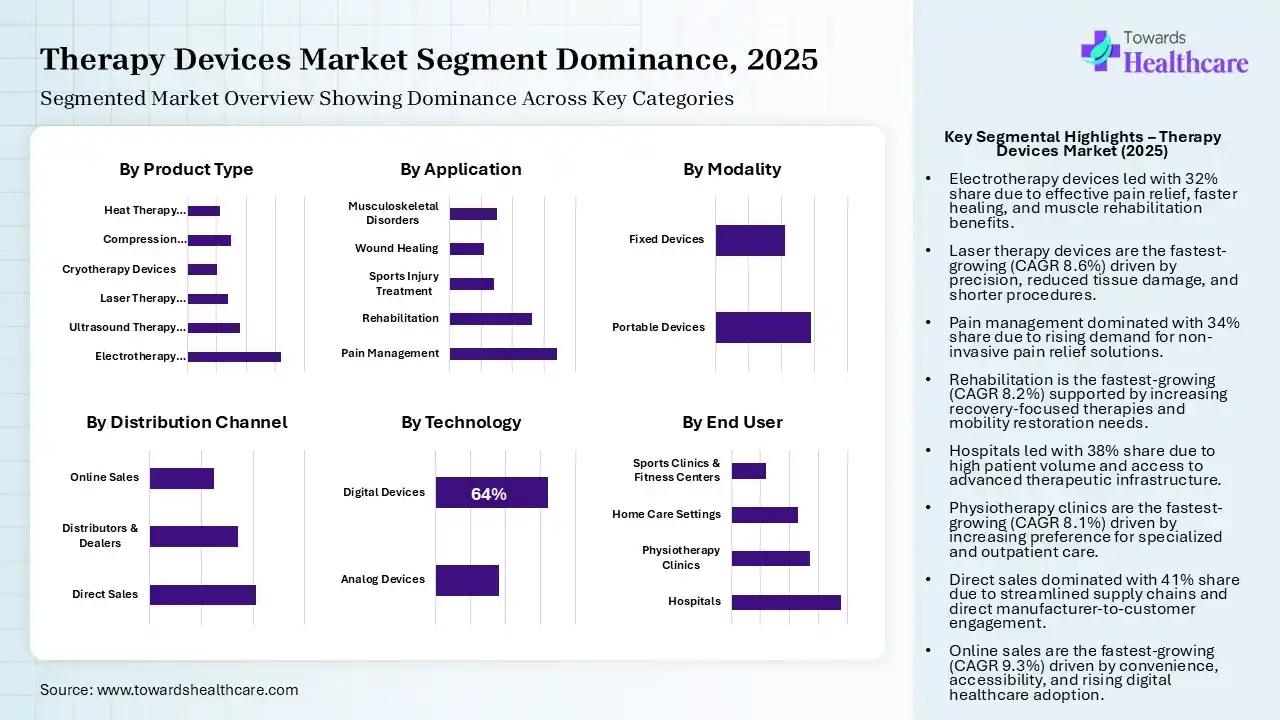
Electrotherapy Devices Segment Led the Therapy Devices Market in 2025
| Segment | Share 2025 (%) |
| Electrotherapy Devices | 32% |
| Ultrasound Therapy Devices | 18% |
| Laser Therapy Devices | 14% |
| Cryotherapy Devices | 10% |
| Compression Therapy Devices | 15% |
| Heat Therapy Devices | 11% |
The electrotherapy devices segment contributed the largest market share of 32% in 2025, as electrotherapy delivers rapid pain relief, 76% better healing when integrated with exercise, and prevents muscle atrophy after surgery. Electrotherapy tools have many benefits, including pain management, osteoarthritis treatment, muscle rehabilitation, and wound healing. Electrotherapy enhances blood circulation in the treated area, which lowers swelling, relaxes muscles, and supports rapid healing.
The ultrasound therapy devices segment held the second-largest share of 18% of the market in 2025, as it's used to detect and manage different musculoskeletal challenges, including pain, tissue injury, and muscle spasms. Ultrasound has expanded from the diagnostic realm into the substitute therapies for uterine, breast, and even cardiac soft tissue irregularities.
Whereas the compression therapy devices segment held a notable share of 15% in the therapy devices market in 2025, as this therapy supports increased blood circulation in the lower legs, ankles, and feet. It is an efficient treatment for pain and puffiness caused by conditions related to poor circulation, like chronic intravenous insufficiency and varicose veins.
The laser therapy devices segment held a notable share of 14% and is expected to grow at the fastest CAGR of 8.6% during the forecast period, as lasers are more accurate than traditional surgical tools, and cuts are made shallower and shorter. This causes less tissue damage. Laser operations are generally shorter than traditional surgeries.
The heat therapy devices segment held a notable share of 11% of the market in 2025, as heat therapy has independently shown to lower whole-body insulin resistance, enhance vascular function, activate interorgan cross-talk through endocytic vesicles, and activate HSPs to enhance mitochondrial function and proteostasis in a diversity of tissues.
The cryotherapy devices segment held a notable share of 10% of the market in 2025, as cryotherapy is generally used in postoperative care for both arthroscopic and open orthopaedic technology. It enhanced psychological well-being, faster recovery, and better performance.
Pain Management Segment Led the Therapy Devices Market in 2025
| Segment | Share 2025 (%) |
| Pain Management | 34% |
| Rehabilitation | 26% |
| Sports Injury Treatment | 14% |
| Wound Healing | 11% |
| Musculoskeletal Disorders | 15% |
The pain management segment contributed the largest market share of 34% in 2025, as it supports regulating pain via procedures, medications, exercises, and therapy. Pain management specialists recommend one strategy or a combination of strategies to prevent, lower, or relieve pain.
The rehabilitation segment held the second largest share of 26% and is expected to grow at the fastest CAGR of 8.2% during the forecast period. By using the rehab devices of recovery together with professional therapy, the patients greatly hasten their recovery to normal movement.
The sports injury treatment segment held a notable share of 14% of the therapy devices market in 2025. This device offers precise control during therapeutic exercises. This means athletes follow customized schedules that fit their precise requirements. It is intended to restore functionality, relieve pain, and lessen inflammation while also strengthening muscles that are weak due to injury.
The musculoskeletal disorders segment held 15% share of the market in 2025, as physiotherapy techniques efficiently alleviate pain and discomfort without relying exclusively on medication. It supports restoring the anatomical and physiological functions of the human body.
The wound healing segment held 11% share of the market in 2025. Different type of devices is intended for chronic wounds, involving diabetic foot ulcers, pressure ulcers, and venous leg ulcers. ES has been shown to sponsor wound healing by shortening the inflammatory phase.
The Hospitals Segment held the Largest Share in the Market in 2025
| Segment | Share 2025 (%) |
| Hospitals | 38% |
| Physiotherapy Clinics | 27% |
| Home Care Settings | 23% |
| Sports Clinics & Fitness Centers | 12% |
The hospitals segment contributed the largest market share of 38% in 2025, as therapy devices provide flexibility and convenience, enabling continuous or intermittent delivery of medicines without the need for frequent injections or hospital visits. Therapeutic devices enable patients to regain their power, completely solving narrowly targeted recovery challenges.
The physiotherapy clinics segment held the second largest share of approximately 27% and is expected to grow at the fastest CAGR of 8.1% during the forecast period, as physiotherapists use electrotherapy to manage injuries, accelerating healing, and providing pain relief by using sophisticated tools. These therapy tools drive hands-on techniques that relieve pain and enhance mobility.
The home care settings segment held a notable share of 23% of the therapy devices market in 2025, as home therapy services are an invaluable resource for the ageing, providing targeted care that helps their physical, mental, and emotional well-being. By helping with independence, improving recovery, and offering convenience, these services support patients to lead healthier and more satisfying lives.
The sports clinics & fitness centers segment held a notable share of 12% of the market in 2025, as physical therapy in sports medicine not only accelerates recovery from injuries but also plays a significant role in preventing future injuries. Therapy tools are supporting patients in recovering from injuries or surgeries, leading to a quick recovery.
The Direct Sales Segment held the Largest Share of the Market in 2025
| Segment | Share 2025 (%) |
| Direct Sales | 41% |
| Distributors & Dealers | 34% |
| Online Sales | 25% |
The direct sales segment contributed the largest market share of approximately 41% in 2025, as this type of sales often supports efficient supply chains and packaging, lowering waste and environmental impact as compared to traditional distribution methods. The direct sales strategies allow businesses to involve consumers without intermediaries
The distributors & dealers segment held the second largest share of approximately 34% of the therapy devices market in 2025. It provides numerous strategic, operational, and financial benefits for producers. Distributors handle warehousing, inventory management, and shipping, which reduces the requirement for the manufacturer.
Whereas the online sales segment held a notable share of 25% and is expected to grow at the fastest CAGR of 9.30% during the forecast period, as online platforms are making it simple for patients to connect with physicians promptly from the comfort of their homes. It is significant for patients with limited mobility and chronic conditions.
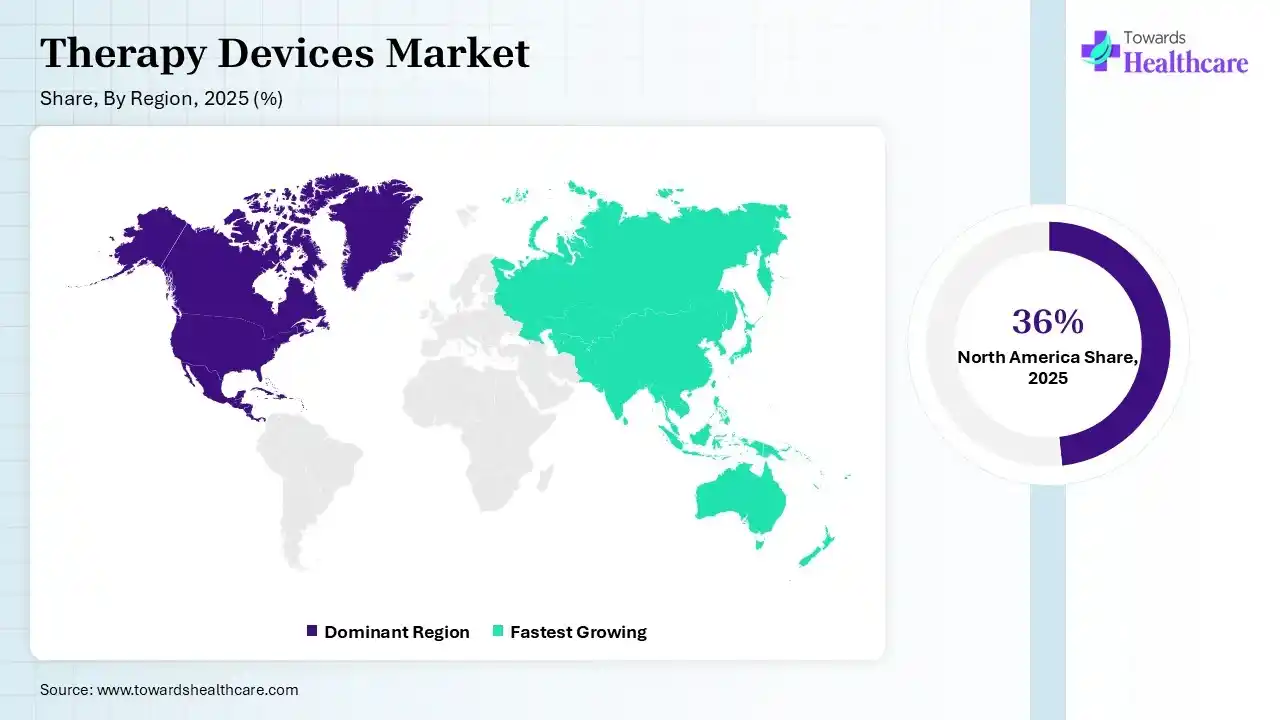
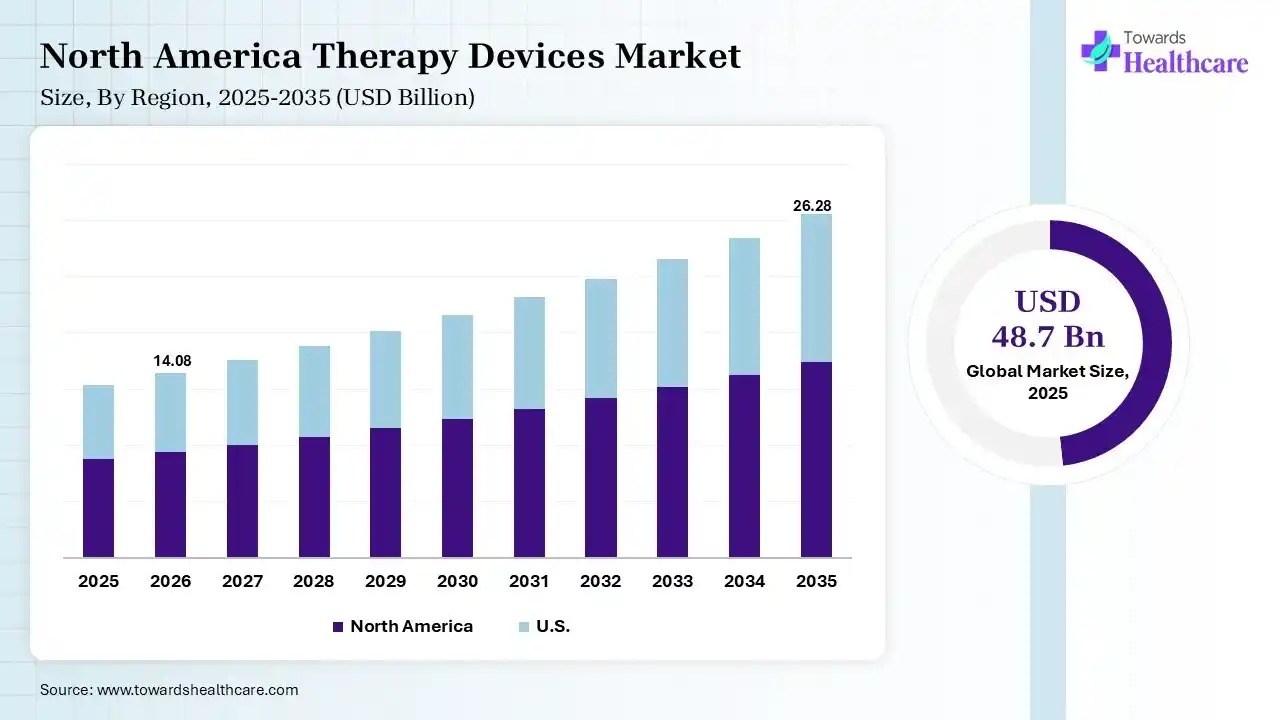
In 2025, North America dominated the therapy devices market with a share of 36% in 2025, because of the increasing prevalence of chronic diseases such as obesity and diabetes, and significantly prevalent unhealthy lifestyles. The North American medical care system has invested significant resources in healthcare research and pharmaceutical advancement, which has led to advanced discoveries and enhanced treatments in a variety of sectors, which drive the growth of the market.
U.S. Market Trends
In the U.S., increasing use of wearable tools in healthcare is redesigning patient care, allowing for real-time monitoring and more practical health management. Major organizations such as Medtronic and Boston Scientific are based in the U.S. or have a robust presence, massively investing in R&D to uphold a competitive advantage.
Asia Pacific held 24% of the market share in 2025 and is expected to grow at the fastest CAGR of 9.20% during the forecast period, as rapidly growing population, increasing chronic diseases, and growing healthcare infrastructure spending. Governments are investing significantly in advanced R&D technology. Rising middle-class income accelerated the demand for advanced therapies and home-use medical tools, which contributes to the growth of the market.
China Market Trends
China has evolved as a worldwide production powerhouse in this sector, supplying a varied range of products, including healthcare gloves, testing reagents, syringes, protective apparel, and diagnostic kits. China is significantly focused on emerging fields such as CAR-T cell therapies.
R&D:
Manufacturing Processes:
Patient Services:
| Company | Headquarters | Latest Update |
| Enovis Corporation | United States | In July 2025, Enovis Corporation, a global medical technology innovator, announced the launch of the Manafuse Bone Growth Stimulator. It is the novel addition to Enovis’ portfolio of regenerative bone growth. |
| BTL Industries | United Kingdom | BTL's tools for skin tightening, body shaping, intimate health, and mental wellness have recently become an integral part of thousands of aesthetic clinics globally. |
| Zimmer MedizinSysteme GmbH | Germany | Zimmer MedizinSysteme provides a significant combination of tools that integrates electrotherapy and ultrasound therapy in one compact system. |
| Zynex Inc. | United States | Zynex, Inc., is an advanced medical technology organization specializing in the production and sale of non-invasive healthcare devices. |
| Dynatronics Corporation | United States | Dynatronics has been a leading producer of therapeutic modalities and provisions for muscle and pain therapy for over 40 years. |
Strengths
Weakness
Opportunities
Threat
By Product Type
By Applications
By End User
By Modality
By Technology
By Distribution Channel
By Region







Principal Consultant
Rohan Patil is a seasoned market research professional with over 5+ years of focused experience in the healthcare sector, bringing deep domain expertise, strategic foresight, and analytical precision to every project he undertakes.
Learn more about Rohan Patil

Reviewed By
Aditi Shivarkar is a seasoned professional with over 14 years of experience in healthcare market research. As a content reviewer, Aditi ensures the quality and accuracy of all market insights and data presented by the research team.
Learn more about Aditi Shivarkar