


The global qPCR instruments market size is predicted to increase from USD 7.41 billion in 2026 to approximately USD 15.95 billion by 2035, expanding at a CAGR of 8.9% from 2026 to 2035. The rise in disease burden and growing R&D activities are increasing the use of qPCR instruments. Growing applications, expanding point-of-care testing trends, government initiatives, and new product launches are also enhancing the market growth.
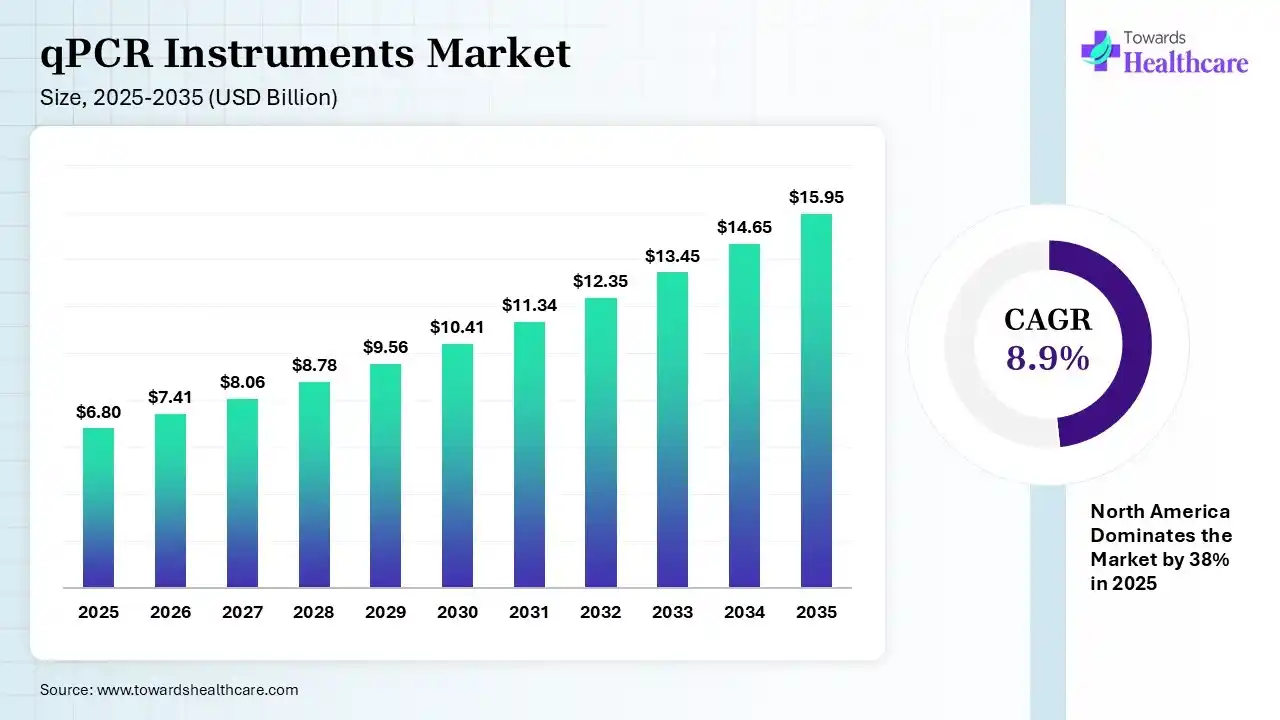
The qPCR instruments market is driven by the rising prevalence of infectious diseases, the expansion of personalized medicines, and technological advancements. The qPCR instruments encompass the laboratory devices utilized for the amplification and measurement of DNA in real-time. These instruments are used for the detection and quantification of genetic materials, driving their demand across disease diagnosis, drug discovery and development, gene expression analysis, and food and environmental testing.
qPCR instruments are advanced laboratory systems that amplify DNA or RNA in real time, enabling highly sensitive and accurate detection of genetic material for research, clinical diagnostics, infectious disease testing, oncology, and precision medicine applications.
The qPCR instruments market is expanding due to the growing demand for rapid molecular diagnostics, increasing genomic research, and wider use of nucleic acid testing in healthcare and life sciences. Technological advancements in multiple qPCR, automated sample processing, AI-assisted data analysis, cloud-enabled laboratory connectivity, and miniaturized high-throughput systems are improving workflow efficiency and diagnostic accuracy. Emerging trends include integrated molecular testing platforms, decentralized diagnostic laboratories, and digital laboratory automation. Future opportunities lie in companion diagnostics, precision medicine, agricultural genomics, and environmental monitoring. Rising investments in biotechnology research, personalized healthcare, and infectious disease surveillance continue to drive long-term market growth.
AI offers a wide range of applications in the qPCR instruments, driving their use for faster and more accurate results with reduced human errors. They offer automated data analysis and improved result interpretation, driving their use across complex sample analysis. Their stringent quality control, high-throughput data management, and multiplex assay optimization are also increasing their use for large-scale studies. It is also being used for drug target identification, biomarker discovery, and contamination control.
Escalating Precision Medicine
The growing demand for precision or personalized medicines is increasing the use of qPCR instruments due to their accurate nucleic acid quantification, driving their use for biomarker discovery, functional genomics, and drug development.
Expanding Molecular Diagnostics
The growing incidences of infectious diseases and cancer are driving the demand for qPCR instruments, for early detection of infectious agents and genetic testing applications, where they are also being utilized as a routine diagnostic tool.
Blooming Technological Innovations
A rise in technological advancements is driving the development of new portable and miniaturized qPCR instruments with automation, high throughput systems, multiplexing capabilities, and cloud-based data management.
| Table | Scope |
| Market Size in 2026 | USD 7.41 Billion |
| Projected Market Size in 2035 | USD 15.95 Billion |
| CAGR (2026 - 2035) | 8.9% |
| Leading Region | North America by 38% |
| Historical Data | 2020 - 2023 |
| Base Year | 2025 |
| Forecast Period | 2026 - 2035 |
| Measurable Values | USD Millions/Units/Volume |
| Market Segmentation | By Product Type, By Detection Method, By Throughput, By Application, By End User, By Region |
| Top Key Players | Thermo Fisher Scientific, Bio-Rad Laboratories, Roche Diagnostics, QIAGEN, Agilent Technologies, Danaher, Analytic Jena, Eppendrof, Bio Molecular Systems |
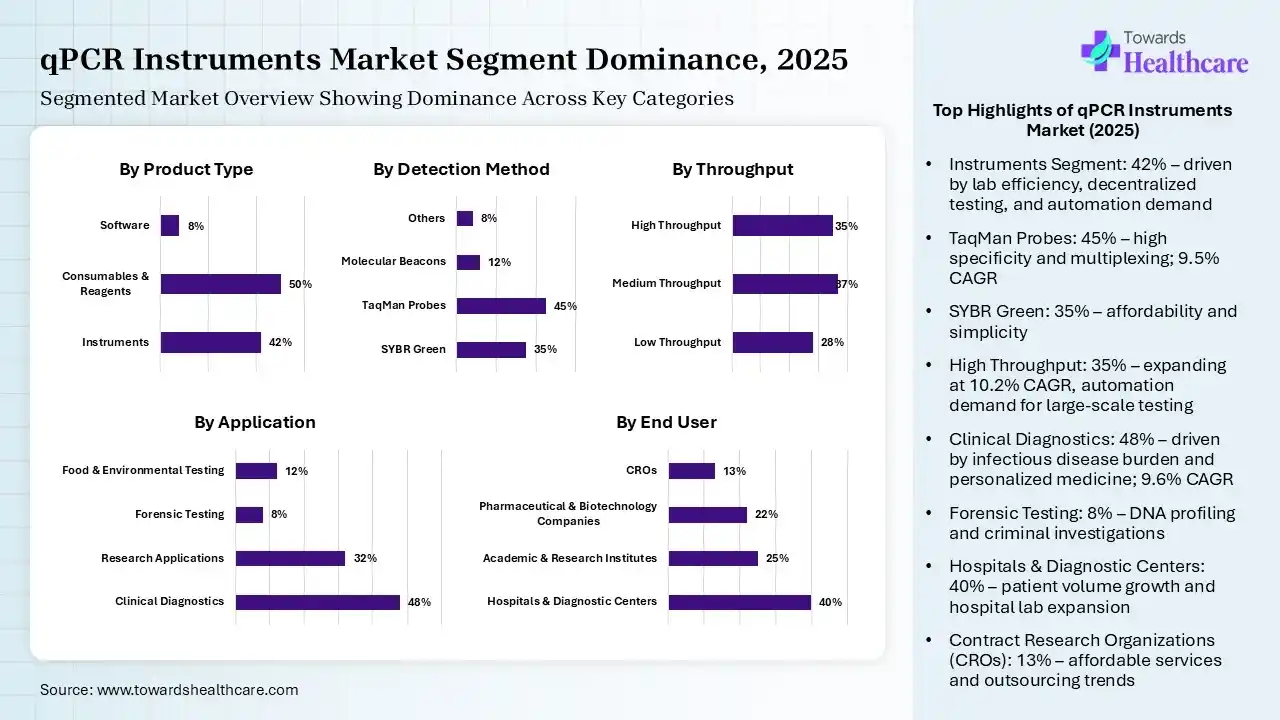
| Segment | Share 2025 (%) |
| Instruments | 42% |
| Consumables & Reagents | 50% |
| Software | 8% |
The Instruments Segment Dominated the Market With 42% in 2025
The instruments segment led the qPCR instruments market with 42% share in 2025, driven by growing focus on enhancing lab efficiency. This increased the adoption of advanced qPCR systems. Growth in decentralized testing also increased the demand for compact systems. Rising demand for automation in diagnostics has also increased the instrument sales.
The consumables & reagents segment is expected to witness the fastest growth with a CAGR of 9.8% during the forecast period, driven by high repeated usage. The growing diagnostic testing volumes are also increasing their demand. Additionally, expanding molecular testing is also increasing its consumption.
The software segment held 8% of the qPCR instruments market share in 2025, due to growing data analysis complexities. To enhance result accuracy and interpretation, AI-based analytics are also being utilized. The cloud-based integration is also being preferred to improve workflow efficiency.
| Segment | Share 2025 (%) |
| SYBR Green | 35% |
| TaqMan Probes | 45% |
| Molecular Beacons | 12% |
| Others | 8% |
The TaqMan Probes Segment Dominated the Market With 45% in 2025
The TaqMan probes segment accounted for the highest revenue share of 45% of the qPCR instruments market in 2025 and is expected to show the highest growth with a CAGR of 9.5% during the forecast period, driven by their high specificity. Their multiplexing capabilities also increased their use to enhance the testing workflows. Their expanding clinical applications also increased their acceptance rates.
The SYBR green segment held 35% of the qPCR instruments market share in 2025, due to its affordability. Their simplicity also contributed to their increased usability. The growth in the general gene expression studies also increased their use.
The molecular beacons segment held 12% of the market share in 2025, due to their high sensitivity, which increased their use in niche diagnostic applications. Enhanced probe design also increases the acceptance rates. Their growing use in mutation detection is also driving their adoption rates.
The others (scorpions, FRET probes) segment held 8% of the market share in 2025, driven by their specialized applications. Expanding technological innovation is also increasing its use across various niche areas. Additionally, growing R&D activities are also increasing their adoption rates.
| Segment | Share 2025 (%) |
| Low Throughput | 28% |
| Medium Throughput | 37% |
| High Throughput | 35% |
The Medium Throughput Segment Dominated the Market With 37% in 2025
The medium throughput segment held a major revenue share of 37% of the qPCR instruments market in 2025, due to their balanced cost and efficiency, which increased their adoption across mid-sized labs. Enhanced flexibility also increased their use for various applications. Growth in diagnostic volume also increased their use.
The high throughput segment held 35% of the market share in 2025 and is expected to expand rapidly with a CAGR of 10.2% during the forecast period, due to growing demand for automation for large-scale testing. Expanding pharmaceutical R&D activities are also increasing their use. Additionally, growing focus on pandemic preparedness is also increasing the adoption rates.
The low-throughput segment held 28% of the qPCR instruments market share in 2025, driven by their affordability, increasing their use across small labs. They are also preferred for limited sample processing. Moreover, they are also being used for academic research applications.
| Segment | Share 2025 (%) |
| Clinical Diagnostics | 48% |
| Research Applications | 32% |
| Forensic Testing | 8% |
| Food & Environmental Testing | 12% |
The Clinical Diagnostics Segment Dominated the Market With 48% in 2025
The clinical diagnostics segment contributed the biggest revenue share of 48% of the qPCR instruments market in 2025 and is expected to show the highest growth rate with a CAGR of 9.6% during the forecast period, driven by growth in infectious disease burden. Growth in government screening programs also increased the demand for qPCR instruments. Additionally, increasing demand for personalized medicines has also increased their use for molecular diagnostics.
The research applications segment held the second-largest share of 32% of the market in 2025, due to increasing gene expression studies and genomic research. Growing cancer and infectious disease research is also increasing the use of qPCR instruments. The rise in academic funding is also increasing their adoption rates.
The food & environmental testing segment held 12% of the qPCR instruments market share in 2025, driven by stringent food safety regulations. This is increasing the use of qPCR instruments for the detection of pathogens in the food supply chain. Expanding focus on environmental monitoring is also increasing its use.
The forensic testing segment held 8% of the market share in 2025, due to DNA profiling applications. The qPCR instruments are also being used for criminal investigations. Additionally, growing government investments are also driving their adoption rates across forensic labs.
| Segment | Share 2025 (%) |
| Hospitals & Diagnostic Centers | 40% |
| Academic & Research Institutes | 25% |
| Pharmaceutical & Biotechnology Companies | 22% |
| CROs | 13% |
The Hospitals & Diagnostic Centers Segment Dominated the Market With 40% in 2025
The hospitals & diagnostic centers segment held the largest revenue share of 40% of the qPCR instruments market in 2025, driven by growth in the patient volume. Expansion of hospital labs' support also increased the adoption of qPCR instruments. Focus on quality care also increased their use of molecular diagnostics.
The academic & research institutes segment held 25% of the qPCR instruments market share in 2025, due to expanding genomic studies. Growing government funding is also promoting the qPCR instruments adoption rates. Additionally, growing collaborations are also increasing their use.
The pharmaceutical & biotechnology companies segment held 22% of the market share in 2025 and is expected to show the fastest growth with a CAGR of 9.8% during the forecast period, driven by expanding R&D activities and increasing demand for gene analysis tools. Growing biotech innovation is also increasing qPCR instruments adoption rates. Expanding clinical trials are also increasing their adoption rates.
The contract research organizations (CROs) segment held 13% of the market share in 2025, due to their affordable services. The growing outsourcing trends are also increasing their use to leverage advanced qPCR instruments. Expanding clinical trials are also increasing their collaborations.
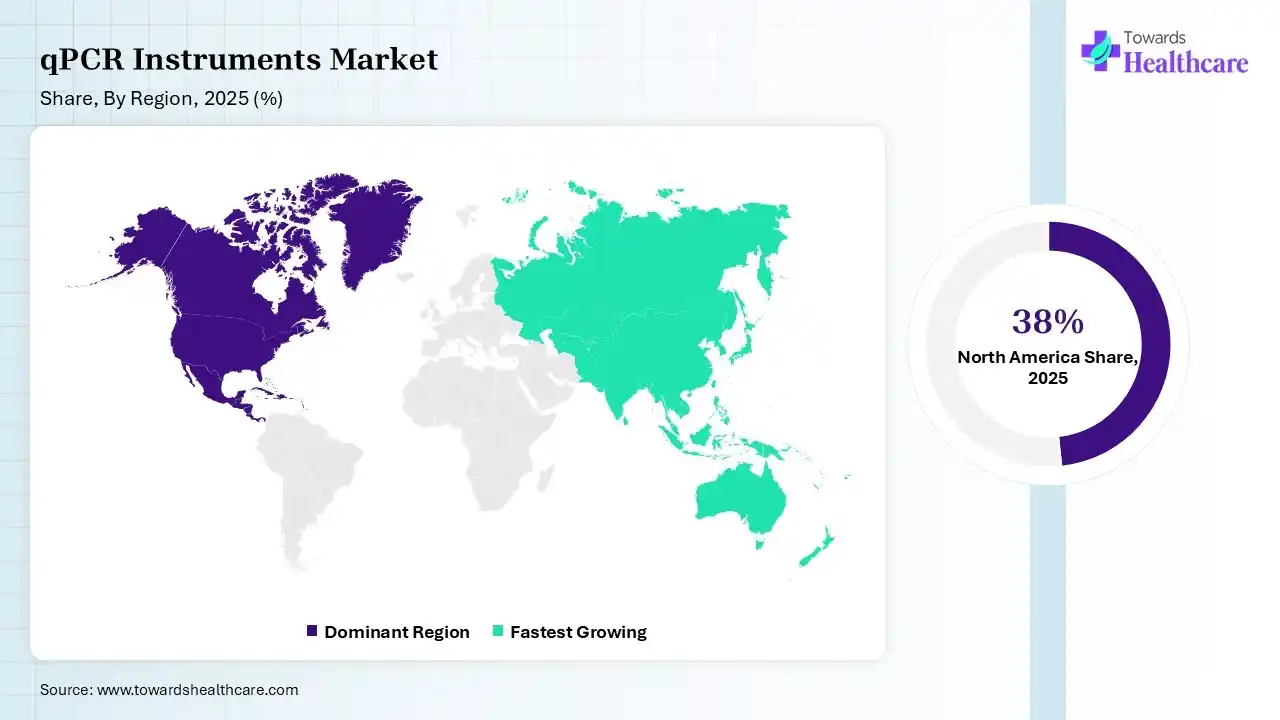
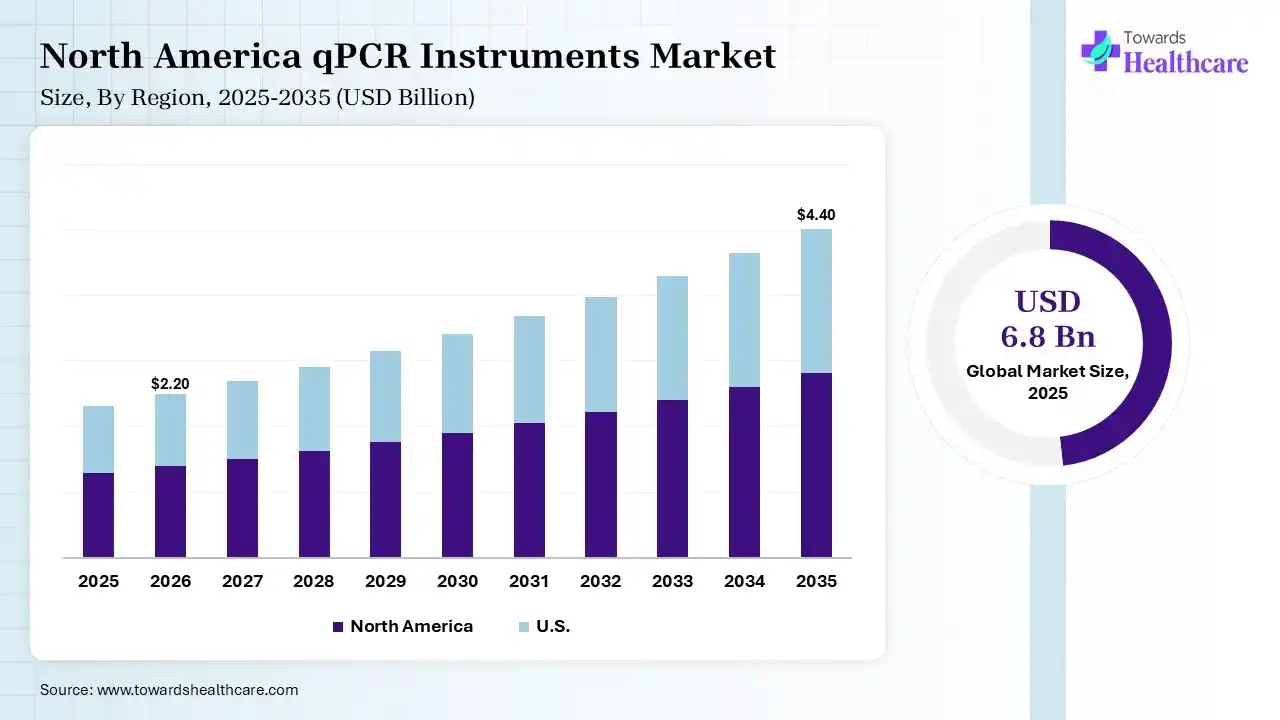
North America registered its dominance over the global qPCR instruments market with 38% in 2025, due to the presence of advanced healthcare infrastructure and robust key players, which contributed to the increased qPCR instruments innovations. High infectious disease burden and diagnostic testing rates also increased their adoption. Growth in R&D activities also enhanced the market growth.
U.S. Market Trends
The U.S. consists of robust companies driving the development of new qPCR instruments. Large-scale diagnostics and R&D investments are also boosting their usage. The presence of a strong R&D ecosystem and healthcare infrastructure is also increasing their use for disease diagnosis, genomics, and drug discovery applications.
The Canada qPCR Instruments Market Through Expanding Molecular Diagnostics
The Canada qPCR instruments market is growing significantly due to increasing investments in genomics and life science research, expanding adoption of molecular diagnostics in hospitals and research laboratories, and rising demand for precision medicine. Strong government funding for biotechnology innovation, advanced academic research collaborations, and the growing use of automated qPCR platforms for infectious disease detection and genetic testing continue to sustain market growth.
Asia Pacific held 24% share of the qPCR instruments market in 2025 and is expected to grow at the fastest CAGR of 10.5% during the forecast period, due to rapid healthcare expansion and growing disease burden. The expanding molecular testing infrastructure and government initiatives are also increasing the adoption of the qPCR instruments. Increasing health awareness is also increasing their use, promoting market growth.
China Market Trends
The expanding pharmaceutical and biotechnology sector in China is increasing the demand for qPCR instruments, where the large population is also driving their use for early and accurate disease detection. The growing government initiatives are also accelerating their adoption rates and innovations. Growing genomics research is also increasing its adoption rates.
India Expands qPCR Instruments Marekt Through Growing Molecular Testing Demand
The India qPCR instruments market is expanding significantly due to the increasing use of molecular diagnostics for infectious disease, genetic disorders, and oncology testing. Growing biotechnology and pharmaceutical research activities, rising investment sin diagnostic laboratory infrastructure, and greater adoption og advanced molecular testing technologies are boosting demand. Additionally, expanding genomic research initiatives and increasing awareness of early disease detection continue to support maket growth.
Europe is expected to expand significantly in the market during the forecast period, due to the presence of a strong biotechnology sector. The presence of advanced healthcare infrastructure is also increasing the use of qPCR instruments. Growing infectious diseases are also driving the demand for qPCR instruments.
UK Market Trends
The presence of strong life sciences sectors in the UK is driving the demand for qPCR instruments. Advanced research infrastructure and increasing infectious disease testing are also driving the demand for qPCR instruments.
Germany Market Trends
Increasing genomics research across Germany is driving the demand for qPCR instruments. The presence of a strong pharmaceutical industry and advanced research infrastructure are also driving the demand for qPCR instruments. Additionally, increasing cancer R&D activities are also driving their adoption.
Latin America is anticipated to show lucrative growth during the forecast period, due to increasing infectious disease burden. Expanding molecular diagnostics and biotechnology sector is also driving the adoption of qPCR instruments. Growing government support and genomic research activities are also increasing their usage.
Argentina Market Trends
Rising infectious disease testing demand across Argentina is driving the adoption of qPCR instruments. The growing R&D activities and research investments are also increasing their adoption rates. Expanding diagnostic laboratories, the biotechnology sector, and infectious disease monitoring demand are also increasing their use.
Rest of Latin America Market Trends
Rising incidences of infectious diseases across the rest of Latin America are increasing the demand for qPCR instruments. The expanding biotechnology sector is also utilizing qPCR instruments for rapid disease detection. Increasing healthcare investments are also supporting their adoption.
MEA is anticipated to show notable growth during the predicted period, due to expanding healthcare infrastructure. Rising incidence of infectious diseases is also driving the demand for qPCR instruments. Growing cancer research and molecular diagnostics are also driving the demand for these instruments.
GCC Countries Market Trends
GCC countries are experiencing a rise in healthcare investments, which supports the adoption of qPCR instruments. The growing healthcare initiatives and infectious disease surveillance are also promoting their adoption. Rising clinical trials and cancer research are also driving their demand.
Saudi Arabia Market Trends
Growing focus on healthcare modernization in Saudi Arabia is increasing the adoption of qPCR instruments. Rising infectious disease surveillance and genomics research are also driving their rapid adoption. Increasing cancer diagnostics are also promoting their use.
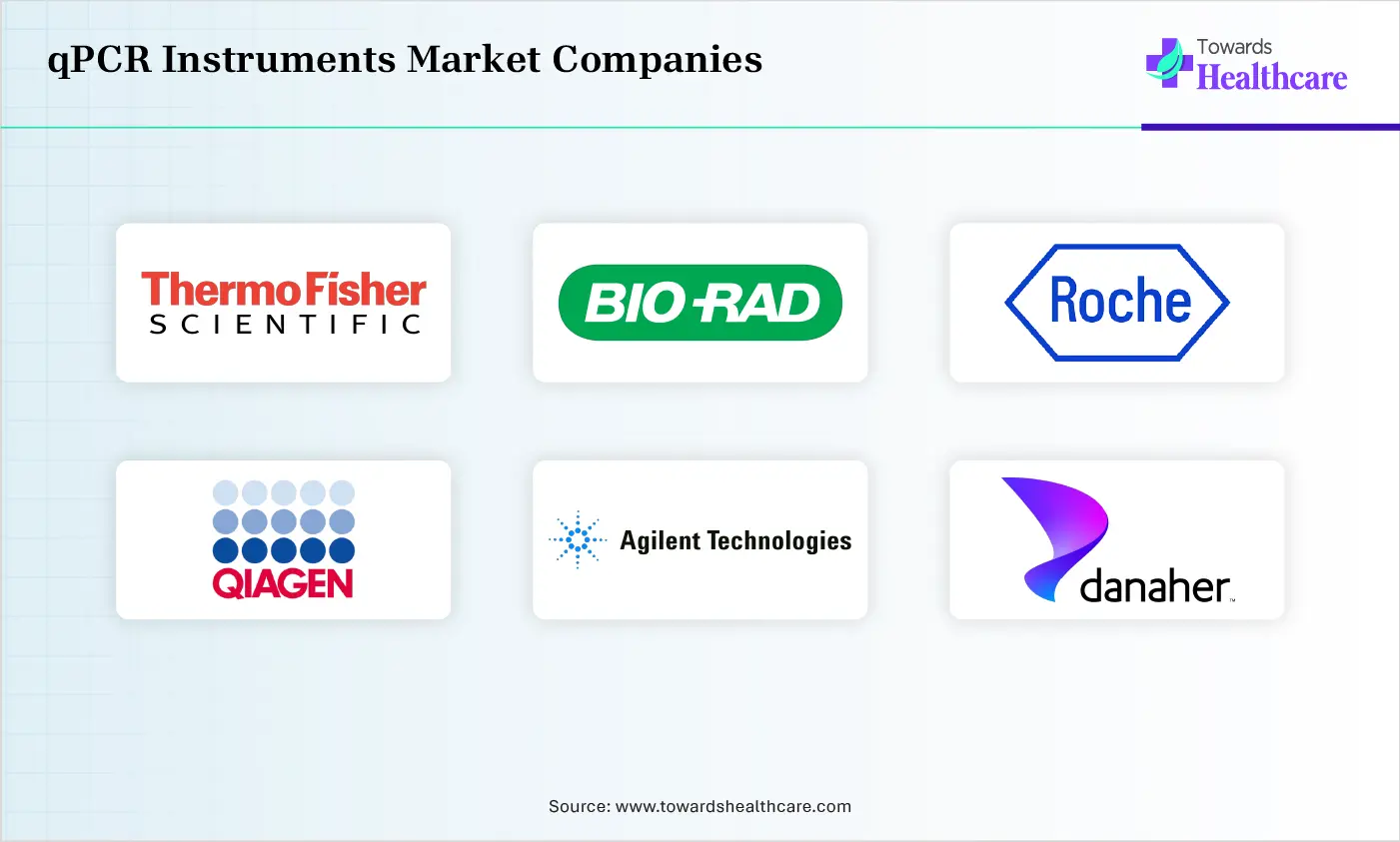
| Companies | Headquarters | qPCR Instruments |
| Thermo Fisher Scientific | Waltham, U.S. | Applied Biosystems QuantStudio |
| Bio-Rad Laboratories | Hercules, U.S. | CFX Opus, CFX Opus Dx, and CFX Duet |
| Roche Diagnostics | Basel, Switzerland | LightCycler PRO, cobas 4800/6800/8800, and LightCycler 96/480 |
| QIAGEN | Hilden, Germany | Rotor-Gene Q and QIAcuity dPCR |
| Agilent Technologies | Santa Clara, U.S. | AriaMx Real-Time PCR System |
| Danaher | Sunnyvale, U.S. | GeneXpert Systems |
| Analytic Jena | Jena, Germany | qTOWER Series |
| Eppendrof | Hamburg, Germany | Mastercycler X50 |
| Standard Bio Tools | South San Francisco, CA | Biomark X9 System |
| Bio Molecular Systems | Upper Coomera, Australia | Mic qPCR Cycler |
In June 2026, Gene expression represents one of the largest application areas in molecular biology and a significant opportunity for digital PCR "By expanding the QIAcuity ecosystem with new assays, enhanced multiplexing capabilities and workflow solutions, we are helping customers apply digital PCR to a broader range of research and biopharma applications”, said Thierry Bernard, CEO of QIAGEN.
By Product Type
By Detection Method
By Throughput
By Application
By End User
By Region






Principal Consultant
Payal Rabde is a Healthcare Market Research Analyst at Towards Healthcare Research & Consulting with 4+ years of experience in pharmaceuticals, biotechnology, medical devices, and life sciences.
Learn more about Payal Rabde

Reviewed By
Aditi Shivarkar is a seasoned professional with over 14 years of experience in healthcare market research. As a content reviewer, Aditi ensures the quality and accuracy of all market insights and data presented by the research team.
Learn more about Aditi Shivarkar









