

Pipeline Programs

CGT Companies Tracked

Manufacturing Facilities
The guideline-directed medical therapy market is on an upward trajectory, poised to generate substantial revenue growth, potentially climbing into the hundreds of millions over the forecast years from 2026 to 2035. This surge is attributed to evolving consumer preferences and technological advancements reshaping the industry.
Across the world, a rise in the burden of chronic conditions and other co-morbidities are fueling demand for advanced therapies. For this, many governments are fostering evidence-based or clinical-trial-based treatments, especially in heart failure instances.
The use of specific, evidence-based medications, specifically for heart failure (HF), which further enhances outcomes, lowers hospitalizations, and minimizes mortality by targeting underlying disease processes, is termed guideline-directed medical therapy. The guideline-directed medical therapy market is prominently fueled by a rise in the requirement for lowering the increased mortality and hospitalization rates via a four-pillar pharmacological solution. However, various studies are demonstrating the adoption of HFrEF "polypills", which combine once-daily, basic medications into a single capsule to streamline regimens & minimize expenditures.
More specific application of the AI is the analysis of EHR data for finding patients' eligibility for GDMT, mainly the "four pillars", like ARNIs, beta-blockers, MRAs, SGLT2i, who are underdosed. Apart from this, AI has an immersive role in advancing remote monitoring approaches, such as Biofourmis and CardioMEMS, which are united with AI to determine hemodynamic deterioration, encouraging proactive medication adjustments before hospital readmission.
The globe is highly focused on SGLT2 inhibitors (SGLT2i), which offer significant benefits, although uptake is minimal in older/prevalent heart failure (HF) patients.
Day by day, the market is leveraging sophisticated digital telemonitoring, digital consultations, and remote titration to improve GDMT, with positive results in boosting beta-blocker use and comprehensive management.
Particularly, the TITRATE-HF registry is studying specific reasons behind the failure of initiation or up-titration therapy, such as clinician-reported barriers.
Which Drug Class/Therapy Type Segment Led the Market in 2025?
The angiotensin receptor-neprilysin inhibitor (ARNI) combinations segment dominated the guideline-directed medical therapy market in 2025. This mainly comprises sacubitril/valsartan (Entresto), for heart failure. According to the WHF, every year, 1 in every 5 people will experience heart failure in their lifetime. Whereas, these ARNI combinations have robust renal protection as compared to ACE inhibitors in HFrEF patients, even though early issues. Research activities are showing acceleration in natriuretic peptides; ARNI treatment is enabling minimal need for loop diuretics.
Sodium-Glucose Cotransporter 2 (SGLT2) Inhibitors
Moreover, the sodium-glucose cotransporter 2 (SGLT2) inhibitors segment will expand fastest. This encompasses dapagliflozin, empagliflozin, and canagliflozin, which are necessary components of GDMT for heart failure (HFrEF and HFpEF) and chronic kidney disease (CKD). Alongside, studies are exploring how SGLT2 inhibitors can optimize cardiac remodeling and lower heart failure hospitalization, primarily in patients with diabetes or raised NT-proBNP post-MI.
How did the Heart Failure With Reduced Ejection Fraction (HFrEF) Segment Dominate the Market in 2025?
In 2025, the heart failure with reduced ejection fraction (HFrEF) segment held a major share of the guideline-directed medical therapy market. The market is widely using four substantial therapies, such as RASi/ARNI, Beta-blockers, MRA, and SGLT2i. A recent trial, the FINEARTS-HF, received FDA approval for finerenone in heart failure with LVEF ≥40%, which is also united into wider HF management to prevent worsening events.
Heart Failure With Preserved Ejection Fraction (HFpEF)
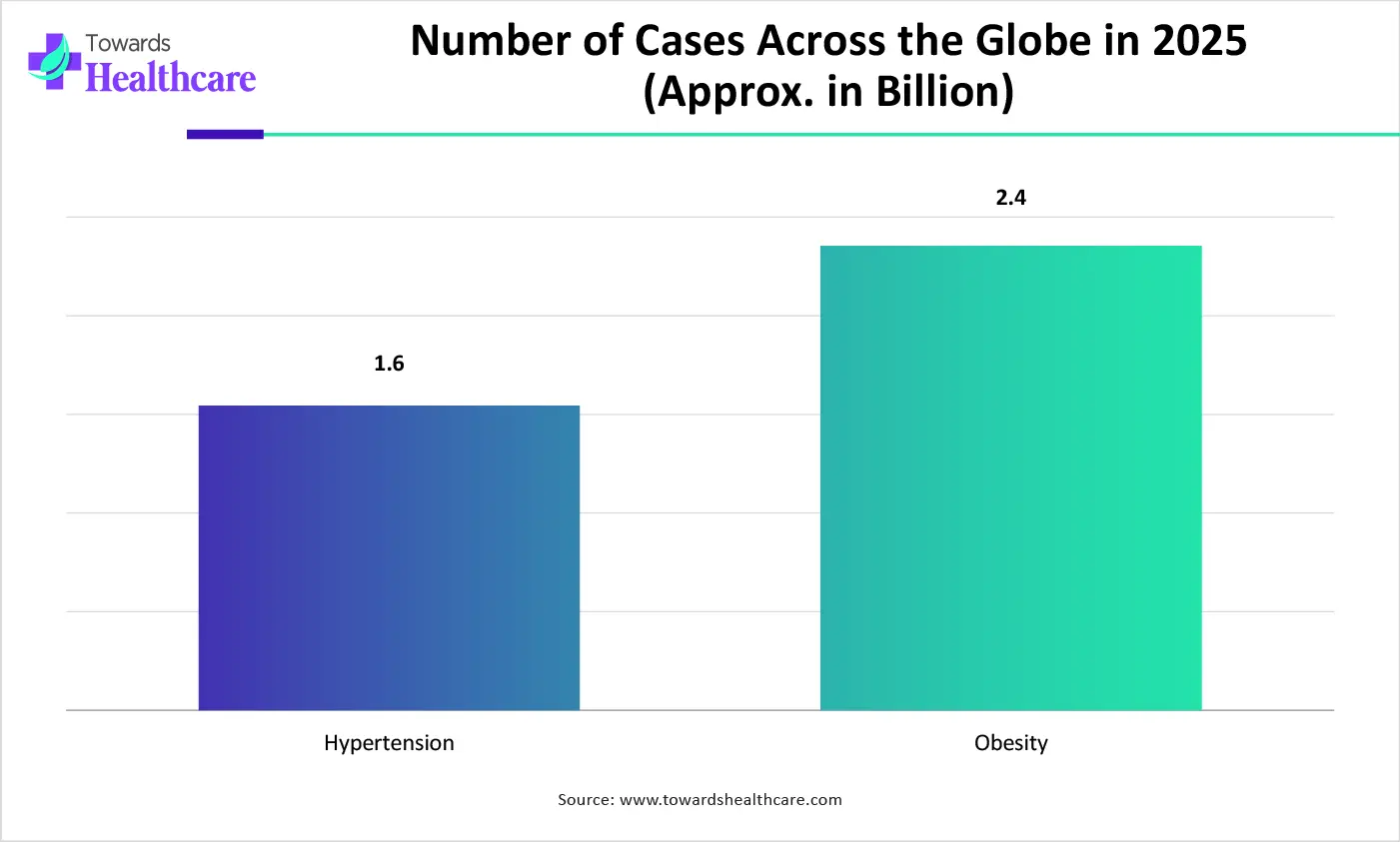
Whereas the heart failure with preserved ejection fraction (HFpEF) segment will expand rapidly. The increasing geriatric population and greater morbidities, like obesity, diabetes, hypertension, and chronic kidney disease, are leading to this case. For early diagnosis, the leading firms are bolstering advances in Doppler-based and strain-based echocardiography. The emergence of diuretics, MRAs, ARBs/ACE inhibitors, and beta-blockers is highly effective in managing symptoms, but with less extensive outcome data in HFpEF.
Why did the Hospitals/Clinics Segment Lead the Market in 2025?
The hospitals/clinics segment was dominant in the guideline-directed medical therapy market in 2025. Specifically, they are broadly executing in-hospital initiation and titration of GDMT, primarily during or immediately after acute decompensated heart failure (ADHF) hospitalizations to foster long-term adherence. Additionally, they are increasingly using teleconsultation, telemonitoring, and clinical decision support systems (CDSS) for tracking patient response to GDMT and improving dosages remotely.
Specialized Heart Failure Clinics
The specialized heart failure clinics segment is predicted to witness rapid growth. They are reinforced by promising Nurse Practitioners (NPs), Pharmacists, and HF-trained nurses, who facilitate closer monitoring, which results in strong patient compliance and rapid dose rising. Alongside, they are integrating in-person visits and tele-health, which enables weekly to bi-weekly medication adjustments, with ensured faster up-titration.
Why did North America Dominate the Market in 2025?
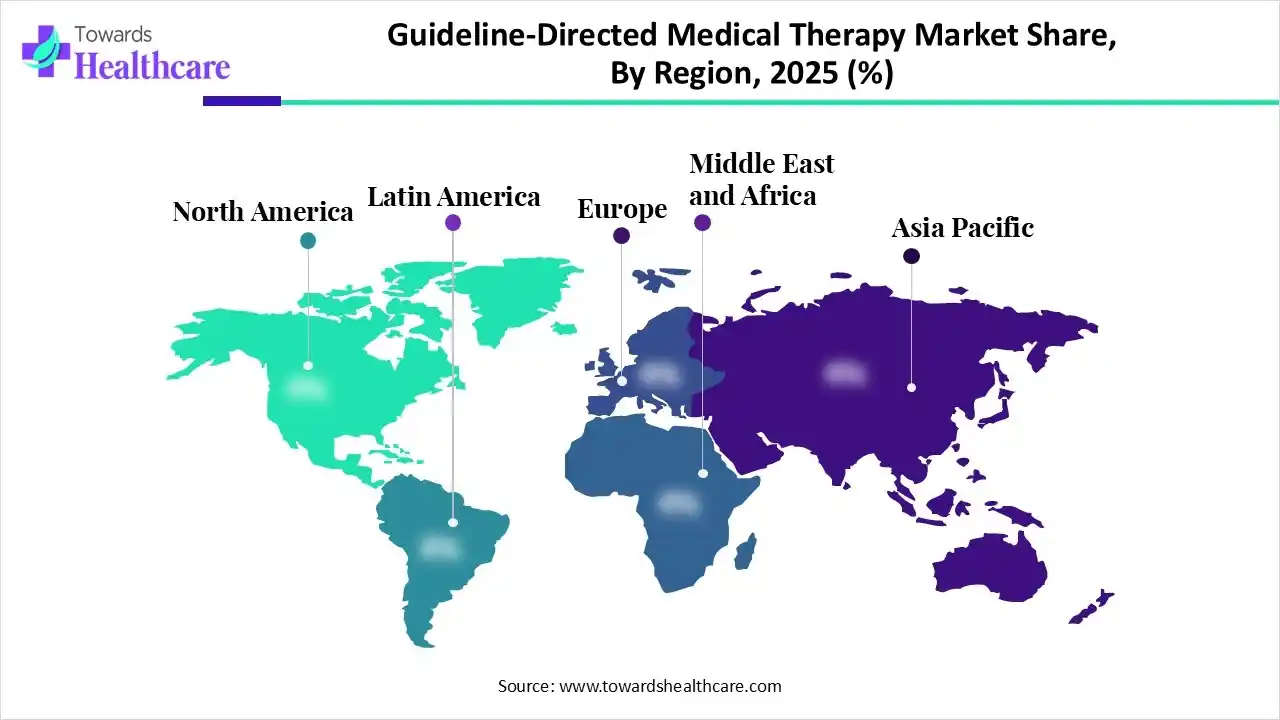
By capturing the largest share, North America led the guideline-directed medical therapy market in 2025. A prominent driver is the proactive guidelines from the American Heart Association (AHA) and American College of Cardiology (ACC) (Class I recommendations), as well as government encouragement to bolster healthcare infrastructure and raise the adoption of these treatments.
U.S. Market Trends
The U.S. market is growing rapidly, driven by increased adoption of SGLT2 inhibitors and ARNIs for heart failure, alongside rising chronic disease prevalence, though high costs and underutilization remain barriers. However, as per HFSA 2025 report, there will be nearly 8.7 million by 2030 and 10.3 million by 2040 heart failure cases in the U.S. Moreover, the Navajo Nation (Hózhó trial) showed that a telehealth model, where nurses manage medication titration at home employing remote blood pressure monitoring, crucially boosts GDMT uptake, i.e., 66.2% vs 13.1% in usual care.
Asia Pacific is anticipated to expand fastest in the guideline-directed medical therapy market, due to the accelerating instances of several chronic issues, including hypertension, diabetes, and CVD, especially in India and China. Besides this, APAC countries' governments are aiming at Universal Health Coverage and also widening healthcare systems.
In June 2025, Meril unveiled MyClip, India’s first Transcatheter-Edge-to-Edge Repair (TEER) system to treat severe mitral regurgitation.
China Market Trends
Driven by an aging population, rising chronic disease, and "Healthy China 2030" initiatives, the China guideline-directed medical therapy market is growing rapidly. Furthermore, Chinese guidelines prefer "new quadruple" therapy, such as ARNI, beta-blockers, MRA, and SGLT2 inhibitors. A recent study at the First Affiliated Hospital of Nanjing Medical University demonstrated that uniting vericiguat with this quadruple therapy further boosts cardiac function and quality of life in stabilized patients.
In the future, Europe is predicted to expand notably in the guideline-directed medical therapy market. Recently, ESC/EACTS Guidelines empowered the role of "Heart Teams" and the latest recommendations for TEER (transcatheter edge-to-edge repair) to Class I for specific secondary mitral regurgitation patients, mainly when enhanced GDMT fails. However, Europe expanded Vericiguat, a sGC stimulator, which lowers cardiovascular deaths in HFrEF.
UK Market Trends
The market in the UK, particularly within the cardiovascular and heart failure (HF) sectors, is experiencing steady growth, driven by a high prevalence of chronic diseases, adoption of new therapeutic guidelines, and NHS initiatives focusing on early, intensive, and outpatient management. In the UK, recently, NICE (National Institute for Health and Care Excellence) combined technology appraisals (TA929 and TA902) into its 2025 guidelines to encourage the use of SGLT2 inhibitors for patients with preserved or mildly lowered ejection fraction.
| Company | Description |
| Novartis AG | Its vital offering is an angiotensin receptor/neprilysin inhibitor (ARNI) for heart failure (HFrEF) and hypertension. |
| AstraZeneca Plc | This firm specialises in Cardiovascular, Renal and Metabolism (CVRM) and Respiratory & Immunology. |
| Boehringer Ingelheim | A company facilitates a variety of therapies of the SGLT2 inhibitor class. |
| Eli Lilly Company | This explores various therapies in diabetes, obesity, and heart failure management, like Tirzepatide, Jardiance, etc. |
| Merck & Co., Inc. | It mainly focuses on heart failure and diabetes, which includes Verquvo, Keytruda, etc. |
| Johnson & Johnson | This provides diverse products through both its Innovative Medicine and MedTech divisions. |
| Pfizer Inc. | A company emphasizes cardiology, metabolic disease, and internal medicine to treat or prevent disease growth. |
By Clinical Application
By End-User/Care Setting
By Region




Principal Consultant
Deepa Pandey is a focused and detail-oriented market research professional with growing expertise in the healthcare sector, delivering high-quality insights across therapeutic areas, diagnostics, biotechnology and healthcare services.
Learn more about Deepa Pandey

Reviewed By
Aditi Shivarkar is a seasoned professional with over 14 years of experience in healthcare market research. As a content reviewer, Aditi ensures the quality and accuracy of all market insights and data presented by the research team.
Learn more about Aditi Shivarkar









