


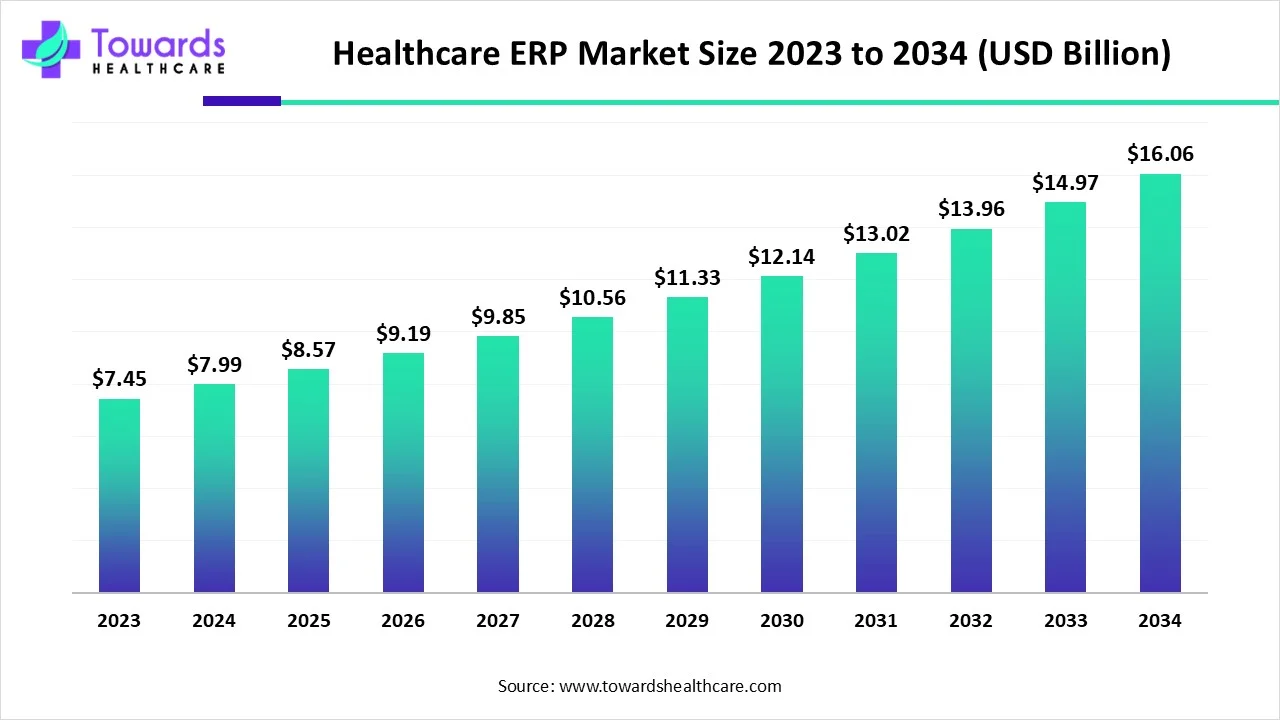
The global healthcare ERP market size is calculated at USD 8.57 billion in 2025, grew to USD 9.19 billion in 2026, and is projected to reach around USD 17.22 billion by 2035. The market is expanding at a CAGR of 7.23% between 2026 and 2035. The growing demand for state-of-the-art treatment, technological advancements, and the burgeoning healthcare sector drive the market.
Enterprise resource planning (ERP) is a software system that helps manage and integrate core business processes. It enables business organizations to access and store all integrated data from various departments in real time. In the healthcare sector, a centralized ERP system helps improve the accessibility and quality of patient care, streamline operations, and decrease overall costs. It is essential in every aspect, including inventory management, financial management & accounting, staff & doctor management, patient management, pharmacy management, and regulatory compliance.
The market for healthcare ERP systems is experiencing significant growth due to various factors, including the increasing number of hospitalizations and the growing demand for advanced patient care. Technological advancements such as AI and ML drive the latest innovations in ERP. The rising healthcare expenditure and the growing healthcare sector are driving market growth. The increasing research and development activities, as well as new product launches, lead to the need for timely medication delivery.
Growing use of Cloud-based ERP Solutions
Due to the growing healthcare digitalization, the adoption of cloud-based ERP solutions is increasing, which offer remote work, improved scalability, easier update and enhanced data access.
Demand for High Security
Due to growth in cyberattacks and data breaches in the healthcare sector, the demand for cybersecurity, regulatory compliance features, and automated audits are increasing, driving advancements in the healthcare ERP.
Technological Advancements
The companies are focusing on enhancing the features of the healthcare ERP, driving innovations in the automated administrative work, predicting patient admission, improving resource allocations, optimizing staffing, and decision-making.
Artificial intelligence (AI) has been found to play a crucial role in streamlining the operations of healthcare organizations. Integrating AI into ERP enables healthcare organizations to connect and automate multiple functions, thereby minimizing the need for human intervention. It can improve operational efficiency and patient care by analyzing vast amounts of data. It can predict potential issues in a healthcare setting, enabling healthcare professionals to make informed and effective decisions.
AI-enabled ERP systems can be utilized for automated quality control and inspection. It can also perform basic tasks such as automated invoice routing, managing inventory reorders, and coordinating maintenance schedules. Thus, AI enables autonomous decision-making in production scheduling, quality control, and supply chain optimization. It is estimated that AI-enabled ERP systems can yield efficiency gains of 30-40% in healthcare organizations.
The healthcare ERP market comprises enterprise resource planning platforms designed to integrate and manage healthcare organizations’ financial, administrative, supply chain, human resources, procurement, and operational processes through centralized systems. The market is growing as healthcare providers seek to reduce operational complexity, improve resource utilization, and strengthen data-driven decision-making. Key trends include cloud-based ERP adoption, mobile accessibility, interoperability, automation, and integration with electronic health records (EHRs).
Technological advancements in artificial intelligence, machine learning, robotic process automation, and advanced analytics are enabling predictive insights, automated workflows, and more efficient resource planning. Future opportunities are emerging from digital transformation among hospitals, clinics, specialty centers, and healthcare networks, particularly in developing economies. Increasing healthcare expenditure, expanding healthcare infrastructure, regulatory compliance requirements, and the need for real-time visibility across departments are important growth drivers. Integration with IoT devices and emerging healthcare technologies is also creating opportunities for more connected and intelligent healthcare operations.
Driver
Increasing Market Competition
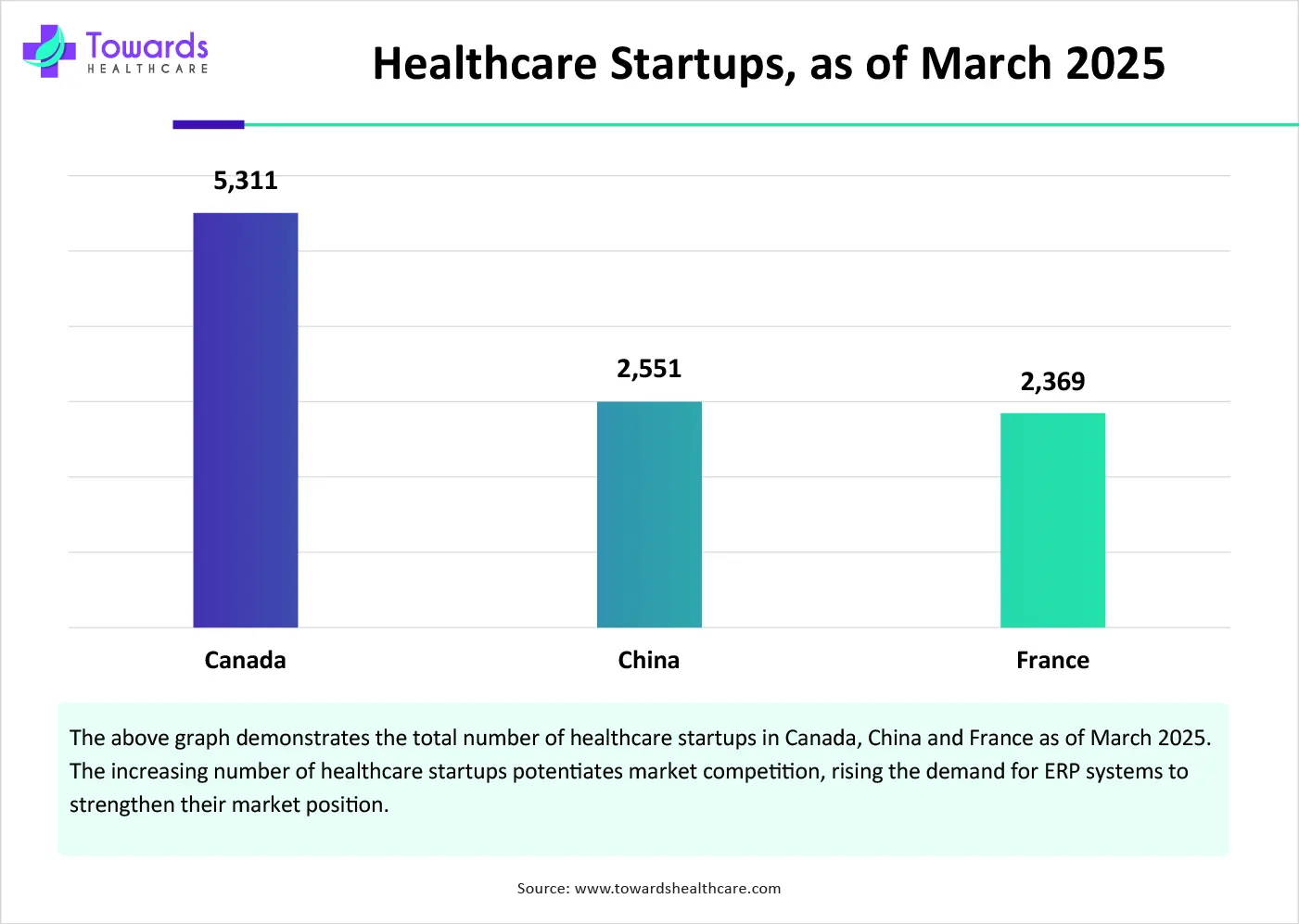
The major growth factor of the healthcare ERP market is the increasing market competition among several healthcare organizations and pharmaceutical companies. Pharmaceutical companies must develop innovative strategies to differentiate their products from those of their competitors in the therapeutic field as marketplaces become increasingly competitive. The increasing number of hospitals, pharmaceutical companies, and biotechnology startups is a major factor in the rising market competition. The primary goal of these organizations is to deliver an exceptional patient experience. This facilitates the adoption of ERP systems, benefitting both organizations and patients. ERP systems are used to evaluate the better functionality of the healthcare organizations, addressing parallel essential functions and possible malfunctions. Implementing ERP systems in healthcare organizations can evolve to align closely with corporate objectives and achieve high levels of healthcare quality.
Restraint
Stringent Regulatory Compliance
The major challenge faced by the market is the stringent regulatory compliance for adopting healthcare ERP. These systems need to be compliant with evolving regulatory standards through regular audits and continuous monitoring. Strict access controls and regular security assessments are required for HIPAA compliance. Hence, changes to HIPAA regulations pose a significant challenge for healthcare organizations.
Opportunity
Cloud Computing
The future of the healthcare ERP market is promising, driven by the advent of cloud computing. Cloud ERP is a system that runs on a vendor’s cloud platform, allowing organizations to access it over the internet. The demand for cloud computing is rising due to its cost-effectiveness, reliability, and secure IT infrastructure. It aids in data storage, application maintenance, upgrades, innovations, and security. Cloud ERP provides advanced features and flexibility, offering improved agility. Numerous healthcare organizations prefer decentralized models, which in turn potentiates the demand for ERP. Cloud ERP enables data processing near the location, rather than sending it to a distant centralized location for processing. The advent of advanced technologies, such as the Internet of Things (IoT), AI, and advanced analytics, has led to the latest innovations in cloud ERP. According to a recent survey of 100 hospitals and health systems, approximately 70% would adopt a cloud-based approach to supply chain management by 2026.
Why Did the Finance & Billing Modulators Segment Dominate in the Healthcare ERP Market?
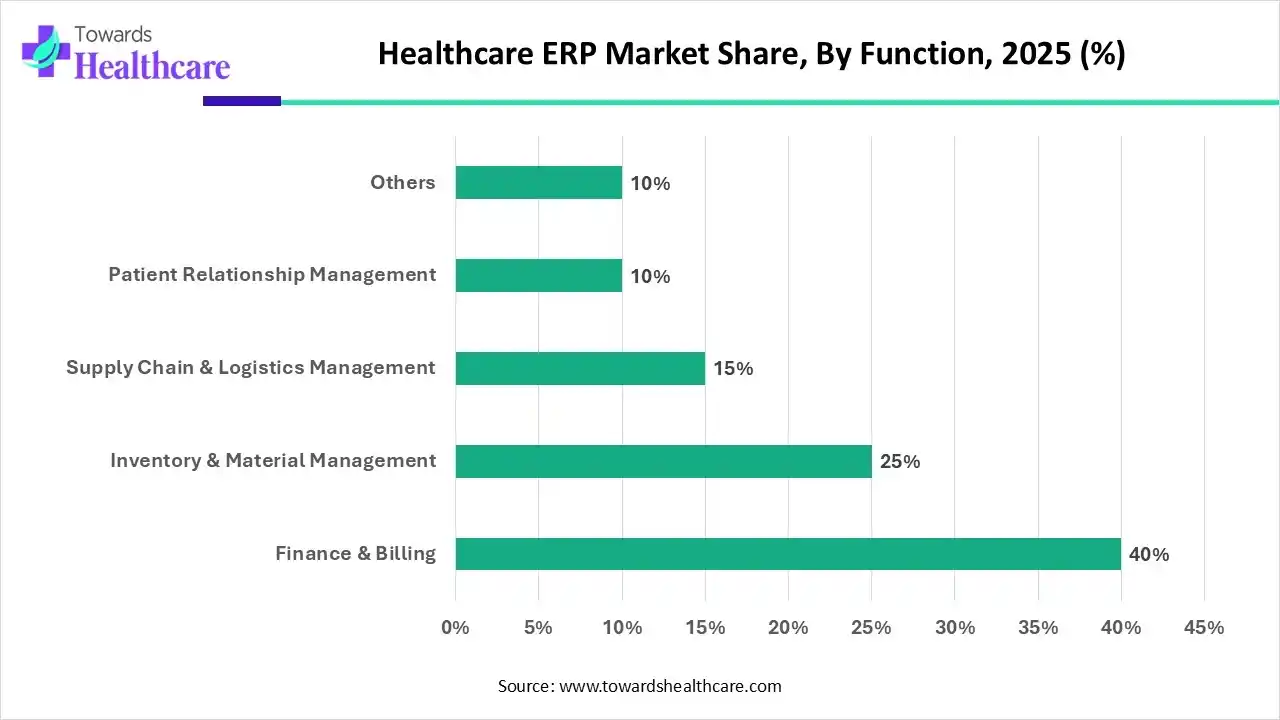
By function, the finance & billing segment held a dominant presence in the healthcare ERP market by 40% in 2025. Healthcare ERP streamlines financial operations in a healthcare organization by tracking, reporting, and analyzing various data. It can drive revenue growth by optimizing various aspects of the operation, including billing and claims processing. Automating administrative tasks helps healthcare professionals to focus more on patient care. ERP facilitates data-driven decision-making to enhance patient care. The increasing number of hospitalizations is likely to potentiate the demand for ERP in finance and billing.
Inventory & Material Management Segment: Fastest-Growing
By function, the inventory & material management segment is expected to grow at the fastest rate in the market during the forecast period. ERP systems facilitate inventory management by pinpointing supply chain issues, managing orders, and providing real-time visibility into inventory status. New product launches and the increasing demand for the timely delivery of pharmaceuticals boost the segment’s growth. The increasing number of clinical trials also facilitates the use of ERP systems to deliver products on-site at trial locations. As of March 2025, 87,626 active, recruiting, and not recruiting clinical trials are registered on clinicaltrials.gov.
| Segment | Share 2025 (%) |
| On-Premises | 60% |
| Cloud | 40% |
Which Deployment Type Segment Held the Dominating Share of the Healthcare ERP Market?
By deployment, the on-premises segment led the global healthcare ERP market by 60% in 2025. On-premises ERP systems provide complete control over healthcare processes within an organization. They also enable healthcare organizations to maintain privacy and customize their services. On-premise systems can boost productivity and efficiencies for companies. They help to take charge of the business decisions, rather than relying on a vendor to deliver ERP services. The increasing investment in transforming healthcare infrastructure promotes the segment’s growth. On-premise systems are predominantly preferred in areas with internet connectivity issues. Thus, they offer greater flexibility, but the need to upgrade the subscription annually remains.
Cloud Segment: Fastest-Growing
By deployment, the cloud segment is anticipated to grow with the highest CAGR in the market during the studied years. The rising adoption of internet connectivity and advancements in cellular technology augment the segment’s growth. Cloud ERP enables healthcare professionals to access their data anytime and from anywhere. It eliminates the need for specialized infrastructure to install hardware solutions. It is comparatively more cost-effective, suitable for small- and medium-sized enterprises. It provides real-time monitoring of complex data and undergoes continuous innovations, providing advanced services.
How the Hospital Segment Dominated the Healthcare ERP Market?
By end-use, the hospital segment held the largest share of the healthcare ERP market by 55% in 2025. The segmental growth is attributed to suitable capital investments and favorable infrastructure. The increasing number of patients in hospitals, combined with the presence of skilled professionals and favorable reimbursement policies, also encourages hospitals to adopt ERP systems. Implementing ERP systems can reduce costs, boost efficiency, and empower remote staff. This enables healthcare professionals to focus more on patient care.
Clinics Segment: Significantly Growing
By end-use, the clinics segment is predicted to witness significant growth in the market over the forecast period. Healthcare ERP helps manage digital medical records, appointments and professional management, billing, and multi-clinic grouping. The increasing number of specialized clinics and growing investments are fueling the segment’s growth. ERP systems can help clinics reduce operational costs by automating processes. Additionally, they can store and manage patient data as well as assist in scheduling, billing, and inventory management.
North America dominated the global healthcare ERP market in 2025. Advanced healthcare infrastructure and technological advancements drive the market. The growing demand for improved operational efficiency and advanced patient care has led to the increased adoption of ERP systems in numerous healthcare organizations in the U.S. The increasing investments by several government and private organizations also augment the market. The rising healthcare expenditure contributes to market growth.
U.S. Market Trends and Size
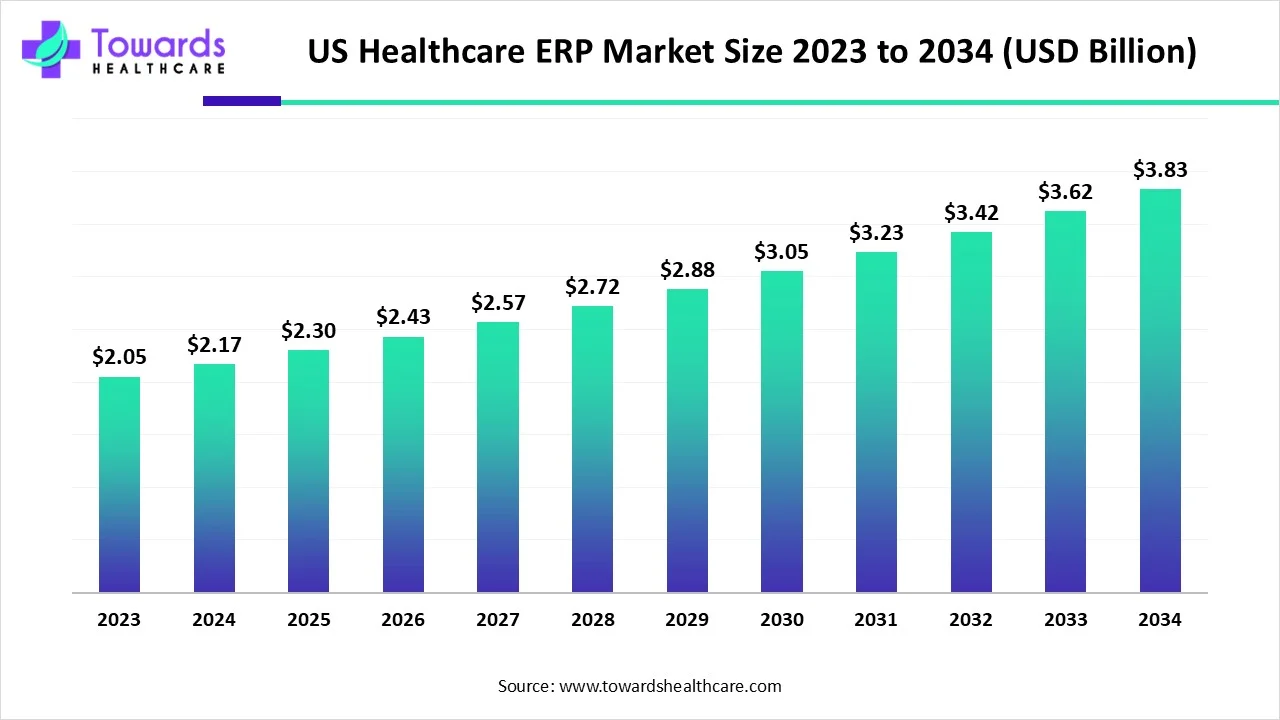
The U.S. healthcare ERP market is valued at $2.17 billion in 2024 and is expected to grow to $2.3 billion in 2025. By 2034, it is projected to reach approximately $3.83 billion, growing at an annual rate of 5.84% from 2025 to 2034. This growth is fueled by technological advancements and the increasing demand for better patient care.
The presence of key players boosts market growth. Key players, including Epic, Oracle, Google, and Microsoft, hold a significant market share in the U.S. The U.S. government supports healthcare ERP through funding, telehealth initiatives, and workforce development. Currently, 45% of U.S. hospitals have adopted cloud technologies for supply chain management.
Canada Market Trends
The increasing venture capital investments support the market. In 2024, approximately $700 million was invested in health tech startups in Canada across 287 deals. Additionally, the Canadian government has several grants and loan programs to help small- and mid-sized businesses to adopt new technology. The rising mergers & acquisitions also enable healthcare organizations to install ERP systems.
Asia-Pacific is anticipated to grow at the fastest rate in the healthcare ERP market during the forecast period. The rising adoption of advanced technologies and rising collaborations drive the market. The increasing number of healthcare startups and the rapidly expanding healthcare sector are driving market growth. Several government and private institutions conduct symposiums, conferences, and workshops to create awareness about adopting ERP systems in healthcare organizations. It is estimated that Asia-Pacific will be the fastest-growing in healthcare spending, accounting for more than 20% of global spending by 2030.
China Market Trends
The increasing geriatric population is resulting in a growing gap between demand and supply, which enables healthcare organizations to adopt ERP systems. There were approximately 297 million people aged 60 and above in China in 2023.
India Market Trends
India is emerging as a key player in the healthcare sector in the Asia-Pacific, attracting significant investments. The increasing number of healthcare startups leads to the rising adoption of healthcare ERP. India hosted 22 healthcare deals in 2023, accounting for $4.6 billion out of the total $14 billion of the Asia-Pacific region.
Europe is seen to grow at a notable rate in the healthcare ERP market in the foreseeable future. The growing awareness about advanced healthcare technologies leads to the rising adoption of healthcare ERP. It was found that 43.3% of enterprises in Europe used ERP software applications in 2023. European governments are increasingly focusing on digitalizing healthcare through funding programs. The increasing healthcare expenditure and rising number of healthcare startups are propelling the market. Around 43 new startups were reported in Europe in 2024. Germany and the UK reported 12 new healthcare startups in 2023, accounting for 28% of the healthcare ventures in Europe.
Germany Market Trends
Germany has a robust healthcare system globally, characterized by a range of choices, scientific advancements, and a commitment to fiscal sustainability. It secured 3rd rank in the 2024 World Index of Healthcare Innovation. Favorable government policies also support market growth. The German government introduced the “Digital Act” to accelerate digitalization in the healthcare sector.
UK Market Trends
The rising healthcare expenditure, along with favorable government initiatives, drives market growth. The UK government spent approximately £292 billion on healthcare in 2023. The “Matrix” ERP project is a UK government initiative designed to promote the adoption of ERP systems across various government agencies.
South America is expected to grow significantly in the healthcare ERP market during the forecast period, due to the growing digital transformation of the healthcare sector, which is increasing the adoption of various digital health tools like healthcare ERP solutions. The growing healthcare investments and government support are increasing their use to enhance workflow efficiency, promoting market growth.
Brazil Healthcare ERP Market Trends
The rapid healthcare digitalization in Brazil is increasing the use of ERP systems. Moreover, to offer a unified health data platform and standardized data exchange, their use is increasing, where the growing investments are increasing their innovations for chronic disease management and online health services.
Argentina Market Trends
Argentina's healthcare ERP market is growing steadily as hospitals and clinics modernize administrative operations. Healthcare providers are adopting ERP platforms to improve financial management, procurement, patient scheduling, and inventory control. Cloud-based solutions are gaining popularity because they reduce infrastructure costs. Government efforts to strengthen healthcare services support digital transformation. Growing demand for integrated data management and operational efficiency will create new opportunities for ERP vendors across the healthcare sector.
MEA is expected to show lucrative growth in the healthcare ERP market during the forecast period, due to growing government health initiatives encouraging the use of advanced digital healthcare solutions. Expanding healthcare, increasing healthcare IT investments, and telemedicine services are also increasing the use of ERP systems, which is fueling the market growth.
Saudi Arabia Healthcare ERP Market Trends
Saudi Arabia is experiencing a rise in healthcare digitalization, which is backed by the growing government initiatives. Increasing investments, growing chronic diseases, and the use of telemedicine platforms are also increasing the use of ERP systems to enhance workflow efficiency, patient care, and reduce paperwork.
South Africa Market Trends
South Africa's healthcare ERP market is expanding with increasing investment in healthcare digitalization and hospital modernization. Public and private healthcare providers are implementing ERP systems to improve resource planning, financial operations, inventory management, and workforce efficiency. Cloud deployment is becoming more common because it offers flexibility and lower maintenance costs. Rising demand for integrated healthcare management and better patient services will continue supporting market growth and technology adoption.
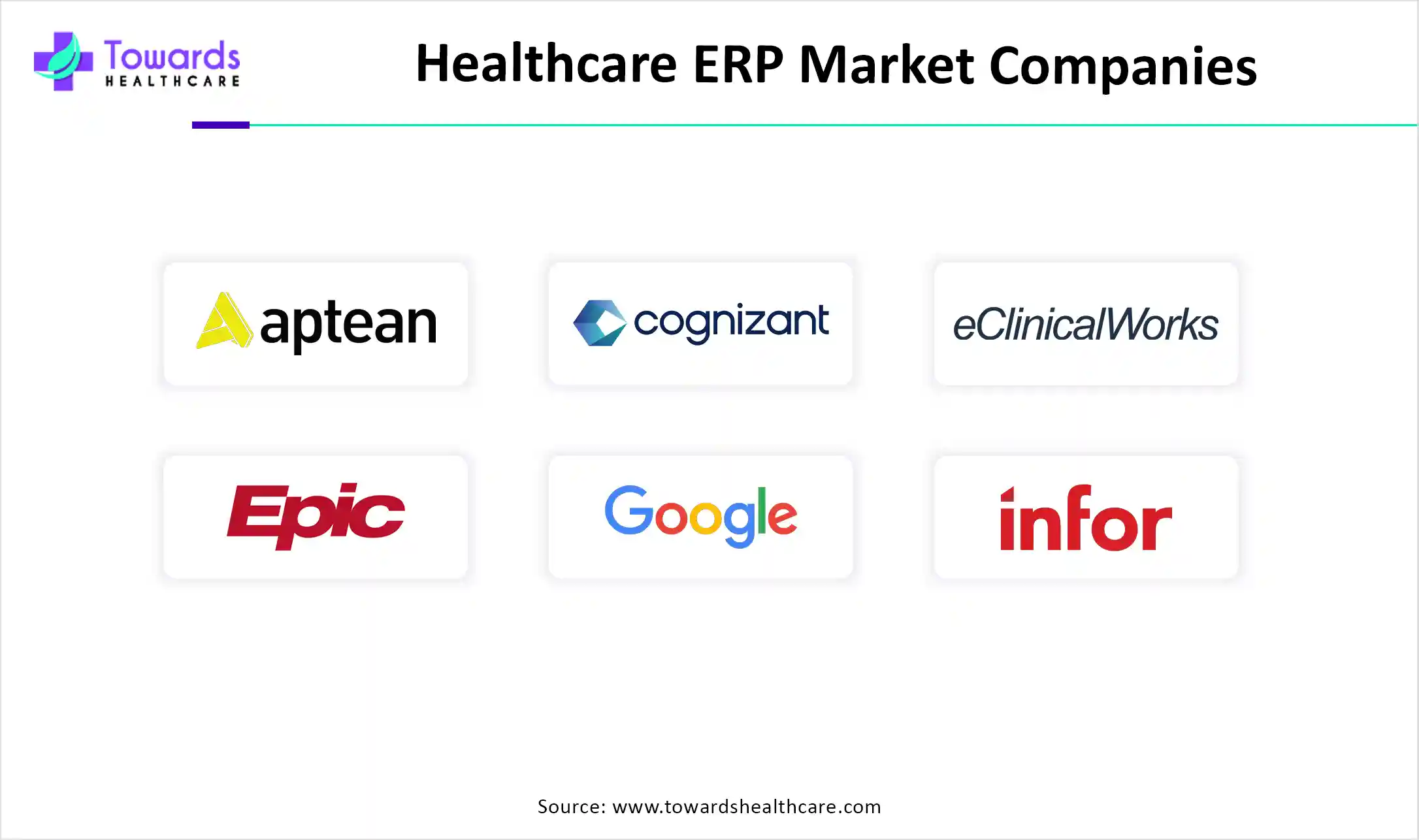
| Companies | Headquarters | Healthcare ERP |
| Oracle Health | Austin, U.S. | Integrated ERP and EHR systems |
| SAP SE | Walldorf, Germany | Molecular solutions for patient administration, real-time financial tracking |
| Microsoft | Redmond, U.S. | Microsoft Cloud |
| Infor | New York, U.S. | Infor CloudSuite Healthcare |
| Epic System | Verona, U.S. | Comprehensive “Revenue Cycle” and administrative suite |
| Workday, Inc. | Pleasanton, U.S. | Unified cloud platform |
| Sage Group | Newcastle upon Tyne, UK | Sage Intacc |
Bruce Murphy, CEO and Founder of Arkansas Heart Hospital, commented that innovation has been a driving force that separates Arkansas Heart from the competition. He emphasized Oracle’s commitment to transforming healthcare for the betterment of patients, staff, and communities. He said that by extending Oracle technology, the hospital is putting information into the hands of their staff for patient care where every second counts.
By Function
By Deployment
By End-Use
By Region






Principal Consultant
Payal Rabde is a Healthcare Market Research Analyst at Towards Healthcare Research & Consulting with 4+ years of experience in pharmaceuticals, biotechnology, medical devices, and life sciences.
Learn more about Payal Rabde

Reviewed By
Aditi Shivarkar is a seasoned professional with over 14 years of experience in healthcare market research. As a content reviewer, Aditi ensures the quality and accuracy of all market insights and data presented by the research team.
Learn more about Aditi Shivarkar









