The interventional radiology AI market is on an upward trajectory, poised to generate substantial revenue growth, potentially climbing into the hundreds of millions over the forecast years from 2026 to 2035. This surge is attributed to evolving consumer preferences and technological advancements reshaping the industry.
The interventional radiology AI market is growing due to AI significantly enhancing pre-procedural planning, intra-procedural navigation, and post-procedural evaluation.
The Interventional Radiology AI market involves the implementation of artificial intelligence in interventional radiology, enhancing image analysis, aiding in diagnosis, suggesting suitable interventions, predictive modelling in healthcare, and training education. In radiologists' workload, the use of artificial intelligence offers better results in healthcare imaging by assisting, rather than supervising or replacing, radiologists. By incorporating AI in radiology, patient care improved via rapid diagnoses, targeted treatment plans, and increased procedural safety.
Remote-controlled and teleoperated robotic systems are a transformative development in interventional radiology (IR), with the potential to improve precision, lower radiation exposure, and increase access to advanced care.
Predictive techniques in healthcare radiology provide transformative opportunities for early diagnosis and personalized care. It provides a unique opportunity for targeted prevention care plans.
Recent trends in extended reality (XR) technologies, which include virtual reality (VR), augmented reality (AR), and mixed reality (MR), hold transformative strength for radiology.
Which Solution Led the Interventional Radiology AI market in 2025?
In 2025, the AI-enabled image guidance systems segment held the dominant market share, as AI-based solutions significantly advance medical imaging by improving the visualization of structures. AI assists with real-time navigation, supporting the identification of ideal catheter or ablation points and enhancing precision during minimally invasive procedures.
AI Decision Support & Predictive Analytics
Whereas the AI decision support & predictive analytics segment is the fastest-growing in the market, as AI-driven tools improved diagnostic precision and effectiveness in identifying abnormalities in imaging modalities via automated feature extraction. AI-driven technology assists in decision-making by providing real-time recommendations based on clinical strategies or advancements, lowering the likelihood of healthcare mistakes.
Why did the Fluoroscopy + AI Segment Dominate the Market in 2025?
The fluoroscopy + AI segment is dominant in the Interventional radiology AI market in 2025, as AI-enabled fluoroscopy systems are significantly lowering radiation exposure to both patients and healthcare personnel via the use of ultrafast collimation techniques, which majorly focus radiation on the region of interest. AI has shown great promise in improving image quality, a significant aspect of diagnostic radiology.
Multi-modal AI Platforms
Whereas the multi-modal AI platforms segment is the fastest growing in the market, as multimodal models support healthcare image analysis in the medical care sector by collecting data from various sources. Applying multimodal AI provides the medical industry with vast advantages, like more precise diagnoses, targeted treatment, and enhanced patient results.
Why did the Vascular & Endovascular Interventions Segment Dominate the Market in 2025?
The vascular & endovascular interventions segment is dominant in the interventional radiology AI market in 2025, as AI-driven technology is rapidly renovating vascular care by improving diagnostic accuracy, streamlining pre-interventional planning, and enhancing patient outcomes. It shows significant advancement in diagnostic radiology via advanced pattern recognition abilities.
Oncology & Tumor Ablation Applications
Whereas the oncology & tumor ablation segment is the fastest growing in the market, as AI-driven technology demonstrated near-physician capabilities in detecting and classifying tumor ablation, with increased performance when such tools are applied in concert with radiologists. This AI-driven process of evaluation avoids the requirement for excessive invasive biopsies and lowers healthcare expenses for patients.
Why did the Hospitals & Health Systems Segment Dominate the Market in 2025?
The hospitals & health systems segment is dominant in the Interventional radiology AI market in 2025. AI-based radiology shows rapid and more precise diagnoses, which leads to better patient results and increased satisfaction. It lowers delays, increases accuracy, and streamlines pathways. AI involves technical value, allocative value, and better patient outcomes without adding to the workflow load.
Specialized radiology & Interventional Centers
Whereas the specialized radiology & interventional centers segment is the fastest growing in the market, as AI-based technology cuts down the time it takes to process images. By automating parts of the analysis technology, radiologists can significantly focus on the more challenging aspects of image interpretation in the radiology center. This is specifically helpful in crowded radiology centre settings with high imaging volumes.
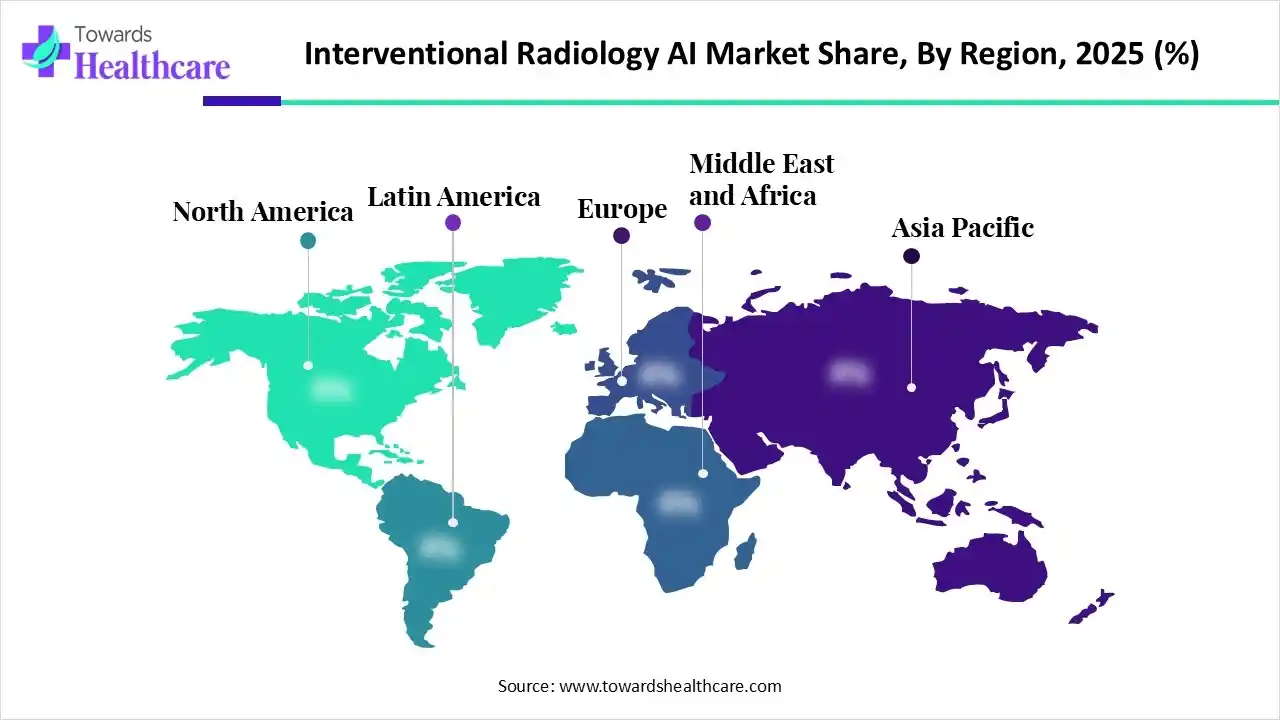
In 2025, North America led the interventional radiology AI market, as the medical care system in this region is often counted among the world’s best, providing expedient access to an extremely subspecialized network of surgeons who work at the forefront of advancing and utilizing novel, advanced procedures and medications. North America has significant AI-driven systems in the world, leading the world in creative and transformative applications of these systems, which contribute to the growth of the market.
U.S. Market Trends
In the U.S., increasing government investment in advanced healthcare technology, for instance, in January 2025, U.S. President Donald Trump announced a private field spending of up to $500 billion to fund infrastructure for AI-driven technology, to outpace competing nations in business-critical technology. The United States has strong and emerging technology sectors, with a significant lead in artificial intelligence.
Asia Pacific is set to experience rapid growth in the interventional radiology AI market, due to the APAC medical care sector having massive strength for growth, and organizations that drive revolution. Aging populations and growing demand for healthcare access increase the use of interventional radiology AI. Radiology AI is becoming progressively sophisticated and allows to simply handling of even the most challenging diagnostic imaging tasks.
India Market Trends
India's medical care landscape is experiencing a digital revolution, driven by regulatory initiatives, strategy reforms, and technological developments. AI-driven technology is revolutionizing healthcare in India by enhancing diagnostics, increasing telemedicine, and increasing rural healthcare access. Teleradiology links the healthcare gap in rural India, providing hope and a significantly enhanced quality of life to millions.
Europe is experiencing substantial growth in the interventional radiology AI market, as developments in imaging technologies and growing demand for minimally invasive processes. Europe has a rapidly aging population, with 85% of deaths in the EU caused by chronic diseases such as cancer and cardiovascular disorders, which often need IR actions, which contributes to the growth of the market.
UK Market Trends
The UK regulation is creating dedicated AI Growth Zones (AIGZs), areas with improved access to power and support for planning, to accelerate the build-out of AI-driven technology infrastructure. The Clinical Practice Research Datalink (CPRD) gathers information on patients from a network of GP practices in the UK, which drives the growth of the market.
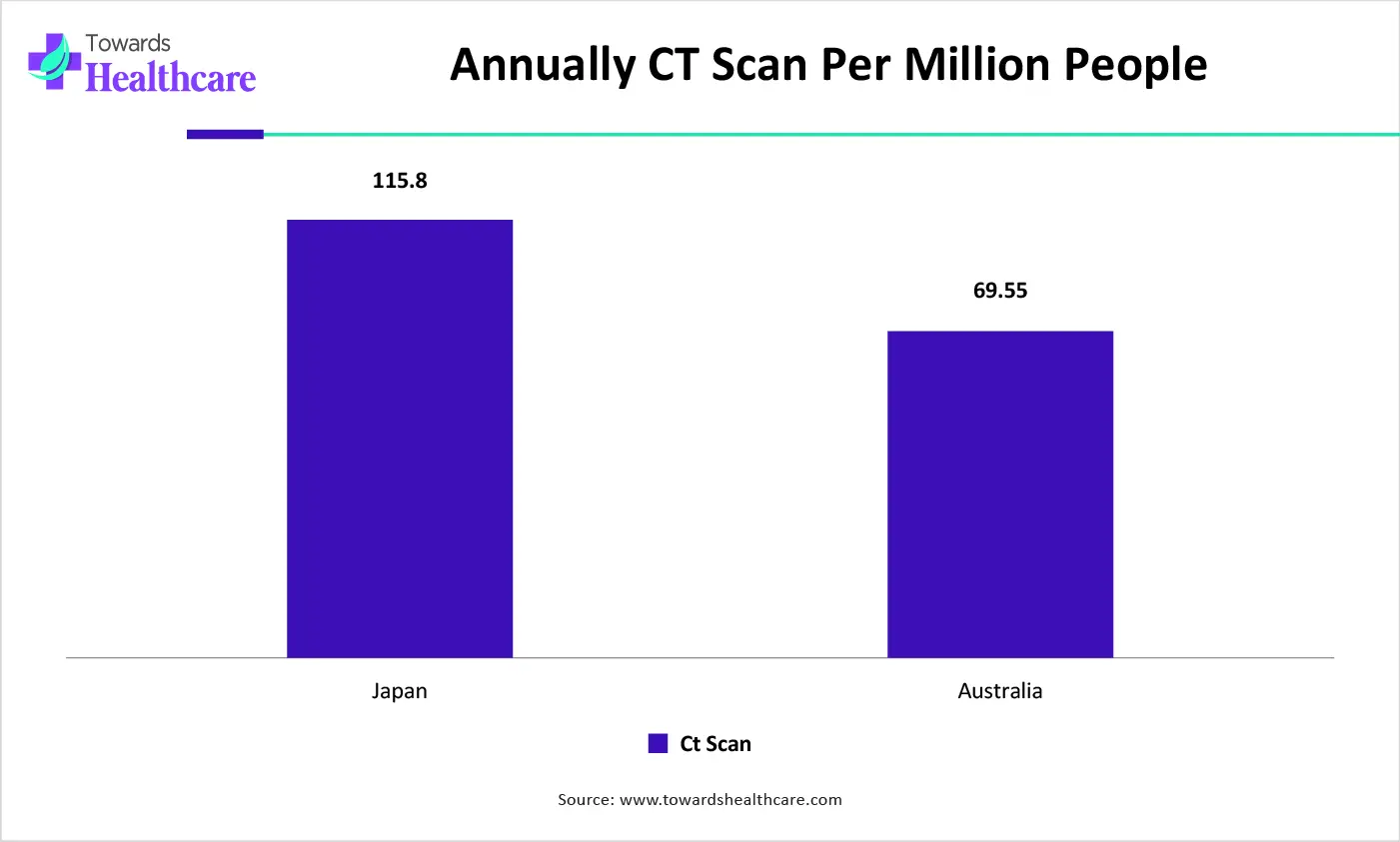
| Country | CT Scan |
| Japan | 115.8 |
| Australia | 69.55 |
| Company | Headquarters | Latest Update |
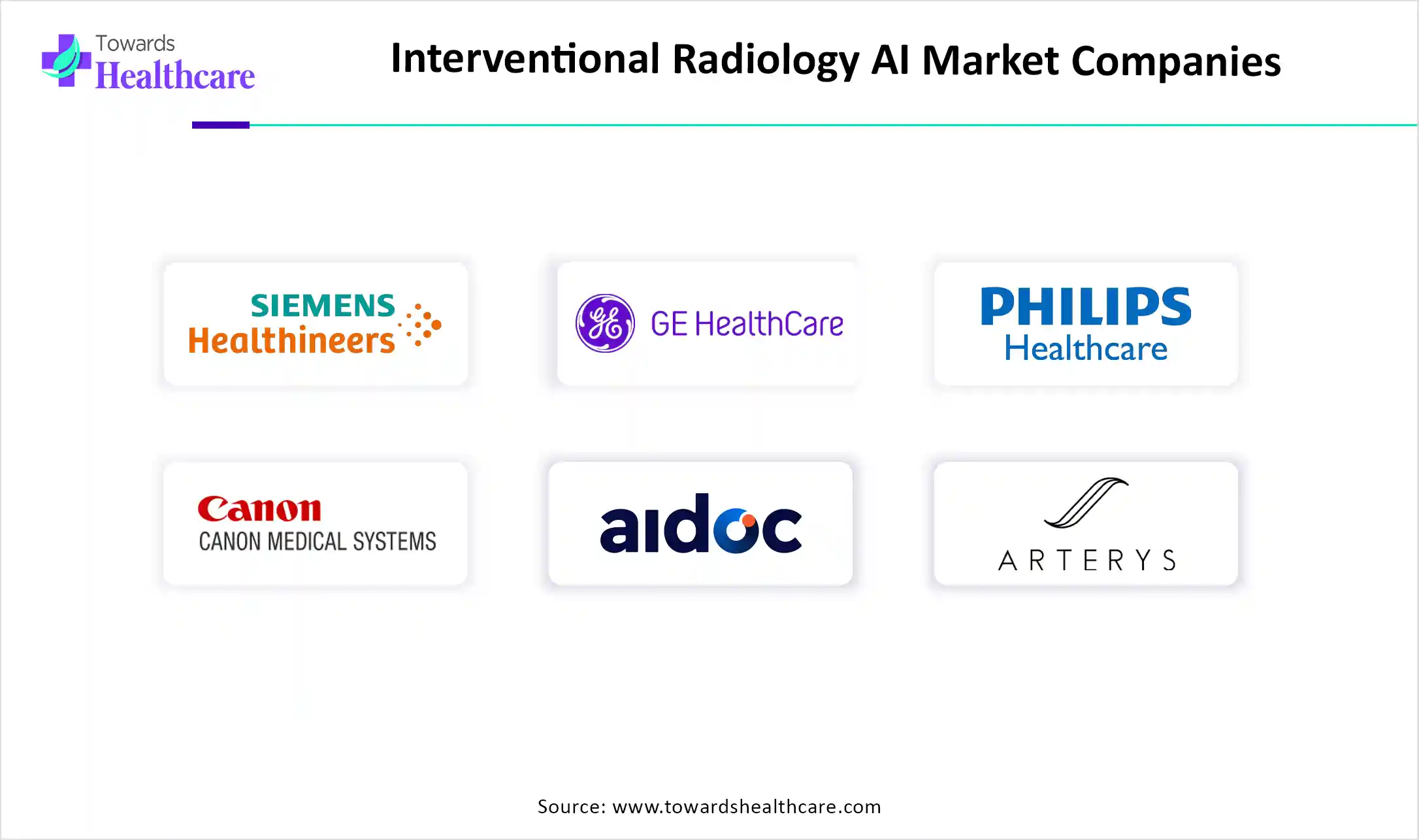
| Siemens Healthineers | United States | In January 2026, Siemens Healthineers received Food and Drug Administration clearance for the 70cm bore Magnetom Flow. platform, a 1.5 tesla platform for magnetic resonance (MR) imaging with a closed helium circuit and no quench pipe, which lowers helium dependency and annual energy consumption. |
| GE Healthcare | United States | In December 2025, GE HealthCare announced the latest advancements of Imaging 360, which present improved capabilities with artificial intelligence (AI), intended to supports improve efficiency in the radiology department. |
| Philips Healthcare | India | In December 2025, Royal Philips acquired a medtech company that specializes in artificial intelligence-enabled advanced vascular imaging. |
| Canon Medical Systems | Japan | In November 2025, Canon Medical, a leader in healthcare tools technology, announced the FDA clearance of the advanced interventional imaging equipment available, Alphenix 4D CT with Aquilion ONE/INSIGHT Edition. |
| Aidoc | Israel | Aidoc delivers clinical AI that allows medical care providers to make faster, more precise decisions. |
| Arterys | Australia | GMP Pharmaceuticals Pty Ltd is a leading Australasian contract manufacturer of complementary medicines, natural health products, and infant formulas. |
By Solution Type
By Modality Integration
By Clinical Application
By End-User
Regional Outlook





Principal Consultant
Shivani Zoting is a dedicated research analyst specializing in the healthcare industry. With a strong academic foundation, a B.Sc. in Biotechnology and an MBA in Pharmabiotechnology, she brings a unique blend of scientific understanding and strategy.
Learn more about Shivani Zoting
Reviewed By
Aditi Shivarkar is a seasoned professional with over 14 years of experience in healthcare market research. As a content reviewer, Aditi ensures the quality and accuracy of all market insights and data presented by the research team.
Learn more about Aditi Shivarkar