Pipeline Programs

CGT Companies Tracked

Manufacturing Facilities


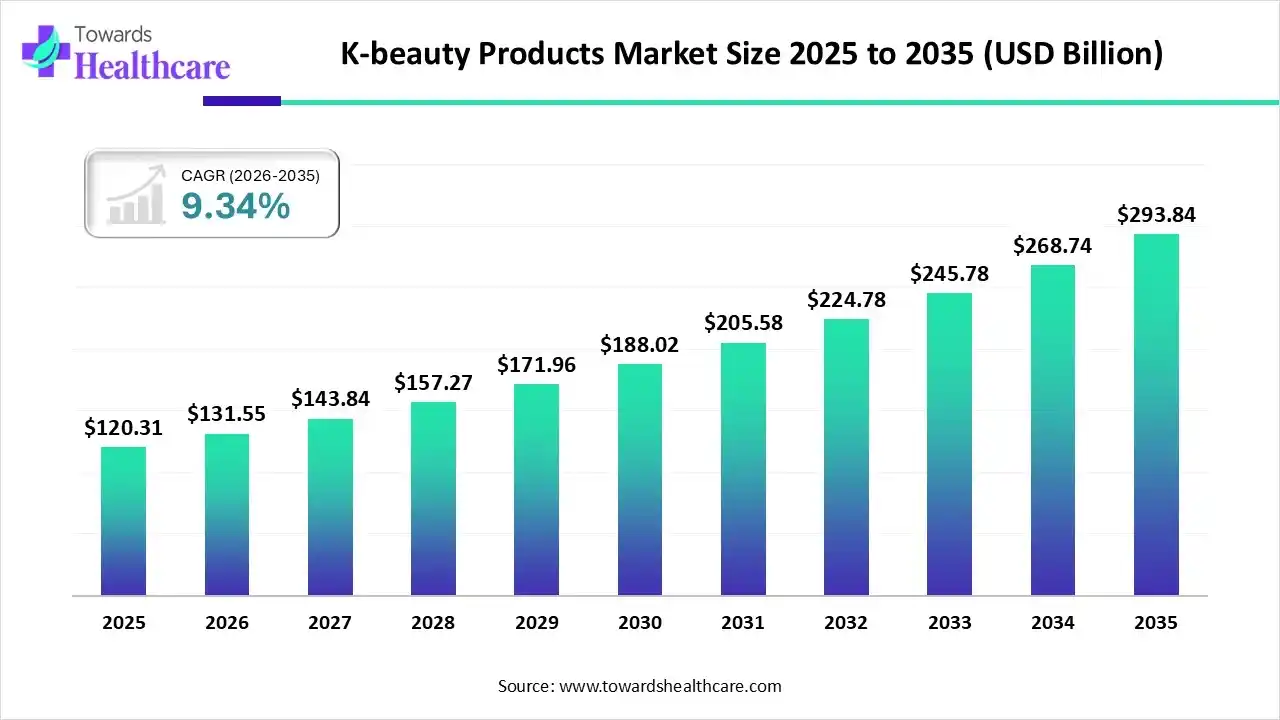
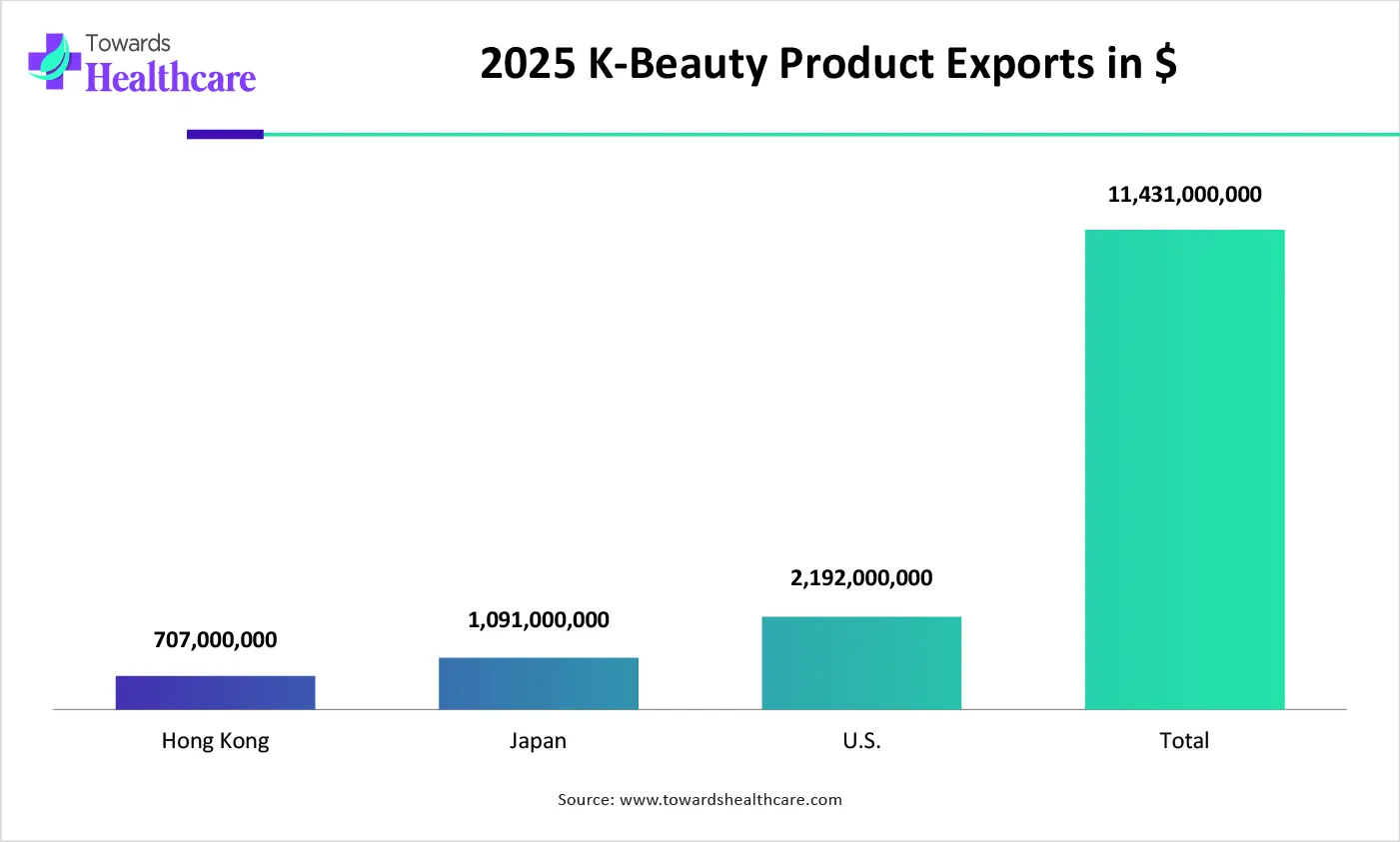
The global K-beauty products market size was estimated at USD 120.31 billion in 2025 and is predicted to increase from USD 131.55 billion in 2026 to approximately USD 293.84 billion by 2035, expanding at a CAGR of 9.34% from 2026 to 2035.
The growing skin and hair health awareness, along with expanding K-culture, are driving the adoption of K-beauty products. Growing disposable income, innovations, collaborations, and launches are promoting the market growth.
The K-beauty products market is driven by the combination of pop culture influence, shift towards skincare-as-wellness, and rapid product innovations. The K-beauty products encompass the products developed in South Korea for skin care and hair care applications. These products target skin hydration, anti-aging, brightening, acne, skin barrier repair, sun protection, hair hydration, repair, scalp health, and hair strength.
The K-beauty products market continues to grow as consumers worldwide increasingly seek innovative skincare and cosmetic products inspired by South Korean beauty trends. The market is driven by rising awareness of preventive skincare, growing demand for natural and multifunctional ingredients, and the popularity of personalized beauty routines. Social media influence, beauty influencers, and expanding e-commerce platforms have significantly increased global accessibility to K-beauty brands. Companies are continuously introducing advanced formulations featuring fermented ingredients, botanical extracts, probiotics, and skin barrier-enhancing technologies to meet evolving consumer preferences. The increasing focus on clean beauty, sustainable packaging, and cruelty-free products is also encouraging product innovation and strengthening the global appeal of K-beauty products.
AI is being utilized in the development of personalized K-beauty products as it helps in the analysis of skin types and their conditions, as well as helps in the development of suitable formulations. It also helps in detecting wrinkles, acne, and hydration levels, as well as in the discovery and development of new formulations. It is also being used in the selection of suitable formulations and the prediction of their effectiveness.
Growing Innovations
The growing skin awareness is increasing the shift towards personalized skin products and body care products, as well as creating an opportunity for anti-aging and sensitive skin care products.
Increasing Demand for Natural Beauty Products
The growing shift towards natural ingredients, clean formulations, and sustainable products are driving the development of natural K-beauty products with enhanced effectiveness, attracting consumers.
Increasing Online Platforms
The growing e-commerce platforms are increasing the accessibility of the K-beauty products, which is enhancing their adoption rates, where the growing K-pop and K-drama impact is also increasing their use.
| Table | Scope |
| Market Size in 2026 | USD 131.55 Billion |
| Projected Market Size in 2035 | USD 293.84 Billion |
| CAGR (2026 - 2035) | 9.34% |
| Leading Region | North America by 36% |
| Key Applications | Skincare, Anti-aging, Sun Protection, Hydration, Acne Treatment, Makeup, Hair Care, Personal Care |
| Primary End Users | Individual Consumers, Beauty Retailers, E-commerce Platforms, Salons, Dermatology Clinics, Specialty Beauty Stores |
| Key Growth Drivers | Global popularity of Korean culture (Hallyu), innovative skincare formulations, e-commerce expansion, social media influence, premium beauty demand |
| Measurable Values | USD Millions/Units/Volume |
| Market Segmentation | By Product, By End-user, By Distribution Channel, By Region |
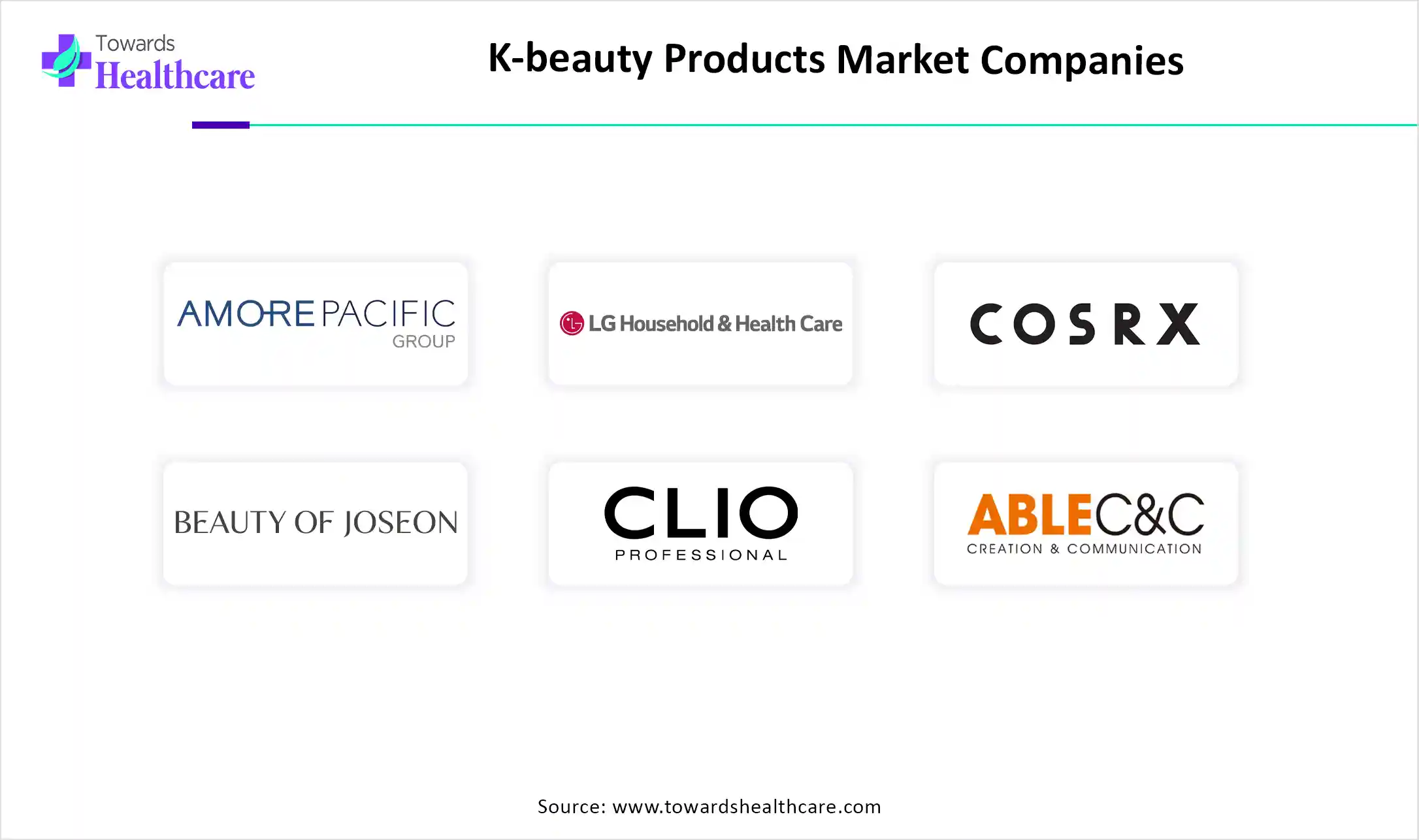
| Top Key Players | Amorepacific Group,LG Household & Health Care, COSRX Inc., Beauty of Joseon, Clio Professional, Able C&C (Missha), Peach & Lily, Tonymoly Co. |
| Segments | Shares % |
| Skin Care | 78% |
| Hair Care | 22% |
Why Did the Skin Care Segment Dominate in the K-beauty Products Market in 2025?
The skin care segment held a dominant position in the market by 78% share in 2025, due to growth in skin health awareness. Increased shift towards long term skin health and glass skin trends also increased the adoption of various K-beauty skin care products. Moreover, the availability of a wide range of products targeting broader age groups also increased their use.
Hair Care
The hair care segment is expected to expand rapidly during the predicted time, due to increasing cases of hair damage. The growing scalp care awareness is also increasing the demand for various K-beauty hair products. Additionally, increasing focus on male grooming is also driving the development of various scalp serums, hair ampoules, and low-pH shampoos.
| Segments | Shares % |
| Women | 71% |
| Men | 29% |
What Made Women the Dominant Segment in the K-beauty Products Market in 2025?
The women segment registered its dominance over the global market by 71% share in 2025, due to growth in the adoption of skincare products. Growth in k-beauty trends also increased the adoption of various products. Furthermore, the advancements in the anti-aging and skin brightening products, along with personalised formulations, also encouraged their use.
Men
The men segment is expected to show the highest growth during the upcoming years, due to growth in the men's skin care awareness. The increasing influence of the K-dramas and K-pop is also increasing the use of these products for healthy skin and hair, where their simplified routines and e-commerce platforms are also increasing their innovation and accessibility.
| Segments | Shares % |
| Supermarkets & Hypermarkets | 38% |
| Specialty Stores | 27% |
| Online | 23% |
| Pharmacies | 12% |
Which Distribution Channel Type Segment Dominated the K-beauty Products Market in 2025?
The supermarkets and hypermarkets segment held the dominating share of 38% of the market in 2025, due to the presence of numerous K-beauty products. They also offered brand visibility and discounts, which attracted the consumer. Additionally, their widespread availability also enhanced the convenience and trust of the consumers, which increased their purchase rates.
Online
The online segment is expected to witness the fastest growth during the predicted time, due to 24/7 availability. They also offer international and niche products, which increases their use. Additionally, price comparison and product reviews also increase their acceptance rates, while the buyer's confidentiality is also maintained.
North America dominated the K-beauty products market by 36% share in 2025, due to a growing shift towards K-beauty routines, which increased the adoption of various K-beauty products. The presence of mature retail infrastructure and growth in social media influence also increased their use, where increased focus on skin care also enhanced their use, which contributed to the market growth.
U.S. Market Trends
The growing skin and hair care awareness is increasing the use of K-beauty products across the U.S. The growing penetration of e-commerce platforms is also increasing their availability. Additionally, growing social media influence and advancements in male grooming products are also increasing their adoption rates.
Canada Market Trends
Canada is witnessing steady growth in the K-beauty products market as consumers increasingly seek innovative skincare solutions and clean beauty products. Rising awareness of Korean skincare routines and growing interest in natural ingredients are driving product demand. E-commerce platforms and beauty retailers are making K-beauty brands more accessible across the country. Social media influence, beauty influencers, and expanding partnerships between Korean cosmetic companies and Canadian distributors are further encouraging product adoption and supporting the continued growth of the market across Canada.
Asia Pacific is expected to host the fastest-growing K-beauty products market by 31% share during the forecast period, due to growing disposable income and increasing personal care, driving the adoption of K-beauty products. The growing beauty awareness and expanding e-commerce platforms are also increasing their availability, enhancing the market growth.
Japan Market Trends
There is a rise in the demand for preventive and high-quality skincare products in Japan, which is driving the adoption of K-beauty products. The growing influence of K-pop and K-dramas is also increasing their demand, as well as driving the development of new personalized skincare and hair care products.
South Korea Market Trends
South Korea continues to experience strong growth in the K-beauty products market because of constant product innovation and a well-established cosmetics industry. Companies are investing in advanced skincare research, sustainable packaging, and new product development to meet changing consumer preferences. Rising demand for premium skincare, personalized beauty solutions, and functional cosmetics is supporting market expansion. Strong global exports, continuous research into skincare ingredients, and increasing collaboration between beauty brands and technology companies are further strengthening the country's K-beauty industry.
Europe is expected to grow significantly in the K-beauty products market by 23% share during the forecast period, due to growing demand for anti-aging products and the increasing influence of Korean culture. The growing disposable income and expanding e-commerce platforms are also increasing their adoption and accessibility, which is creating new opportunities and promoting market growth.
UK Market Trends
The growing Korean beauty awareness in the UK is increasing the demand and adoption of K-beauty products. This, in turn, is driving the development of serum, sheet masks, etc., where the growing men's skin products are also attracting consumers. Increasing demand for natural products is also increasing their innovations.
Germany Market Trends
Germany is seeing steady growth in the K-beauty products market as consumers become more interested in advanced skincare products and multi-step beauty routines. Demand for natural ingredients, gentle formulations, and innovative cosmetic products is encouraging the adoption of Korean beauty brands. Beauty retailers and online platforms are expanding the availability of K-beauty products across the country. Growing awareness through social media, increasing preference for premium skincare, and partnerships between Korean brands and local distributors are supporting continued market growth in Germany.
The region is popularly known as an emerging growth engine for the K-beauty products market. Increased regional appetite for K-pop, K-dramas, and digital content has directly accelerated local demand for Korean personal care and cosmetic items in the region, propelling the growth of the market. South American buyers increasingly gravitate toward eco-friendly, sustainable, and ingredient-transparent formulations rather than traditional performance-only claims. Lip and nail makeup remain major entry points due to accessible drugstore price points and rapid product turnover cycles, helping the market’s growth.
Brazil Market Trends
Brazil’s contribution to the growth of the market is reflected by a massive, high-demand consumer market and a strategic gateway to Latin America. Brazil also represents the world's third-largest cosmetics and personal care market, making it a prime expansion target for South Korean beauty firms. Brazilian consumers have embraced Korean beauty regimens heavily via social media, beauty-focused digital creators, K-dramas, and K-pop. Local viral interest focuses on multi-step routines, skin health ingredients and specialized product lines also fuel market’s growth.
Argentina Market Trends
Argentina also has a steady contribution to the growth of the K-beauty products market. Major beauty conglomerates shape local adoption by tailoring Korean-inspired formats to Argentine consumers, fueling the market’s growth. Argentine consumer preferences heavily favor multifunctional skincare, products that combine sun protection, anti-aging, and deep hydration which directly mirrors core K-beauty philosophies of streamlined, multi-step or all-in-one glowing skin routines, helpful for the market’s growth.
The Middle East has experienced rapid e-commerce growth, heavily accelerated by viral discovery platforms like TikTok Shop and high social media engagement. Centers like the United Arab Emirates and Saudi Arabia drive immense demand for premium, results-led, and preventative skincare solutions, further fueling the growth of the market.
Saudi Arabia Market Trends
Saudi Arabia helps drive the growth of the region's market by acting as a high-value regional consumption hub, driving demand for science-backed skincare, and expanding institutional and digital retail channels. Saudi Arabia's broader skincare and cosmetics sector shows heavy consumer preference for Korean multi-step routines, including cleansers, serums, sunscreens, sheet masks, and cushion cosmetics, directly linked to the growth of the market. Korean cosmetic companies are scaling their export volumes to Saudi Arabia by tailoring products with halal-certified, vegan, and clean ingredient credentials that align with regional values.
UAE Market Trends
Growing demand for cosmetics in the region, making it one of the top consumer-goods export categories to the country after vehicles, is a major factor fueling the growth of the market. K-beauty formulations, rich in hydrating, soothing, and barrier-repair ingredients like niacinamide, green tea extract, and snail mucin, directly address local environmental challenges such as year-round intense sun exposure, heat, and dryness, further fueling the market’s growth.
| Ecosystem Segment | Key Participants | Role in Market |
| Ingredient & Technology Providers | Cosmax, Kolmar Korea, SK Bioland, KCC Beauty | Develop active ingredients, formulations, and cosmetic technologies |
| Product Manufacturers | Amorepacific, LG H&H, COSRX, Clio, Nature Republic | Manufacture skincare, cosmetics, and beauty products |
| Contract Manufacturers (ODM/OEM) | Cosmax, Kolmar Korea, Cosmecca Korea | Provide formulation, development, and manufacturing services |
| Distribution & Retail Platforms | Olive Young, Sephora, Amazon, YesStyle | Global and regional distribution channels |
| E-commerce Providers | Coupang, YesStyle, StyleKorean | Digital sales and international market expansion |
| Beauty Service Providers | Dermatology Clinics, Beauty Salons, Aesthetic Centers | Product recommendation and end-user application |
| Research Institutions | Korea Institute of Science and Technology (KIST), Korea Institute of Industrial Technology (KITECH) | Cosmetic ingredient research and innovation |
| End-User Industries | Beauty & Personal Care, Retail, E-commerce, Healthcare Aesthetics | Primary consumption sectors |
R&D
Clinical Trials and Regulatory Approvals
Patient Support and Services
| Tier 1 | Tier 2 | Tier 3 | |
| Typical Market Influence | 62% | 25% | 13% |
| Tier 1 | ||||
| Company Name | Headquarters | Country | Why Relevant to This Market | Key Products/Services |
| Amorepacific Corporation | Seoul, South Korea | South Korea | Largest K-beauty company with extensive global reach and multiple leading brands | Laneige, Innisfree, Sulwhasoo, Etude |
| LG Household & Health Care | Seoul, South Korea | South Korea | Major premium beauty manufacturer with strong Asian and global market presence | The History of Whoo, CNP Laboratory, Belif |
| Cosmax Inc. | Seongnam, Gyeonggi-do, South Korea | South Korea | World's leading cosmetic ODM specializing in K-beauty formulation and manufacturing | Cosmetic R&D, ODM/OEM services |
| Tier 2 | ||||
| Company Name | Headquarters | Country | Why Relevant to This Market | Key Products/Services |
| COSRX Inc. | Seoul, South Korea | South Korea | Globally recognized skincare brand known for acne and sensitive skin solutions | Advanced Snail Series, Acne Patches |
| Clio Co., Ltd. | Seoul, South Korea | South Korea | Leading color cosmetics and skincare company | CLIO, Peripera, Goodal |
| Nature Republic Co., Ltd. | Seoul, South Korea | South Korea | Significant global retail footprint and natural ingredient focus | Aloe Vera Gel, Skincare Products |
| Tier 3 | ||||
| Company Name | Headquarters | Country | Why Relevant to This Market | Key Products/Services |
| Anua Co., Ltd. | Seoul, South Korea | South Korea | Fast-growing skincare company gaining strong global traction | Heartleaf Toner, Soothing Skincare |
| Torriden Co., Ltd. | Seoul, South Korea | South Korea | Popular hydration-focused skincare innovator | DIVE-IN Hyaluronic Acid Line |
| Round Lab Co., Ltd. | Seoul, South Korea | South Korea | Strong growth through minimalist skincare positioning | Birch Juice Moisturizing Line |
In March 2026, "K-Beauty trends move incredibly fast, and the brands that are viral in Seoul can take years to reach the U.S.," said Sarah Chung Park, CEO of Landing International. "Ulta Beauty Marketplace gives us a faster and more reliable way to bring the brands everyone is talking about in Korea directly to Ulta Beauty guests."
Strengths
Weaknesses
Opportunities
Threats
By Product
By End-user
By Distribution Channel
By Region




Principal Consultant
Rohan Patil is a seasoned market research professional with over 5+ years of focused experience in the healthcare sector, bringing deep domain expertise, strategic foresight, and analytical precision to every project he undertakes.
Learn more about Rohan Patil

Reviewed By
Aditi Shivarkar is a seasoned professional with over 14 years of experience in healthcare market research. As a content reviewer, Aditi ensures the quality and accuracy of all market insights and data presented by the research team.
Learn more about Aditi Shivarkar