


The global laboratory informatics market size is predicted to increase from USD 4.32 billion in 2026 to approximately USD 6.67 billion by 2035, expanding at a CAGR of 4.94% from 2026 to 2035. The growth in the digital transformation of the healthcare sector is increasing the adoption of laboratory informatics systems globally. Additionally, increasing R&D activities, expanding industries, technological advancements, and new system launches are also promoting the market growth.
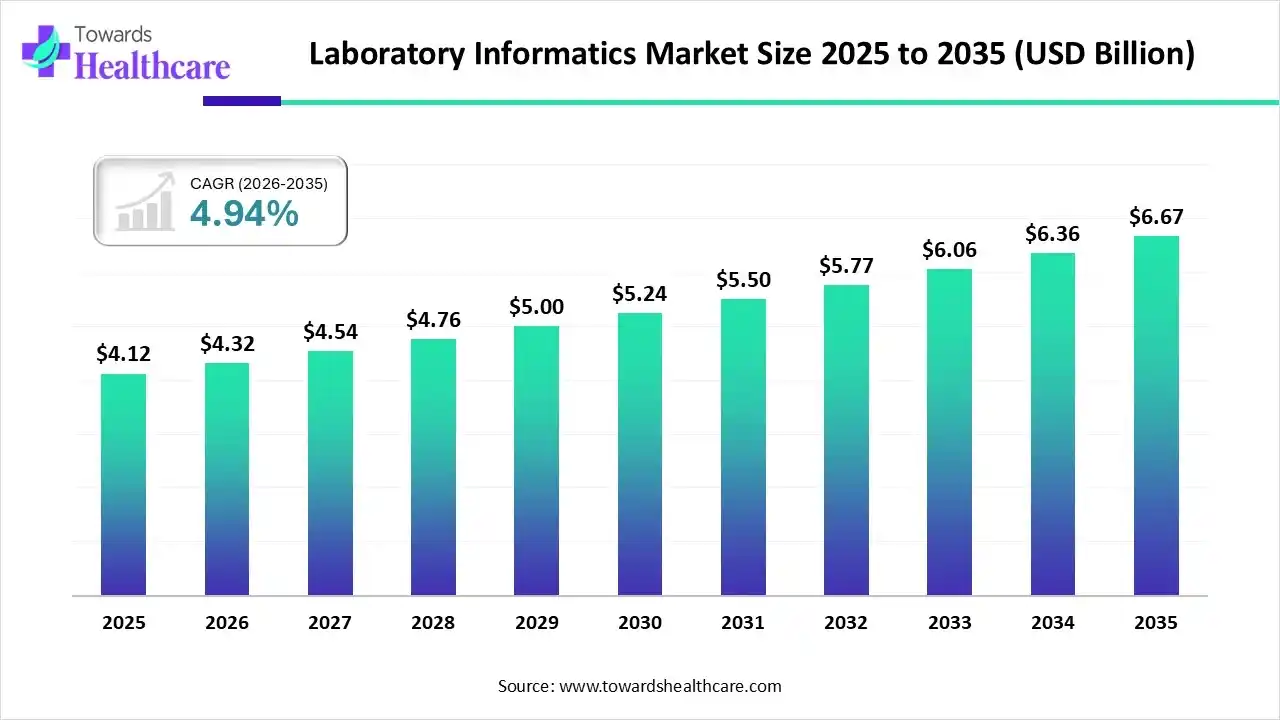
The laboratory informatics market is driven by a growing shift towards integrated AI and cloud-based solutions for the management of growing data complexities. Laboratory informatics refers to the integration of laboratory operations with IT systems to offer automation, digital data management, and smarter decision-making. These systems offer improved data analysis, handling, sharing, and storage with minimal manual errors, enhancing workflow efficiency.
Laboratory informatics refers to the integrated use of software platforms, digital technologies, and data management systems that streamline laboratory operations, automate workflows, manage scientific data, and ensure regulatory compliance across research, clinical, and industrial laboratories.
The laboratory informatics market is expanding as laboratories increasingly adopt cloud-based platforms, AI-powered analytics, and automated data management to improve operational efficiency and research productivity. Growing pharmaceuticals and biotechnology R&D, rising demand for precision medicine, and stricter regulatory requirements are accelerating adoption. Emerging trends such as interoperable laboratory ecosystems, real-time instrument connectivity, and predictive analytics are enhancing data accuracy and decision-making. Future opportunities lie in AI-driven laboratory automation, digital twin technologies, and scalable SaaS-based informatics platforms that support collaborative research, remote laboratory management, and faster scientific discoveries while reducing operational costs and improving data integrity.
AI offers a wide range of applications in the development of laboratory informatics systems, as it helps in processing large datasets, predicting disease progression, and offers automation. This helps in reducing errors in repetitive tasks, where it also helps in the analysis of genomics and proteomics, accelerating drug discovery and development. Its easy integration with laboratory instruments and enhanced workflow efficiency is also increasing its use.
AI-Powered Laboratory Intelligence
Artificial intelligence and machine learning are increasingly being integrated into laboratory informatics platforms to automate data analysis, identify patterns, predict experimental outcomes, and improve decision-making. These capabilities reduce manual effort, enhance data accuracy, and accelerate research across pharmaceutical, biotechnology, and clinical laboratories.
Expansion of Cloud-Based and Connected Laboratory Ecosystems
Cloud-native laboratory informatics solutions are enabling secure data sharing, remote access, and seamless integration with laboratory instruments and enterprise systems. As organizations prioritize scalability and collaboration, connected digital laboratory ecosystems are expected to become the standard for efficient and compliant laboratory operations.
Growing Focus on Interoperability and Digital Laboratory Transformation
The future of laboratory informatics will be driven by interoperable platforms that unify data from multiple instruments, applications, and research sites. Standardized data exchange, automation, and advanced analytics will support faster scientific discoveries, regulatory compliance, and more efficient laboratory workflows across global organizations.
| Table | Scope |
| Market Size in 2026 | USD 4.32 Billion |
| Projected Market Size in 2035 | USD 6.67 Billion |
| CAGR (2026 - 2035) | 4.94% |
| Leading Region | North America by 43% |
| Key Applications | LIMS, ELN, SDMS, LES, Scientific Data Management, Quality Control, Research Data Management, Biobanking |
| Primary End Users | Pharmaceutical Companies, Biotechnology Firms, CROs, Clinical Laboratories, Academic Research Institutes, Food & Beverage Testing Labs, Environmental Testing Labs |
| Key Challenges | High implementation costs, system integration complexity, data security concerns, legacy infrastructure migration, regulatory validation requirements |
| Measurable Values | USD Millions/Units/Volume |
| Market Segmentation | By Product, By Delivery Mode, By Component, By End Use, By Region |
| Top Key Players | Thermo Fisher Scientific, LabWare, LabVantage Solutions, Abbott Informatics, Agilent Technologies, Waters Corporation, Benchling, Dassault Systemes, Dotmatics, PerkinElmer |
Why Did the LIMS Segment Dominate in the Laboratory Informatics Market in 2025?
The LIMS segment accounted for the highest revenue share of the market in 2025, due to its centralized data management, offering improved test results, and workflow management in once platforms. Its enhanced scalability, automation, easy integration, and regulatory compliance have also increased its acceptance rates across various sectors for a wide range of applications.
ECM
The ECM segment is expected to grow at the fastest CAGR in the market during the upcoming years, driven by its efficient data storage and retrieval applications. Their seamless integration and accurate insights are also increasing their use, as well as encouraging the development of cloud-based solutions.
How Cloud-based Segment Dominated the Laboratory Informatics Market in 2025?
The cloud-based segment contributed the biggest revenue share of the market in 2025, due to its enhanced scalability and data security applications. They also enhanced remote access, where they provided automatic updates and faster implementation, which enhanced their adoption across low-infrastructure facilities.
On-premise
The on-premise segment is expected to show the highest growth during the upcoming years, driven by its improved data security and regulatory compliance. They are also being used in the development of customized lab workflows, where their reduced internet dependency is also increasing their adoption rates.
Which Component Type Segment Held the Dominating Share of the Laboratory Informatics Market in 2025?
The software segment held the dominating share of the market in 2025, as it is the core functionality of the laboratory information for enhancing data management. They also offered automation, improved data analysis, and enhanced flexibility, which promoted its use to enhance workflow efficiency and reduce manual errors.
Services
The services segment is expected to witness the fastest growth during the predicted time, due to its seamless integration and customized lab workflows. The growing training programs and consultations are also increasing their use, where their regulatory compliance and improved maintenance are also enhancing their adoption rates.
What Made Life Sciences Companies the Dominant Segment in the Laboratory Informatics Market in 2025?
The life sciences companies segment held the largest revenue share of the market in 2025, due to growth in the R&D activities, which increased the use of laboratory informatics for the management of large data volumes. Additionally, growth in the clinical trials, investments, and stringent regulations also increased their use.
CROs
The CROs segment is expected to expand rapidly in the market during the predicted time, due to growing outsourcing trends. This is increasing the use of laboratory informatics for the management of large datasets, testing, and clinical trials, where the growing technological advancement and stringent regulations are also increasing their innovation and adoption rates.
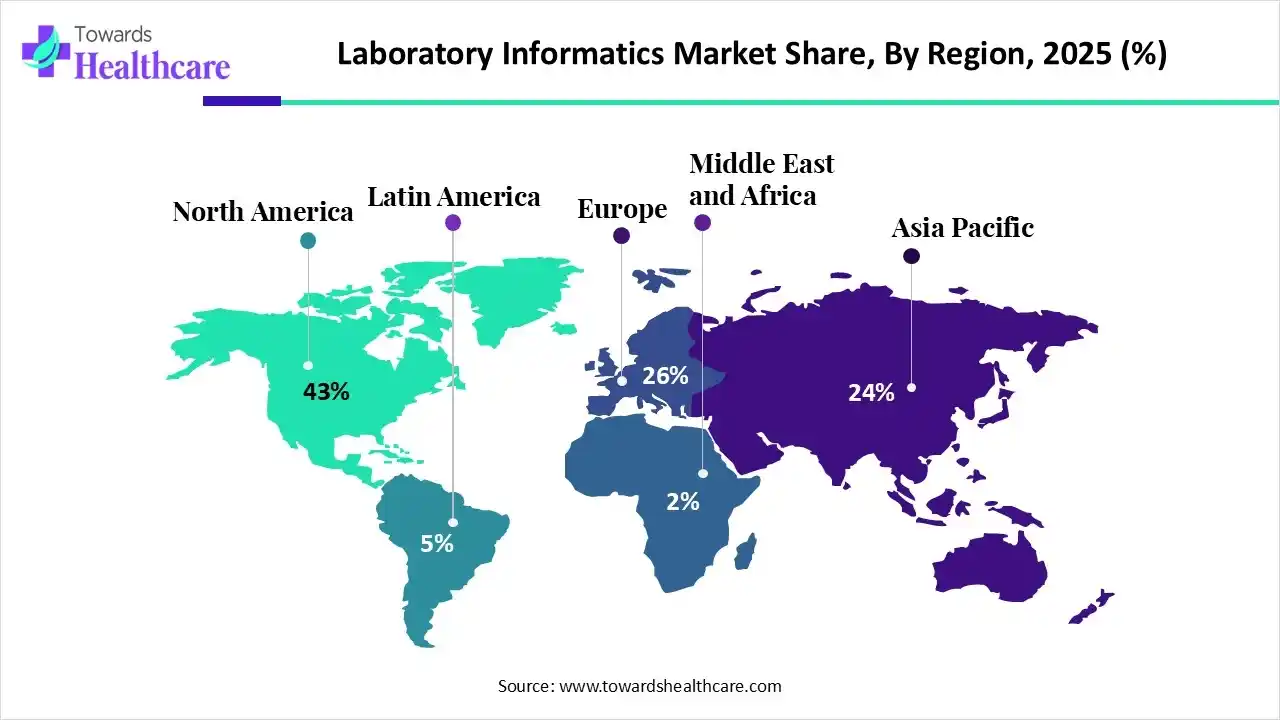
| Regions | Share 2025 (%) |
| North America | 43% |
| Europe | 26% |
| APAC | 24% |
| Latin America | 5% |
| Middle East and Africa | 2% |
North America dominated the laboratory informatics market by 43% in 2025, due to the presence of advanced healthcare infrastructure, which increased the early adoption of laboratory informatics systems. The growth in the R&D investment, presence of robust life science industries, and skilled personnel also increased their use for various R&D applications, which contributed to the market growth.
U.S. Market Trends
The presence of advanced R&D infrastructure in the U.S. is increasing the use of laboratory informatics to accelerate drug development and clinical trials. Additionally, the presence of well-developed healthcare infrastructure is also increasing their use due to their regulatory compliance, where the technological advancements are propelling their innovations, which are further supported by the R&D investments.
Canada Market Trends
The expanding life science sector in Canada is increasing the demand for laboratory informatics solutions. The growing R&D investments are also driving their adoption rates. Increasing government funding is also promoting their adoption, and advancements in personalized medicine are also increasing their demand.
Asia Pacific is expected to host the fastest-growing laboratory informatics market during the forecast period, due to rapid healthcare infrastructure expansion, which is increasing the adoption of advanced tools such as laboratory informatics. The growing government initiatives, increasing innovations, and growing demand for advanced diagnostics solutions are also increasing their use, enhancing the market growth.
India Market Trends
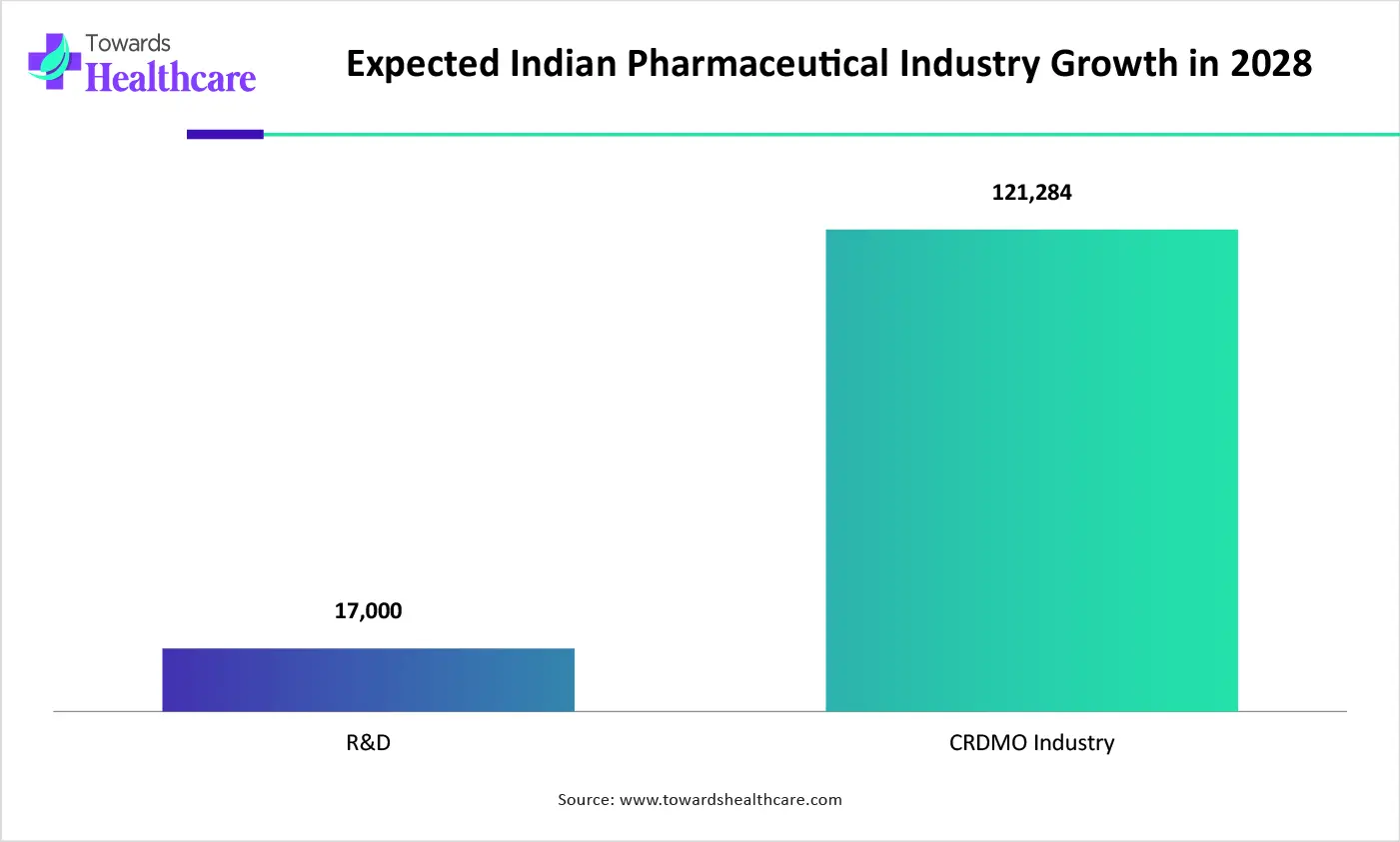
India is experiencing a growth in the healthcare infrastructure, which is increasing the adoption of laboratory informatics systems across hospitals and diagnostic labs. The expanding pharmaceuticals, biotech industries, and CRO ecosystems are also increasing their adoption rates, where the growing government initiatives and technological innovations are also increasing their advancements.
Europe is expected to grow significantly in the laboratory informatics market during the forecast period, due to the presence of robust life sciences and pharmaceutical industries. The well-established R&D infrastructures and growing healthcare digitalization are also increasing the adoption of laboratory informatics systems. Furthermore, the growing R&D investment, stringent regulations, and collaborations are also promoting the market growth.
UK Market Trends
The UK consists of an advanced healthcare system, which supports the R&D activities driving the adoption of laboratory informatics. The presence of robust industries is also increasing their use in the development of new drugs and personalized medications, where the growing healthcare investments and government support are also encouraging their use and innovations.
Germany Market Trends
The presence of robust pharmaceutical companies in Germany encourages the adoption of laboratory informatics solutions. The expanding advanced biotechnology sector also supports their adoption. Increasing R&D investment and digital transformation are also increasing the use of these solutions.
South America is predicted to show notable growth in the market during the forecast period, due to an expanding pharmaceutical industry. Rising advancements in molecular biology are also increasing the demand for laboratory informatics. At the same time, the growing clinical research and technological advancements are also encouraging their use.
Brazil Market Trends
The expanding drug development across Brazil is driving the demand for laboratory informatics. Similarly, increasing R&D activities in the biotechnology sector are also driving their demand. Furthermore, growing clinical activities are also increasing their use for efficient laboratory data management.
MEA is predicted to show lucrative growth in the market during the upcoming years, due to expanding healthcare infrastructure. Growing R&D activities across pharmaceutical and biotechnology sectors are also increasing the use of laboratory information solutions. Additionally, rising healthcare digitalization and clinical activities are also encouraging their usage.
GCC Countries Market Trends
GCC countries are experiencing a rise in healthcare digitalization, which is driving the adoption of laboratory informatics solutions. Expanding pharma and biotech sectors are also increasing their demand. At the same time, growing government investments and advancements in genomics and precision medicine are also increasing the adoption of these solutions for improved data management.
| Ecosystem Segment | Key Participants | Role in Market |
| Technology Providers | Thermo Fisher Scientific, Revvity, Agilent Technologies | Provide laboratory software infrastructure and integrated platforms |
| Product Manufacturers | Thermo Fisher Scientific, Agilent Technologies, Waters Corporation | Develop laboratory instruments integrated with informatics solutions |
| Service Providers | Accenture, Deloitte, Cognizant | Implementation, consulting, validation, integration, and support services |
| Platform Providers | LabVantage Solutions, Sapio Sciences, Benchling | Provide laboratory informatics platforms and data management systems |
| CROs/CDMOs | IQVIA, Labcorp Drug Development, Charles River Laboratories | Utilize and integrate laboratory informatics for research and clinical services |
| Software Vendors | Siemens Healthineers, LabWare, STARLIMS, Benchling | Develop LIMS, ELN, SDMS, and laboratory workflow software |
| Research Institutions | NIH Laboratories, Broad Institute, Mayo Clinic Research Centers | Drive adoption of advanced laboratory data management solutions |
| End-User Industries | Pharmaceuticals, Biotechnology, Diagnostics, Food Testing, Environmental Testing, Chemicals | Primary users of laboratory informatics systems |
| Tier 1 | Tie 2 | Tier 3 | |
| Typical Market Influence | 62% | 28% | 10% |
| Tier 1 | ||||
| Company Name | Headquarters | Country | Why Relevant to This Market | Key Products/Services |
| Thermo Fisher Scientific | Waltham, Massachusetts | USA | Global leader in laboratory software and scientific workflows | SampleManager LIMS, Scientific Data Management Platform |
| Revvity, Inc. | Waltham, Massachusetts | USA | Strong laboratory informatics portfolio serving pharma and diagnostics | Signals Research Suite, Signals Notebook |
| Siemens Healthineers | Erlangen, Bavaria | Germany | Major provider of clinical and laboratory informatics solutions | Laboratory Diagnostics IT, Laboratory Information Systems |
| Tier 2 | ||||
| Company Name | Headquarters | Country | Why Relevant to This Market | Key Products/Services |
| LabVantage Solutions | Somerset, New Jersey | USA | Leading enterprise LIMS provider for life sciences and manufacturing | LabVantage LIMS |
| Sapio Sciences | Baltimore, Maryland | USA | Strong growth in AI-enabled laboratory informatics | Sapio ELN, LIMS, Scientific Data Cloud |
| Agilent Technologies | Santa Clara, California | USA | Integrates laboratory software with analytical instruments | OpenLab Software Suite |
| Tier 3 | ||||
| Company Name | Headquarters | Country | Why Relevant to This Market | Key Products/Services |
| Benchling | San Francisco, California | USA | Rapidly expanding cloud-native R&D informatics platform | Benchling R&D Cloud |
| Scitara Corporation | Westborough, Massachusetts | USA | Specializes in laboratory integration and data orchestration | Scitara Digital Lab Exchange |
| Dotmatics | Boston, Massachusetts | USA | Growing scientific software provider for R&D laboratories | Dotmatics Scientific Platform |
October 2026, after announcing the expansion of capabilities of ClinisysTM Laboratory Solution (CLS), the Chief Product Officer, Anthony Ventress, at Clinisys, a global provider of laboratory informatics solutions, highlighted that “Laboratories generate enormous volumes of information, much of it locked inside documents, reports, images, and scientific records.”
“Our vision is to help laboratories transform that information into connected, searchable, governed intelligence that can be used across operations, analytics, and AI-driven workflows. Document intelligence is an important step toward building the future of connected laboratory intelligence and the foundation for intelligent laboratory workflows.”
By Product
By Delivery Mode
By Component
By End Use
By Region





Principal Consultant
Payal Rabde is a Healthcare Market Research Analyst at Towards Healthcare Research & Consulting with 4+ years of experience in pharmaceuticals, biotechnology, medical devices, and life sciences.
Learn more about Payal Rabde

Reviewed By
Aditi Shivarkar is a seasoned professional with over 14 years of experience in healthcare market research. As a content reviewer, Aditi ensures the quality and accuracy of all market insights and data presented by the research team.
Learn more about Aditi Shivarkar









