

Pipeline Programs

CGT Companies Tracked

Manufacturing Facilities


The global LNP manufacturer at commercial scale market size is calculated at USD 1.42 billion in 2025, driven by growth in the demand for mRNA therapeutics. The market continues to grow in 2026 at USD 1.69 billion due to the increasing manufacturing complexities, regulatory requirements, and investments. It is expected to reach USD 8.02 billion by 2035 as continued pandemic preparedness, adoption of digital manufacturing solutions, and outsourcing trends accelerate market expansion. The market is expected to grow at a CAGR of 18.9% during the forecast period 2026-2035. North America accounted for 42% of the market in 2025 due to strong commercial manufacturing infrastructure, pharmaceutical investment, and government funding.
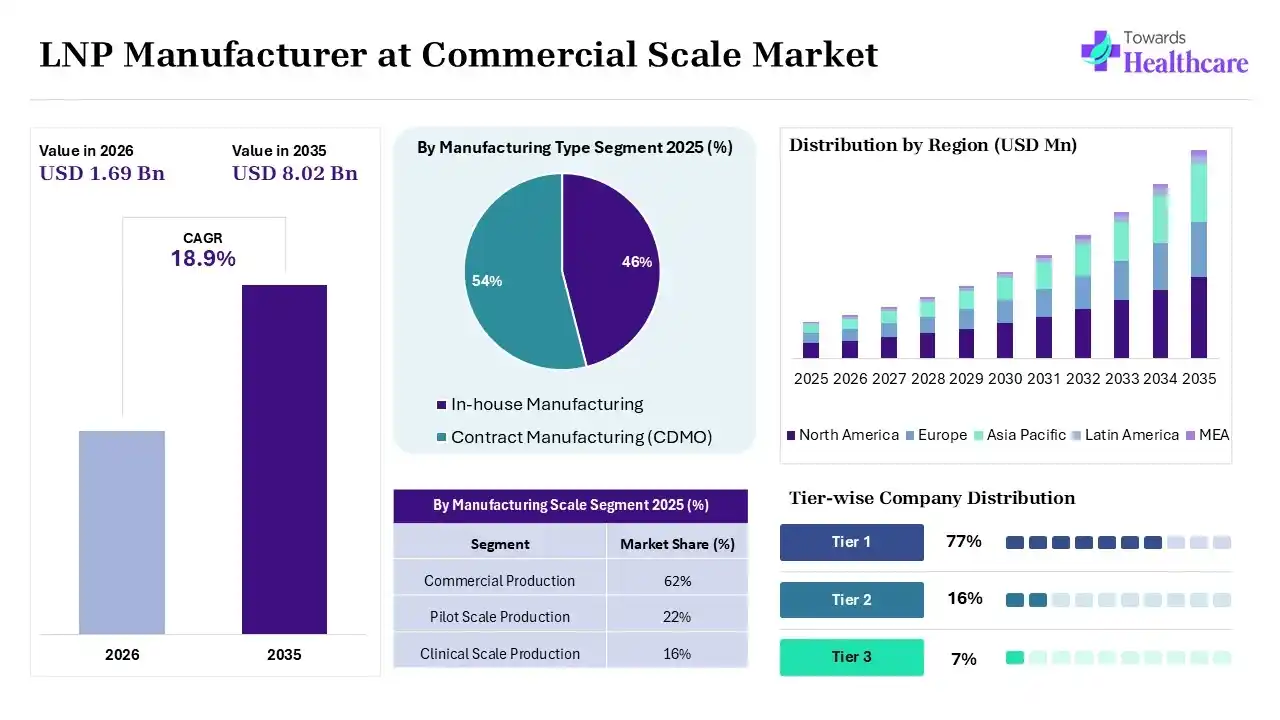
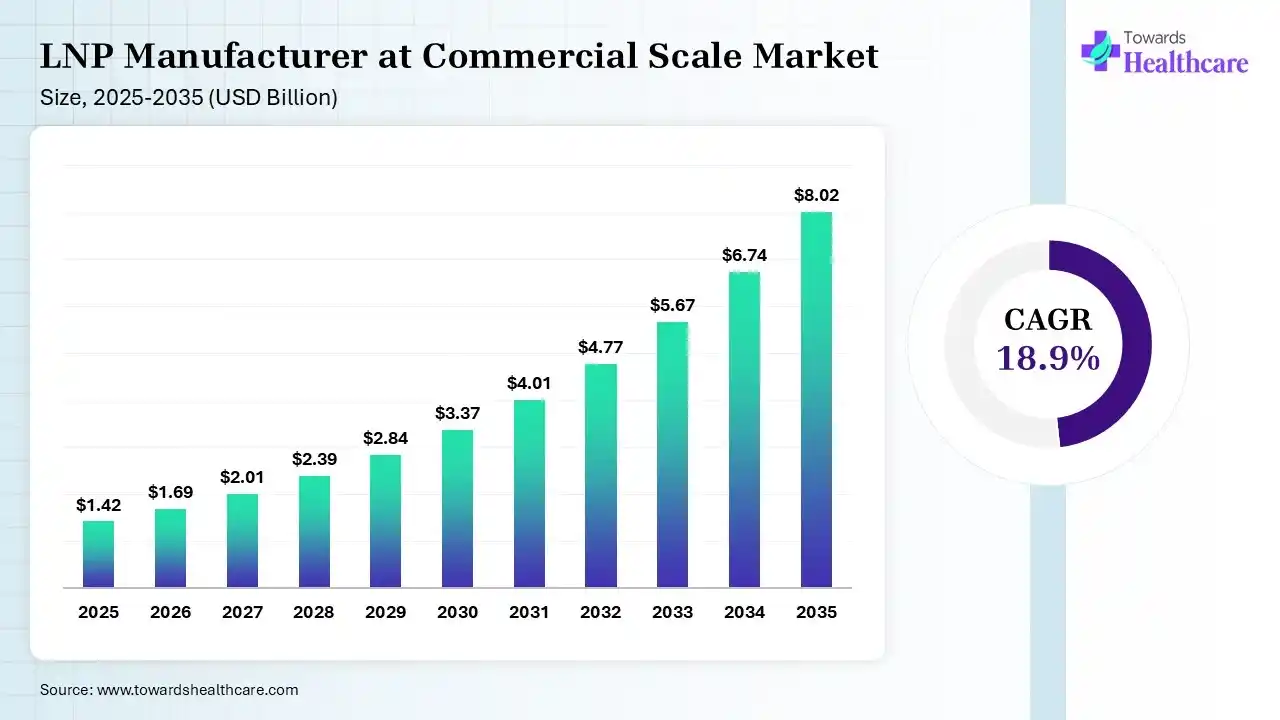
LNP manufacturer at commercial scale refers to the companies developing lipid nanoparticles in compliance with regulatory standards for commercial and clinical pharmaceutical product development. They help in the transition from laboratory scale to large-scale LNP production for the development of nucleic acid-based drugs.
LNPs were developed in small-scale batches due to their limited stability, which increased the focus on improving their stability and delivery properties. This led to a rise in the development of new technologies offering reproducibility, enhanced delivery efficiency, and scalable production. Later, the growth in their innovations increased their use in RNA therapeutics and gene therapies, which increased the demand for clinical production capabilities. Additionally, expansion in advanced technologies, investments, and vaccine production also fueled the commercial LNP manufacturing.
The surge in the demand for mRNA therapeutics, vaccines, gene therapies, and cancer treatment options is driving the market expansion. Depending on the survey conducted by Payal Rabde, the growing demand for mRNA vaccines, personalized medicine, GMP manufacturing, and advancements in microfluidic mixing technologies are also increasing their use.
Growing demand for scalable and GMP-compliant LNP manufacturing is increasing the demand for LNP manufacturers at commercial scale. They are also being preferred to reduce development risk and enhance manufacturing efficiency, where growing demand for RNA therapeutics is also increasing their use.
Expansion of Commercial mRNA Manufacturing Facilities
Investments in new manufacturing sites and global capacity expansion are leading to a rise in the number of mRNA manufacturing facilities. Additionally, growing mRNA vaccines are also increasing their use
Increasing Outsourcing to Specialized CDMOs
The lack of in-house LNP infrastructure is increasing outsourcing trends. Growing demand for scalable manufacturing, faster commercialization, and regulatory expertise are also increasing their use.
Growing Adoption of Continuous Manufacturing Technologies
To enhance production efficiency, companies are adopting continuous manufacturing technologies. They also help in reducing manufacturing cost and scale-up challenges.
Development of Next-Generation Proprietary Lipids
Growing innovations in ionizable lipids, targeted delivery systems, and customized formulations are driving the demand for LNP manufacturing at commercial scale. They are also being preferred to enhance their stability and delivery efficiency.
Integration of Digital Manufacturing and Process Analytics
A rise in the adoption of automation and AI-enabled quality monitoring is ensuring product quality. Additionally, PAT and digital manufacturing platforms are also improving manufacturing productivity.
Market Drivers
The major growth drivers in the market include expansion of RNA therapeutics and increasing GMP manufacturing demand. Rise in regulatory approvals and pandemic preparedness investments are also contributing to the market growth.
Market Restraints
High capital investment, manufacturing complexity, lipid raw material costs, and regulatory compliance are the key market restraints.
Market Opportunities
Expansion of personalized medicine and gene editing technologies are creating new opportunities. Additionally, emerging markets, decentralized manufacturing, and novel delivery systems are also expanding the market.
Market Challenges
Major market challenges include technical, operational, workforce, supply chain, and scalability challenges affecting market participants.
Current Demand Across Therapeutic Applications
The current demand across therapeutic applications is driven by increasing use of vaccines, oncology, rare diseases, gene editing, and RNA therapeutics.
Future Commercial Manufacturing Demand
The future commercial manufacturing demand encompasses growing manufacturing requirements based on clinical pipelines and commercialization trends.
Capacity Utilization Trends
Capacity utilization trends focus on current utilization levels across commercial manufacturing facilities and expected future capacity requirements.
Commercial Manufacturing Technologies
Commercial manufacturing technologies in LNP manufacturer at commercial scale encompass microfluidic mixing, T-junction mixing, impingement mixing, homogenization, and emerging technologies.
Manufacturing Automation
Manufacturing automation for LNP manufacturer at commercial scale includes the use of robotics, automation, PAT, continuous manufacturing, and digital quality control.
Emerging Manufacturing Innovations
Emerging manufacturing innovations in LNP manufacturer at commercial scale focus on improving encapsulation efficiency, scalability, reproducibility, and cost efficiency.
Commercial Lipid Supply Chain
Commercial lipid supply chain encompasses sourcing of ionizable lipids, phospholipids, PEG lipids, cholesterol, and specialty lipids.
Supply Risk Assessment
Supply risk assessment focuses on the dependence on specialized suppliers, geopolitical risks, and raw material availability.
Strategic Supplier Landscape
Strategic supplier landscape includes leading suppliers and vertical integration strategies.
Global GMP Manufacturing Requirements
Global GMP manufacturing requirements highlight the regulatory expectations required for commercial LNP manufacturing.
Regional Regulatory Framework
Regional regulatory framework covers regulatory environments across North America, Europe, Asia-Pacific, Latin America, and the Middle East & Africa
Quality Control and Validation Standards
Quality control and validation standards focus on analytical testing, release criteria, process validation, and compliance requirements.
Commercial Manufacturing Pricing Trends
Commercial manufacturing pricing trends include pricing variations based on batch size, technology platform, and manufacturing complexity.
Pricing by Manufacturing Type
Pricing by manufacturing type depends on in-house manufacturing versus CDMO pricing models.
Cost Drivers Influencing Manufacturing Prices
Labor, lipid costs, utilities, quality testing, and facility expenses are the cost drivers influencing manufacturing prices.
Manufacturing Cost Breakdown
Manufacturing cost breakdown focuses on CAPEX and OPEX components.
Fixed and Variable Cost Analysis
Fixed and variable cost analysis evaluates operating costs associated with commercial production.
Economies of Scale
Economies of scale are driven by cost reductions achieved through higher manufacturing volumes.
Complete Industry Value Chain
Complete industry value chain encompasses every stage from lipid suppliers to commercial product delivery.
Margin Analysis Across the Value Chain
Margin analysis across the value chain involves profitability across raw material suppliers, CDMOs, pharmaceutical manufacturers, and distributors.
Global Supply Network
Global supply network highlights manufacturing logistics and distribution pathways.
Supply Chain Risk Assessment
Supply chain risk assessment helps in the analysis of inventory management, transportation, and supplier dependency.
Supply Chain Optimization Strategies
Inventory planning, regional manufacturing, and sourcing diversification are some of the supply chain optimization strategies.
Complete Industry Ecosystem
Complete industry ecosystem covers relationships among pharmaceutical companies, biotechnology firms, CDMOs, lipid suppliers, equipment manufacturers, regulators, and research institutes.
Strategic Collaboration Network
Strategic collaboration network highlights new partnerships, licensing agreements, and technology collaborations.
Venture Capital and Private Equity Investments
Funding activity supporting manufacturing expansion drives venture capital and private equity investments.
Government Funding Programs
Rise in government funding programs promotes public investments supporting RNA manufacturing infrastructure.
Mergers, Acquisitions, and Strategic Partnerships
Mergers, acquisitions, and strategic partnerships are rapidly expanding due to recent transactions shaping industry competition.
Patent Filing Trends
A rise in intellectual property developments across lipid chemistry and manufacturing drives patent filing trends.
Emerging Technology Innovations
Emerging technology innovations focus on the development of next-generation lipid formulations and manufacturing platforms.
Innovation Pipeline Assessment
Innovation pipeline assessment includes technologies approaching commercialization.
End-user Purchasing Behavior
End-user purchasing behavior depends on procurement priorities among pharmaceutical companies and biotechnology firms.
Vendor Selection Criteria
Vendor selection criteria encompass factors driving purchasing decisions based on quality, regulatory compliance, scalability, pricing, and technical expertise.
Customer Satisfaction Drivers
Performance metrics influencing long-term contracts are the major customer satisfaction drivers.
Competitive Positioning Matrix
Strategic Benchmarking
| Table | Scope |
| Market Size in 2026 | USD 1.69 Billion |
| Projected Market Size in 2035 | USD 8.02 Billion |
| CAGR (2026 - 2035) | 18.9% |
| Historical Data | 2020 - 2023 |
| Base Year | 2025 |
| Forecast Period | 2026 - 2035 |
| Measurable Values | USD Millions/Units/Volume |
| Market Segmentation | By Manufacturing Scale, By Manufacturing Type, By Lipid Type, By Application, By End User, By Manufacturing Technology, By Purity Grade, By Product Format, By Region |
| Top Key Players | Merck KGaA, Catalent, Inc., Lonza Group, CordenPharma International, Evonik Industries |
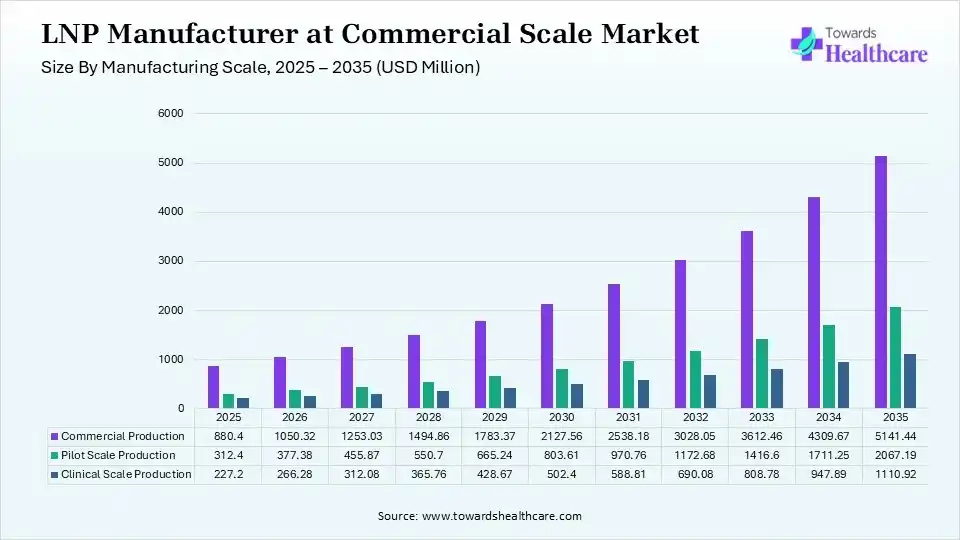
| Segment | Share 2025 (%) |
| Commercial Production | 62% |
| Pilot Scale Production | 22% |
| Clinical Scale Production | 16% |
The Commercial Production Segment Dominated the Market With 62% in 2025
The commercial production segment led the LNP manufacturer at commercial scale market with 62% share in 2025, due to growth in commercialization of mRNA products, which increased the demand for high-volume GMP manufacturing. Companies continued expanding production capacity through automated facilities. Based on the details gathered by Payal Rabde, long-term supply agreements also supported sustained investment.
The pilot scale production segment held the second-largest share of 22% of the market in 2025 and is expected to witness the fastest growth during the forecast period, driven by developers rapidly transitioning candidates from research into late-stage trials. Flexible pilot plants accelerate process optimization. Increasing biotech funding also supports their expansion.
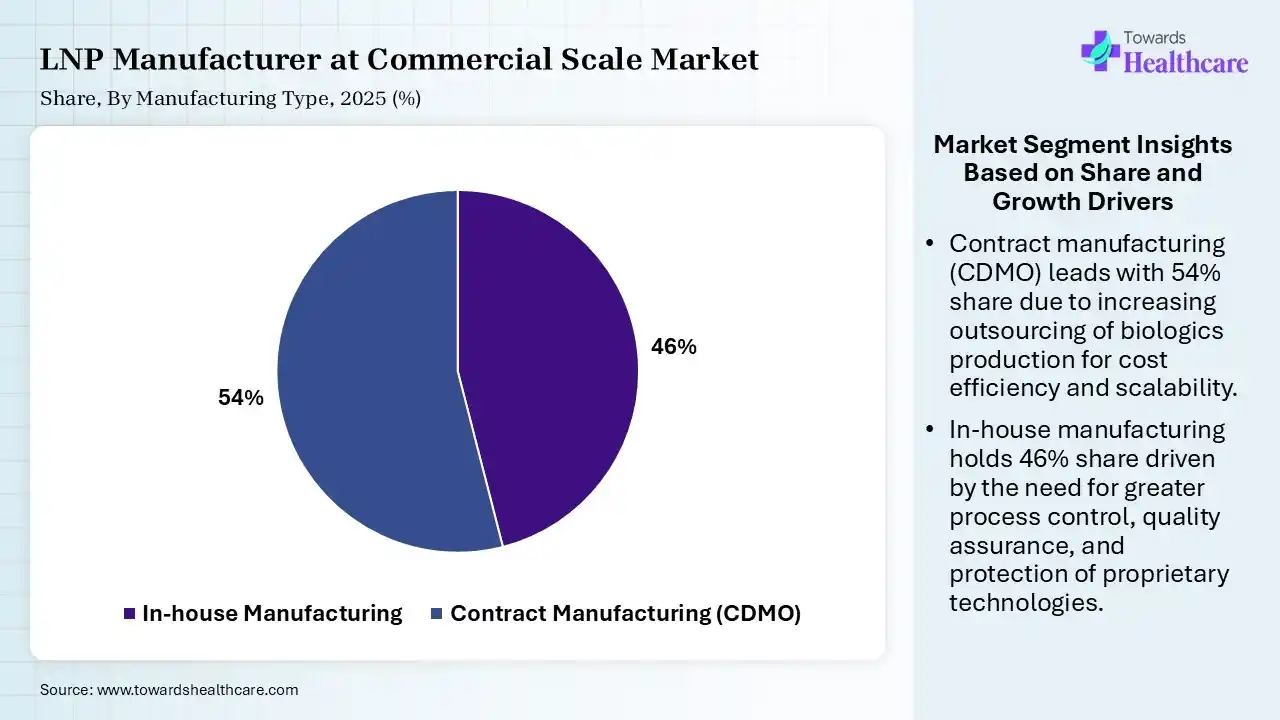
| Segment | Share 2025 (%) |
| In-house Manufacturing | 46% |
| Contract Manufacturing (CDMO) | 54% |
The Contract Manufacturing (CDMO) Segment Dominated the Market With 54% in 2025
The contract manufacturing (CDMO) segment accounted for the highest revenue share of 54% of the LNP manufacturer at commercial scale market in 2025 and is expected to show the highest growth with a CAGR of % during the forecast period, driven by growth in small biotech firms increasingly outsourcing commercial production. CDMOs provided scalable GMP infrastructure and technical expertise, which increased their use. Capacity expansion also accelerated market growth.
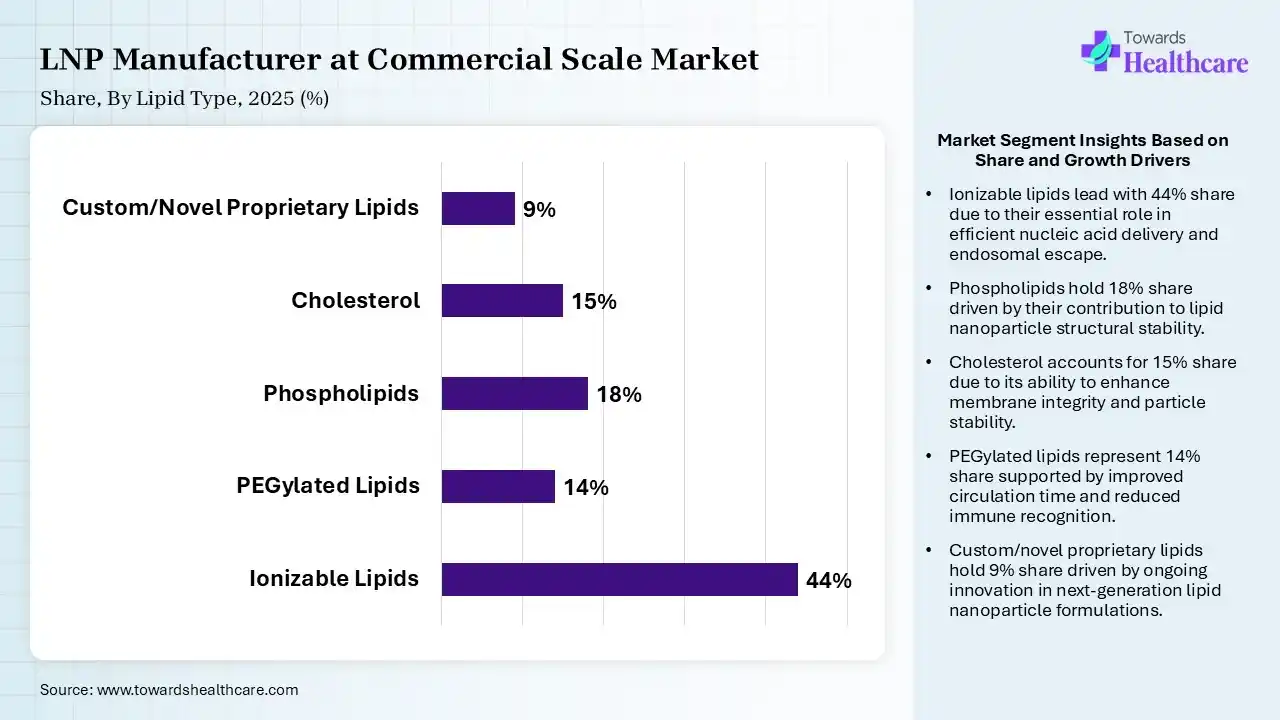
| Segment | Share 2025 (%) |
| Ionizable Lipids | 44% |
| PEGylated Lipids | 14% |
| Phospholipids | 18% |
| Cholesterol | 15% |
| Custom/Novel Proprietary Lipids | 9% |
The Ionizable Lipids Segment Dominated the Market With 44% in 2025
The ionizable lipids segment held a major revenue share of 44% of the LNP manufacturer at commercial scale market in 2025, due to high transfection efficiency, which made ionizable lipids essential for nucleic acid delivery. Continuous innovation improved safety profiles. Commercial vaccines also sustained their demand.
The custom/novel proprietary lipids segment held the second-largest share of 9% of the market in 2025 and is expected to expand rapidly during the forecast period, due to rising in companies developing proprietary lipids for targeted delivery. Growing demand for personalized medicine also drives innovations. Licensing opportunities also encourage investments.
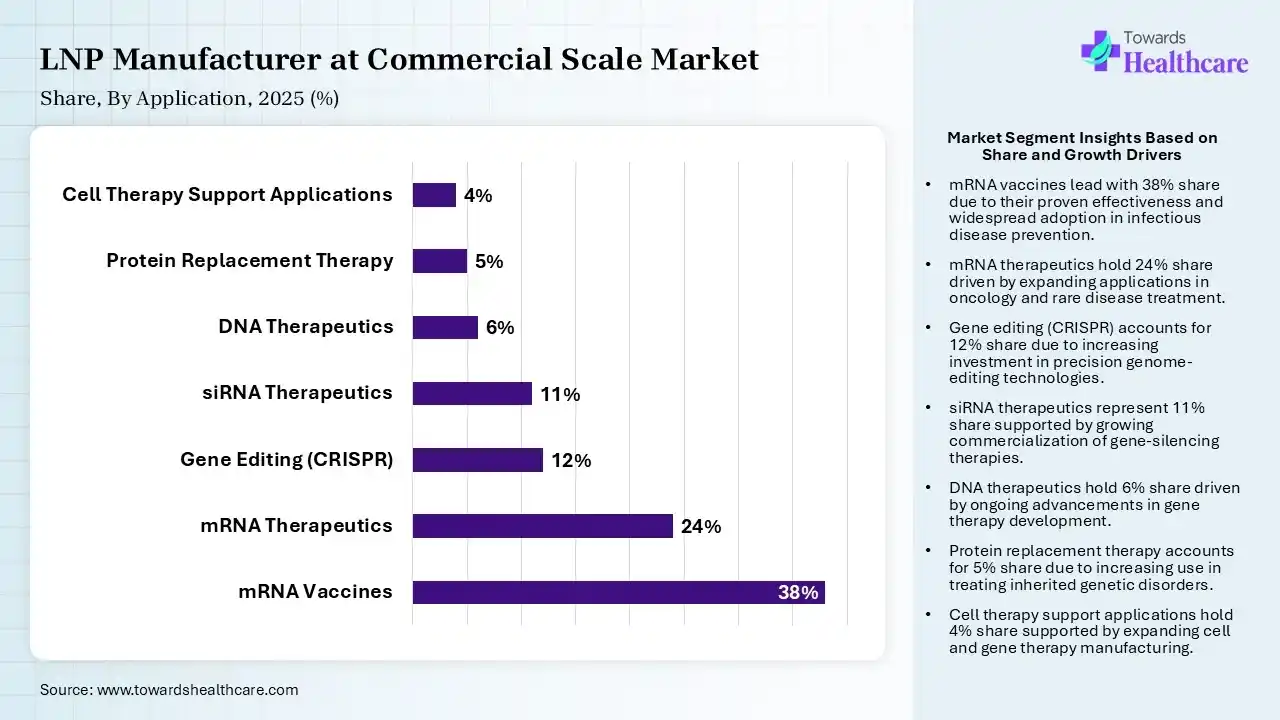
| Segment | Share 2025 (%) |
| mRNA Vaccines | 38% |
| mRNA Therapeutics | 24% |
| Gene Editing (CRISPR) | 12% |
| siRNA Therapeutics | 11% |
| DNA Therapeutics | 6% |
| Protein Replacement Therapy | 5% |
| Cell Therapy Support Applications | 4% |
The mRNA Vaccines Segment Dominated the Market With 38% in 2025
The mRNA vaccines segment held the largest revenue share of 38% of the LNP manufacturer at commercial scale market in 2025, driven by commercial vaccine production, which continued generating high manufacturing demand. Governments maintained pandemic preparedness investments. Booster development also supported long-term utilization.
The mRNA therapeutics segment held the second-largest share of 24% of the market in 2025 and is expected to grow with the fastest CAGR during the forecast period, due to oncology and rare disease pipelines expanding rapidly. According to the report by Payal Rabde, clinical successes are encouraging investment in commercial manufacturing. Large pharmaceutical partnerships also accelerate development, where 37 RNA therapies have been approved till the fourth quarter of 2025, which is driving new opportunities.
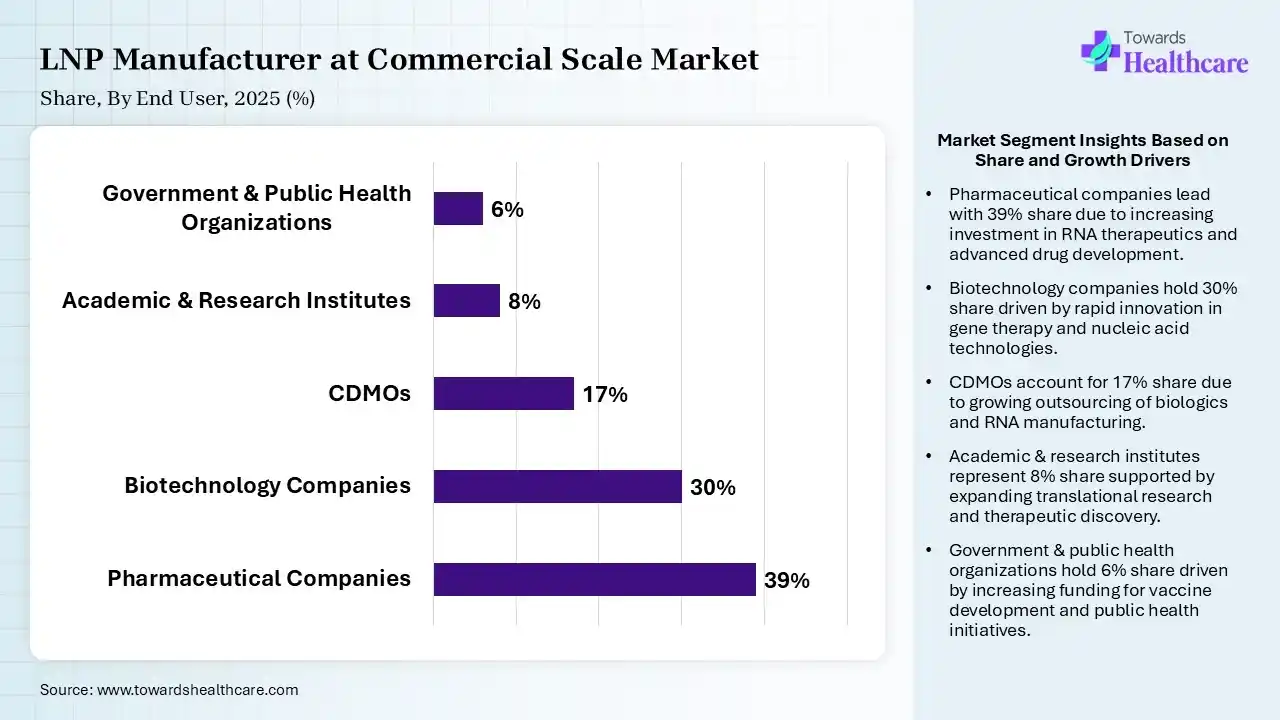
| Segment | Share 2025 (%) |
| Pharmaceutical Companies | 39% |
| Biotechnology Companies | 30% |
| CDMOs | 17% |
| Academic & Research Institutes | 8% |
| Government & Public Health Organizations | 6% |
The Pharmaceutical Companies Segment Dominated the Market With 39% in 2025
The pharmaceutical companies segment contributed the biggest revenue share of 39% of the LNP manufacturer at commercial scale market in 2025, driven by growth in global pharmaceutical firms, which expanded commercial RNA medicine portfolios. Internal manufacturing investments also increased capacity. Long-term product pipelines also sustained demand.
The biotechnology companies segment held the second-largest share of 30% of the market in 2025 and is expected to gain the highest share during the forecast period, due to venture funding accelerating therapeutic innovation. Emerging companies rely on scalable manufacturing, increasing their use. Clinical advancement also increases production requirements.
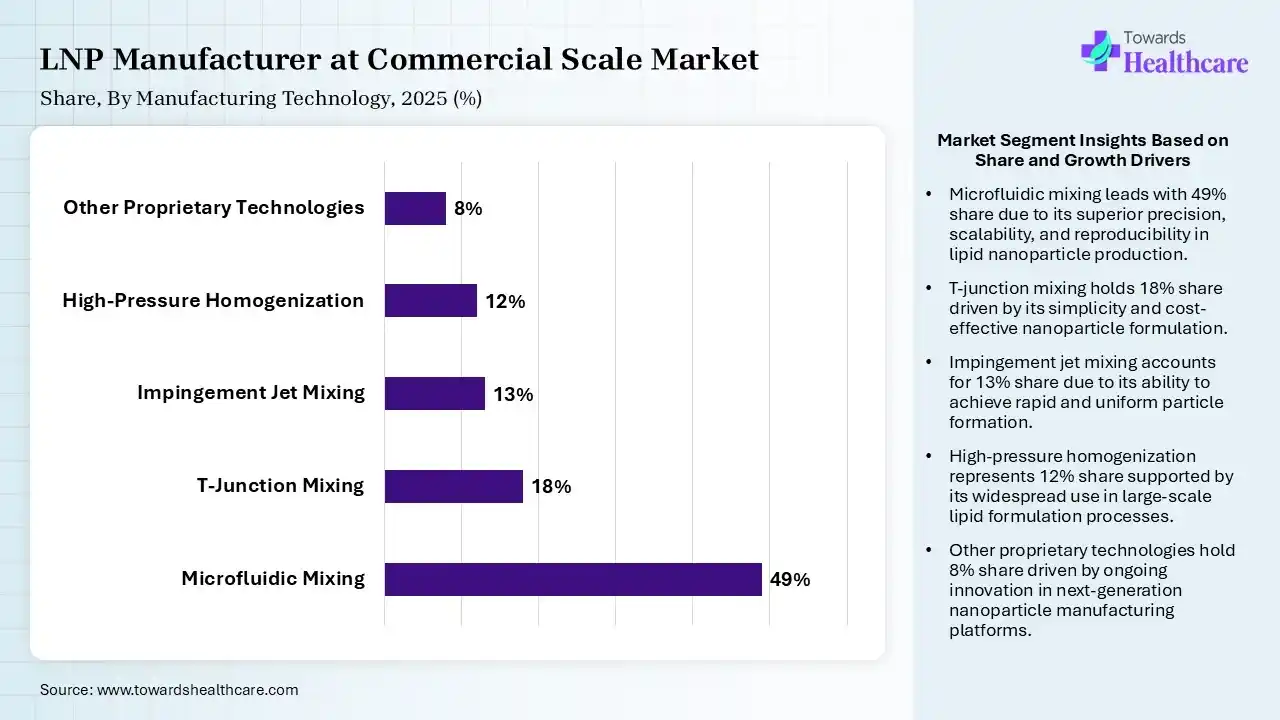
| Segment | Share 2025 (%) |
| Microfluidic Mixing | 49% |
| T-Junction Mixing | 18% |
| Impingement Jet Mixing | 13% |
| High-Pressure Homogenization | 12% |
| Other Proprietary Technologies | 8% |
The Microfluidic Mixing Segment Dominated the Market With 49% in 2025
The microfluidic mixing segment accounted for the highest revenue share of 49% of the LNP manufacturer at commercial scale market in 2025 and is expected to show the highest growth during the forecast period, due to high reproducibility, which enabled commercial GMP production. Continuous manufacturing also improved scalability. Automation enhanced process consistency.
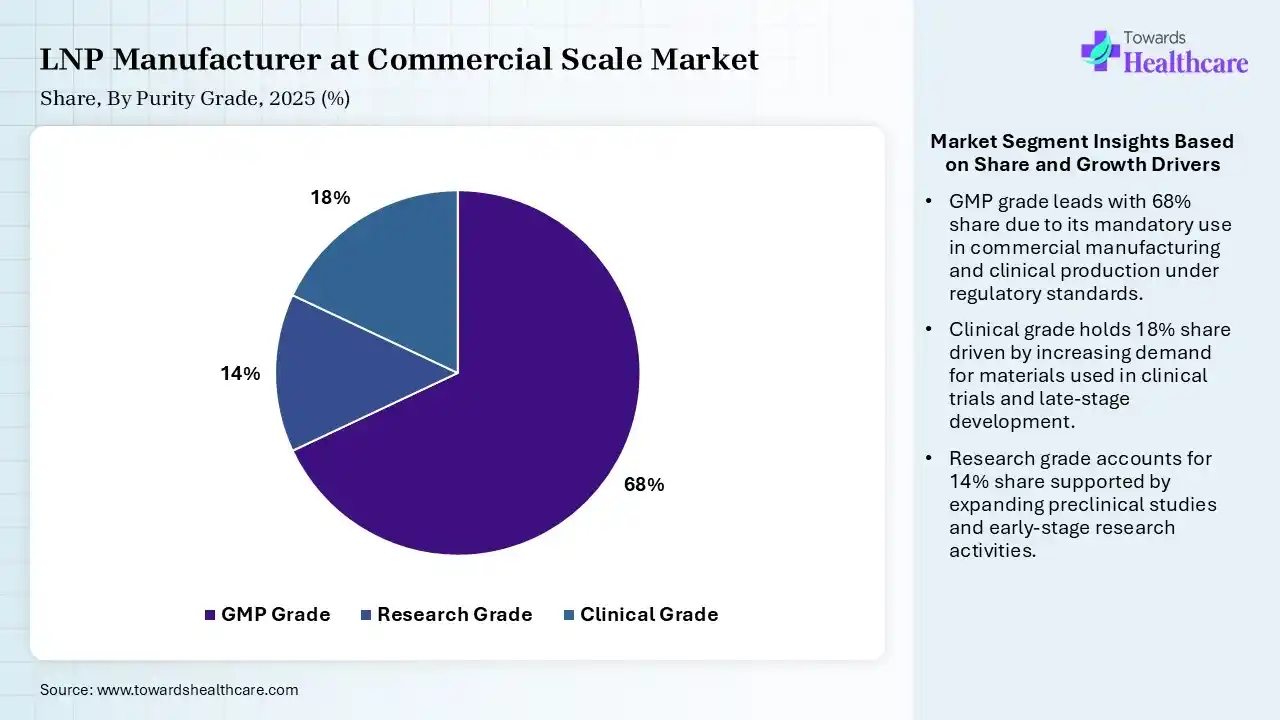
| Segment | Share 2025 (%) |
| GMP Grade | 68% |
| Research Grade | 14% |
| Clinical Grade | 18% |
The GMP Grade Segment Dominated the Market With 68% in 2025
The GMP grade segment held a major revenue share of 68% of the LNP manufacturer at commercial scale market in 2025, due to commercial manufacturing, which required stringent regulatory compliance. Approved therapies also increased GMP demand. Facility certifications also supported their expansion.
The clinical grade segment held the second-largest share of 18% of the market in 2025 and is expected to expand rapidly during the forecast period, driven by clinical pipeline growth, which is increasing intermediate manufacturing needs. Transition from research to commercialization accelerates. Regulatory compliance also remains essential.
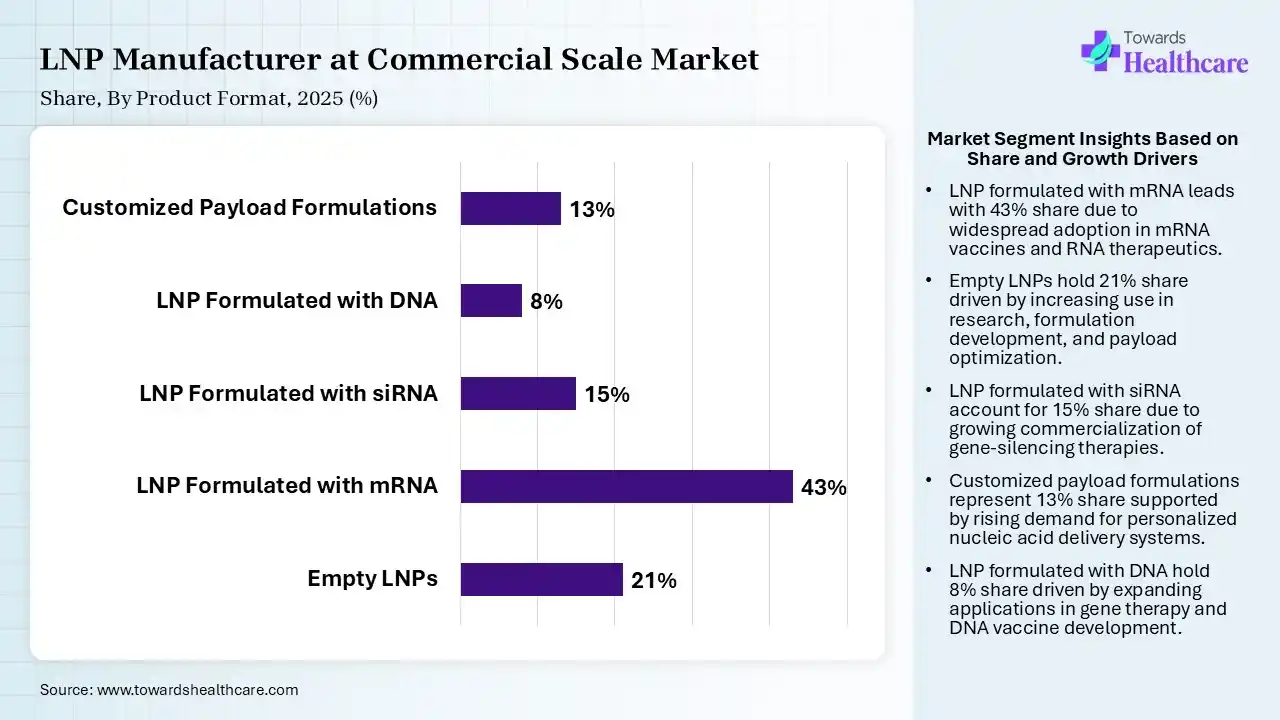
| Segment | Share 2025 (%) |
| Empty LNPs | 21% |
| LNP Formulated with mRNA | 43% |
| LNP Formulated with siRNA | 15% |
| LNP Formulated with DNA | 8% |
| Customized Payload Formulations | 13% |
The LNP Formulated with mRNA Segment Dominated the Market With 43% in 2025
The LNP formulated with mRNA segment contributed the biggest revenue share of 43% of the LNP manufacturer at commercial scale market in 2025, driven by growth in commercial vaccines and therapeutics, which increased sustained manufacturing demand. Product approvals also increased production volume. Pharmaceutical investment also supported expansion.
The customized payload formulations segment held the second-largest share of 13% of the market in 2025 and is expected to gain the highest share during the forecast period, due to precision medicine requiring customized formulations. Contract manufacturers provide formulation flexibility. Advanced therapies also accelerate innovation.
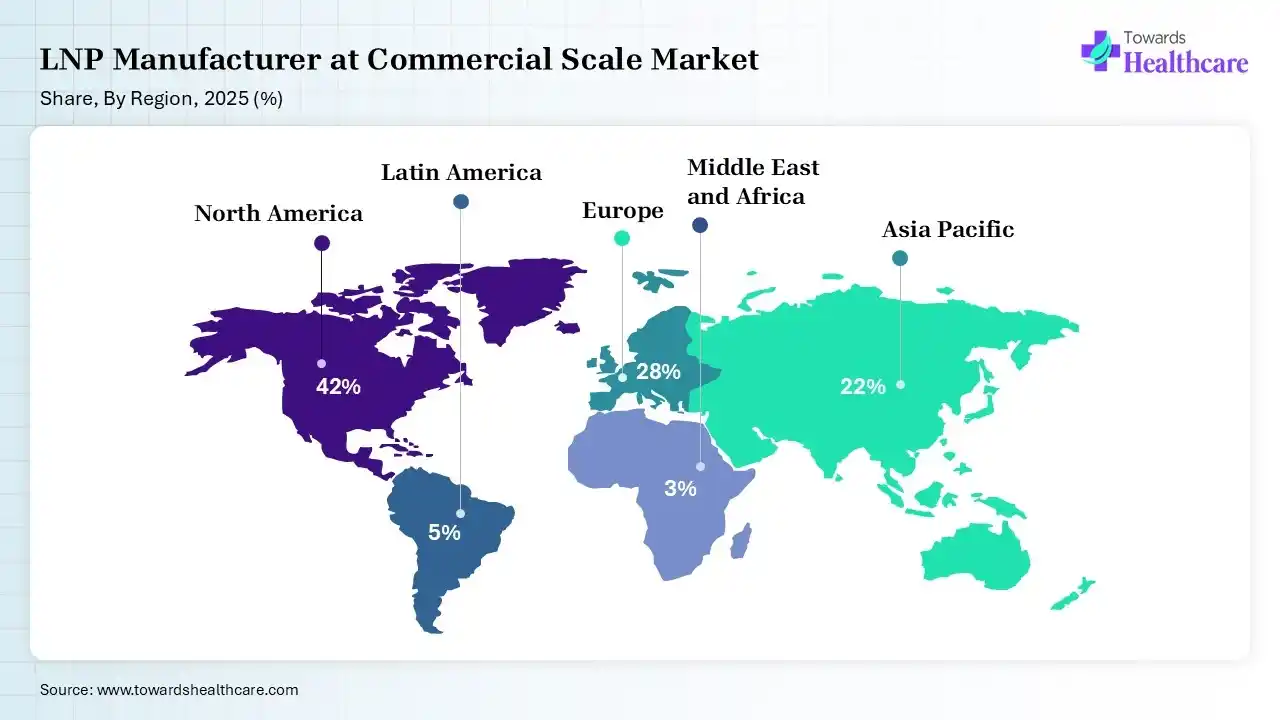
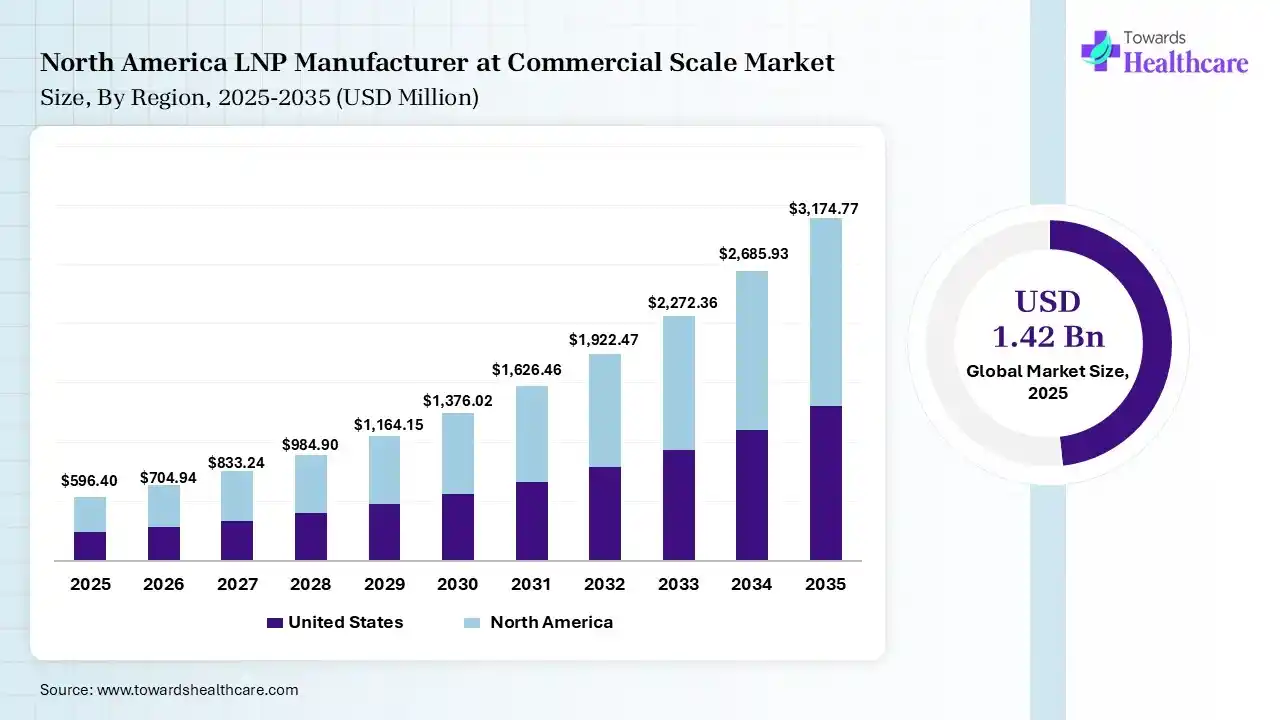
North America dominated the LNP manufacturer at commercial scale market with 42% in 2025, due to the presence of strong commercial manufacturing infrastructure, which supported leadership. Significant pharmaceutical investment also increased capacity expansion, where growth in government funding accelerated RNA innovation. Based on the survey conducted by Payal Rabde, the presence of robust CDMO ecosystems and advanced technologies also increased their advancements. The growth in mRNA vaccines and gene therapies also increased their use, where expansion of clinical trials also contributed to the market growth.
US Market Growth
U.S. held a 34% share of the LNP manufacturer at commercial scale market in 2025, driven by the largest concentration of RNA therapeutic developers. Extensive GMP infrastructure also supported commercialization, where strong investment also contributed arise in the LNP manufacturing at commercial scale. Government support and growth in clinical activity also encouraged their use. The technological advancements and presence of advanced industries like Catalent Inc. also contributed to their growth by achieving various collaborations.
Canada Market Growth
Canada held a 5% share in the market in 2025 and is expected to grow with the highest CAGR of 19.20% during the studied years, due to expanding biomanufacturing initiatives attracting investment. Government support also strengthens domestic production, where clinical programs also increase the demand for LNP manufacturing services. Growing R&D activities and collaborations among the institutes and investors are also driving their commercial-scale production, where regulatory support is also encouraging their use.
Europe held a 28% share of the LNP manufacturer at commercial scale market and is expected to grow significantly during the forecast period, due to a strong biotechnology ecosystem that supports commercial manufacturing. Regulatory harmonization encourages investment, driving the use of LNP commercial-scale manufacturing services. CDMO expansion also strengthens regional capacity. Growing interest in nanomedicine and gene therapies is also increasing their use, while expanding GMP manufacturing facilities are also promoting market growth.
Germany Market Growth
Germany held an 8% share in the LNP manufacturer at commercial scale market in 2025, driven by the presence of a leading pharmaceutical manufacturing hub. Continuous investment expanded GMP facilities, where growth in innovations supported the use of LNP commercial-scale manufacturing services. A rise in collaboration and government support also encouraged their use. At the same time, increased clinical activity also fuelled their demand. A rise in digital manufacturing technologies also attracted clients.
UK Market Growth
UK held a 6% share in the market in 2025 and is expected to witness the fastest growth with a CAGR of 19.50% over the forecast period, due to the growing RNA innovation ecosystem which accelerates commercialization. Government funding also supports LNP manufacturing, where growing biotech industries are also driving their demand. Expanding GMP manufacturing facilities are also attracting clients, where a favourable regulatory environment is also encouraging their use. Increasing demand for cancer treatment options is also promoting their use.
Asia Pacific held a 22% share of the LNP manufacturer at commercial scale market in 2025 and is expected to grow at the fastest CAGR during the forecast period, due to rapid biotechnology expansion, which drives manufacturing investment. Governments prioritize domestic RNA capabilities, increasing the demand for LNP commercial-scale manufacturing facilities. Commercial capacity grows significantly, driving new collaborations. Affordable manufacturing capabilities and large patient populations also increased the demand for nucleic advanced therapeutics, which promoted market growth.
China Market Growth
China held an 8% share of the LNP manufacturer at commercial scale market in 2025 and is expected to expand rapidly in the coming years, driven by major investment in RNA manufacturing infrastructure. Domestic pharmaceutical companies expanded capacity, which increased the number of collaborations. Government support also accelerated commercialization, which increased the demand for LNP commercial-scale manufacturing services. Expansion of CDMO ecosystems and adoption of advanced technologies also encouraged their use.
India Market Growth
India held a 3% share in the market in 2025, due to CDMO expansion strengthening commercial manufacturing. Cost competitiveness attracts outsourcing, where growing government incentive support also leads to dependence on LNP commercial manufacturing services. Increasing demand for RNA therapeutics and gene therapies is also increasing their use, where expanding biopharmaceutical hubs are also attracting companies. Affordable manufacturing services are also leading to a rise in new collaborations, where growing clinical actives are also driving their demand.
Latin America held a 5% share in the LNP manufacturer at commercial scale market in 2025 and is expected to show lucrative growth during the forecast period, due to regional biotechnology investments improving manufacturing capabilities. Healthcare modernization supports the rise in the demand for LNP-based products, increasing the commercial-scale manufacturing process. Local production initiatives expand, promoting their use. Growing R&D activity and clinical trials are also driving their demand. Growing infectious diseases are also increasing their use, fueling market growth.
Brazil Market Growth
Brazil held a 3% share in the LNP manufacturer at commercial scale market in 2025 and is expected to gain the highest market share during the forecast period, driven by the largest pharmaceutical market in the region. Government investment also supported a rise in LNP manufacturing. The biotechnology ecosystem continued expanding, which led to new collaborations to leverage LNP manufacturing services. Growth in the demand for biologics and RNA therapeutics also increased their use.
The rest of Latin America held a 1% share in the market in 2025, due to regional healthcare investments strengthening production. Local pharmaceutical development also supports growth, where continuously improving infrastructure is also driving the expansion of LNP commercial-scale manufacturing services. A rise in collaborations among industries and institutes has also increased their use, where growing interest in innovative drug delivery technologies is also increasing their adoption. Growing demand for nanomedicine and GMP-compliant production is also driving their demand.
MEA held a 3% share in the LNP manufacturer at commercial scale market in 2025 and is expected to show notable growth during the forecast period, due to increasing government investments in advanced biomanufacturing. Regional healthcare diversification also supports market growth, where strategic partnerships expand LNP manufacturing capabilities. A rise in demand for mRNA vaccines and gene therapies is also increasing their use. Growing collaboration, clinical activities, and technological advancement are also driving the market growth.
Saudi Arabia Market Growth
Saudi Arabia held a 1% share in the LNP manufacturer at commercial scale market in 2025 and is expected to show the fastest growth over the forecast period, driven by national biotechnology initiatives, which strengthened manufacturing. Healthcare diversification also attracted investment, where rapid expansion of infrastructure also increased the development of LNP manufacturing capabilities. Growth in R&D centres and government support also increased their use, where high healthcare expenditure promoted the adoption of advanced manufacturing technologies.
UAE Market Growth
United Arab Emirates (UAE) held a 1% share in the LNP manufacturer at commercial scale market in 2025, due to increasing innovation-focused healthcare policies encouraging commercial production. International partnerships increase technology transfer, promoting their use. Manufacturing capabilities grow, attracting clients and investments from various sources. According to the Payal Rabde analysis, growing government support is also driving the adoption of digital manufacturing technologies, creating new opportunities.
| Companies | Headquarters | Solutions |
| Merck KGaA | Darmstadt, Germany | Impingement Jets Mixing systems |
| Catalent, Inc. | Smereset, U.S. | Turbulent jet mixing and impingement jet mixing |
| Lonza Group | Basel, Switzerland | Continuous flow jet mixing and tee junction assemblies |
| CordenPharma International | Plankstadt, Germany | NxGen microfluidic technology and impingement jet mixers |
| Evonik Industries | Essen, Germany | Jet impingement and turbulent mixing technologies |
In February 2026, after the announcement of a definitive agreement by Eli Lilly to acquire Orna Therapeutics, Joe Bolen, PhD, chief executive officer of Orna Therapeutics, highlighted that “At Orna, we believe our circular RNA technology paired with our best-in-class LNP delivery platform have the potential to unlock in vivo CAR-T therapies for patients across a wide range of B cell-driven autoimmune diseases.” “We are excited to join forces with Lilly, an industry leader in the development of patient-centric therapeutics to realize the full potential of these technologies.”
High-Growth Regional Opportunities
Regional opportunities such as expansion of mRNA pipeline, cost-effective manufacturing, biotechnology innovations, and contract partnerships will attract future manufacturing investments.
Untapped Commercial Opportunities
Underserved therapeutic areas, production of RNA therapeutics, advancements in proprietary lipid formulations, demand for targeted LNP systems, CDMO expansion, and manufacturing capabilities will drive commercial opportunities.
Bargaining Power of Suppliers
Bargaining power of suppliers focuses on supplier concentration and dependence on specialized lipid manufacturers.
Bargaining Power of Buyers
Bargaining power of buyers highlights the negotiating power of pharmaceutical companies and CDMOs.
Threat of New Entrants
Threat of new entrants is driven by capital investment, technology, and regulatory requirements.
Threat of Substitutes
Threat of substitutes arises due to increasing competing delivery technologies, including viral vectors and polymer nanoparticles.
Competitive Rivalry
Rising capacity expansion, innovation, pricing, and partnerships are responsible for competitive rivalry.
Base Case Scenario
The base case scenario is driven by growing demand for RNA therapeutics, gene therapies, outsourcing trends, and expanding manufacturing capabilities.
Optimistic Scenario
Expanding RNA applications, growing investments, and technological advancements are some of the optimistic scenarios.
Pessimistic Scenario
Pessimistic scenario includes regulatory delays, supply shortages, and funding reductions.
Market Sensitivity Analysis
Market sensitivity analysis is influenced by varying pricing, approvals, and production capacity.
Sustainable Manufacturing Practices
Energy-efficient manufacturing and waste reduction initiatives drive sustainable manufacturing practices.
ESG Strategies of Major Companies
ESG strategies of major companies focus on environmental, social, and governance initiatives across leading manufacturers.
In-house Manufacturing Models
In-house manufacturing models focus on process consistency, faster technology transfer, process optimization, quality control, and rapid commercialization.
CDMO Business Models
CDMO business models support specialized LNP formulation, offer manufacturing expertise, manage regulatory compliance, and accelerate commercialization timelines.
Licensing and Partnership Models
Licensing and partnership models drive technology licensing and collaborative manufacturing approaches.
Market Outlook Through 2035
The market is expected to show significant growth due to growing technology evolution, manufacturing capacity, and therapeutic commercialization.
Future Commercial Opportunities
The future commercial opportunities will be based on emerging investment areas like nucleic acid therapeutics, targeted LNP delivery technologies, personalized medicines, and strategic growth opportunities such as growing outsourcing trends and increasing commercialization of lipid formulations.
Strategic Recommendations for Stakeholders
The strategic recommendations for manufacturers, investors, suppliers, pharmaceutical companies, and policymakers highlight the rapid expansion of commercial-scale GMP manufacturing facilities, end-to-end CDMO services, adoption of automation technologies, and digital manufacturing solutions.
Competitive Market Structure
Merck KGaA, Lonza Group, and Evonik Industries are the market leaders based on competitive intensity, market concentration, and strategic positioning.
Market Share Analysis of Leading Companies
Merck KGaA, Lonza Group, and Evonik Industries were the leading companies by market share analysis.
Recent Strategic Developments
Merck KGaA, Evonik Industries, and CordenPharma International dominated the market depending on partnerships, facility expansions, acquisitions, product launches, and manufacturing investments.
| Company Overview | Supports innovative complex modalities development |
| Financial Performance | 2025 Year-End Highlights: €960 million in net sales |
| Manufacturing Capacity | Peptides and injectables |
| Product & Service Portfolio | APIs, drug products, and lipid excipients |
| Geographical Presence | Switzerland, U.S., and France |
| Strategic Initiatives | Agreement to acquire AmbioPharm |
| Recent Developments | Expansion of Peptide Development Lab in New LEED® Gold-Certified Facility at Flatiron Park in Boulder |
| SWOT Analysis |
Strengths:
Weakness:
Opportunities:
Threats:
|
| Company Overview | Offers seamless development and manufacturing solutions for biopharmaceutical products |
| Financial Performance | First quarter of 2026: revenue of KRW 1,257 billion |
| Manufacturing Capacity | cGMP manufacturing, drug substance, drug products |
| Product & Service Portfolio | Advanced modalities, research services, development services, manufacturing services, quality services |
| Geographical Presence | South Korea, U.S., and Japan |
| Strategic Initiatives | acquisition of GSK’s manufacturing facility in Rockville |
| Recent Developments | Awarded the Sustainability Leadership Award |
| SWOT Analysis |
Strengths:
Weakness:
Opportunities:
Threats:
|
| Company Overview | Life sciences and diagnostics innovator |
| Financial Performance | First quarter 2026: Net earnings $1.0 billion |
| Manufacturing Capacity | Microfluidics, microchannels and integrated systems |
| Product & Service Portfolio | NanoAssembler platforms, GeneVoy delivery platforms, AKTA Purification systems |
| Geographical Presence | U.S., Canada, UK, Sweden, and China |
| Strategic Initiatives | Acquisition of Masimo Corporation |
| Recent Developments | $1 million commitment to support urgent, on-the-ground response to the Ebola Bundibugyo outbreak in the Democratic Republic of Congo (DRC) and Uganda |
| SWOT Analysis |
Strengths:
Weakness:
Opportunities:
Threats:
|
Major Scientific Conferences
Major scientific conferences held in 2026 are expected to be CordenPharmacLNP Summit 2026, World ADC San Diego, and BOS Basel 2026.
The Major Scientific Conferences
CordenPharmacLNP Summit 2026, CPHI, BioProcess International (BPI) Boston, and Danaher Corporation Quarterly Earnings conference call are some of the major manufacturing and industry events.
Based on Payal Rabde's analysis, the LNP manufacturer at commercial scale market is expected to show significant growth during the forecast period, which will be driven by a wide range of factors. The advancements in manufacturing technologies, focus on GMP-compliant LNP manufacturing, innovations in microfluidic mixing technologies, and reduced development timelines are expected to drive the demand for LNP manufacturers at commercial scale. A rise in the demand for mRNA vaccines, RNA therapeutics, next-generation proprietary lipid mRNA vaccines, and personalized medicine is also promoting their use. Segments such as contract manufacturing (CDMO), mRNA therapeutics, and customized payload formulations are estimated to show rapid growth, which will drive investment opportunities. Similarly, Merck KGaA, CordenPharma International, Lonza Group, and Catalent, Inc. are anticipated to show rapid growth in the market, attracting new investments.
By Manufacturing Scale
By Manufacturing Type
By Lipid Type
By Application
By End User
By Manufacturing Technology
By Purity Grade
By Product Format
By Region













Principal Consultant
Payal Rabde is a Healthcare Market Research Analyst at Towards Healthcare Research & Consulting with 4+ years of experience in pharmaceuticals, biotechnology, medical devices, and life sciences.
Learn more about Payal Rabde

Reviewed By
Aditi Shivarkar is a seasoned professional with over 14 years of experience in healthcare market research. As a content reviewer, Aditi ensures the quality and accuracy of all market insights and data presented by the research team.
Learn more about Aditi Shivarkar









