


The global mental health software market size was estimated at USD 6.06 billion in 2025 and is predicted to increase from USD 6.77 billion in 2026 to approximately USD 18.38 billion by 2035, expanding at a CAGR of 11.74%% from 2026 to 2035.
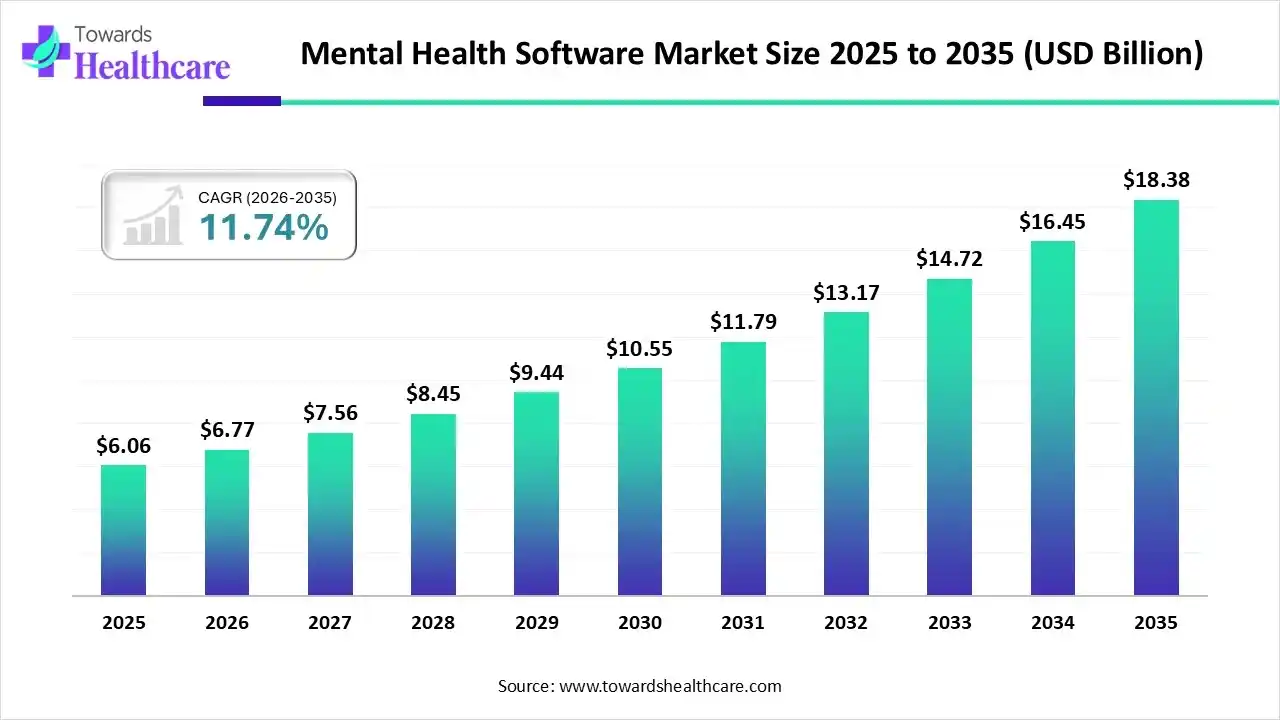
The mental health software market is experiencing robust growth driven by rising mental health awareness, increasing prevalence of anxiety and depression, and expanding adoption of digital healthcare solutions. North America dominated the market due to advanced healthcare IT infrastructure, strong reimbursement frameworks, high smartphone penetration, and widespread use of telehealth and AI-enabled mental health platforms.
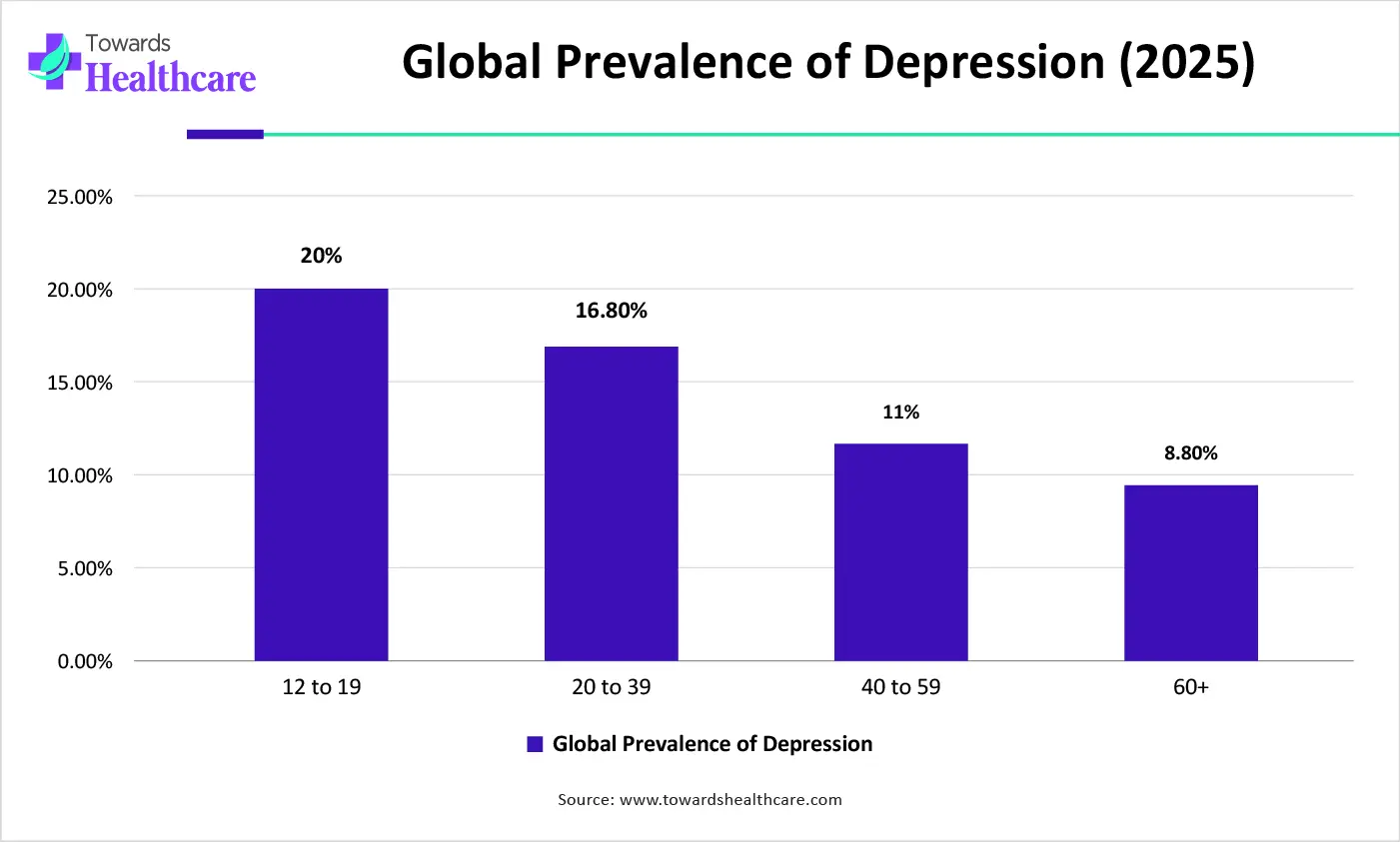
The mental health software market is driven by rising awareness of mental well-being, increasing prevalence of stress, anxiety, and depression, and growing acceptance of digital healthcare solutions. Expanded telehealth adoption, supportive government initiatives, employer wellness programs, and advances in AI and mobile technologies are accelerating demand across clinical and non-clinical settings. Mental health software refers to digital platforms and applications designed to support the assessment, treatment, monitoring, and management of mental health conditions. These solutions include teletherapy platforms, mobile mental health apps, clinical decision support tools, patient engagement systems, and analytics-based software used by healthcare providers, employers, and individuals to improve mental wellness outcomes.
AI integration can transform the mental health software market by enhancing diagnostic accuracy through real-time analysis of speech, text, and behavioral patterns, enabling earlier detection of issues. It can personalize care with adaptive treatment plans and tailored therapeutic content, improving user engagement and outcomes. AI-powered chatbots and virtual assistants offer 24/7 support, reducing clinician burden and expanding access to care. Predictive analytics help identify risk trends, enabling proactive intervention. Additionally, natural language processing streamlines documentation and administrative tasks, freeing clinicians to focus on patient care. Overall, AI fosters scalability, efficiency, and more responsive mental health solutions for diverse users.
Teletherapy and Virtual Care Expansion
Remote therapy sessions and virtual care tools continue to grow as users and providers prefer flexible access. This trend reduces barriers like geographic limitations and stigma, making consistent support more accessible and integrating with wearable and mobile platforms.
Data Analytics for Predictive Insights
Advanced analytics help identify patterns in mental health data, enabling early risk detection and preventive care. Providers can forecast potential crises, allocate resources strategically, and improve clinical decision-making through actionable insights.
Integration with Wearables and IoT
Mental health software increasingly connects with wearables (like smartwatches) to capture physiological data, heart rate, sleep trends, and activity levels, which enriches assessments and offers real-time, context-aware interventions to users and clinicians.
Focus on Workplace Mental Wellness
Employers are investing in mental health platforms that support employee well-being, reduce burnout, and boost productivity. These solutions include confidential assessments, resilience training modules, and stress-management tools tailored to organizational needs.
Regulatory and Privacy Emphasis
As digital mental health tools proliferate, there’s a stronger focus on compliance with data protection and healthcare regulations. Future software will emphasize secure data handling, transparency, and trust to protect sensitive user information while enabling clinical integration.
| Key Elements | Scope |
| Market Size in 2026 | USD 6.06 Billion |
| Projected Market Size in 2035 | USD 18.38 Billion |
| CAGR (2026 - 2035) | 11.74% |
| Leading Region | North America by 40% |
| Historical Data | 2020 - 2023 |
| Base Year | 2025 |
| Forecast Period | 2026 - 2035 |
| Measurable Values | USD Millions/Units/Volume |
| Market Segmentation | By Software Type, By Solution, By End User, By Region |
| Top Key Players | Cerner Corporation (Oracle Health), Epic Systems Corporation, Netsmart Technologies, Qualifacts Systems, Core Solutions, Inc., Valant Medical Solutions, TherapyNotes, LLC, SimplePractice, Talkspace, BetterHelp (Teladoc Health) |
| Segments | Shares % |
| Clinical Functionality | 25% |
| Electronic Health Records (EHR) | 20% |
| Clinical Decision Support Systems (CDSS) | 15% |
| Practice Management | 10% |
| Administrative Functionality | 5% |
| Revenue Cycle Management | 5% |
| Patient Scheduling | 5% |
| Billing and Invoicing | 5% |
| Telehealth Solutions | 15% |
| E-prescribing | 5% |
| Other Software Types | 5% |
Which Software Type Segment Dominated the Mental Health Software Market?
The clinical functionality segment dominates the global market with share of 25% in 2025 due to increasing demand for remote therapy and diagnostic tools, growing use of AI-driven assessment and treatment planning, and rising adoption of teletherapy platforms. Enhanced patient monitoring, personalized care features, and improved clinical outcomes further drive preference for solutions that directly support diagnosis, intervention, and ongoing mental health management.
Telehealth Solutions
The telehealth solutions segment is expected to be the fastest-growing segment in the global market due to increased demand for remote access to therapy, convenience for patients and providers, and broader acceptance of virtual care. Enhanced digital connectivity, improved video-consultation platforms, and a shift toward decentralized healthcare delivery further accelerate adoption and growth in teletherapy and remote mental health services.
| Segments | Shares % |
| Integrated Software | 60% |
| Standalone Software | 40% |
Why Did the for Integrated Software Segment Dominate the Mental Health Software Market?
The integrated software segment dominates the global market by 60% share in 2025 due to seamless interoperability, unified patient data access, streamlined workflows, and enhanced care coordination. They reduce administrative burden, improve clinical decision-making, and support comprehensive treatment delivery across functions, making them more efficient and attractive than standalone systems for providers and healthcare organizations.
Standalone Software
The standalone software segment is estimated to be the fastest-growing segment in the global market due to its affordability, ease of deployment, and flexibility for specific use cases. Providers and individuals prefer modular tools focused on niche needs, rapid implementation, and lower IT requirements, driving faster adoption compared to complex integrated systems.
| Segments | Shares % |
| Community Clinics | 10% |
| Hospitals | 55% |
| Private Practices | 35% |
Which End-User Segment Led the Mental Health Software Market?
The hospitals segment dominates the market by 55% share due to high patient volumes, comprehensive behavioral health services, and the need for integrated clinical, administrative, and telehealth solutions. Advanced IT infrastructure, larger budgets, and a focus on improved patient outcomes drive hospitals to adopt robust mental health software more extensively than other end-users.
Private Practices
The private practices segment is anticipated to be the fastest-growing segment in the mental health software market due to increasing demand for flexible, cost-effective digital solutions. Easy-to-deploy telehealth tools, personalized care features, and scalable software options enable small practices to enhance patient engagement and expand services, driving rapid adoption compared to larger institutions.
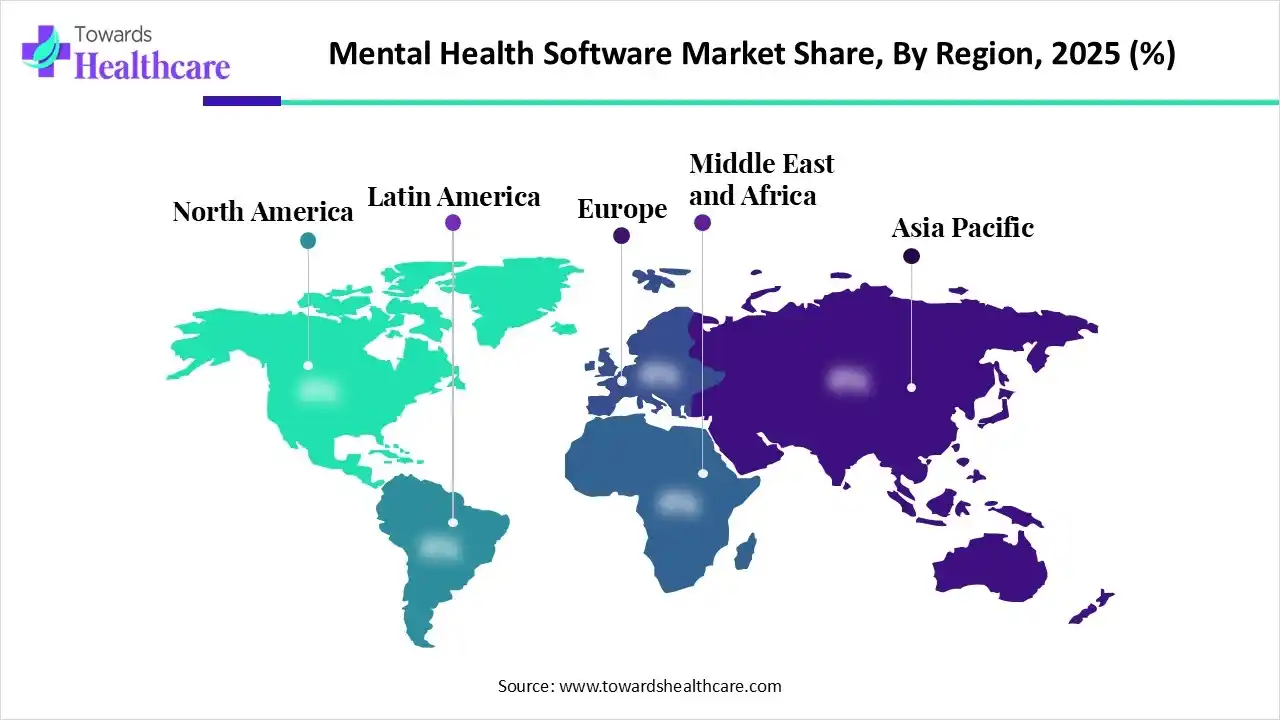
North America dominated the global mental health software market with share of 40% in 2025. North America dominates the market due to advanced healthcare infrastructure, widespread adoption of digital health technologies, strong government support, and high awareness of mental well-being. Favourable reimbursement policies, extensive telehealth integration, and significant investment in AI-driven mental health solutions further strengthen the region’s leadership in the market.
U.S. Market Trends
The U.S. dominates North America’s mental health software market due to advanced healthcare IT infrastructure, widespread telehealth adoption, strong government initiatives promoting mental health, and high awareness of digital wellness solutions. Robust funding, innovative AI-driven platforms, and extensive integration of clinical and administrative functionalities further reinforce its leading position in the region.
Asia Pacific is estimated to host the fastest-growing mental health software market by 20% share during the forecast period. The Asia-Pacific region is the fastest-growing market for mental health software due to rising awareness of mental health issues, increasing smartphone and internet penetration, and growing adoption of digital healthcare solutions. Expanding telehealth infrastructure, supportive government initiatives, and investments in AI-driven mental wellness platforms are accelerating demand across both urban and rural populations.
China Market Trends
China is the fastest-growing country in the Asia-Pacific mental health software market due to increasing government focus on mental health awareness, rapid digitalization of healthcare services, and widespread adoption of telehealth and AI-powered mental wellness platforms. Rising internet and smartphone penetration, along with expanding mental healthcare infrastructure, further drive the accelerated growth of digital mental health solutions.
Europe is expected to grow at a significant CAGR in the market by 25% share during the forecast period. Europe is a notably growing region in the mental health software market due to increasing awareness of mental well-being, supportive government regulations, and widespread adoption of digital healthcare solutions. Rising telehealth integration, focus on preventive care, and investments in AI-driven mental health platforms are driving steady growth across clinical and non-clinical settings.
UK Market Trends
The UK is a notably growing country in Europe’s mental health software market due to strong government initiatives promoting digital mental health, widespread adoption of telehealth and AI-driven therapy platforms, and increased public awareness of mental well-being. Investments in NHS digital programs and private healthcare integration further accelerate the adoption of innovative mental health solutions.
The mental health software market in South America is rapidly expanding, driven by government initiatives, increased awareness, reduced stigma, and improved digital health infrastructure. Brazil leads this growth, leveraging high smartphone usage and public-private partnerships focused on accessible teletherapy. South American governments are investing more in mental health services and promoting digital tools like apps and wearables. The COVID-19 pandemic accelerated telemedicine adoption, making remote care a standard in mental health treatment, especially in urban Brazil, where smartphone access is widespread. Collaboration between tech companies and healthcare providers is fostering innovation in care delivery.
Brazil Market Trends
Brazil's dominance in the mental health software market stems from high demand due to prevalent anxiety, a dynamic tech startup ecosystem, and the urgent need for improved mental healthcare access. The country's strong support for telemedicine and digital health initiatives has fueled this growth, positioning Brazil as the center of the South American startup scene with numerous tech startups and unicorns. These innovative companies, often led by visionary founders, are advancing mental health solutions using AI and data analytics. With a high prevalence of mental health disorders, particularly anxiety, Brazil faces significant demand for accessible solutions, including apps and teletherapy platforms. Growing awareness of workplace burnout has also spurred the adoption of mental health software and wellness programs, especially in the booming tech sector.
The Mental Health Software Market in the Middle East and Africa (MEA) is rapidly growing by 10% share due to significant government investment in healthcare, quick digital adoption in GCC countries, and a young population increasingly using telehealth and mobile apps for mental health. Governments, particularly in the UAE, are heavily investing in healthcare modernization and mental health systems, boosting software solution usage. Rising mental health awareness and the need to improve traditional care are driving the adoption of AI-driven and personalized care platforms. The pandemic increased telemedicine demand, leading to a swift shift to digital mental health services.
UAE Market Trends
The UAE is at the forefront of the mental health software market, supported by high smartphone penetration, robust government-backed digital health infrastructure such as Riayati and NABIDH, and a surge in telehealth adoption driven by the pandemic. This leadership is enhanced by reduced stigma, extensive insurance coverage for digital services, and AI/chatbot integration for personalized care. The UAE has unified national electronic medical records (EMR) through systems like Riayati and NABIDH, facilitating seamless integration of mental health applications. A cultural shift, aided by public awareness campaigns, has made mental health care more acceptable, increasing demand for discreet app-based therapy. Mental health platforms are increasingly part of broader telehealth ecosystems led by insurers and hospitals, ensuring higher engagement. The diverse population necessitates multilingual mental health support, often delivered through virtual tools.
| Factor | Estimated Contribution (%) |
| Chronic Stress & Work Pressure | 30-35% |
| Economic & Financial Stress | 20-25% |
| Social Isolation & Loneliness | 15-20% |
| Digital & Social Media Overuse | 10-15% |
| Trauma & Life Events | 8-12% |
| Biological & Genetic Factors | 5-10% |
| Substance Use (alcohol/drugs) | 5-8% |
| Environmental & Global Stressors | 5-7% |
| Company / Vendor | Headquarters (City/ Country) | Core Offerings & Products |
| Cerner Corporation (Oracle Health) | North Kansas City, Missouri, USA | Behavioral health EHR modules, predictive analytics, integrated clinical system |
| Epic Systems Corporation | Verona, Wisconsin, USA | Comprehensive EHR with integrated mental/behavioral health workflows & telehealth |
| Netsmart Technologies | Overland Park, Kansas, USA | Cloud-based mental health EHRs, coordinated care & analytics platforms |
| Qualifacts Systems | Nashville, Tennessee, USA | CareLogic – cloud EHR for behavioral & mental health providers |
| Core Solutions, Inc. | King of Prussia, Pennsylvania, USA | Cx360 – EHR + clinical & administrative workflow tools |
| Valant Medical Solutions | Seattle, Washington, USA | Valant EHR tailored for mental health practices |
| TherapyNotes, LLC | Horsham, Pennsylvania, USA | Practice management EHR: documentation, scheduling, billing |
| SimplePractice | USA (Remote) | All-in-one practice management & EHR for mental health clinicians |
| Talkspace | New York City, New York, USA | Online therapy (text, video, voice), care plans for individuals/employers |
| BetterHelp (Teladoc Health) | Mountain View, California, USA | Online therapy and counseling sessions via web & app |
Strengths:
Weaknesses:
Opportunities:
Threats:
By Software Type
By Solution
By End User
By Region






Reviewed By
Aditi Shivarkar is a seasoned professional with over 14 years of experience in healthcare market research. As a content reviewer, Aditi ensures the quality and accuracy of all market insights and data presented by the research team.
Learn more about Aditi Shivarkar









