

Pipeline Programs

CGT Companies Tracked

Manufacturing Facilities


The global metastatic pancreatic cancer treatment market size was estimated at USD 3.68 billion in 2025 and is predicted to increase from USD 3.91 billion in 2026 to approximately USD 6.75 billion by 2035, expanding at a CAGR of 6.25% from 2026 to 2035.
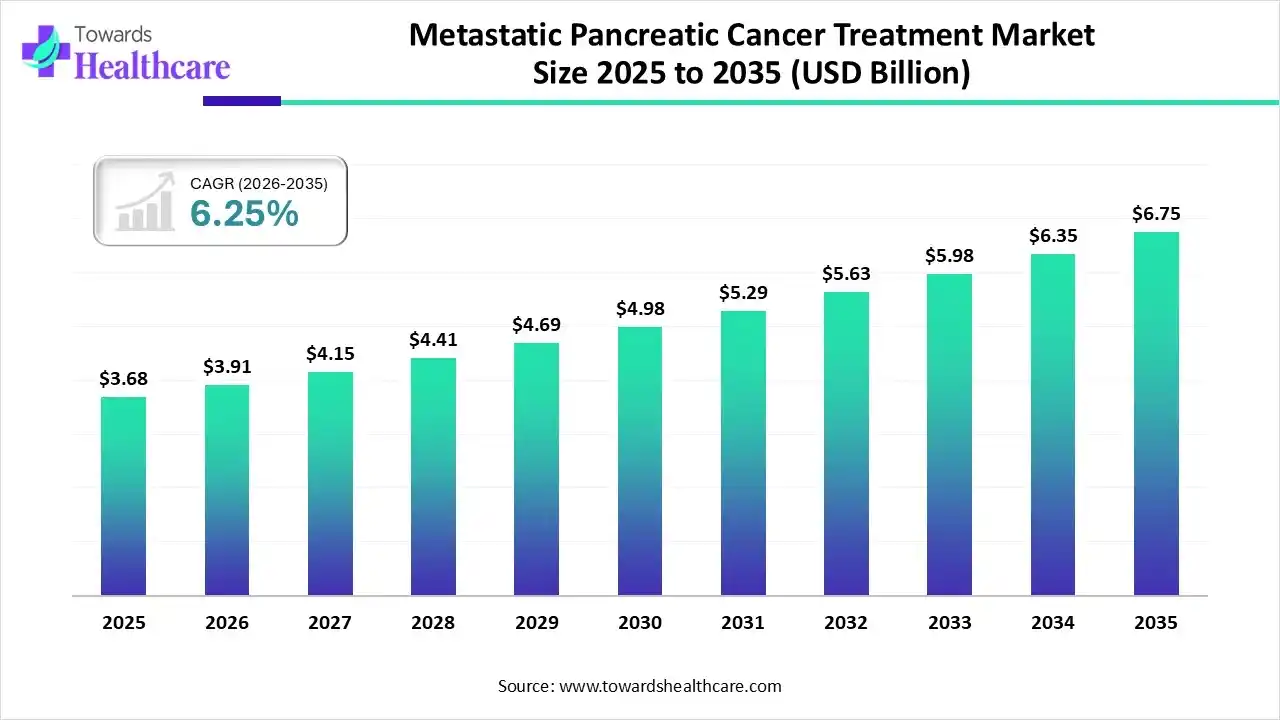
The market is expanding due to rising disease incidence, increased R&D and approvals of targeted and immunotherapies, improved diagnostics, aging populations, and greater healthcare investment globally.
Metastatic pancreatic cancer treatment refers to therapies aimed at controlling pancreatic cancer that has spread to other organs, focusing on extending survival and improving quality of life. The metastatic pancreatic cancer treatment market is growing due to rising global incidence, aging populations, improved diagnostic rates, and increased investment in oncology R&D. Advances in combination chemotherapy, targeted therapies, immunotherapy research, and expanded clinical trials are improving treatment options, driving adoption, and encouraging pharmaceutical companies to focus on this high-need segment.
AI can revolutionize the metastatic pancreatic cancer treatment market by enabling early and accurate diagnosis, predicting treatment response, and supporting personalized therapy selection. Machine learning models help analyze imaging, genomic, and clinical data to optimize drug development and clinical trial design. AI-driven decision support tools also improve treatment planning, patient monitoring, and outcome prediction, accelerating innovation and improving care quality.
The market is shifting toward biomarker-based and targeted therapies that tailor treatment to individual patient profiles. Advances in genomic testing and companion diagnostics are enabling better therapy selection, improving response rates, reducing trial-and-error treatment, and supporting the development of personalized combination regimens.
AI-driven tools are increasingly used to analyze imaging, pathology, and genomic data, enabling earlier detection and more accurate disease monitoring. These technologies support treatment decision-making, predict patient outcomes, streamline clinical workflows, and accelerate drug development, strengthening future growth of the treatment market.
Pharmaceutical companies and research institutions are increasing clinical trials focused on novel drugs, immunotherapies, and combination treatments. Expanded global trial participation improves access to innovative therapies, speeds regulatory approvals, and enhances the overall treatment landscape for metastatic pancreatic cancer.
| Key Elements | Scope |
| Market Size in 2026 | USD 3.91 Billion |
| Projected Market Size in 2035 | USD 6.75 Billion |
| CAGR (2026 - 2035) | 6.25% |
| Leading Region | North America by 42% |
| Market Segmentation | By Therapy Type, By Cancer Type, By End-User, By Region |
| Top Key Players | AstraZeneca PLC, Pfizer Inc., Novartis AG, Amgen Inc., F. Hoffmann-La Roche Ltd., Merck & Co., Inc., Bristol-Myers Squibb Company |
Why Did the Monitors Chemotherapy Segment Dominate in the Market in 2025?
The chemotherapy segment dominated the metastatic pancreatic cancer treatment market with a share of 48% in 2025 due to its well-established role as the primary treatment option, proven effectiveness, and widespread availability. It is often used alone or in combination with targeted therapies, enhancing patient outcomes. Continuous advancements in drug formulations and supportive care have improved tolerability and efficacy, maintaining high adoption rates and reinforcing chemotherapy’s leading position in the market.
Targeted Therapy
The targeted therapy segment is expected to grow at the fastest CAGR during the forecast period due to increasing focus on personalized medicine and biomarker-driven treatments. Advances in molecular research and precision oncology are enabling therapies that specifically attack cancer cells, while sparing healthy tissue. Rising clinical trials, regulatory approvals, and improved patient outcomes are driving adoption, making targeted therapies a rapidly expanding segment in the metastatic cancer treatment market.
How the Exocrine (Adenocarcinoma) Segment Dominated the Metastatic Pancreatic Cancer Treatment Market in 2025?
The exocrine (Adenocarcinoma) segment dominates the market with a revenue share of 94% due to its high prevalence and aggressive nature. Its poor prognosis drives demand for effective therapies, while ongoing research, targeted treatment, and combination therapy developments expand options. Increased clinical trials and advances in treatment strategies continue to fuel market growth, maintaining the segment’s leading position throughout the forecast period.
Endocrine (NETs)
The endocrine (NETs) segment is expected to grow at the fastest CAGR during the forecast period due to rising diagnosis rates and increased awareness. Advances in targeted therapies, peptide receptors radionuclide therapy (PRRT), and personalized treatment options are improving patient outcomes. Expanding research, ongoing clinical trials, and growing adoption of novel therapies are driving rapid market growth in this segment.
Why Hospitals & Cancer Centers Segment Dominated the Metastatic Pancreatic Cancer Treatment Market?
The hospitals & cancer centers segment dominated the market with a revenue share of 52% due to their advanced infrastructure, specialized oncology departments, and access to multidisciplinary care. They offer comprehensive treatment options, including chemotherapy, targeted therapy, and clinical trials participation. High patient inflow, better diagnostic facilities, and skilled healthcare professionals make hospitals and cancer centers the preferred choice for treatment, sustaining their leading position in the market.
Specialty Oncology Clinics
The specialty oncology clinics segment is expected to grow at the fastest CAGR during the forecast period due to increasing patient preference for personalized and convenient cancer care. These clinics offer focused expertise, advanced therapies, and quicker access to treatments like targeted therapies and immunotherapies. Expansion of clinic networks, rising awareness, and adoption of innovative treatment protocols are driving rapid growth in this market.
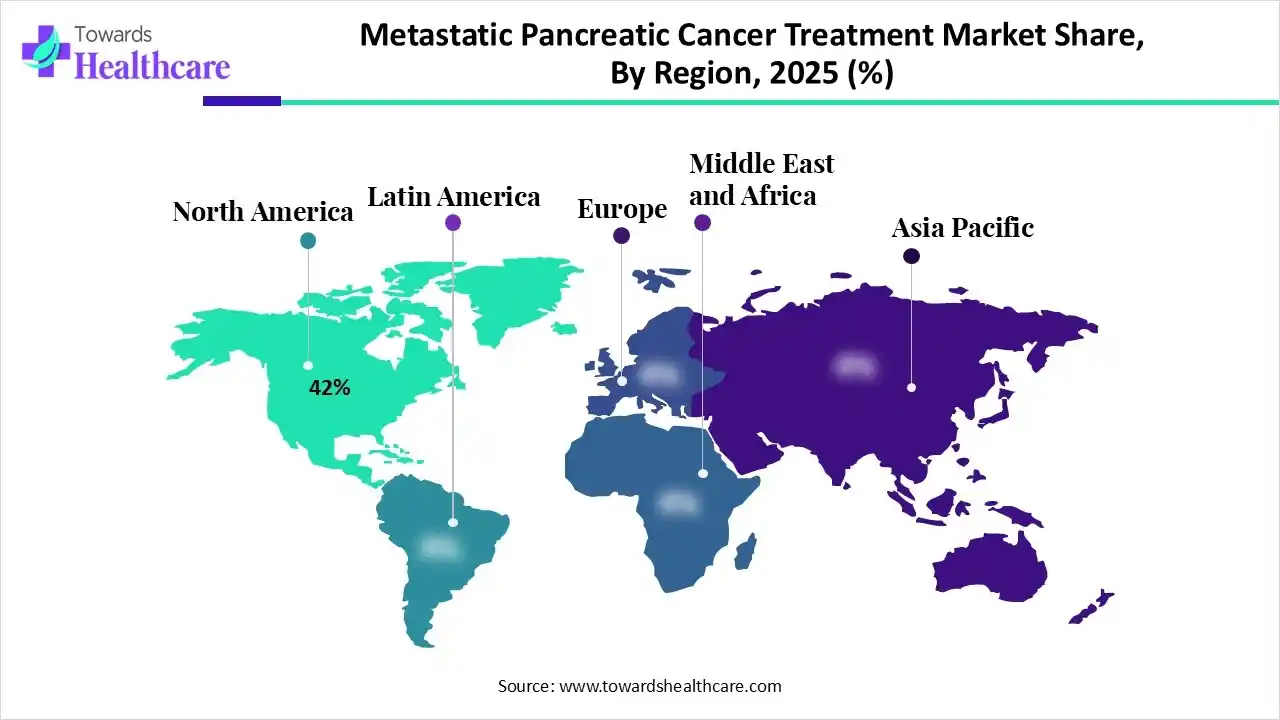
North America dominated the global market with a 42% share in 2025 due to advanced healthcare infrastructure, high awareness, and strong adoption of innovative therapies. Rising prevalence, well-established oncology centers, significant R&D investment, and supportive government policies for cancer care have driven market growth, making the region a key leader in treatment development and patient access.
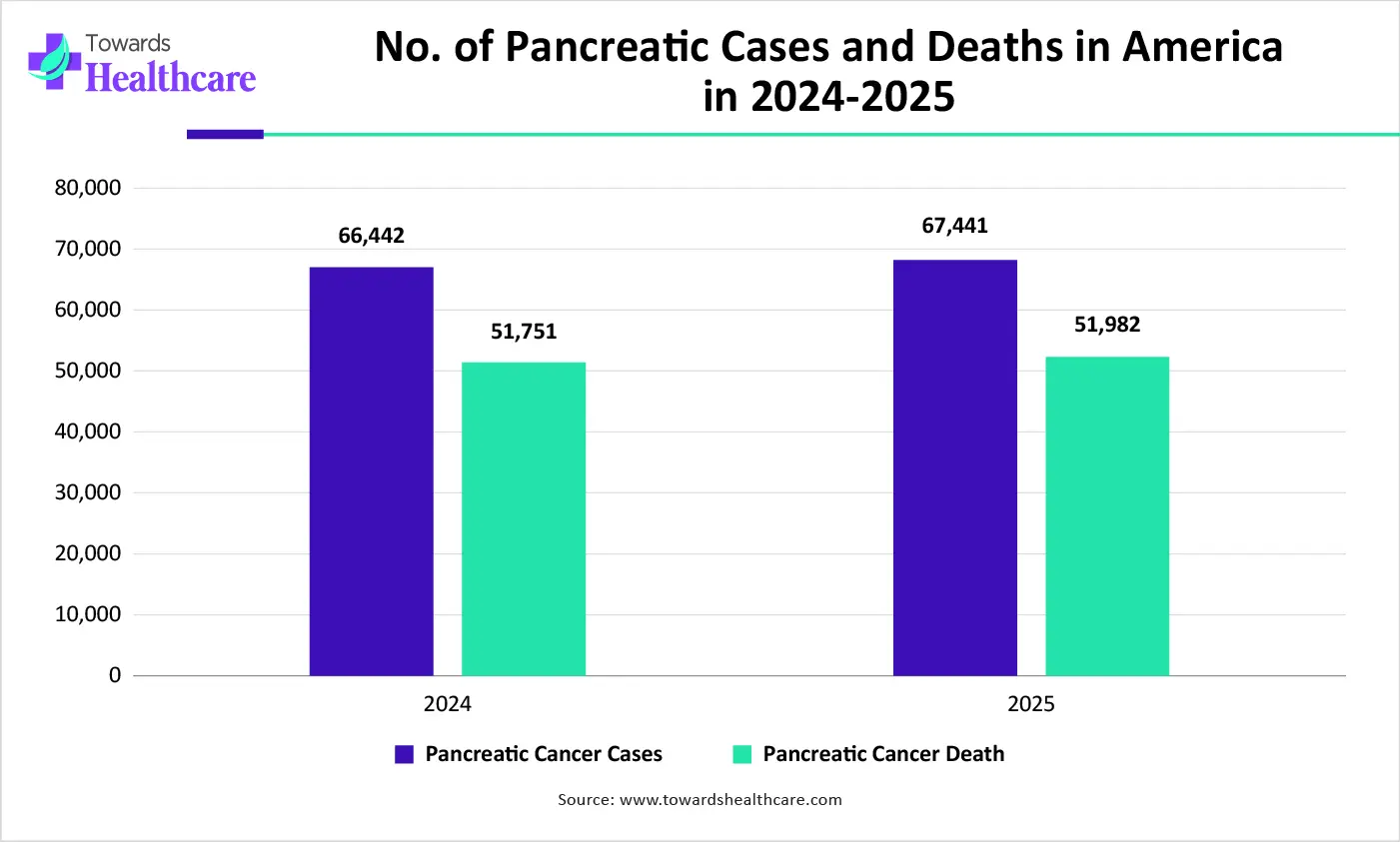
What Makes the U.S. the Market Leader in Metastatic Pancreatic Cancer Treatment?
The U.S. led the metastatic pancreatic cancer treatment market in 2025 by generating the highest revenue share, driven by advanced healthcare infrastructure, early adoption of innovative therapies, and significant R&D investment. High disease prevalence, widespread access to specialized oncology centers, strong clinical trials activity, and supportive regulatory frameworks further strengthened its market dominance, making the U.S. a key leader in metastatic pancreatic cancer treatment.
Asia Pacific’s metastatic pancreatic cancer treatment market is experiencing rapid growth due to rising disease prevalence, increased awareness, and improving healthcare infrastructure. Expanding oncology centers, greater access to advanced therapies, and supportive government initiatives are boosting treatment adoption. Additionally, growing investments in clinical trials, pharmaceutical R&D, and international collaborations are accelerating the development and availability of innovative therapies, driving the region’s fastest market growth during the forecast period.
Why India is Poised for a Surge in Pancreatic Cancer Therapies
India’s metastatic pancreatic cancer treatment market is expected to grow at a rapid CAGR due to increasing cancer prevalence, rising awareness, and expanding healthcare infrastructure. Improved access to advanced therapies, a growing number of specialized oncology centers, government initiatives, and rising investment in clinical trials and pharmaceutical research are driving market adoption, making India one of the fastest-growing regions in the segment.
The Europe metastatic pancreatic cancer treatment market is anticipated to grow at a notable CAGR during the forecast period due to increasing pancreatic cancer incidence, strong healthcare systems, and early adoption of advanced therapies. Rising investments in oncology research, expanding clinical trial activity, and a supportive regulatory framework are improving access to innovative treatments. Additionally, growing awareness and availability of specialized cancer centers are accelerating market growth across the region.
Why is the UK Emerging as a high-Growth Market for Metastatic Pancreatic Cancer Treatment?
The UK is anticipated to grow at a rapid CAGR during the forecast period due to rising pancreatic cancer cases, strong public healthcare infrastructure, and increasing adoption of innovative therapies. Expanding clinical research, active participation in international trials, supportive NHS initiatives, and improved access to advanced diagnostics and targeted treatments are accelerating market growth and strengthening the UK’s position in this market.
| Companies | Headquarters | Offerings |
| AstraZeneca PLC | Cambridge, United Kingdom | Offers PARP inhibitors (e.g., Lynparza for BRCA-mutated pancreatic cancer) and other targeted therapies, focusing on precision medicine and combination regimens. |
| Pfizer Inc. | New York, USA | Develops targeted agents and immunotherapy options, including monoclonal antibodies and biomarker-driven programs that address mutation-driven tumors. |
| Novartis AG | Basel, Switzerland | Focuses on molecularly targeted therapies and precision oncology treatments such as Lutathera for neuroendocrine tumors, while advancing adaptive clinical strategies |
| Amgen Inc. | California, USA | Works on precision medicines targeting specific oncogenic mutations like KRAS and immunomodulatory therapies in pancreatic cancer. |
| F. Hoffmann-La Roche Ltd. | Basel, Switzerland | Provides integrated portfolios of targeted drugs, companion diagnostics, and precision medicine solutions to optimize individualized care. |
| Merck & Co., Inc. | New Jersey, USA | Leader in immunotherapy with checkpoint inhibitors and extensive clinical research across combination strategies. |
| Bristol-Myers Squibb Company | New York, USA | Focuses on immuno-oncology with checkpoint inhibitors and combination regimens to enhance therapeutic efficacy. |
By Therapy Type
By Cancer Type
By End-User
By Region





Principal Consultant
Deepa Pandey is a focused and detail-oriented market research professional with growing expertise in the healthcare sector, delivering high-quality insights across therapeutic areas, diagnostics, biotechnology and healthcare services.
Learn more about Deepa Pandey

Reviewed By
Aditi Shivarkar is a seasoned professional with over 14 years of experience in healthcare market research. As a content reviewer, Aditi ensures the quality and accuracy of all market insights and data presented by the research team.
Learn more about Aditi Shivarkar









