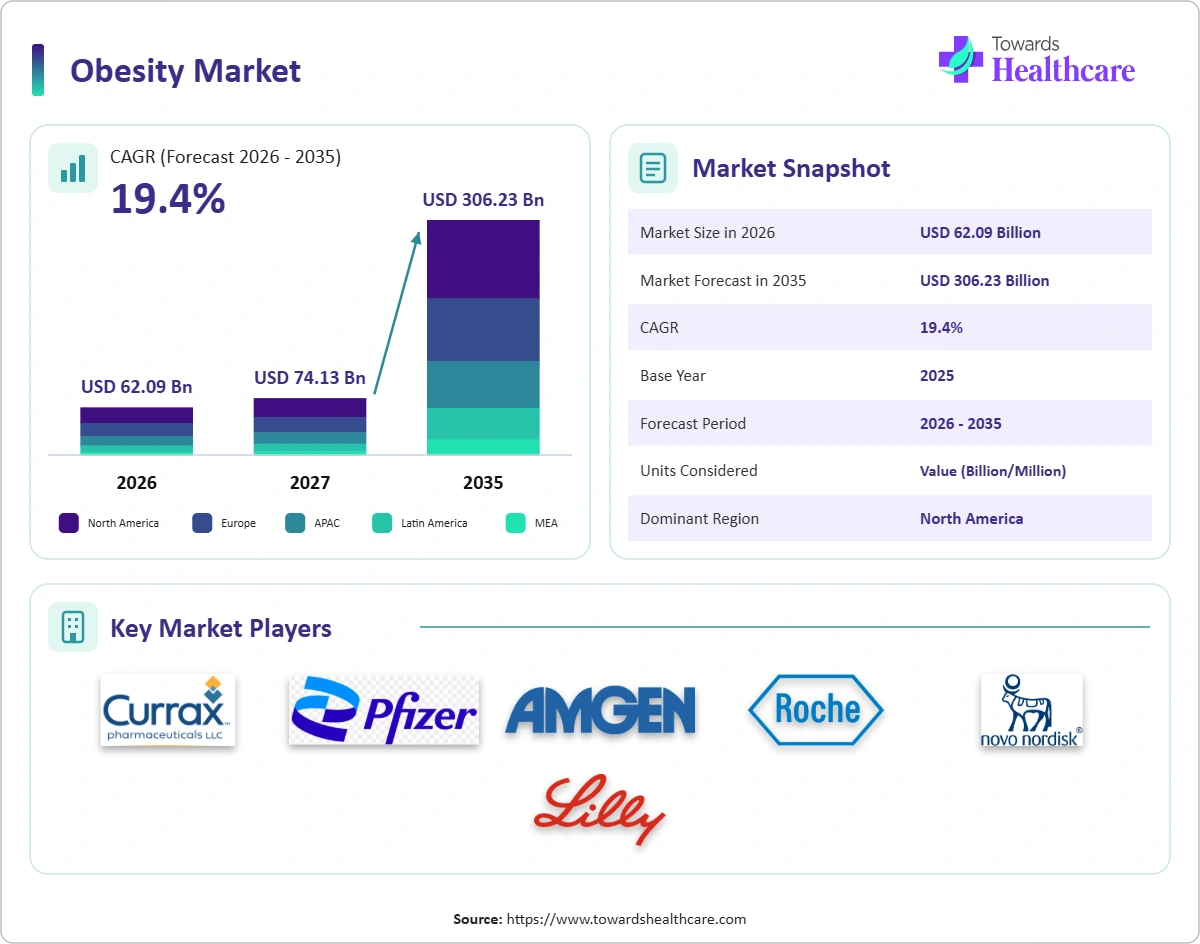
The market is expected to grow from USD 52.00 billion in 2025 to USD 306.23 billion by the end of the forecast period because obesity affects a large number of adults and incretin drugs deliver better weight loss performance than earlier treatments, creating very large demand. A strong market growth is being supported by high obesity prevalence, constantly improving drug efficacy, a wide range of oral options and broader access.
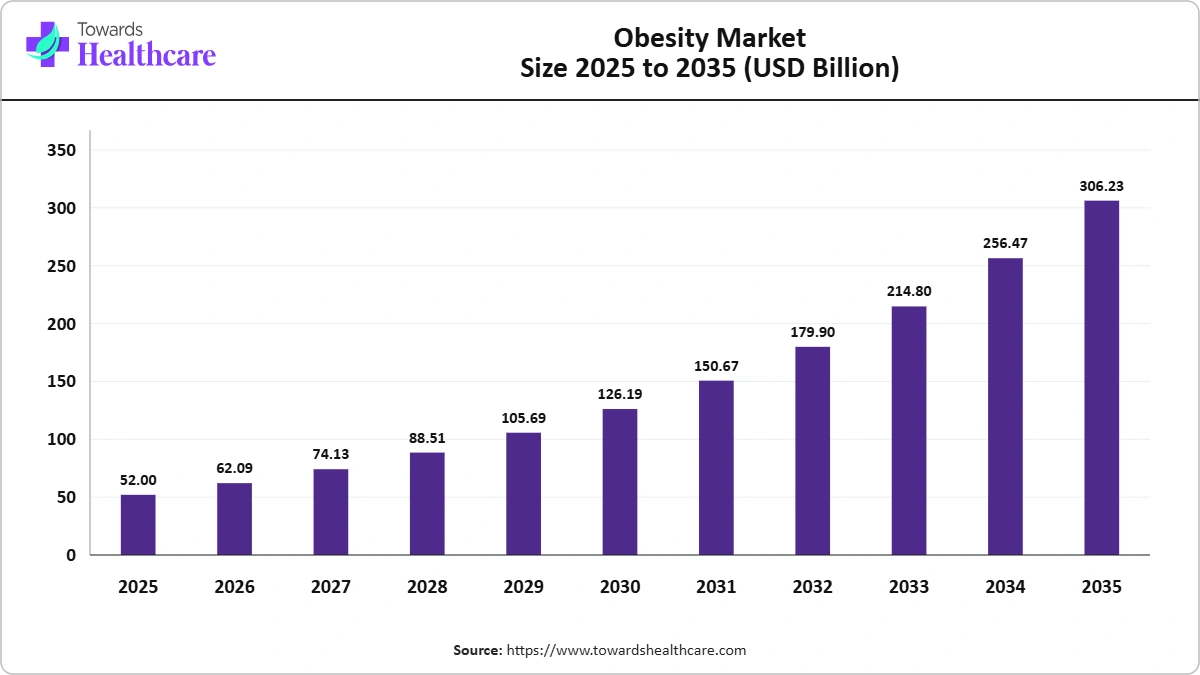
The market is expected to reach USD 126.19 billion by 2030 and sustain a CAGR of 19.40% throughout the forecast period. Telehealth and precision medicine are being increasingly used for obesity care, while probiotics and the human microbiome are studied as supporting approaches.
Analyst View: We built the estimate from obesity prescriptions and net prices by drug class and region, and checked it against the obesity revenues that Novo Nordisk and Eli Lilly report. Net prices were assumed to decrease over time as competition increases and oral drugs and generics arrive, which slows down value growth even as patient numbers rise rapidly.
Oral GLP-1 drugs: Daily pills improve accessibility and alleviate supply crunch issues because the production of small molecules involves fewer intricacies as compared to peptides.
Triple agonists: Retatrutide and similar drugs target for weight loss above 25% in clinical trials, raising the bar for future competitors.
Muscle-preserving combinations: Developers are testing add-on drugs that protect lean mass while cutting weight.
Direct-to-consumer pricing: Manufacturers offer discounted prices to self-paying patients, which helps to reach the patient base with no insurance coverage.
Wider indications: Obesity drugs are being approved to treat heart diseases, sleep apnoea, and liver disease, which helps to widen their patient base.
The market is rapidly evolving from a niche therapy area to one of the largest pharmaceutical markets, driven by incretin drugs that deliver substantial and sustained weight loss. The demand is far greater than the number of people treated so far, so supply, price, and coverage are the key differentiators that will decide the market growth rate in the upcoming years. The approval of oral drugs, development of new mechanisms, and expansion in Asia are expected to have the largest influence in the next phase. Prices of drugs are expected to decrease as competition stiffens.
| Driver | Impact | ≈ CAGR Contribution | Time Horizon | Key Regions |
| High obesity prevalence | High | +7.57 pp | Short to long term | Global, strongest in North America |
| Strong weight-loss efficacy | Medium | +6.39 pp | Medium to long term | Global, fastest uptake in Asia Pacific |
| Oral options and supply expansion | Medium | +5.44 pp | Short to medium term | Global |
| Cardiometabolic benefits | Low | +4.26 pp | Long term | Developed and emerging markets |
Note: Contributions are indicative estimates of each factor's effect on annual growth.
Sources: Expert interviews, secondary sources, Towards Healthcare database and Towards Healthcare analysts.
High obesity prevalence and strong drug efficacy have the highest contribution to the growth of the market. The approval of oral drugs and new supply capacity remove limitations that held back sales in 2023 and 2024. Their impact is strongest in North America today, while Asia Pacific is expected to see the fastest growth.
| Restraint | Impact | ≈ Negative CAGR Contribution | Time Horizon | Key Regions |
| High prices and coverage gaps | High | -1.92 pp | Short to medium term | Global |
| Side effects and discontinuation | High | -1.41 pp | Medium term | Price-sensitive and emerging markets |
| Compounded and generic competition | Medium | -0.94 pp | Short term | North America and other mature markets |
Note: Contributions are indicative estimates of each factor's effect on annual growth.
Sources: Expert interviews, secondary sources, Towards Healthcare database and Towards Healthcare analysts.
Coverage gaps are the largest restraints, followed by discontinuation and compounded or generic competition. Value growth is harmed more than volume growth due to these factors.
Asian launches: China, Japan, India and South Korea are approving obesity drugs, and local players are introducing their own medications.
Employer and payer programmes: Employer-sponsored weight-management programs that provide drugs as well as coaching can expand access to covered obesity treatments.
Combination and maintenance therapy: Lower-dose or oral maintenance regimens could keep patients on treatment after initial weight loss.
Note: 2025 is the base year; 2035 shares and CAGRs are forecasts.
Sources: Expert interviews, secondary sources, Towards Healthcare database and Towards Healthcare analysts.
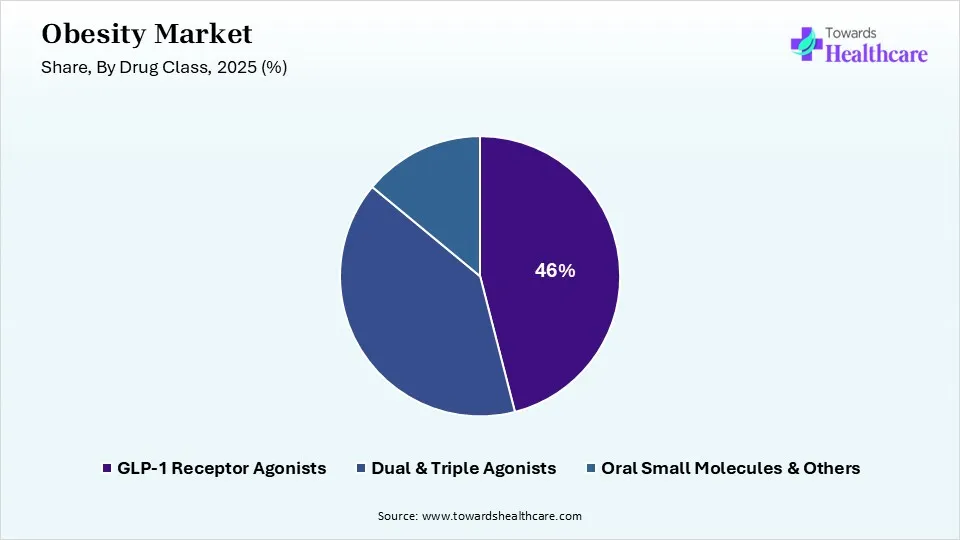
GLP-1 Receptor Agonists single-hormone GLP-1 drugs, led by semaglutide, held 46.00% of the market in 2025. Its dominance can be attributed to its proven track record and cardiovascular outcome data. It is being approved to reduce the risk of heart attacks, manage sleep apnoea, and liver disease.
Dual & Triple Agonists such as retatrutide, still in late development, intend to reach the commercialization stage. This allows the segment to rank close second in the drug-class segment.
Oral Small Molecules & Others together with older drugs like Contrave and Qsymia, this group is forecast to grow at 22.94%. This segment is forecast to grow at a CAGR of 22.94% from 2026 to 2035 owing to the approval of novel drugs and the presence of older drugs such as Contrave and Qsymia.
Injectable: Pen injectors accounted for 86.00% of sales in 2025. Patients and doctors are now familiar with weekly dosing, and higher-dose and longer-acting versions are still in development.
Oral: Oral semaglutide and orforglipron widen access to patients who do not prefer needles and to health systems where there is a supply crunch of pens.
Retail Pharmacies: Chain and independent pharmacies dispense 58.00% of obesity drugs, mostly to insured patients. Pharmacists also manage supply shortages and dose changes, which made this channel central during the 2023-2024 supply crunch.
Online & Direct-to-Consumer: LillyDirect, NovoCare and telehealth providers sell vials and pills directly to cash-paying patients.
Hospital Pharmacies: Hospital and specialist weight-management clinics serve patients with severe obesity or complex conditions.
Analyst View: Share is moving toward oral drugs and direct-to-consumer channels. We expect GLP-1 and dual agonists to stay close in size, with the balance depending on new data and supply rather than on any single launch.
Note: 2025 is the base year; 2035 shares and CAGRs are forecasts.
Sources: Expert interviews, secondary sources, Towards Healthcare database and Towards Healthcare analysts.
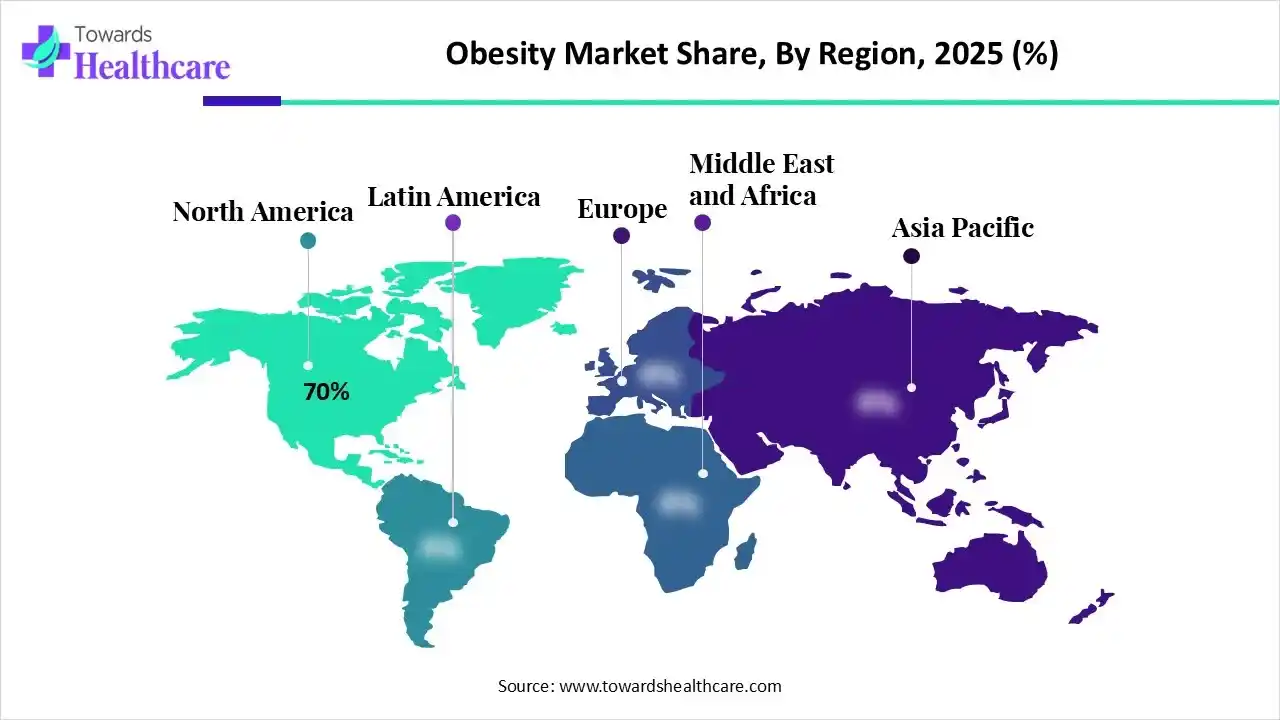
Analyst View: North America will remain the largest market in terms of value, but Asia Pacific is gaining share at the fastest rate because launches are in an early stage and the patient base is massive.
| Rank | Company Name | 2025 Share (%) | Key Products / Business | Headquarters |
| 1 | Eli Lilly | 44.00% | Zepbound and Foundayo (orforglipron) | United States |
| 2 | Novo Nordisk | 40.00% | Wegovy injectable and oral semaglutide | Denmark |
| 3 | Currax Pharmaceuticals | 1.00% | Contrave | United States |
| 4 | Innovent Biologics | 1.00% | Mazdutide in China | China |
| 5 | Vivus | 0.50% | Qsymia | United States |
| 6 | Rhythm Pharmaceuticals | 0.50% | Imcivree for rare genetic obesity | United States |
| 7 | Roche | 0.50% | Obesity pipeline from Carmot | Switzerland |
| 8 | Amgen | 0.50% | MariTide pipeline | United States |
| 9 | Pfizer (Metsera) | 0.50% | Obesity pipeline | United States |
| 10 | Hengrui Medicine | 0.50% | Obesity pipeline | China |
Note: Company shares are 2025 estimates.
Sources: Company press releases, expert interviews, secondary sources, Towards Healthcare database and Towards Healthcare analysts.
Eli Lilly led the market with a 44.00% share in 2025, followed by Novo Nordisk at 40.00% share and Currax Pharmaceuticals at 1.00% share. Eli Lilly leads with Zepbound and Foundayo (orforglipron), Novo Nordisk competes with Wegovy injectable and oral semaglutide, and Currax Pharmaceuticals offers Contrave. Innovent Biologics, Vivus, Rhythm Pharmaceuticals, Roche, Amgen, Pfizer (Metsera), and Hengrui Medicine compete through mazdutide in China, Qsymia, and Imcivree for rare genetic obesity, the obesity pipeline from Carmot, the mariTide pipeline, obesity pipeline and the obesity pipeline.
The top 10 companies accounted for 89.00% of revenue in 2025, while the remaining 11.00% was shared among many developers with clinical-stage obesity drugs. The market is a near-duopoly between Eli Lilly and Novo Nordisk, and competition centres on weight-loss efficacy, oral convenience, supply capacity, pricing and coverage, and next-generation pipeline drugs.
The obesity ecosystem links API & peptide makers, drug developers, pharmacies & telehealth, payers & employers and regulators, with each stage adding value before products reach end users.
| Ecosystem Stage | Role in the Market | Key Companies |
| API & Peptide Makers | Make peptides and small molecules | Drug makers and CDMOs |
| Drug Developers | Develop and sell drugs | Novo Nordisk, Eli Lilly, pipeline companies |
| Pharmacies & Telehealth | Dispense drugs | Retail, online and DTC pharmacies |
| Payers & Employers | Pay for drugs | Insurers, Medicare, employers |
| Regulators | Approve drugs | FDA, EMA, NMPA |
Sources: Company press releases, expert interviews, secondary sources, Towards Healthcare database and Towards Healthcare analysts.
API & Peptide Makers: Peptide synthesis and fill-finish capacity caused a supply crunch in 2023 and 2024, which is why Lilly and Novo have invested billions in the development of new plants.
Drug Developers: The two leaders run the largest trials and commercial teams, while dozens of challengers are developing new mechanisms.
Pharmacies & Telehealth: Telehealth and manufacturer pharmacies now sit alongside traditional pharmacies, changing how patients obtain treatment.
Payers & Employers: Coverage decisions by employers and insurers decide how many people can afford long-term treatment.
Regulators: Regulators have approved new indications quickly and are now reviewing oral drugs and higher doses.
Value in the obesity market flows from upstream material and technology suppliers to manufacturers and service providers, then through distribution partners to end users. Companies that integrate several stages or build long-term relationships with end users capture a larger share of this value.
The Towards Healthcare Companies Quadrant positions key participants in the obesity market by market strength, reflecting revenue scale, market share and geographic reach, and by innovation and growth strategy, reflecting product portfolio breadth, R&D intensity and partnerships. Positions reflect each company's estimated 2025 share of the obesity market and our assessment of its product innovation, portfolio breadth and partnerships.
Sources: Company press releases, expert interviews, secondary sources, Towards Healthcare database and Towards Healthcare analysts.
Leaders: Eli Lilly, Novo Nordisk, Currax Pharmaceuticals, Innovent Biologics, Vivus and Rhythm Pharmaceuticals combine high market share with broad portfolios and strong innovation.
Innovators: Roche, Amgen, Pfizer (Metsera) and Hengrui Medicine bring newer technologies and specialised products.
The market covers prescription medicines for chronic weight management, including injectable GLP-1 receptor agonists and dual or triple incretin agonists, oral anti-obesity drugs such as oral semaglutide and orforglipron, and other pharmacotherapies. It involves treatments for adults and adolescents with obesity or overweight with comorbidities, dispensed through retail pharmacies, hospital pharmacies and online and direct-to-consumer channels.
The 2025 base year was built bottom-up from demand volumes and average prices by drug class, route and distribution channel and region, and checked top-down against the market-specific revenues of leading companies and public industry data. Segment, regional and company values were allocated from drug class, route and distribution channel and region demand. Key estimates were verified by cross-checking company disclosures, regulatory and industry data and published third-party estimates, and inputs that could not be reconciled were excluded. All segment, regional and company figures were reconciled to the same 2025 base year, and the 2026-2035 forecast, which applies a constant CAGR from the 2025 base, was recalculated and validated.
Analyst View: We expect the market to exhibit a high growth rate, although at a slower pace than in its first breakout years. Patient numbers are likely to increase faster than market value because net prices are declining. Oral drugs, Asian launches, and new indications drive growth, while coverage limits, side-effect-driven discontinuation, and generic semaglutide in some countries pose key challenges.