

Pipeline Programs

CGT Companies Tracked

Manufacturing Facilities


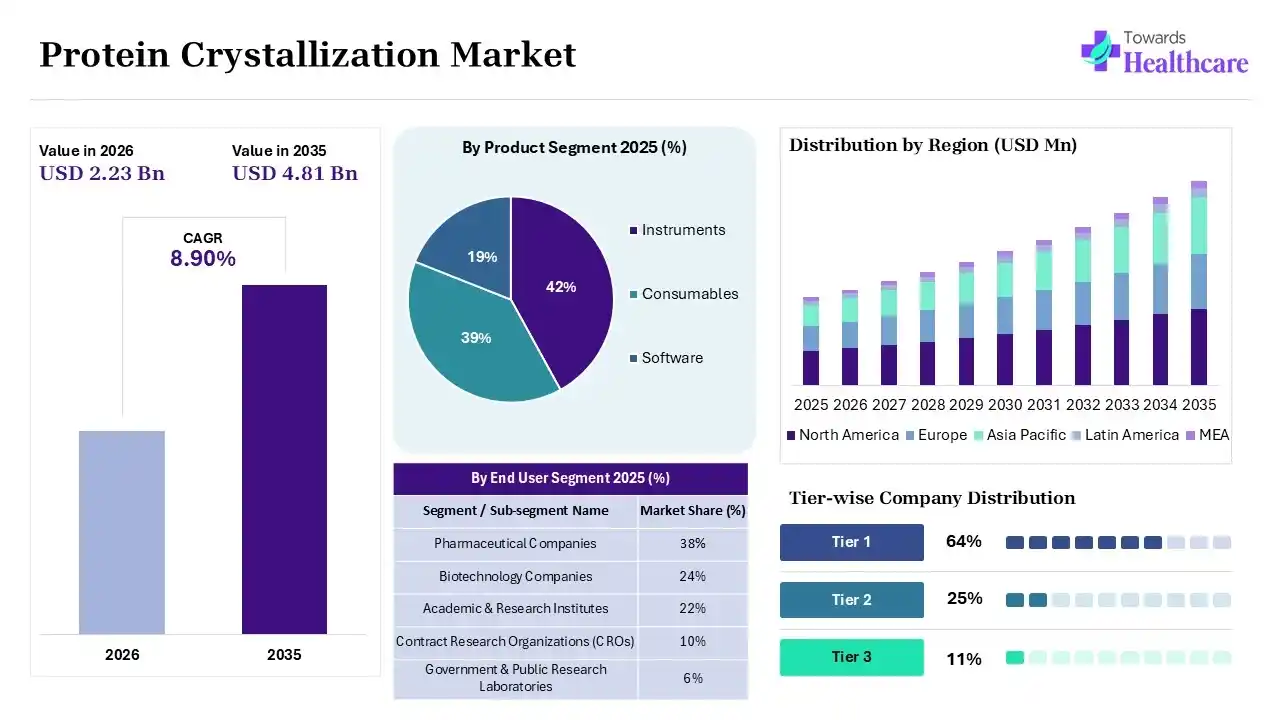
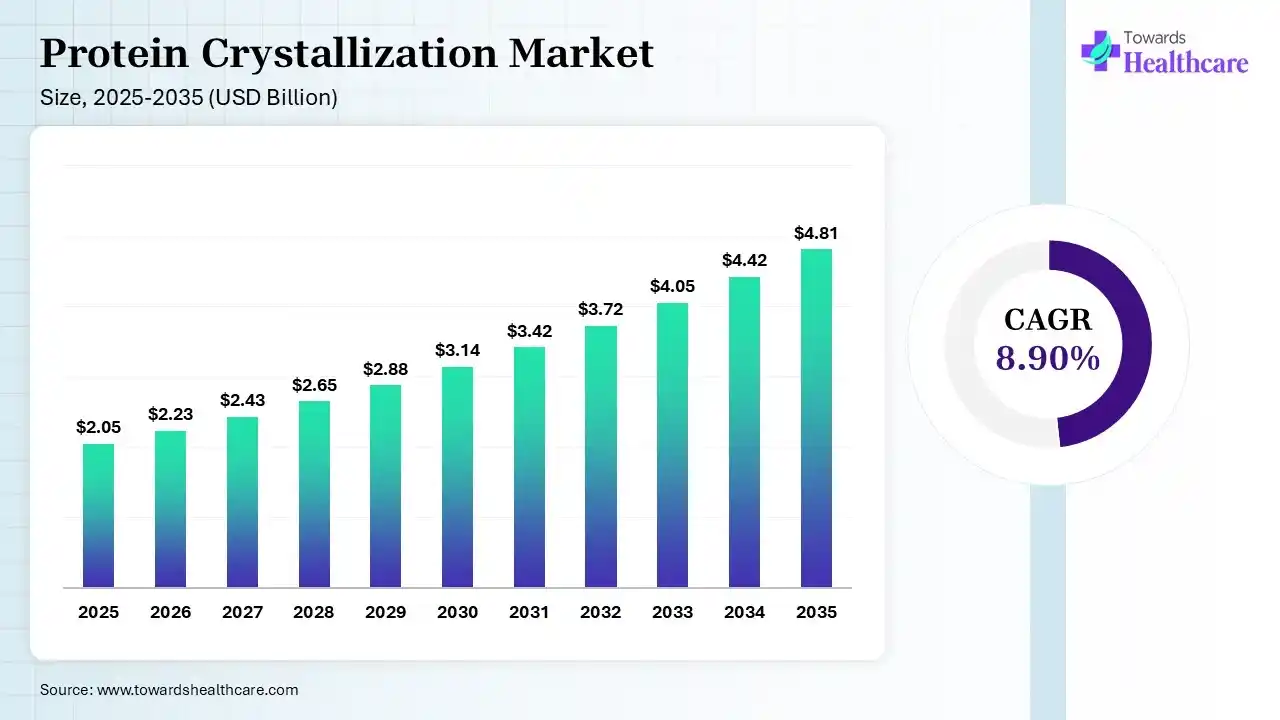
The global protein crystallization market size is calculated at USD 2.05 billion in 2025, where it continues to grow in 2026 at USD 2.23 billion due to increasing complex biologics pipelines. It is expected to reach USD 4.81 billion by 2035 with a CAGR of 8.90% due to a shift towards high-throughput automated systems. North America accounted for 39% of the market in 2025 due to high pharmaceutical investments.
What is Protein Crystallization?
Protein crystallization refers to the process of developing a regular array of individual protein molecules which are stabilized by crystal contacts. The protein crystals developed offer ordered protein configurations with higher physicochemical stability and purity. They help in the identification of drug binding sites, atomic protein structures, support understanding of protein function, and drive the development of new therapeutics.
150 years ago, German biologists first observed protein crystals of hemoglobin from worms and fishes, while in the 1880s Ritthausen and Osborne crystallized plant seed proteins for purification. Success in the crystallization of hen-egg albumin, or ovalbumen, led to the development of new protein crystallization techniques. In 1926, Sumner marked a major success in the crystallization of insulin, where various important enzymes from the pancreas of pigs and cows were purified by crystallization by Northrop and coworkers.
The growing application of protein crystallization is increasing its use for enzyme characterization, biologics development, drug discovery and development, understanding disease mechanisms, antibody characterization, and structural biology R&D purposes. Additionally, based on information gathered by Payal Rabde, the market is driven by the rapid expansion of complex biologics pipelines, drug discoveries, and growing demand for high-throughput, automated nanolitre liquid handling systems.
AI plays an important role in protein crystallization by predicting optimal conditions for the process. It helps in the automated analysis of crystallization images, enhances quality assessments, and accelerates crystal screening. AI also optimizes experimental design, reagents, and crystallization workflow, which reduces the chances of errors and enhances success rates. It also helps in protein structure prediction, data-driven decisions, and supports the discovery of complex crystalline proteins, which accelerates drug discovery and development.
Growing adoption of biologics such as cell therapies, vaccines, monoclonal antibodies, and recombinant proteins is increasing their production volume and innovations, which in turn is driving the adoption of protein crystallization technologies. They are used for understanding stability, efficacy, and binding interactions of these biologics, where the growing pipeline is also driving their continuous usage.
Increasing incidence of rare diseases is propelling their R&D activities, where protein crystallization technologies are being used for the identification of proteins responsible for mutations and dysfunctions. Growing investments and collaborations are also driving their research. These technologies are also used for altering protein structures, along with the identification of genetic mutations.
Microfluidic technologies utilize small amounts of samples, which increases their use, where their high-throughput screening applications encourage their adoption. Therefore, to offer faster screening and optimization of workflow, automated microfluidic platforms are being developed. Similarly, researchers are also developing compact, miniaturized, and scalable platforms with improved reproducibility and success rates.
Cryo-electron microscopy is a complementary structural biology technology that helps in the identification of large protein complexes. Their combination with protein crystallization provides higher-resolution structural information about proteins, which increases their use for detailed structural insights. This, in turn, is promoting their use in drug discovery, protein characterization, and biologics development.
| Table | Scope |
| Market Size in 2026 | USD 2.23 Billion |
| Projected Market Size in 2035 | USD 4.81 Billion |
| CAGR (2026 - 2035) | 8.90% |
| Leading Region | North America by 39% |
| Historical Data | 2020 - 2023 |
| Base Year | 2025 |
| Forecast Period | 2026 - 2035 |
| Measurable Values | USD Millions/Units/Volume |
| Market Segmentation | By Product, By Technology, By Protein Type, By Application, By End User, By Workflow Stage, By Region |
| Top Key Players | Rigaku Holdings Corporation, Jena Bioscience GmbH, Bruker Corporation, MiTeGen, LLC, Formulatrix, Inc., Corning Incorporated, Hampton Research Corp., Mettler-Toledo International, Inc., Molecular Dimensions Ltd., Tecan Group Ltd. |
| Segment | Share 2025 (%) |
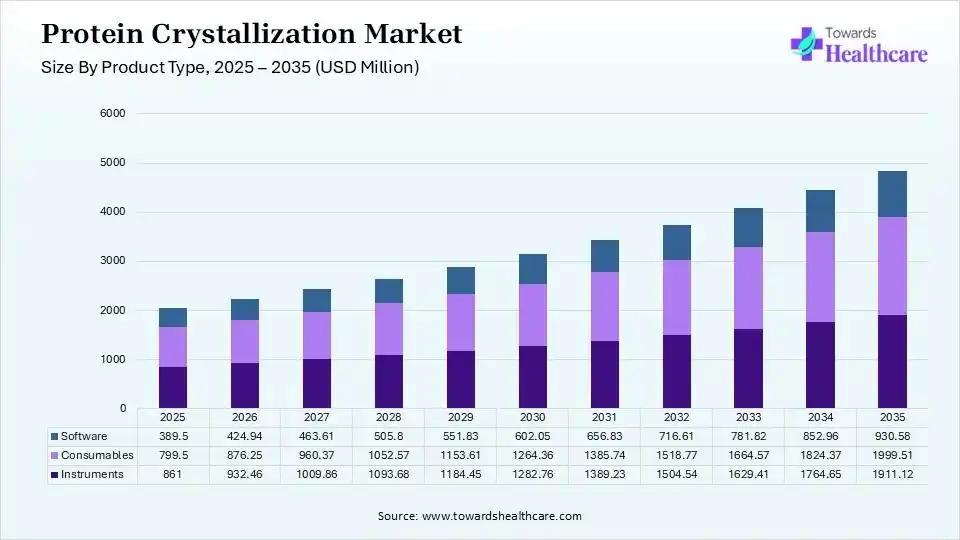
| Instruments | 42% |
| Consumables | 39% |
| Software | 19% |
The Instruments Segment Dominated the Protein Crystallization Market With 42% in 2025
The instruments segment led the market with a 42% share in 2025, driven by continued equipment upgradation by research laboratories. Automation improved crystallization throughput, which increased their demand. Advanced imaging also enhanced crystal detection accuracy, which promoted their adoption rates.
The consumables segment held the second-largest share of 39% of the protein crystallization market in 2025 and is expected to witness the fastest growth with a CAGR of 9.60% during the forecast period, due to high experiment frequency, which is driving their repeat purchases. Expanding screening libraries are also increasing reagent demand. As per the survey conducted by Payal Rabde, growing biopharma R&D is also sustaining their recurring consumption.
| Segment | Share 2025 (%) |
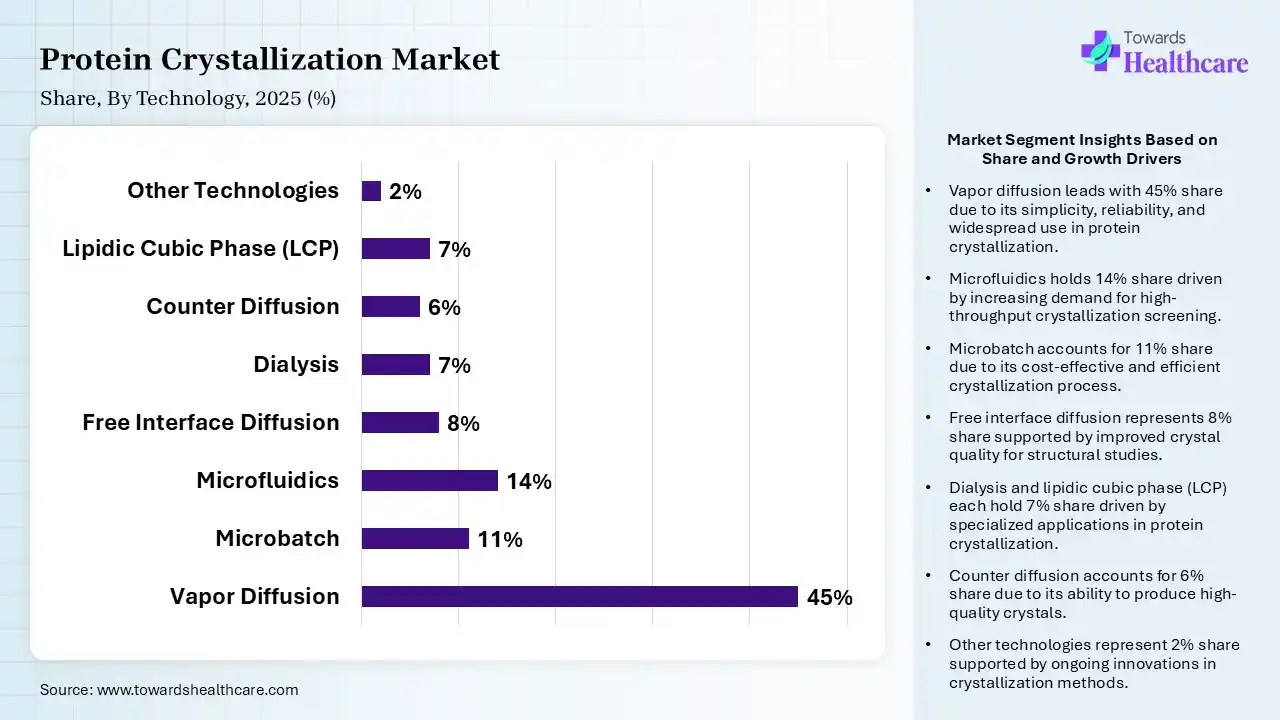
| Vapor Diffusion | 45% |
| Microbatch | 11% |
| Microfluidics | 14% |
| Free Interface Diffusion | 8% |
| Dialysis | 7% |
| Counter Diffusion | 6% |
| Lipidic Cubic Phase (LCP) | 7% |
| Other Technologies | 2% |
The Vapor Diffusion Segment Dominated the Protein Crystallization Market With 45% in 2025
The vapor diffusion segment accounted for the highest revenue share of 45% of the market in 2025, as they were the widely accepted experimental protocol. Their compatibility with numerous protein classes also increased their use. Simple laboratory implementation also supported a rise in their adoption.
The microfluidics segment held the second-largest share of 14% of the protein crystallization market in 2025 and is expected to show the highest growth with a CAGR of 11.20% during the forecast period, due to minimized sample consumption. They also enable automated miniaturized experiments, which drives their demand. They also accelerate difficult protein crystallization, which increases their use.
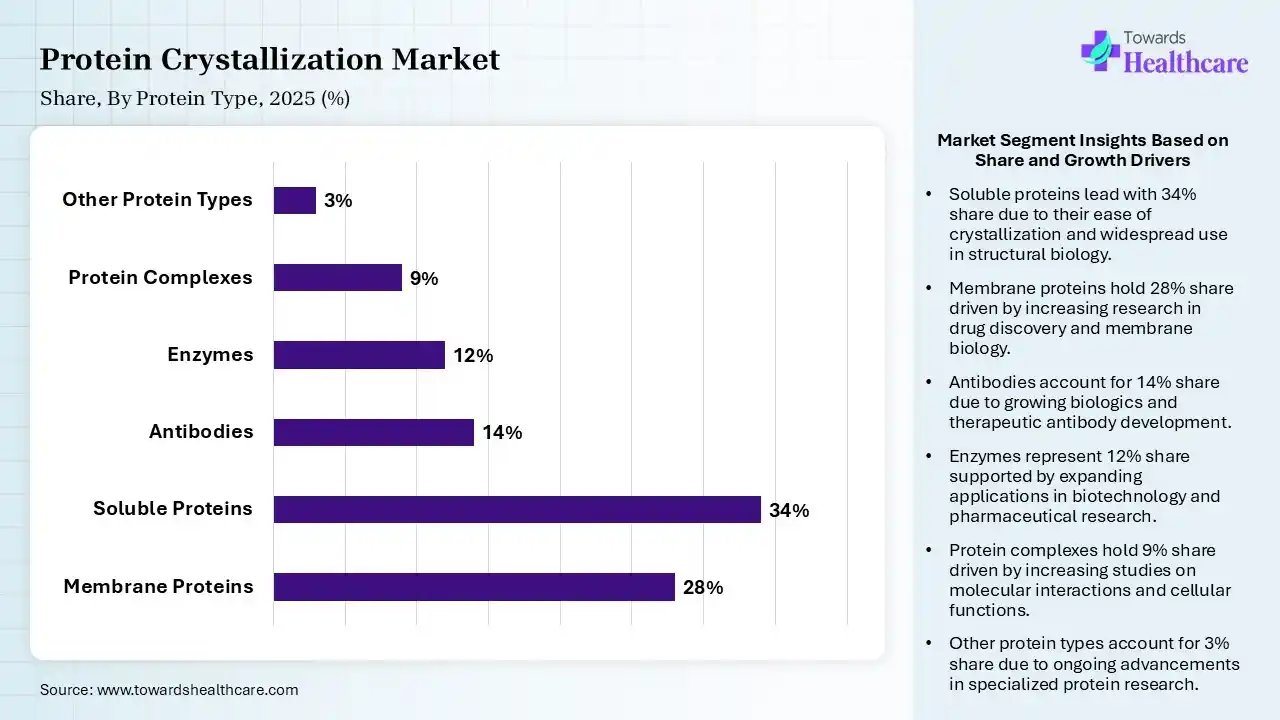
| Segment | Share 2025 (%) |
| Membrane Proteins | 28% |
| Soluble Proteins | 34% |
| Antibodies | 14% |
| Enzymes | 12% |
| Protein Complexes | 9% |
| Other Protein Types | 3% |
The Soluble Proteins Segment Dominated the Protein Crystallization Market With 34% in 2025
The soluble proteins segment held a major revenue share of 34% of the market in 2025, driven by broad research utilization, which supported a rise in their demand. Established protocols simplify crystallization, which encouraged their use. Academic studies also sustained high volumes of soluble protein.
The membrane proteins segment held the second-largest share of 28% of the protein crystallization market in 2025 and is expected to expand rapidly with a CAGR of 10.90% during the forecast period, due to rapid expansion of drug target research. Advanced crystallization methods are improving success rates, which is increasing the use of membrane proteins. Growing structural genomics also increases investments in these proteins.
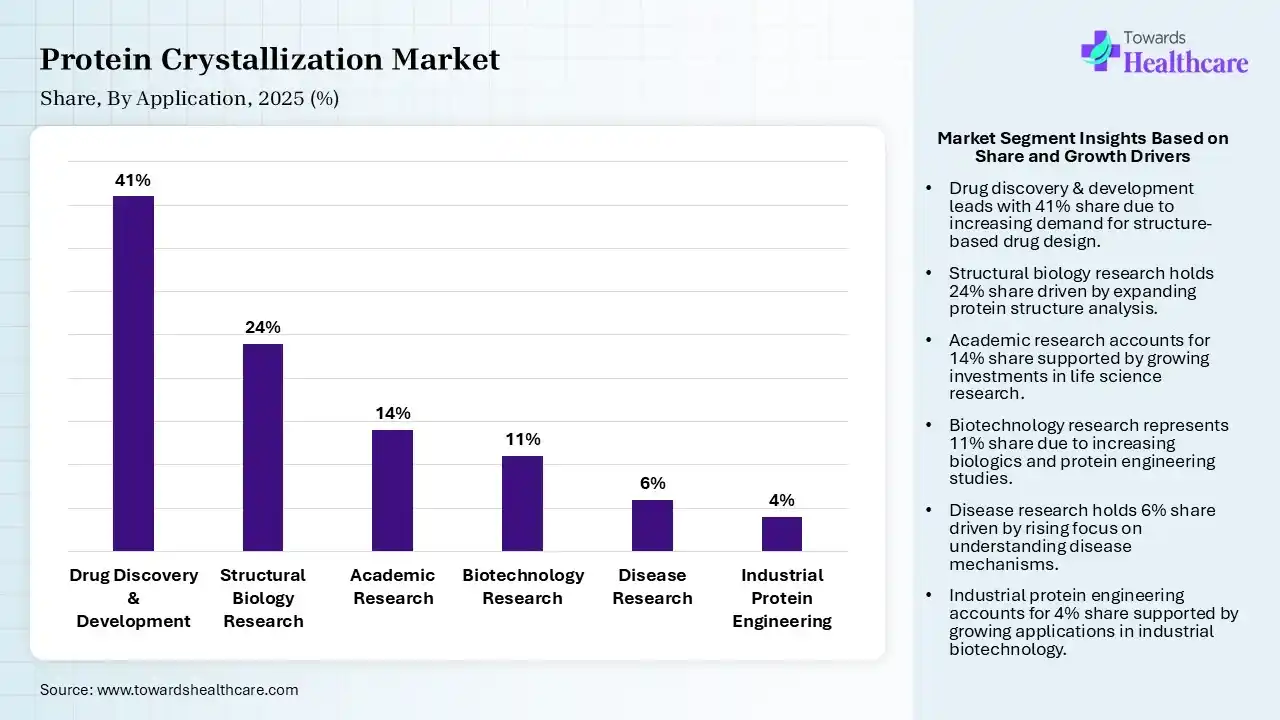
| Segment | Share 2025 (%) |
| Drug Discovery & Development | 41% |
| Structural Biology Research | 24% |
| Academic Research | 14% |
| Biotechnology Research | 11% |
| Disease Research | 6% |
| Industrial Protein Engineering | 4% |
The Drug Discovery & Development Segment Dominated the Protein Crystallization Market With 41% in 2025
The drug discovery & development segment held the largest revenue share of 41% of the market in 2025 and is expected to grow with the fastest CAGR of 10.20% during the forecast period, driven by the expansion of structure-based drug design globally. Growth in biopharmaceutical pipelines increased screening activity, which contributed to a rise in the use of protein crystallization processes. Precision medicine also increased protein analysis.
The structural biology research segment held the second-largest share of 24% of the protein crystallization market in 2025, due to growing academic funding, which supports research. Synchrotron facilities are improving capabilities, driving the adoption of protein crystallization products. Based on the analysis of Payal Rabde, collaborative projects are also increasing their use in experiments.
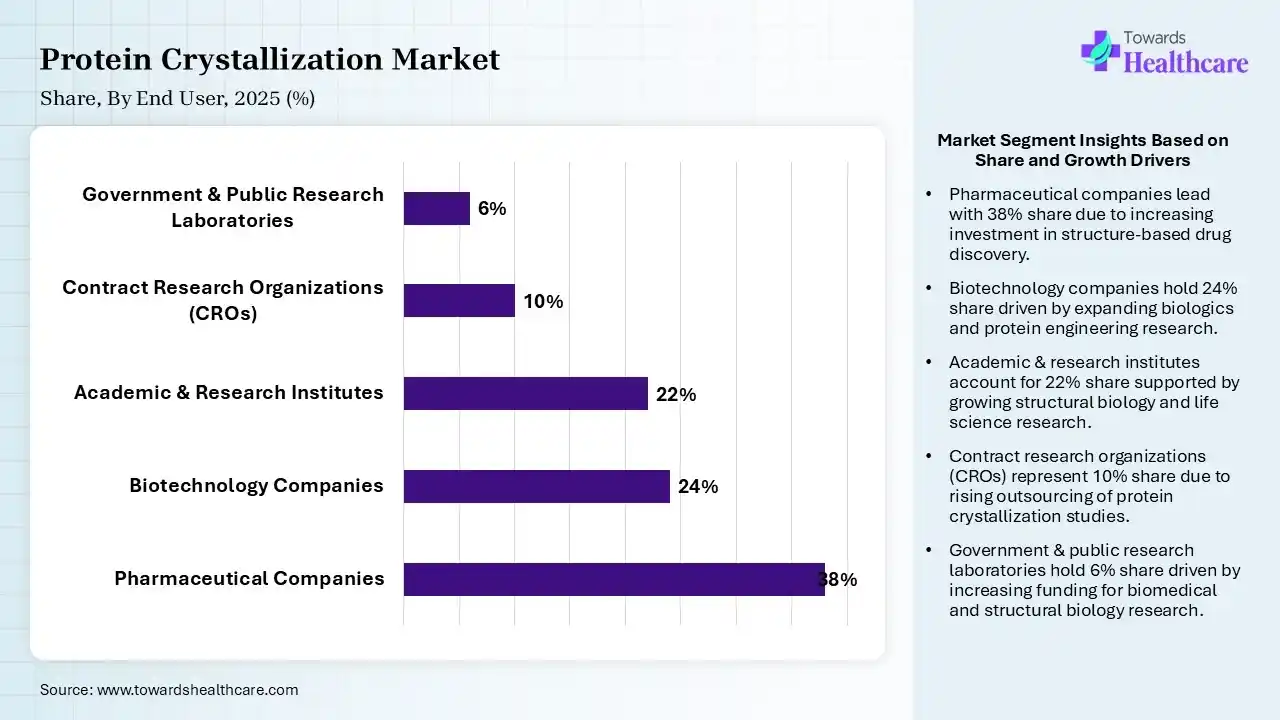
| Share | Segment 2025 (%) |
| Pharmaceutical Companies | 38% |
| Biotechnology Companies | 24% |
| Academic & Research Institutes | 22% |
| Contract Research Organizations (CROs) | 10% |
| Government & Public Research Laboratories | 6% |
The Pharmaceutical Companies Segment Dominated the Protein Crystallization Market With 38% in 2025
The pharmaceutical companies segment contributed the biggest revenue share of 38% of the market in 2025, driven by large R&D budgets, which increased investments. Drug pipelines required structural characterization, which increased the adoption of protein crystallization technologies. Automation also enhanced laboratory productivity.
The biotechnology companies segment held the second-largest share of 24% of the protein crystallization market in 2025 and is expected to gain the highest share with a CAGR of 10.30% during the forecast period, due to rapid expansion of biologics development. Startups are investing in structural platforms, driving the demand for protein crystallization products. Growing innovations in protein therapeutics also accelerate their demand.
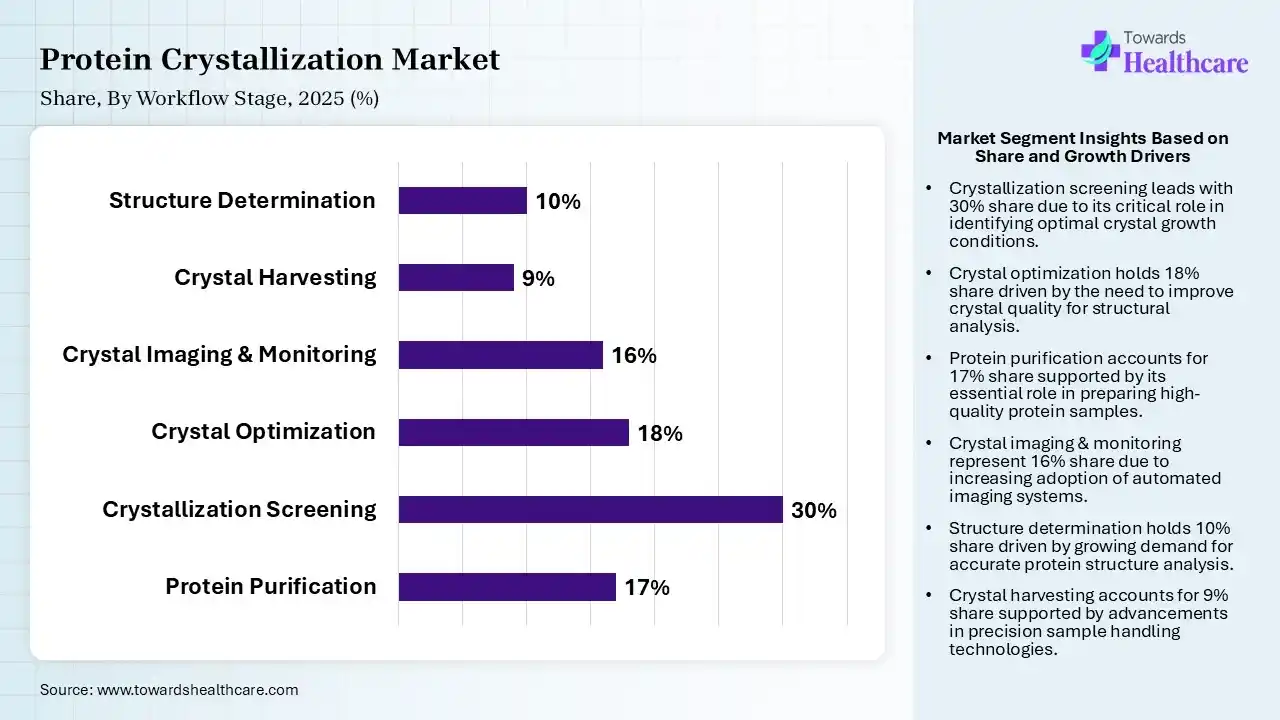
| Segment | Share 2025 (%) |
| Protein Purification | 17% |
| Crystallization Screening | 30% |
| Crystal Optimization | 18% |
| Crystal Imaging & Monitoring | 16% |
| Crystal Harvesting | 9% |
| Structure Determination | 10% |
The Crystallization Screening Segment Dominated the Protein Crystallization Market With 30% in 2025
The crystallization screening segment accounted for the highest revenue share of 30% of the market in 2025, driven by high-throughput screening, which accelerated discovery. Large reagent libraries improved success rates, which increased their adoption. Automation supported reproducibility, which encouraged their use.
The crystal imaging & monitoring segment held the second-largest share of 16% of the protein crystallization market in 2025 and is expected to show the highest growth with a CAGR of 10.40% during the forecast period, due to AI-powered imaging, which improves identification. Remote monitoring also increases efficiency, driving demand. Digital laboratories accelerate deployment, promoting their use.
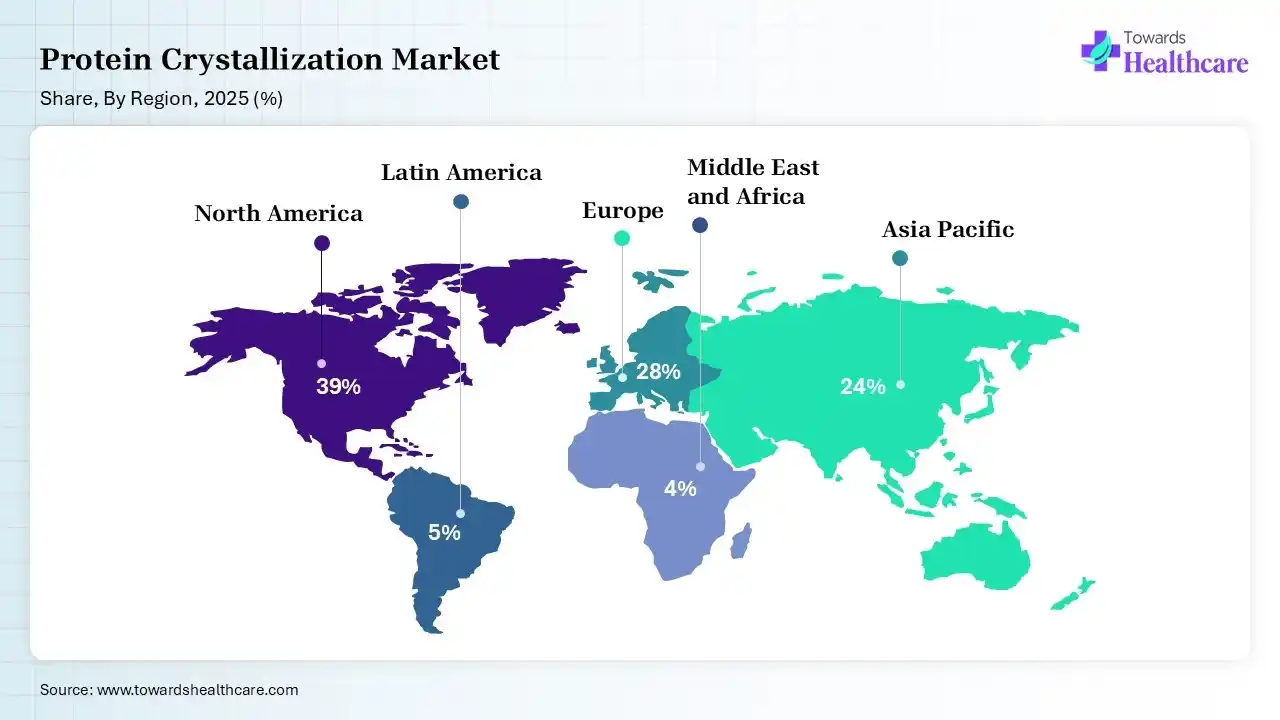
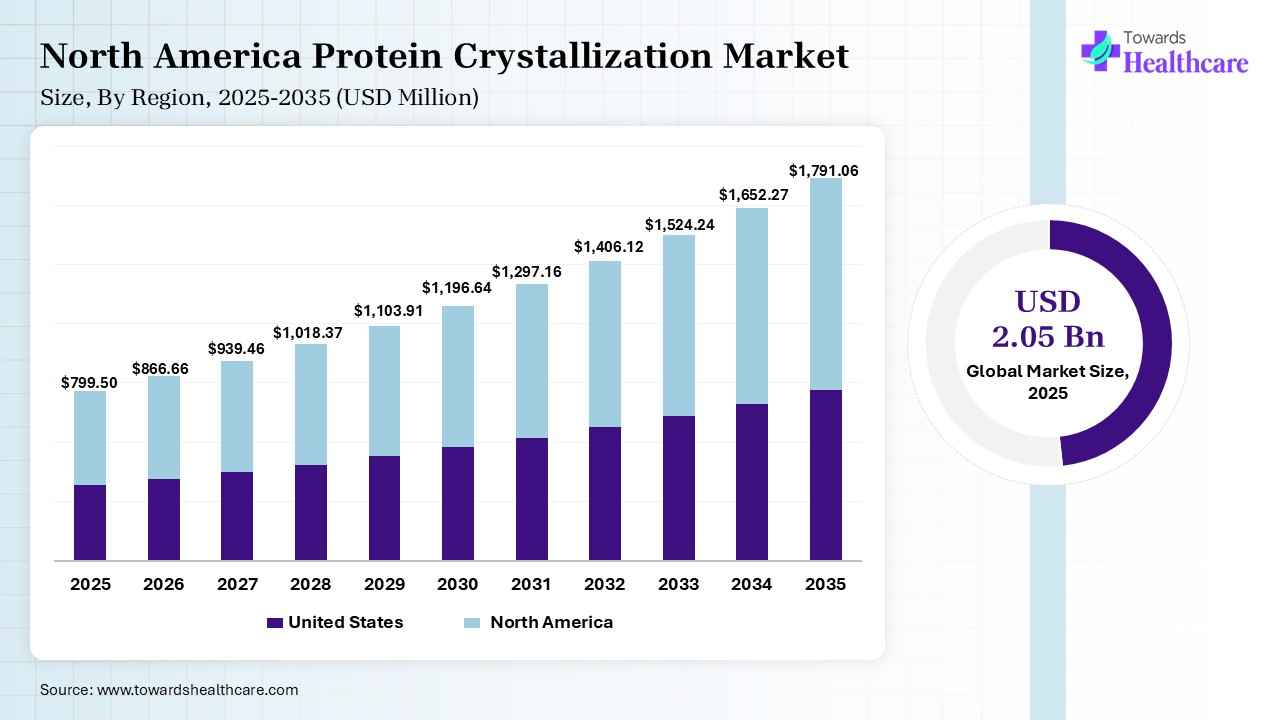
North America dominated the market with 39% in 2025, due to strong pharmaceutical investment, which increased the demand for protein crystallization products. The presence of advanced research infrastructure and government funding also supported their adoption. High automation accelerated workflows, which increased their demand, while growth in the adoption of biologics also increased their use. A rise in the focus on patient-based therapeutics and precision medicines also increased their innovations, where new collaborations also contributed to the market growth.
US Market Trends
U.S. held a 31% share of the protein crystallization market in 2025 and is expected to grow with the highest CAGR of 8.5% during the studied years, driven by the presence of the largest structural biology ecosystem. Major biopharma investments continued the adoption of protein crystallization products, where a rise in technology innovations also supported their growth. A rise in the demand for targeted therapies also increased their use, where the presence of major companies such as Formulatrix, Inc., serving 1478 employee and operating around 2,735 customer sites, also contributed to their leadership.
Canada Market Trends
Canada held a 5% share in the protein crystallization market in 2025, due to expanding government-funded research activities. According to the information gathered by Payal Rabde, growing academic collaborations are also increasing adoption of protein crystallization technologies, where steady expansion of the biotech sector is also encouraging adoption. Growing interest in protein-based drugs and structural biology are also increasing their use, where increasing investments in precision medicines and molecular research are also driving their demand. Advancements in automated crystallization technologies are also increasing their innovations.
Europe held a 28% share of the market and is expected to grow significantly during the forecast period, due to the presence of a strong academic research base. Expanding collaborative EU projects and biotechnology investments are also increasing the adoption of protein crystallization products. Growing government funding and collaboration are also increasing their use for various applications. Rising demand for biologics and other protein-based therapeutics are also increasing their adoption rates, where expanding protein engineering, targeted therapies, and precision medicine are also driving their demand, enhancing market growth.
Germany Market Trends
Germany held an 8% share in the protein crystallization market in 2025, driven by the presence of a strong biotechnology ecosystem. Growth in industrial R&D activities also increased the demand for protein crystallization products, where the presence of advanced laboratories increased adoption. Growth in investments and high adoption of automated crystallization technologies also promoted innovations. The presence of skilled personnel and rise in interest for biologics and biosimilars also led to new collaborations, which increased the adoption of new technologies. Growth in adoption of advanced therapies and AI technologies also increased their use and advancements.
UK Market Trends
UK held a 6% share in the protein crystallization market in 2025 and is expected to witness the fastest growth with a CAGR of 8.5% over the forecast period, due to the presence of world-class structural biology centers. Increasing drug discovery investments are also driving the adoption of protein crystallization products, where growing innovations are also strengthening their demand. Growing government support is also increasing the adoption of high-throughput and automated crystallization technologies, where increasing drug discoveries and protein science R&D are also encouraging their usage.
Asia Pacific held a 24% share of the market in 2025 and is expected to grow at the fastest CAGR of 10.30% during the forecast period, due to expanding pharmaceutical manufacturing. Growing government R&D funding is increasing the use of protein crystallization products, where an expanding biotechnology ecosystem is also accelerating their adoption. Increasing demand for precision medicine, personalized therapies, and biologics is also driving their demand, where a rise in technological advancements is supporting the development of new products, promoting market growth.
China Market Trends
China held a 9% share of the protein crystallization market in 2025, driven by a continued rise in major research investments. Rapid expansion of biopharma production also increased the demand for protein crystallization technologies, where a rise in automation adoption also increased their innovations. Growth in drug discovery and protein research also increased their use, where continuous use of vaccines and protein-based therapeutics also increased their adoption rate. Strong government support and new collaborations also enhanced their accessibility and promoted their innovations.
India Market Trends
India held a 4% share in the protein crystallization market in 2025 and is expected to expand rapidly with a CAGR of 11% in the coming years, due to rapid biotech expansion. Growing government research initiatives are also increasing the demand for protein crystallization products, while the growing CRO industry is also driving their demand. Increasing generic drug development and life science research activities are also increasing their use, where rising demand for vaccines and advanced therapies are also promoting their utilization. Increasing healthcare expenditure, technological advancements, and collaborations are also increasing their use and innovations.
Latin America held a 5% share in the market in 2025 and is expected to show lucrative growth during the forecast period, due to expansion of biotechnology research. Increasing healthcare investments are driving the demand for protein crystallization technologies, where new academic collaborations are also encouraging their use. Growing government funding is encouraging drug discoveries, new technologies adoption, and biologics development, fueling their demand. Emerging startups, a shift towards advanced technologies, and demand for personalized therapies are also promoting market expansion.
Brazil Market Trends
Brazil held a 2.50% share in the protein crystallization market in 2025 and is expected to gain the highest market share with a CAGR of 8% during the forecast period, driven by the largest regional research market. Government initiatives supported laboratories, which increased the adoption of protein crystallization products, while growth in biotech activities also encouraged their use. The presence of well-established institutes also contributed to a rise in genomics, protein structure, and structural biology research, where growth in contract research and collaborations also contributed to the high demand for protein crystallization technologies.
The rest of Latin America held a 1.50% share in the protein crystallization market in 2025, due to improving regional research capacity. Growing infrastructure investments are increasing the adoption of advanced protein crystallization technologies, while increasing international partnerships are also supporting their growth. A rising number of researchers, drug discovery, and contract research activities are also increasing their demand, where government incentives are accelerating their adoption. Additionally, growing demand for advanced therapies and personalized products are also increasing their use.
MEA held a 4% share in the market in 2025 and is expected to show notable growth during the forecast period, due to the gradual development of research infrastructure. Government investments are also supporting biotechnology innovations, increasing the demand for protein crystallization products, where increasing healthcare innovations are also driving their demand. Growing interest in precision medicine is also increasing their use for R&D purposes, where strategic partnerships are enhancing their availability. Furthermore, growing technological advancements and increasing awareness are also propelling the market growth.
Saudi Arabia Market Trends
Saudi Arabia held a 1.20% share in the protein crystallization market in 2025, driven by expansion of national research initiatives. Increased life science investments and improved laboratory capabilities also increased the use of protein crystallization products. A rise in funding also supported translational research and biomedical research, which increased the demand for their technologies, where advancements in genomics and protein-based therapeutics also encouraged their adoption. Technological advancements also increased the development of automated systems and AI integration, which attracted clients.
UAE Market Trends
United Arab Emirates (UAE) held a 0.90% share in the protein crystallization market in 2025 and is expected to show the fastest growth with a CAGR of 8.2% over the forecast period, due to the development of biotechnology hubs. Depending on Payal Rabde’s survey, rising international collaborations are also increasing the demand for protein crystallization products, while growing research funding is also increasing their use. Growing government support is driving the adoption of various technologies and accelerating R&D activities, where rising demand for biologics, advanced therapies, and biosimilars is also increasing their demand. Expanding healthcare modernization is also increasing the development of advanced technologies.
R&D
Clinical Trials and Regulatory Approvals
Formulation and Final Dosage Preparation
Packaging and Serialization
Distribution to Hospitals, Pharmacies
Patient Support and Services
| Companies | Headquarters | Solutions |
| Rigaku Holdings Corporation | Akishima, Japan | XtaLAB Synergy-R, Miniflex, and HyPix-6000HE |
| Jena Bioscience GmbH | Jena, Germany | JBScreen series and Crystallization Plates |
| Bruker Corporation | Billerica, U.S. | D8 VENTURE, PROTEUM3, and METALJET |
| MiTeGen, LLC | Ithaca, U.S. | MiteGen Goniometer Bases, MicroMounts, and InSitu Crystallization Trays |
| Formulatrix, Inc. | Bedford, U.S. | Rock Imager, MANTIS, and NT8 |
| Corning Incorporated | New York, U.S. | CrystalEX and Corning 96-Well Next Generation Crystallization Plates |
| Hampton Research Corp. | Aliso Viejo, U.S. | Crystal Screen, VDX Plates, and Index |
| Mettler-Toledo International, Inc. | Greifensee, Switzerland | Crystallization Control Software, EasyMax, and ReactIR |
| Molecular Dimensions Ltd. | Maumee, UK | Morpheus Fusion, PGA Screen, and The BCS Eco Screen |
| Tecan Group Ltd. | Mannedorf, Switzerland | CrysScreen software and Freedom EVO Workstation |
In July 2026, after publishing a new approach replacing a tedious, unpredictable process with intentional design by Northwestern University chemists, Zhenyu Han, PhD, the paper’s first author highlighted, “Over 30 years ago, the Mirkin group proposed the idea to take nanoparticles and modify them with DNA to create programmable atom equivalents.” “Nature’s nanoparticles are proteins. The difference between synthetic nanoparticles and proteins is that proteins are naturally uniform and molecularly precise. So, if we modify proteins with DNA and assemble them, we can form high-quality, atomically precise crystals, overcoming a decades-old challenge in the field of DNA-programmable assembly.”
Based on Payal Rabde's analysis, the protein crystallization market is expected to show notable growth during the forecast period due to a wide range of factors. The rise in the demand for biologics, precision medicines, growing drug discoveries, R&D investments, and rare disease research are increasing the adoption of protein crystallization products and technologies. Advancements in automated high-throughput platforms, microfluidic systems, integration of complementary structural biology technologies, outsourcing trends, and AI integration are also driving the market growth. Segments such as consumables, microfluidics, membrane proteins, structural biology research, biotechnology companies, crystallization screening, and crystal imaging & monitoring are expected to show significant growth, which will increase new opportunities for investments. Similarly, companies like Bruker Corporation, Rigaku Holdings Corporation, Formulatrix, Inc., Mettler-Toledo International, Inc., and Jena Bioscience GmbH are anticipated to show considerable growth, which will attract new funding and investments.
By Product
By Technology
By Protein Type
By Application
By End User
By Workflow Stage
By Region











Principal Consultant
Payal Rabde is a Healthcare Market Research Analyst at Towards Healthcare Research & Consulting with 4+ years of experience in pharmaceuticals, biotechnology, medical devices, and life sciences.
Learn more about Payal Rabde

Reviewed By
Aditi Shivarkar is a seasoned professional with over 14 years of experience in healthcare market research. As a content reviewer, Aditi ensures the quality and accuracy of all market insights and data presented by the research team.
Learn more about Aditi Shivarkar









