

Pipeline Programs

CGT Companies Tracked

Manufacturing Facilities


The global tissue regenerative therapy market size was estimated at USD 15.04 billion in 2025 and is predicted to increase from USD 16.85 billion in 2026 to approximately USD 46.88 billion by 2035, expanding at a CAGR of 12.04% from 2026 to 2035.
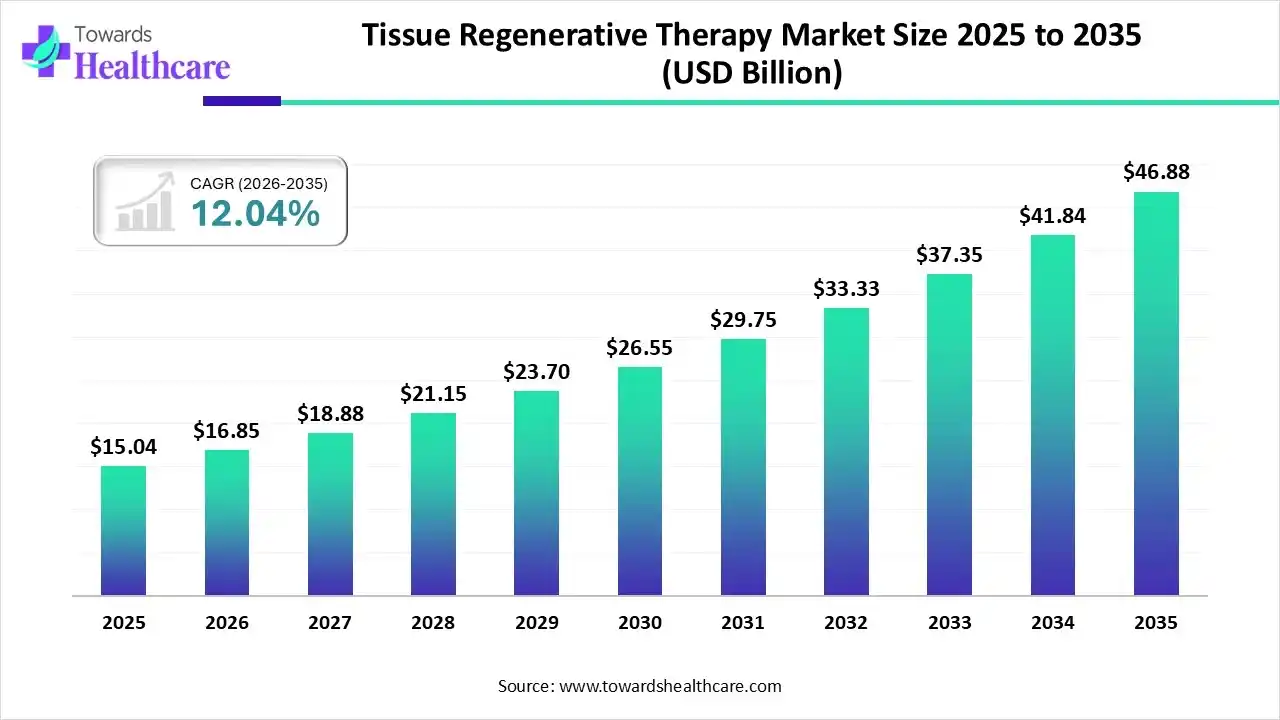
The tissue regenerative therapy market is growing as regenerative therapy shows an ever-rising interdisciplinary sector goal to create biological replacements for injured tissues and dysfunctional organs.
The tissue regenerative therapy market is expanding due to regenerative therapes has massive potential to restore or replace tissues and organs injured by age, disease, or trauma, also to normalize inherited defects. This is promising therapies use in preclinical and clinical data to offer extensive support for the possibility of managing both chronic diseases and acute conditions, and for regenerative medicine to assist sicknesses occurring in the broad array of organ systems and contexts. Regenerative medicine is a procedure of treatment that applies the body's own cells to encourage healing.
Integration of AI-driven technology in tissue regenerative therapies drives the growth of the market, as AI-based algorithms analyze vast amounts of data on various materials and fabrication processes to detect appropriate combinations for a particular tissue engineering application. These algorithms simulate the fabrication process and predict the characteristics of the resulting scaffold, which supports investigators in optimizing the design and lowering the time and expenses of the fabrication technology. AI-based technology improves the drug discovery process of regenerative medicine by tackling the main challenges related to the tissue regenerative process.
3D Bioprinting
3D bioprinting includes the accurate deposition of bioinks composed of living cells and biomaterials, allowing the fabrication of multifaceted tissue structures.
Stem Cell Advancements
Stem cell therapy is a new therapeutic stratergies which uses the unique characteristics of stem cells, such as self-renewal and differentiation, to regenerate injured cells and tissues in the patient's body or replace these cells with healthy, fully functional cells by transporting exogenous cells into a patient.
Organ-on-a-Chip Technology
Organ-on-a-chip technology accelerates the time it takes for therapeutic compounds to enter clinical trials by lowering the dependence on animal testing, which is now the most significant method used to appraise the kinetics, efficacy, and safety of therapeutic candidates.
| Key Elements | Scope |
| Market Size in 2026 | USD 16.85 Billion |
| Projected Market Size in 2035 | USD 46.88 Billion |
| CAGR (2026 - 2035) | 12.04% |
| Leading Region | North America by 48% |
| Key Applications | Orthopedic repair, wound healing, skin regeneration, dental regeneration, cardiovascular tissue repair, nerve regeneration, ophthalmology, musculoskeletal disorders |
| Primary End Users | Hospitals, Specialty Clinics, Ambulatory Surgical Centers, Research Institutes, Academic Medical Centers |
| Key Challenges | High treatment costs, regulatory complexity, reimbursement limitations, manufacturing scalability, long clinical approval timelines |
| Measurable Values | USD Millions/Units/Volume |
| Market Segmentation | By Product Type, By Applications, By Distribution Channel, By Region |
| Top Key Players | Novartis AG, Gilead Sciences, Inc., Smith & Nephew plc, Medtronic plc, Stryker Corporation, Integra LifeSciences Corporation |
Which Product Led the Tissue Regenerative Therapy Market in 2025?
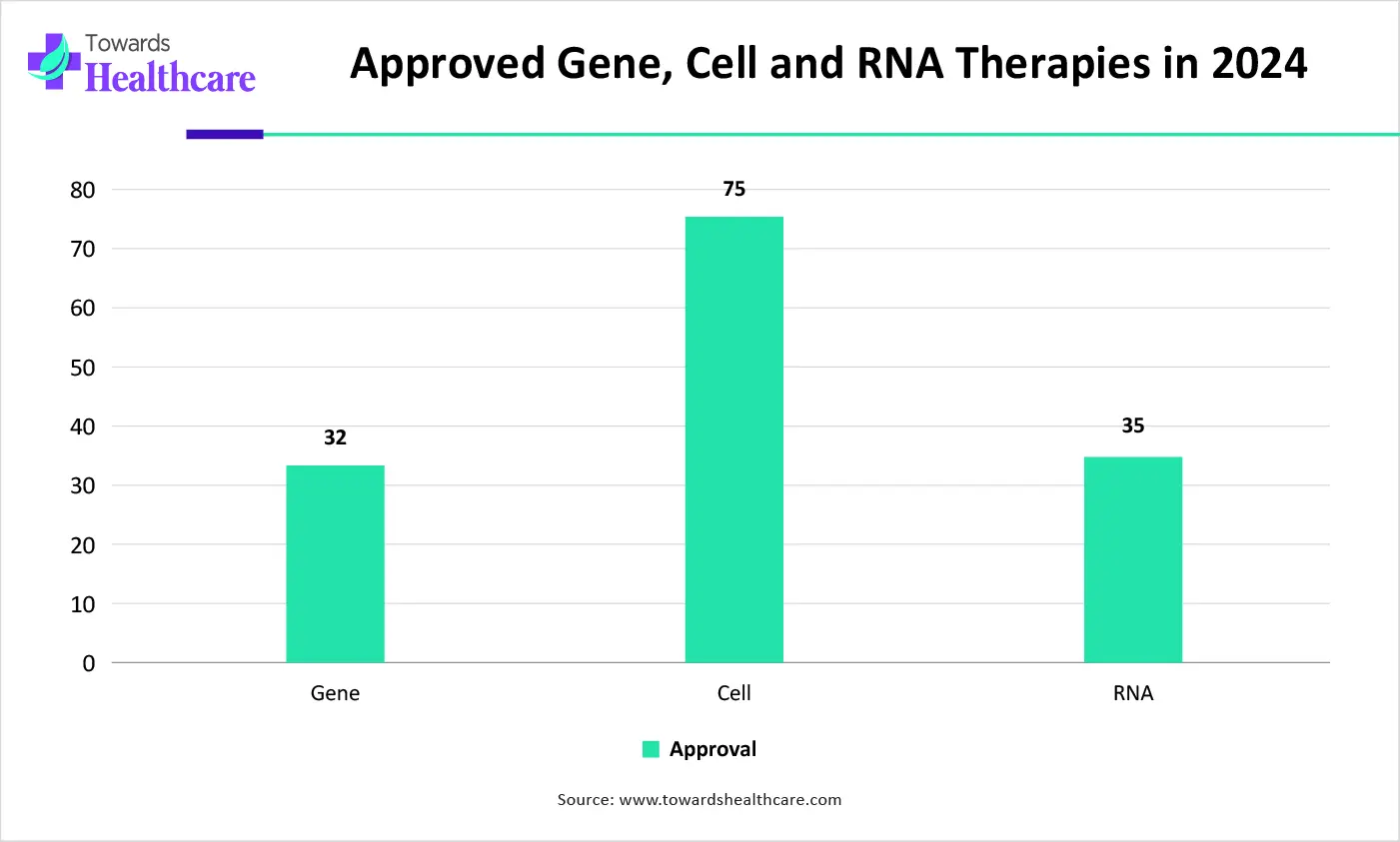
In 2025, the cell therapy segment held the dominant market share with approximately 55% share in 2025, as cell therapy plays a significant role in reducing inflammation and modulating the immune system, creating it a promising treatment choice for different health conditions. It also suppport to regenerate or repair of damaged tissues, reduces inflammation, and improves immunity.
Gene Therapy
Whereas the gene therapy segment is estimated to be the fastest-growing in the market, as gene therapy potentially manages someone with a disease, especially where no other medications have worked. It provides a potential opportunity to manage diseases earlier considered incurable. Gene therapy has huge strength to remove and prevent genetic diseases, like cystic fibrosis, and is a possible cure for heart disease, cancer, and AIDS. For gene therapy to be recognized as a permanent cure for any disorder, it has to be confirmed that the therapeutic DNA presented into the target cells.
Why did the Oncology Segment Dominate the Market in 2025?
The oncology segment was dominant in the tissue regenerative therapy market, with approximately 38% share in 2025, as tissue regenerative therapies have a massive strength to transform cancer research by offering mechanisms to detect tumorigenesis and migration at metastasis directly. Tissue engineering provides the capability to recapitulate the cancer microenvironment and its complex and multifold characteristics. It promotes natural tissue regeneration, causing an advance in recovery results in patients who have undergone medical interventions.
Wound Care
Whereas the wound care segment is anticipated to be the fastest-growing in the market, as regenerative medicine offers a number of ways for speed-ups and encouraging wound healing. By actively promoting tissue repair and regeneration, regenerative therapies support wound healing rapidly. Therapy supports diabetic foot wounds and pressure sores that heal rapidly. It supports tissue regeneration even in challenging or chronic wounds.
Why did the Hospitals Segment Dominate the Market in 2025?
The hospitals segment was dominant in the tissue regenerative therapy market with approximately 55% share in 2025, as regenerative medicine aims to harness the body’s natural healing process to restore normal function, improve quality of life, and reduce the requirement for chronic treatment or transplant. Tissue regeneration therapy in hospitals provides important benefits, including quicker healing, lower requirement for invasive surgery, and long-term, sustainable pain relief by repairing rather than managing symptoms.
Specialty Clinics
Whereas the specialty clinics segment is anticipated to witness the fastest growth in the market, as regenerative therapies accelerate the treatment process and promote tissue regeneration, causing to rapid recovery and fewer post-treatment challenges. Regenerative medicine is a multipurpose sector that provides advantages to a wide range of individuals, irrespective of age or particular healthcare condition. Allows recovery in organs and tissues damaged by injury or disease.
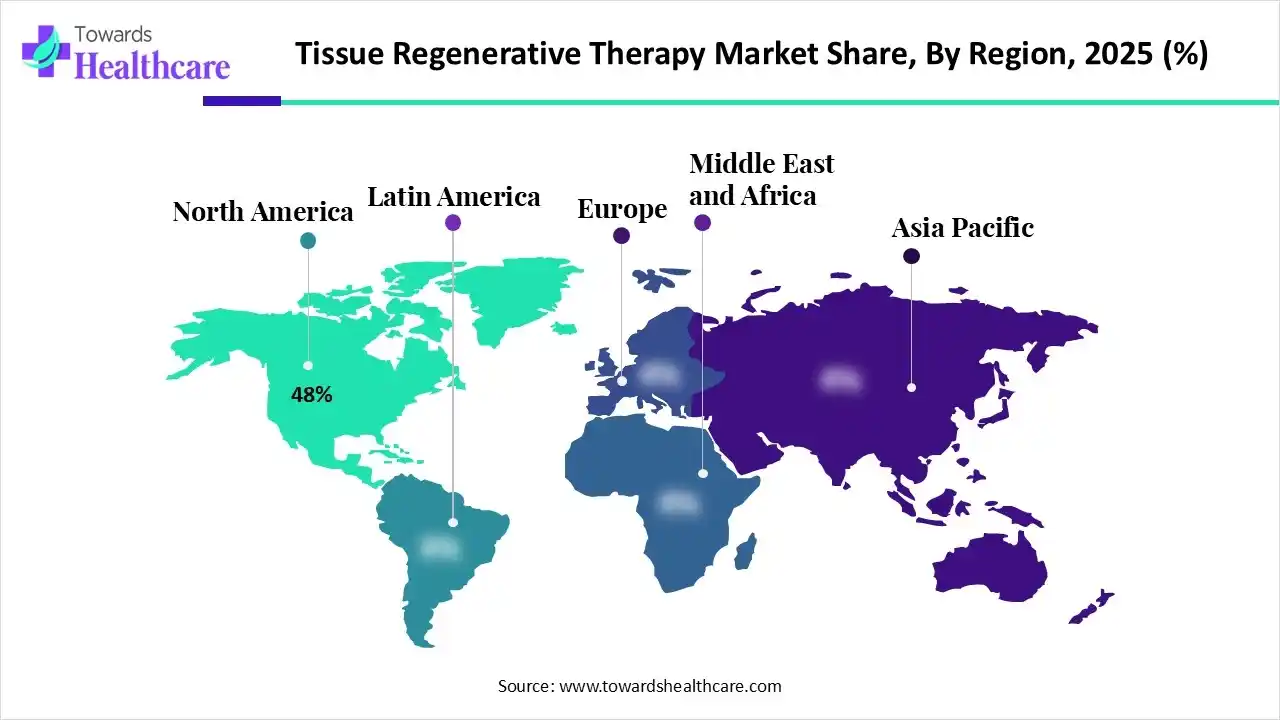
In 2025, North America dominated the tissue regenerative therapy market, with a revenue of approximately 48%, driven by advancements in tissue regenerative therapies, it allows recovery in organs and tissues damaged by injury or disease. Regenerated tissue is stronger and more elastic, enhancing long-term function and structural integrity. Access to advanced apparatus such as PRP, BMAC, and 3D bioprinting, which are not available in general practices, contributes to the growth of the market.
U.S. Market Trends
The U.S. is at the forefront of integrating 3D bioprinting technologies, which are applied to create functional, modified tissue structures and organs, offering a competitive superiority in developing advanced, patient-centric treatments. With a massive, aging population suffering from chronic conditions, the U.S. has a massive demand for regenerative services that provide alternatives to organ donation or outdated surgeries.
Canada Market Trends
The market for tissue regenerative therapies in Canada is expected to continue its rapid growth over the next several years due primarily to an increase in the number of patients suffering from chronic wounds and orthopedic disorders, and an increase in investment into regenerative medicine research. A high level of government support, a sophisticated healthcare infrastructure, and a growing number of people utilizing stem cell therapies and tissue engineering technologies are driving market growth in both clinical and research scenarios.
Mexico Market Trends
The market for tissue regenerative therapies in Mexico continues to grow at a steady rate, which can be attributed to improvements in healthcare infrastructure, rising demand for advanced wound care treatments, and improved access to regenerative therapies. The increasing investment in biotechnology and increasing awareness of regenerative medicine provide the main conditions to promote innovative tissue repair therapies in Mexico.
Asia Pacific is expected to see rapid growth in the tissue regenerative therapy market, driven by increasing government support in the region are profoundly spending in regenerative medicine (RM) to lower medical care burdens. Large-scale, affordable manufacturing of cell therapies, lowering treatment expenses and enhancing accessibility.
India Market Trends
In India, increasing medical care infrastructure and the growth of medical tourism for advanced stem cell products. India has grown rapidly as a healthcare hub for regenerative medicine because of its advanced clinical research, ethical framework, and growing evidence supporting stem cell therapy. A growing number of clinical trials and translational research projects on stem cells and cell-driven therapies are being conducted in universities, hospitals, and research laboratories.
Japan Market Trends
The tissue regenerative therapy market in Japan is benefiting fully from government assistance with regenerative medicine, advanced biomedical research, and an aging population. Continued commercialization of cell-based therapies is creating a growing demand for new and innovative therapeutic solutions across many different areas of medicine through tissue engineering and related technologies.
China Market Trends
The Increasing demand for regenerative medicine is providing exciting opportunities for growth in the tissue regenerative therapy market in China. The rapid expansion of capabilities in the field of biotechnology, increasing levels of governmental support for regenerative medicine, and an increased demand for healthcare services from domestic consumers can all be tied to the accelerating development of the tissue regenerative therapy market in China. Increasing investment in stem cell research, tissue engineering, and developed and advanced biomaterials will positively impact the overall market's growth in China.
Europe is significantly growing in the tissue regenerative therapy market, due to the growing incidence of deteriorating diseases and a rising aging population. Increased spending for research and development hastens innovation in tissue engineering and stem cell therapies. Major companies consult the European Medicines Agency (EMA) to identify whether a medicine they are developing is a progressive therapy medicinal product (ATMP), which drives the growth of the market.
Germany Market Trends
Germany is one of the top countries in Europe when it comes to the market for tissue regenerative therapy. The strong demand for new ways to regrow or repair tissue has helped create a large number of jobs for doctors, designers, and scientists. The extensive support of Germany's well-developed healthcare system and research programs has also played a role in Germany's position as a leader in this area.
Netherlands Market Trends
Tissue regenerative therapy is a growing industry in the Netherlands. Strong support from the Dutch life sciences sector, as well as strong research facilities, has helped create a collaborative environment among the academic sector and biotechnology companies, driving innovation in tissue regeneration technologies.
France Market Trends
France has invested heavily in developing new therapies to help patients recover from chronic illnesses. Because of this, the market for tissue regenerative therapy in France has experienced steady growth. In addition to having a strong healthcare system, the French healthcare system has made significant investments in developing new cell-based therapies and other advanced biomaterials, which further support the growth of innovative therapies to restore damaged tissue.
| Ecosystem Segment | Description |
| Technology Providers | Develop stem cell technologies, biomaterials, tissue engineering platforms, extracellular matrices, and regenerative biomolecules. |
| Product Manufacturers | Manufacture regenerative implants, biologics, scaffolds, allografts, xenografts, collagen matrices, and wound care products. |
| Service Providers | Clinical treatment providers, regenerative medicine clinics, specialized hospitals, and laboratory services. |
| Platform Providers | Provide cell processing, tissue engineering, bioprinting, manufacturing, and regenerative therapy platforms. |
| CROs/CDMOs | Support clinical development, GMP manufacturing, biologics production, cell processing, and commercialization. |
| Software Vendors | Supply imaging, digital pathology, manufacturing automation, quality management, and laboratory informatics software. |
| Research Institutions | Universities, translational medicine centers, and regenerative medicine research institutes developing novel therapies. |
| End-User Industries | Healthcare, Biotechnology, Pharmaceutical, Medical Device, Academic Research, Sports Medicine, Dental Care |
R&D:
Manufacturing Processes:
Patient Services:
| Tier 1 | Tier 2 | Tier 3 | |
| Typical Market Influence | 68% | 22% | 10% |
| Tier 1 | ||||
| Company Name | Headquarters | Country | Why Relevant to This Market | Key Products/Services |
| Smith+Nephew plc | Watford, England | United Kingdom | Global leader in advanced wound management and regenerative biologics | GRAFIX®, REGENETEN™, advanced wound matrices, orthopedic regenerative solutions |
| Integra LifeSciences Holdings Corporation | Princeton, New Jersey | United States | Major regenerative medicine and tissue engineering company | Integra Dermal Regeneration Template, collagen matrices, nerve repair products |
| Organogenesis Holdings Inc. | Canton, Massachusetts | United States | Leading commercial regenerative medicine company | Apligraf®, Dermagraft®, PuraPly®, Affinity® |
| Tier 2 | ||||
| Company Name | Headquarters | Country | Why Relevant to This Market | Key Products/Services |
| AxoGen, Inc. | Alachua, Florida | United States | Specialized peripheral nerve regeneration company | Avance® Nerve Graft, Axoguard® products |
| CollPlant Biotechnologies Ltd. | Rehovot | Israel | Pioneer in recombinant human collagen and regenerative biomaterials | rhCollagen platform, bioinks, tissue scaffolds |
| Cook Biotech Incorporated | West Lafayette, Indiana | United States | Extracellular matrix technologies for tissue repair | SIS-based regenerative biomaterials |
| Tier 3 | ||||
| Company Name | Headquarters | Country | Why Relevant to This Market | Key Products/Services |
| Aspect Biosystems Ltd. | Vancouver, British Columbia | Canada | Innovator in bioprinted tissue therapeutics | 3D bioprinted tissue platform |
| TELA Bio, Inc. | Malvern, Pennsylvania | United States | Commercializing regenerative soft tissue reconstruction products | OviTex®, tissue reinforcement matrices |
| BioStem Technologies Inc. | Pompano Beach, Florida | United States | Emerging placental-derived regenerative medicine company | Vendaje®, BioREtain®, amniotic tissue products |
Strengths
Weaknesses
Opportunities
Threat
In July 2026, INTENT Biologics announced that the U.S. FDA granted Breakthrough Therapy Designation to PEP Biologic™ for diabetic foot ulcers.“Breakthrough Therapy designation is a transformational milestone for INTENT Biologics and for the field of advanced wound care,” said Suneet Varma, Chief Executive Officer of INTENT Biologics.
In May 2026, Conexeu Sciences launched a preclinical development program for its B.R.E.A.S.T.™ bioregenerative matrix platform with the Wake Forest Institute for Regenerative Medicine. "The tissue-organ printing system at WFIRM is one of the tools that allows ReMDO to deliver on its mission, accelerating the translation of regenerative medicine technologies by de-risking innovative products and advancing scalable biomanufacturing. Conexeu’s progress on 3D printing is a strong example of that work in action," said Joshua Hunsberger, PhD, Chief Technology Officer, ReMDO.
By Product Type
By Applications
By Distribution Channel
By Region





Principal Consultant
Rohan Patil is a seasoned market research professional with over 5+ years of focused experience in the healthcare sector, bringing deep domain expertise, strategic foresight, and analytical precision to every project he undertakes.
Learn more about Rohan Patil

Reviewed By
Aditi Shivarkar is a seasoned professional with over 14 years of experience in healthcare market research. As a content reviewer, Aditi ensures the quality and accuracy of all market insights and data presented by the research team.
Learn more about Aditi Shivarkar









