Pipeline Programs

CGT Companies Tracked

Manufacturing Facilities


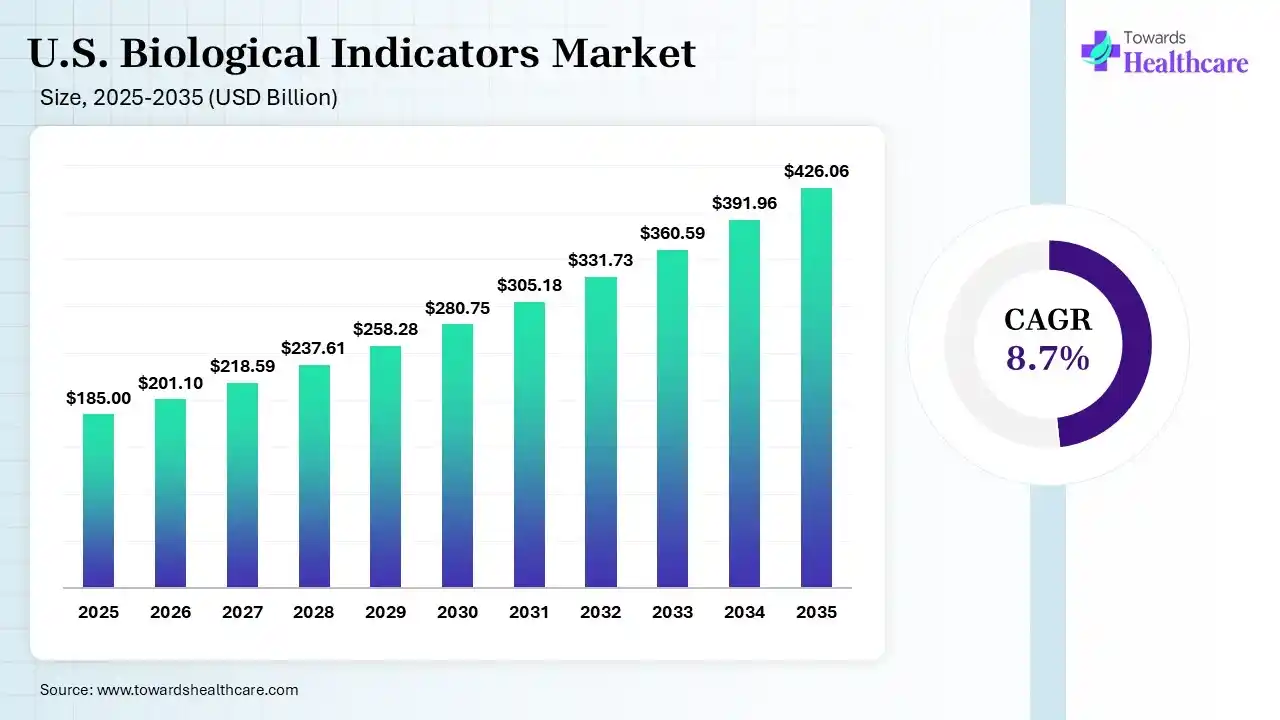
The U.S. biological indicators market size was estimated at USD 185 million in 2025 and is predicted to increase from USD 426.06 million in 2026 to approximately USD 426.06 million by 2035, expanding at a CAGR of 8.7% from 2026 to 2035.
Biological indicators are microbiological test systems that contain highly resistant bacterial spores used to verify the effectiveness of sterilization processes. They are considered the gold standard for sterilization monitoring because they directly demonstrate whether a sterilization cycle has successfully destroyed microorganisms. Biological indicators are widely used in hospitals, pharmaceutical manufacturing, biotechnology laboratories, and medical device sterilization to ensure safety, quality, and regulatory compliance.
The use of biological indicators is increasing due to strict infection control requirements, growing emphasis on patient safety, and rising adoption of advanced sterilization methods. Key trends, results, automated monitoring systems, and digital records-keeping for improved traceability. Technological advancements such as fluorescence-based detection, self-contained biological indicators, and smart sterilization monitoring solutions are enhancing the speed, accuracy, and reliability of sterilization validation processes.
The U.S. biological indicators market is growing due to increasing emphasis on infection prevention, stringent sterilization standards, and rising demand for quality assurance in healthcare and pharmaceutical industries. Expanding medical device manufacturing and biopharmaceutical production are further driving adoption, while rapid-readout biological indicators and automated monitoring technologies continue to enhance sterilization validation efficiency and reliability.
Artificial intelligence is transforming the market by improving sterilization monitoring, predictive maintenance, and quality control processes. AI-powered analytics can identify sterilization cycle deviations, reduce human errors, and optimize workflow efficiency through real-time data analysis. Additionally, AI-enabled automation supports faster decision-making, enhances regulatory compliance, and improves traceability, helping healthcare and pharmaceutical facilities achieve more reliable and cost-effective sterility assurance.
Rapid-Readout Biological Indicators
The adoption of rapid-readout biological indicators is increasing as healthcare and pharmaceutical facilities seek faster sterilization validation. These indicators significantly reduce result turnaround times, improving operational efficiency, minimizing equipment downtime, and enabling quicker release of sterilized products while maintaining high sterility assurance standards.
Digitalization and Automation
The integration of digital monitoring systems and automated sterilization tracking is becoming a key market trend. Advanced data management platforms improve traceability, reduce manual errors, simplify regulatory compliance, and provide real-time insights, helping organizations enhance quality control and streamline sterilization workflows.
Expansion of Biopharmaceutical Manufacturing
Growing biopharmaceutical and medical device production is expected to drive future demand for biological indicators. As manufacturing processes become more complex and regulatory requirements tighten, companies will increasingly rely on advanced biological indicators to ensure product safety, process validation, and consistent sterility assurance.
| Table | Scope |
| Market Size in 2026 | USD 201.1 Million |
| Projected Market Size in 2035 | USD 426.06 Million |
| CAGR (2026 - 2035) | 8.7% |
| Historical Data | 2020 - 2023 |
| Base Year | 2025 |
| Forecast Period | 2026 - 2035 |
| Measurable Values | USD Millions/Units/Volume |
| Market Segmentation | By Product Type, By Sterilization Process, By Microorganism, By End User, By Distribution Channel |
| Top Key Players | 3M Health Care, Mesa Laboratories, Inc., STERIS plc, Crosstex International, Inc., Getinge USA, Propper Manufacturing Co., Inc., Terragene North America |
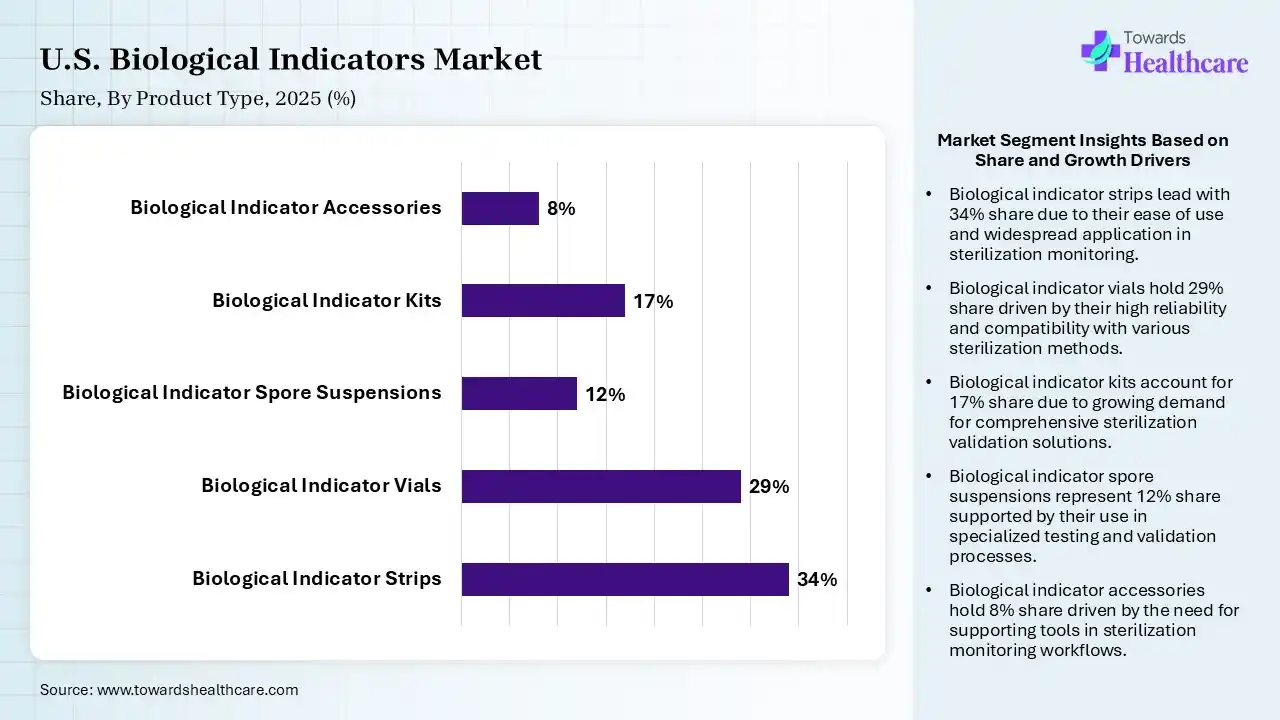
| Segment | Share 2025 (%) |
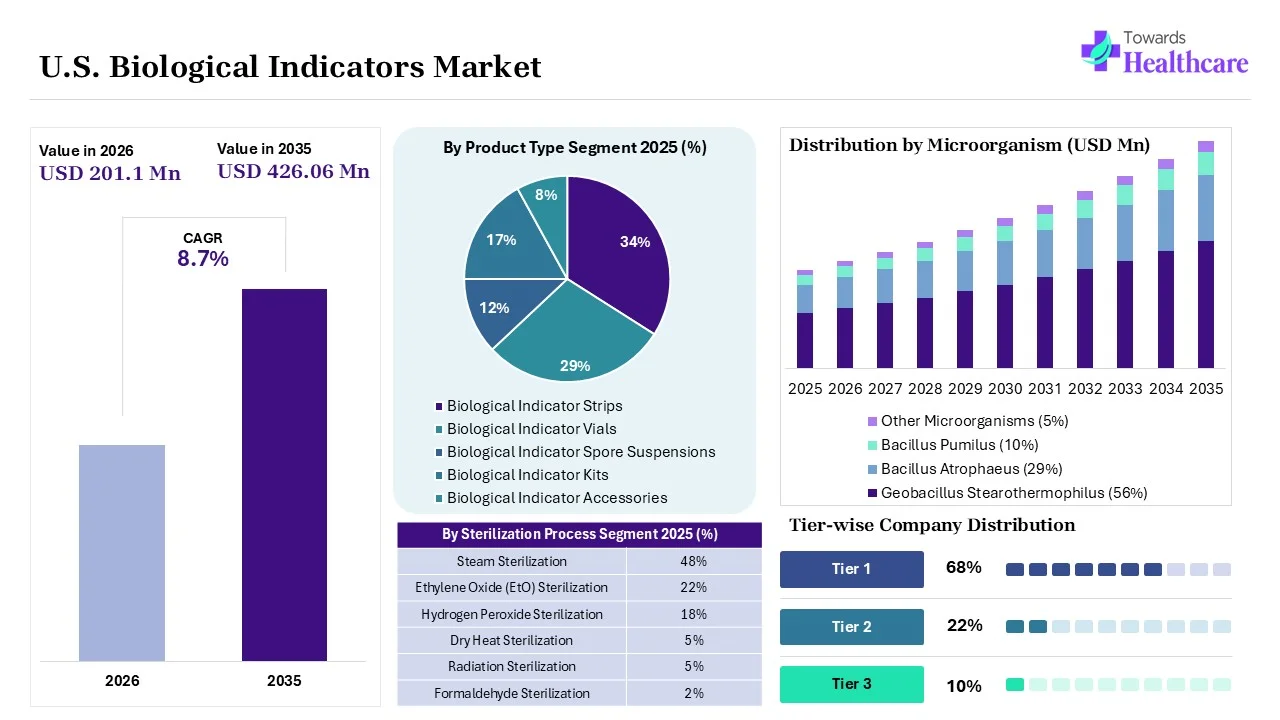
| Biological Indicator Strips | 34% |
| Biological Indicator Vials | 29% |
| Biological Indicator Spore Suspensions | 12% |
| Biological Indicator Kits | 17% |
| Biological Indicator Accessories | 8% |
The Biological Indicator Strips Segment Dominated the U.S. Biological Indicators Market in 2025.
The biological indicator strips segment held a dominant share of 34% in 2025 due to its cost-effectiveness, ease of use, and widespread adoption across hospitals, pharmaceutical facilities, and medical device sterilization centers. These strips provide reliable sterilization verification for various sterilization methods and are compatible with existing monitoring workflows. Their proven accuracy, regulatory acceptance, and ability to support routine sterility assurance continue to drive strong demand.
The biological indicator vials segment held the second-largest share of 29% in 2025 due to its convenience, self-contained design, and ability to provide highly reliable sterilization validation. These vials reduce contamination risks and simplify testing procedures by combining spores and growth media in a single unit. Their widespread use in hospitals, pharmaceutical manufacturing, and medical device sterilization facilities supports strong market demand.
The biological indicator kits segment held a 17% share in 2025 and is expected to grow at the fastest CAGR of 10.3% in the U.S. biological indicators market during the forecast period due to increasing demand for comprehensive sterilization monitoring solutions and simplified testing procedures. These kits offer convenience, improved accuracy, and standardized validation processes, making them attractive for healthcare, pharmaceutical, and medical device facilities. Growing regulatory scrutiny and the need for efficient sterility assurance are further accelerating their adoption.
The biological indicator spore suspensions segment held a 12% market share due to its critical role in sterilization validation, disinfectant efficacy testing, and laboratory research applications. These suspensions provide precise and customizable microbial challenge testing, making them highly valuable in pharmaceutical, biotechnology, and medical device industries. Increasing focus on process validation, quality assurance, and compliance with stringent sterilization standards is further driving segment growth.
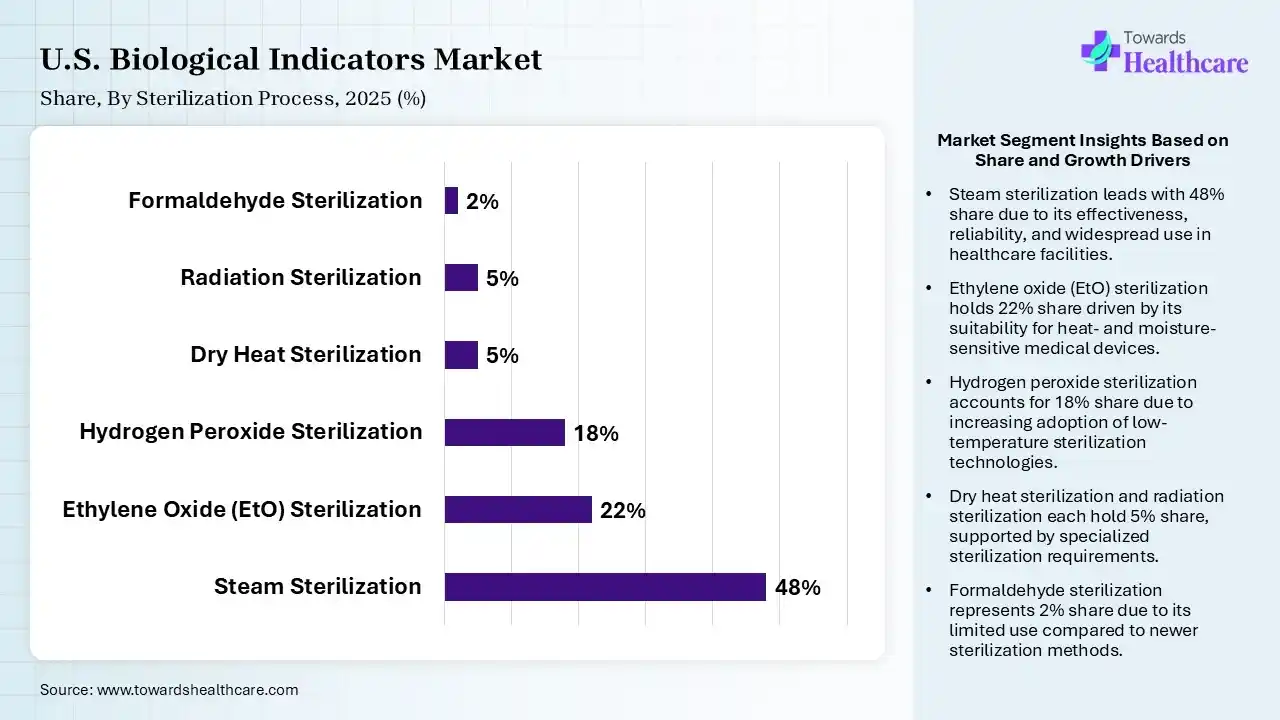
| Segment | Share 2025 (%) |
| Steam Sterilization | 48% |
| Ethylene Oxide (EtO) Sterilization | 22% |
| Hydrogen Peroxide Sterilization | 18% |
| Dry Heat Sterilization | 5% |
| Radiation Sterilization | 5% |
| Formaldehyde Sterilization | 2% |
The Steam Sterilization Segment Led the Market in 2025 with the Largest Share
The steam sterilization segment dominated the U.S. biological indicators market with a share of 48% in 2025 due to its widespread use in hospitals, laboratories, and pharmaceutical facilities. Steam sterilization is highly effective, cost-efficient, and capable of rapidly eliminating microorganisms while meeting stringent regulatory standards. The growing volume of surgical procedures, increasing focus on infection prevention, and extensive use of reusable medical instruments further supported the segment’s market leadership.
The ethylene oxide (EtO) sterilization segment held the second-largest share of 18% in 2025 due to its effectiveness in sterilizing heat and moisture-sensitive medical devices. EtO can penetrate complex device structures and packaging, making it ideal for a wide range of healthcare products. Growing medical device production and stringent sterility requirements continued to drive demand for EtO sterilization monitoring.
The hydrogen peroxide sterilization segment held 18% share in 2025 and is expected to grow at the fastest CAGR of 10.8% in the U.S. biological indicators market during the forecast period due to increasing demand for low-temperature sterilization of heat-sensitive medical devices. The method offers shorter cycle times, leaves no toxic residues, and supports environmentally friendly sterilization practices. Growing adoption in healthcare facilities, coupled with stricter safety regulations and the need for efficient sterilization solutions, is expected to accelerate segment growth during the forecast period.
The dry heat sterilization segment held a 5% market share due to its effectiveness in sterilizing moisture-sensitive materials, glassware, metal instruments, powders, and oils that cannot be processed using steam. The method is valued for its simplicity, reliability, and ability to achieve sterilization without chemical residues. Increasing demand from pharmaceutical manufacturing, research laboratories, and medical device applications is further supporting the segment’s growth.
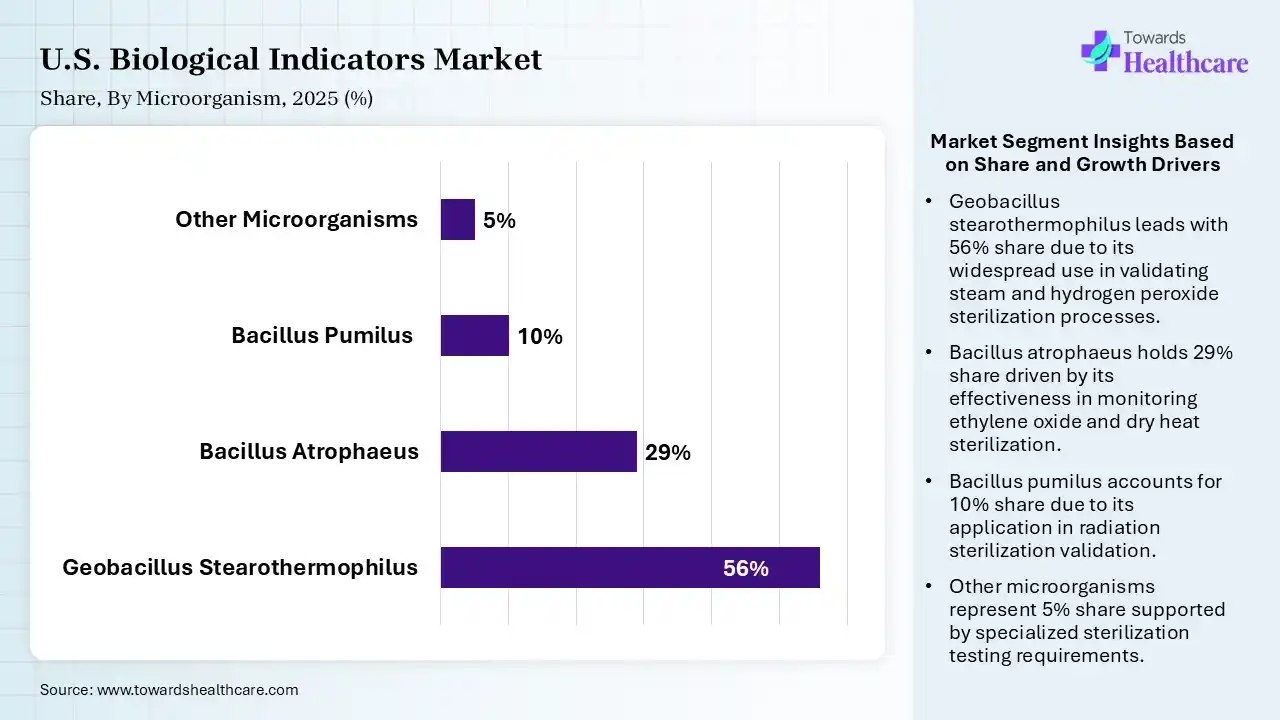
| Segment | Share 2025 (%) |
| Geobacillus Stearothermophilus | 56% |
| Bacillus Atrophaeus | 29% |
| Bacillus Pumilus | 10% |
| Other Microorganisms | 5% |
The Geobacillus Stearothermophilus Segment Led the U.S. Biological Indicators Market in 2025 with the Largest Share
The Geobacillus stearothermophilus segment held a dominant share of 56% in 2025 and is expected to grow at the fastest CAGR of 9.00% in the market during the forecast period due to its widespread use in monitoring steam, hydrogen peroxide, and other low-temperature sterilization processes. Its highly resistant spores provide reliable verification of sterilization efficacy, making it the preferred choice for healthcare, pharmaceutical, and medical device applications. Strong regulatory acceptance and its crucial role in sterility assurance further contributed to the segment’s market leadership.
The Bacillus atrophaeus segment held the second-largest share of 29% in 2025 due to extensive use in monitoring ethylene oxide (EtO) and dry heat sterilization processes. Its highly resistant spores provide reliable validation of sterilization effectiveness, making it essential for healthcare, pharmaceutical, and medical device applications. Growing use of heat-and moisture-sensitive medical devices, along with stringent sterility requirements, continued to support strong demand for this biological indicator.
The Bacillus Pumilus segment held 10% of the U.S. biological indicators market share due to its important role in monitoring radiation sterilization processes used in medical device manufacturing and pharmaceutical applications. Its resistance characteristics make it highly effective for validating sterilization efficacy in radiation-based systems. Growing adoption of radiation sterilization, increasing production of single-use medical devices, and rising regulatory emphasis on sterility assurance are key factors driving segment growth.
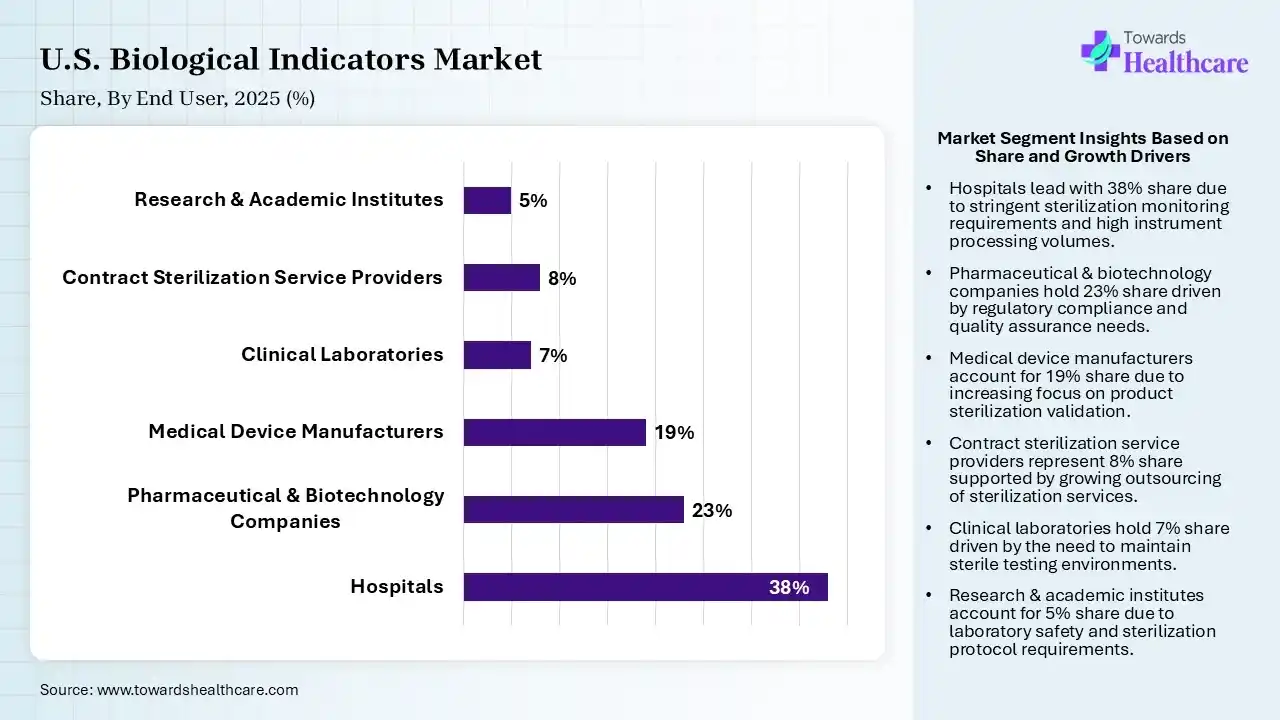
| Segment | Share 2025 (%) |
| Hospitals | 38% |
| Pharmaceutical & Biotechnology Companies | 23% |
| Medical Device Manufacturers | 19% |
| Clinical Laboratories | 7% |
| Contract Sterilization Service Providers | 8% |
| Research & Academic Institutes | 5% |
The Hospitals Segment Led the U.S. Biological Indicators Market in 2025 with the Largest Share
The hospitals segment led the market with a share of 38% in 2025 due to a high volume of surgical procedures, frequent sterilization of reusable medical instruments, and stringent infection prevention requirements. Hospitals rely extensively on biological indicators to verify sterilization effectiveness and ensure patient safety. Growing healthcare utilization, increasing awareness of healthcare-associated infections, and strict regulatory compliance standards further strengthened the segment’s dominant position in the market.
The pharmaceutical & biotechnology companies segment held the second-largest share of 23% in 2025 due to the critical need for sterility assurance in drug manufacturing, biologics production, and laboratory operations. These organizations rely on biological indicators to validate sterilization processes and comply with stringent regulatory requirements. Rising biopharmaceutical production, increasing R&D activities, and growing focus on product quality and safety further supported segment growth.
The medical device manufacturers segment held a 19% share in 2025 and is expected to grow at the fastest CAGR of 10.6% in the U.S. biological indicators market during the forecast period due to increasing production of complex and single-use medical devices that require stringent sterilization validation. Rising regulatory requirements, growing demand for minimally invasive devices, and expanding healthcare needs are accelerating the adoption of biological indicators. Continuous innovation in device manufacturing and sterility assurance further supports rapid segment growth.
The contract sterilization service providers segment held an 8% market share due to increasing outsourcing of sterilization processes by healthcare, pharmaceutical, and medical device companies. Outsourcing helps organizations reduce operational costs, access specialized sterilization technologies, and ensure regulatory compliance. The growing production of medical devices, rising demand for validated sterilization services, and the need for scalable, efficient sterilization solutions are further driving segment growth.
| Segment | Share 2025 (%) |
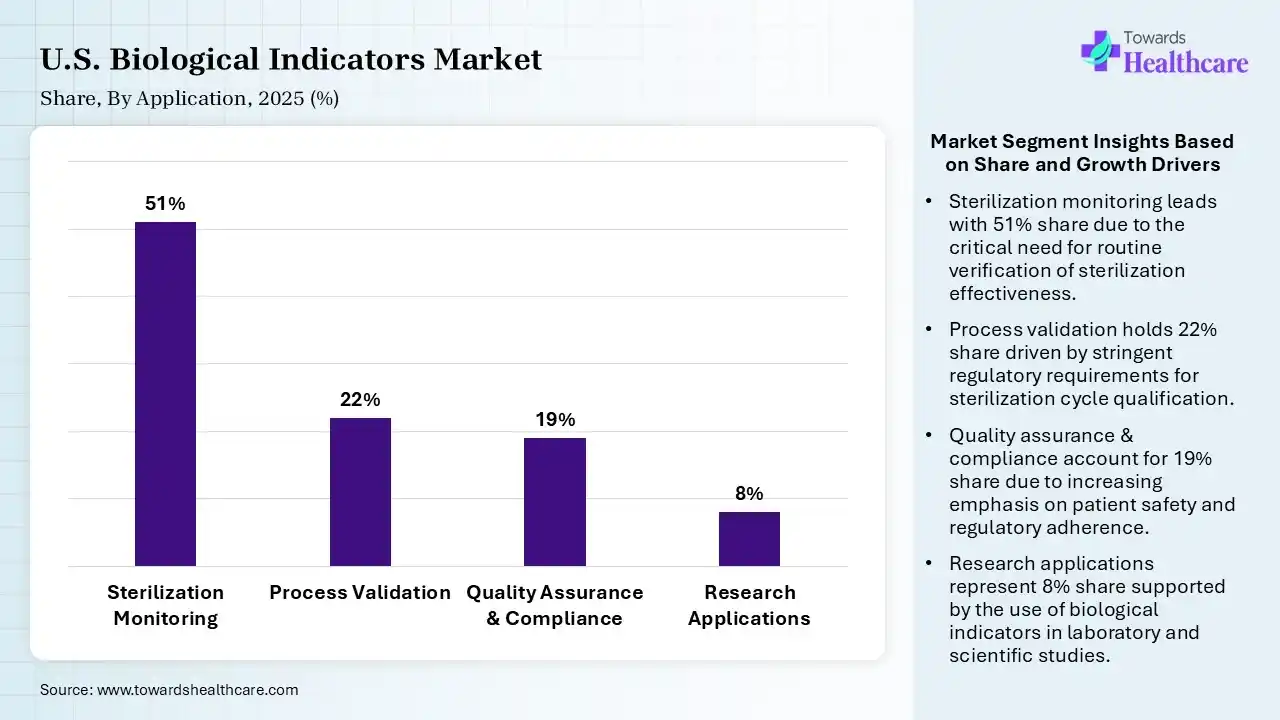
| Sterilization Monitoring | 51% |
| Process Validation | 22% |
| Quality Assurance & Compliance | 19% |
| Research Applications | 8% |
The Sterilization Monitoring Segment Dominance Dominated the U.S. Biological Indicators Market in 2025
The sterilization monitoring segment held a dominant share of 51% in 2025 due to the critical need to verify the effectiveness of the sterilization process across healthcare, pharmaceutical, and medical device settings. Biological indicators are widely used to ensure compliance with stringent regulatory standards and prevent microbial contamination. The increasing focus on patient safety, infection prevention, and quality assurance, along with the growing volume of sterilization procedures, supported the segment’s market leadership.
The process validation segment held the second-largest share of 22% in 2025 due to the growing need to verify and document the effectiveness of sterilization processes in healthcare, pharmaceutical, and medical device industries. Biological indicators play a critical role in ensuring consistent sterilization performance and regulatory compliance. Increasing quality assurance requirements, stringent validation standards, and the expansion of biopharmaceutical and medical device manufacturing further supported segment growth.
The quality assurance & compliance segment held a 19% share in 2025 and is expected to grow at the fastest CAGR of 10.1% in the U.S. biological indicators market during the forecast period due to increasing regulatory scrutiny and the growing need to maintain sterility standards across healthcare, pharmaceuticals, and medical devices industries. Biological indicators play a vital role in documenting sterilization effectiveness and ensuring compliance. Rising quality control requirements, audit readiness, and risk management initiatives are further accelerating segment growth.
The research applications segment held an 8% market share due to increasing investments in microbiology, biotechnology, and pharmaceutical research. Biological indicators are widely used to evaluate sterilization methods, validate laboratory processes, and support experimental studies requiring contamination control. Rising R&D activities, expanding biopharmaceutical innovation, and the growing need for accurate sterility testing in research environments are driving the adoption of biological indicators across academic and industrial laboratories.
| Segment | Share 2025 (%) |
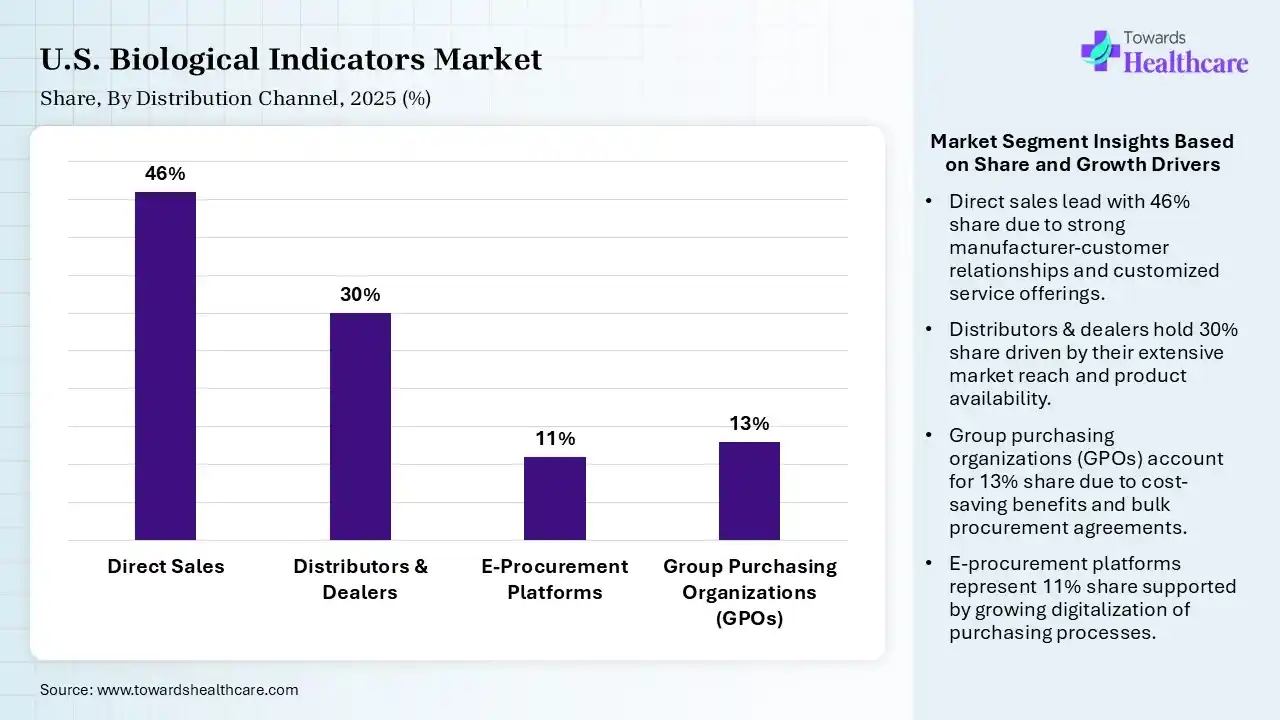
| Direct Sales | 46% |
| Distributors & Dealers | 30% |
| E-Procurement Platforms | 11% |
| Group Purchasing Organizations (GPOs) | 13% |
The Direct Sales Segment Led the U.S. Biological Indicators Market in 2025 with the Largest Share
The direct sales segment held a dominant share of 46% in 2025 due to strong relationships between biological indicator manufacturers and end users, including pharmaceutical companies and medical device manufacturers. Direct sales provide customized solutions, technical support, product training, and faster response to customer requirements. The need for regulatory compliance, quality assurance, and reliable sterilization monitoring products further encouraged organizations to procure biological indicators directly from manufacturers.
The distributors & dealers segment held the second-largest share of 30% in 2025 due to its extensive distribution networks and ability to provide biological indicators to a broad customer base. These channels help manufacturers reach small and mid-sized healthcare facilities, laboratories, and clinics efficiently. Their role in ensuring product availability, timely delivery, and customer support, combined with growing demand for sterilization monitoring solutions, contributed to a strong market presence.
The E-procurement platforms segment held 11% share in 2025 and is expected to grow at the fastest CAGR of 11.2% in the U.S. biological indicators market during the forecast period due to increasing digitization of healthcare and life sciences procurement processes. These platforms offer greater purchasing efficiency, real-time inventory visibility, streamlined supplier management, and cost optimization. Growing adoption of online procurement systems, coupled with the need for faster ordering, improved transparency, and automated compliance tracking, is driving rapid segment expansion.
The group purchasing organizations (GPOs) segment held a 13% market share due to its ability to help healthcare providers, laboratories, and healthcare systems reduce procurement costs through collective purchasing agreements. GPOs offer access to competitive pricing, standardized products, and streamlined sourcing processes. Growing pressure to control healthcare expenditure, improve supply chain efficiency, and ensure consistent access to sterilization monitoring products is driving increased adoption of GPO-based purchasing models.
The U.S. biological indicators market leads due to its well-established healthcare infrastructure, strong pharmaceutical and biotechnology sectors, and stringent sterilization regulations. High adoption of advanced sterilization monitoring technologies, increasing surgical procedures, and growing production of medical devices further drive demand. Continued investments in infection prevention, quality assurance, and regulatory compliance have strengthened the country’s leadership in biological indicator adoption and innovation.
R&D
Regulatory Approvals
Patient Support and Services
| Companies | Headquarters | Offerings |
| 3M Health Care | St. Paul, Minnesota, USA | Biological indicators, rapid-readout biological indicators, sterilization assurance products, sterilization monitoring systems |
| Mesa Laboratories, Inc. | Lakewood, Colorado, USA | Biological indicators, spore suspensions, sterilization process monitoring solutions, validation services |
| STERIS plc | Mentor, Ohio, USA | Biological indicators, sterilization monitoring products, sterilizers, and infection prevention solutions |
| Crosstex International, Inc. | Hauppauge, New York, USA | Biological indicators, chemical indicators, sterilization pouches, and infection control products |
| Getinge USA | Wayne, New Jersey, USA | Biological indicators, sterilization monitoring systems, washer-disinfectors, sterilization equipment |
| Propper Manufacturing Co., Inc. | Long Island City, New York, USA | Biological indicators, sterilization monitoring products, infection control, and surgical support products |
| Terragene North America | Miami, Florida, USA | Biological indicators, rapid biological indicators, chemical indicators, traceability, and sterilization monitoring solutions |
In September 2025, “RapidCert™ BI sterility testing reflects Nelson Labs’ legacy of innovation, science and quality, designed to meet applicable regulatory expectations, while overcoming challenges and mitigating risk. It is the result of Nelson Labs’ desire to push the boundaries of traditional microbiological methods and to provide accurate and early detection of spore-forming microorganisms on biological indicators utilized in manufacturer-validated sterilization cycles. This solution exemplifies our commitment to advancing testing methodologies to support our partners in delivering safe, effective healthcare solutions,” Said Scott Dimond, Principal Scientist at Nelson Labs.
By Product Type
By Sterilization Process
By Microorganism
By End User
By Distribution Channel










Principal Consultant
Rohan Patil is a seasoned market research professional with over 5+ years of focused experience in the healthcare sector, bringing deep domain expertise, strategic foresight, and analytical precision to every project he undertakes.
Learn more about Rohan Patil

Reviewed By
Aditi Shivarkar is a seasoned professional with over 14 years of experience in healthcare market research. As a content reviewer, Aditi ensures the quality and accuracy of all market insights and data presented by the research team.
Learn more about Aditi Shivarkar