Pipeline Programs

CGT Companies Tracked

Manufacturing Facilities


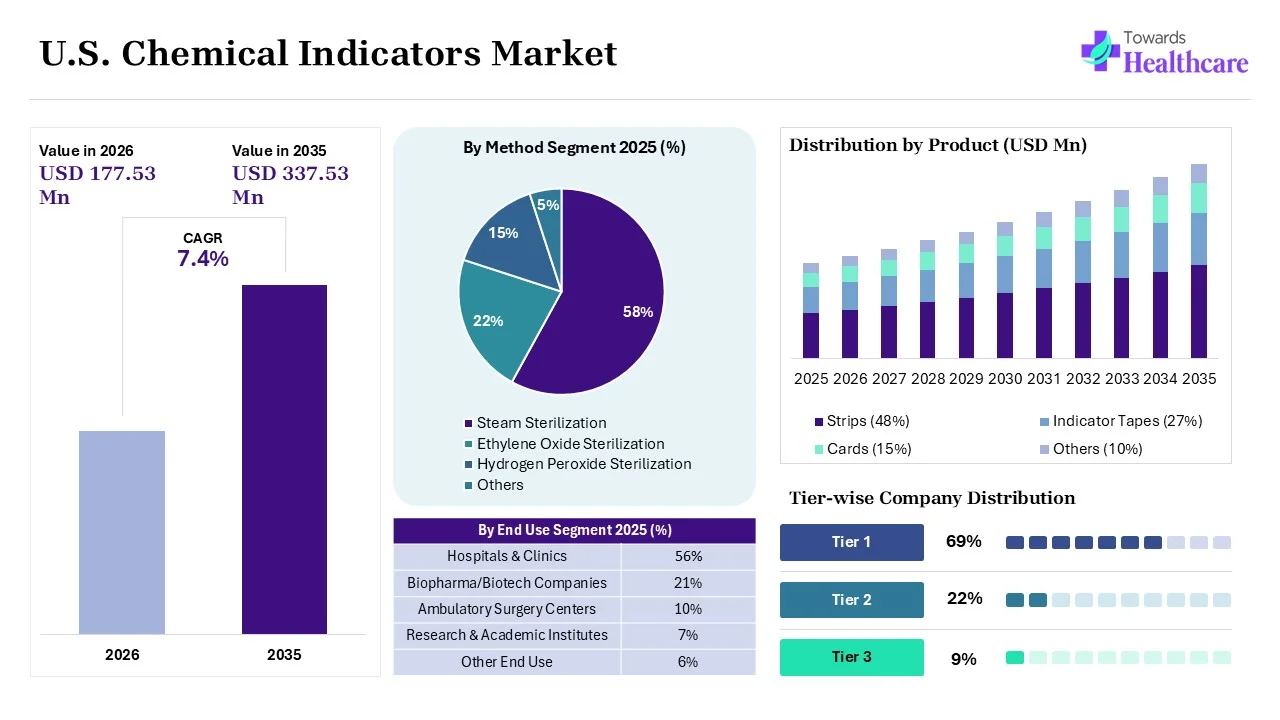
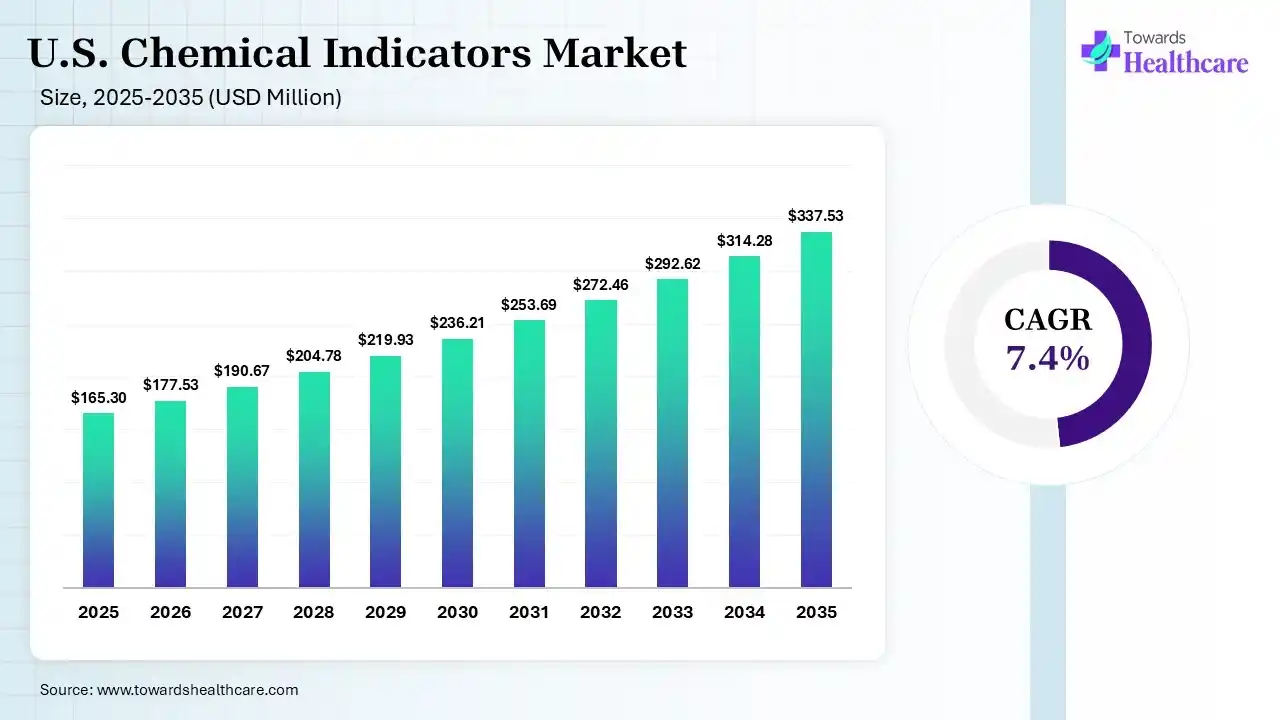
The U.S. chemical indicators market size was valued at US$ 165.3 million in 2025 and is projected to grow to 177.53 billion in 2026. Forecasts suggest it will reach approximately US$ 337.53 million by 2035, registering a CAGR of 7.4% during the period.
Chemical indicators, which are products used to verify whether required sterilization conditions, such as time, temperature, and sterilant exposure, have been achieved during a sterilization cycle. These indicators are widely used in hospitals, clinics, laboratories, and surgical centers to support sterilization monitoring and surgical centers to support sterilization monitoring and infection prevention. Market growth is driven by strict sterilization regulations, increasing surgical procedures, and rising focus on reducing healthcare-associated infections.
Key trends in the market include growing adoption og advanced multi-parameter and integrating indicators, especially for steam and low-temperature sterilization methods. Opportunities are emerging from the increased use of hydrogen peroxide sterilization systems for sensitive medical devices, while technological advancements are focused on improving accuracy, ease of interpretation, and integration with digital compliance and traceability systems.
The U.S. chemical indicators market is growing due to stringent sterilization and infections control regulations, increasing surgical diagnostic procedures, and diagnostic procedures, and rising awareness of healthcare-associated infection prevention. Demand for healthcare-associated infection prevention. Demand is also supported by the widespread use of chemical indicators in hospitals, ambulatory surgical centers, dental clinics, and laboratories. In addition, growing adoption of advanced sterilization technologies and multi-parameter indicators is further driving market expansion across the U.S.
AI can support the market by improving sterilization monitoring, predictive maintenance, and compliance tracking in healthcare facilities. It can help analyze sterilization cycle data, detect process deviations, reduce human error, and strengthen documentation accuracy. AI-enabled sterile processing workflows may also increase demand for advanced, easy-to-interpret chemical indicators that integrate with digital monitoring systems, ultimately enhancing infection control and operational efficiency.
Rising Shift Toward Advanced Multi-Parameter Indicators
Healthcare facilities in the U.S. are increasingly adopting multi-parameter and integrating chemical indicators because they provide more reliable sterilization verification than basic indicators. This trend is expected to strengthen as hospitals and surgical centers focus on improving sterilization accuracy, compliance, and patient safety across complex reprocessing workflows.
Growing demand from low-temperature sterilization applications
The increasing use of hydrogen peroxide and other low-temperature sterilization systems for heat-sensitive medical devices is creating strong demand for specialized chemical indicators. Going forward, this trend is likely to expand as minimally invasive and device-intensive procedures continue to rise, requiring compatible monitoring products for modern sterilization technologies.
Integration with digital compliance and traceability systems
The market is gradually moving toward smarter sterilization monitoring supported by digital recordkeeping, workflow tracking, and automated compliance documentation. In the future, chemical indicators may become more aligned with connected sterile processing systems, helping healthcare providers reduce human error, strengthen traceability, and improve efficiency in infection prevention practices.
| Table | Scope |
| Market Size in 2026 | USD 177.53 Million |
| Projected Market Size in 2035 | USD 337.53 Million |
| CAGR (2026 - 2035) | 7.4% |
| Historical Data | 2020 - 2023 |
| Base Year | 2025 |
| Forecast Period | 2026 - 2035 |
| Measurable Values | USD Millions/Units/Volume |
| Market Segmentation | By Product, By Method, By End Use |
| Top Key Players | 3M Health Care, STERIS, Mesa Laboratories, Propper Manufacturing, Crosstex International. |
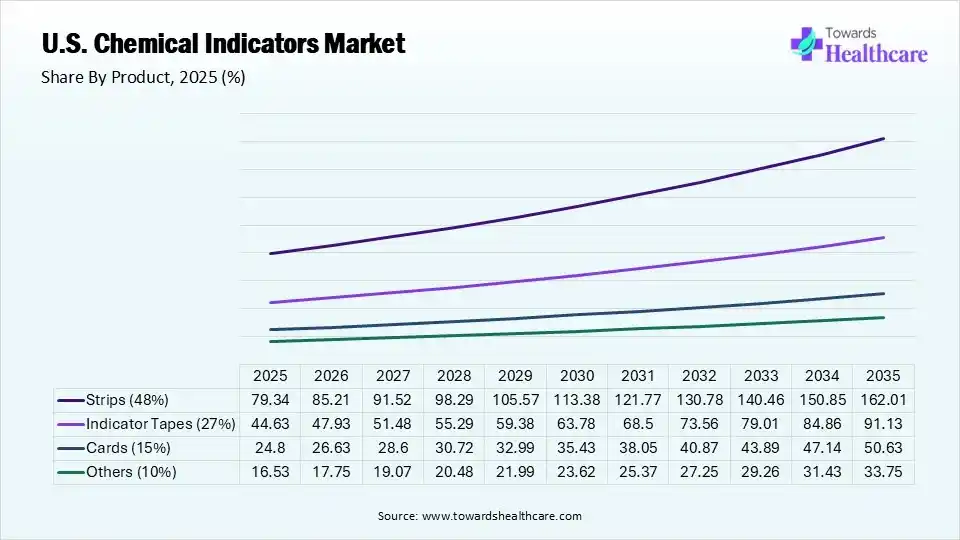
| Segment | Share 2025 (%) |
| Strips | 48% |
| Indicator Tapes | 27% |
| Cards | 15% |
| Others | 10% |
The Strips Segment Dominated the U.S. Chemical Indicators Market in 2025
The strips segment held a dominant share of 48% in 2025 due to its low cost, ease of use, and wide applicability across steam, ethylene oxide, and other sterilization processes. Chemical indicator strips are routinely placed inside packs, trays, and pouches to confirm sterilant exposure, making them highly suitable for daily sterilization monitoring in hospitals, clinics, dental settings, and laboratories. Their convenience and high-volume usage continue to support strong market demand.
The indicator tapes segment held the second-largest share of 27% in 2025 due to its dual function of sealing packs and visually confirming sterilization exposure. These tapes are widely used in hospitals, dental clinics, and laboratories because they are convenient, cost-effective, and easy to apply to wrapped trays and pouches. Their routine use in daily sterilization workflows and strong compatibility with steam sterilization processes supported continued market demand.
The cards segment held a 15% of market share in 2025 due to increasing demand for clear, easy-to-read sterilization monitoring tools that improve workflow efficiency and compliance. Indicator cards are commonly used in trays, packs, and instrument sets to provide visible confirmation of sterilization exposure. Their rising adoption in hospitals, surgical centers, and laboratories is also supported by the need for organized documentation, accurate monitoring, and better infection control practices.
The others segment held 10% share in 2025 and is expected to grow at the fastest CAGR of 8.4% in the U.S. chemical indicators market during the forecast period due to its dual function of sealing packs and visually confirming sterilization exposure. These tapes are widely used in hospitals, dental clinics, and laboratories because they are convenient, cost-effective, and easy to apply to wrapped trays and pouches. Their routine use in daily sterilization workflows and strong compatibility with steam sterilization processes supported continued market demand.
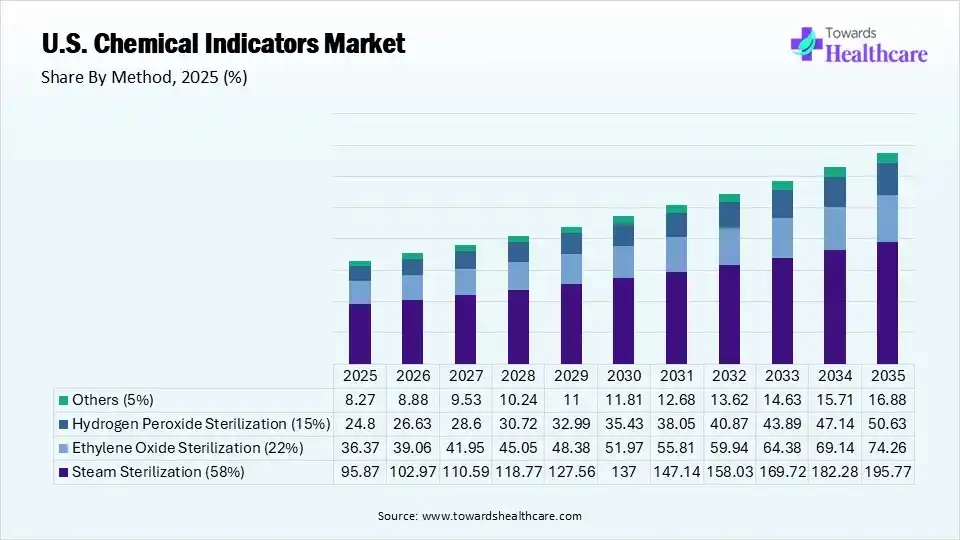
| Segment | Share 2025 (%) |
| Steam Sterilization | 58% |
| Ethylene Oxide Sterilization | 22% |
| Hydrogen Peroxide Sterilization | 15% |
| Others | 5% |
The Steam Sterilization Segment Led the Market in 2025 with the Largest Share
The steam sterilization segment dominated the U.S. chemical indicators market with a share of 58% in 2025 because steam sterilization remains the most widely used, cost-effective, and reliable sterilization method across hospitals, surgical centers, and laboratories. It is commonly used for sterilizing surgical instruments. trays of reusable medical devices, creating strong demand for compatible chemical indicators. Its high adoption, established infrastructure, and routine use in healthcare sterilization workflows supported the segment’s leading market share.
The ethylene oxide sterilization segment held the second-largest share of 22% in 2025 because it is widely used for heat-and moisture-sensitive medical devices that cannot withstand steam sterilizations. Its importance in sterilizing complex instruments, catheters, plastics, and electronic medical components supports strong demand for compatible chemical indicators. Continued use across hospitals, device reprocessing units, and specialty healthcare settings helped maintain its significant market position.
The hydrogen peroxide sterilization segment held 15% share in 2025 and is expected to grow at the fastest CAGR of 9.8% in the U.S. chemical indicators market during the forecast period due to rising demand for low-temperature sterilization of heat-and moisture-sensitive medical devices. It offers faster cycle times, leaves no toxic residue, and is increasingly preferred over ethylene oxide in many healthcare settings. Growing adoption of advanced sterilization systems and expanding use of complex minimally invasive instruments are further supporting segment growth.
The others segment held a 5% of market share due to the growing use of specialized sterilization methods and niche monitoring products for diverse healthcare and laboratory applications. Rising demand for indicators compatible with emerging low-temperature and customized sterilization processes is supporting segment growth. In addition, increasing use of advanced medical devices, complex instrument sets, and application-specific sterilization workflows is broadening the need for alternative chemical indicator formats.
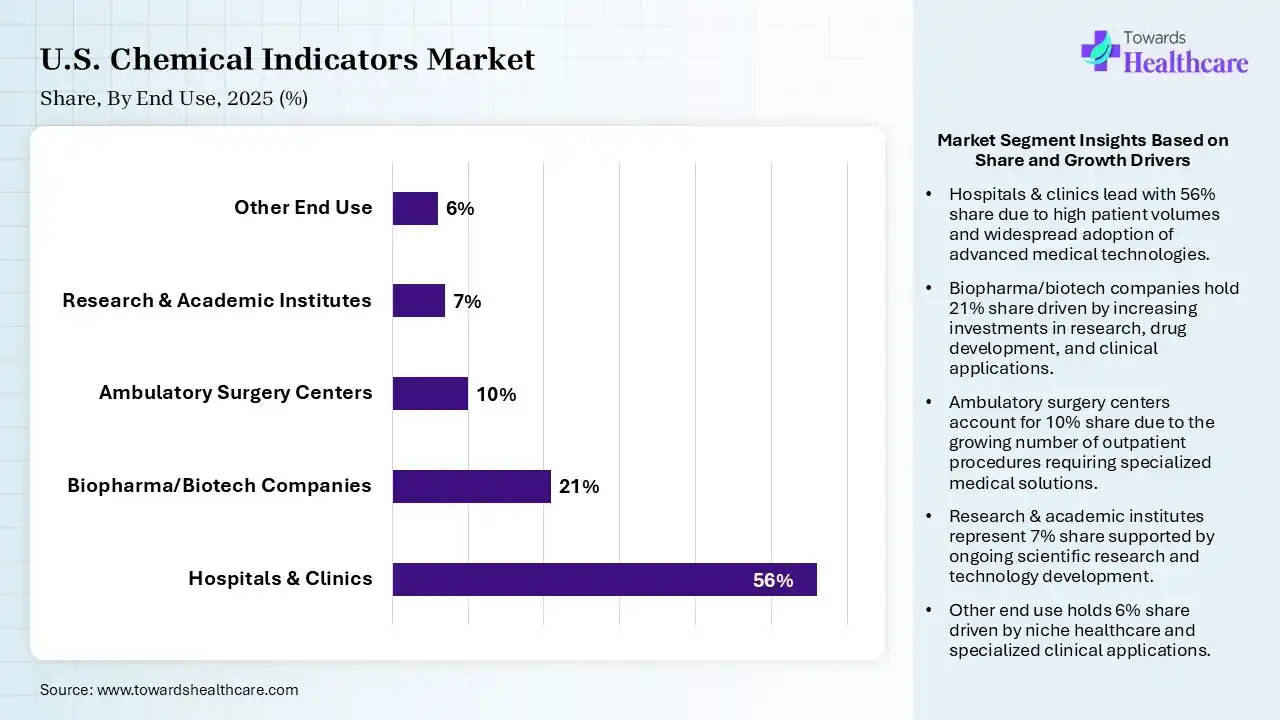
| Segment | Share 2025 (%) |
| Hospitals & Clinics | 56% |
| Biopharma/Biotech Companies | 21% |
| Ambulatory Surgery Centers | 10% |
| Research & Academic Institutes | 7% |
| Other End Use | 6% |
The Hospitals & Clinics Segment Led the Market in 2025 with the Largest Share
The hospitals & clinics segment led the U.S. chemical indicators market with a share of 56% in 2025 due to the high volume of surgical procedures, instrument reprocessing activities, and strict infection control requirements in these settings. Hospitals and clinics routinely use chemical indicators to monitor the sterilization of surgical tools, trays, and reusable medical devices. Their large patient inflow, established sterile processing departments, and strong regulatory compliance focus continue to drive significant demand for chemical indicators.
The biopharma/biotech companies segment held the second-largest share of 21% in 2025 and is expected to grow at the fastest CAGR of 9.4% in the market during the forecast period due to the high level of sterilization assurance in pharmaceutical manufacturing, research, and laboratory operations. These companies rely on chemical indicators to monitor sterilization processes for equipment, cleanroom materials, and production environments. Growing biologics production, stringent quality standards, and rising investments in research and development are further supporting demand from this end-user segment.
The ambulatory surgery centers segment held a 10% of the U.S. chemical indicators market share in 2025 due to the rising shift of outpatient and minimally invasive procedures from hospitals to cost-efficient surgical centers. These facilities require reliable sterilization monitoring for surgical instruments and reusable devices, driving demand for chemical indicators. Increasing procedure volumes, shorter patient stays, and growing emphasis on infection control, compliance, and efficient reprocessing workflows are further supporting segment expansion.
The research & academic institutes segment held a 7% of market share in 2025 due to increasing sterilization needs in laboratories, biomedical research facilities, and academic healthcare centers. These institutions use chemical indicators to monitor the sterilization of laboratory instruments, glassware, and research materials. Rising life sciences activities, growing university-based biotech innovation, and a stronger focus on contamination control and laboratory safety are further driving demand from this segment.
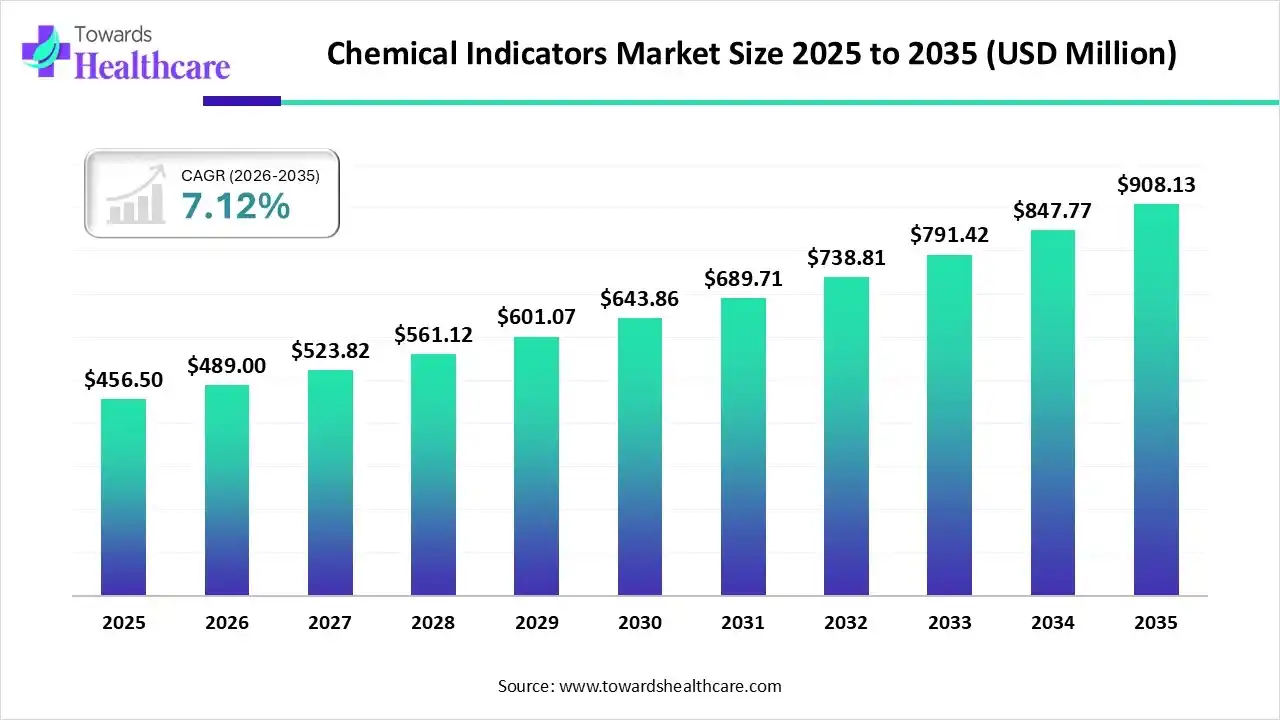
The global chemical indicators market size was estimated at USD 456.5 million in 2025 and is predicted to increase from USD 489 million in 2026 to approximately USD 908.13 million by 2035, expanding at a CAGR of 7.12% from 2026 to 2035.
The U.S. chemicals indicators market is leading due to its advanced healthcare infrastructure, strict sterilization and infection control standards, and high volume of surgical and diagnostic procedures. Strong adoption of sterilization monitoring products across hospitals, clinics, laboratories, and biopharma facilities further supports market growth. In addition, continuous investments in healthcare quality, patient safety, and advanced sterilization technologies are strengthening the country’s leadership in this market.
R&D
Regulatory Approvals
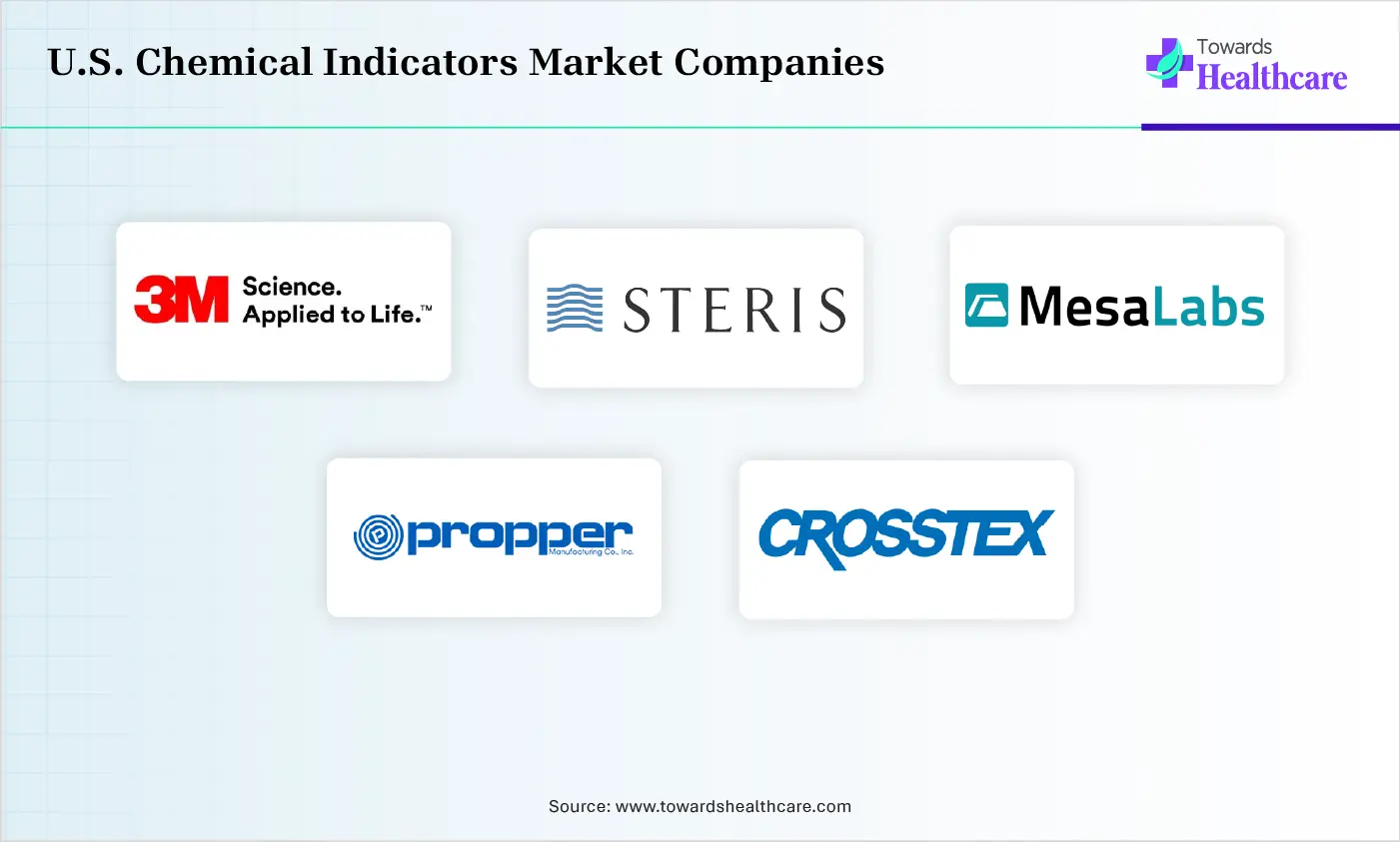
| Companies | Headquarters | Offerings |
| 3M Health Care | St. Paul, Minnesota, U.S. | Chemical indicator tapes, sterilization indicator strips, integrating indicators, Bowie-Dick test packs, and sterilization assurance products |
| STERIS | Mentor, Ohio, U.S. | Chemical indicators, sterilization monitoring systems, process challenge devices, indicator strips, and sterility assurance solutions. |
| Mesa Laboratories | Lakewood, Colorado, U.S. | Chemical indicators, biological indicators, sterilization process monitoring products, and compliance testing solutions. |
| Propper Manufacturing | Long Island City, New York, U.S. | Chemical indicator tapes, sterilization indicators, monitoring products, and infection prevention supplies. |
| Crosstex International | Hauppauge, New York, U.S. | Chemical indicator strips, indicator tapes, sterilization pouches, and monitoring accessories. |
In April 2026, VHPTM LTS60 Low Temperature sterilizer. “This launch represents another significant step forward in our expanding VHP equipment portfolio,” said Andrea Conroy, Vice President of Marketing and Technical Services for Equipment and Service at STERIS.
By Product
By Method
By End Use








Principal Consultant
Rohan Patil is a seasoned market research professional with over 5+ years of focused experience in the healthcare sector, bringing deep domain expertise, strategic foresight, and analytical precision to every project he undertakes.
Learn more about Rohan Patil

Reviewed By
Aditi Shivarkar is a seasoned professional with over 14 years of experience in healthcare market research. As a content reviewer, Aditi ensures the quality and accuracy of all market insights and data presented by the research team.
Learn more about Aditi Shivarkar