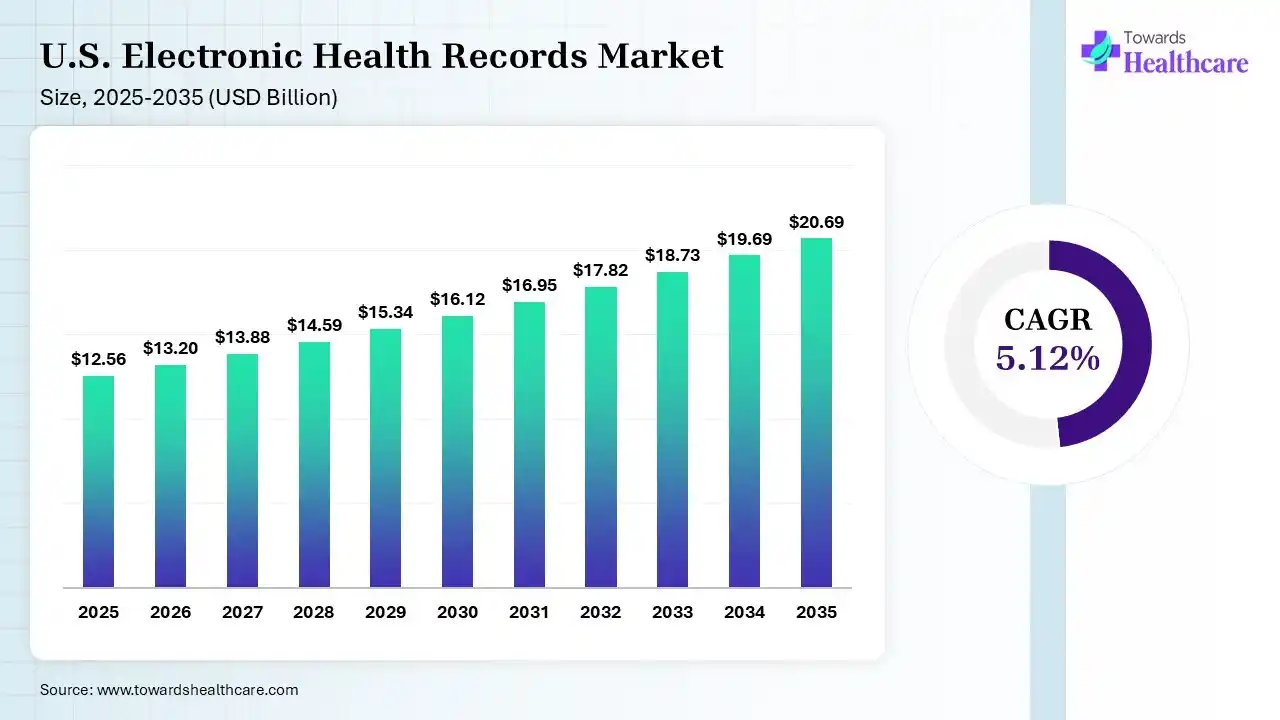
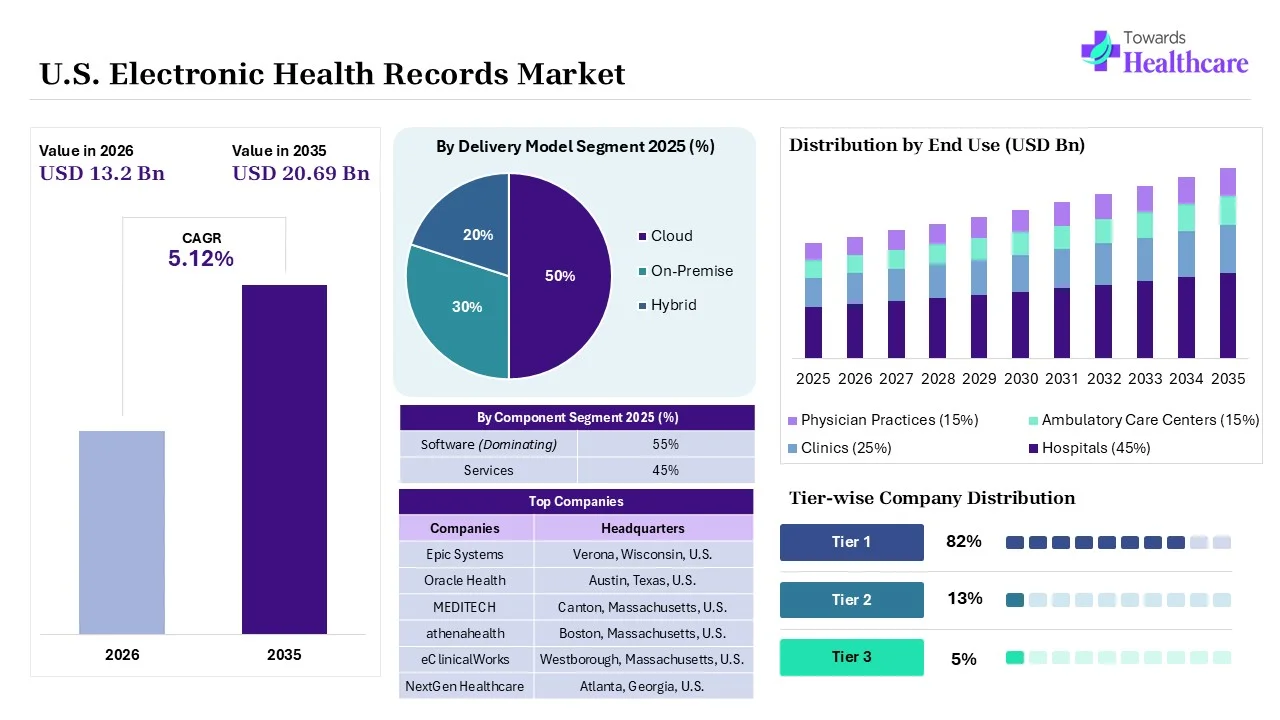
The U.S. electronic health records market size is expected to rise to US$ 13.2 billion in 2026 and to reach US$ 20.69 billion by 2035. According to forecasts, it will grow at a CAGR of 5.12%.
Electronic health records (EHRs) are a digital version of patients’ medical records that enable healthcare providers to securely store, access, update, and share health information in real time. They contain data such as medical history, diagnoses, medication, laboratory results, allergies, treatment plans, and clinical notes, improving care quality, accuracy, and coordination. EHRs are used across hospitals, physician offices, specialty clinics, ambulatory care centers, and long-term care facilities. Their applications include patient record management, clinical documentation, e-prescribing, telehealth support, healthcare analytics, population health management, and care coordination.
The scope of EHRs extends to interoperability, data exchange, patient engagement, and decision support functions throughout the healthcare continuum. The U.S. electronic health records market is growing due to increasing healthcare digitization, government support for health IT adoption, rising demand for efficient patient data management, expanding telehealth services, and the need for improved care coordination, interoperability, and value-based healthcare delivery.
In the U.S., over 75% of office-based clinicians and 96% of hospitals use an ONC-certified EHR. Consequently, almost all practices have an immediate, practical need to boost system efficiency.
Number of Hospitals, Staffed Hospital Beds, and Admissions
| Total Number of All U.S. Hospitals | 6,100 |
| Staffed Beds in Community 1 Hospitals | 775,297 |
| Total Admissions in All U.S. Hospitals | 35,658,583 |
| Admissions in Community1 Hospitals | 33,553,725 |
| Number of Rural Community Hospitals | 1,797 |
The U.S. government is spending $50 billion over five years (from 2026 to 2030) to help rural healthcare under the Rural Health Transformation (RTH) Program. Every year, $10 billion becomes available. 50% of the money is divided completely equally among all the states that get approved. Every approved state gets the same baseline amount. The other 50% is handed out based on specific needs. States get more money if they have a higher rural population, more rural clinics, or hospitals that are struggling financially.
Artificial intelligence is enhancing the market by automating clinical documentation, improving data accuracy, and providing advanced clinical decision support. AI-powered analytics help identify health risks, predict patient outcomes, and support personalized treatment planning. Additionally, AI streamlines administrative tasks, reduces physician workload, enhances interoperability, and enables more efficient use of healthcare data, ultimately improving patient care quality and operational efficiency.
Expansion of Interoperability and Health Information Exchange
Healthcare providers are increasingly adopting interoperable EHR systems that enable seamless sharing of patient information across hospitals, clinics, laboratories, and pharmacies. This trend improves care coordination, reduces medical errors and duplicate testing, and supports more efficient healthcare delivery while enhancing patient outcomes across diverse healthcare settings.
Rising Adoption of Cloud-Based EHR Solutions
Cloud-based EHR platforms are gaining traction due to their flexibility, lower infrastructure requirements, and ease of access. These systems allow healthcare organizations to securely manage patient data, streamline updates, and improve operational efficiency while supporting remote access and scalability as healthcare needs continue to evolve.
Growing Focus on Patient-Centric Healthcare
Healthcare organizations are increasingly implementing EHR features that enhance patient engagement, including patient portals, online appointment scheduling, access to medical records, and telehealth integration. This trend supports greater patient participation in healthcare decisions, improves communication with providers, and promotes more personalized and accessible care experiences.
| Table | Scope |
| Market Size in 2026 | USD 13.2 Billion |
| Projected Market Size in 2035 | USD 20.69 Billion |
| CAGR (2026 - 2035) | 5.12% |
| Measurable Values | USD Millions/Units/Volume |
| Market Segmentation | By Component, By Delivery Model, By End-User, By Application, By Deployment, By Pricing Model, By Organization Size |
| Top Key Players | Epic Systems, Oracle Health, MEDITECH, athenahealth, eClinicalWorks, NextGen Healthcare |
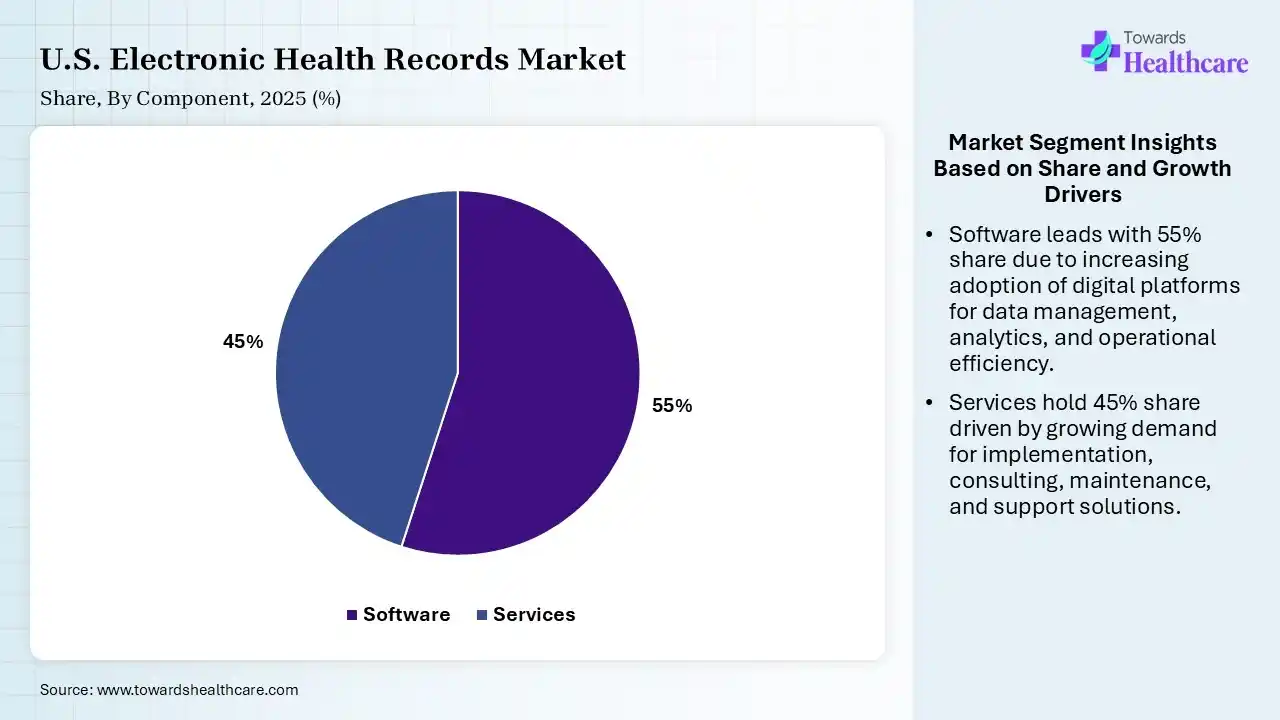
| Segment | Share 2025 (%) |
| Software | 55% |
| Services | 45% |
The Software Segment Dominated the U.S. Electronic Health Records Market in 2025
The software segment held a dominant share of 55% in 2025 due to its central role in managing, storing, and accessing patient health information across healthcare settings. Healthcare providers increasingly rely on EHR software for clinical documentation, e-prescribing, scheduling, billing, interoperability, and data analytics. Continuous technological advances, regulatory compliance requirements, and the growing need for efficient healthcare workflows have further accelerated software adoption, making it the largest component segment.
The cloud-based sub-segment held a 35% share in 2025 due to its scalability, lower upfront costs, and ease of remote access. Its projected CAGR of 7.2% is driven by increasing adoption of cloud infrastructure, growing interoperability requirements, enhanced data-sharing capabilities, and rising demand for secure, flexible, and cost-efficient healthcare information management solutions.
The services segment held the second-largest share of 25% in 2025 due to the growing need for implementation, system integration, customization, training, maintenance, and technical support services. Healthcare organizations rely on these services to ensure a smooth EHR deployment, regulatory compliance, interoperability, and system optimization. Continuous software upgrades and evolving healthcare requirements further drive demand for professional and managed EHR services across healthcare facilities.
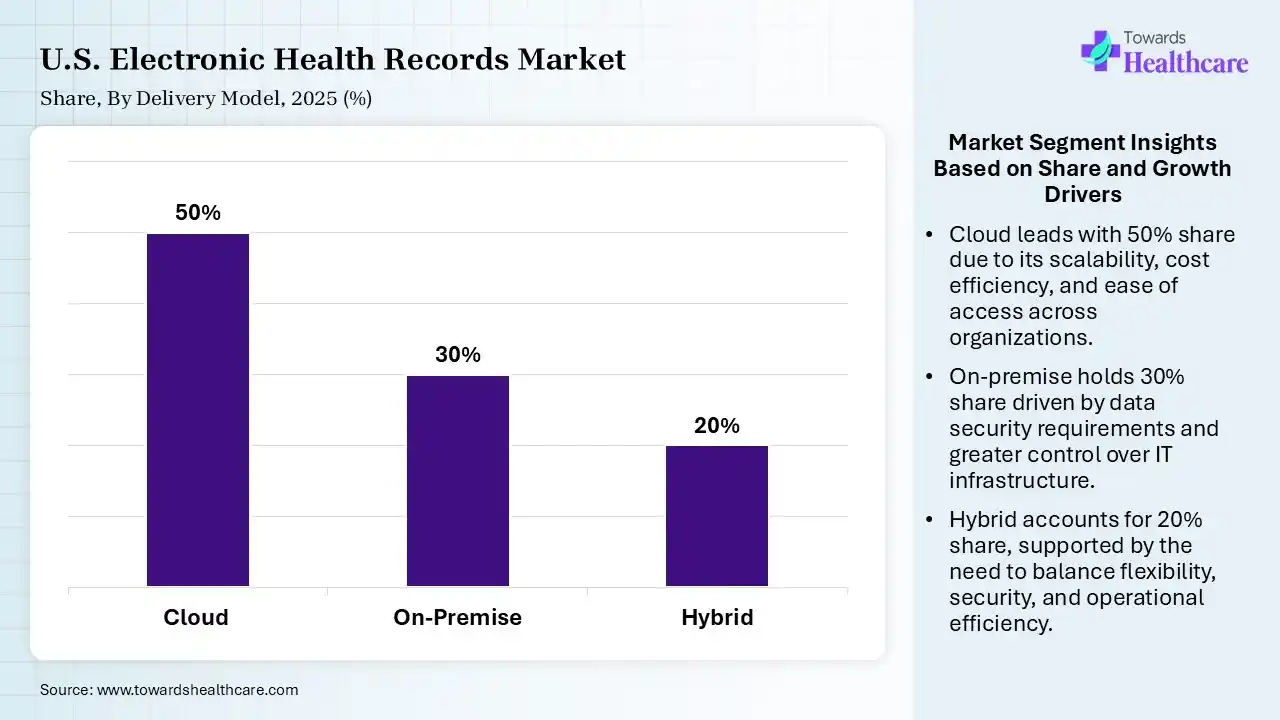
| Segment | Share 2025 (%) |
| Cloud | 50% |
| On‑Premise | 30% |
| Hybrid | 20% |
The Cloud Segment Led the U.S. Electronic Health Records Market in 2025 with the Largest Share
The cloud segment held a dominant share of 50% in 2025 and is expected to grow at the fastest CAGR of 7.0% in the market during the forecast period support services due to its cost-effectiveness, scalability, and ease of deployment compared to on-premises systems. Cloud solutions enable secure remote access to patient data, support real-time updates, and reduce the need for extensive IT infrastructure. Healthcare providers increasingly prefer cloud-based EHRs for their flexibility, improved data shaping capabilities, and ability to support growing digital healthcare and telehealth requirements.
The on-premises segment held the second-largest share of 30% in 2025 due to its strong data security, greater control over IT infrastructure, and ability to meet strict regulatory and compliance requirements. Large hospitals and healthcare networks often prefer on-premises solutions for managing sensitive patient information, customizing system configurations, and maintaining direct oversight of data storage, system performance, and cybersecurity operations.
The hybrid segment held a 20% of the U.S. electronic health records market share as healthcare organizations seek to combine the flexibility of cloud-based systems with the security and control of on-premises infrastructure. Hybrid models enable efficient data management, improved scalability, enhanced disaster recovery, and compliance with regulatory requirements. They also support gradual digital transformation, allowing providers to optimize costs while maintaining secure access to critical patient information.
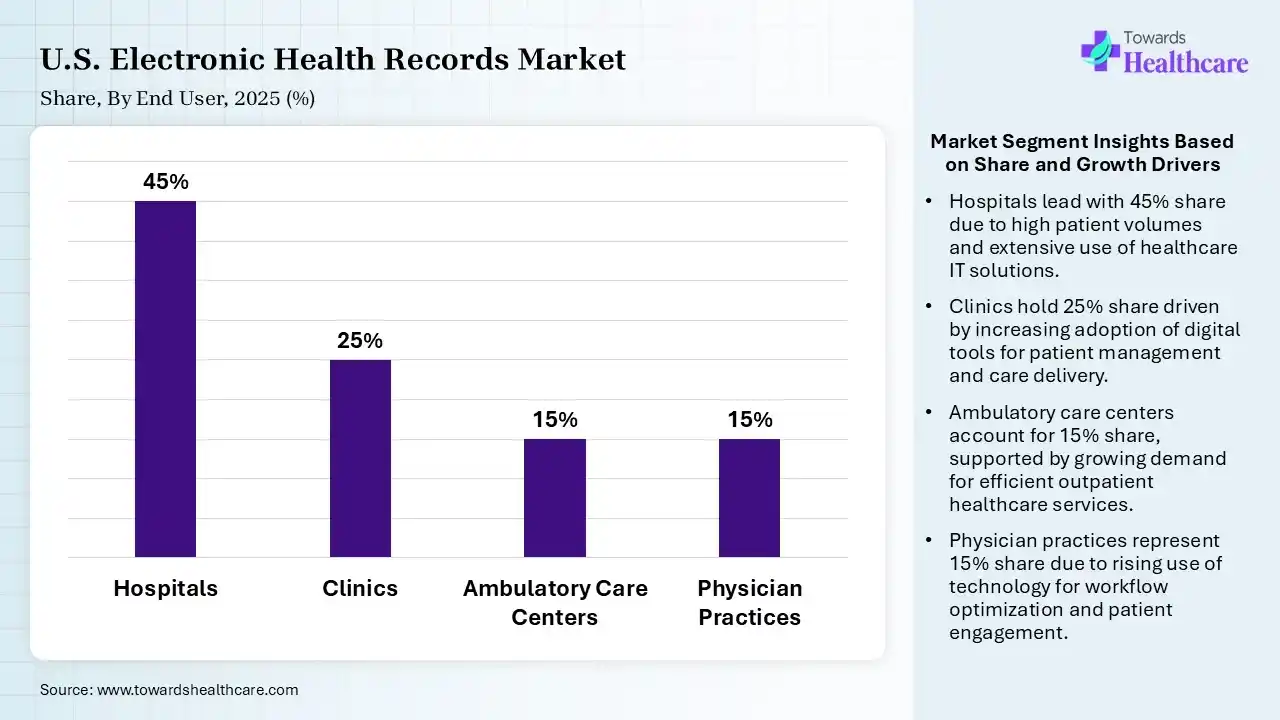
| Segment | Share 2025 (%) |
| Hospitals | 45% |
| Clinics | 25% |
| Ambulatory Care Centers | 15% |
| Physician Practices | 15% |
The Hospitals Segment Led the U.S. Electronic Health Records Market in 2025 with the Largest Share
The hospitals segment held a dominant share of 45% in 2025 due to the high volume of patient data generated across inpatient, outpatient, emergency, and surgical departments. Hospitals require comprehensive EHR systems to manage clinical documentation, medication records, diagnostics, billing, and care coordination. Growing regulatory requirements, increasing digitization of healthcare operations, and the need for seamless information exchange further strengthened EHR adoption across hospital settings.
The clinics segment held the second-largest share of 25% in 2025 due to the increasing adoption of digital record management in primary care and specialty practices. Clinics utilize EHR systems to streamline patient scheduling, clinical documentation, e-prescribing, billing, and follow-up care. The growing patient population, demand for efficient workflow management, and emphasis on coordinated and value-based healthcare have further supported EHR implementation across clinic settings.
The physician practices segment held a 15% share in 2025 and is expected to grow at the fastest CAGR of 6.2% in the U.S. electronic health records market during the forecast period, increasing adoption of digital healthcare solutions among independent and group practices. Growing demand for streamlined patient management, e-prescribing, telehealth integration, and regulatory compliance is driving EHR implementation. Additionally, the shift towards value-based care and improved interoperability is encouraging physicians to invest in advanced EHR systems.
The ambulatory care centers segment held a 15% of market share due to the increasing shift towards outpatient care and minimally invasive procedures. These facilities require efficient EHR systems to manage patient records, scheduling, clinical documentation, billing, and care coordination. Rising patient volumes, demand for cost-effective healthcare services, and the need for seamless information exchange are further accelerating EHR adoption across ambulatory care centers.
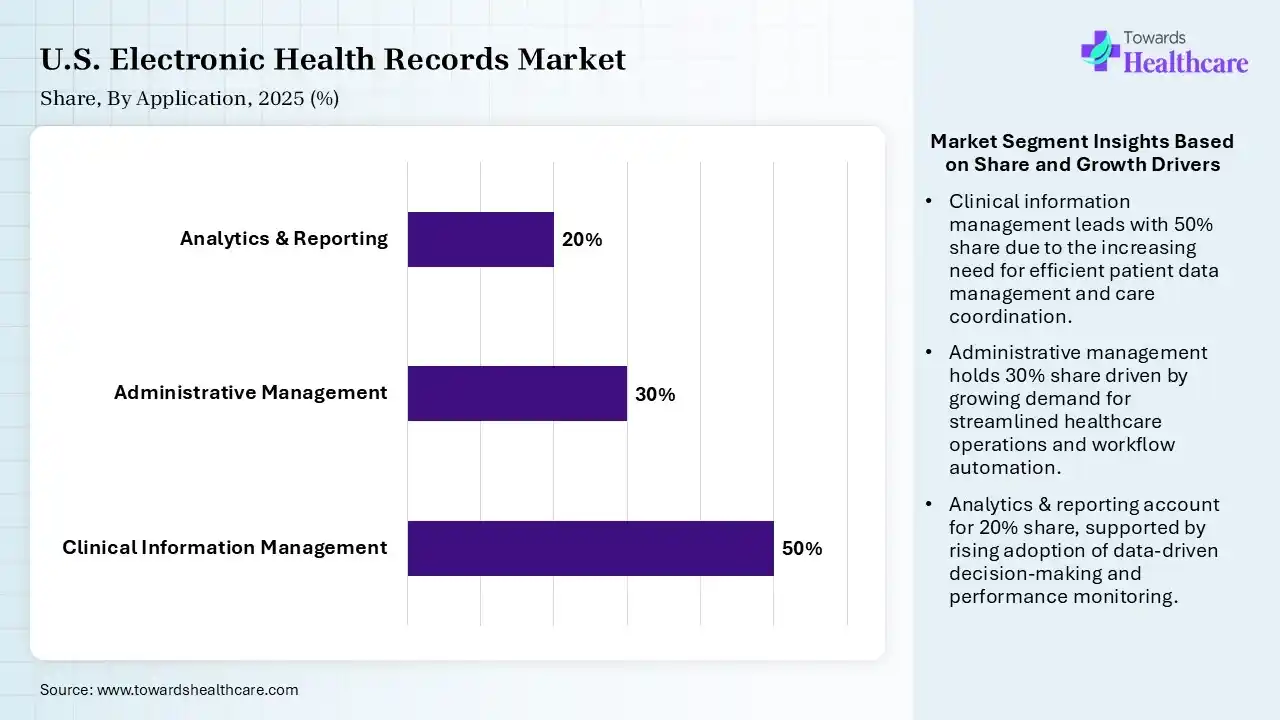
| Segment | Share 2025 (%) |
| Clinical Information Management | 50% |
| Administrative Management | 30% |
| Analytics & Reporting | 20% |
The Clinical Information Management Segment Led the Market in 2025 with the Largest Share
The clinical information management segment led the U.S. electronic health records market with a share of 50% in 2025 due to its critical role in capturing, storing, and managing patient health data across healthcare settings. Healthcare providers rely on these solutions for clinical documentation, medication management, diagnostic reporting, and treatment planning. Growing patient volumes, increasing demand for accurate and accessible medical records, and the need to improve care quality and operational efficiency have driven widespread adoption of critical information management systems.
The administrative management segment held the second-largest share of 30% in 2025 due to the growing need for efficient scheduling, billing, claims processing, patient registration, and revenue cycle management. Healthcare provider increasingly relies on an integrated administrative tool to streamline operations, reduce paperwork, improve workflow efficiency, and ensure regulatory compliance. The rising patient volume and focus on cost optimization here further accelerate the adoption of administrative management solutions across healthcare facilities.
The analytics & reporting segment held a 20% U.S. electronic health records market share and is expected to grow at a CAGR of 6.0% during the forecast period due to the increasing demand for data-driven clinical and operational decision-making. Healthcare providers are leveraging advanced analytics tools to monitor patient outcomes, optimize resource utilization, improve care quality, and support value-based care initiatives. The growing adoption of artificial intelligence, predictive analytics, and real-time reporting capabilities is further driving the segment’s rapid growth across healthcare organizations.
| Segment | Share 2025 (%) |
| Web‑Based | 50% |
| Mobile‑Based | 30% |
| Integrated Devices | 20% |
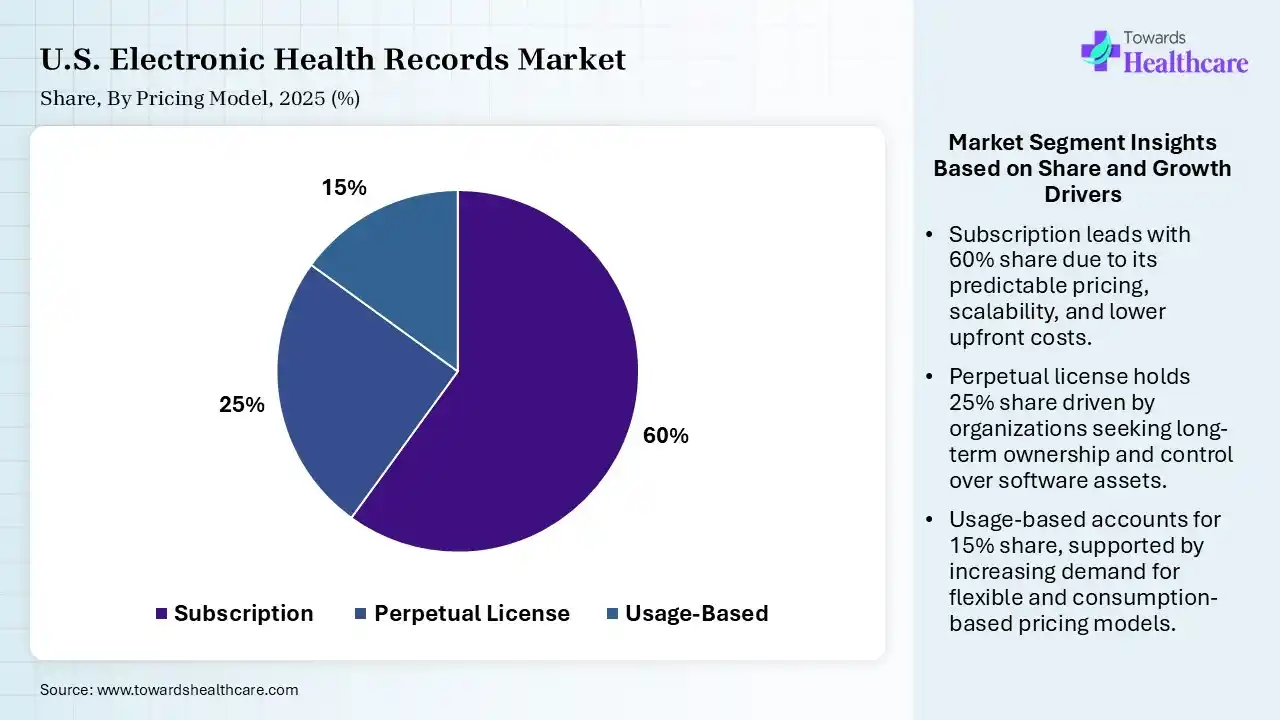
The Subscription Segment Dominated the Market in 2025
The subscription segment led the U.S. electronic health records market with a share of 60% in 2025 and is expected to grow at the fastest CAGR of 6.8% in the market during the forecast period due to its affordability, scalability, and lower upfront investment requirements. Subscription-based models enable healthcare providers to access regular software updates, cloud-based services, technical support, and enhanced security without significant capital expenditure. Growing adoption among physician practices, clinics, and ambulatory care centers coupled with the increasing shift towards cloud-based healthcare IT solutions, has further strengthened the segment’s market leadership.
The perpetual license segment held the second-largest share of 25% in 2025 due to its strong adoption among large hospitals and healthcare networks seeking long-term software ownership and greater control over system customization. Many organizations prefer a perpetual license for enhanced data security, regulatory compliance, and predictable long-term costs. Existing investments in on-premise infrastructure and established IT systems have also contributed to the segment’s substantial market presence.
The usage-based segment held a 15% share in 2025 due to its flexibility and cost-efficiency, allowing healthcare providers to pay according to actual system usage. This model is particularly attractive to small and medium-sized practices seeking to minimize fixed expenses while scaling operations. Growing adoption of cloud-based EHR platforms, fluctuating patient volumes, and the need for a customizable pricing structure are further driving demand for usage-based solutions.
The global electronic health records market size is forecast to increase at USD 31.13 billion in 2025 and is expected to be worth USD 45.55 billion by 2035, expanding at a CAGR of 4.32% from 2026 to 2035.
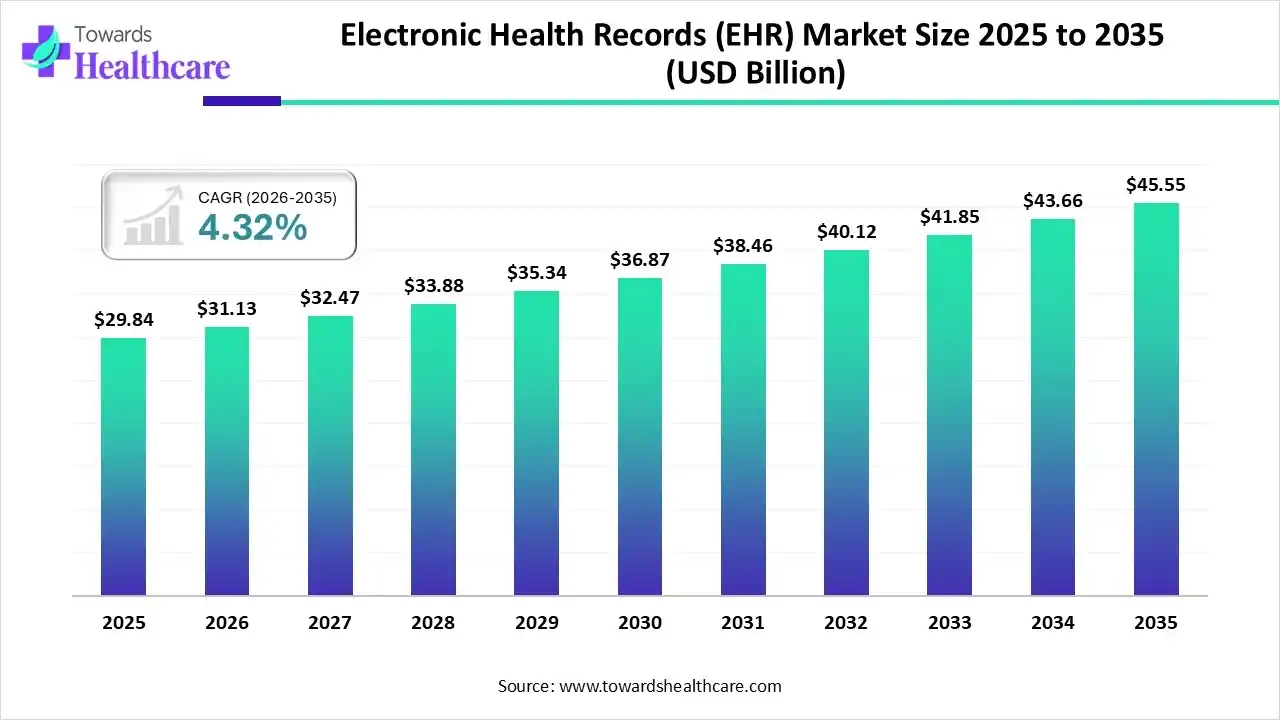
The U.S. electronic health record market is experiencing steady growth driven by the increasing adoption of digital healthcare technologies, government initiatives supporting health information exchange, and the growing need for efficient patient data management. Healthcare providers are investing in advanced EHR platforms to improve clinical workflows, enhance care coordination, and support value-based care models. The integration of cloud computing, artificial intelligence, and analytics capabilities is further accelerating market expansion across hospitals and ambulatory care settings.
Wisconsin Market Trends
Wisconsin contributes to the growth of the market primarily through Epic Systems Corporation, headquartered in Verona, Wisconsin, which dominates national hospital market share and clinical data management. Wisconsin's eligible providers and health systems maintain high EHR adoption and meaningful use compliance rates compared to national averages, supported by statewide health information exchange networks. The region also anchors a major regional biohealth and health-IT hub, pairing medical device manufacturers with data science institutes that drive artificial intelligence and machine learning integration inside EHR platforms. Wisconsin-based campuses have pioneered large-scale enterprise data hosting and cloud-based EHR infrastructure, allowing smaller community hospitals and ambulatory clinics nationwide to offload local server maintenance to centralized vendor data centers, fueling the growth of the market.
California Market Trends
California has a major contribution to the growth of the market through massive enterprise adoption, large-scale health system innovation, and state-led interoperability mandates. California is also home to major academic and non-profit hospital networks that continuously push the boundaries of clinical documentation, decision support, and large-scale data aggregation, fueling the growth of the market. Virtually all acute care hospitals and the vast majority of community health centers in California have achieved baseline-to-comprehensive EHR adoption, helping the growth of the market.
New York Market Trends
New York is stated to have a leadership role in the growth of the U.S. electronic health records market. New York pioneered one of the nation's most integrated health information exchange (HIE) frameworks, connecting 100% of the state's hospitals and over 100,000 healthcare professionals through regional Qualified Entities. By establishing standardized consent, security, and public health reporting guidelines via the New York eHealth Collaborative, New York solved early silos between competing EHR platforms (such as Epic, eClinicalWorks, and Cerner), setting a benchmark for national interoperability and fueling the growth of the market.
| Companies | Headquarters | Offerings |
| Epic Systems | Verona, Wisconsin, U.S. | Provides integrated electronic health record solutions, including clinical documentation, patient scheduling, revenue cycle management, interoperability tools, population health management, analytics, and patient engagement platforms for hospitals and health systems. |
| Oracle Health | Austin, Texas, U.S. | Offers cloud-enabled EHR solutions that support clinical workflows, care coordination, health information exchange, population health management, revenue cycle operations, and data-driven decision-making across healthcare organizations. |
| MEDITECH | Canton, Massachusetts, U.S. | Delivers EHR platforms for acute, ambulatory, and community care settings, featuring clinical documentation, care coordination, patient engagement, interoperability, laboratory and pharmacy management, and healthcare analytics. |
| athenahealth | Boston, Massachusetts, U.S. | Provides cloud-based EHR and practice management solutions with capabilities in clinical documentation, medical billing, patient engagement, telehealth integration, and revenue cycle optimization for ambulatory providers. |
| eClinicalWorks | Westborough, Massachusetts, U.S. | Offers cloud-based EHR software with features such as clinical documentation, telehealth services, patient portals, population health management, interoperability, artificial intelligence-enabled workflows, and revenue cycle management. |
| NextGen Healthcare | Atlanta, Georgia, U.S. | Provides ambulatory-focused EHR solutions that include practice management, patient experience tools, interoperability services, clinical workflow automation, revenue cycle management, and population health capabilities. |
In November 2025, "The future of healthcare technology isn’t about making doctors work the way the system works – it's about making the system work the way doctors work,” said Bob Segert, chairman and CEO of athenahealth.
In August 2025, Oracle Health introduced a next-generation AI-enabled EHR platform designed to simplify clinical workflows and reduce administrative burden. Built on cloud infrastructure, the solution features voice-based interactions, automated clinical documentation, intelligent chart summarization, and workflow automation capabilities, helping healthcare professionals improve efficiency, streamline patient record management, and enhance overall user experience.
In May 2025, Scotland County Hospital adopted MEDITECH’s Expanse EHR platform to strengthen healthcare delivery and improve operational efficiency. The implementation supports better patient information management, streamlined clinical workflows, and enhanced coordination of community-focused healthcare services, helping the hospital deliver more integrated and effective care to local residents.
By Component
By Delivery Model
By End-User
By Application
By Deployment
By Pricing Model
By Organization Size










Principal Consultant
Payal Rabde is a Healthcare Market Research Analyst at Towards Healthcare Research & Consulting with 4+ years of experience in pharmaceuticals, biotechnology, medical devices, and life sciences.
Learn more about Payal Rabde

Reviewed By
Aditi Shivarkar is a seasoned professional with over 14 years of experience in healthcare market research. As a content reviewer, Aditi ensures the quality and accuracy of all market insights and data presented by the research team.
Learn more about Aditi Shivarkar